
Mastering Production Timelines: Your Guide to Bulk Custom Bag Lead Times from China
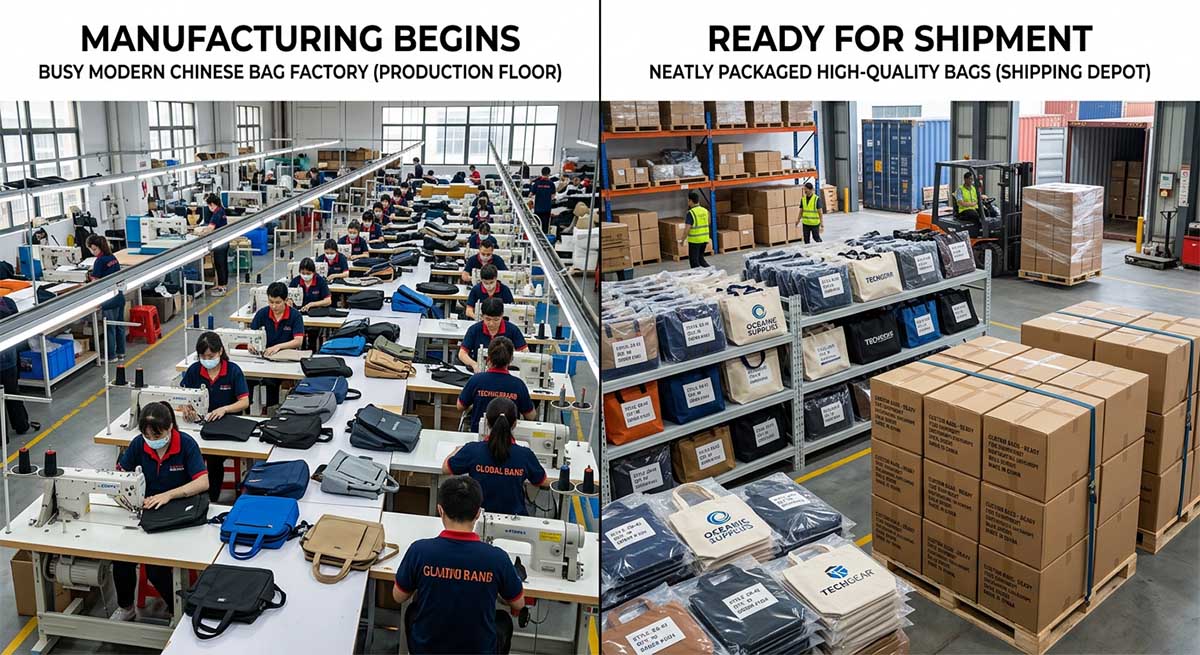
For e-commerce brands, retailers, and startups sourcing custom bags from China, understanding and accurately predicting production lead times isn’t just logistics – it’s critical for inventory planning, marketing launches, and cash flow. Misjudging this timeline can lead to missed sales opportunities, costly air freight, or disappointed customers. This guide breaks down the realities of bulk custom bag production lead times from Chinese suppliers, empowering you to plan strategically and build a reliable supply chain.
Deconstructing the Timeline: The 4 Phases of Custom Bag Production
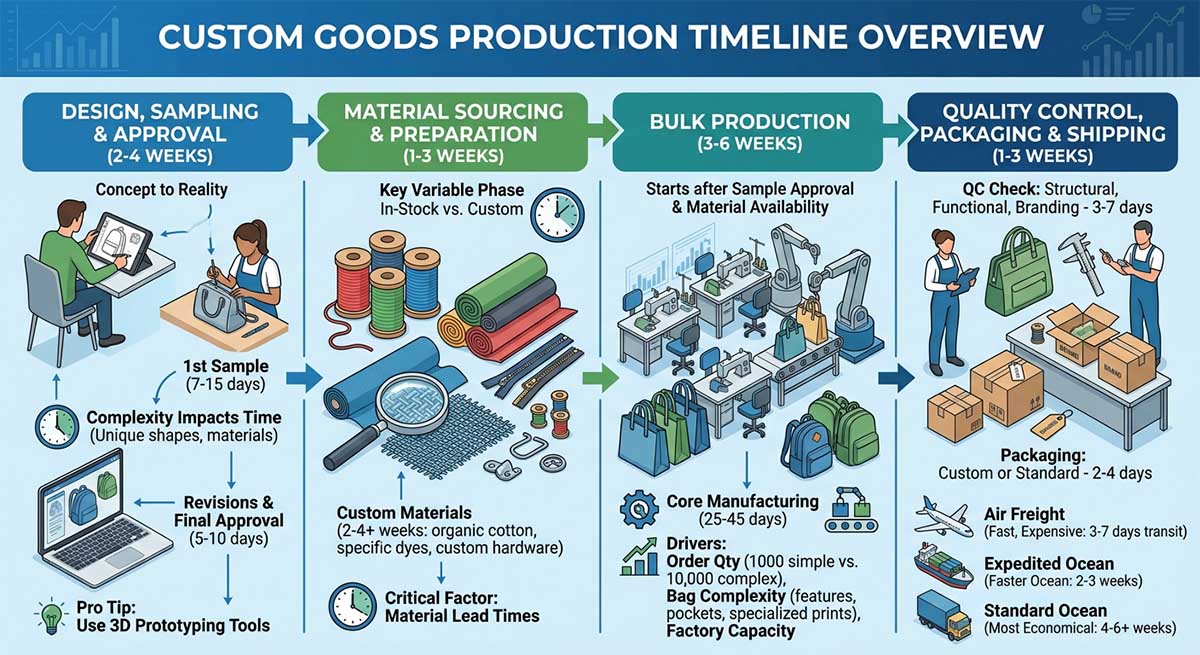
A typical bulk order doesn’t happen overnight. It progresses through distinct phases, each contributing to the total lead time:
1. Design, Sampling & Approval (2-4 Weeks):
First Sample (7-15 days): This is where your concept meets reality. Suppliers translate your tech packs, designs, or reference samples into a physical prototype. Complexity (unique shapes, novel materials, intricate details) significantly impacts this phase.
Revisions & Final Approval (5-10 days): Rarely is the first sample perfect. Factor in time for feedback, adjustments (1-2 revision rounds is common), and your final sign-off. Pro Insight: Utilize digital prototyping tools (like 3D renders) offered by advanced suppliers to reduce initial sampling time by up to 50% for simpler adjustments. Clear, detailed initial specifications minimize revision cycles.
2. Material Sourcing & Preparation (Varies, Often 1-3 Weeks):
This phase can be a major variable. Does your supplier have the exact fabric, hardware, lining, and custom components (like dyed-to-match zippers or embossed leather patches) in stock?
Custom Materials: Special fabrics (e.g., organic cotton, specific recycled content, custom-dyed colors) or unique hardware (custom cast metal logos, specialized buckles) add significant time – potentially 2-4 weeks or more. Critical Factor: Material availability is often the single biggest* cause of delays beyond the supplier’s direct control. Confirming material lead times upfront is essential.
3. Bulk Production (3-6 Weeks):
Core Manufacturing Time (25-45 days): This starts after* final sample approval and material availability. Key drivers:
Order Quantity: 1,000 simple totes takes less time than 10,000 complex backpacks. However, very large orders might run on multiple production lines.
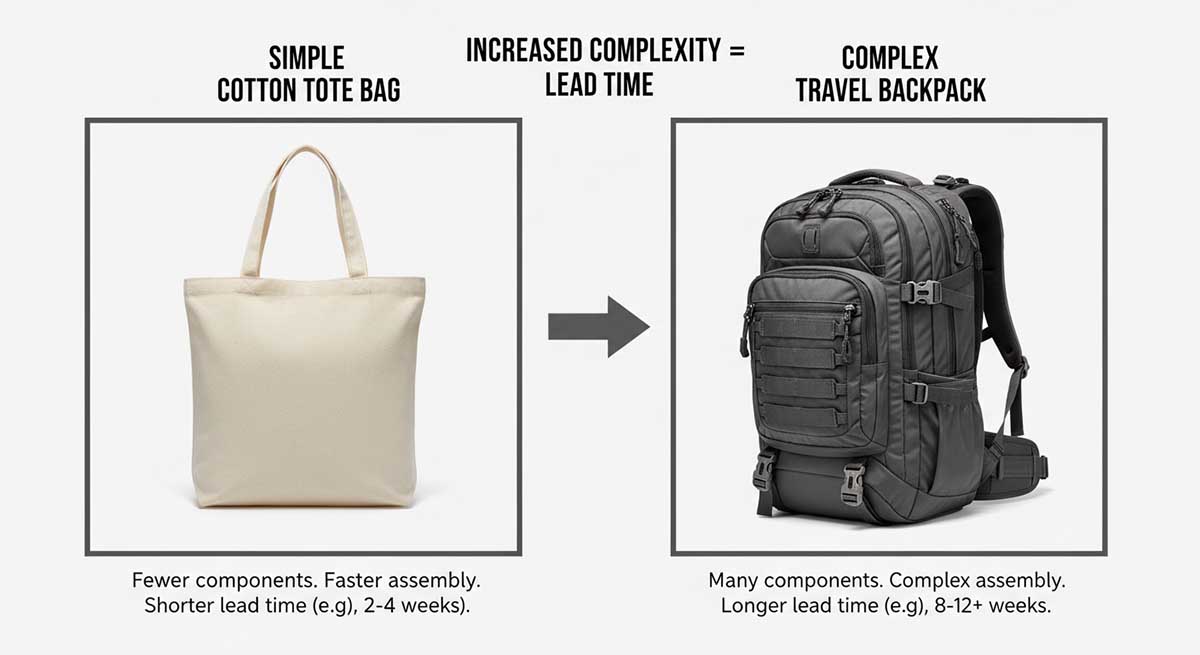
Bag Complexity: A basic tote is faster than a backpack with multiple compartments, padded laptop sleeves, custom metal feet, specialized printing (like sublimation or PU coating), intricate embroidery, or unique construction techniques.
Factory Capacity: Is your supplier currently at peak capacity (e.g., pre-holiday rush) or operating smoothly? Reliable suppliers communicate this transparently.
4. Quality Control, Packing & Shipping (1-3 Weeks):
QC Inspection (3-7 days): Rigorous quality control is non-negotiable. This involves checking construction, materials, dimensions, functionality (zips, straps), print/embroidery quality, and overall workmanship against the approved sample. Allow time for any necessary rework or replacements.
Packing (2-4 days): Custom packaging (e.g., individual polybags, branded hang tags, specific carton sizes) adds time versus standard packing.
Shipping & Logistics (1-4 weeks): This depends heavily on destination and method:
Air Freight:* Fast (3-7 days transit), but very expensive. Ideal for urgent, small batches.
Express Ocean (e.g., Sea Freight LCL/Less than Container Load):* Faster than standard sea (2-3 weeks transit), more cost-effective than air for moderate volumes.
Standard Sea Freight (FCL/Full Container Load):* Most economical for large bulk orders (4-6+ weeks transit), but port congestion and customs can add unpredictability.
Key Factors That Can Stretch or Shrink Your Lead Time
Understanding these variables allows for better planning and risk mitigation:
Design Complexity & Novelty: Radically new designs or complex features (custom molds, unique closures) require more engineering and testing time. Simplifying designs without sacrificing quality speeds up production.
Material Availability & Customization: As emphasized, stock materials are fastest. Custom-dyed fabrics, specialized hardware, or imported components add substantial lead time. Confirm material ETAs before* locking in your production schedule.
Order Volume: While larger orders benefit from economies of scale, they inherently take longer to produce than smaller batches. Discuss production line planning with your supplier.
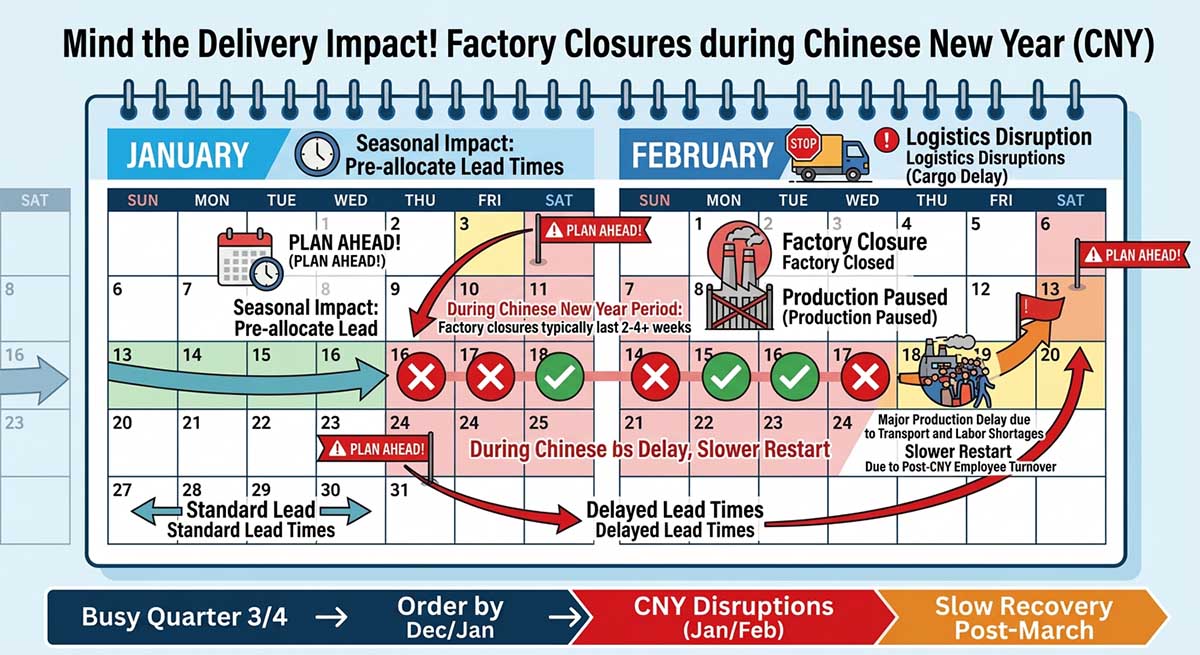
Supplier Expertise & Capacity: Choose a supplier experienced in your specific bag type and scale. A factory specializing in small leather goods may struggle with 10,000-unit nylon backpack orders. Transparency about current workload is crucial. Seasonality: Lead times balloon around major Chinese holidays, especially Chinese New Year (typically January/February, adding 2-4+ weeks) and Golden Week (October). Plan orders well* in advance or avoid these periods if possible. Factories are also busiest in Q3/Q4 for the Western holiday season.
Communication & Approval Efficiency: Delays in providing feedback, approving samples, or finalizing details directly extend the timeline. Designate a clear point person for approvals.
Payment Terms: Processing deposits and final payments (especially with international banking) can add 3-7 days before production officially commences. Use efficient payment methods.
Strategic Planning: Building in Realism & Buffer for Bulk Orders
Based on the data, here’s how to plan effectively:
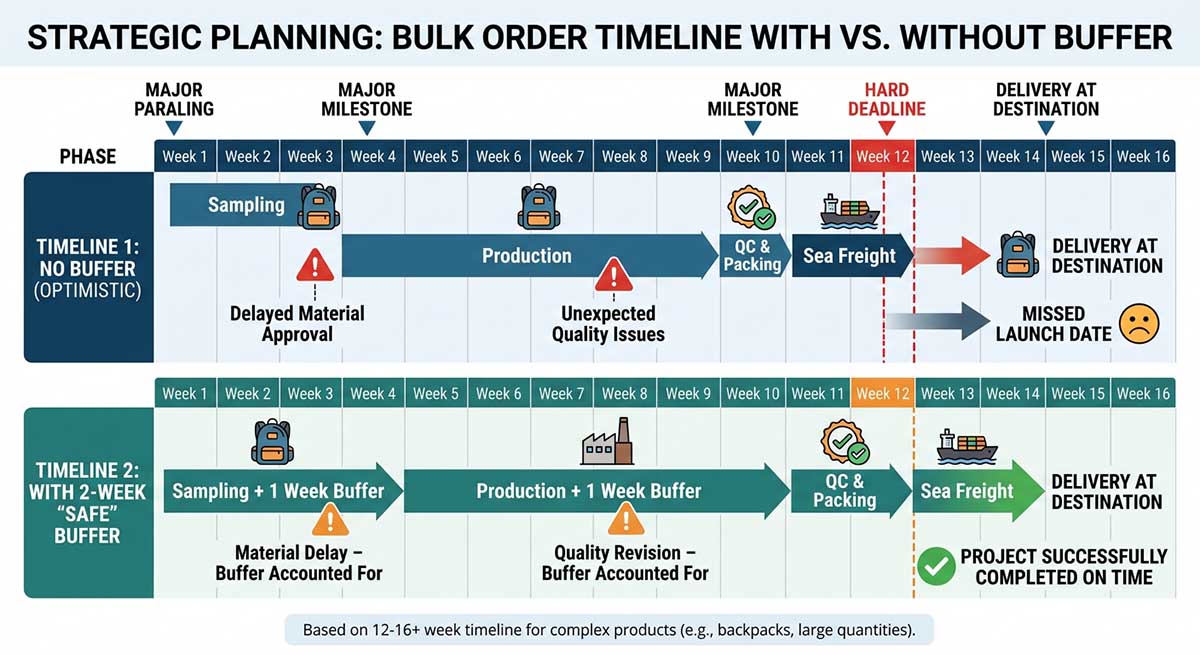
1. The Realistic Baseline: For most standard complexity bulk orders (e.g., 1,000 – 5,000 units), plan for a total timeline of 8-12 weeks from order confirmation/PO to goods arriving at your destination port or warehouse. This includes sampling, production, QC, and standard sea shipping.
2. The “Safe” Buffer: If you have a hard deadline (e.g., a product launch or seasonal sale), add a 2-week buffer to your baseline estimate. This accounts for minor material delays, an extra sample revision, or unexpected QC findings. Total: 10-14 weeks.
3. Complexity & Volume Adjustments:
Simple Bags (Totes, Drawstring Bags):* Can sometimes achieve 6-8 weeks total with stock materials and efficient processes.
Complex Bags (Structured Bags, Backpacks, Custom Hardware):* Easily require 12-16+ weeks, especially for large volumes (>10,000 units) or unique materials.
4. The “Faster” Scenario (3-5 Weeks Total): This is typically only feasible for:
Stock Bags + Customization: Adding your logo/print to an existing bag model the supplier holds in stock or can produce very quickly. (As noted: 7-10 days).
Simple Re-orders (“Reorders”): Producing the exact* same bag (same materials, design, specs) as a previous order. Suppliers can bypass sampling and often have materials pre-sourced.(As noted: ~30 days production + shipping).
Small Batches + Air Freight: Combining a simple design, small quantity, and paying for air shipping.
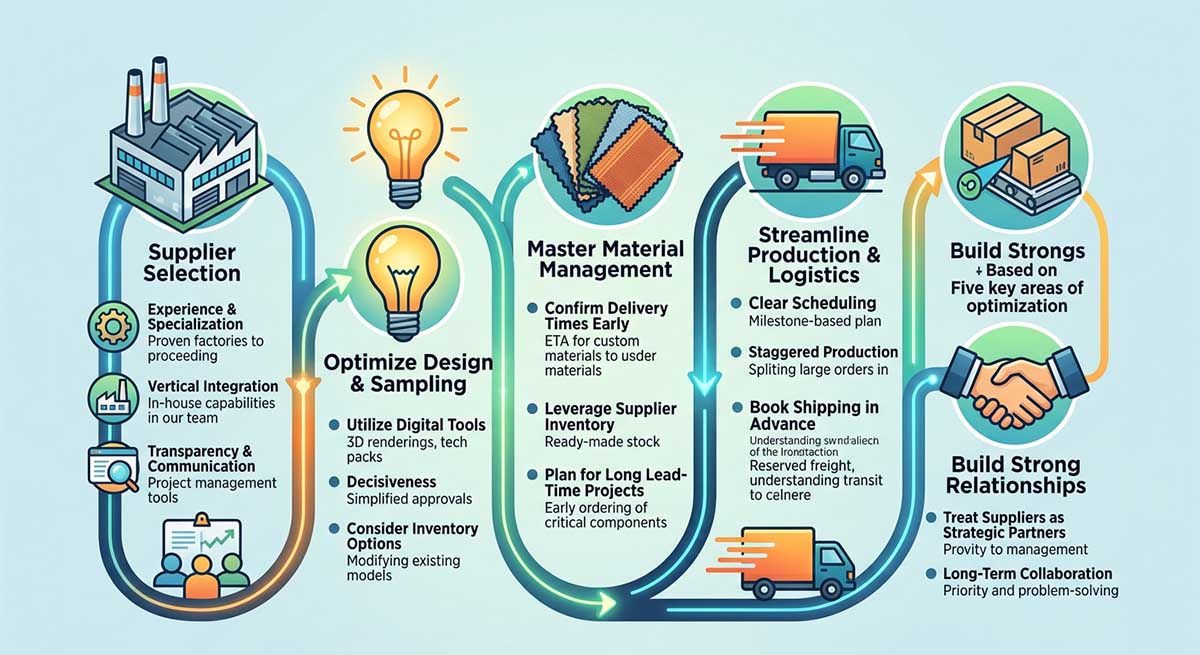
1. Supplier Selection is Paramount:
Experience & Specialization: Partner with factories proven in your specific bag category and volume. Check references and visit if possible.
Vertical Integration: Suppliers with in-house material sourcing, cutting, printing, and hardware capabilities have far more control over timelines than those outsourcing multiple steps.
Transparency & Communication: Choose partners who proactively communicate potential delays and provide regular updates. Modern factories use project management tools.
2. Optimize the Design & Sampling Phase:
Leverage Digital Tools: Use 3D renders, digital proofs for prints, and detailed tech packs to minimize physical sample rounds.
Be Decisive: Streamline your internal approval process for samples and decisions.
Consider Stock Options: Explore modifying existing supplier models (e.g., changing fabric, adding a pocket) instead of designing from scratch.
3. Master Material Management:
Confirm Lead Times Early: Get firm ETAs for all* custom materials before finalizing your production schedule.
Utilize Supplier Stock: Where possible, choose from the supplier’s readily available material inventory.
Plan for Long Lead Items: Order critical custom hardware or fabrics before* the final sample is approved, if the risk is acceptable (discuss MOQs and liability with the supplier).
4. Streamline Production & Logistics:
Clear & Realistic Scheduling: Agree on a detailed, milestone-based production schedule with your supplier upfront.
Consider Staggered Production: For very large orders, discuss splitting production into manageable batches.
Factor Shipping Early: Book freight space during* production, not after completion. Understand current port conditions and transit times to your destination. Consider express sea options for balance.
5. Build Strong Relationships: Treat your supplier as a strategic partner. Long-term relationships foster better communication, priority during busy periods, and mutual problem-solving when challenges arise.
Conclusion: Lead Time Mastery as a Competitive Advantage
For independent brands, mastering the intricacies of custom bag production lead times from China is a core competency. By understanding the typical 8-12 week baseline, the critical factors influencing it (complexity, materials, volume, seasonality), and implementing proactive strategies (supplier selection, design optimization, buffer planning), you transform potential logistical headaches into a reliable, efficient supply chain.
Remember: Rushing production is the enemy of quality and ethical manufacturing. Realistic timelines, built with buffer and based on transparent communication with a qualified supplier partner, are the foundation for delivering exceptional custom bags that meet your deadlines and delight your customers. Partner with suppliers who value transparency and have the expertise to guide you through these timelines effectively. By demonstrating this deep understanding of production realities, your independent brand establishes crucial credibility and operational excellence in the competitive bag market.
Post time: Mar-12-2026