
Meta Description:Thinking of sourcing custom bags from China? Understand the critical role of samples, realistic lead times, costs, and proven strategies to ensure bulk production matches your quality expectations.Essential reading for serious bag brands.
Introduction
For independent bag brands looking to create unique, high-quality products, sourcing from China remains a compelling option. The potential for competitive pricing and manufacturing expertise is significant. However, the journey from concept to receiving your bulk order hinges critically on the sampling phase and the processes that follow. Missteps here can lead to delays, cost overruns, and, most damagingly, products that don’t meet your quality standards. Understanding the nuances of sample production, costs, lead times, and quality assurance mechanisms is paramount for a successful partnership with a Chinese manufacturer. This guide breaks down these essential elements, providing actionable insights to navigate your sourcing journey confidently.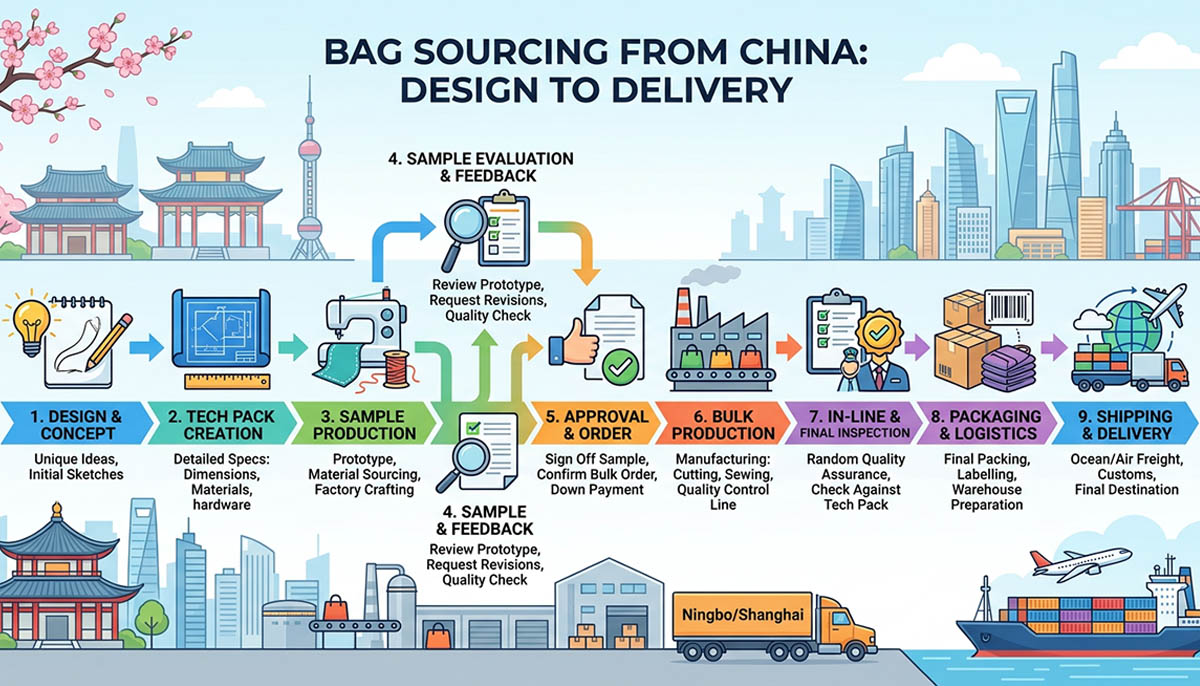
1. Sample Quality: Setting the Standard from the Start
The quality of your pre-production sample isn’t just a preview; it’s the blueprint for your entire bulk order. Achieving high-quality samples is possible and expected when managed correctly.
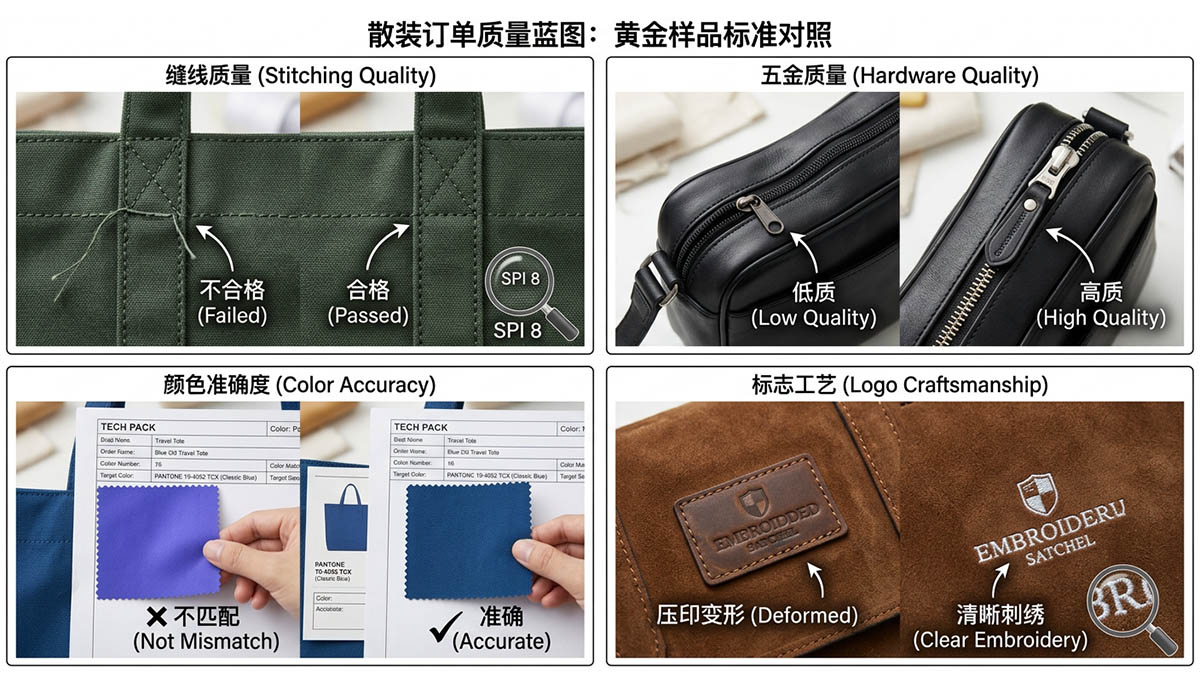
*The Foundation: A Detailed Tech Pack: This is non-negotiable. Your technical package (tech pack) must include precise specifications: dimensions, materials (with grade/type specifics), stitching details (SPI – Stitches Per Inch), hardware requirements (zipper types, puller styles, buckle finishes), logo placement and application method (embroidery, debossing, printing), lining, and any functional features. Ambiguity here invites interpretation and potential quality deviations. Clear tech packs significantly reduce the risk of “common issues” like weak stitching, low-grade zippers, color mismatches, warped prints, or inconsistent material thickness.
*The Golden Sample: Upon finalizing the pre-production sample (often after one or more iterations), this approved unit becomes the “Golden Sample.” It serves as the definitive physical reference for quality during mass production. Reputable suppliers will retain this sample at the factory, and any third-party quality inspectors you hire will rigorously compare random units from the production line against this golden standard. This practice is crucial for ensuring consistency.
*Proactive Quality Management: Sample quality is your first opportunity to assess the factory’s capabilities and attention to detail. Scrutinize stitch tension, hardware finish, material feel, and print/embroidery clarity. Don’t hesitate to request revisions if it doesn’t meet your expectations – it’s far easier and cheaper to correct now than during bulk production.
2. Sample Production Lead Time: Realistic Expectations
Patience during sampling is an investment in future quality and smoother bulk production. Lead times vary considerably based on complexity.
*Simple/Semi-Custom Bags (Existing Styles + Your Branding): If you’re modifying an existing bag design with your logo, prints, or colorways, expect a sample lead time of approximately 7-14 working days after you provide finalized artwork and specifications. This timeframe assumes readily available materials.
*Fully Custom Bags (New Shapes, Patterns): Designing a bag from scratch requires pattern making, sourcing potentially unique materials, and prototyping. This process is inherently more complex and time-consuming. Lead times for the initial pre-production sample in such cases typically range from 2 to 8 weeks.Factors influencing this include the novelty of materials, the intricacy of the design, and the factory’s current workload.
*Factor in Revisions: It’s rare for the first* sample to be perfect. Budget time for at least one round of revisions. Each revision cycle can add 1 to 3+ weeks to the timeline. Clear and prompt communication during the feedback stage is key to minimizing delays.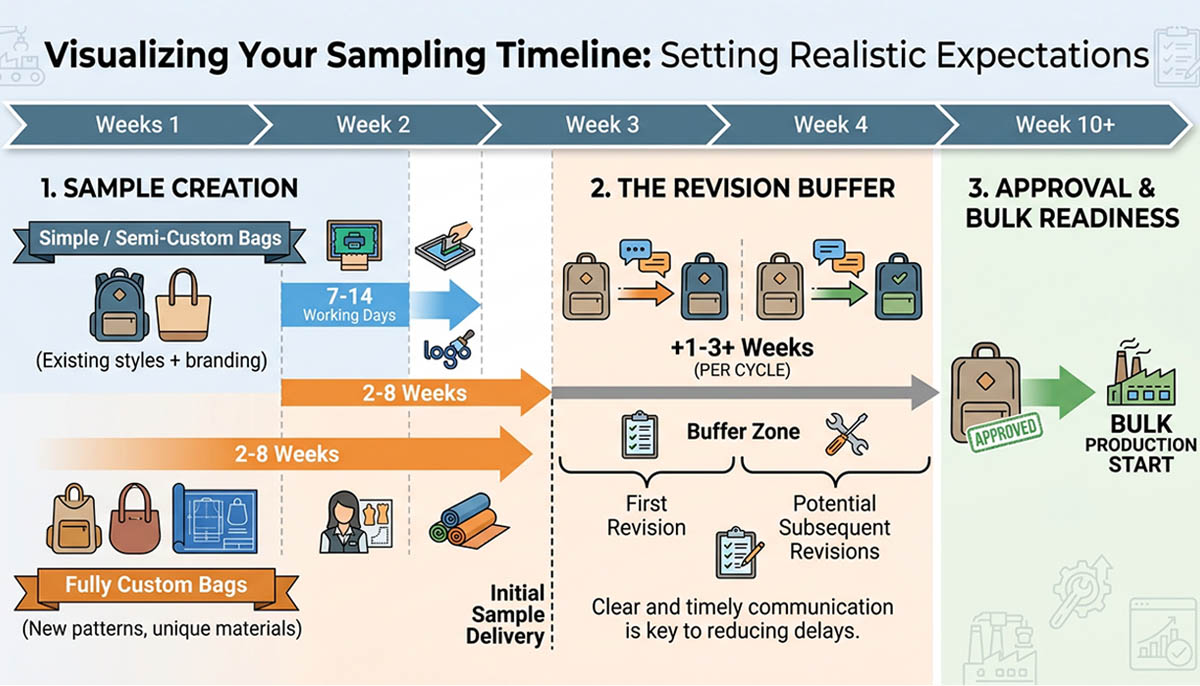
3. Sample Cost: Understanding the Investment
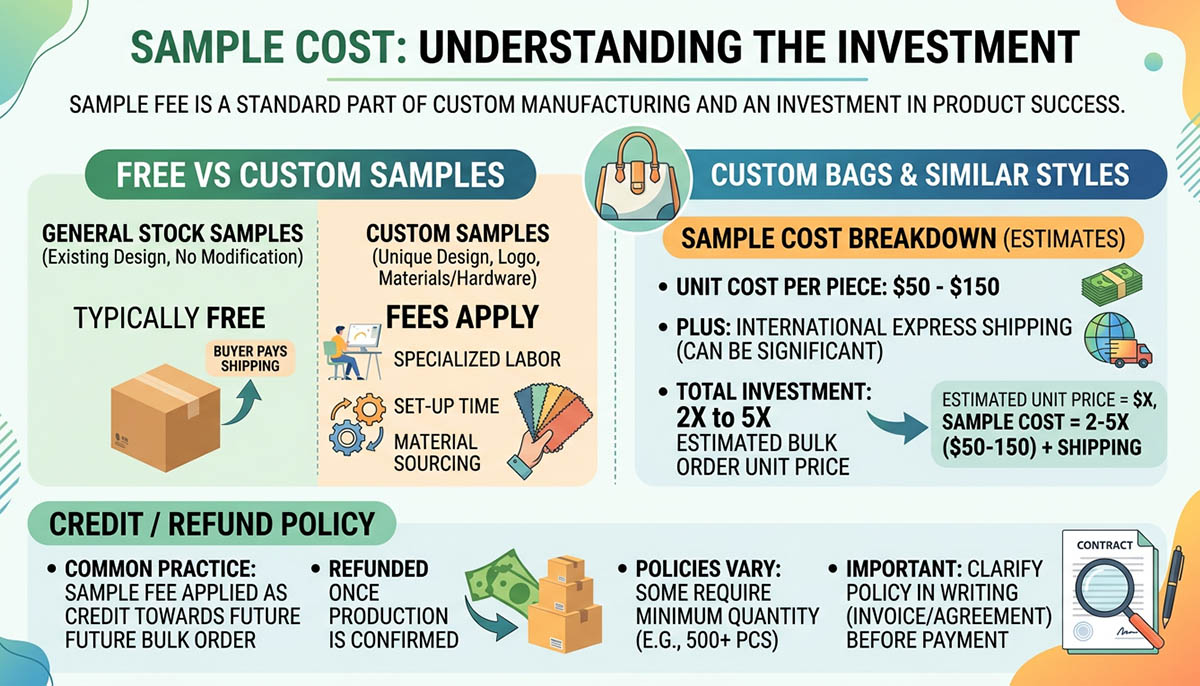
Sample fees are a standard part of the custom manufacturing process and should be viewed as a vital investment in your product’s success.
*Free vs. Custom Samples: Generic stock samples (existing designs with no modifications) are often offered for free, with the buyer covering shipping costs. However, customized samples – those featuring your unique design, logo, specific materials, or hardware – incur a fee. This fee compensates the factory for the dedicated labor, setup time, and material sourcing required to produce a single, unique item.
*Cost Range: For custom handbags and similar styles, sample fees commonly fall within the range of $50 to $150 USD per sample, plus express international shipping costs (which can be substantial). This cost often represents 2 to 5 times the estimated per-unit cost during mass production, reflecting the inefficiency of setting up a production line for a single item.
*Credit/Refund Policies: A common practice is for the sample fee to be credited against your subsequent bulk order, effectively refunding the cost once you commit to production. Some suppliers may explicitly state this policy (e.g., crediting after 500 units), while others treat it as a sunk cost. Always clarify the supplier’s policy on sample fee credit or refund before* paying for the sample. Get it documented in your pro forma invoice or agreement.
4. From Sample Approval to Your Doorstep: Bulk Production & Total Timeline
Once the golden sample is approved and your deposit is paid, the focus shifts to bulk manufacturing and logistics.
*Bulk Production Lead Time: After sample approval, expect the bulk manufacturing process for your bags to take approximately 30 to 45 days. This duration depends heavily on the order size, complexity of the bags, and the factory’s production schedule. Larger orders or highly intricate designs will naturally take longer.
*The End-to-End Reality: It’s crucial to consider the total timeline from the start* of sampling to goods arriving at your warehouse. Including sample development (1-8 weeks), bulk production (4-6 weeks), and ocean freight shipping (4-6 weeks), your first custom bag order can realistically span 2 to 4 months. Major holidays like Chinese New Year (typically late Jan/early Feb) can add significant delays, as factories shut down for 2-4 weeks. Plan accordingly and build buffer time into your launch schedule.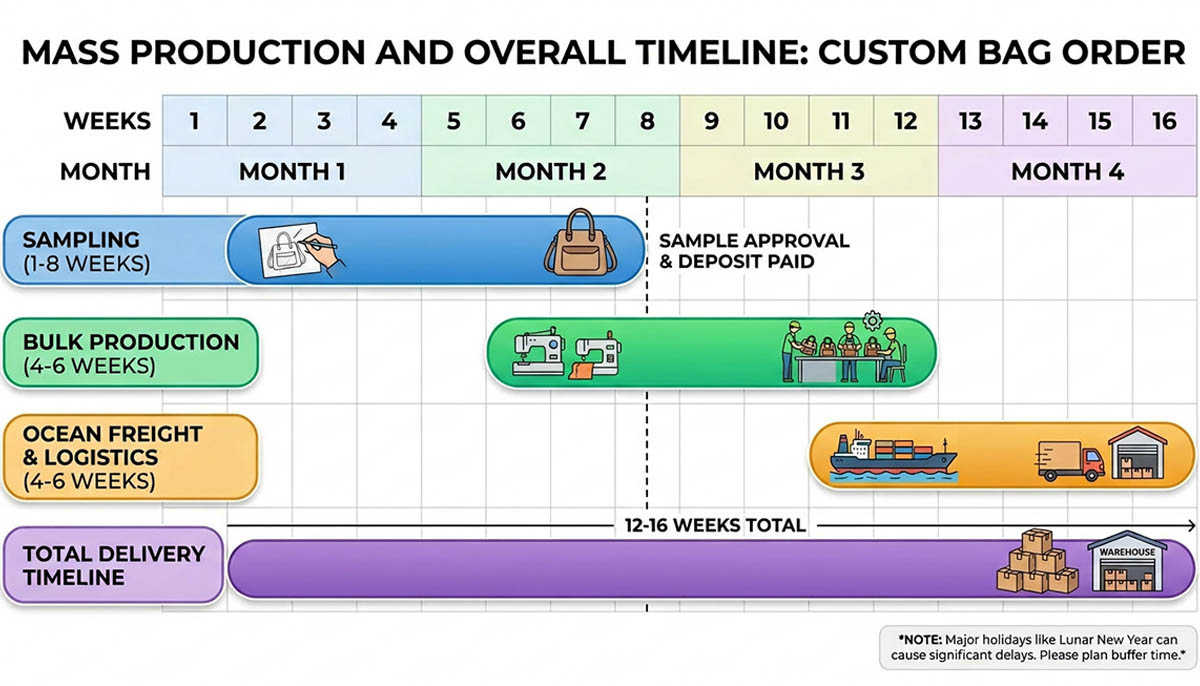
5. Pro Tips for Ensuring Quality & Managing Costs
Leverage these strategies to optimize your sourcing experience:
Start Semi-Custom: For your first order, consider using an existing, proven bag shape from the supplier and customizing it with your branding (logos, prints, colors). This dramatically reduces sampling complexity, time, and cost compared to a completely new design.
Demand Detailed Pro Forma Invoices: Before committing, obtain a clear pro forma invoice (PI) outlining: Sample fee amount and credit/refund policy, Per-unit bulk production price at your Minimum Order Quantity (MOQ), Estimated lead times for both sample production and bulk manufacturing. This transparency is vital for budgeting and planning.
Invest in Independent Quality Control (QC): Especially for your first order, do not skip third-party inspections. Hire an independent QC company to conduct inspections during production (DUPRO) and/or pre-shipment (PSI). The cost (typically $200-$400 per inspection) is minimal compared to the risk and expense of receiving a substandard container of goods. Inspectors use your Golden Sample as the benchmark.
Secure Mold/Tooling Ownership: If your custom design requires unique molds, cutting dies, or other tooling, ensure your contract explicitly states that you own these assets. This prevents the supplier from using them for other clients and gives you flexibility to move production if needed.
Consider Payment Terms: While not always possible for new relationships, structuring payments (e.g., 30% deposit, 70% against copy of Bill of Lading) can provide leverage and encourage the factory to maintain quality standards to ensure final payment. Be aware that very tight margins combined with demanding payment terms can sometimes tempt factories to cut corners.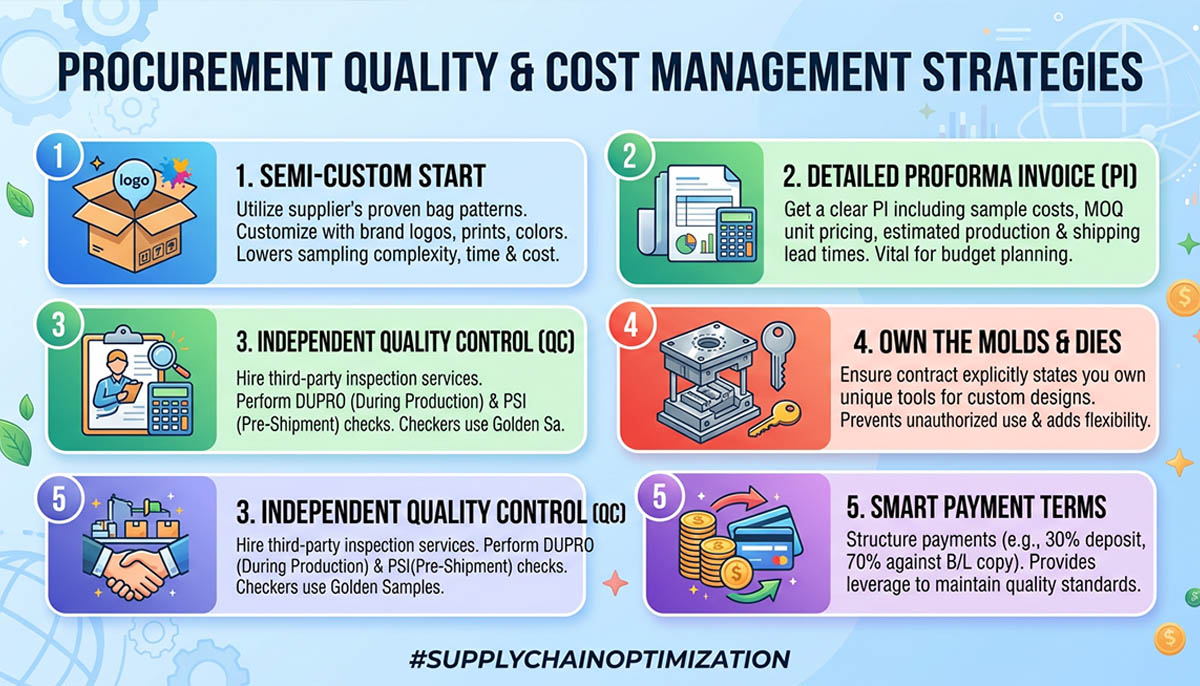
Conclusion: Knowledge is Power in Bag Sourcing
Sourcing custom bags from China offers tremendous potential for independent brands, but success hinges on informed navigation of the sampling and production process. By understanding realistic sample lead times (7 days to 8 weeks), costs ($50-$150 + shipping, often credited), and the critical importance of the Golden Sample and tech pack, you set a solid foundation. Implementing strategies like starting semi-custom, using independent QC, and securing clear agreements protects your investment and ensures the quality you demand is delivered in bulk.
Ready to discuss your specific custom bag project? Share details about your bag type (tote, backpack, crossbody, luxury leather, etc.), target price point, and estimated quantities. We can provide more tailored insights into realistic timelines, costs, and quality strategies for your unique venture.
Post time: Mar-09-2026