
Decoding the Price Tag: Understanding the Cost Structure When Sourcing Bags from China

For independent retailers sourcing bags directly from Chinese manufacturers, navigating the pricing structure can feel like deciphering a complex code. The factory quote you receive is rarely the final landed cost sitting in your warehouse. Understanding the intricate web of factors influencing the price is crucial for budgeting accurately, negotiating effectively, and ultimately, maintaining healthy profit margins. This deep dive will demystify the cost structure of sourcing bags from China, empowering you to make informed sourcing decisions.
The Building Blocks: Common Pricing Structures Explained
Chinese suppliers typically present prices using specific frameworks. Recognizing these is your first step:
1. Unit Price with Incoterms (EXW/FOB/CIF):
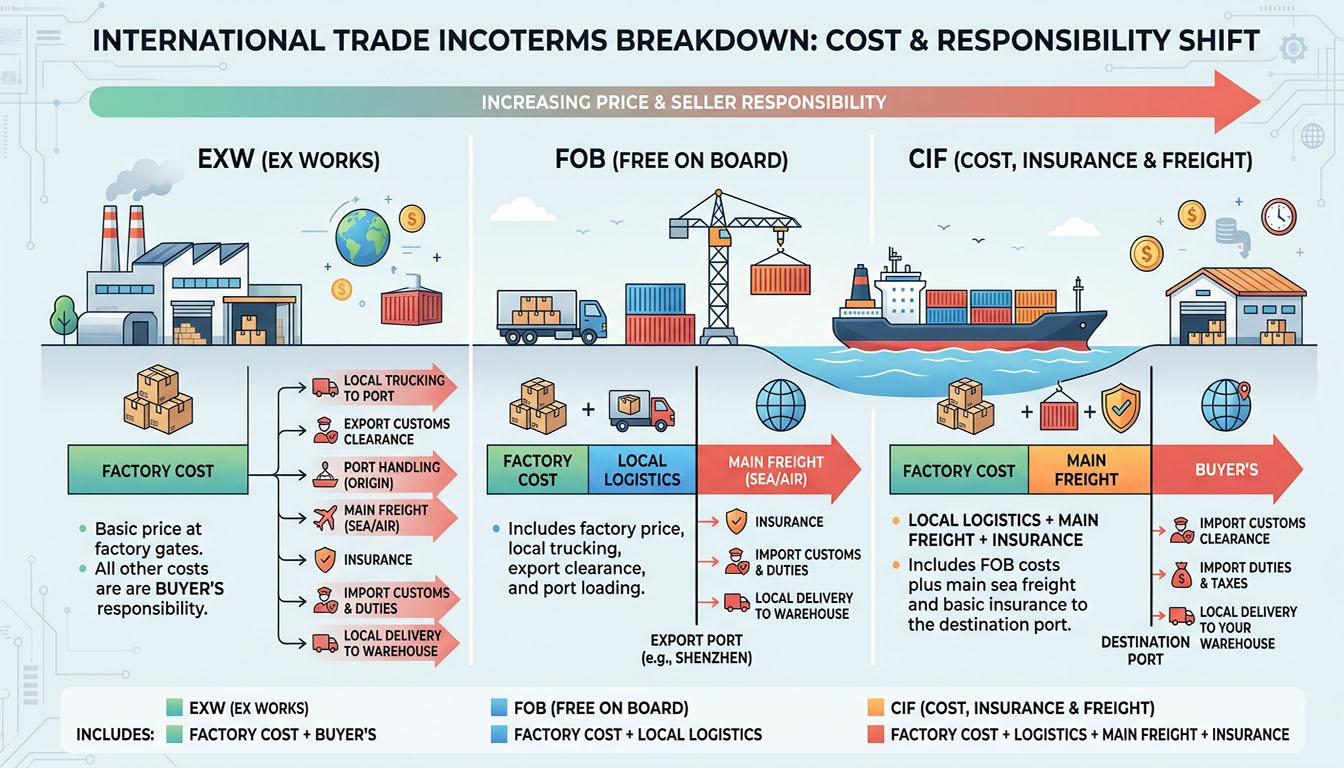
This is the most quoted price, but its meaning changes dramatically based on the accompanying Incoterm – a standardized set of international trade terms defining responsibilities and costs.
EXW (Ex Works): The simplest, lowest base price. This is only the cost of the finished bags at the factory gate. All* logistics – trucking to the port, export clearance, ocean freight, insurance, import duties, and final delivery – are your responsibility and cost. It offers maximum control but requires significant logistics management.
FOB (Free On Board): A more common quote. This price includes the product cost plus all expenses incurred getting the goods loaded onto the vessel at the port of export (e.g., Shenzhen, Shanghai). This covers local trucking within China, export customs clearance, port handling fees, and loading charges. You* are responsible for arranging and paying for the ocean/air freight, insurance, and all destination costs (import duties, customs clearance, local delivery).
CIF (Cost, Insurance, and Freight): This price builds on FOB. It includes the FOB cost plus the main sea freight cost and basic marine insurance to your destination port. It simplifies logistics for you (the supplier handles the freight booking) but gives you less control over carrier choice and rates. You* still handle and pay for import clearance, duties, and delivery from the destination port to your warehouse.
2. One-Time Setup/Tooling Fees: Customization often requires upfront investment. These are separate, non-recurring charges per design for creating molds (e.g., for unique plastic components), custom hardware dies, bespoke logo plates, or digitizing embroidery files. Negotiate these upfront.
3. Sampling Fees: Developing the perfect sample costs time and materials. Factories charge fees to cover making pre-production samples and couriering them to you. The silver lining? These fees are often refunded or credited against your subsequent bulk order.
4. Payment Milestones: Rarely will you pay 100% upfront. Standard terms involve staged payments, typically via Telegraphic Transfer (T/T). A common structure is 30% deposit to confirm the order and start production, with the 70% balance paid before shipment (often against proof of shipping like a Bill of Lading). Other splits like 30/40/30 (deposit/progress/final) also exist.
Beyond the Base Price: Key Factors Driving Your Bag Costs
The unit price quoted under any Incoterm is itself influenced by a multitude of factors:
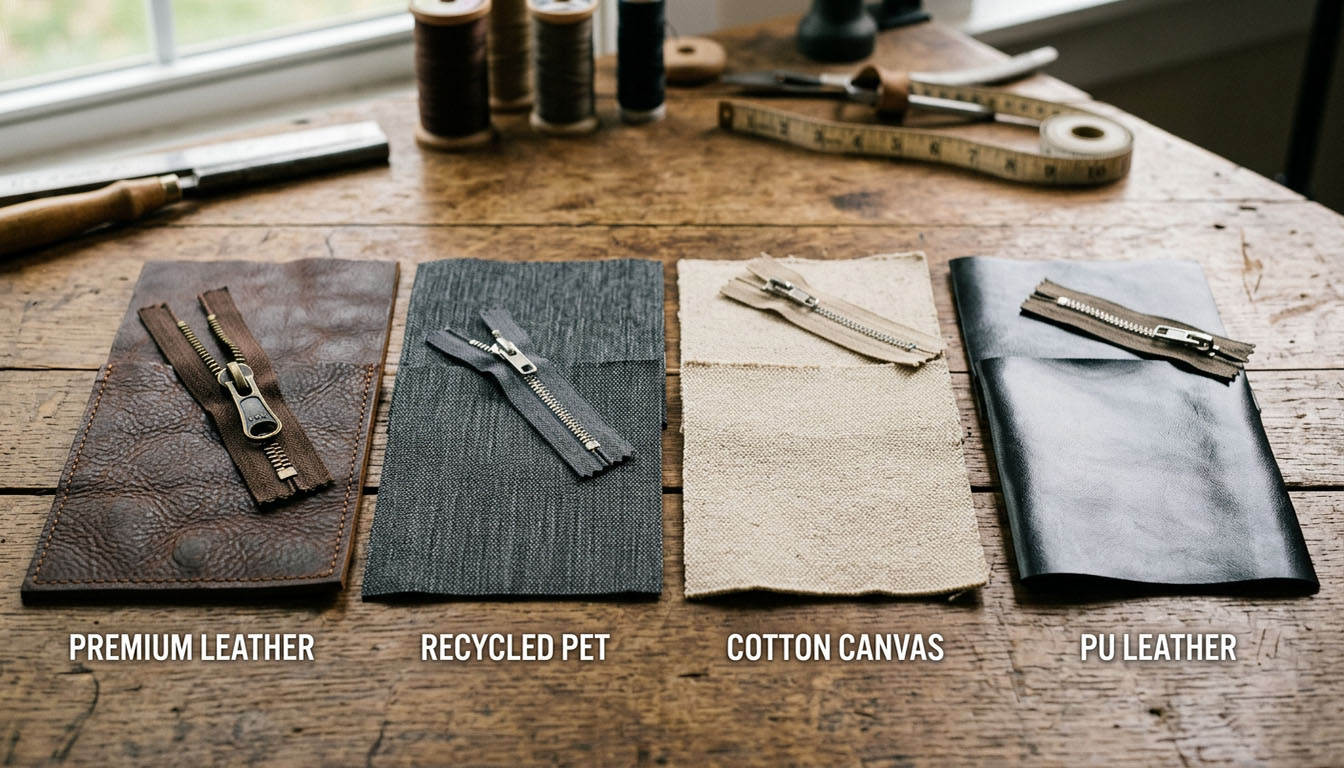
1. Materials: The Core Cost Driver: The choice of fabric (PU leather vs. genuine leather vs. cotton canvas vs. recycled PET), its weight/thickness, special coatings (waterproofing), lining materials, zipper quality (YKK standard vs. generic), and metal fittings (standard vs. custom) have a massive impact. Opting for premium, sustainable, or specialized materials will push the per-unit cost higher.
(Insight: Material costs are a key determinant of bag pricing.)*
2. Labor & Complexity: Time is Money: Simple tote bags are quick to sew. Bags with multiple compartments, intricate pocket designs, complex patterns requiring precise cutting, detailed top-stitching, or special finishing techniques (e.g., edge painting, laser etching) demand significantly more skilled labor hours. This complexity directly translates into a higher factory price.
(Insight: Labor expenses in Chinese factories influence overall costs.)*
3. Order Quantity (MOQ & Volume Tiers): Scale is Your Lever: Factories thrive on volume. They typically set Minimum Order Quantities (MOQs) per style/color. Crucially, the per-unit price usually decreases significantly as your order volume increases. Negotiating based on projected annual volume, not just a single order, can yield better rates.
(Insight: Bulk purchasing enables lower per-unit prices through economies of scale.)*
4. Customization & Branding: Your Identity, Your Cost: Adding your brand adds cost. Techniques like screen printing, embroidery, debossing, or hot stamping incur per-unit charges. Creating custom metal logos or unique packaging (dust bags, branded boxes, hang tags) involves setup fees and per-unit costs. The more unique the branding, the higher the premium.
(Insight: Brand reputation and design complexity drive price premiums.)*
5. Sampling & Revisions: Iteration Adds Up: While sampling is essential, multiple rounds of sample revisions (beyond minor tweaks) increase costs and delay production. Some factories charge higher initial sample fees but offer larger credits against bulk orders to mitigate this.
6. Factory Location & Tier: Geography Matters: Manufacturing costs vary across China. Factories in major coastal cities (Shenzhen, Shanghai) often have higher labor and overhead costs than those in inland provinces. Similarly, a high-end factory with advanced equipment and stringent quality control will charge more than a smaller, less sophisticated operation. Choose based on your quality requirements and budget.
(Insight: Factory and location: Different regions and factories in China have varying labor, energy, and overhead costs.)*
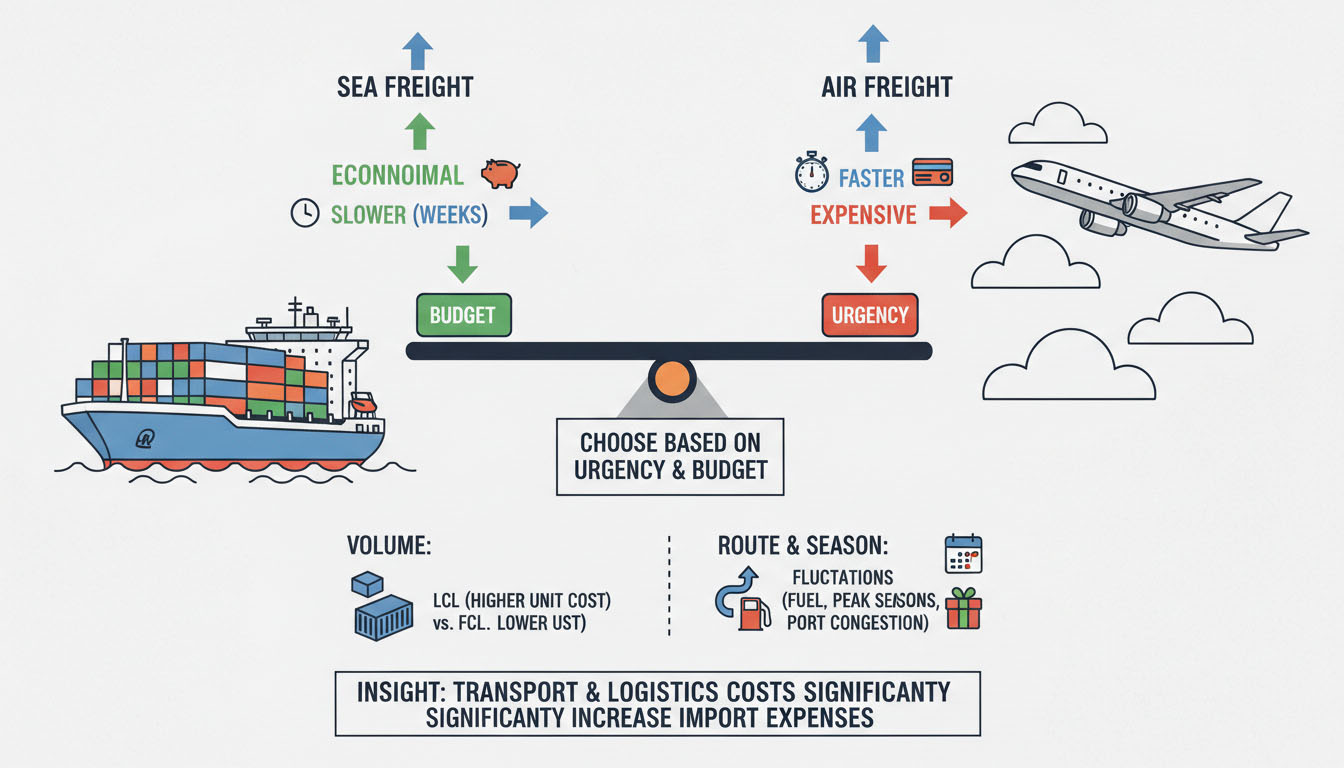
7. Logistics: The Journey’s Toll: Your chosen shipping method drastically affects the total landed cost.
Mode: Air freight is fast but expensive; sea freight is economical but slow. Choose based on urgency and budget.
Volume: Less than Container Load (LCL) costs more per unit than Full Container Load (FCL).
Route & Season: Shipping lanes, fuel costs, and seasonal peaks (pre-holidays) cause freight rate fluctuations. Port congestion can add demurrage/detention fees.
(Insight: Shipping and logistics fees significantly increase import expenses.)*
8. Tariffs & Duties: The Import Tax Bite: This is often overlooked but critical. Once your bags arrive, your country’s customs authority will levy import duties. These vary significantly based on:
Product Classification: The HS code assigned to your bags (based on material – textile, leather, plastic).
Country of Origin: Goods from China may face specific duty rates or even anti-dumping tariffs in some markets (e.g., the US).
Trade Agreements: Existing Free Trade Agreements (FTAs) might reduce or eliminate duties.
Other Fees: Potential inspection fees, harbor maintenance fees, etc.
(Insight: Import tariffs and duties vary by country and affect final costs.)*
(Insight: Compliance with international standards (e.g., REACH, ISO) adds hidden costs.) (Compliance might be required before* import, adding pre-shipment costs).
9. Currency Exchange: The Fluctuating Factor: Most transactions are in USD. If your revenue is in another currency (EUR, GBP, CAD), fluctuations in the exchange rate between payment dates can impact your actual cost. Hedging strategies can mitigate this risk.
(Insight: Currency exchange rate fluctuations impact payment conversions.)*
10. Supply Chain Resilience: The Cost of Uncertainty: Events like trade disputes (e.g., tariffs), geopolitical tensions, pandemics, or even regional factory closures (e.g., during Chinese New Year) can disrupt supply chains, cause delays, and lead to scarcity, ultimately pushing prices up. Building flexibility and buffer stock can help.
(Insight: Supply chain disruptions from events like trade conflicts raise prices.)*
(Insight: Technological investments in manufacturing can reduce long-term expenses.)* (Automation can mitigate labor cost inflation and improve consistency).
Navigating Commercial Terms: What to Expect
When reviewing quotes and contracts, expect to see terms like:
Price Expression: “FOB Shenzhen, USD $5.50 per piece, based on 500 pcs MOQ.” Always confirm the Incoterm and port.
Payment Terms: “30% deposit by T/T upon order confirmation, 70% balance payable against copy of Bill of Lading before shipment.” Understand the milestones clearly.
Currency: Predominantly USD. RMB is possible but involves more complex banking (e.g., via Hong Kong).
Pro Tips: Controlling and Comparing Costs Effectively
1. Demand Clarity: Insist on detailed written quotes specifying: Exact Incoterm (e.g., FOB Guangzhou), clear unit price, breakdown of any tooling/setup fees, sample costs, and payment terms. Avoid vague quotes.
2. Standardize Your RFQ (Request for Quotation): Create a comprehensive specification sheet for your bag. Include: Detailed material specs (type, weight, origin), precise dimensions, construction details (stitch type, SPI – stitches per inch), hardware specifics (zipper brand/size, buckle type), packaging requirements (individual, carton), and any required quality/safety standards (e.g., REACH, CPSIA, ISO 9001). Send this identical spec to all potential suppliers. This allows for true apples-to-apples comparisons.
3. Calculate Landed Cost, Not Just Unit Price:The factory unit price is just one piece. To truly compare suppliers or Incoterms, calculate the Landed Cost per Unit. This includes:
Product Cost (Unit Price x Quantity)
+ Tooling/Setup Fees (amortized per unit if possible)
+ Sampling Fees (if not credited)
+ Freight Cost (Ocean/Air)
+ Insurance Cost
+ Import Duties & Taxes (Calculate based on your country’s rates)
+ Destination Logistics (Port handling, customs broker fees, trucking to your warehouse)
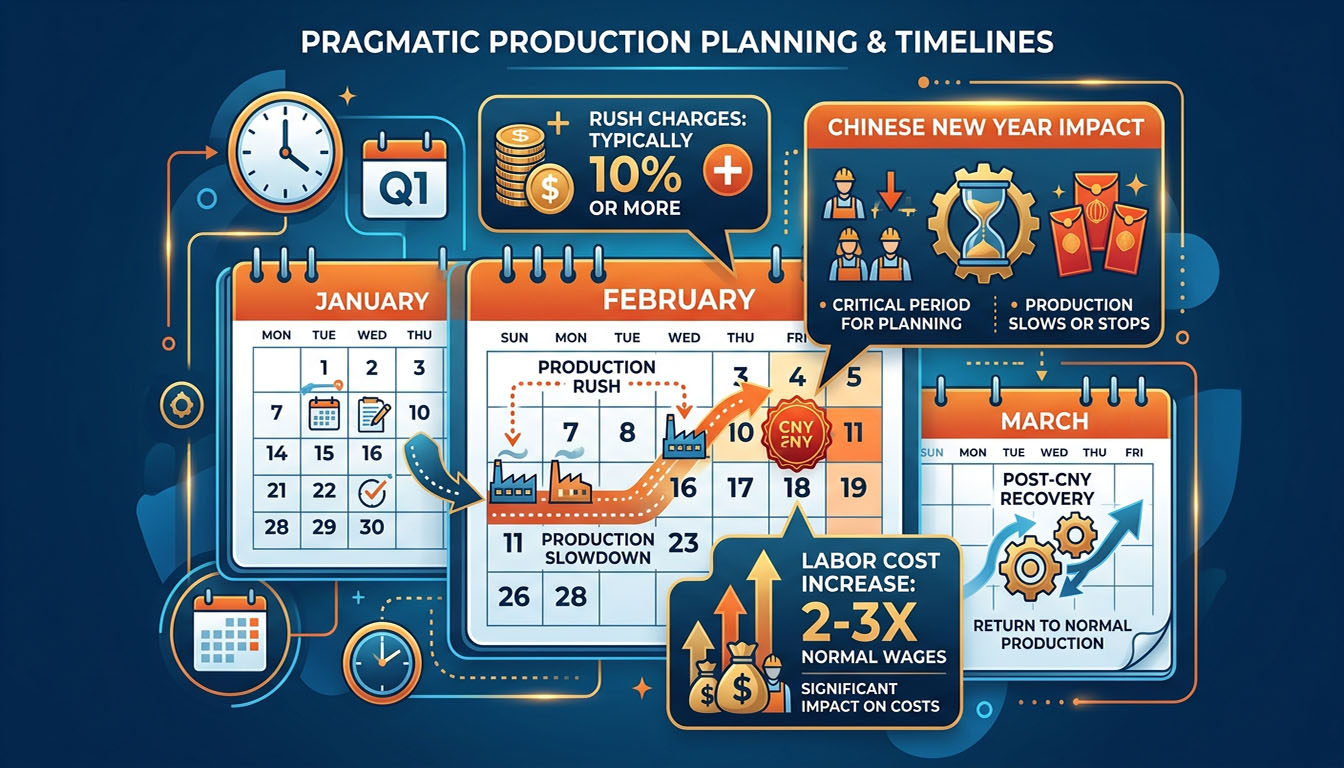
4. Consider Timing: As noted in your insights, rushed lead times often incur a premium (typically 10% or more). Chinese New Year is a critical period; production slows, and expedited work during this time often requires paying workers 2-3x their normal wages, significantly impacting costs. Plan production schedules realistically.
(Insight: Lead time also affects product price… Chinese New Year… 2-3x wages.)*
Conclusion: Knowledge is Power (and Profit)
Sourcing bags from China offers tremendous value, but the true cost extends far beyond the initial factory quote. By understanding the fundamental pricing structures (Incoterms), the myriad factors influencing the base price, the impact of logistics and duties, and the nuances of commercial terms, you position your independent store for success. Armed with this knowledge, you can negotiate more effectively, budget more accurately, avoid costly surprises, and ultimately source high-quality bags that delight your customers and sustain your business.
Ready to refine your sourcing strategy? Share details about your specific bag type (e.g., leather backpacks, canvas totes), target quantities, and budget, and we can delve into more precise cost modeling and RFQ strategies.
Post time: Mar-18-2026