
Proactive Problem Solving: Can Your Chinese Bag Supplier Deliver? (Hint: Choose Wisely)

As an independent seller sourcing bags directly from manufacturers, your success hinges not just on cost and design, but crucially on the reliability and foresight of your supplier. The allure of Chinese manufacturing is undeniable – vast capacity, specialized skills, competitive pricing. But a common concern lingers: Will your supplier proactively tackle problems, or will you be left scrambling when issues arise?
The truth isn’t black and white. While some suppliers operate reactively, waiting for you to flag problems, many can and do adopt proactive approaches – but it’s not automatic. Your choice of partner and how you manage the relationship are paramount. Let’s dissect the reality of proactive problem-solving with Chinese bag suppliers and how you can secure it.
The Reactive Trap: Why Problems Arise Post-Shipment

Based on industry experience and observation, several factors contribute to a reactive posture among some suppliers:
1. Post-Issue Mindset: Suppliers often focus on resolving problems only after they are flagged by the buyer, rather than anticipating and preventing them during production. This can stem from operational pressures or a lack of structured quality management systems.
2. Buyer-Dependent QC: Truly proactive quality control often requires explicit agreement, detailed specifications, and sometimes direct buyer oversight or third-party inspections. Without this framework, QC might be superficial.
3. Communication Gaps: Time zone differences, language barriers, or simply slow response times can delay the identification and resolution of nascent problems, allowing them to escalate.
4. Payment & Milestone Influence: A supplier’s urgency in addressing potential issues can be influenced by payment terms and the stage of order fulfillment (e.g., pre-production vs. post-shipment release).
5. Ambiguous Contracts: Without crystal-clear contracts outlining specifications, responsibilities, defect resolution procedures, and penalties, accountability becomes blurred, hindering proactive action.
6. Cultural Nuances: Differences in communication styles (e.g., reluctance to deliver bad news directly) can impact how and when problems are reported.
The Proactive Advantage: What It Looks Like in Action
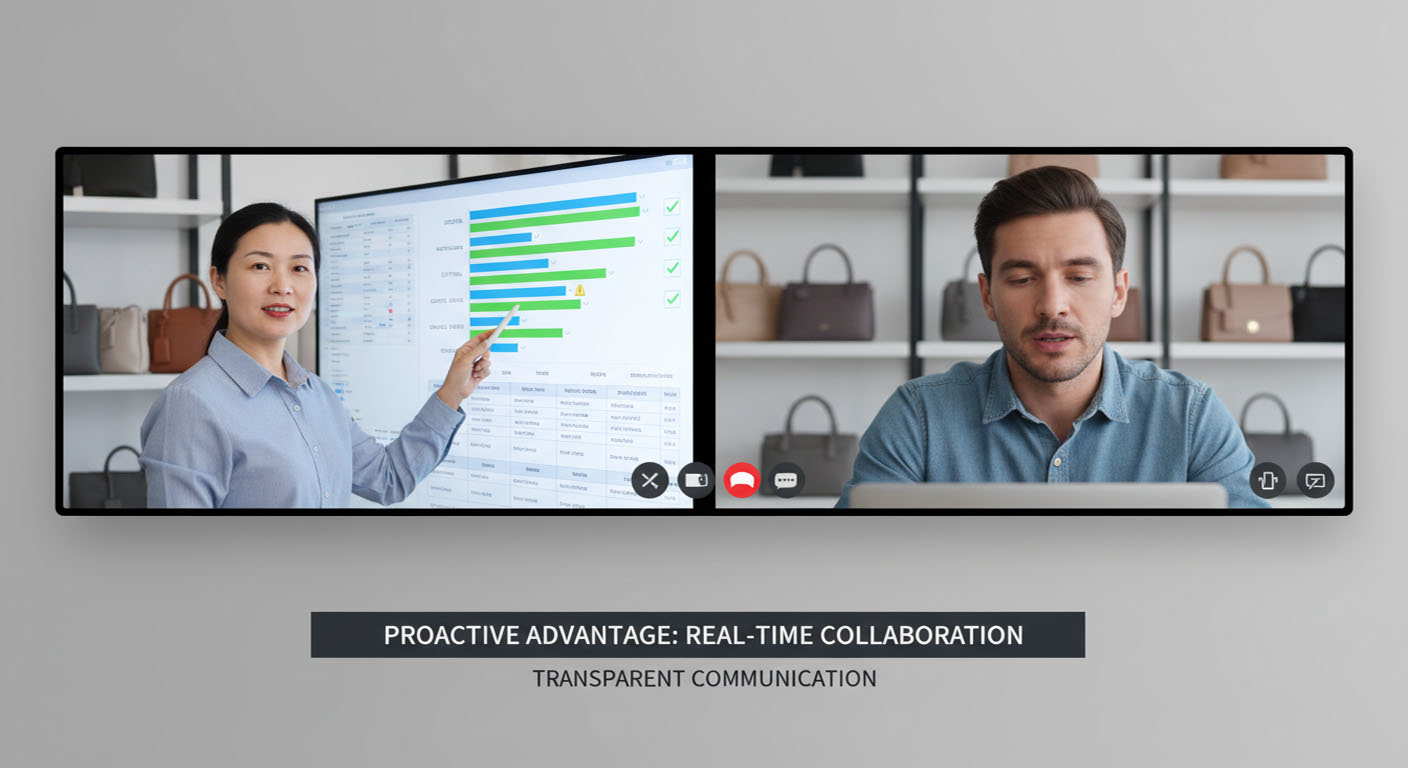
Thankfully, many Chinese suppliers, especially established and quality-focused factories, understand that proactivity is a competitive edge. Here’s what a proactive Chinese bag supplier typically demonstrates:
1. Anticipating & Solving Production Challenges: They don’t just say “yes” to your specs. When technical hurdles or specification ambiguities arise, they quickly communicate, propose viable solutions or alternatives (materials, construction methods, hardware), and work collaboratively to resolve them before production hits a snag. (Reference: china2west)
2. Robust & Transparent Quality Management: They have defined, documented QC procedures integrated throughout production (not just a final check). Crucially, they actively monitor processes, track defect rates internally, and can swiftly identify the root cause of any quality deviation. They don’t wait for you to find the flaw and complain; they aim to catch and fix it internally. (Reference: intouch-quality)
3. Supply Chain & Production Transparency: Proactive suppliers share production schedules proactively, flag potential delays early (due to material shortages, capacity issues, or logistics), and have contingency plans in place. They manage potential bottlenecks (like sourcing specific hardware or fabric) by monitoring lead times and communicating risks. (Reference: gembah)
4. Geopolitical & Supply Chain Risk Mitigation: While no one can predict every global event, proactive suppliers monitor potential disruptions (tariffs, port closures, raw material volatility). They may diversify their own material sources slightly, maintain strategic stock levels for critical components, or offer flexible logistics options. They communicate these risks and mitigation strategies to key clients.
Finding the Proactive Partner: Due Diligence is Key
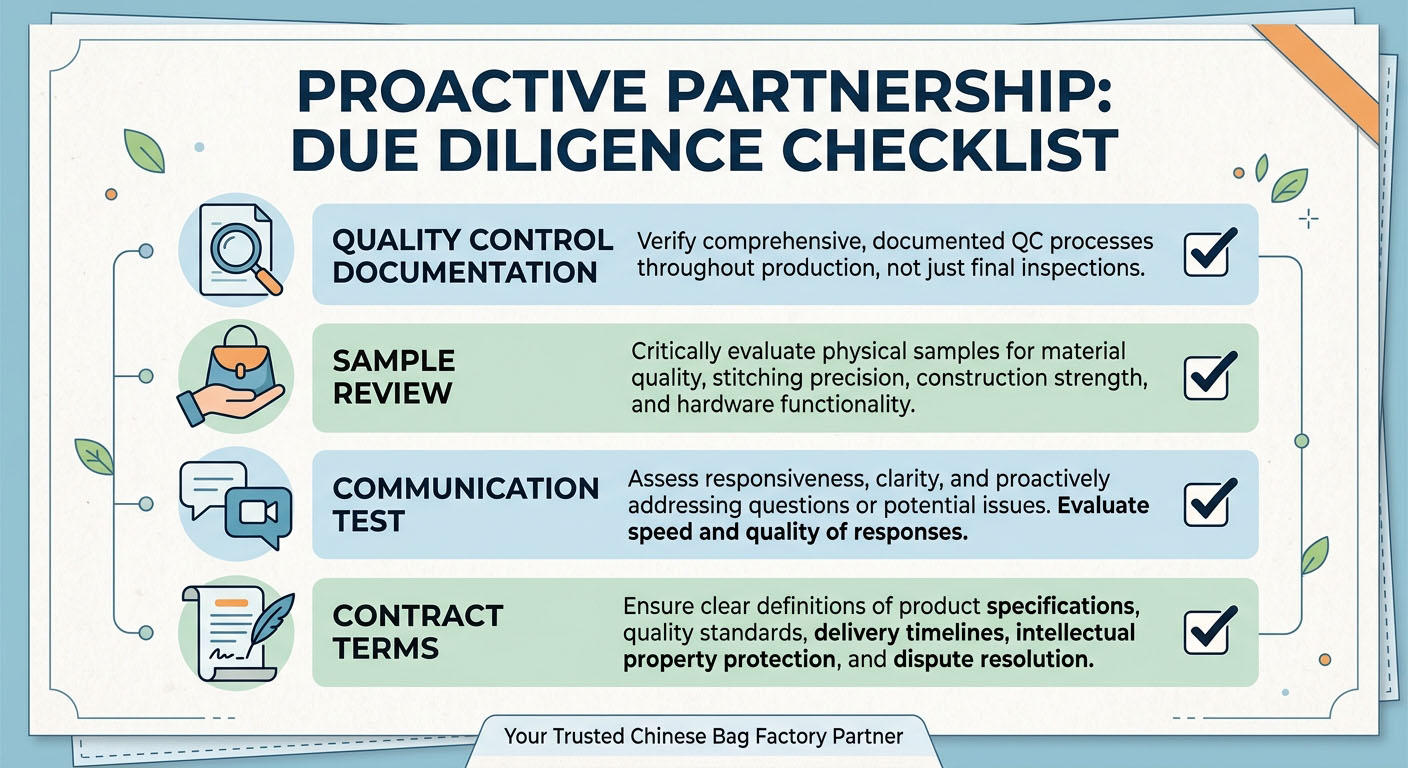
Proactivity isn’t always advertised; it needs to be uncovered. Before committing to a supplier, conduct thorough due diligence:
1. Test Communication Rigorously: Evaluate response times, clarity of answers, and language proficiency. Crucially, observe if they proactively suggest options when discussing materials, construction, or packaging, or if they simply agree without offering insights. This indicates engagement and problem-solving capability. (Reference: diriana)
2. Demand Quality Documentation: Ask for their QC manuals, internal defect tracking reports (if they share them), and specific examples of how they resolved past quality issues for other clients. Their willingness and ability to provide this speaks volumes. (Reference: brildragon)
3. Assess Commitment to Verification: Do they readily agree to pre-shipment inspections? Are they meticulous about approval samples? Are they open to using mutually agreed-upon third-party quality control (QCI) services? This shows confidence and a commitment to catching issues early. (Reference: china2west)
4. Evaluate Technical Capability & Structure: Larger suppliers or those with investments in technology (like IoT sensors on production lines, data analytics for process optimization) are often better equipped for proactive monitoring. Understand their management structure – clear lines of responsibility aid proactive management. (Logical Inference)
5. Seek Long-Term Potential: Suppliers are more likely to invest in proactive measures for clients they perceive as long-term partners. Express your interest in building a stable relationship.
Cultivating Proactivity: Managing the Relationship
 Securing a proactive supplier is step one; fostering that behavior is an ongoing process:
1. Define Specifications Exhaustively: Leave no room for ambiguity. Detail every aspect: exact dimensions, material types/weights/sources/specs (provide swatches or approved samples), hardware specifications (zippers, buckles, finishes), stitching requirements (SPI, thread type), logos, packaging, and required quality tests (e.g., zipper pull tests, colorfastness). Confirm everything in writing. (Reference: diriana)
2. Codify Problem Resolution: Your purchase contract must explicitly state procedures for handling defects, rework responsibilities, timelines for resolution, return/refund policies, and penalties for non-compliance. This sets clear expectations and motivates proactive quality control. (Reference: gembah)
3. Maintain Regular, Open Communication: Don’t disappear after placing the order. Schedule regular updates (via email, messaging apps, or video calls). Consider periodic factory visits or third-party audits. Building a strong rapport encourages the supplier to be transparent about challenges. (Reference: connectedsourcing)
4. Align Incentives: Fair payment terms (e.g., partial milestones tied to QC stages) and demonstrating loyalty (consistent orders) encourage suppliers to prioritize your business and invest in preventing problems.
The Cost of Reactivity: Risks You Can’t Afford
 Partnering with a purely reactive supplier exposes you to significant risks:
Inconsistent Quality: Weak process control and poor record-keeping lead to variations between batches, making your product unreliable.
Late-Stage Defects: Lack of in-process testing or final inspections means defects (faulty zippers, weak seams, color mismatches) only surface after the bags reach you or, worse, your customers. (Reference: sofeast)*
Unforeseen Delays & Costs: Bottlenecks and shipping issues arise unexpectedly, causing missed deadlines and expensive expedited shipping or air freight.
Brand Damage: Ultimately, poor quality and delays erode customer trust and damage your brand reputation.
Conclusion: Proactivity is a Partnership
 Yes, you can find Chinese bag suppliers who embrace proactive problem-solving. However, it requires strategic selection, meticulous management, and fostering a true partnership. By understanding the potential pitfalls, knowing what proactive behavior looks like, conducting thorough due diligence, and actively managing the relationship with clear communication and contracts, you significantly increase your chances of a smooth, reliable, and successful sourcing experience. Don’t settle for reactive; demand proactive partnership for the health of your brand.
Ready to find a proactive partner? Share details about your order volume, bag type (e.g., backpacks, totes, leather goods), and quality expectations. We can advise on specific steps, key contract clauses, and even help identify suppliers with a proven proactive approach.
Post time: Mar-30-2026