
The Death of the $800 De Minimis Rule: What Every Bag Industry Seller and Influencer Needs to Know in 2025-2026
Updated April 2026 | Essential Reading for Independent Sellers, Resellers, and Influencer-Marketers

Introduction: The Game Has Changed
For years, the $800 de minimis threshold was the silent profit engine behind countless small B2C businesses, resellers, and influencers selling bags, accessories, and low-ticket merchandise to American customers. That era is now officially over.
As of August 29, 2025, the United States eliminated the broad low-value import exemption that previously allowed duty-free entry for shipments valued under $800 per person per day. This sweeping policy shift—coupled with earlier restrictions targeting Chinese and Hong Kong-origin goods—has fundamentally restructured the economics of cross-border e-commerce in the bag and luggage industry.
If you’re a small business owner, an independent seller operating your own Shopify or WooCommerce store, or a content creator monetizing merchandise and product partnerships, the rules you built your business around no longer exist. But here’s the good news: strategic alternatives exist, and for sellers who adapt quickly, there are still paths to healthy profit margins.
In this comprehensive guide, we’ll break down exactly what changed, which product categories face the steepest impact, how overseas warehousing and bonded logistics can reduce costs by up to 60%, and—most importantly—what you can do right now to protect your margins in the new de minimis landscape.
Section 1: Understanding the $800 De Minimis Rule—What It Was and Why It Mattered
What the De Minimis Threshold Actually Did
The de minimis rule was a U.S. Customs and Border Protection (CBP) provision that permitted individuals and businesses to import goods valued at $800 or less per person per day without paying duties or taxes. When properly declared on shipping documents, these low-value shipments could bypass formal customs entry procedures, avoiding both the time and cost of standard clearance processes.
For the bag and luggage industry specifically, this threshold was extraordinarily valuable. A typical wholesale order of crossbody bags, backpacks, or travel accessories often fell comfortably under $800, allowing sellers to ship directly to customers or fulfillment centers without factoring duty costs into their pricing.
The Mechanics: How Aggregation Changed Everything
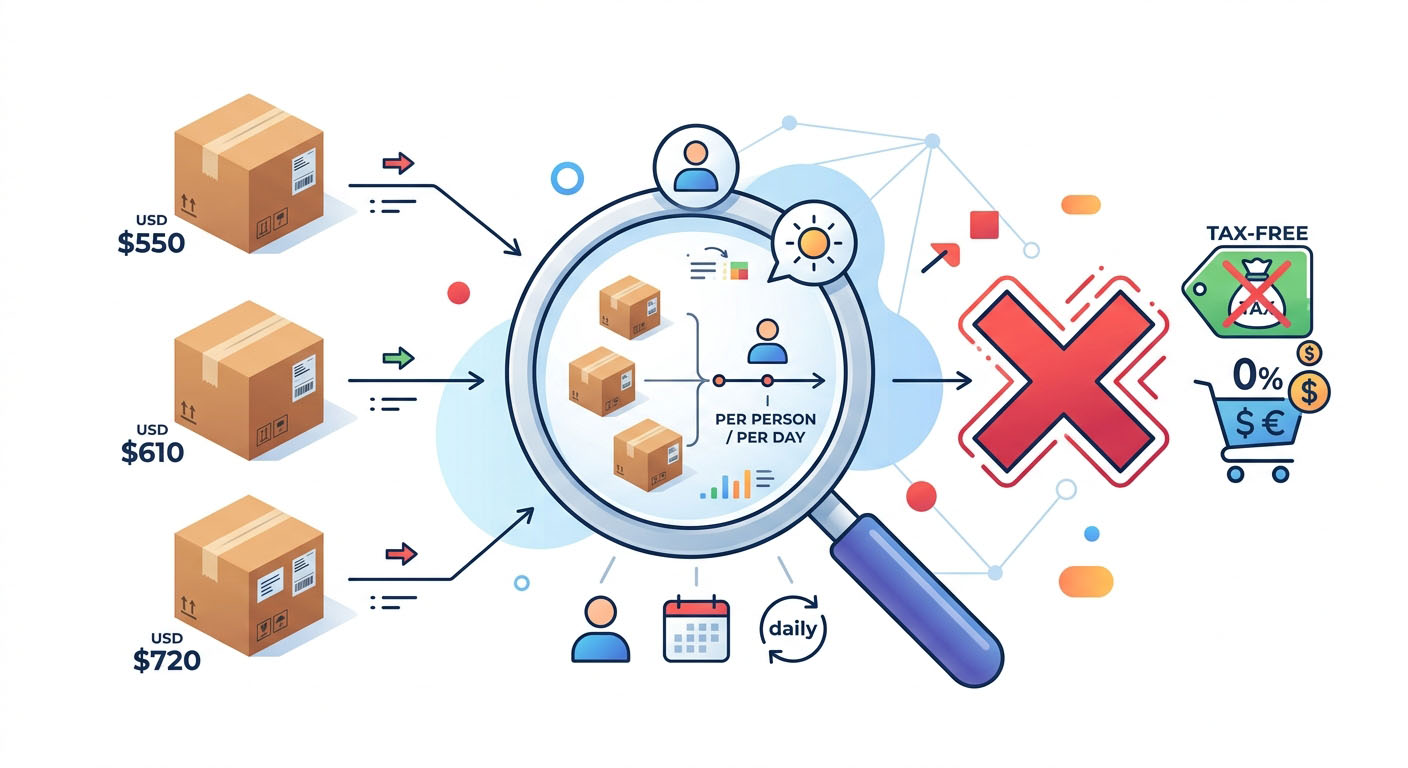
Here’s what many sellers didn’t realize: the $800 threshold was per person per day, and CBP’s systems were designed to catch aggregation violations.
If you shipped three separate packages to the same recipient on the same day—each valued at $400—customs would treat these as a single $1,200 shipment, immediately triggering formal entry requirements and duty obligations. Intentional misdeclaration to exploit the threshold wasn’t just risky; it was illegal. Violations could result in:
Cargo delays at U.S. ports
Shipment seizures
Financial penalties from CBP enforcement
Potential import bans for repeat offenders
The system wasn’t perfect, but it created a relatively predictable operating environment for compliant sellers.
Section 2: The 2025 Policy Shift—What Actually Changed
The Timeline of Destruction

The elimination of de minimis protections didn’t happen overnight. It unfolded in stages:
Early 2025: The U.S. began imposing additional restrictions on Chinese and Hong Kong-origin shipments, targeting the flow of goods from the world’s largest e-commerce exporters. These initial measures affected postal treatments and introduced new duty calculations for specific product categories.
July 30, 2025: A presidential executive order suspended de minimis treatment for all countries, not just China. This was the first truly global change, affecting sellers worldwide.
August 29, 2025: The broad elimination of the low-value exemption took full effect. The former assumption that “under $800 means tax-free” became obsolete overnight.
The Financial Impact: What Sellers Now Face
The elimination of T86 clearance—the streamlined customs entry type previously used for low-value shipments—replaced a simple exemption with a choice between two costly alternatives:
| Option | Cost Structure | Best For |
|————|——————-|————–|
| Ad Valorem Taxation | 120% of the shipment’s declared value | Higher-margin products that can absorb the cost |
| Flat Fee Per Package | $100–$200 per shipment | Lower-value individual items where flat fees are proportionally smaller |
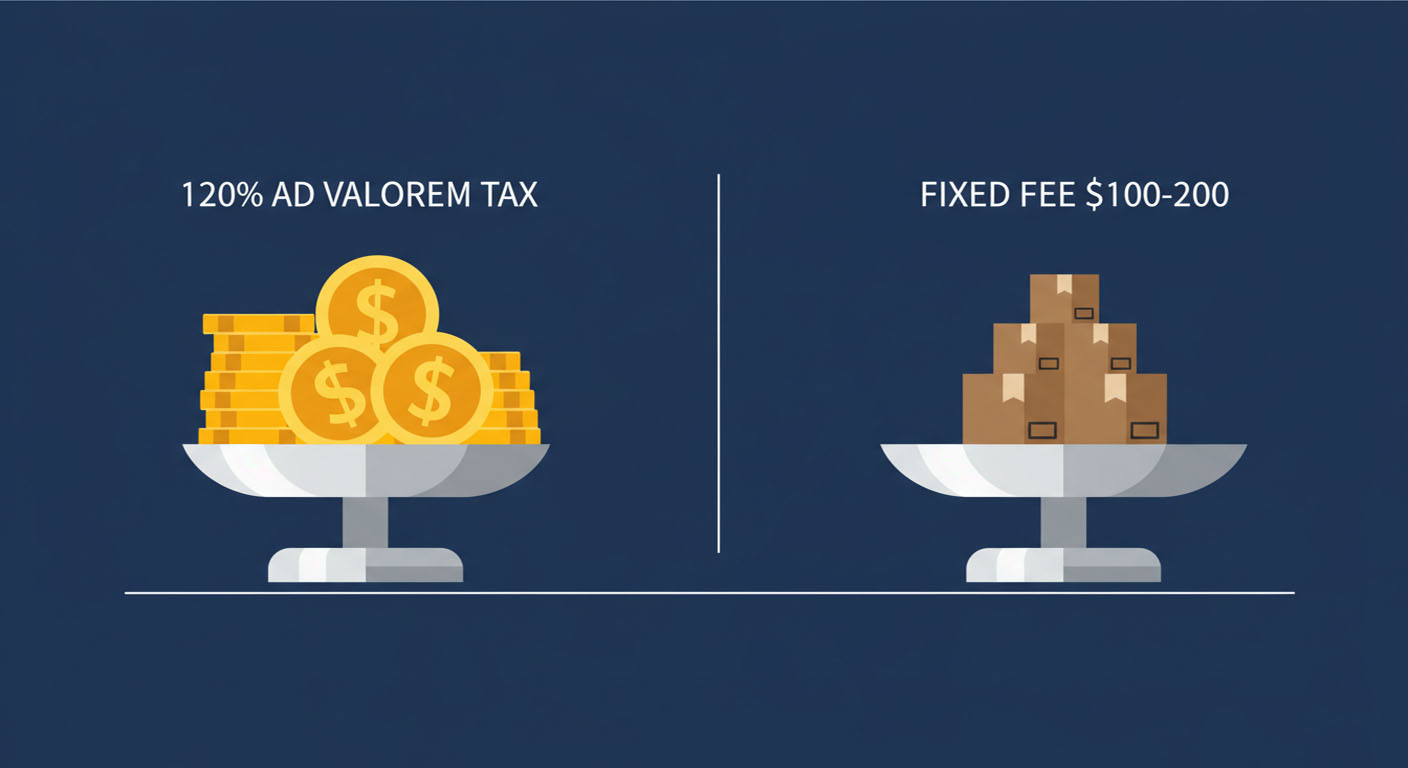
For a $200 wholesale bag order, the 120% ad valorem option means $240 in duties alone—before shipping, brokerage, or last-mile delivery fees. The flat fee option ($100–$200) can be even more punishing on low-value shipments.
The Scale of the Change
To understand the magnitude of this shift, consider this: Major e-commerce platforms like Temu and Shein previously accounted for nearly one-third of all de minimis shipments entering the United States. These platforms built entire fulfillment models around the assumption of duty-free shipping. When the rules changed, they were forced to restructure operations, absorb new costs, or pass them to consumers.
For independent sellers—particularly those in niche categories like custom bags, artisanal leather goods, and influencer-branded merchandise—the impact was equally severe. Orders that were profitable under the $800 rule suddenly required higher pricing, larger minimum order quantities, or completely different fulfillment strategies.
Section 3: Impact on Small B2C Businesses and Influencers
Why the Bag Industry Is Particularly Vulnerable
Product categories with high baseline tariffs—including many types of apparel, leather goods, and assembled bags—face compounded challenges under the new rule. When your product category already carries elevated duty rates, the additional 120% ad valorem tax or flat fees can dramatically alter your unit economics.
Consider a concrete example:
Before De Minimis Elimination:
Wholesale cost of 5 custom canvas bags: $400
Shipping to U.S. fulfillment center: $80
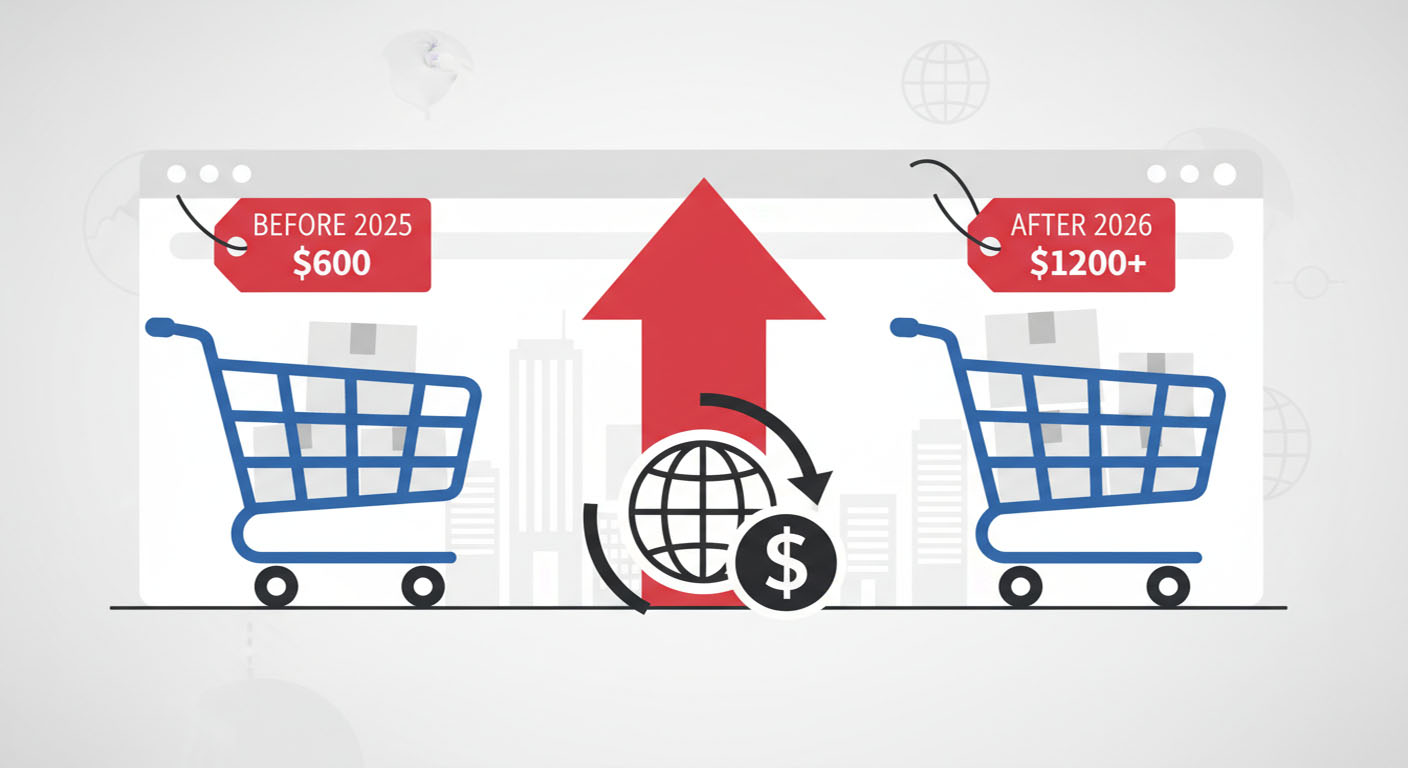
Direct-to-consumer selling price: $600 (profit margin: ~19%)
Duties: $0
After De Minimis Elimination (120% Ad Valorem Option):
Wholesale cost of 5 custom canvas bags: $400
Shipping to U.S. fulfillment center: $80
Duties (120% of $400): $480
Total landed cost: $960
To maintain the same profit margin: selling price must exceed $1,200
For small B sellers and influencers operating on thin margins, these numbers can make the difference between viability and closure.
The Influencer Economy Takes a Direct Hit

If you’re a micro-influencer or content creator monetizing through merchandise, affiliate partnerships, or sponsored product reviews, the de minimis changes affect you in several ways:
1. PR Samples and Gifted Items: Product shipments from brands to influencers must now be reviewed for customs value and compliance risk. Even low-value samples can trigger duty obligations if their declared value exceeds thresholds.
2. Creator Merchandise Fulfillment: If you’ve launched a product line—whether it’s custom tote bags, branded backpacks, or limited-edition accessories—your fulfillment costs have increased substantially.
3. Real-Time Margin Erosion: Carrier rate fluctuations, surcharges, and brokerage fees can silently erode profit margins on every shipment. Without active monitoring, you may be selling at a loss without realizing it.
4. Hidden Surcharge Traps: Many carriers add fuel surcharges, peak season fees, and customs processing charges that aren’t visible at checkout. These can add 15–30% to your calculated shipping costs.
Section 4: Product Categories Most Affected
High-Risk Categories in the Bag Industry

Post time: Apr-13-2026