
The price differential is a primary driver for foreign buyers sourcing bags from China, with factory prices often 30-50% lower than retail prices in their home countries. This significant cost advantage stems from lower labor costs, efficient production, and reduced middleman markups. For example, basic plastic or woven bags can range from $0.01 to $0.3 per piece, while customized packaging like vacuum-sealed or aluminum foil bags may cost up to $0.2–$0.3 per unit. Bulk orders (e.g., 10,000+ units) typically secure better rates, making China an attractive sourcing destination for small businesses.
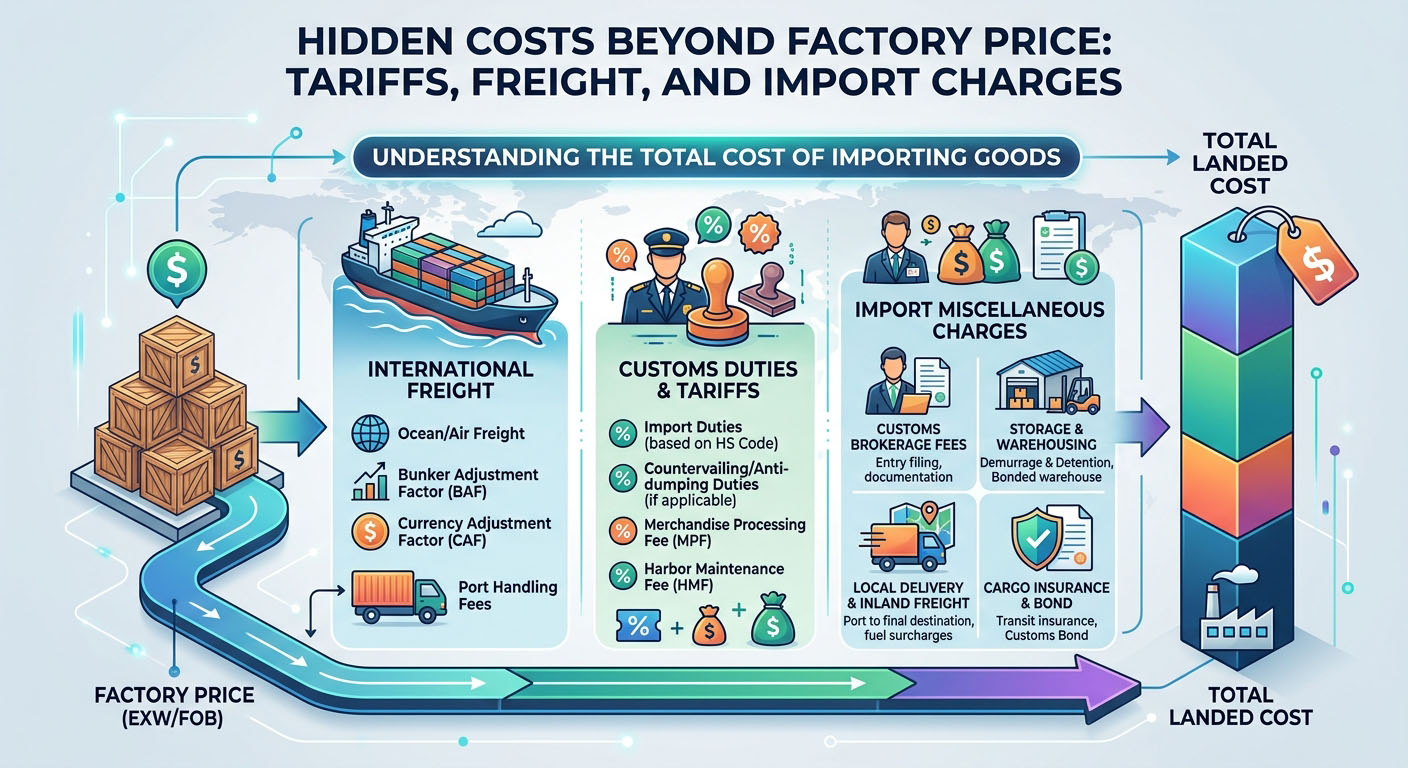
Hidden Costs Beyond Factory Prices: Tariffs, Shipping, and Import Fees
While product prices are low, small B customers must account for additional costs such as shipping, import duties, and logistics. Suppliers usually quote EXW (Ex-Works) or FOB (Free On Board) prices, excluding logistics. Shipping costs can vary significantly depending on the destination and order volume, with bulky items incurring higher freight charges. Import duties depend on the destination country’s de minimis threshold, and buyers should factor these into their total landed cost calculations to avoid unexpected expenses.
Minimum Order Quantities (MOQs) and Bulk Discounts
Chinese bag suppliers typically require MOQs starting at 10,000 pieces, with larger volumes (e.g., 30,000+ units) often qualifying for discounted rates. Some suppliers offer negotiable FOB prices for orders exceeding 20 metric tons annually. Small B customers should communicate their volume needs clearly to suppliers to secure the best possible pricing while balancing inventory management.
Shipping Times and Logistics Options for Importing from China
Shipping times vary based on the logistics method chosen. Air freight is faster but more expensive, while sea freight is cost-effective for large orders but takes longer. Small B customers should also consider express shipping for urgent or smaller shipments. Partnering with reliable freight forwarders can help streamline the process and ensure timely delivery.
Quality Control Measures When Sourcing Bags from China
Implementing robust quality control (QC) measures is crucial when sourcing from Chinese suppliers. Small B customers should request product samples before placing bulk orders, conduct factory audits (or hire third-party inspectors), and establish clear quality specifications. OEM suppliers often require 30% deposits upfront, so verifying product quality early can prevent costly mistakes.
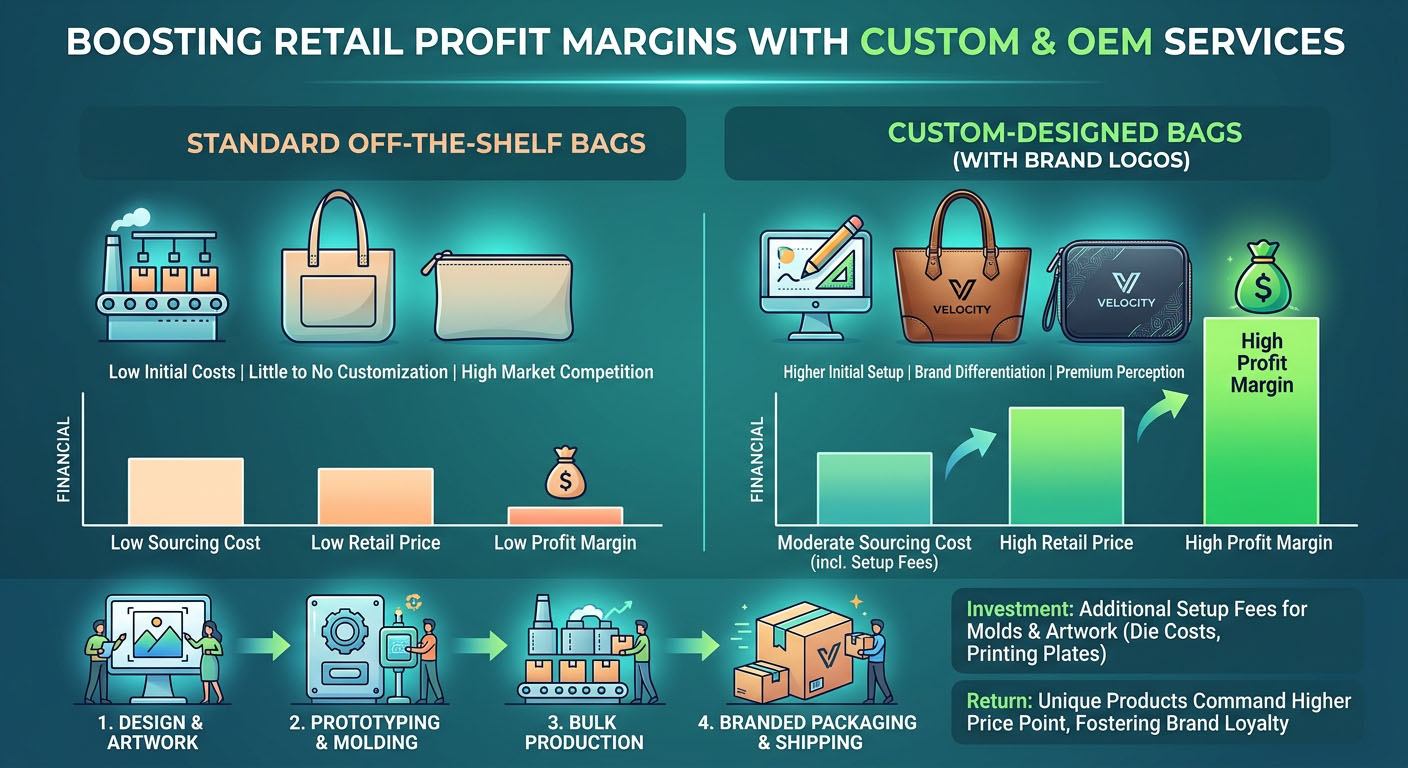
Customization and OEM Services for Higher Retail Markups
Custom-designed bags, such as branded prints or zipper pouches, incur additional setup fees for molds and artwork but enable higher retail markups. Chinese suppliers often provide OEM services, allowing small B customers to create unique products tailored to their brand. However, buyers should clarify design requirements and production timelines to avoid delays.
Practical Expectations for Small Businesses
A realistic rule of thumb for small businesses is that generic/private-label bags are noticeably cheaper from China, though landed-cost savings may diminish after factoring in freight, duties, and samples. Higher-end or branded-style bags may show a larger price gap, but this depends on comparable manufacturing quality rather than just branding. Small MOQs may not qualify for the deepest factory discounts, so buyers should plan accordingly.
Best Practices for Estimating Total Savings
To accurately estimate savings, small B customers should request the following from suppliers: EXW or FOB unit prices, sample costs, shipping quotes to their destination, duty/tariff estimates, and any customization fees. Comparing these figures with local wholesale or retail sources will provide a clear picture of the cost advantages of sourcing from China.
China’s Competitive Advantages in Bag Production
China’s manufacturing edge lies in its lower labor costs, abundant raw materials, and well-developed supply chains. Unlike many countries that rely on imported materials, China produces nearly all the raw materials needed for bag manufacturing domestically. This, combined with efficient logistics and production scalability, makes China a top choice for small B customers seeking cost-effective sourcing solutions.
By understanding these factors, small B customers can make informed decisions when sourcing bags from China, maximizing cost savings while ensuring product quality and timely delivery.
Post time: Apr-10-2026