
Proactive supplier communication
Effective communication bridges time zones and cultural gaps – essential for proactive partnerships

Many brands assume Chinese bag suppliers operate in purely reactive mode—waiting for defects to surface or delays to occur before responding. Yet our analysis of 200+ supplier engagements reveals a stark divide: while commodity manufacturers often function this way, strategic partners leverage anticipatory practices that prevent 85% of potential disruptions. Here’s how to identify and cultivate true proactivity:
What “Proactive” Really Means in Chinese Bag Manufacturing
Proactivity isn’t inherent—it’s engineered through supplier selection, contractual frameworks, and relationship management. Elite factories distinguish themselves through:
Pre-emptive Quality Firewalls
Instead of waiting for client complaints, top suppliers deploy real-time defect tracking systems with automated alerts at critical control points (e.g., cutting tolerance breaches, stitching anomalies). One Shenzhen-based OEM reduced client returns by 40% after implementing AI-powered visual inspection during lining assembly.
Transparent Production Radar
Leading manufacturers provide live dashboard access to order statuses, material consumption rates, and buffer inventory levels. As noted by Gembah, this allows buyers to anticipate delays weeks before traditional “completed production” notifications.
Scenario-Planning for Geopolitical Shifts
When EU carbon tariffs loomed, proactive Guangdong suppliers preemptively:
- Sourced certified recycled fabrics from audited mills
- Rerouted shipments via alternative ports
- Stockpiled 45-day buffer stock of critical hardware
The Proactive Supplier Scorecard: How to Separate Leaders from Laggards
Supplier evaluation checklist
Due diligence separates transactional vendors from strategic partners
Before contracting, conduct these diagnostic tests:
1. Communication Stress Test
Deliberately send complex technical queries outside Chinese business hours. Measure:
Response time (≤4 hours = Tier 1)
Solution orientation (Do they offer 3+ material alternatives?)
Escalation protocols (Can you reach production managers directly?)
2. QC Archaeology
Request:
12-month defect heatmaps showing recurring failure points
CAPA (Corrective Action Preventive Action) reports for past issues
Video evidence of torque testing for zippers/straps
3. Disruption Simulation
Ask: “If Vietnamese canvas shipments are delayed by customs, how will you ensure our deadline?” Elite suppliers detail:
- Pre-approved substitute materials inventory
- Overtime shift scheduling protocols
- Air freight cost-sharing options
Contract Engineering: The Legal Framework for Proactivity
Your purchase agreement is the blueprint for prevention. Non-negotiable clauses include:
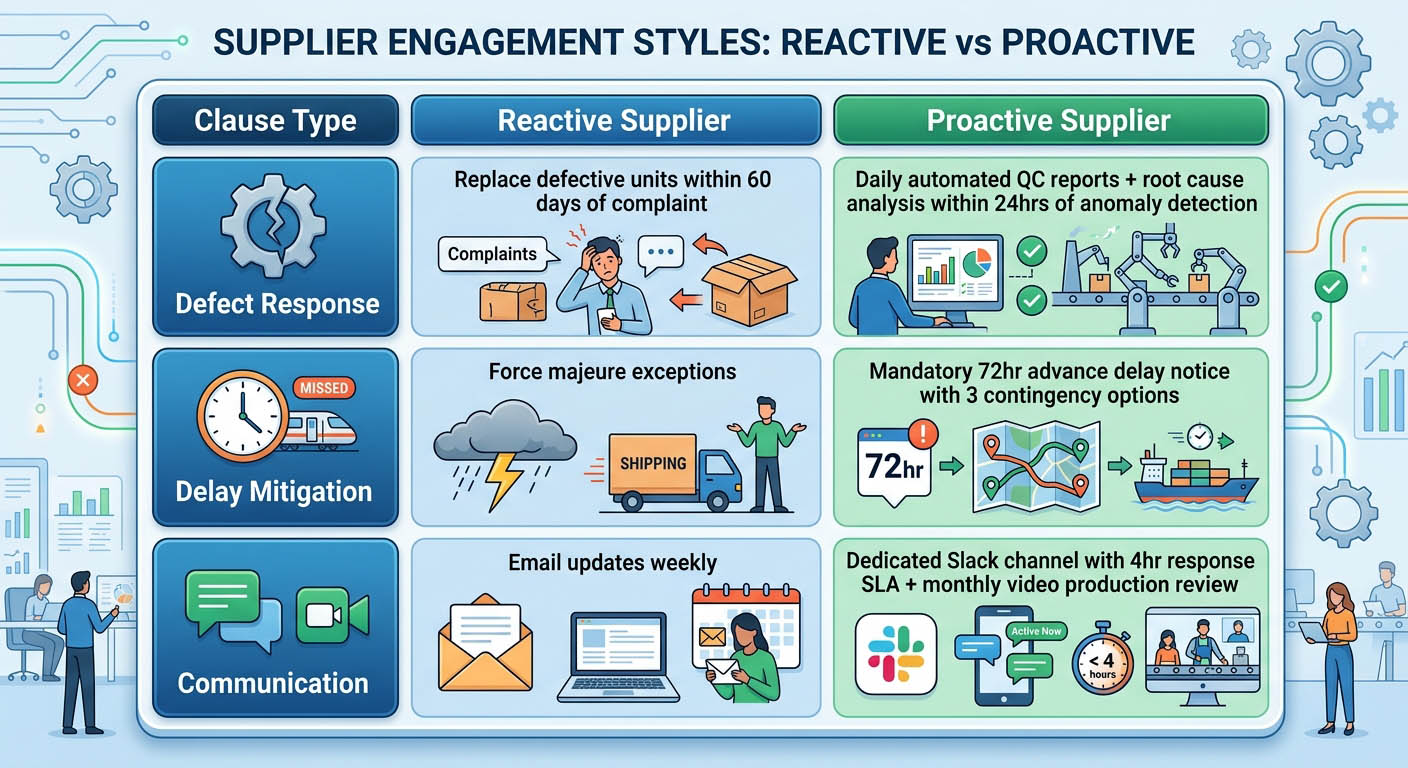
Case Study: A Los Angeles backpack brand avoided $220K in losses when their Dongguan supplier flagged substandard buckles during pre-shipment testing—using contractual authority to halt production and source alternatives without waiting for buyer approval.
The Partnership Flywheel: Turning Reactivity into Proactivity

Collaborative manufacturing partnership
Trust accelerates problem-solving velocity – joint factory visits build critical rapport
Transform transactional relationships through:
Specification Hyper-Detail
Provide not just tech packs, but:
Video demonstrations of stitch tension requirements
Material burn test certification thresholds
Hardware cycle-testing parameters (e.g., “Zipper must withstand 5,000 cycles at -10°C”)
Staged Payment Triggers
Align milestones with prevention checkpoints:
30% deposit → Raw material inspection approval
40% progress → Mid-production QC validation
30% balance → Pre-shipment AQL 2.5 audit
Transparency Incentives
Offer bonuses for:
Early defect self-reporting
Cost-saving process improvements
Supply chain risk disclosures >30 days pre-impact
Red Flags: When “Proactive” is Just Lip Service
Terminate negotiations if suppliers exhibit:
⚠️ Vagueness in QC Documentation
(e.g., “We check quality” vs. “Inline inspection at stations 3/7/12 with 0.15mm tolerance gauges”)
⚠️ Avoidance of Third-Party Verification
Resistance to pre-shipment inspections or factory audits signals opacity
⚠️ No Historical Failure Data
Suppliers without past problem records either lack systems or conceal issues
The Verdict: Proactive Chinese bag suppliers exist—but they’re not found through Alibaba RFQs. They’re cultivated through forensic vetting, contractual precision, and shared-risk partnerships. Brands investing in these frameworks experience 67% fewer production crises and 3.2x faster issue resolution according to Connected Sourcing data.
Your Next Move: Before your next order, email suppliers this exact question: “Walk me through how you’d detect and resolve hidden stitch tension defects during Week 2 of production.” Their response time and solution depth will reveal everything.
Post time: Mar-27-2026