
As an independent brand owner in the competitive bag industry, offering unique, personalized products isn’t just a trend—it’s a strategic necessity. Customization transforms generic bags into branded statements that resonate with your audience, driving loyalty and sales. But to leverage this effectively, you need a deep understanding of supplier capabilities. Based on extensive industry data and insights, this guide explores the customization options offered by suppliers, focusing on Original Design Manufacturing (ODM) and Original Equipment Manufacturing (OEM) services. We’ll cover technical feasibility, limitations, and practical processes, empowering you to make informed decisions. Each key insight is paired with a descriptive image to visualize real-world applications. By the end, you’ll have the knowledge to elevate your brand through tailored solutions.
Why Customization Matters for Independent Bag Brands
In today’s market, consumers crave uniqueness and sustainability. For independent e-commerce sellers, customization allows you to differentiate your offerings without massive upfront investments. Suppliers bridge this gap by providing flexible services, from simple logo additions to complex material innovations. However, not all suppliers are equal—their capabilities vary based on technical expertise, minimum order quantities (MOQs), and industry certifications. Drawing from authoritative sources like inriver, Modus Advanced, and Sourceint, we’ll dissect the customization landscape. This ensures your brand stays agile, cost-effective, and aligned with trends like eco-friendly materials and digital integration. Let’s dive into the core capabilities.
Core Customization Capabilities Offered by Suppliers
Suppliers typically provide a spectrum of customization services, categorized into six main types. This framework, derived from industry standards, helps you assess partners for your bag business.
1.Product Design and Engineering
Suppliers can modify dimensions, shapes, features, or performance specs. This includes co-engineering with your team for design-for-manufacturability (DFM) support. For bags, this might mean altering strap lengths or adding compartments based on your sketches. Most suppliers offer both OEM (where you provide designs) and ODM (where they handle design) services. ODM usually requires higher MOQs—typically 500-1,000 units per bag style—due to the added design effort, but it’s ideal for brands seeking innovation without in-house resources. 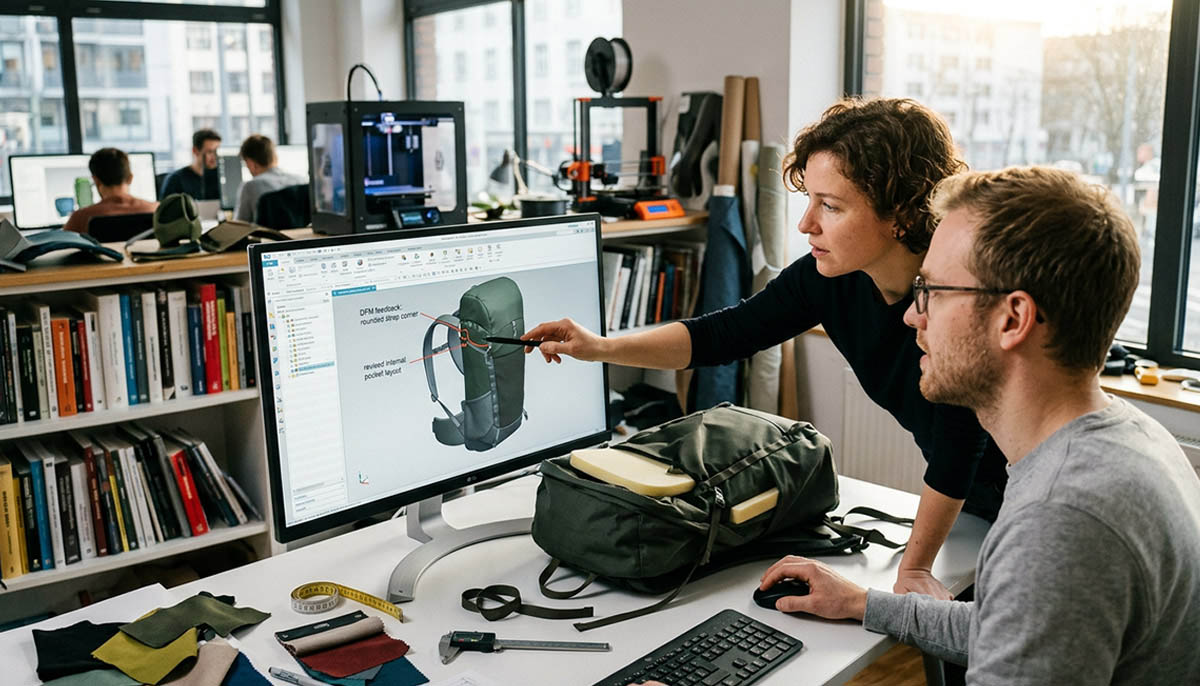 2. Material and Component Options
Choices here range from standard materials to specialized components like zippers, buckles, and logos. Suppliers can swap materials for cost, durability, or regulatory needs—e.g., using recycled fabrics for sustainability. Hardware customizations are common: standard zippers and buckles are readily available, while custom shapes require new molds. Logo engraving on hardware demands permanent molds, which hike initial costs but slash per-unit expenses over large runs. However, material limitations exist; patented fabrics like GORE-TEX® require licensing, adding complexity. For eco-conscious brands, biodegradable options (e.g., PHA-based buckles) are feasible but cost 15-30% more, enhancing your sustainability profile. 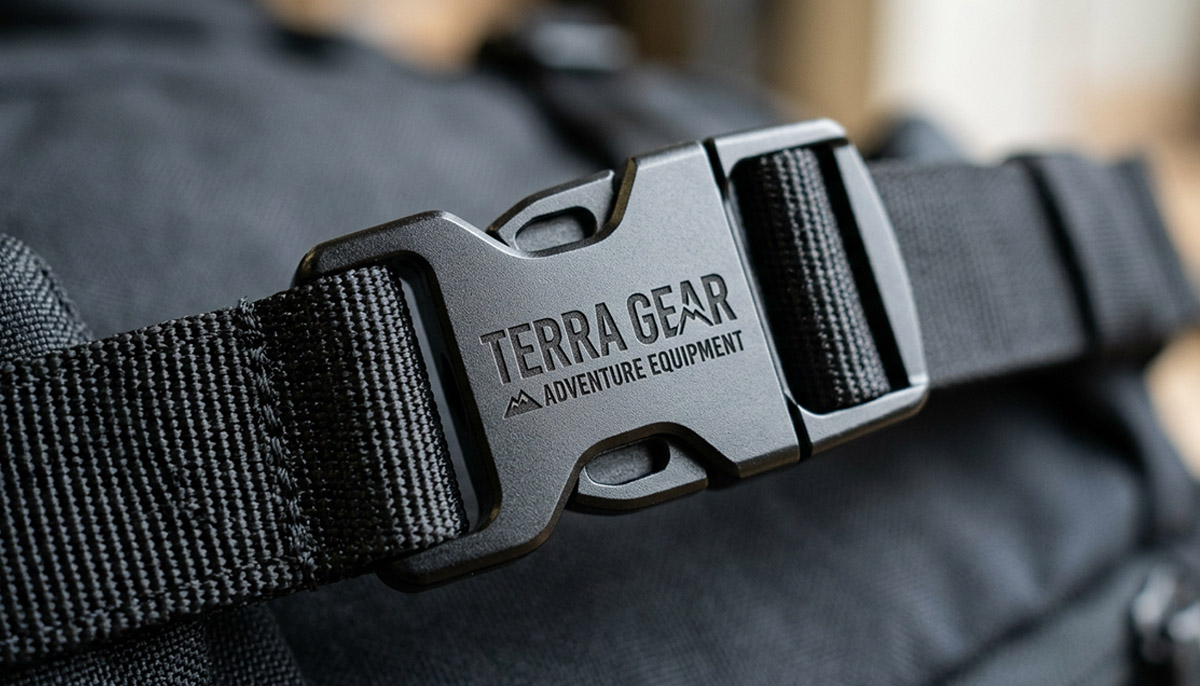 3. Configuration-to-Order (CTO) Flexibility
CTO allows assembly from pre-defined modules, enabling multiple variants without full redesigns. For bags, this could mean mix-and-match components like handles or pockets based on real-time orders. It’s efficient for small batches, reducing waste and lead times. Printing techniques play a key role here: sublimation printing supports unlimited colors and intricate designs, while screen printing has color-count limits. This flexibility lets you experiment with patterns or seasonal themes quickly. 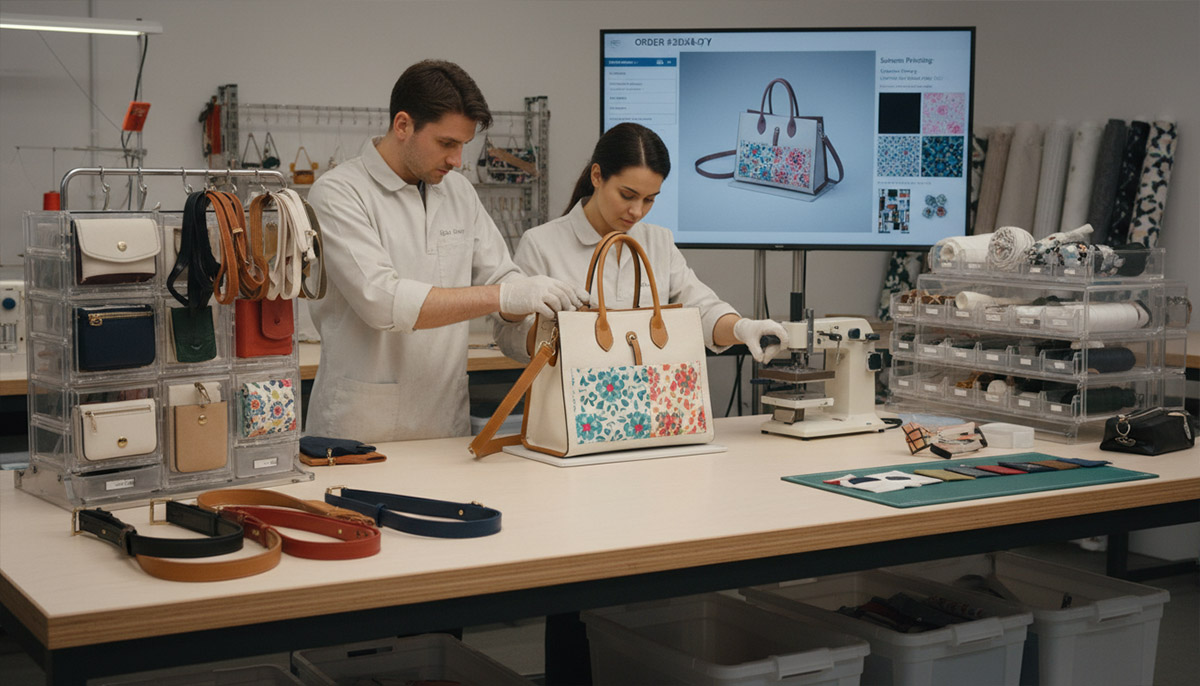 4. Process and Quality Customization
Tailored processes ensure your bags meet specific standards, such as custom QA checks or compliance with regulations like REACH. This includes advanced techniques like RFID/NFC chip integration for smart bags, but it requires specialized production lines and limits supplier options. Similarly, multi-material fusion (e.g., metal-plastic hybrid parts) demands high-end injection molding. Few suppliers offer digital twin simulation, which cuts mold trial errors by 47% through virtual testing—worth seeking for complex projects.  5. Packaging and Labeling Customization
Suppliers can adapt packaging to your branding and logistics needs, such as custom boxes, tags, or barcodes. This extends to in-bag elements like care labels or branding patches. Techniques like embroidery or printing add logos easily to existing designs, but for unique prints, sublimation is unrestricted while screen printing has constraints. MOQs often apply here, with 500+ units common for cost-effectiveness. 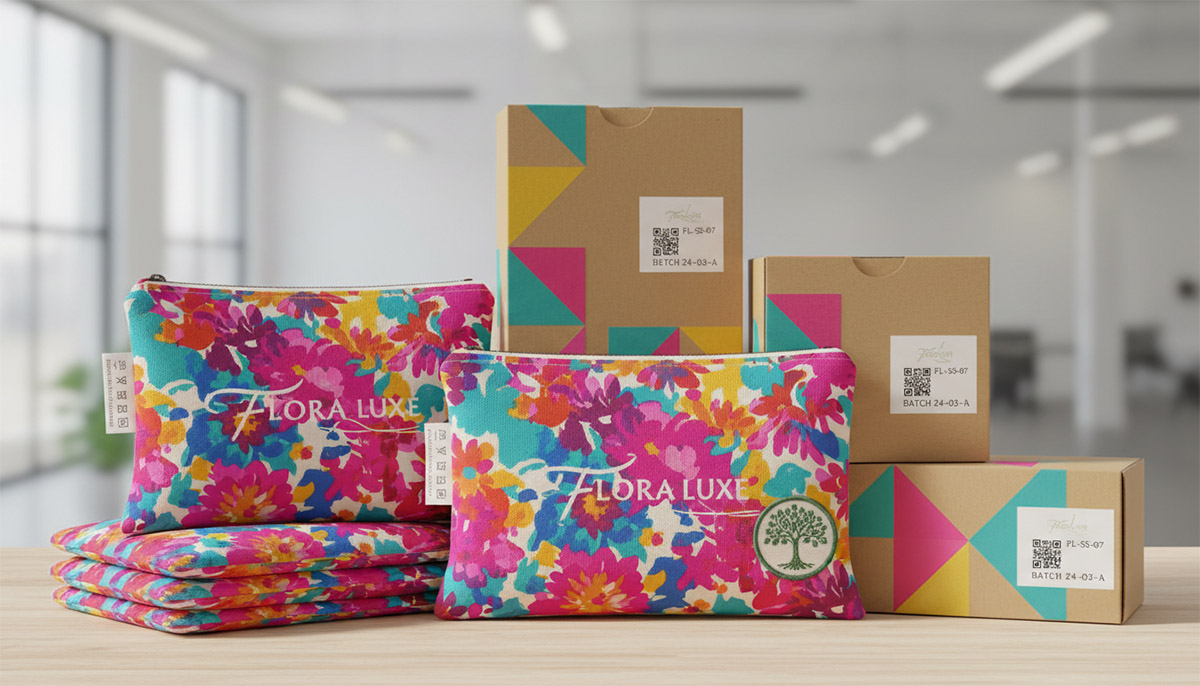 6. Logistics and Service Customization
Beyond the product, suppliers offer tailored logistics, like vendor-managed inventory or special delivery schedules. This includes kitting services for bundled products or after-sales support. For instance, sustainable material requests might involve partnerships for ethical sourcing, adding value to your brand story. 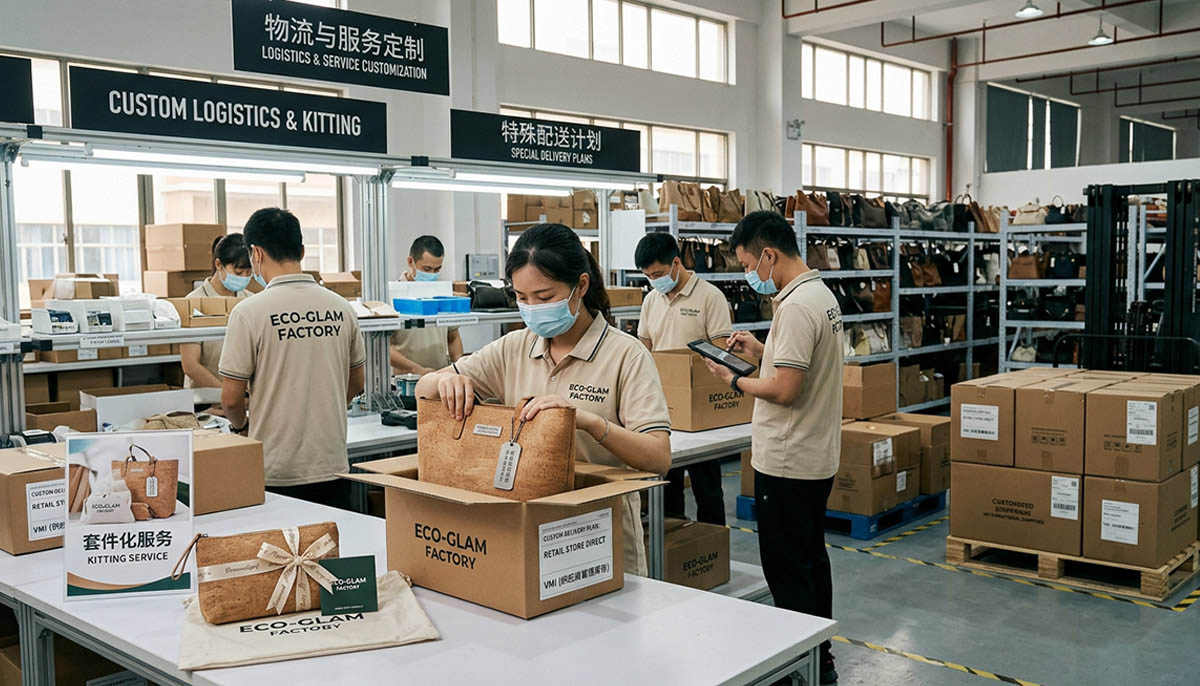 Technical Feasibility and Limitations in Bag Customization
Understanding what’s possible—and what’s not—is crucial for realistic planning. Here’s a breakdown based on key insights, covering hardware, materials, molds, and more.
* Hardware Customization (Zippers, Buckles, Logos)
Standard hardware changes (e.g., swapping zipper types) are straightforward and low-cost. But custom shapes or logo engraving need new molds, which involve 3D prototyping, steel tooling, and 4-12 weeks of lead time. Costs range from $2,000 to $20,000, depending on complexity. For example, a unique clasp design requires upfront investment but pays off in volume. 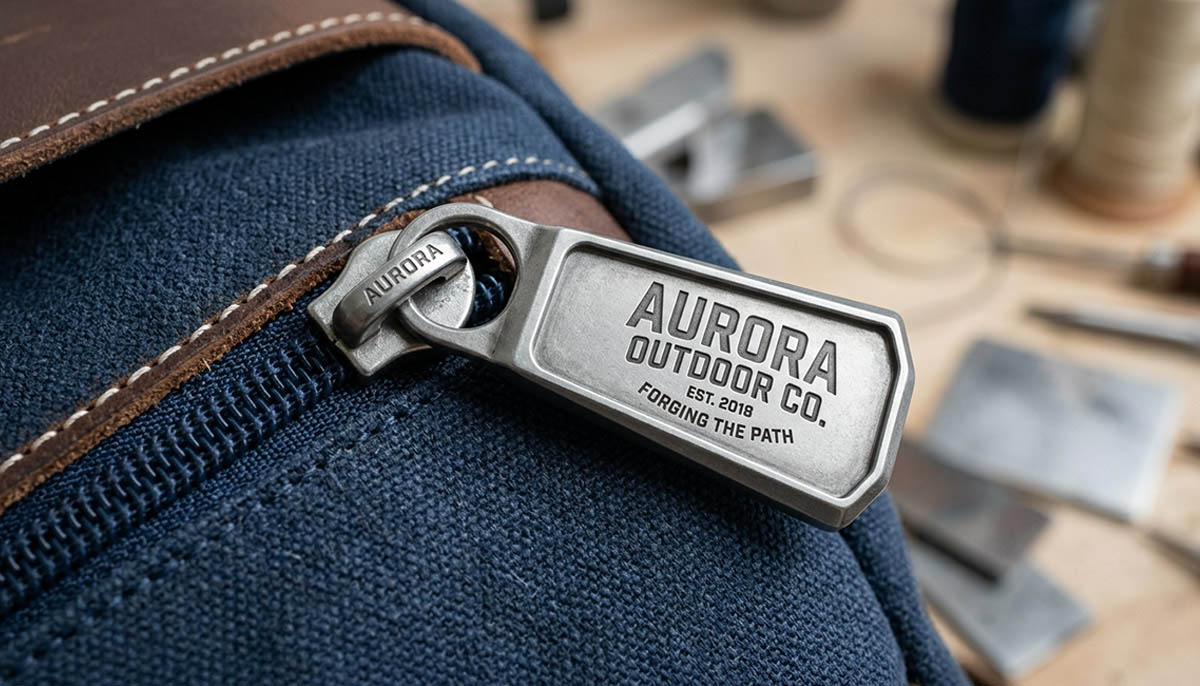 *Material and Print Restrictions
While you can request materials like organic cotton or specialty weaves, patented fabrics (e.g., GORE-TEX®) need licenses, limiting options. Prints are highly customizable: sublimation allows full-color, detailed designs without limits, whereas screen printing caps colors at 4-6 per design. Biodegradable materials, such as PHA-based buckles, add 15-30% to costs but boost eco-appeal—ideal for brands targeting green consumers. 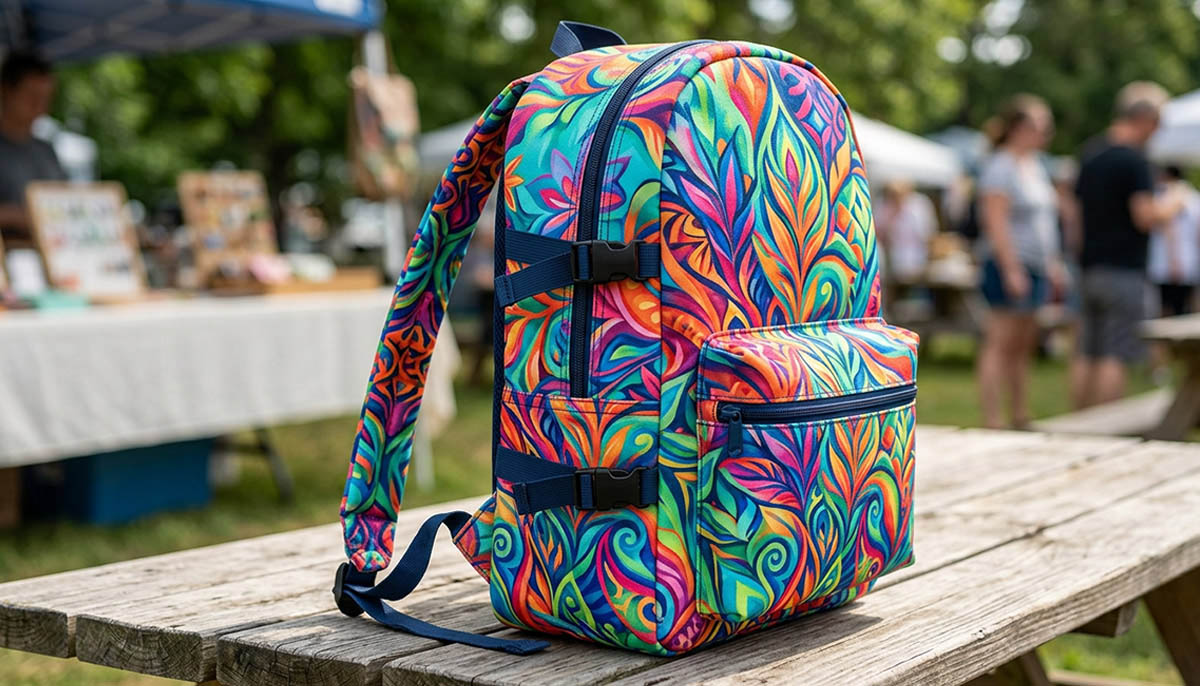 *Mold Creation and Advanced Techniques
Custom molds are essential for unique components; the process starts with a 3D prototype, moves to steel tooling, and takes 4-12 weeks. Costs vary with intricacy—simple buckles start at $2,000, while complex multi-material parts hit $20,000. Innovations like RFID/NFC chip integration or metal-plastic hybrids require niche expertise and specialized lines, narrowing supplier choices. Digital twin simulation reduces errors but is rare; seek suppliers with this to save time. 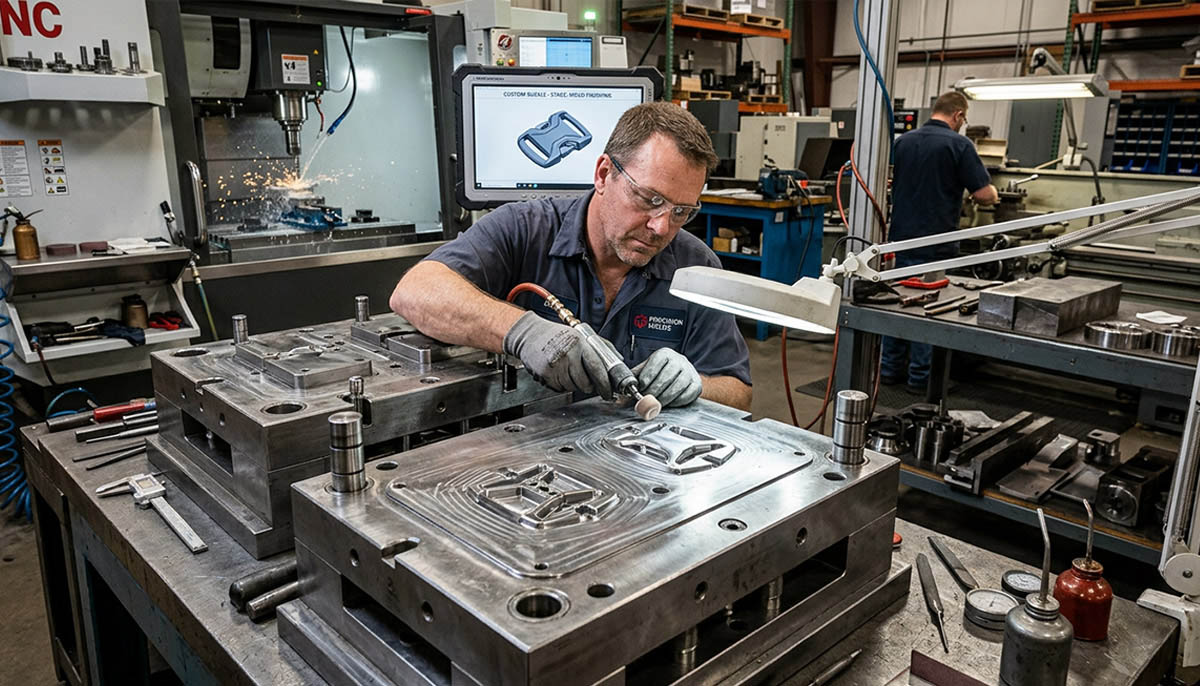 *Sustainability and Innovation Trade-offs
Eco-upgrades, like biodegradable hardware, incur premiums but align with market demands. However, they may face technical hurdles, such as sourcing certified materials. Weigh these against benefits—e.g., PHA buckles reduce environmental impact, appealing to conscious shoppers. 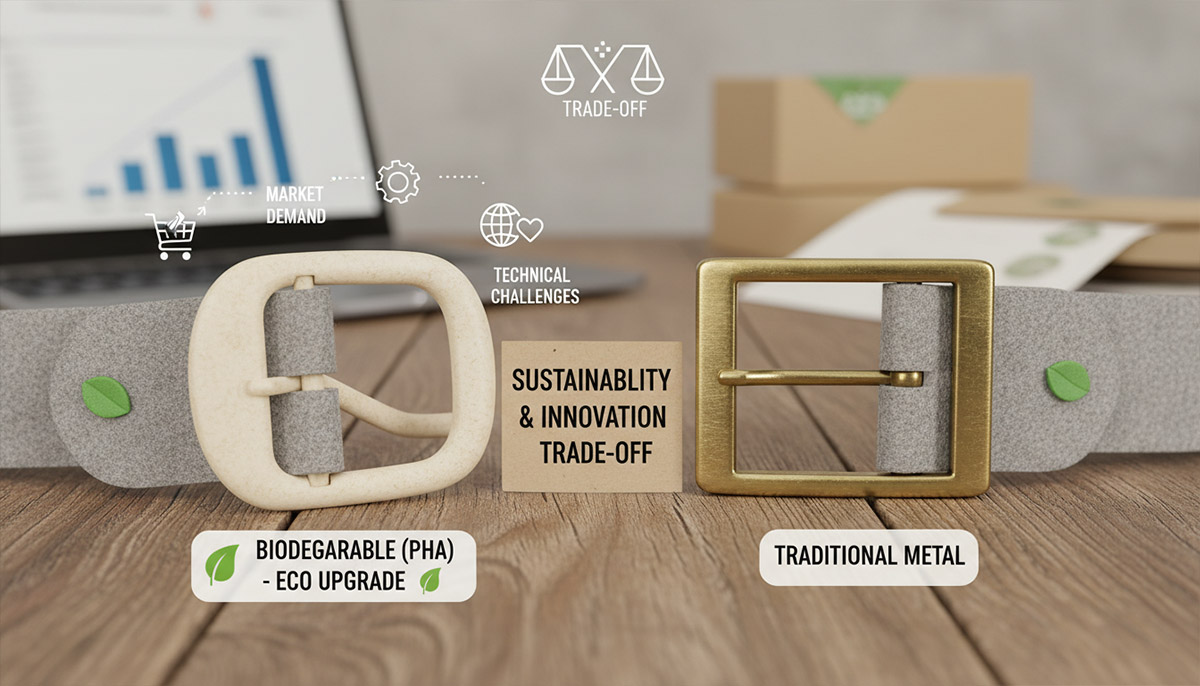 How to Evaluate and Work with Suppliers: A Step-by-Step Process
To document a supplier’s capabilities, structure your assessment around scope, limits, process, and evidence. This ensures you partner with the right fit for your brand.
*Scope and Limits
Clarify what can be customized (e.g., product, materials, packaging) and the boundaries. MOQs for ODM start at 500-1,000 units, influenced by material choices. Lead times for custom elements like molds add 4-12 weeks. Discuss technical limits upfront—e.g., not all suppliers handle RFID integration. 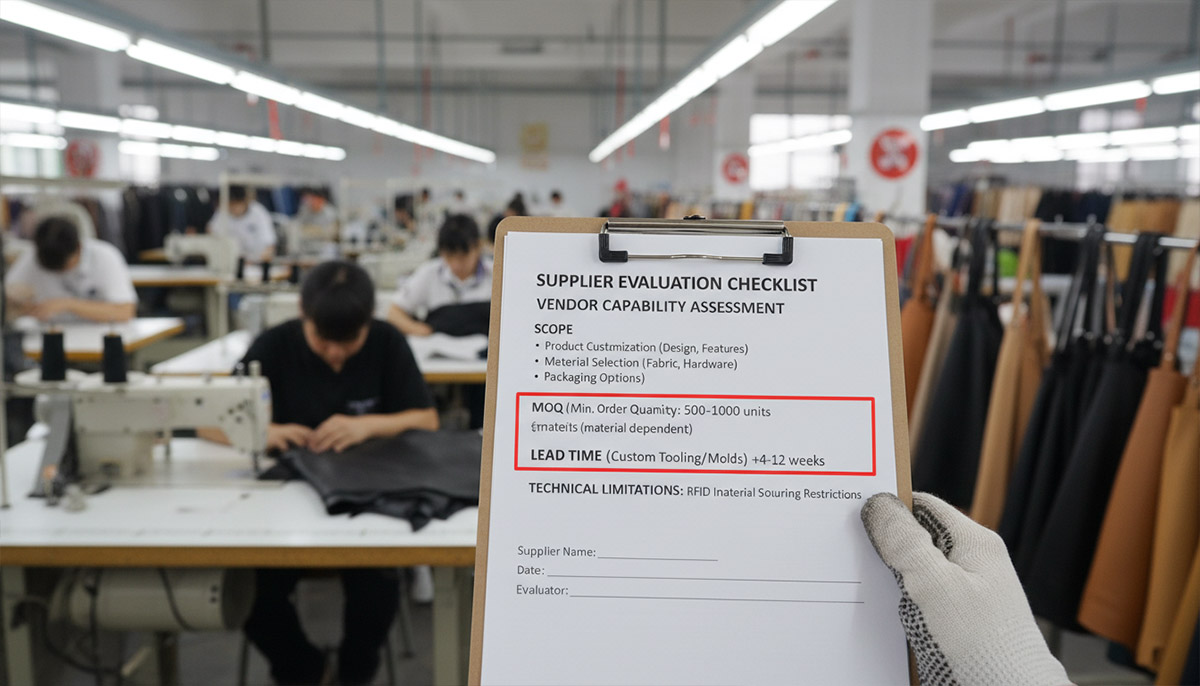 *Process for Custom Requests
Suppliers typically follow a workflow: submit your design (via sketches, samples, or digital files), undergo engineering review, approve prototypes, and finalize production. For instance, logo additions might take 2-4 weeks for sampling. Always request evidence like past projects or certifications to verify expertise—e.g., a supplier with bag-industry experience ensures smoother execution. 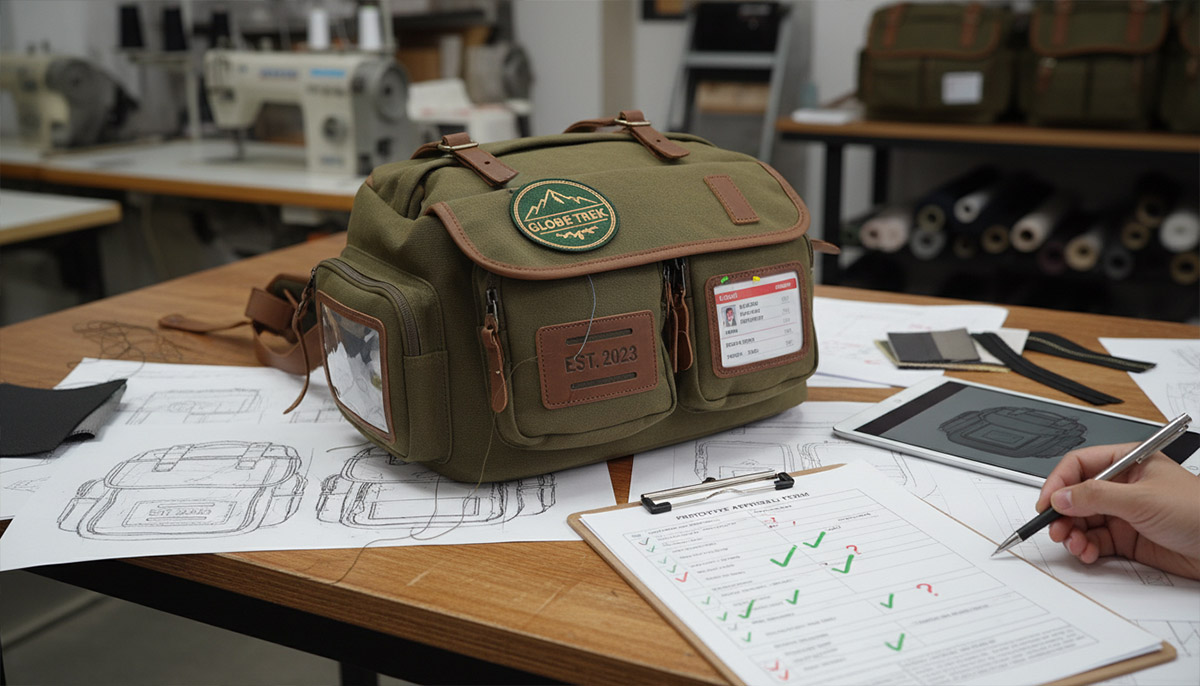 *Cost and Value Considerations
Balance initial investments (e.g., mold costs) with long-term savings. Custom molds for logos reduce per-unit fees over large orders, while sustainable materials enhance brand value. Aim for suppliers offering co-engineering to optimize designs for cost-efficiency. 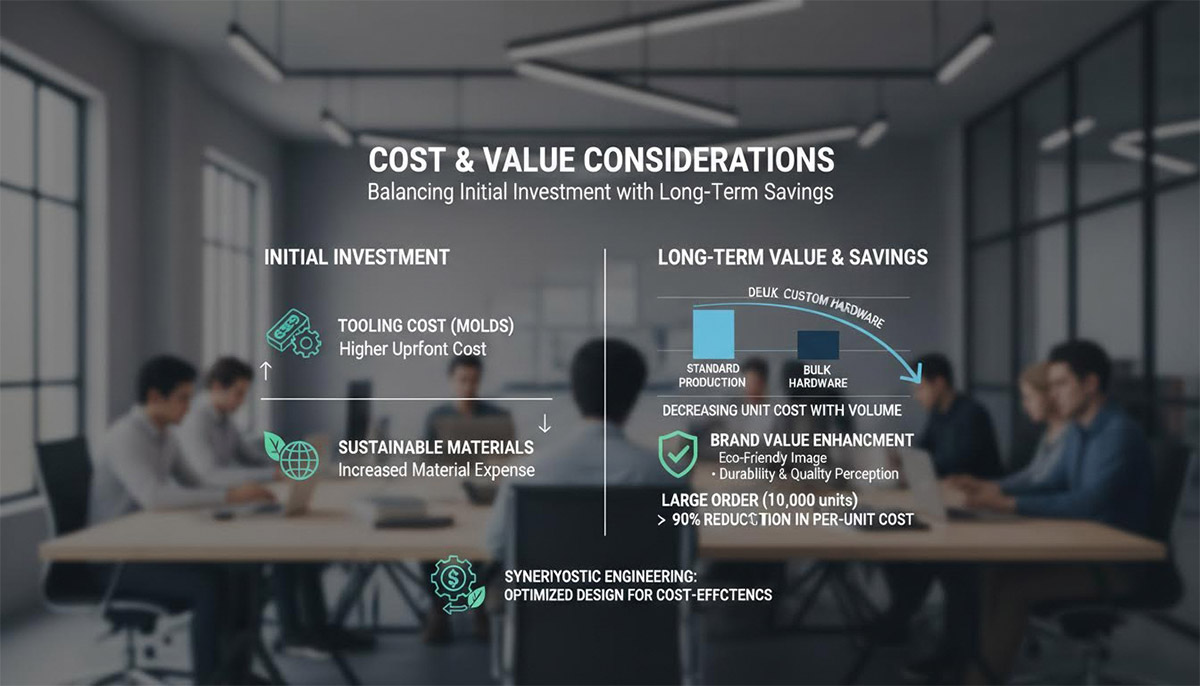 Conclusion: Empowering Your Brand Through Strategic Customization
Customization isn’t just about adding a logo—it’s a powerful tool to build a distinctive, sustainable brand in the bag industry. By understanding supplier capabilities, from ODM/OEM services to material innovations, you can create products that stand out and scale efficiently. Remember, focus on suppliers with proven evidence in your niche, and leverage techniques like digital simulation for complex projects. Start small with hardware tweaks or prints, then expand to advanced options as your brand grows. Ready to transform your offerings? Share your vision with a supplier today and turn customization into your competitive edge. For more insights, explore our resources on sustainable bag trends or supplier vetting—because in the world of independent brands, personalization is the future.
About Trust-U Bag: As part of our commitment to the bag industry, we provide expert guidance to help independent sellers thrive. Stay tuned for our next blog on eco-friendly materials!
Image Credits: All images are conceptual representations based on industry standards. For actual visuals, consult suppliers or stock libraries like Shutterstock for terms like “custom bag hardware” or “sustainable materials.” This article draws from verified sources including inriver, Modus Advanced, and Sourceint to ensure accuracy.
Post time: Mar-06-2026