
Protecting Your Bag Designs: A Small Business Guide to IP Security When Sourcing from China
As an online bag seller, safeguarding your intellectual property (IP) and design confidentiality is critical when manufacturing in China. This guide combines legal frameworks, practical strategies, and supplier management tactics to secure your unique creations.
1. Legal Foundations for IP Protection
a. Pre-Production Registrations
Trademark & Patent Filing: Register your brand name, logos, and unique designs (e.g., hardware patterns) with China’s National Intellectual Property Administration (CNIPA). Without this, legal enforcement against counterfeits is nearly impossible.
Copyright Documentation: Timestamp design artwork and technical specs as evidence of ownership.
b. Enforceable Contracts
Bilingual NDAs: Use China-specific Non-Disclosure Agreements (under PRC law) before sharing designs. Include clauses for:
Prohibition on third-party sharing or reverse engineering.
Penalties for breaches (e.g., financial damages).
Mandatory destruction of samples post-approval.
Non-Compete Clauses: Prevent suppliers from selling similar designs to competitors.

2. Supplier Vetting & Operational Safeguards
a. Rigorous Factory Screening
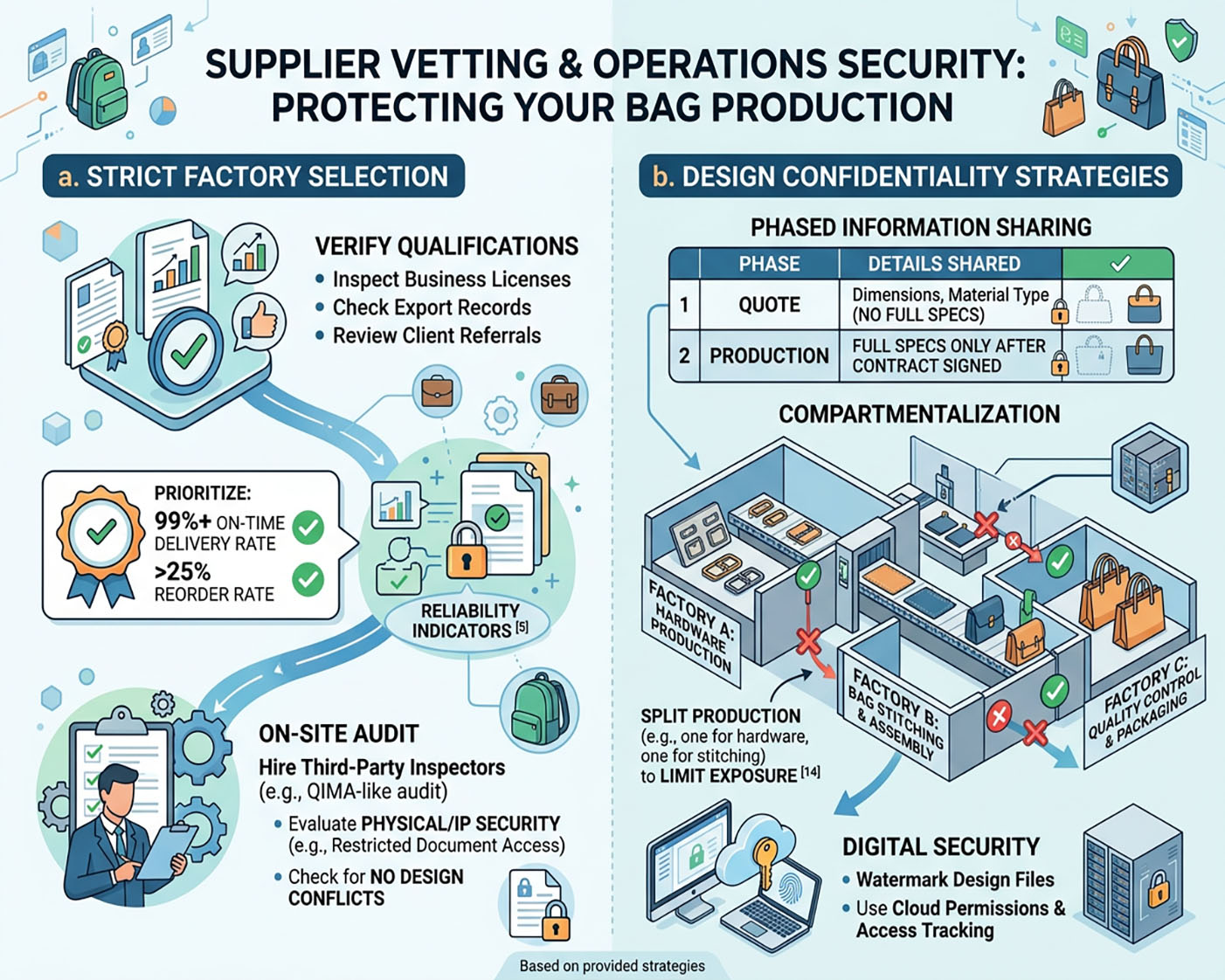
Verify Credentials: Check business licenses, export history, and client references. Prioritize suppliers with 99%+ on-time delivery rates and >25% reorder rates—indicators of reliability.
On-Site Audits: Hire third-party inspectors (e.g., QIMA) to assess:
Physical/IP security (e.g., restricted file access).
No existing conflicts with your designs.
b. Design Confidentiality Tactics
Staged Information Sharing:
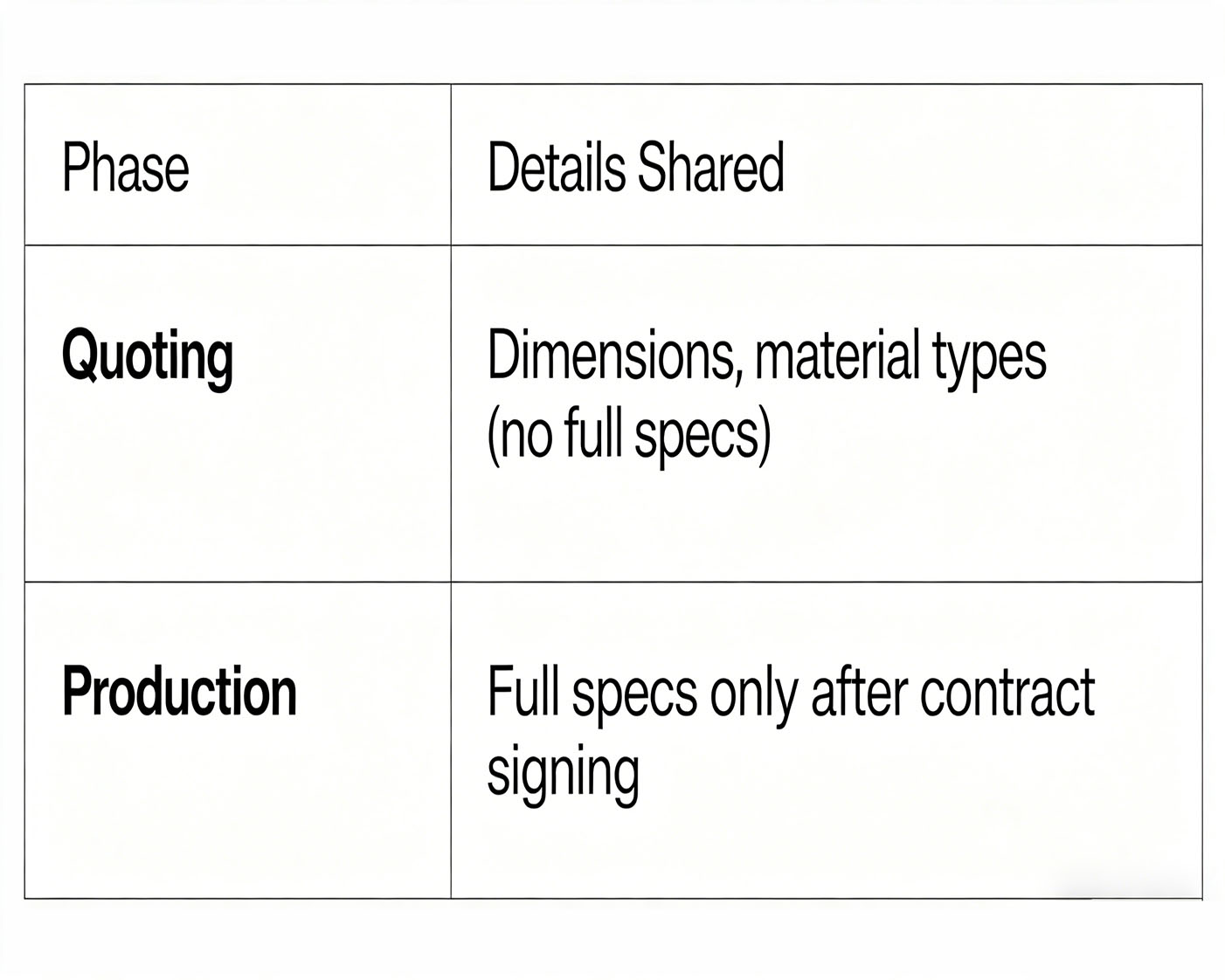
Compartmentalization: Split production across multiple factories (e.g., one for hardware, another for stitching) to limit exposure.
Digital Security: Watermark design files and use cloud permissions to track access.
3. Proactive Monitoring & Enforcement
a. Market Surveillance
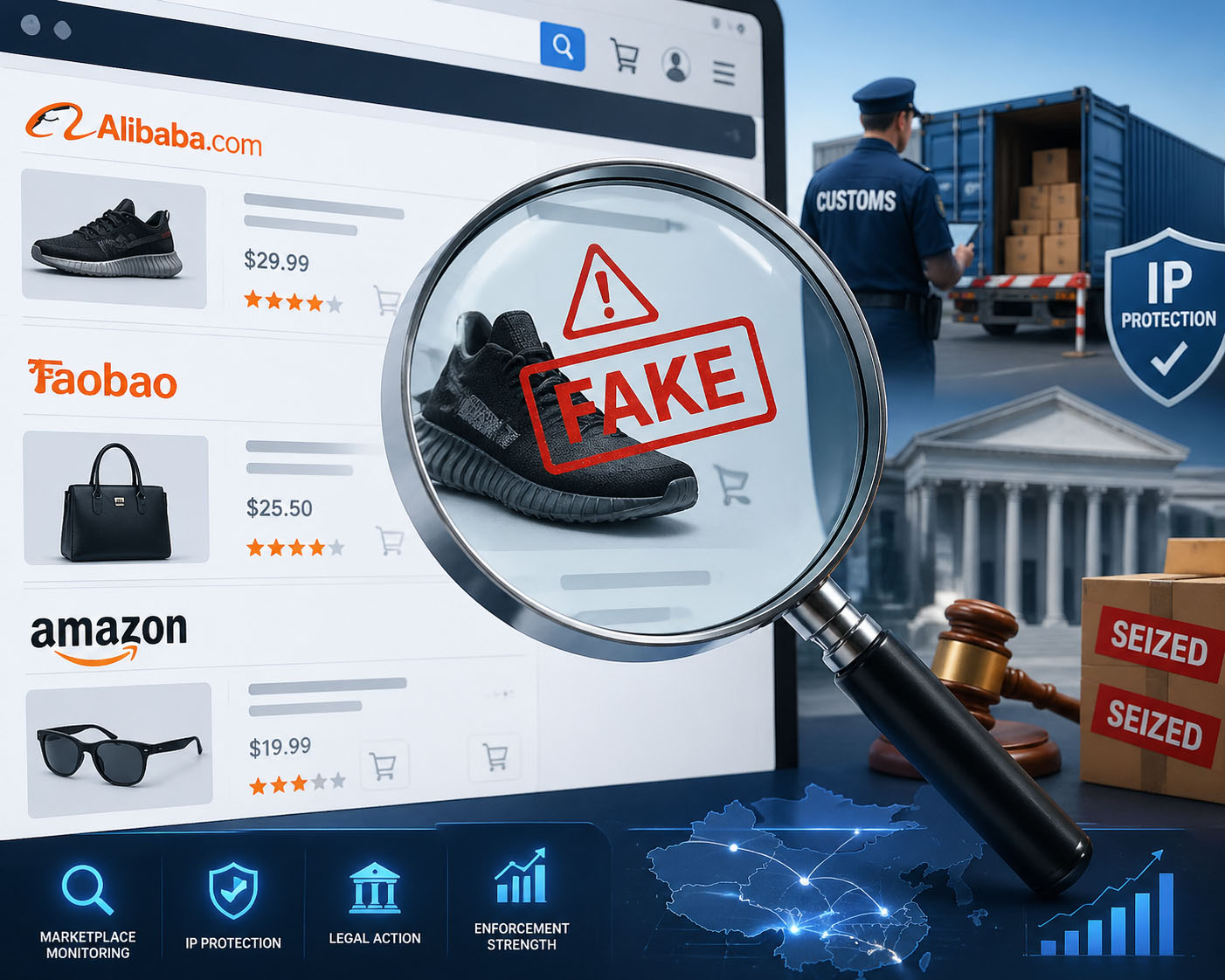
Automated Tools: Use services like Red Points to scan Alibaba, Taobao, and Amazon for counterfeits.
Customs Registration: Record designs with Chinese customs to block counterfeit exports.
b. Legal Recourse in China
Administrative Raids: Fast, low-cost seizures of infringing goods.
Civil Lawsuits: For significant damages (requires local attorney support).
Key Insight: Guangdong’s 2025 IP crackdown saw 2,218 infringement cases prosecuted—proof of China’s tightening enforcement.
4. Supplier Collaboration Best Practices
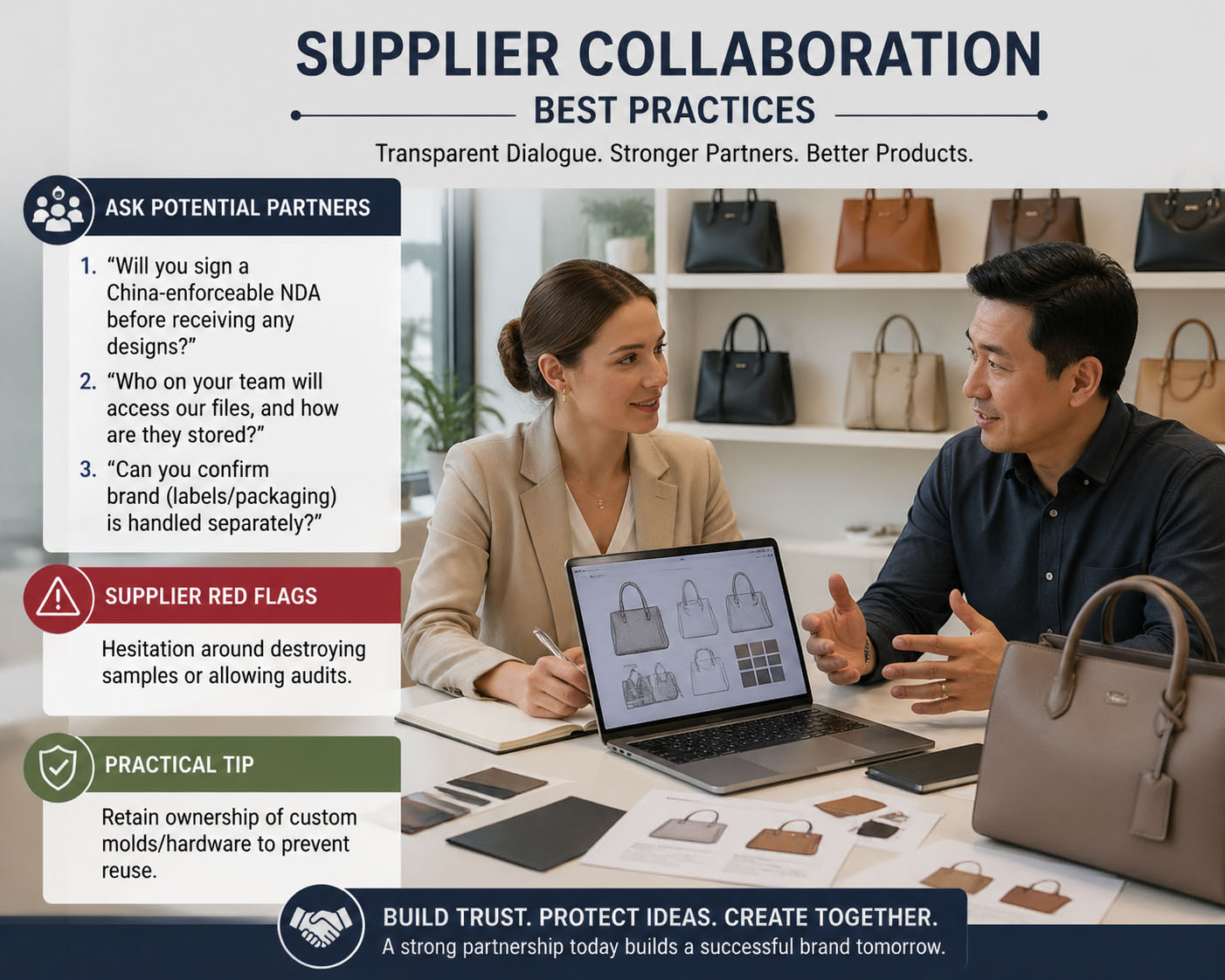
Ask potential partners:
1. “Will you sign a China-enforceable NDA before receiving designs?”
2. “Who on your team accesses our files, and how are they stored?”
3. “Can you confirm branding (tags/packaging) is handled separately?”
Supplier Red Flag: Hesitance to destroy samples or allow audits.
Actionable Tip: Retain ownership of custom molds/hardware to prevent reuse.
5. Your IP Protection Checklist
✅ Register trademarks/patents in China first.
✅ Split production across vetted suppliers.
✅ Audit factories annually for compliance.
✅ Monitor online markets monthly.
✅ Partner with a Chinese IP attorney.
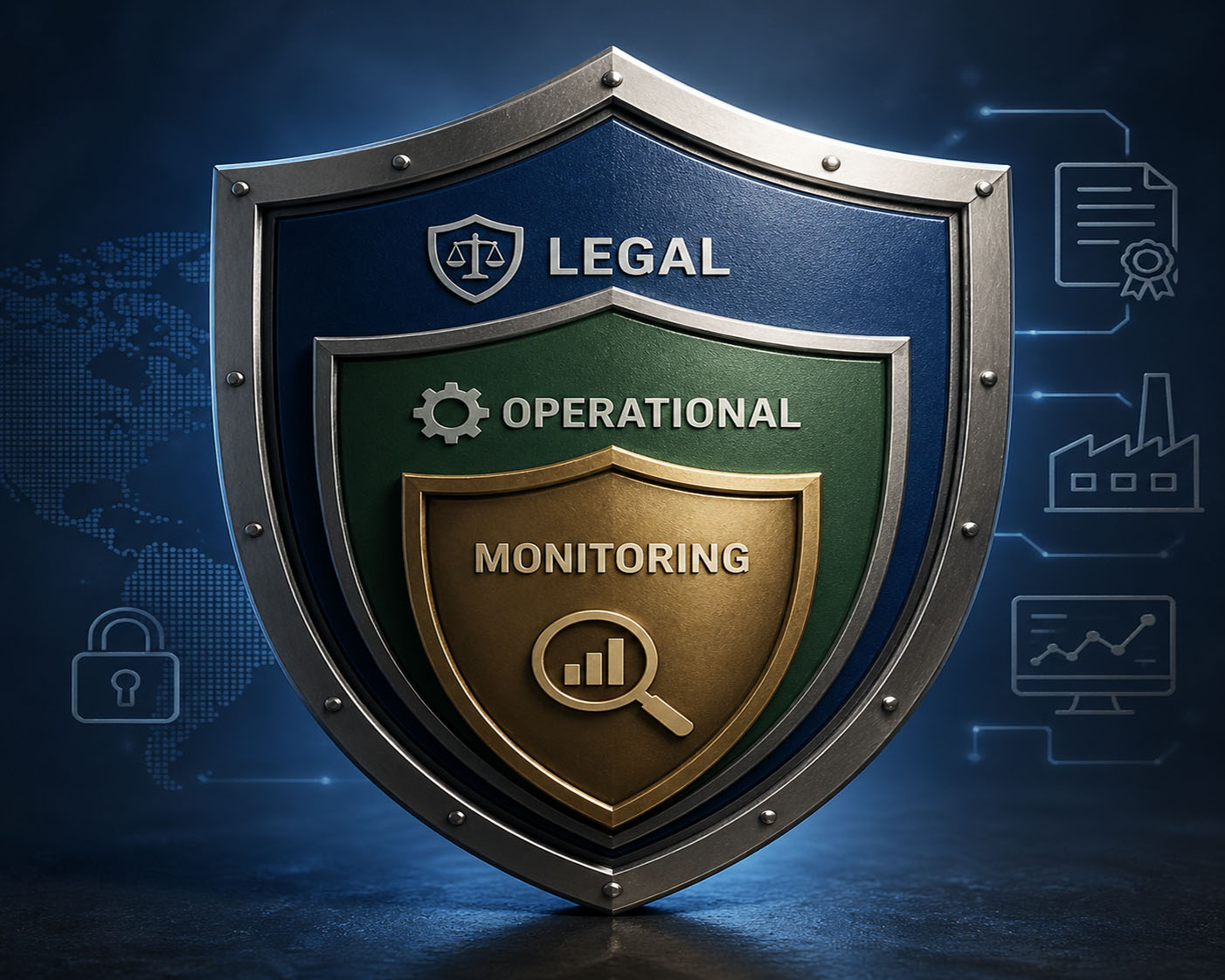
Final Takeaway: No single tactic is foolproof. Combine legal registrations, operational secrecy, and aggressive monitoring to create layered defense.
Why This Matters for Small Businesses
Counterfeit bags cost the global economy $500B annually. By implementing these steps, you protect not just designs—but your brand’s integrity and customer trust. For deeper insights, explore China’s IP enforcement policies or supplier vetting frameworks.
Have questions? Share them below—we’ll tackle real-case scenarios in our next post!
Post time: Apr-29-2026