
Chainstitch vs. Double-Needle Stitching: A Complete Sourcing Guide for High-Quality Bag Manufacturing
Understanding the technical details behind reinforced seams so you can source better bags from Chinese manufacturers
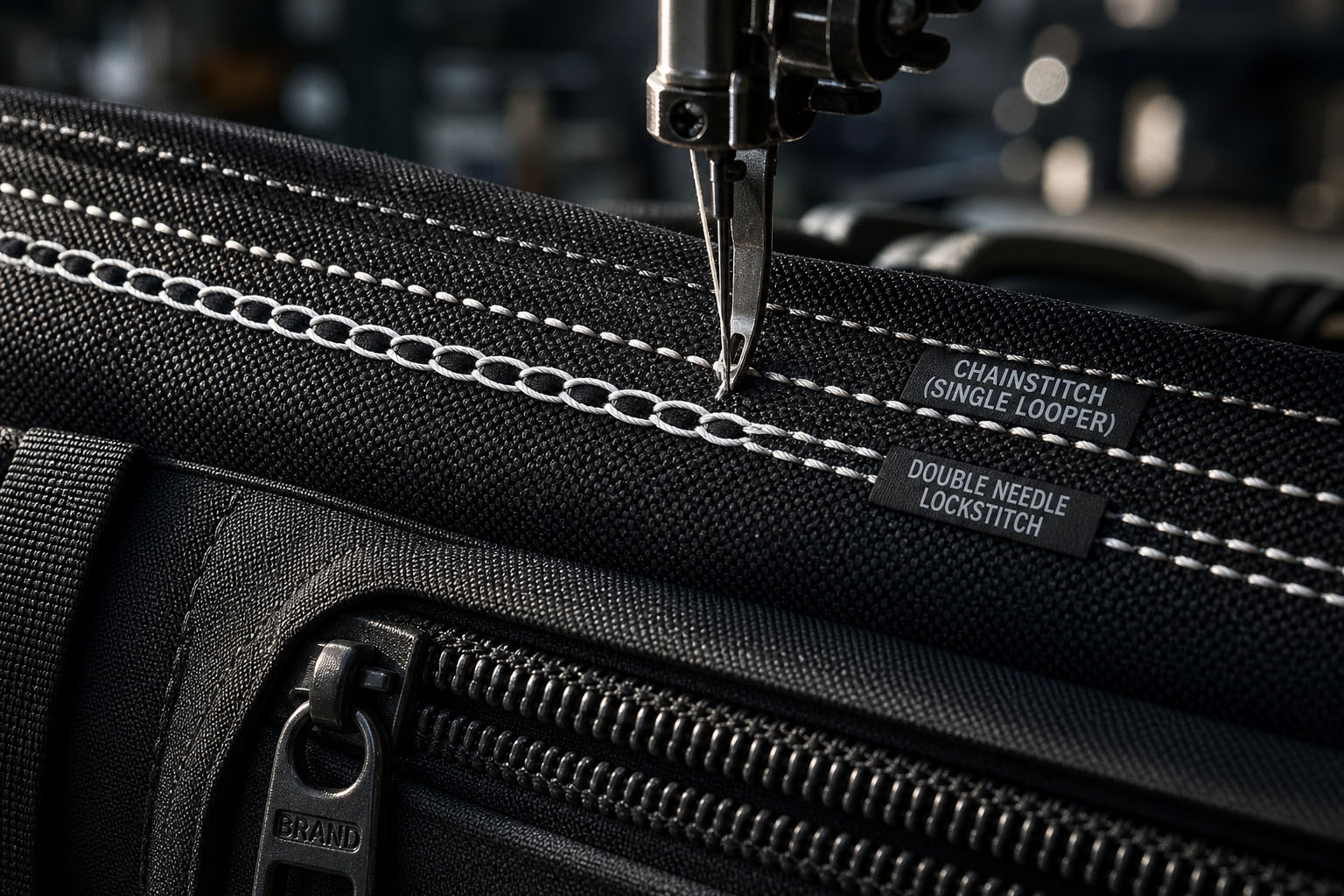
When you’re sourcing bags from China—whether backpacks, duffels, totes, or messenger bags—the quality of the stitching is what separates a product that lasts six months from one that lasts six years. Two stitching techniques you’ll hear about constantly in factory conversations are chainstitch and double-needle stitching, both commonly referenced in reinforced, load-bearing seam construction.
But what do these terms actually mean? How do they differ in performance? And how do they affect your per-unit cost, lead time, and minimum order quantities?
As a bag buyer working directly with Chinese manufacturers, these are the exact questions you need answered before placing a production order. In this guide, I’ll walk you through everything I’ve learned from years of working with factories in Guangzhou, Quanzhou, and Yiwu—covering stitch types, SPI standards, thread specifications, and the real cost implications of reinforcing your bags the right way.
1. Chainstitch vs. Double-Needle Stitching: What’s the Actual Difference?
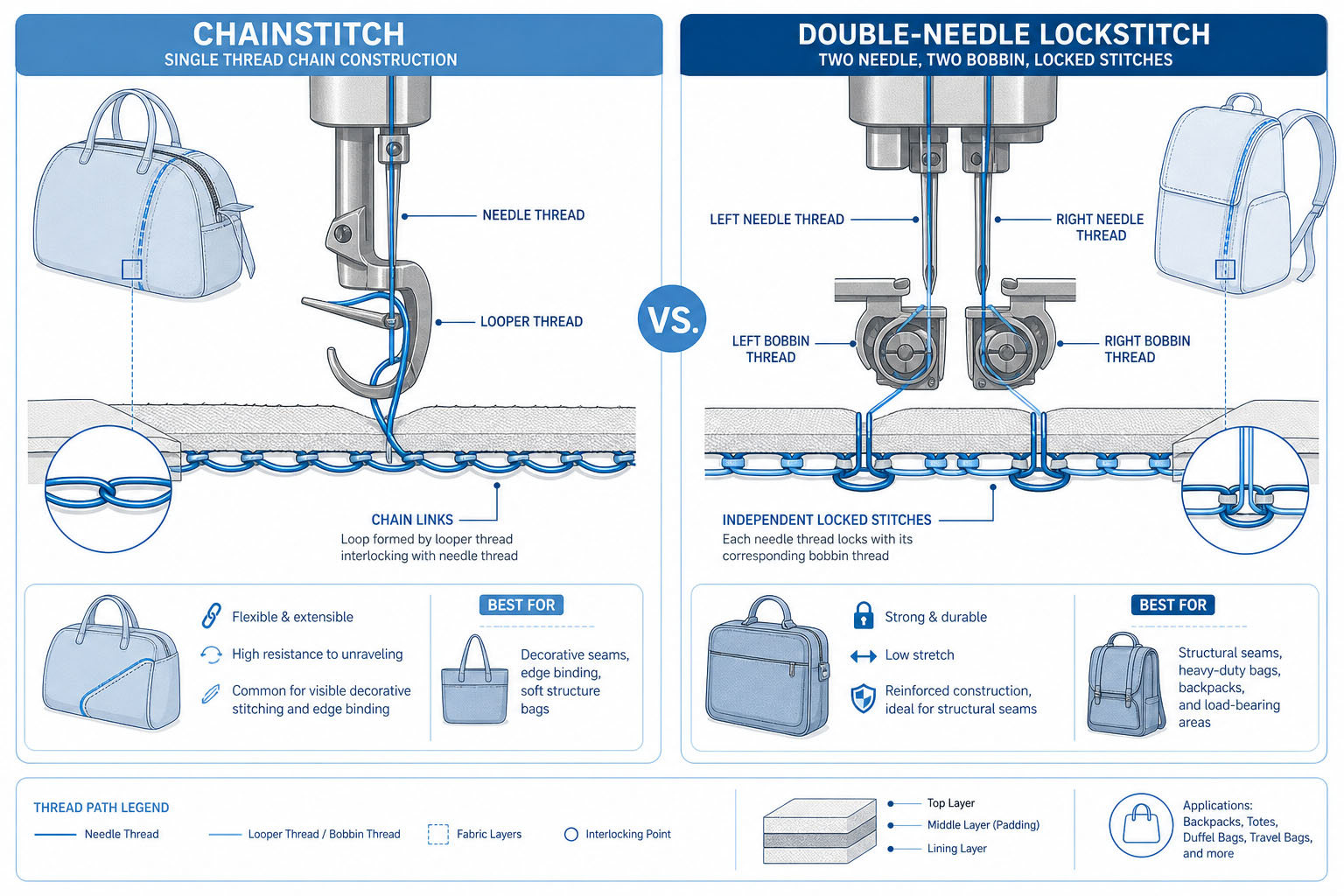
Let’s start with the fundamentals, because most buyers mix these two up.
Chainstitch is formed using a single looper thread that creates an interlocking chain pattern on the underside of the fabric. On a bag, you’ll recognize it as a flexible, often decorative topstitch. Many factories use it on bag panels, flap edges, and along zipper lines because it runs fast on industrial sewing machines and creates a clean, slightly raised visual line.
Double-needle stitching (also called twin-needle stitching) uses two parallel needles mounted on a single machine, each paired with its own bobbin thread. This produces two perfectly parallel rows of lockstitch simultaneously. It’s the go-to method for reinforcing high-stress areas like handle bases, shoulder strap anchors, and bottom seams.
Here’s the practical breakdown:
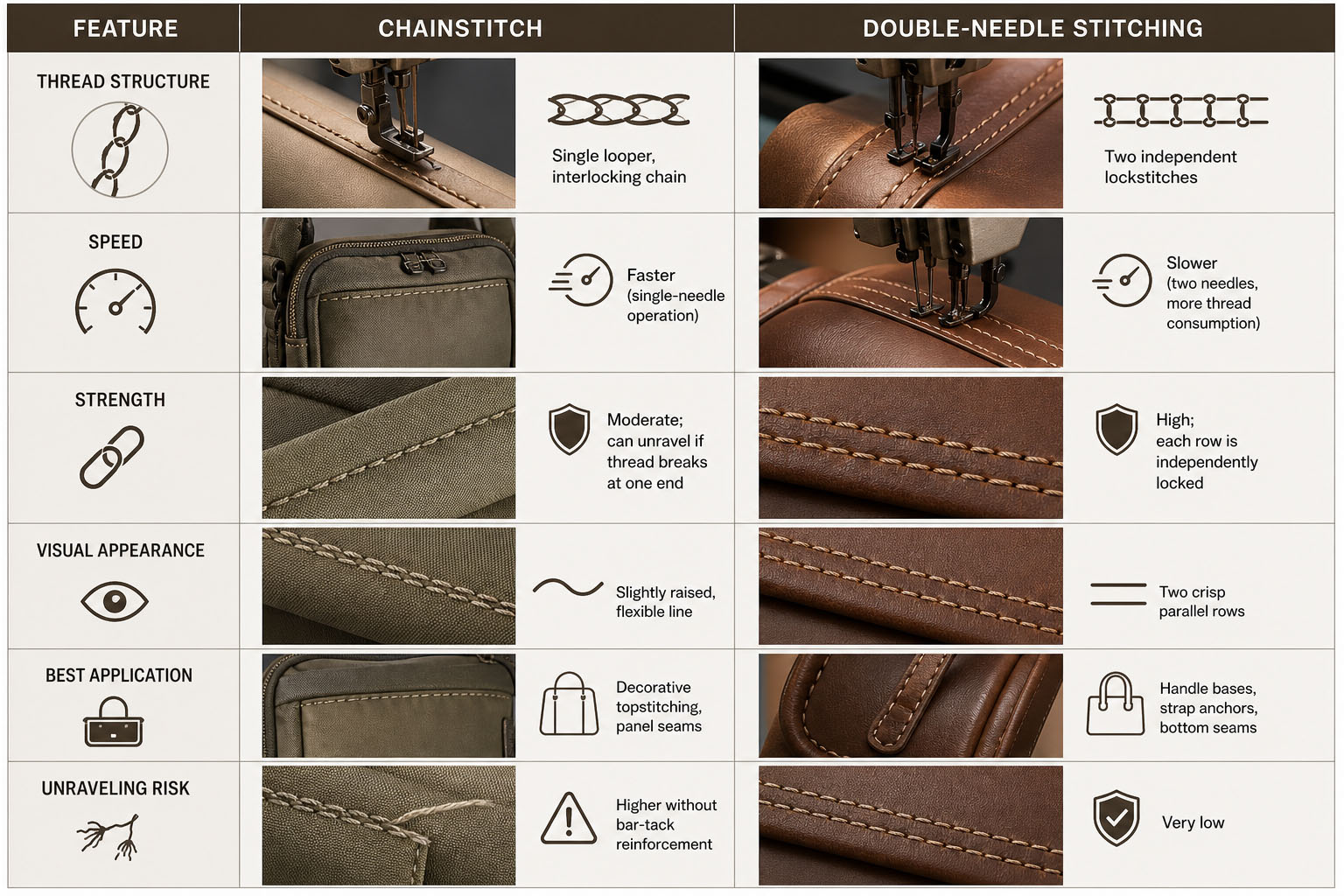
The key takeaway: double-needle lockstitch is more secure because each needle has its own bobbin thread, meaning if one thread is damaged, the other row still holds. Chainstitch, while faster and more flexible, requires additional reinforcement—usually bar-tacks or reverse stitching at both ends—to prevent unraveling.
Both techniques are standard in quality bag manufacturing, and the best factories use them strategically rather than interchangeably.
2. How Many Stitches Per Inch (SPI) Should Be Used for Reinforced High-Stress Bag Seams?
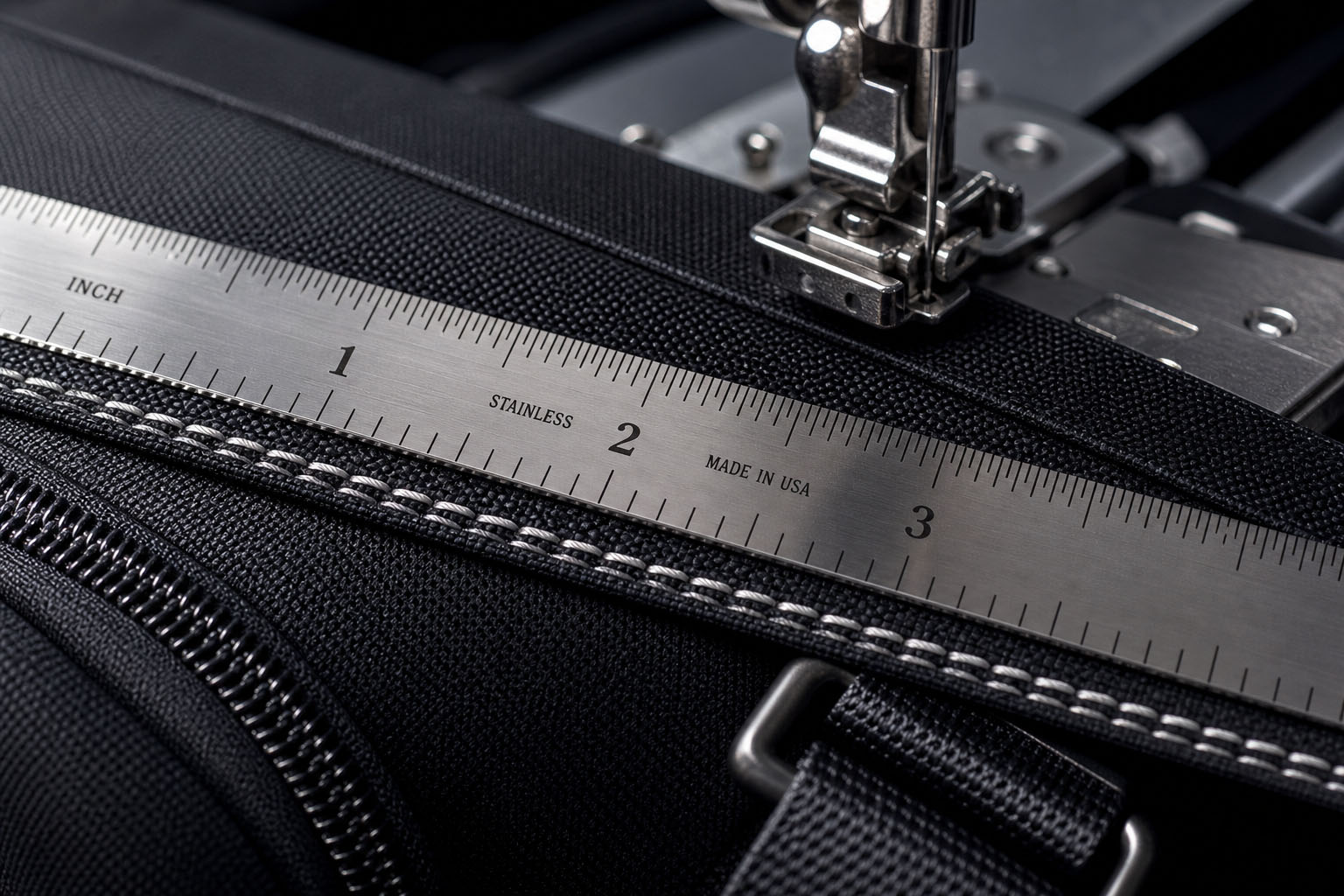
Stitch Per Inch (SPI) is one of the most overlooked specs in bag sourcing conversations, but it directly correlates with seam strength. The general industry standard for bags is 6–10 SPI, with 7–8 SPI being the sweet spot for most reinforced seams.
Here’s how to think about SPI in your supplier negotiations:
6–7 SPI: Standard for lighter bags (totes, fashion backpacks) with moderate load requirements
8 SPI: The industry default for mid-range backpacks, duffels, and messenger bags
9–10 SPI: Used for heavy-duty travel bags, tactical bags, and premium leather goods
A few important things to verify with your factory:
1. Consistent stitch length — skipped stitches, looping, or fabric puckering are signs of poor machine calibration or wrong thread tension
2. Even stitch length across the entire seam — this is what ensures uniform load distribution
3. Walking foot attachments — for thick multi-layer materials (like ballistic nylon or waxed canvas with multiple panels), walking foot machines prevent the layers from shifting and maintain even feeding during double-needle operations
4. Bar-tacks or reverse stitches at seam start/end points — these “lock” the threads in place and prevent unraveling, especially important for chainstitch seams
Pro tip for buyers: Ask your supplier to send a sample seam with a stitch count verification. A simple 1-inch ruler held against the seam can confirm whether they’re hitting the SPI they quoted you.
3. Does Adding Double-Needle Stitching Increase the Price or Lead Time for Custom Bags from China?
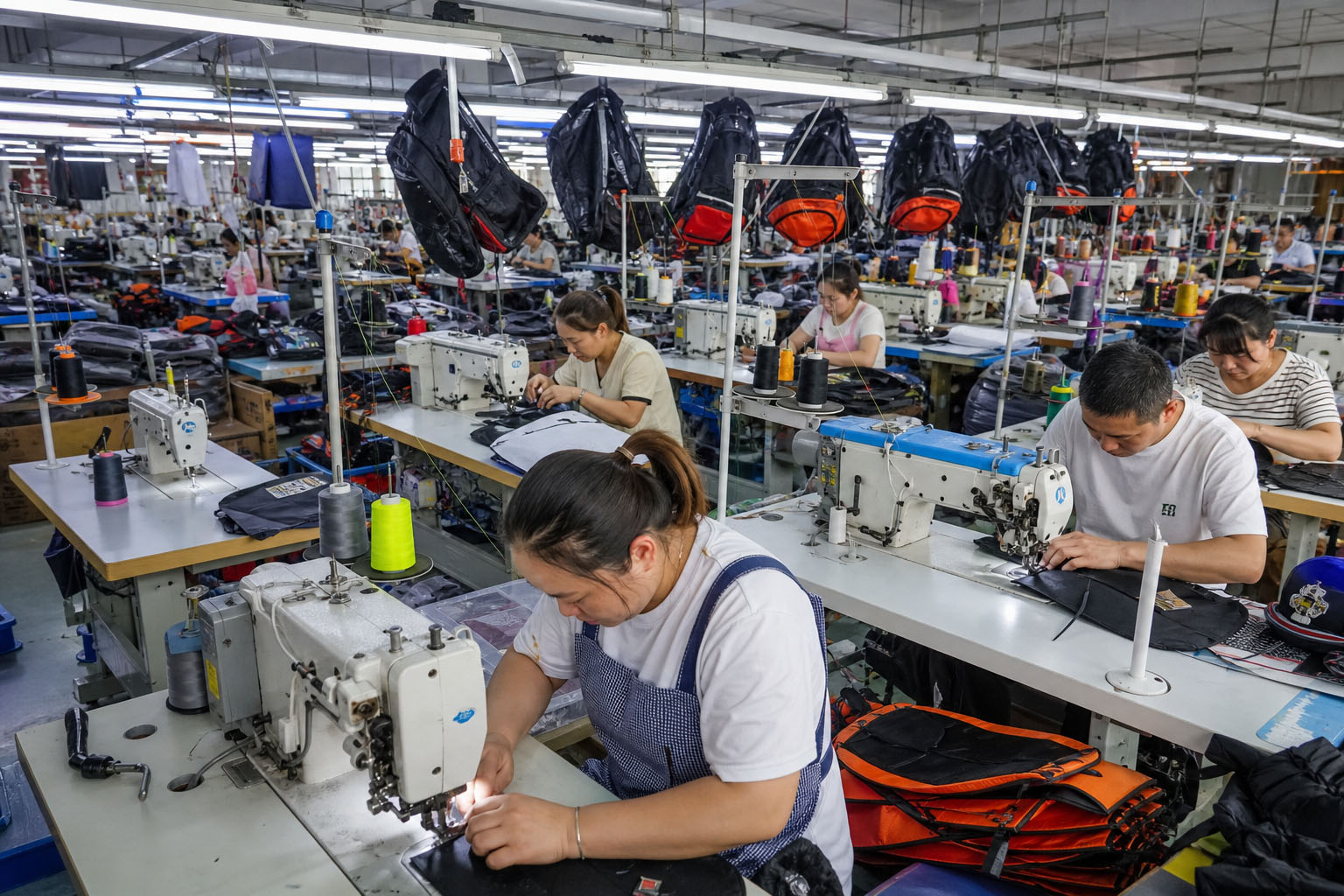
This is the question every buyer wants answered first—and the honest answer is: yes, but the impact is smaller than you think.
Here’s the real breakdown:
Cost Impact
Double-needle stitching typically increases the labor cost per bag by 5–15%, depending on the seam length and complexity. The reasons:
Slower machine speed (two needles, more thread consumption)
Higher thread consumption (roughly 1.8–2x the thread of a single-needle seam)
Need for walking foot machines on thicker materials
Additional setup time for proper thread tension balancing
For a typical custom backpack order of 500–1,000 units, this might add $0.30–$0.80 per unit to your FOB price. For a duffel or travel bag with multiple reinforced seams, it could be $0.80–$1.50 per unit.
Lead Time Impact
The lead time impact is minimal—usually 0 to 3 additional days added to your production schedule. The bigger lead time factors are:
Custom hardware (zippers, buckles, magnetic snaps)
Custom fabric dyeing
Logo application (embroidery, screen printing, heat transfer, leather patches)
So when you’re negotiating with suppliers, don’t let double-needle stitching be the deciding factor in your margin model. It’s one of the most cost-effective durability upgrades you can request.
What to Ask Your Supplier
Here’s a direct question you can send:
“Can you confirm your FOB price includes double-needle stitching on all handle bases, shoulder strap anchors, and bottom seams? If not, please quote the additional cost per unit and any impact on lead time.”
This forces a clear, itemized response and prevents surprise charges later.
4. What Thread Type and Weight Do Chinese Suppliers Use for High-Stress Bag Seams?
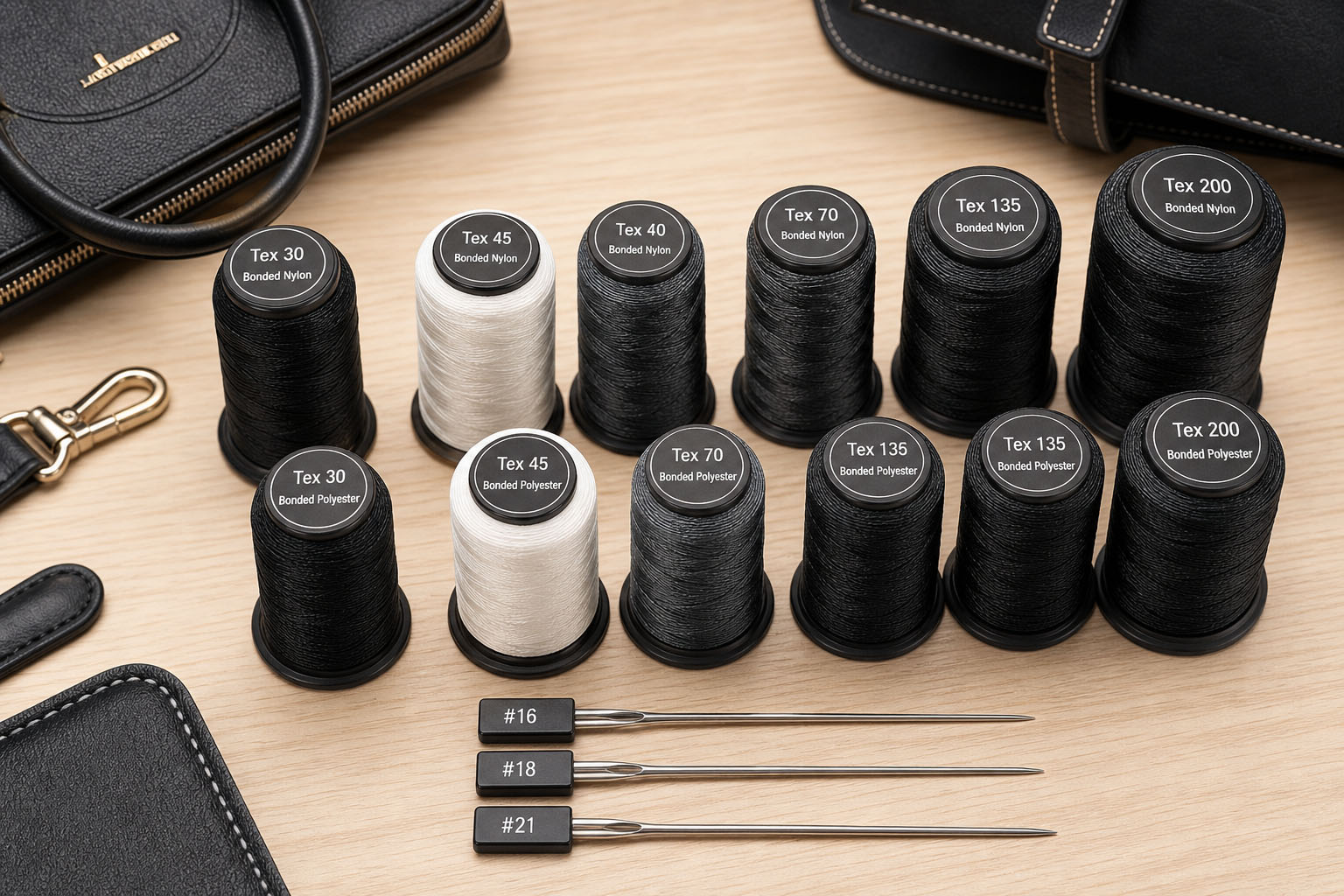
Thread is where many buyers lose margin without realizing it. Chinese factories have a range of thread options, and the default isn’t always the best for your application.
Common Thread Materials
1. Bonded Nylon (Nylon 6,6) — The most common choice for bag manufacturing in China. It’s strong, slightly elastic, and handles UV exposure reasonably well. Most factories default to this.
2. Bonded Polyester — Better UV resistance and colorfastness than nylon. Slightly more expensive, but worth it for outdoor or travel bags.
3. Cotton-wrapped polyester core — Used for decorative stitching, especially on canvas and leather-look bags.
4. Kevlar (Aramid) thread — Premium option for tactical and military-grade bags. Rare in standard orders but available from specialized factories.
Thread Weight (Tex) Guidelines
Tex measures thread weight (grams per 1,000 meters of thread). Higher Tex = thicker, stronger thread.
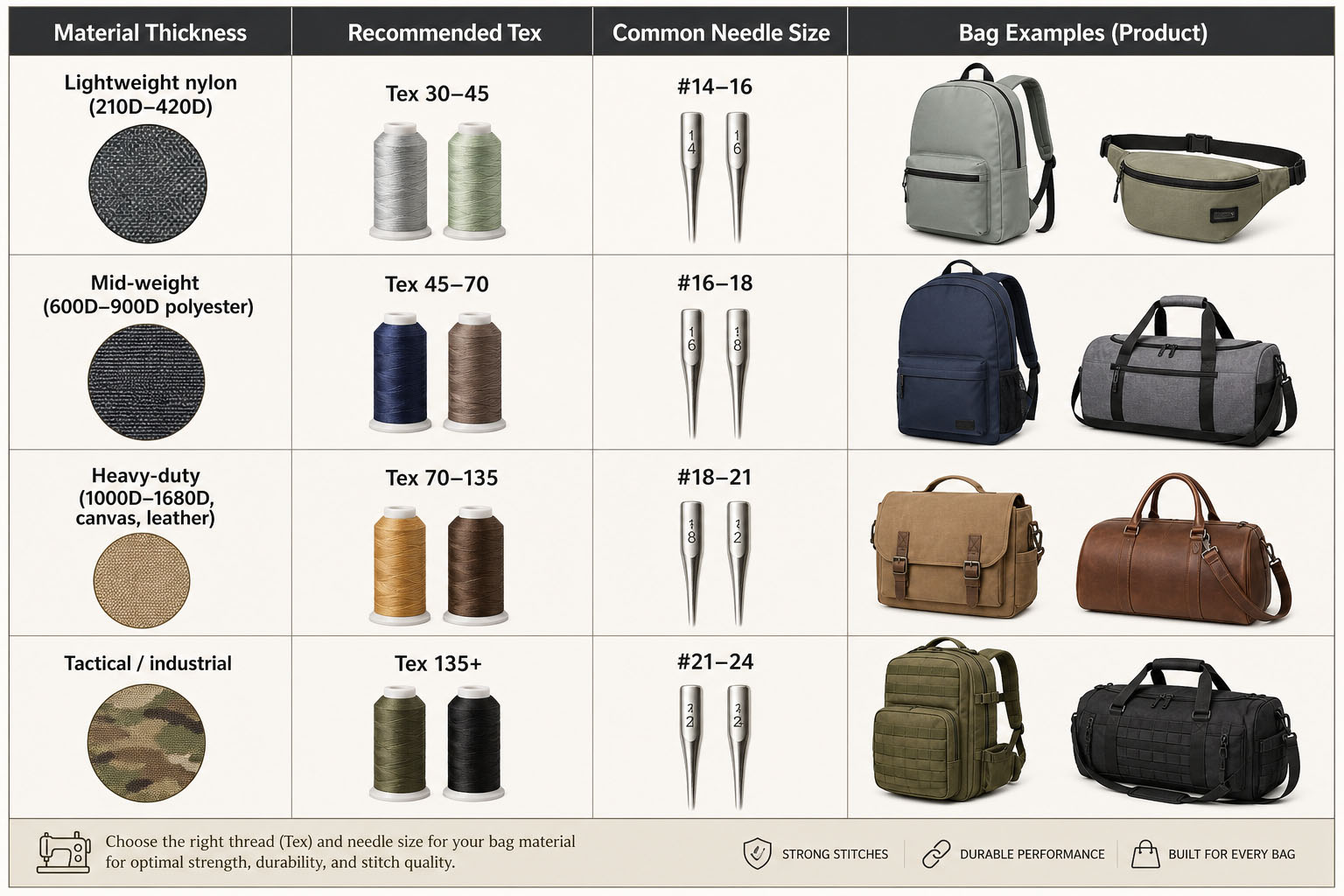
Critical rule: Thread weight and needle size must be matched to fabric thickness. Undersized thread on heavy material = snapped seams. Oversized needle on lightweight fabric = perforation damage and leakage in waterproof bags.
What to Verify
Ask your supplier:
Thread brand (Coats, A&E, and Hong Kong-based Qualitex are common premium options; some factories use cheaper unbranded thread)
Whether thread is UV-treated for outdoor products
Thread Tex number for both topstitching and structural seams
Bonded vs. non-bonded (bonded thread has better fray resistance)
A good question template:
“Please specify the thread brand, material (bonded nylon or polyester), Tex weight, and UV treatment for all structural seams and decorative topstitching.”
5. Reinforcement Beyond Stitching: The Details That Matter Most
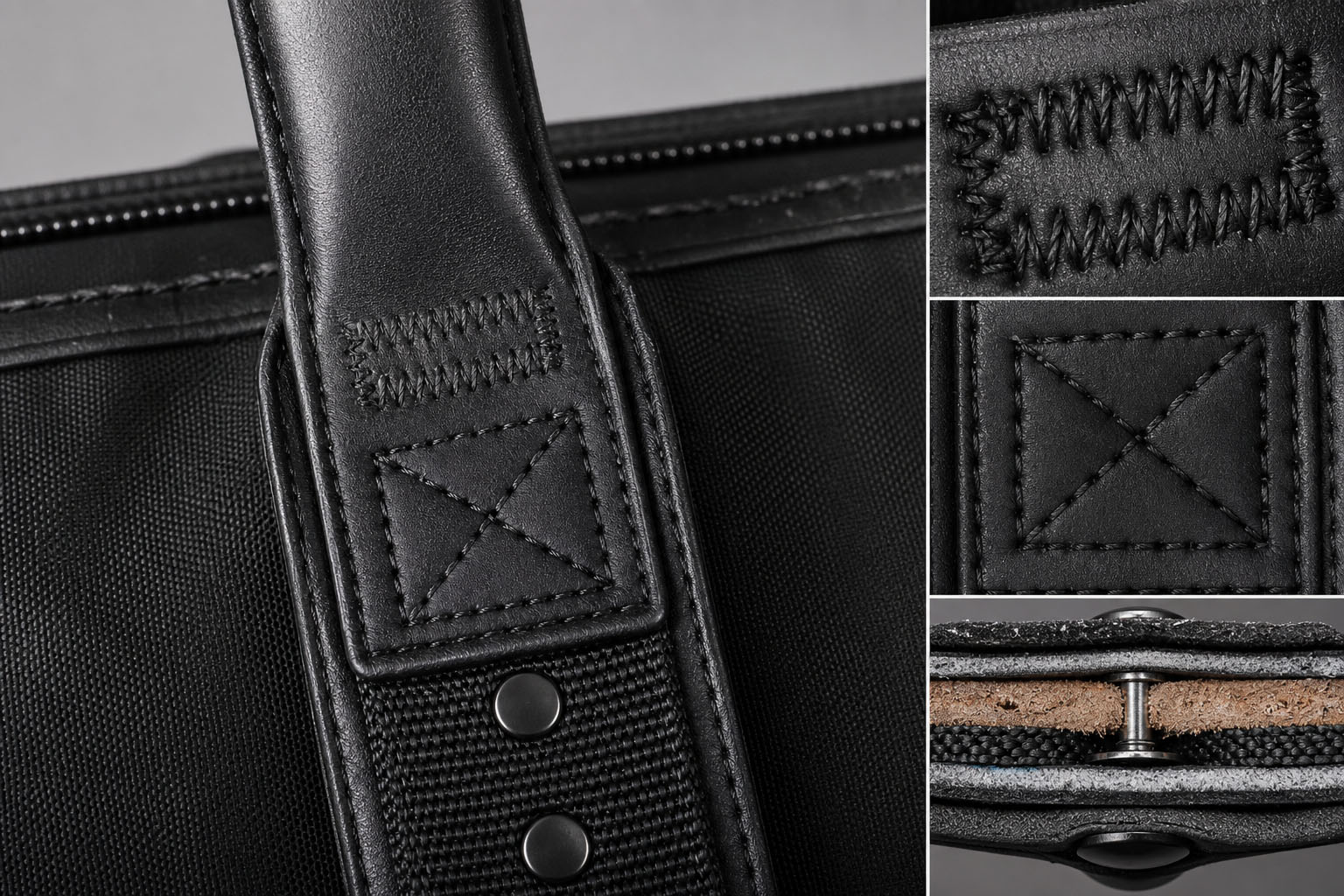
While chainstitch and double-needle stitching are critical, experienced buyers know that seam reinforcement is a system, not a single technique. The best factories combine multiple methods:
Bar-Tacks
Dense, zigzag stitching applied at high-stress points—usually the base of handles, the ends of zippers, and the corners of pockets. A proper bar-tack is typically 10–15mm wide and 5–8mm tall, with 30+ stitches packed into that small area.
Box-Stitching (Box-X)
A square pattern of stitching (often with an X through the middle) used to anchor handles and straps. The X distributes load across four directions.
Rivets and Metal Hardware
Often used in combination with stitching on handle bases and strap anchors for additional load distribution. Look for double-cap rivets or metal D-rings with leather or webbing reinforcement.
Webbing Wraps and Reinforcement Panels
Beneath every handle or strap anchor, there should be a reinforcement panel—usually in a heavier fabric or binding tape—that spreads the load across a wider area of the bag body.
When You Inspect Samples
Pull-test every reinforced point. A well-constructed handle base should withstand at least 50 lbs of static pull without seam slippage or thread breakage. If your sample fails at 20 lbs, the factory cut corners on reinforcement.
6. Common Stitching Defects to Watch For
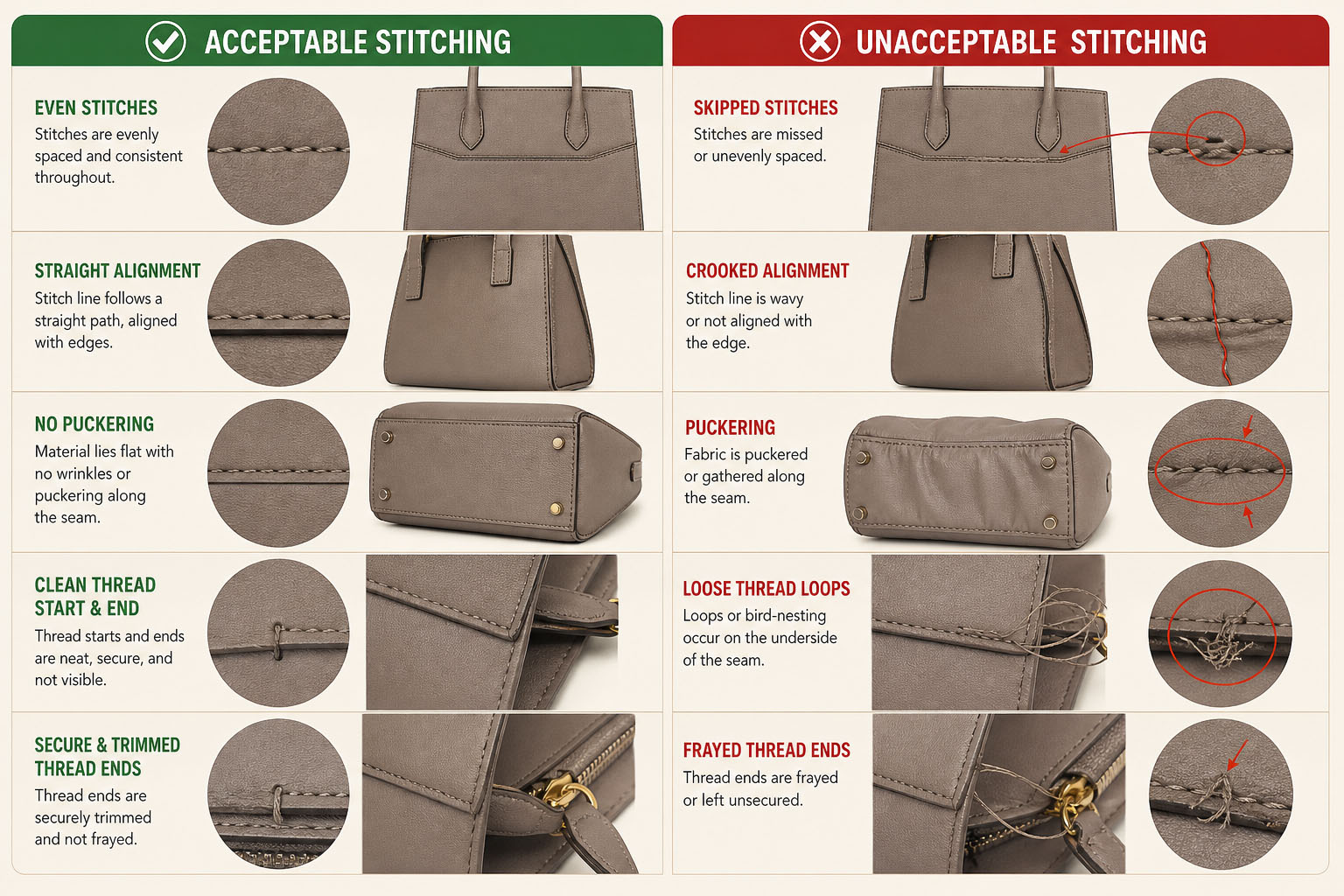
Even with the right techniques specified, quality control failures happen. Here’s what to inspect in your pre-production samples:
1. Skipped stitches — usually a needle/thread mismatch or a dull needle
2. Thread looping or “bird nesting” — incorrect bobbin tension
3. Fabric puckering — wrong thread tension, wrong needle size, or inconsistent feeding
4. Inconsistent SPI — poor machine maintenance or operator error
5. Twisted or crooked seams — improper fabric alignment during sewing
6. Broken or frayed thread ends — low-quality thread or improper cutting
7. Missing bar-tacks at seam ends — common cost-cutting shortcut
Best practice: Order a pre-production sample (PPS) before mass production. This is a sample made with the actual production materials, machines, and operators. It will reveal 90% of the stitching issues you would otherwise find only after production is complete.
7. How to Talk to Your Chinese Supplier About Stitching
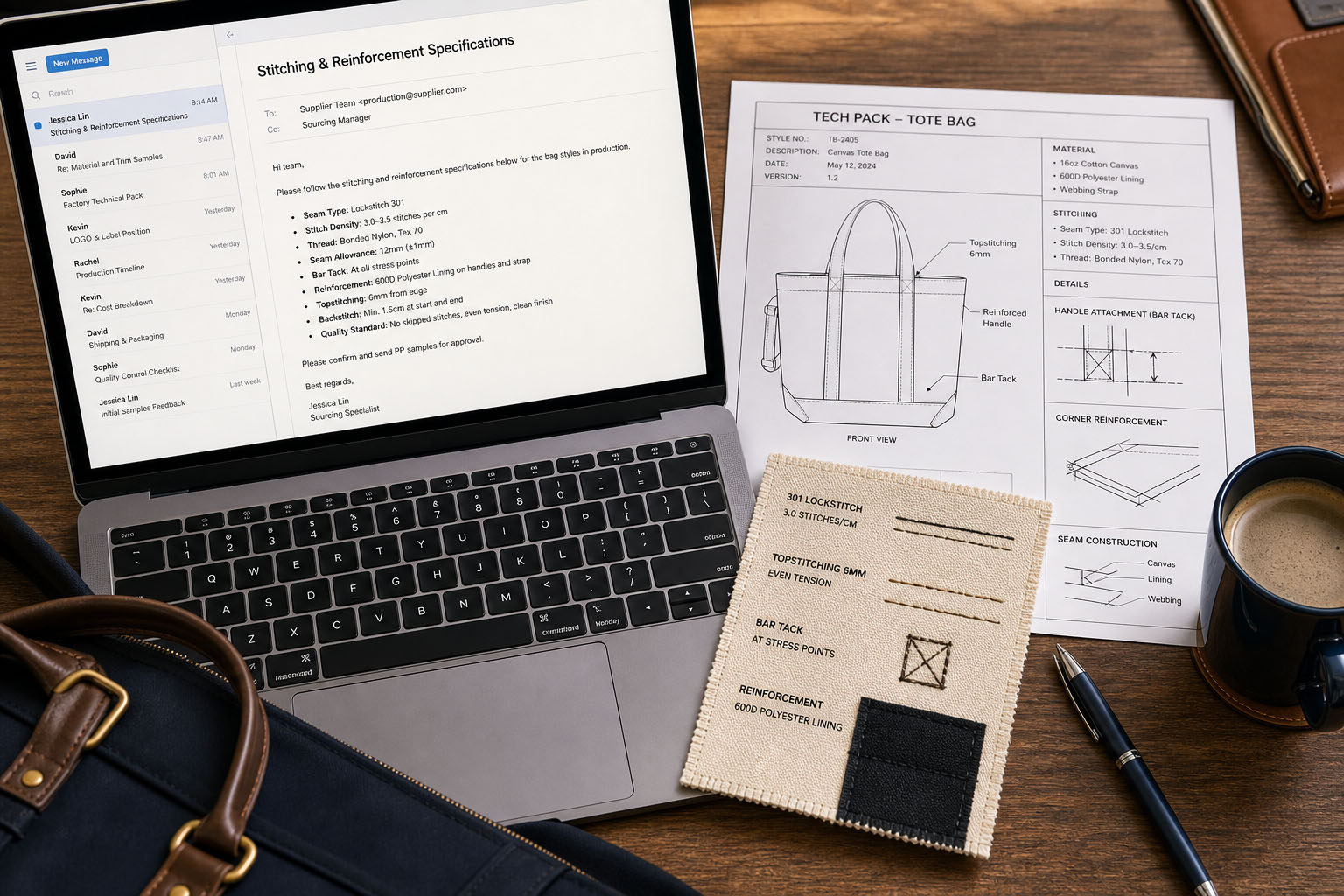
Communication clarity is everything. Here’s a professional sourcing email you can copy and adapt:
Subject: Stitching & Reinforcement Specifications – [Your PO #]
Hi [Supplier Name],
Thank you for the quotation. Before we confirm the order, I’d like to clarify the stitching specifications for our custom bags:
1. Stitching Method
Please confirm whether double-needle lockstitch is used on the following high-stress seams:
Handle base attachments
Shoulder strap anchor points
Bottom seams
Zipper ends and pocket corners
For decorative topstitching, please use chainstitch with bar-tack reinforcement at start and end points.
2. Stitch Density
Standard seam SPI: 7–8 stitches per inch
Reinforced bar-tacks: minimum 30 stitches per square inch
3. Thread Specifications
Material: Bonded nylon or polyester (please specify brand)
Tex weight: please confirm appropriate weight for our [material, e.g., 900D polyester] fabric
UV treatment: required for outdoor use
4. Reinforcement
Bar-tacks required at all handle bases and strap anchors
Box-X stitching or reinforcement panels at load-bearing points
5. Quality Control
Please send a pre-production sample for approval before bulk production
Stitching inspection photos required during production
Please confirm these specifications are included in your FOB price and provide any cost adjustments if needed.
Best regards,
[Your Name]
8. Final Checklist Before You Place Your Order
Use this quick-reference list before confirming any bag order with a Chinese manufacturer:
[ ] Stitching method specified (chainstitch + double-needle) by seam location
[ ] SPI requirements confirmed (6–10 SPI based on bag type)
[ ] Thread brand, material, and Tex weight documented
[ ] Bar-tack and box-stitch reinforcement specified at all load points
[ ] Walking foot machines confirmed for thick/multi-layer materials
[ ] Pre-production sample requested and approved
[ ] Stitching inspection checkpoints added to production schedule
[ ] Pull-test results from sample documented
[ ] Cost and lead time impact of reinforcement confirmed in writing
Conclusion: Quality Stitching Is Your Best Long-Term Investment
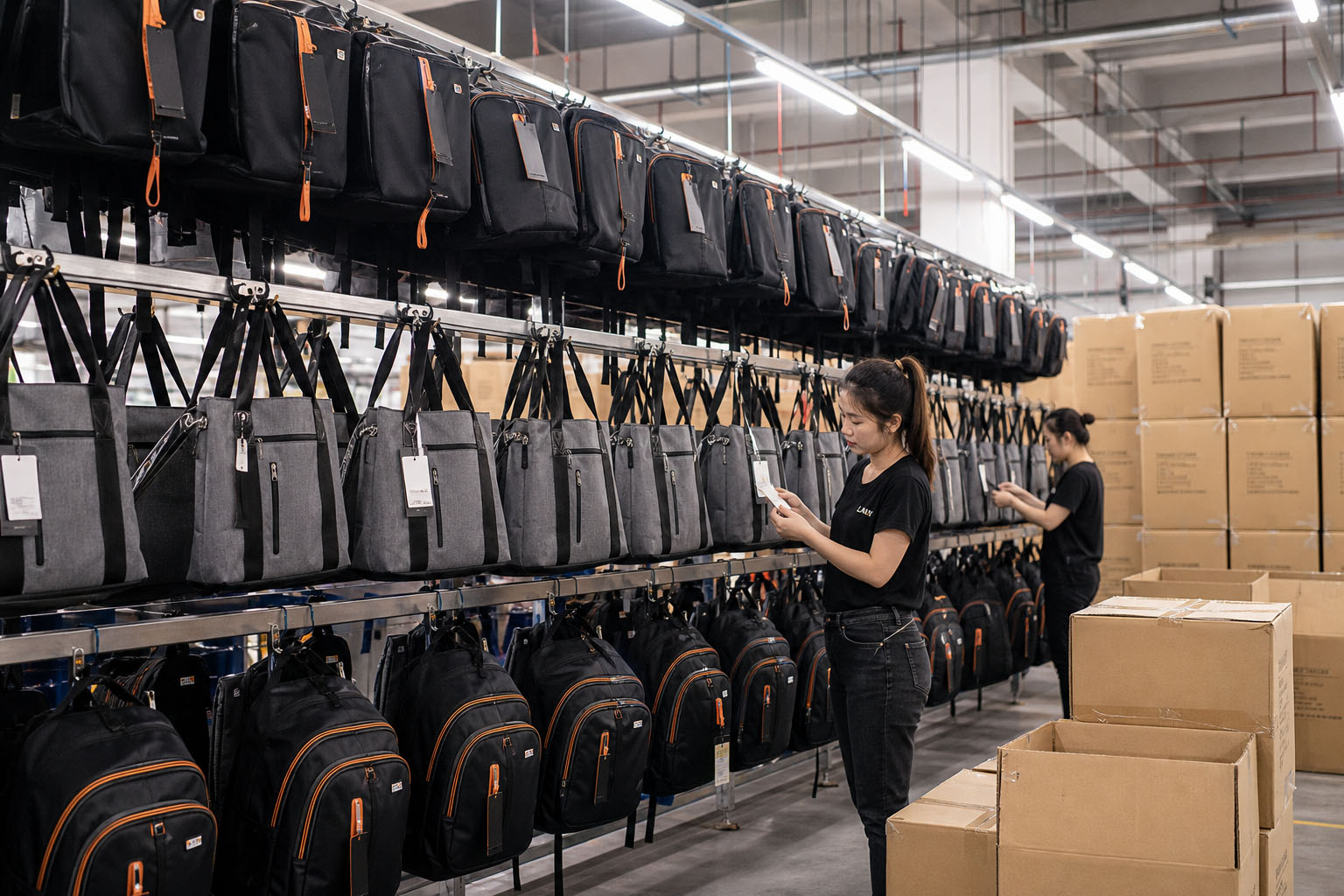
In the bag industry, a customer will never compliment you on your stitching—they’ll only complain when it fails. That’s why understanding the difference between chainstitch and double-needle stitching, knowing the right SPI for your application, and verifying thread specifications with your Chinese supplier isn’t just technical due diligence—it’s the foundation of your brand’s reputation.
The factories that get this right aren’t always the cheapest. The factories that get this right are the ones that keep getting repeat orders from buyers who understand that a 10–15% investment in reinforcement translates into a 100%+ improvement in product lifespan and customer satisfaction.
If you’re sourcing custom bags from China and want to make sure your specs are correct, we work directly with vetted manufacturers who specialize in reinforced stitching for backpacks, duffels, totes, and tactical bags. Contact us for a free sourcing consultation and let us help you specify the right construction for your next collection.
About the Author
We are a US-based bag sourcing company specializing in custom manufacturing partnerships with vetted Chinese factories. With 10+ years of experience in technical bag construction, we help brands specify, source, and quality-control backpacks, travel bags, and specialty totes at competitive FOB prices.
Post time: Jul-09-2026