
Complete Guide to Pantone Color Matching & Lab-Dip Approval When Sourcing Bags from China
How US bag importers can secure accurate, consistent colors from Chinese manufacturers — from first lab-dip to bulk production
Introduction: Why Color Accuracy Is the #1 Headache in Bag Sourcing
If you’ve ever received a bulk shipment of bags from China only to find the color is “off” compared to the sample you approved, you’re not alone. Color mismatches are among the top three disputes between US bag buyers and Chinese factories, often leading to costly re-dyeing, airfreight replacements, or full shipment rejections. For an independent e-commerce brand selling handbags, backpacks, totes, or travel bags, color inconsistency is more than an inconvenience — it directly damages customer trust, increases return rates, and erodes your brand identity.
The good news? Most color problems are preventable. They typically originate from one missing step: a properly documented, light-source-verified lab-dip approval process. In this guide, we’ll walk you through everything you need to know about Pantone color matching, lab-dip turnaround times, Delta E tolerances, revision rounds, and bulk-production consistency — written from the perspective of a US bag buyer who sources directly from China.
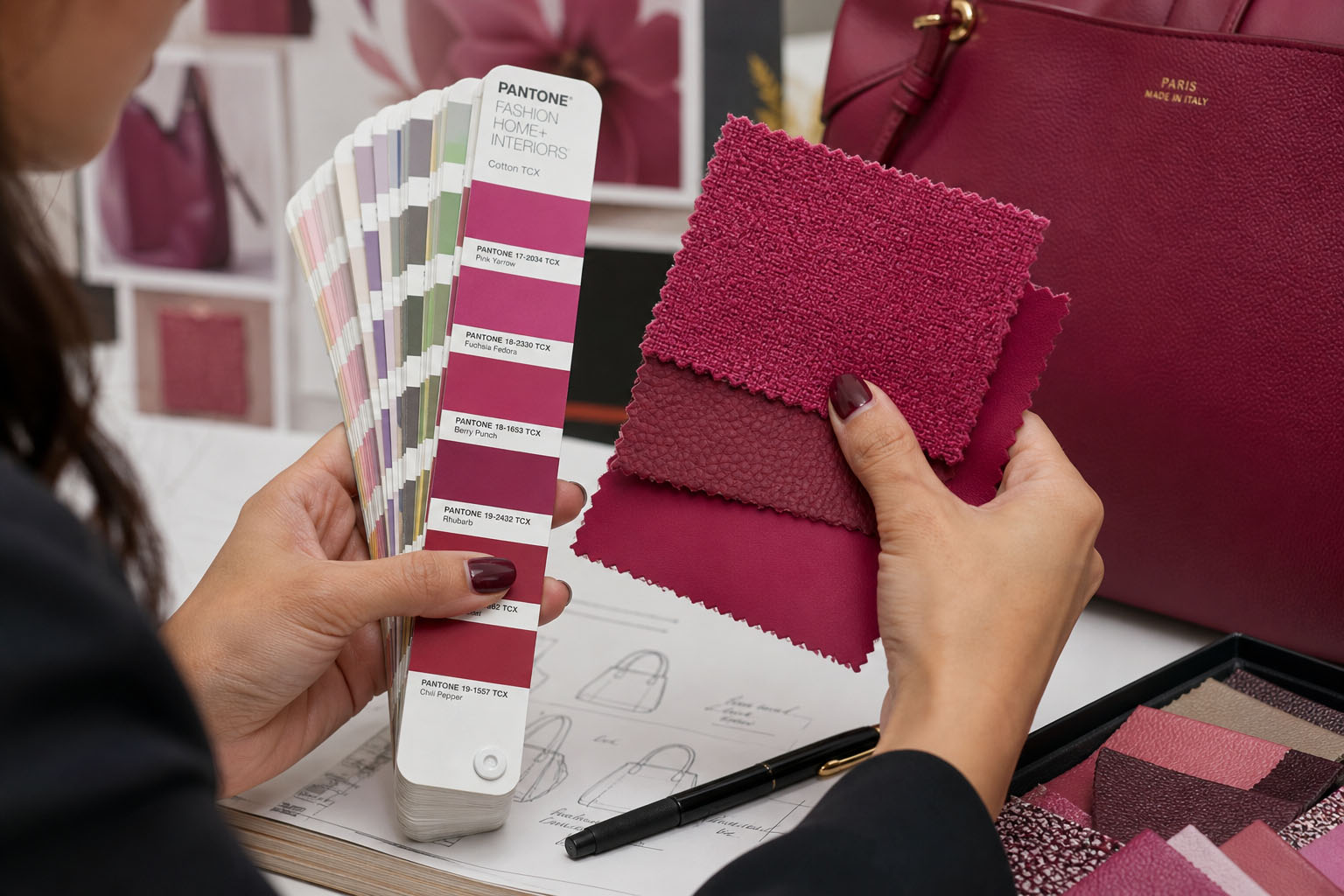
Before bulk production begins, a well-prepared lab-dip is your strongest protection against color surprises.
1. Does Lab-Dip Approval Really Confirm Pantone Color Matching Under Standardized Light Sources?
The short answer is yes — but only when the approval process is properly conducted. When a Chinese bag supplier says “we can match Pantone under standard light sources,” they are typically referring to the use of a standardized light box (also called a color matching booth or viewing cabinet) that simulates different lighting conditions such as:
D65 (6500K) — International standard artificial daylight, the most common reference for textile and apparel color evaluation
TL84 — Cool white fluorescent light, widely used in European and Asian retail stores
A (Incandescent, 2856K) — Warm tungsten household lighting
CWF (Cool White Fluorescent) — Common in US retail and office environments
A reputable factory will check your lab-dip against your specified Pantone code under at least D65 and TL84, and ideally under all four light sources, to detect metamerism — a phenomenon where two colors match under one light source but appear different under another.
Industry insight: Reputable suppliers test color matching under multiple light sources (D65, TL84, A, CWF) to detect metamerism before issuing lab-dip approval. This is a critical step because a color that “passes” under D65 daylight may appear noticeably different in a US customer’s home or retail store.
What to Ask Your Supplier
Before placing any bulk order, send a message like this:
“Please confirm that your lab-dip approval is matched against my Pantone standard (or physical swatch) and checked under standardized light sources — preferably D65 and TL84. Please also confirm your color tolerance and send the approved sample record in writing before bulk production begins.”
This single message sets professional expectations and creates a paper trail that protects you if a dispute arises later.
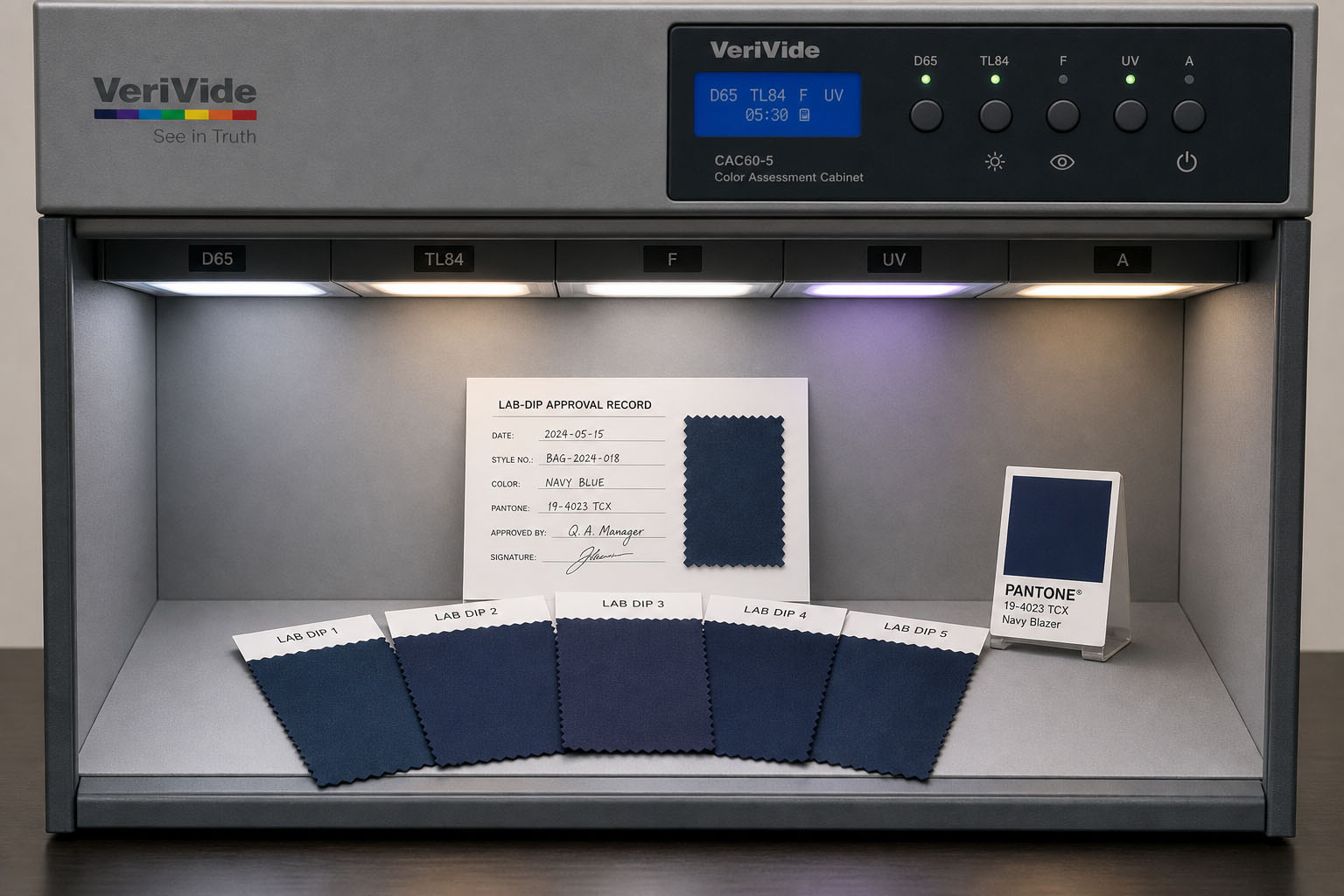
A VeriVide or X-Rite light box is essential for accurate Pantone comparison. Always confirm your supplier owns and uses one.
2. What Is the Typical Turnaround Time for Lab-Dip Samples?
One of the most common delays in the bag sourcing process is waiting for lab-dips. Understanding the typical timeline helps you plan your production calendar and avoid rushed approvals.
Standard Turnaround Benchmarks
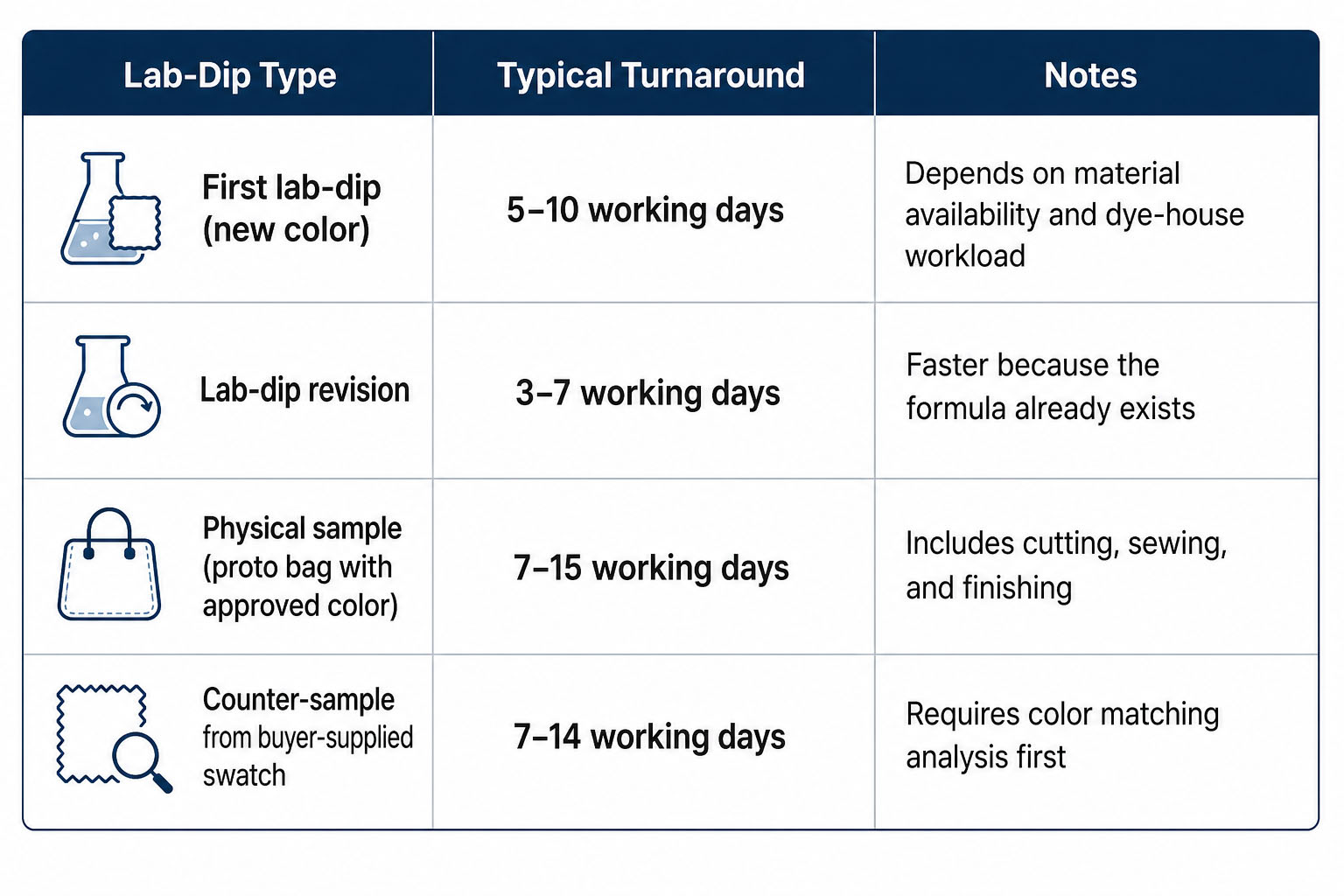
For most custom bag orders, plan for at least 2–3 weeks between submitting your Pantone reference and receiving a bulk-production-ready lab-dip. If you need a custom dyed fabric, leather, or PU/PVC material, allow additional time for raw material procurement.
Pro tip: Always request the lab-dip in the exact same material that will be used in bulk production. A polyester lab-dip on woven fabric is meaningless if your final bag uses coated canvas or synthetic leather. Material composition, weave density, and surface finish all affect how a color appears.
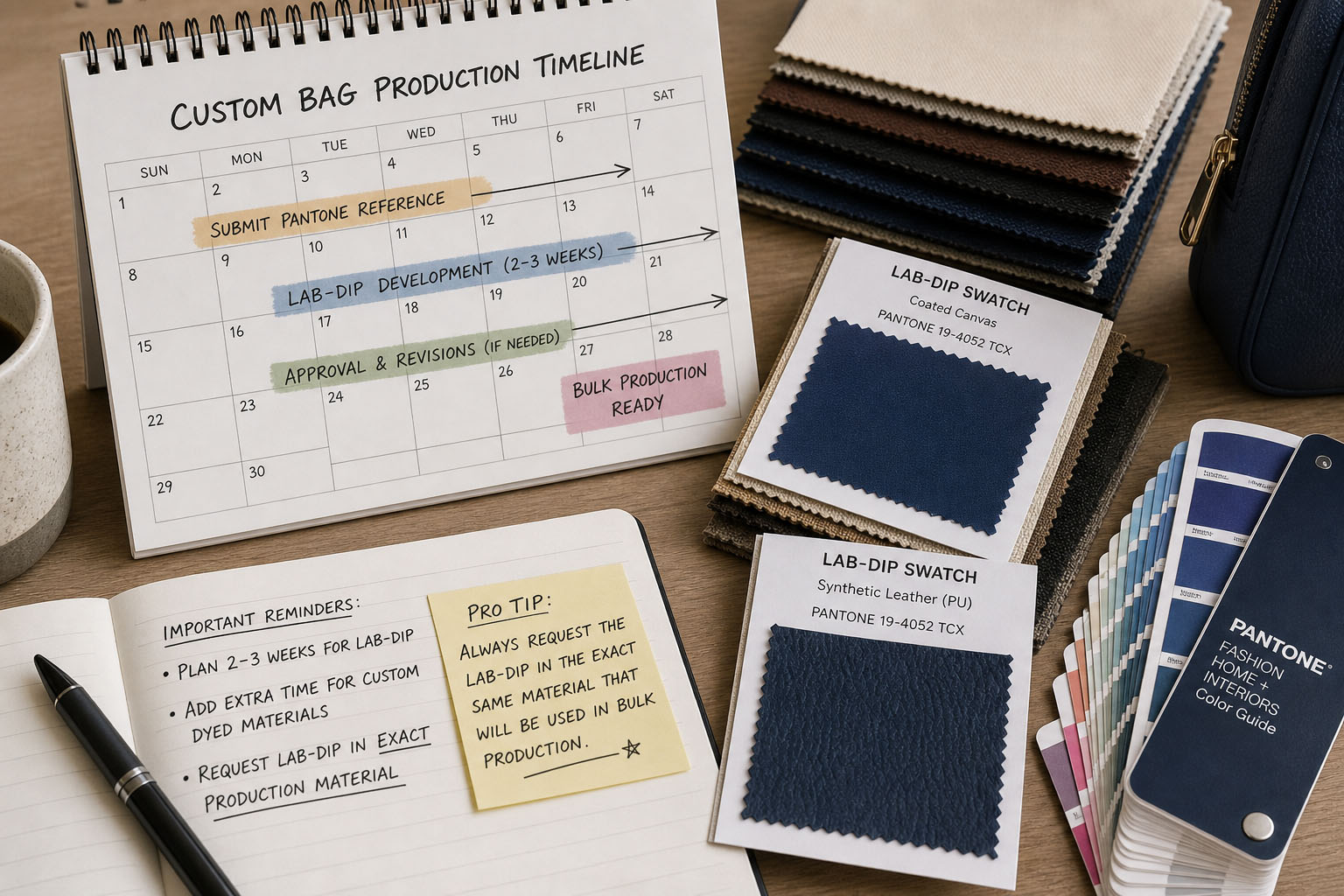
Plan at least 2–3 weeks for lab-dip development to avoid rushing color decisions.
3. What Delta E Tolerance Is Considered Acceptable?
This is where most buyers — and many suppliers — get confused. Let’s break it down.
Delta E (ΔE) is a numerical value that represents the perceptual difference between two colors. It is calculated using the CIELab color space and considers lightness (L), red-green (a), and blue-yellow (b*) coordinates.
Industry Standards for Bag Production
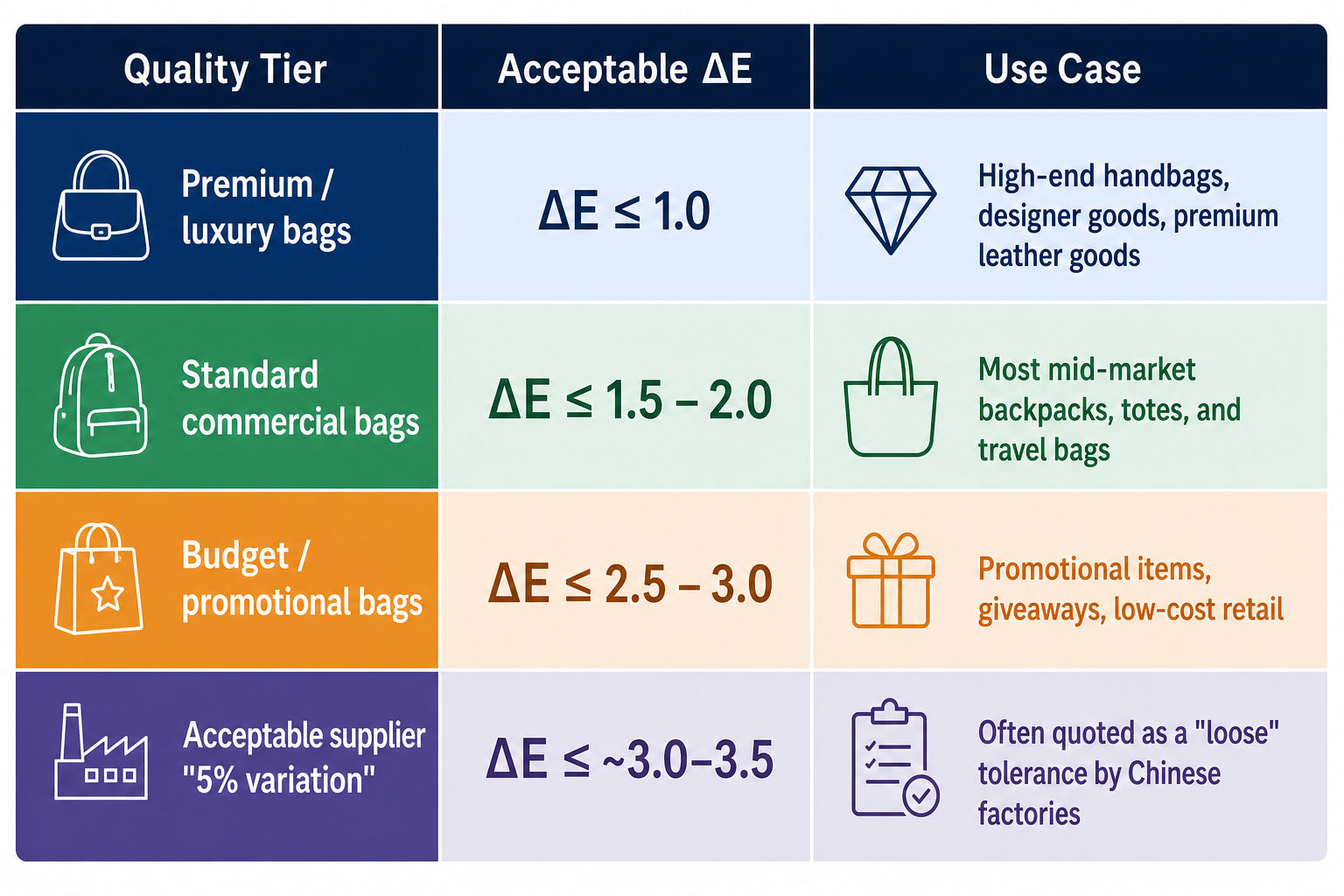
Important reality check: Many Chinese suppliers will tell you, “Please allow around 5% color variation between different batches.” This is a common industry practice because dye lots, fabric batches, and finishing processes naturally introduce minor variation. However, 5% is too vague for professional buyers. Insist on a specific ΔE number in your purchase contract.
A ΔE of 1.0 is generally considered the threshold below which the human eye cannot detect a color difference under normal viewing conditions. A ΔE of 2.0 is noticeable only upon close side-by-side comparison. Anything above ΔE 3.0 will likely be visible to the average customer.
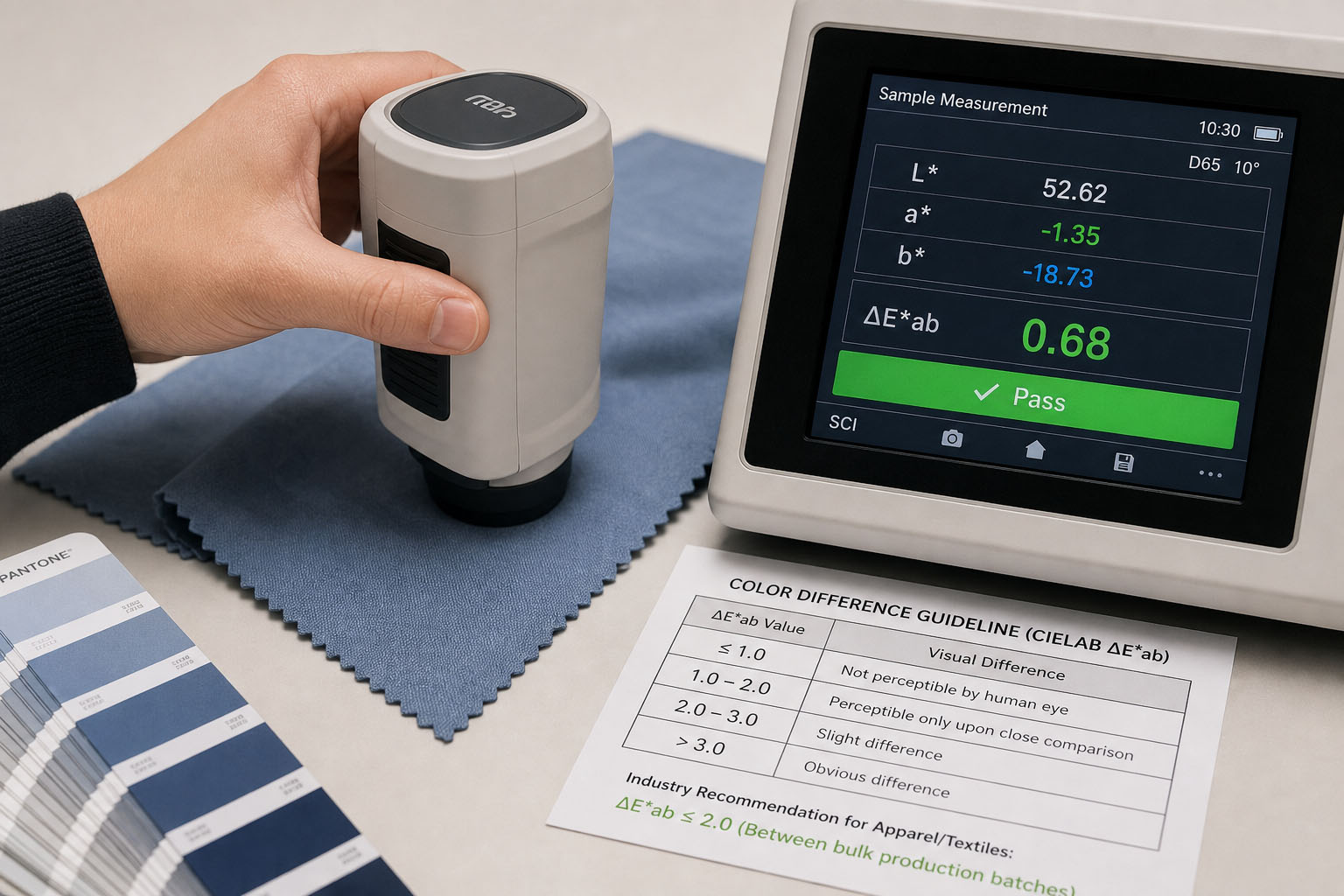
Objective spectrophotometer readings (CIELab ΔE values) provide more reliable verification than visual approval alone.
Why Visual Approval Alone Is Risky
Human eyes are remarkably sensitive to color, but also remarkably easy to fool. Lighting conditions, fatigue, surrounding colors, and even the time of day can affect color perception. That’s why objective spectrophotometer readings should be requested alongside any lab-dip approval. A reliable supplier will own a spectrophotometer (such as those made by X-Rite, Datacolor, or Konica Minolta) and can provide you with numerical ΔE values comparing their lab-dip to your target Pantone standard.
4. How Many Lab-Dip Revision Rounds Are Included?
Here’s an uncomfortable truth: the first lab-dip almost never matches perfectly. Color matching is part science, part art, and even experienced dye-house technicians usually need 2–3 attempts to hit a tight Pantone match, especially on textured or coated materials.
What’s Typical in the Industry?
First 2–3 lab-dip rounds: Usually included in the standard development fee
Beyond 3 rounds: Some factories charge $30–$80 per additional lab-dip
Specialty materials (metallic, neon, reflective, fluorescent): May require 4–6 rounds and incur higher fees
Negotiation tip: When negotiating with your Chinese supplier, request that 3 lab-dip rounds be included free of charge before additional charges apply. Get this in writing in your proforma invoice (PI). Some buyers also negotiate a “lab-dip development fee” of $50–$200 that is refundable against the final bulk order — this aligns the supplier’s incentive to get the color right.
Documentation Is Everything
For every lab-dip round, request the following:
1. Photos of the lab-dip under D65 and TL84 light sources (in the light box)
2. Spectrophotometer reading comparing the lab-dip to your Pantone reference, with ΔE value
3. Written approval signature before moving to the next round
4. A reference swatch kept on file at the factory for bulk production matching
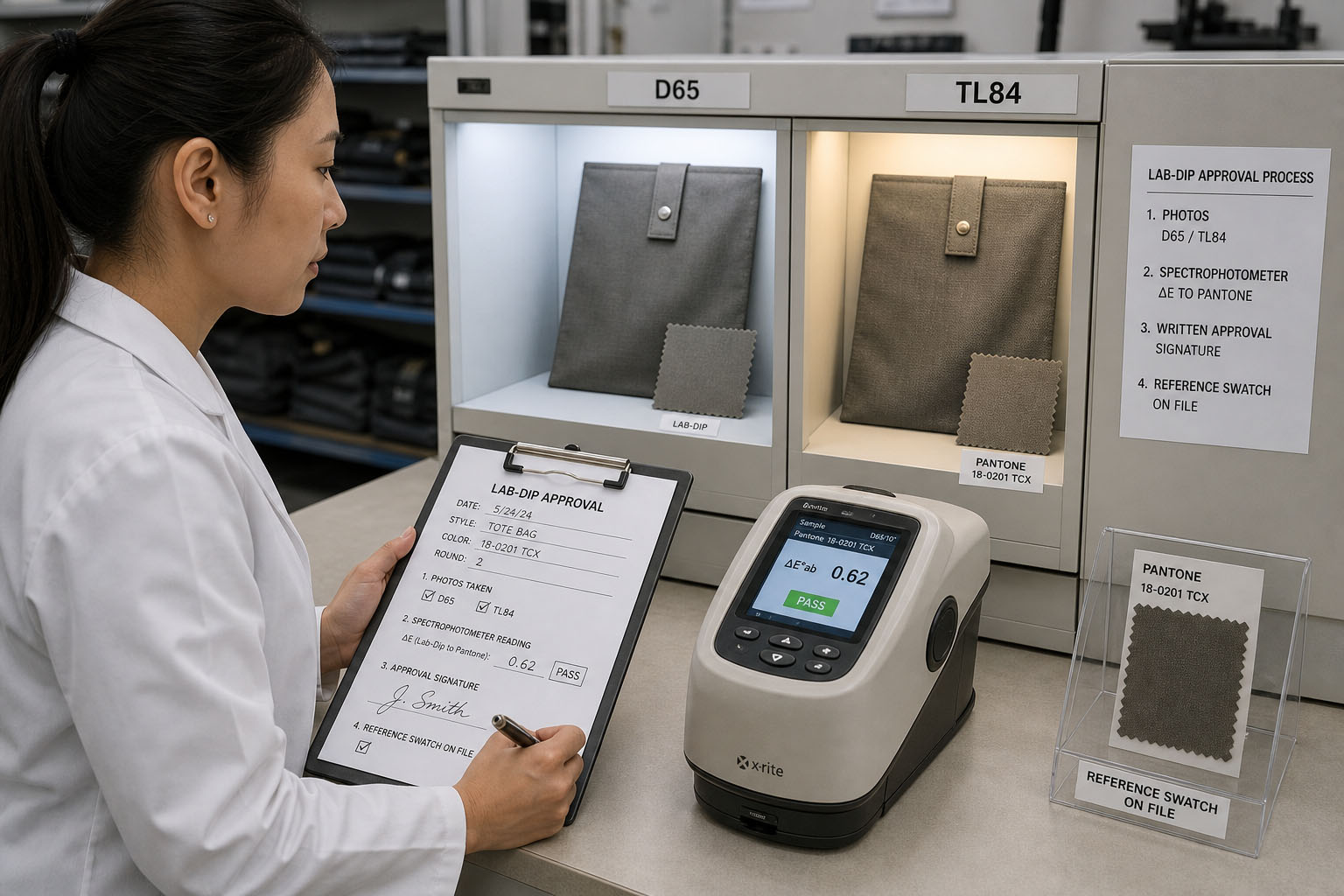
Each lab-dip revision should be documented with photos, spectrophotometer readings, and written sign-off.
5. How Do Chinese Factories Ensure Color Consistency Between Approved Lab-Dips and Bulk Production?
This is the most critical question — and the one where many buyers experience disappointment. A lab-dip can be perfect, but if the bulk production doesn’t match it, you’ve lost both time and money.
The 5-Step Bulk Color Consistency Process
Step 1: Master Sample Retention
The approved lab-dip becomes the master reference. Reputable factories file it in a controlled environment (away from direct sunlight and humidity) and pull it out for comparison at every production stage: greige fabric arrival, dyeing, finishing, and pre-shipment.
Step 2: Bulk Dye Lot Approval
Before starting full production, the factory produces a bulk dye lot sample (typically 1–5 meters of fabric) and compares it to the approved lab-dip. This is your last chance to catch a problem before cutting 5,000 bags.
Step 3: In-Line Production Checks
During bulk production, factories should conduct in-line color checks at regular intervals — for example, every 500 meters of fabric or every 1,000 bags produced. A portable spectrophotometer is used to compare each batch against the master sample.
Step 4: Pre-Shipment Inspection (PSI)
Before any container is sealed, a pre-shipment inspection is conducted. This includes:
Comparing random bulk samples to the master lab-dip under D65 light
Verifying ΔE values are within agreed tolerance
Checking for visible color variation, streaking, or shade shifts
Pro tip: Buyers should require the lab-dip to be sent with a physical reference swatch or digital spectrophotometric data, not just photos. Photos on screens are unreliable due to monitor calibration differences.
Step 5: Third-Party Verification
For high-value orders, consider hiring a third-party inspection company (such as Asia Inspection, QIMA, or V-Trust) to verify lab-dip color accuracy before shipment. These companies send independent inspectors who visit the factory, compare bulk samples to your master lab-dip under standardized lighting, and issue an unbiased report. This adds approximately $200–$400 per inspection but can save you thousands in rejected shipments.
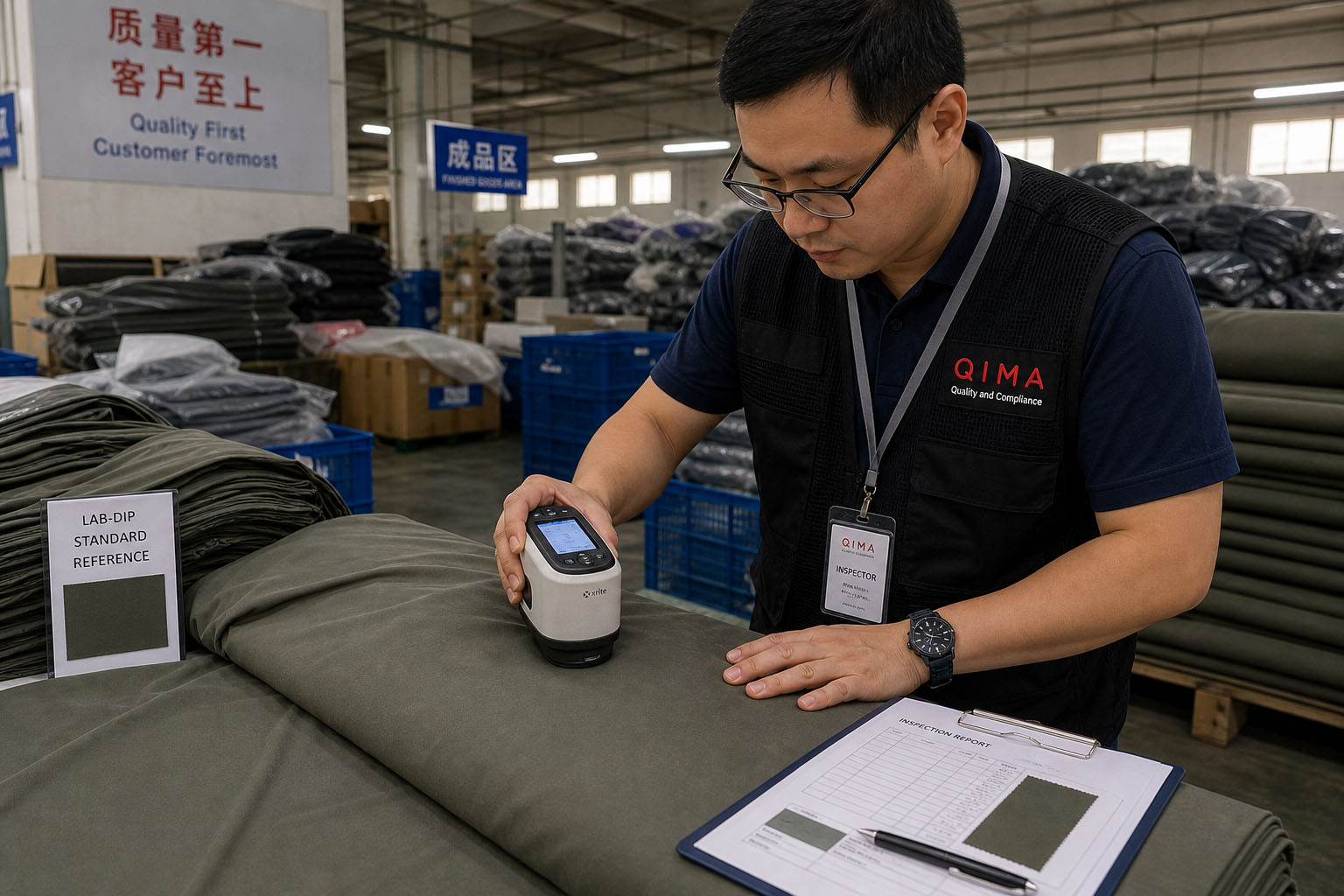
Third-party inspection companies add an independent layer of quality control before mass production.
6. The Pantone Book Problem: Why “Updated” References Matter
Here’s a detail most buyers overlook: Pantone guides fade over time. The dyes in physical Pantone TPX/TPG books degrade with exposure to light, air, and handling. Industry recommendation is to renew your Pantone books every 12–18 months.
When you send a Pantone code to your Chinese supplier, always specify:
The exact Pantone system (TPX = textile paper, TPG = textile plastic, Coated/Uncoated for print)
The edition year of the color book you’re referencing (e.g., Pantone TPX 2019 edition)
A physical swatch as backup, mailed to the factory if possible
Industry insight: Pantone guides fade over time; suppliers should use updated books (renewed every 12–18 months) to ensure accurate color matching. A 5-year-old Pantone book can produce noticeable mismatches even when the supplier is working from the “correct” code.
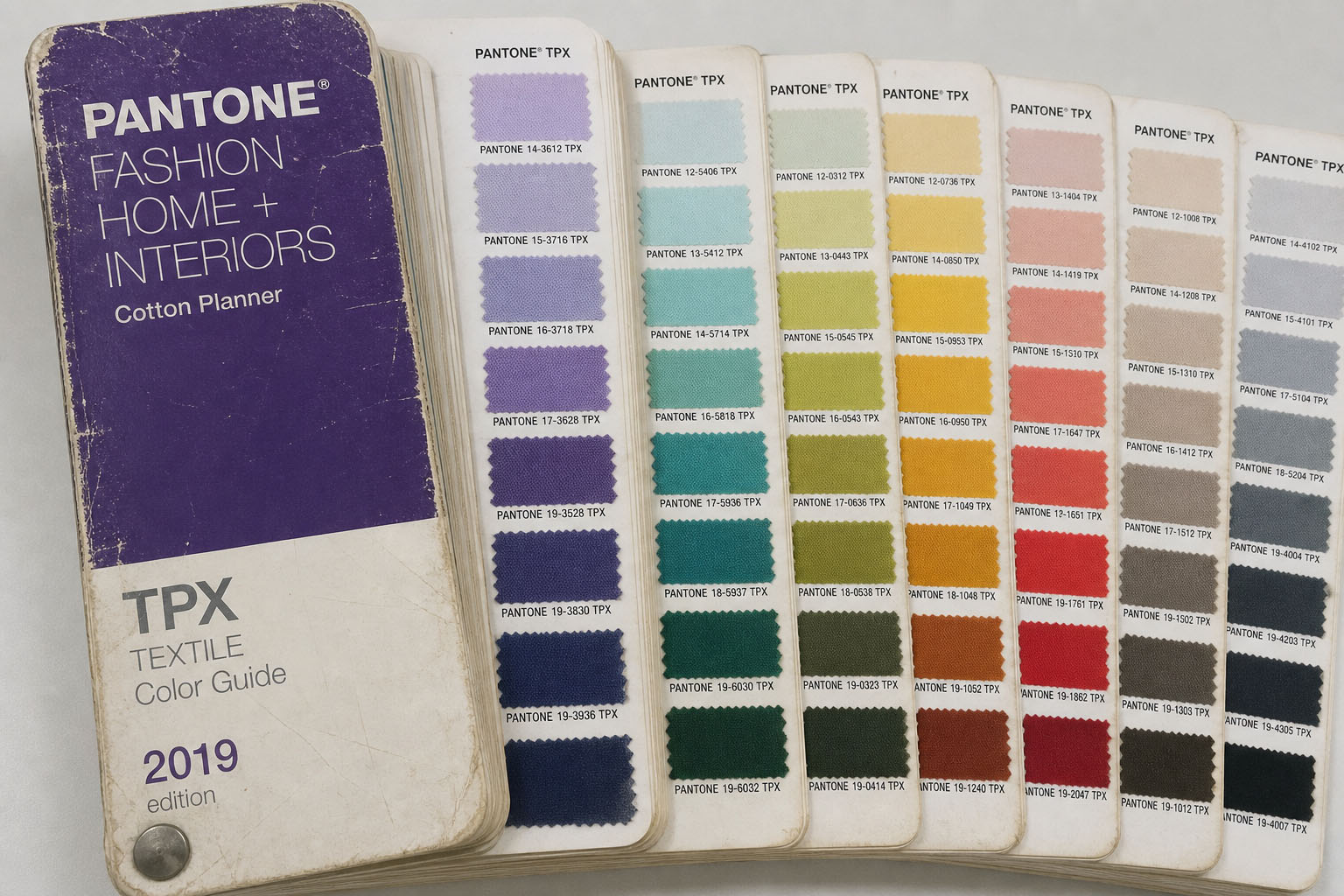
Always specify the Pantone system (TPX/TPG) and edition year when communicating color standards.
7. Lab-Dip Approval Must Be Signed Off in Writing
This is non-negotiable. Verbal approvals over WeChat or email exchanges are not legally sufficient when a dispute arises. Your approval process should include:
A signed digital approval sheet with both parties’ names and dates
Photos of the approved lab-dip in the light box, with timestamp
Spectrophotometer data attached as a PDF or screenshot
A reference to the original Pantone code and light source conditions
Industry best practice: First-article lab-dip approval must be signed off in writing before bulk production to avoid costly re-dyeing or shipment rejections.
Many experienced US buyers create a Lab-Dip Approval Form that includes:
Buyer name, contact, and order reference
Pantone code, edition year, and light source used
ΔE value measured
Approval status (Approved / Rejected / Approved with Comments)
Signature and date from both parties
This single document can be the difference between winning and losing a quality dispute with your supplier.
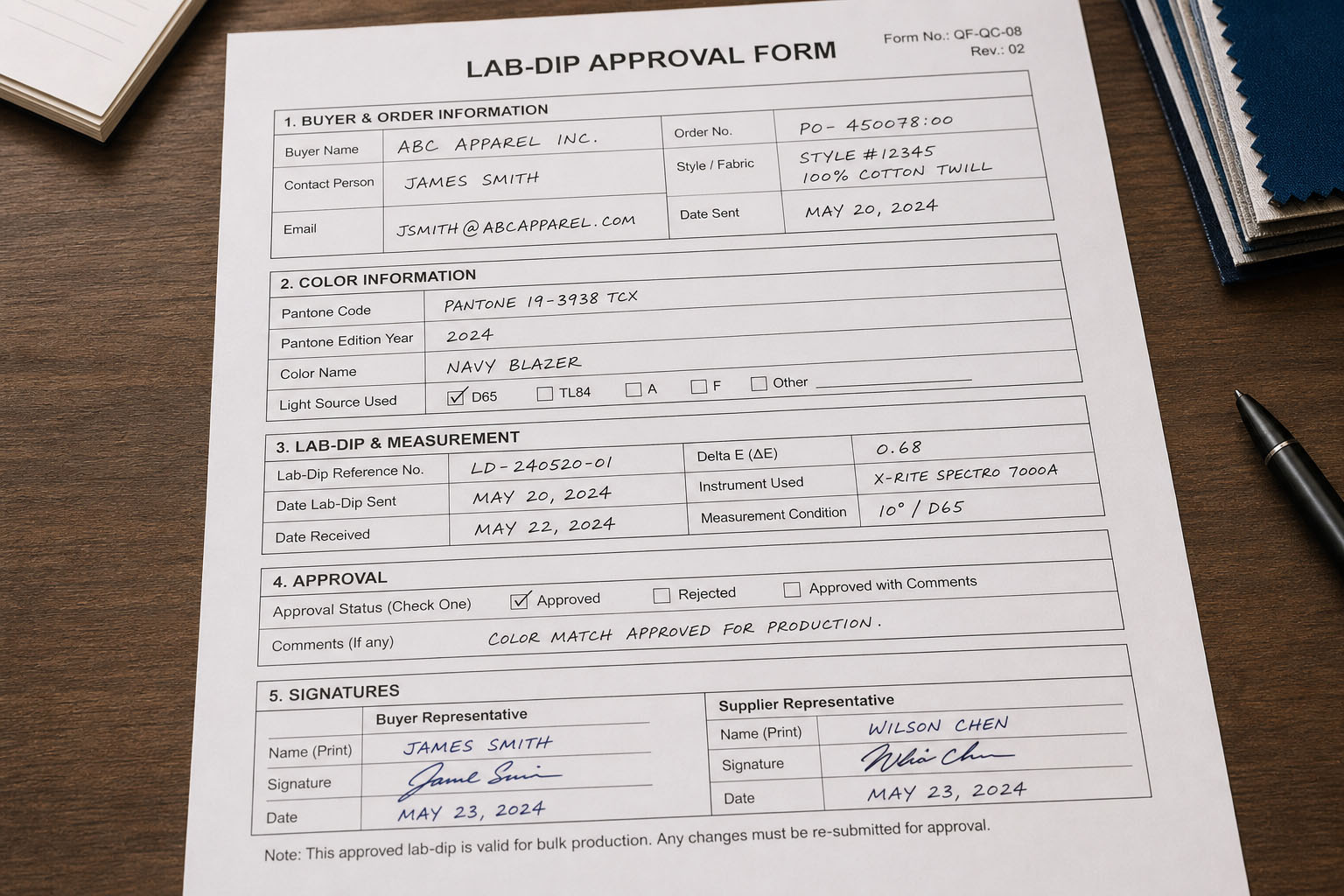
A signed lab-dip approval form protects both buyer and supplier — make it a standard part of your workflow.
8. Practical Communication Template for US Bag Buyers
Here’s a complete message you can copy, customize, and send to your Chinese bag supplier before any bulk order:
Subject: Color Matching & Lab-Dip Approval Requirements — [Your Order Reference]
Hi [Supplier Name],
Before we proceed with the bulk order for [Product Name / Style Number], please confirm the following color matching requirements:
1. We will provide a Pantone code (and/or a physical swatch) as our color reference.
2. Your lab-dip will be matched against this standard under standardized light sources — preferably D65 (daylight) and TL84 (store light).
3. You will use a standard light box (VeriVide, X-Rite, or equivalent) for all color evaluations.
4. Our acceptable color tolerance is ΔE ≤ [1.0 / 1.5 / 2.0], measured using a spectrophotometer.
5. The first 3 lab-dip rounds are included in the development cost. Additional rounds will be charged at $[XX] per round.
6. You will send photos of the lab-dip under D65 and TL84, plus spectrophotometer data, before we issue approval.
7. Our approval will be provided in writing before bulk production begins.
8. The approved lab-dip will be retained as the master reference for the entire production run, and bulk samples will be checked against it at multiple stages.
Please confirm your acceptance of these terms and provide your typical lab-dip turnaround time.
Thank you,
[Your Name]
[Your Company]
This message signals that you are a professional, experienced buyer — which encourages the supplier to treat your order with the seriousness it deserves.
9. A Realistic Supplier Response — and How to Read It
When you send the above message, a typical response from a Chinese bag factory might be:
“Yes, we can do it. Our lab samples and lab sample confirmation can achieve Pantone color matching under standard light sources. However, for different batches, please allow around 5% color difference compared to the Pantone color card.”
Here’s how to interpret and respond:
“Yes, we can match Pantone under standard light” — Good. They have the equipment and process.
“5% color difference between batches” — This is the negotiation point. Reply with: “Thank you. We can accept minor variation, but we need to define this as a specific ΔE value. We propose ΔE ≤ 2.0 measured by spectrophotometer. Please confirm.”
This shifts the conversation from a vague “5%” to a measurable, enforceable standard — which is the only way to manage color quality in production.
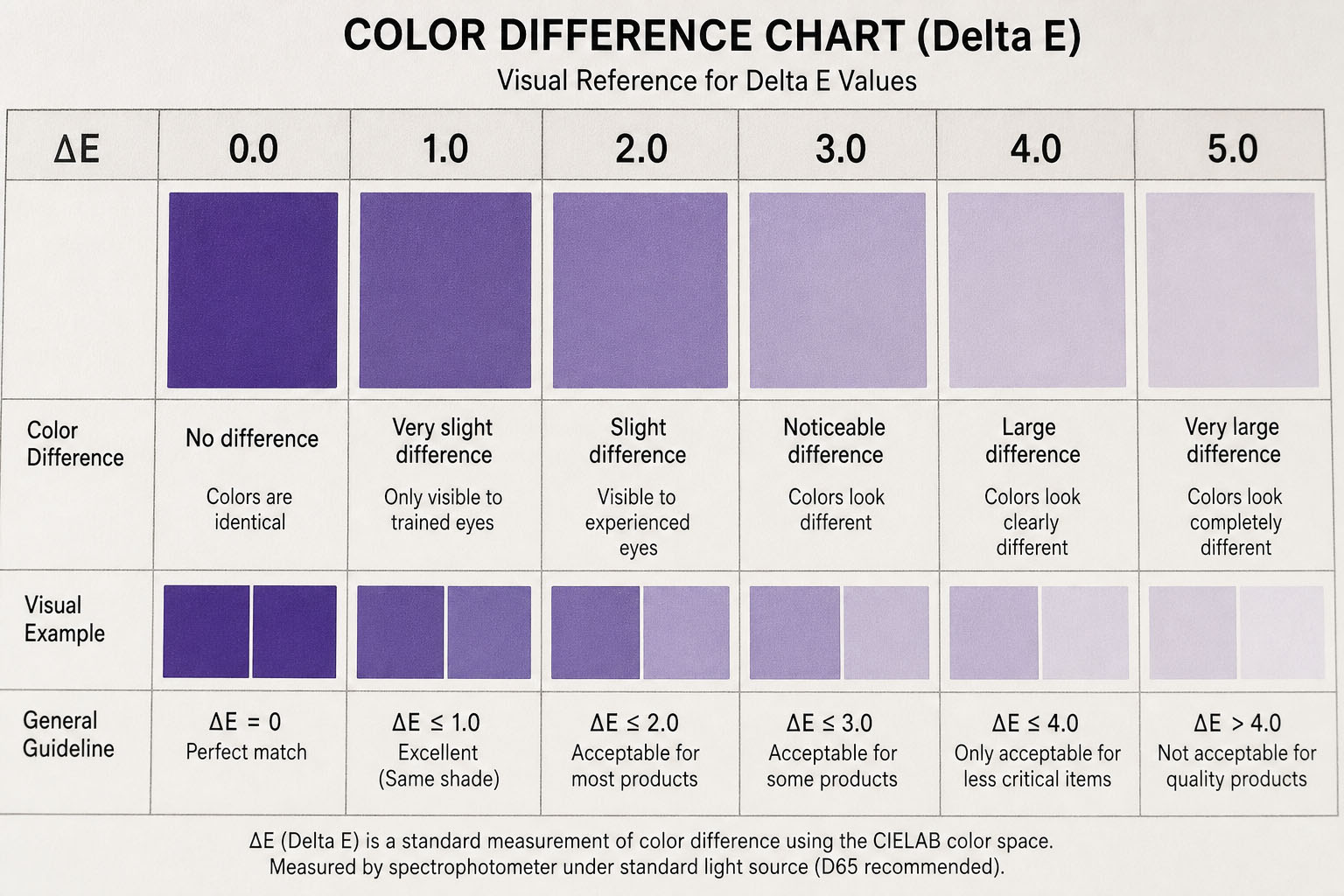
Insist on a specific ΔE value in your contract rather than a vague “5% variation” — numbers are enforceable, percentages are not.
10. The Bottom Line: Color Consistency Is a Process, Not a Promise
The difference between a US bag brand that delivers consistent, on-brand colors every season and one that constantly battles returns and complaints comes down to one thing: a documented, light-source-verified lab-dip approval process.
The 10 essential practices are:
1. Use multiple standardized light sources (D65, TL84, A, CWF) to detect metamerism
2. Use a professional light box (VeriVide, GretagMacbeth, X-Rite) for all evaluations
3. Specify Pantone system and edition year in every communication
4. Send physical swatches whenever possible, not just codes
5. Require spectrophotometer ΔE readings — objective, not visual
6. Set ΔE ≤ 1.0 for premium bags, ΔE ≤ 1.5–2.0 for standard
7. Include 3 free lab-dip revisions in your supplier agreement
8. Document every approval in writing with photos and data
9. Conduct bulk dye lot approval before cutting fabric
10. Hire third-party inspection for verification on high-value orders
By implementing these practices, you transform color matching from a “hope and pray” exercise into a predictable, professional quality control process. Your customers receive bags in the exact color they expect, your return rates drop, and your brand reputation grows.
Frequently Asked Questions
Q: Can a Pantone code alone guarantee an accurate color match?
A: No. Pantone codes are a starting point, but the same code can appear differently on different materials (canvas, nylon, leather, PU). Always pair a Pantone code with a physical swatch in the actual material.
Q: How long should I keep the approved lab-dip reference?
A: Throughout the entire production run, plus at least 90 days after shipment, in case of post-delivery disputes. Some brands keep them for 12 months to support reorders.
Q: What if my supplier doesn’t have a spectrophotometer?
A: This is a red flag. Any factory serious about color quality should own one. If they don’t, consider using a third-party lab or switching suppliers.
Q: Is the supplier’s “5% variation” claim reasonable?
A: It’s a common industry baseline, but not specific enough for professional buyers. Convert it to a specific ΔE value in your contract.
Have questions about color matching or lab-dip approval for your next bag order? Leave a comment below or reach out — we share practical, experience-based insights for US importers sourcing bags directly from China.
Post time: Jun-25-2026