
Meta description: Sourcing bags from China? Learn the 5 critical quality control questions every US bag buyer must ask — from incoming material inspection to AQL sampling, certifications, third-party audits, and defect handling.
Introduction: Why Quality Control Is the Make-or-Break of Your China Bag Sourcing Strategy
If you are a US-based bag buyer running your own e-commerce store, sourcing bags directly from Chinese manufacturers can unlock unbeatable pricing, customization, and scalability. But it also exposes your business to one of the most common pain points in cross-border trade: quality inconsistency.
A wrong shade of canvas, a hand-feel that doesn’t match your golden sample, a strap that snaps after three weeks of use — these are not hypothetical risks. They are the everyday reality of buyers who skip due diligence when vetting Chinese bag factories.
The good news? Most established Chinese bag manufacturers actually have the systems, certifications, and inspection protocols in place to deliver consistent quality. The challenge is knowing the right questions to ask and understanding the right answers to expect.
In this guide, we break down the five most important quality control questions every bag buyer should ask a potential Chinese supplier — and what a professional, trustworthy answer looks like. We will also share actionable insights, real red flags to avoid, and a downloadable quality checklist you can use during supplier evaluation.
Let’s dive in.
Question 1: Do You Verify Fabric Weight, Color, Hand-Feel, and Tensile Strength Before Production Release?
This is the single most important question you can ask a Chinese bag supplier — and the answer will tell you almost everything you need to know about their quality maturity.
A serious factory will not just say “yes.” They will walk you through a structured Incoming Quality Control (IQC) process that happens before any fabric is cut.
What a Real IQC Process Looks Like
1. A dedicated IQC department.
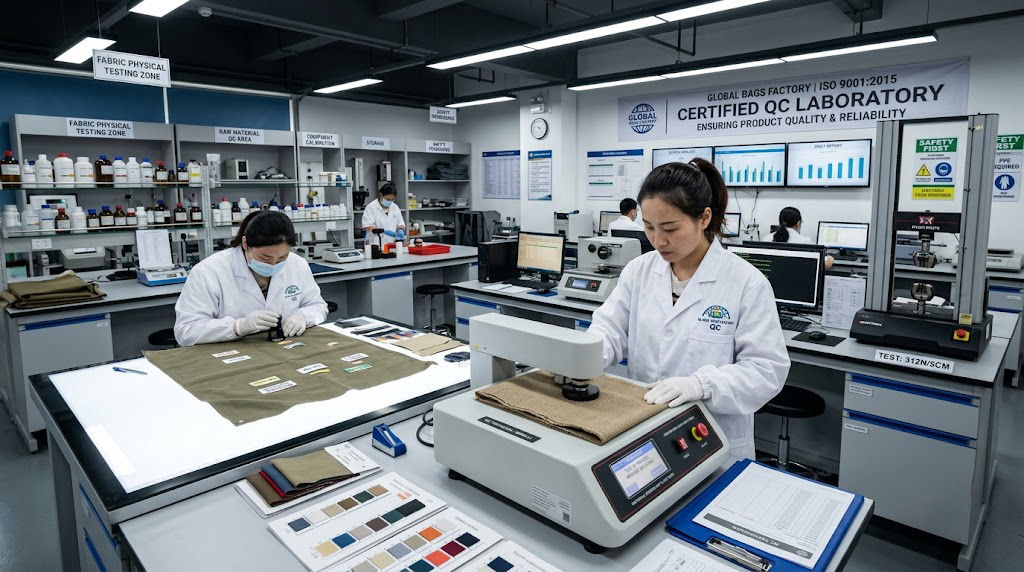
Established Chinese bag manufacturers typically operate a dedicated Incoming Quality Control (IQC) department that inspects materials before production release. This team is separate from the production line, ensuring objectivity and accountability.
2. Fabric weight (GSM) verification.
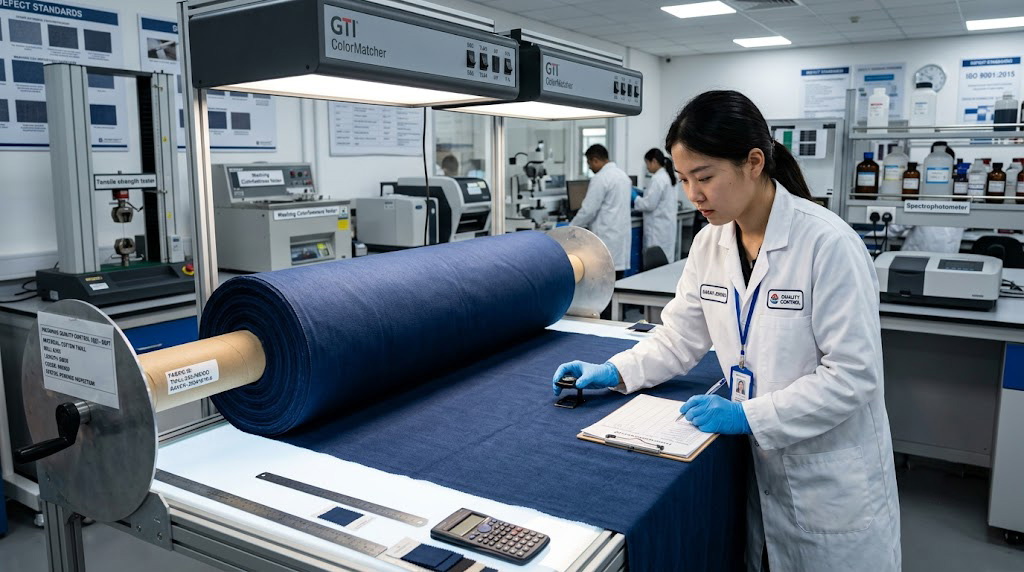
Fabric weight is verified using a round cutter and precision scale, with results compared against the approved specification sheet. This step confirms the material meets the agreed weight tolerance — a critical factor for premium bags where the “hand” of the fabric defines the perceived value.
3. Color conformity under D65 lighting.
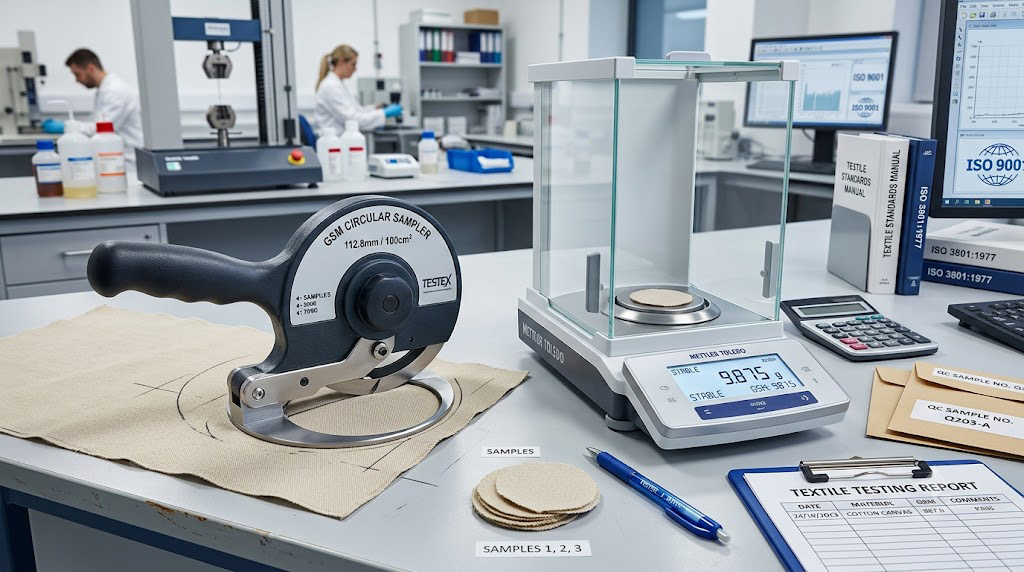
Color conformity is assessed under standardized D65 lighting in a light box, matched against approved Pantone codes or sealed lab-dip references. Visual color assessment under inconsistent lighting is one of the top causes of shade variation between samples and bulk production — professional factories eliminate this risk with calibrated light boxes.
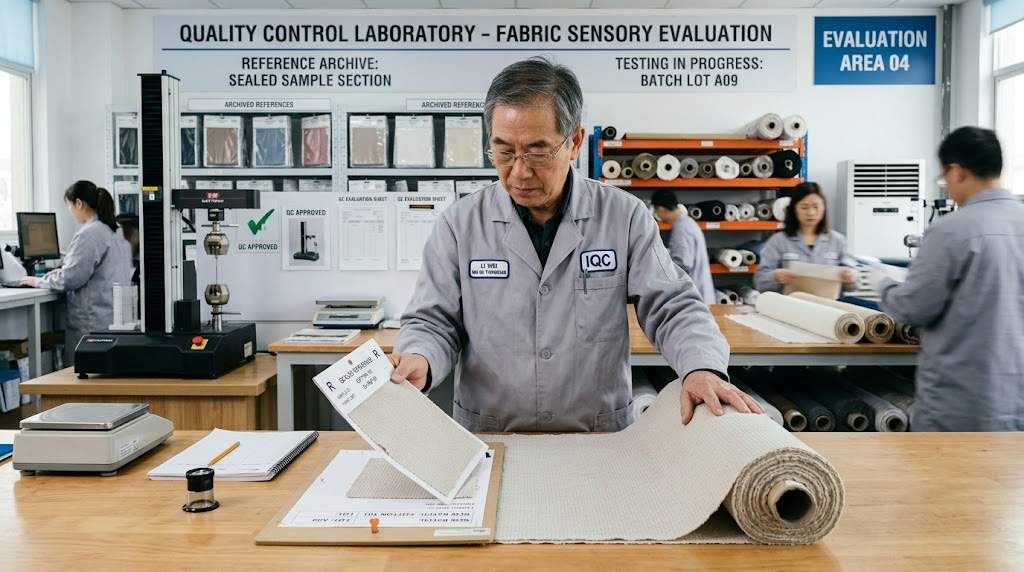
4. Hand-feel evaluation by experienced technicians.
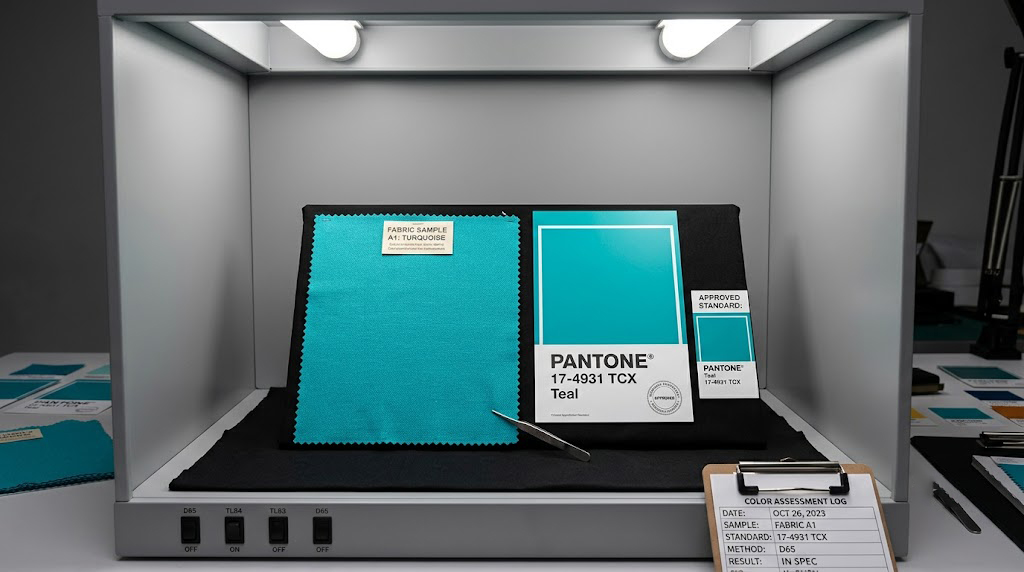
Hand-feel is evaluated by experienced QC technicians who compare bulk fabric against a sealed reference sample for softness, texture, and drape. This is a sensory test that cannot be automated — which is why experienced inspectors matter. They will look for differences in surface smoothness, stiffness, and flexibility.
5. Tensile strength testing.
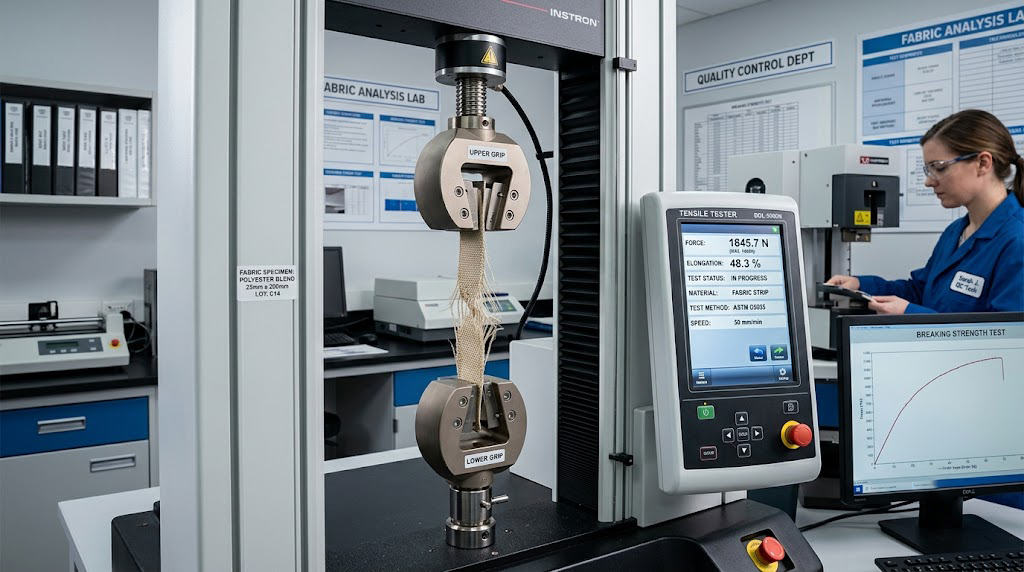
Tensile strength is tested using a universal tensile testing machine following ASTM or ISO methods such as grab or strip tests. This ensures the fabric can withstand the stress of daily use — particularly important for straps, handles, and load-bearing seams.
6. Formal IQC reports for every lot.
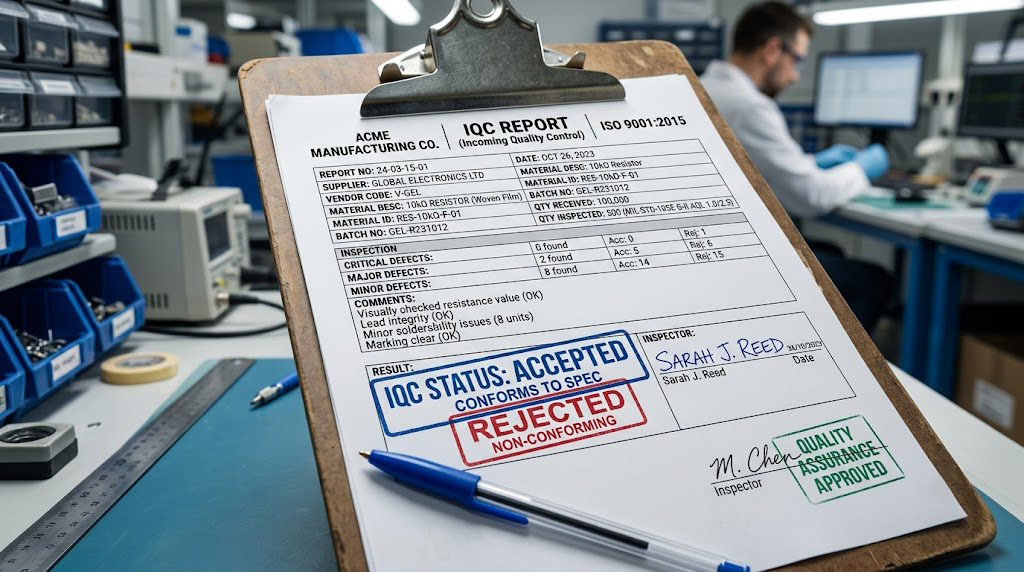
Inspection results are recorded in formal IQC reports documenting pass, reject, or conditional release status for each material lot. These reports are your paper trail if any quality dispute arises later.
7. The golden sample as the benchmark.
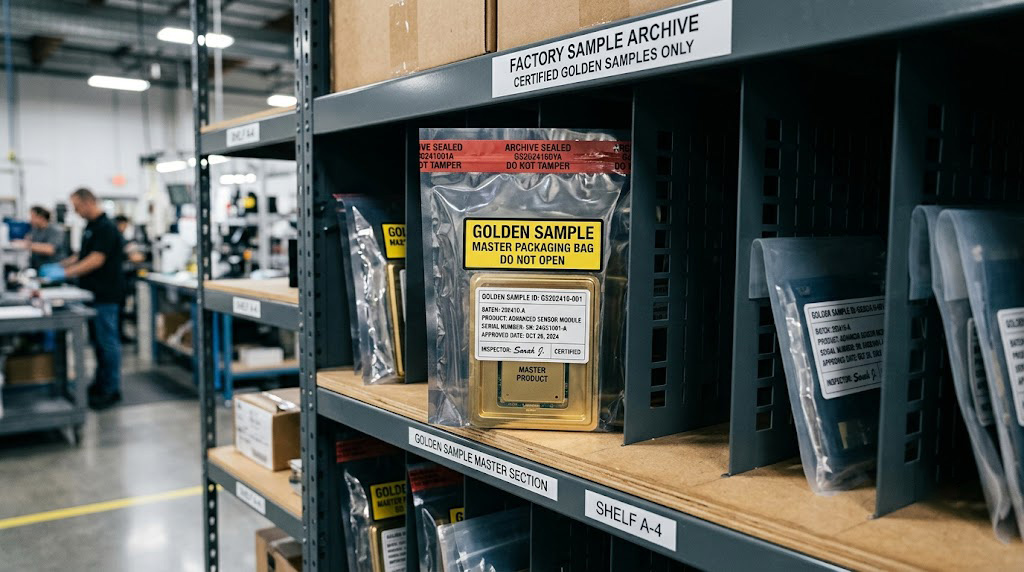
Buyers should approve a Golden Sample and detailed material specification before purchase order confirmation to set a clear inspection benchmark. Without a sealed golden sample, “matching the approved standard” becomes a subjective debate.
8. Independent third-party verification at IQC stage.
Independent third-party inspections from agencies such as SGS, QIMA, Intertek, or Bureau Veritas can be commissioned during the IQC stage to verify factory results. For first-time orders or high-value shipments, this is money exceptionally well spent.
9. AQL-based sampling on incoming lots.
AQL-based sampling — commonly AQL 2.5 or 4.0 for critical defects — is widely applied to determine accept or reject decisions on incoming material lots. We will dive deeper into AQL in the next section.
10. Full material traceability.
Material traceability records, including supplier test reports, mill certificates, and lot numbers, should be retained to support quality consistency and future claim handling. If a defect appears three months after shipment, traceability records let you trace the problem back to the specific fabric lot.
What to Ask Them Directly
Send this message to your supplier:
“Do you perform incoming material inspection for all fabrics and trims before production release? Please confirm whether you check GSM/fabric weight, color consistency or shade matching, hand-feel, and tensile-strength testing, and share your inspection criteria and records.”
A professional supplier will reply with documentation. An amateur one will say “no problem, we check everything.”
Red Flags to Watch For
Be cautious if the factory responds with:
“We check visually.”
“Our workers know the quality.”
“No problem, all good.”
“We inspect only after production.”
These answers usually mean the factory has no real IQC process — and you will pay for that gap later in defects, returns, and bad reviews.
Pro Tip: Request These Documents Before Confirming the Order
Incoming material inspection checklist (with revision date and version)
Approved golden sample photo or physical sample retention protocol
Test reports for fabric GSM and tensile strength from the last 3 months
Shade band or color control method description
A written non-conformance procedure for failed incoming materials
Question 2: Do You Follow AQL Sampling Standards for In-Line and Pre-Shipment Inspections?
AQL (Acceptable Quality Level) is the international standard for sampling-based quality inspection. If your Chinese bag supplier doesn’t use it — or worse, has never heard of it — walk away.
How AQL Works in Bag Manufacturing
AQL sampling defines the maximum acceptable number of defects per 100 units inspected. For bags, the most common standards are:
AQL 2.5 for critical defects (broken zippers, missing straps, structural failures)
AQL 4.0 for major defects (visible stains, misaligned stitching, wrong color)
AQL 6.5 for minor defects (loose threads, slight printing misalignment)
A factory that follows AQL correctly will:
Use statistically valid random sampling based on lot size
Classify defects by severity (critical / major / minor)
Document inspection results in standardized reports
Apply clear pass / fail / re-inspect decisions
When AQL Inspections Should Happen
There are three key inspection points in any bag production cycle:
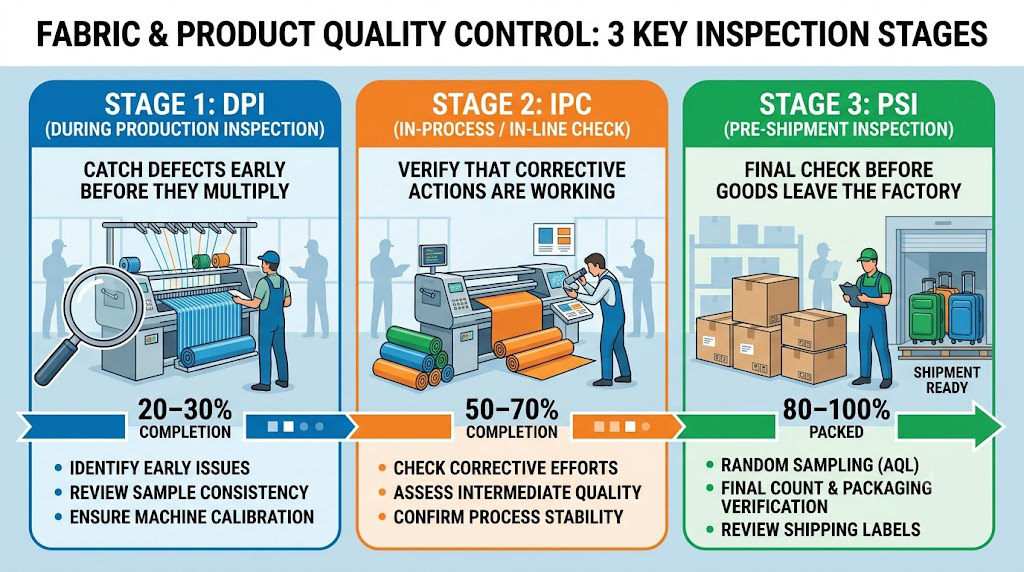
A supplier who only does PSI is essentially gambling that no defects were made in the first 80% of production. A professional supplier will offer all three.
What to Ask Them
“Which AQL standard do you use for inline and pre-shipment inspections? Can you share a sample inspection report from a recent order?”
If they hesitate, ask them to specify the AQL level (e.g., 2.5/4.0) and the sample size they use for a 1,000-unit order. They should be able to quote a number like “80 pieces sampled” instantly.
Question 3: What Quality Management Certifications (ISO 9001, BSCI, SEDEX) Does the Factory Hold?
Certifications are not just paperwork. They signal that the factory has been audited by an independent body and follows documented quality management processes.
Certifications That Matter for Bag Buyers
ISO 9001: The global standard for quality management systems. Indicates the factory has documented procedures for production, inspection, corrective action, and continuous improvement.
BSCI (Business Social Compliance Initiative): Verifies ethical labor practices. Increasingly important for US buyers selling on Amazon, Walmart, or to retail chains that require social compliance audits.
SEDEX/SMETA: Similar to BSCI, focuses on ethical sourcing, labor rights, and health & safety.
SA8000: A deeper social accountability standard.
GRS / GOTS (for sustainable bags): Important if you market your bags as eco-friendly or recycled.
How to Verify a Certification
Never accept a certificate image at face value. Every ISO 9001 certificate has a unique certificate number that can be verified through the issuing body’s online database (e.g., TÜV, SGS, Bureau Veritas, DNV). Ask for the certificate number and verify it yourself.
Also check the scope of certification — some factories hold ISO 9001 only for their trading company, not the actual production facility. The certificate should specifically name the production address.
What to Ask Them
“Please share copies of your ISO 9001, BSCI, and SEDEX certificates, including the certificate number, issuing body, validity date, and the certified entity’s full name and address.”
A trustworthy factory will send these documents within hours.
Question 4: Can Buyers Appoint a Third-Party Inspection Agency to Audit Production Before Shipment?
The short answer: Yes, and any factory that objects to third-party inspections should be immediately disqualified.
Why Third-Party Inspections Are Essential
Even with a great in-house QC team, independent verification adds three critical layers of protection:
1. Objectivity: Factory QC teams are sometimes pressured by production managers to “pass” units. Third-party inspectors have no such conflict.
2. Buyer-side expertise: Inspection agencies like QIMA, SGS, Intertek, and Bureau Veritas specialize in bag inspections and know exactly what to look for.
3. Documentation for your records: Third-party reports are accepted by Amazon, retail buyers, and customs as evidence of due diligence.
How to Structure Third-Party Inspections
The standard approach for US bag buyers sourcing from China is a two-inspection model:
First inspection at 30–50% production completion: Catches systematic issues early
Final pre-shipment inspection at 80–100% packed: Confirms the shipment is ready to ship
Each inspection typically costs $200–$400 per man-day depending on the agency and location. For a 1,000-unit bag order, this is roughly $400–$800 total — a tiny fraction of the cost of a single customer complaint or Amazon return.
What to Ask Them
“Are you willing to allow third-party inspections by SGS, QIMA, Intertek, or Bureau Veritas at our cost? Please confirm there will be no obstruction or fees charged by your factory for the inspection.”
A professional factory will not only agree but will have a process in place to host inspectors smoothly.
Question 5: How Do You Handle Defects, Rework, and Quality Claims During and After Production?
This is the question that separates mature manufacturers from risky ones. Defects are inevitable in any production process — what matters is how the factory responds.
A Professional Defect-Handling Process Includes:
Immediate containment: Stopping the production line when a critical defect is found
Root cause analysis (RCA): Identifying whether the issue is material, machine, method, or operator-related
Rework or repair: Fixing the unit if possible, or scrapping it if not
Corrective action plan (CAP): Preventing the same defect from recurring in future orders
Claim settlement: Replacing defective units, issuing credit notes, or refunding
What to Ask Them
“Please describe your process for handling quality defects during production and after shipment. Who is responsible for customer claims, and what is the typical timeline for resolution?”
A trustworthy factory will provide a written Quality Claim Procedure document and a clear contact person (often the merchandiser or QA manager) responsible for handling claims.
Pro Tip: Build Quality Clauses Into Your Purchase Order
Always include the following clauses in your PO contract:
1. Defect liability period (e.g., 90 days after receipt)
2. Replacement or refund terms for defective units above X%
3. Right to third-party inspection at supplier’s cost if defect rate exceeds AQL
4. Photo and video evidence required for any claims
5. Cap on supplier’s liability (typically 100–150% of order value)
These clauses protect you legally and operationally — and they make the supplier take quality seriously from day one.
Conclusion: Your Sourcing Quality Checklist
Sourcing bags directly from Chinese manufacturers is one of the smartest moves a US e-commerce brand can make — but only if you build quality control into your supplier evaluation process from the very first conversation.
Here is your 5-Question Quality Checklist to use with any Chinese bag supplier:
✅ Do you verify fabric weight, color, hand-feel, and tensile strength before production release?
✅ Do you follow AQL 2.5 / 4.0 standards for inline and pre-shipment inspections?
✅ What certifications (ISO 9001, BSCI, SEDEX) does your factory hold, and can I verify them?
✅ Can I appoint SGS, QIMA, Intertek, or Bureau Veritas for third-party inspections?
✅ How do you handle defects, rework, and post-shipment quality claims?
If a supplier confidently answers all five — and provides documentation to back up each answer — you’ve likely found a partner worth growing with.
If they cannot, keep looking. Your customers will never know the difference between a good factory and a great one — until a defect shows up on their doorstep.
About the Author: This guide is written for independent bag retailers and e-commerce brands who source directly from Chinese manufacturers. For more sourcing strategies, factory audit checklists, and quality control playbooks, explore our resource library.
Post time: Jun-24-2026