
Meta description: A comprehensive, expert-level guide for U.S. bag retailers on sourcing custom-decorated bags — including quilting, embossing, and printing — directly from Chinese manufacturers. Covers MOQ, file specs, lead times, and quality verification.
Introduction: Why Custom Decoration Matters for Independent Bag Brands
If you run an independent bag brand in the United States, you already know that the global handbag, backpack, and travel-goods market is projected to exceed $200 billion by 2030, and the brands winning in that space are the ones that look and feel unmistakably “theirs.” Off-the-shelf, unbranded bags may be cheap, but they don’t build a brand. Quilting, embossing, and printing are the three most powerful decoration techniques that turn a generic Chinese-made bag into a signature product for your U.S. storefront.
As a long-time sourcing advisor for North American bag retailers, I’ve walked dozens of buyers through the exact same questions you’re asking today:
Do Chinese factories actually offer quilting, embossing, and printing as standard services?
What’s the realistic MOQ for customized bags?
What files do I need to send, and in what format?
How much extra time will decoration add to my production and shipping schedule?
And most importantly — how do I make sure the decoration won’t peel, fade, or warp before my customers even receive the bag?
This guide answers every one of those questions in detail. It’s built on real factory conversations, hundreds of bulk orders, and the inevitable trial-and-error that comes with importing custom-decorated bags from China to the U.S.
1. Do Chinese Bag Manufacturers Offer Quilting, Embossing, and Printing?
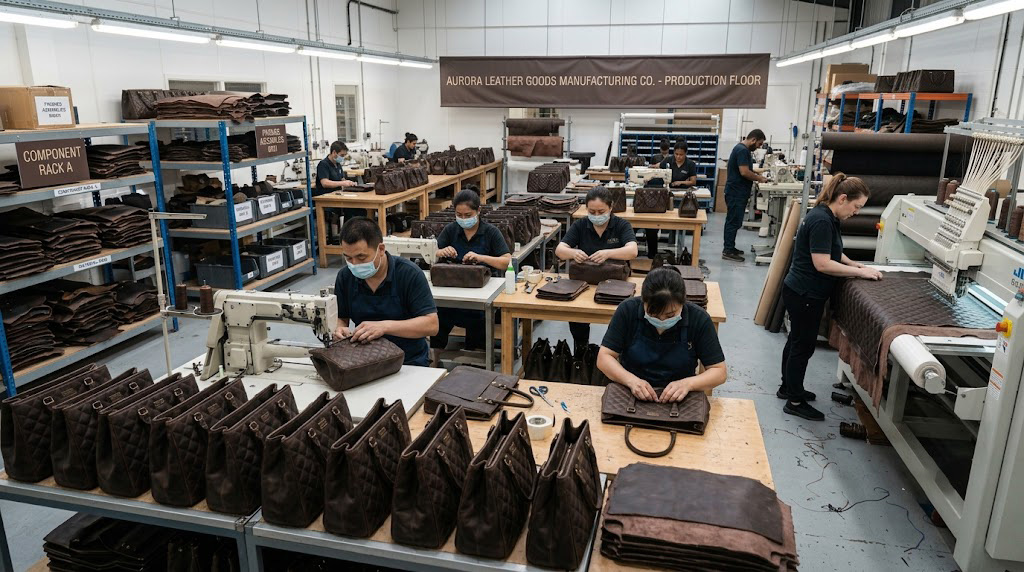
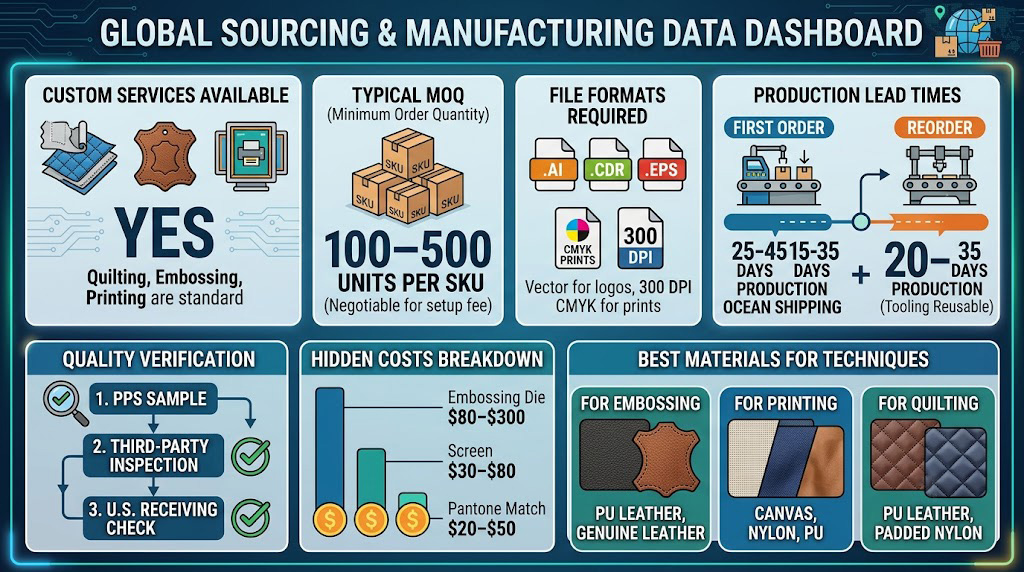
The short answer is yes — almost universally. Quilting, embossing, and printing are now considered standard customization services in the Chinese bag manufacturing ecosystem. From small private-label workshops in Guangzhou to large OEM/ODM factories in Yiwu, Quanzhou, and Dongguan, the overwhelming majority of suppliers offer at least one — and usually all three — of these decoration methods.
The reason is simple: Chinese bag makers have been doing private label and OEM work for Western brands for over two decades. They have the equipment, the technicians, and the workflow already built out. You don’t need a special relationship to access these services; you just need to ask the right questions and structure your inquiry properly.
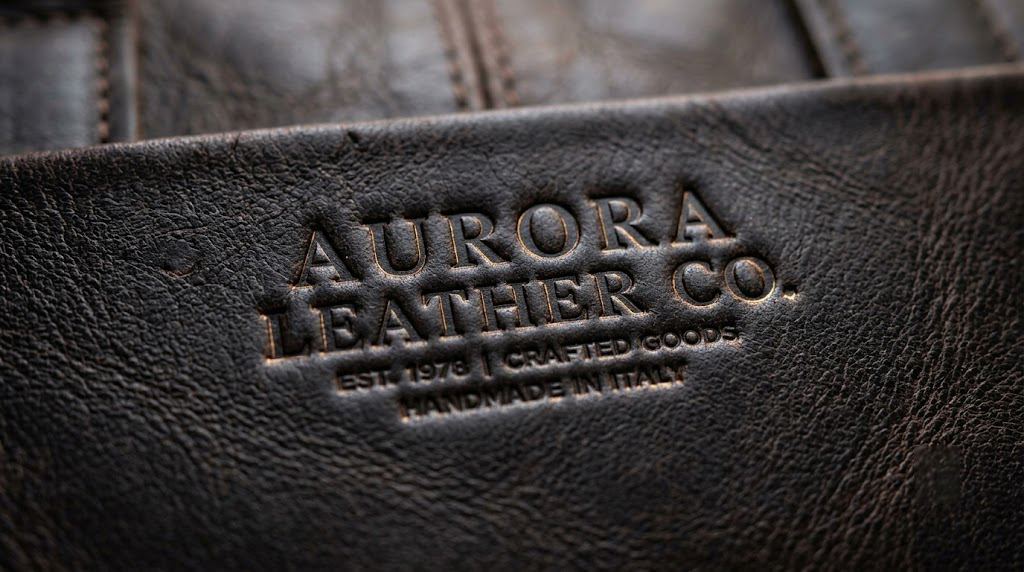
What each method actually does on a finished bag:
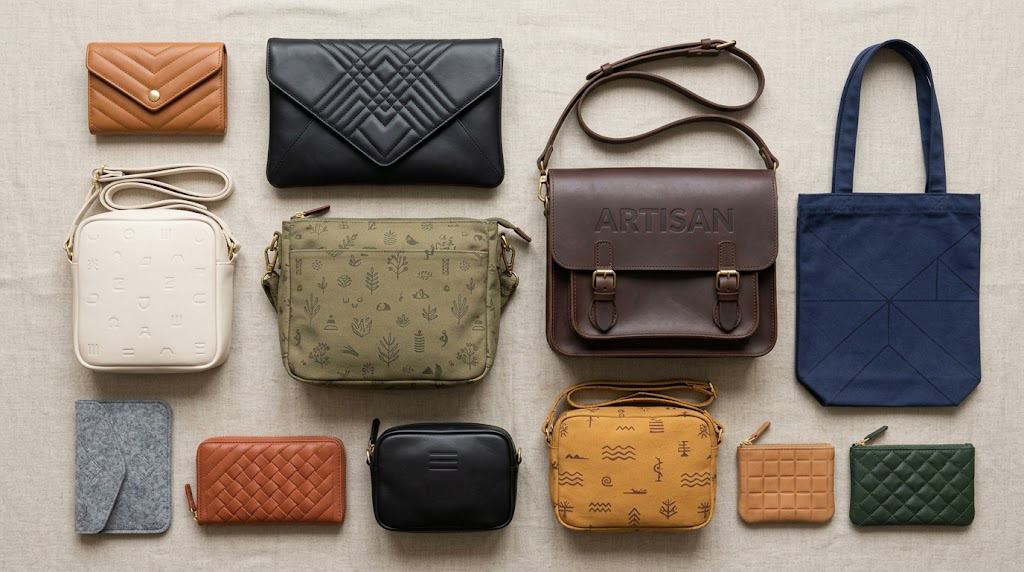
Quilting creates a stitched, dimensional surface pattern — think the iconic Chanel-style diamond stitch, puffy puffer panels, or padded lattice. It adds visible texture, depth, and a premium tactile feel.
Embossing (and its inverse, debossing) presses a metal die into leather, PU, or even nylon to create a permanent raised (or recessed) logo or pattern. Embossed branding reads as “luxury” and cannot peel off, scratch off, or wash off.
Printing — including screen printing, digital printing, heat transfer, and sublimation — applies ink directly to the bag surface. Printing is the right choice for full-color logos, complex artwork, photographs, or pattern-heavy designs.
What to ask your supplier in plain English (a message you can copy and paste):
“Do you offer quilting, embossing, or printing on bags to add texture and brand identity? Please share available techniques, material compatibility, MOQ, sample photos, and lead time.”
A reputable Chinese factory will respond with a clear “yes” and a list of supported techniques. If they don’t, move on — they aren’t the right partner for a branded product.
2. What’s the Realistic MOQ for Custom-Decorated Bags from China?
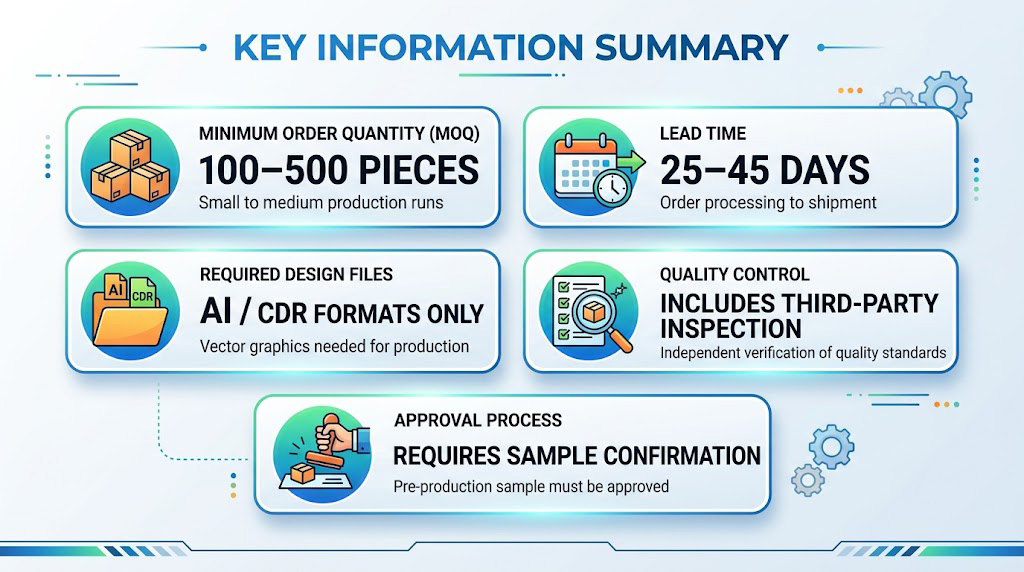
The standard MOQ for bags with custom quilting, embossing, or printing is typically 100 to 500 units per style, per color, per decoration method. However, the exact number depends on three factors:
1. The decoration method itself. Embossing requires a custom metal die (also called a “tooling plate” or “mold”), and the cost of that die is amortized across your order quantity. A 100-unit order with a new embossing die will see a much higher per-unit decoration cost than a 1,000-unit order on the same die. Printing is more flexible — especially digital printing — so MOQ is usually lower.
2. The base bag style. A stock factory bag may have a MOQ as low as 50–100 pieces, while a fully custom-designed bag often requires 300–500 pieces to justify setup costs.
3. The supplier’s own policies. Smaller workshops may accept 50-piece orders, while large factories often enforce stricter minimums. Yiwu-based suppliers are typically more flexible on small MOQs than Dongguan-based luxury-bag factories.
Practical guidance for a U.S. independent bag brand:
First order: Expect to commit to 100–300 units per SKU. This is enough to qualify for wholesale pricing while not overcommitting on a new design.
Reorder: Once your tooling and screens are paid for, you can usually drop the MOQ significantly — sometimes as low as 50 units — for repeat production.
Mixed orders: Some factories will let you combine SKUs to meet MOQ. For example, 150 black totes + 150 tan totes with the same embossed logo = 300-unit combined order.
A few of my U.S. clients have successfully negotiated 50-piece pilot runs for embossing by paying a small setup fee ($50–$150) on top of the per-unit price. Don’t be afraid to ask — but understand the factory has real costs to cover.
3. File Formats and Design Specifications Chinese Manufacturers Need
This is where most first-time importers make costly mistakes. Sending the wrong file format is the number-one reason custom bag orders get delayed, misprinted, or rejected at the sample stage. Here’s exactly what Chinese bag factories expect.
Embossing and Debossing File Requirements
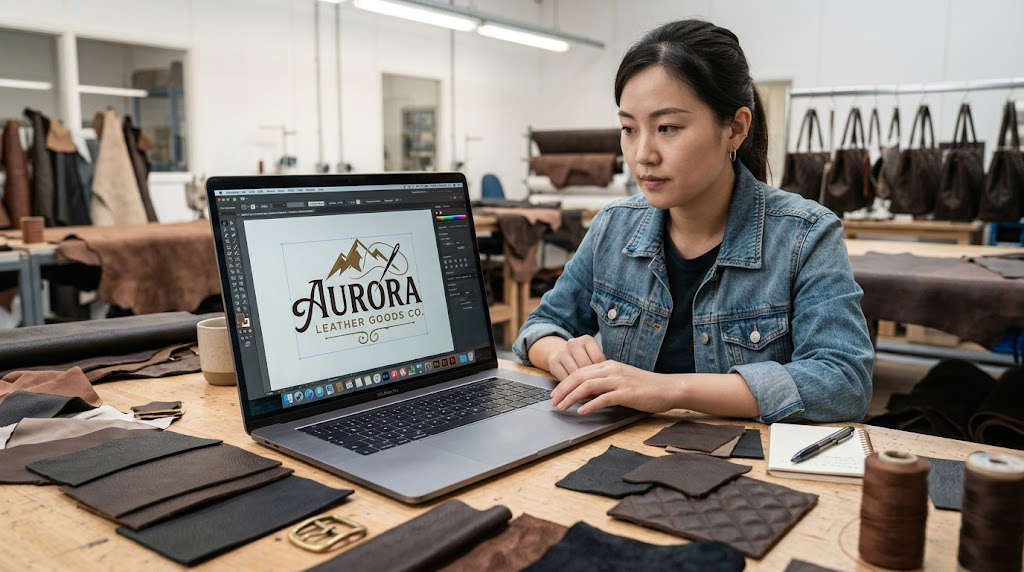
File format: AI (Adobe Illustrator) or CDR (CorelDRAW) vector files are non-negotiable. The factory needs to convert your artwork into a 3D metal die, which requires mathematical vector paths — not pixels.
Preferred file type: .ai, .cdr, .eps, or high-resolution .pdf with text converted to outlines/curves.
Line weight: Strokes should be at least 0.6mm thick for visibility. Anything thinner will not register in the metal die.
Color spec: Embossing doesn’t use color, but you do need to specify “embossed” vs. “debossed,” and provide a physical sample or reference image showing the desired depth and finish.
Logo size: Provide exact dimensions in millimeters (e.g., 30mm x 15mm) so the die maker can scale correctly.
Printing File Requirements
File format: AI, CDR, EPS, or PSD are all accepted. Avoid JPG or PNG for the final artwork — they’ll work for a mockup, but the production team needs layered vector or high-res raster files.
Resolution: For raster artwork, supply files at 300 DPI at the actual print size or larger.
Color mode: CMYK is required for screen printing, digital printing, and heat transfer. RGB files will be color-converted (often badly) and your brand colors will shift.
Pantone matching: If color accuracy is critical, supply Pantone (PMS) codes for every color. Most factories can match Pantone within a 90–95% tolerance using Pantone-coated (C) or Pantone-uncoated (U) references.
Bleed and safe zones: Add 3mm bleed on all sides and keep critical artwork at least 3mm inside the cut line.
Quilting File Requirements
Quilting is different — it’s not a printed logo, it’s a stitched pattern. The factory will need:
A technical sketch or sample image of the desired quilt pattern (diamond, vertical channel, horizontal channel, basket weave, custom logo-quilt, etc.)
Stitch spacing measured in millimeters (typical: 25mm, 30mm, or 38mm between stitch lines)
Quilt depth (the height of the padding puffiness — usually 4mm to 10mm)
Material spec for both the outer fabric and the inner batting (foam, polyester fill, or down-alternative)
Pro tip from the trade floor: Always ask the factory to send back a digital proof (PDF or JPG) showing your logo or pattern placed on the actual bag photo before they start production. This is called a “mock-up proof” and it’s your cheapest insurance against misprints.
4. Lead Time: How Much Longer Does Custom Decoration Take?
Plan for 25 to 45 days of production time after sample approval, plus 15 to 35 days of ocean shipping from China to the U.S. Here’s a more granular breakdown of what “custom” actually adds to your timeline.
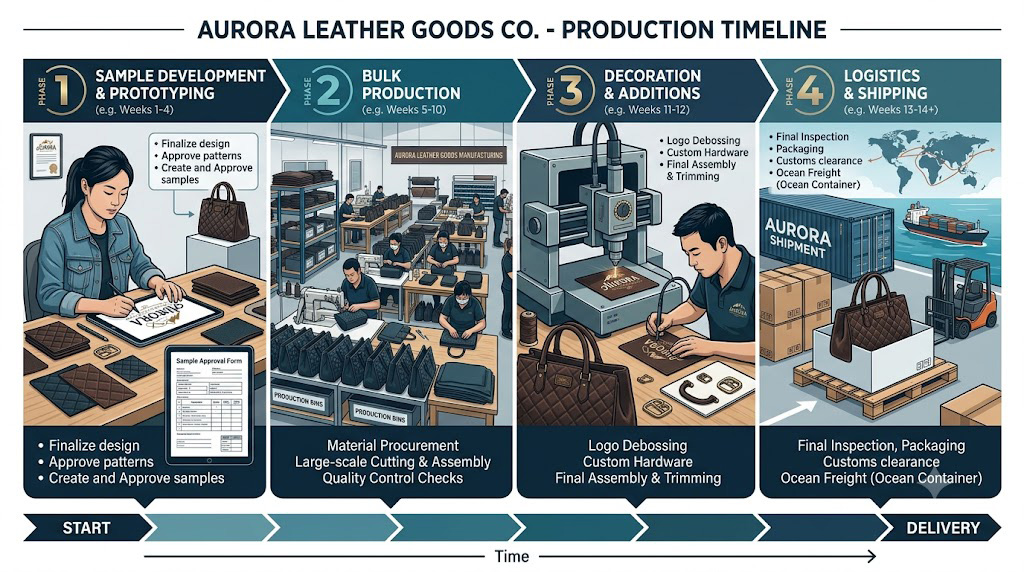
Standard Production Stages (Non-Custom Bags)
1. Material sourcing and cutting — 5–7 days
2. Sewing and assembly — 7–14 days
3. Quality inspection and packing — 2–3 days
4. Total: ~14–24 days
Custom-Decorated Production Stages
1. Material sourcing and cutting — 5–7 days
2. Sample development and shipping to you (if needed) — 7–10 days
3. Sample revision and approval (your responsibility) — 3–7 days
4. Custom tooling/die/mold creation (one-time, first order only) — 5–10 days
5. Sewing and assembly — 7–14 days
6. Embossing/printing/quilt application — 3–7 days
7. Quality inspection — 2–3 days
8. Total: ~30–55 days for first order; 20–35 days for reorders (tooling is reusable)
Shipping Time from China to the U.S.
Ocean freight (most common): 15–35 days port-to-port, depending on West Coast (Long Beach, Oakland) vs. East Coast (New York, Savannah) routing.
Air freight (urgent orders): 5–10 days, but 4–6x more expensive.
Express courier (DHL, FedEx): 3–7 days, used for samples and small rush shipments.
Realistic total timeline for a U.S. importer:
First custom order, by sea: 60–90 days from factory confirmation to your warehouse.
Reorder with existing tooling, by sea: 40–65 days.
Rush sample only, by air: 10–18 days.
If your sales channel is seasonal (back-to-school in August, Black Friday in November, Mother’s Day in May), work backward from your sell date and add a 2-week buffer for U.S. customs clearance, drayage, and inbound logistics.
5. The Proof Approval Process: Your Single Most Important Step
The pre-production sample (PPS) approval is the contractual moment that protects your business. Until you sign off on a physical sample, the factory has no liability for the bulk run. After you sign off, any defects caused by your approved design are yours.
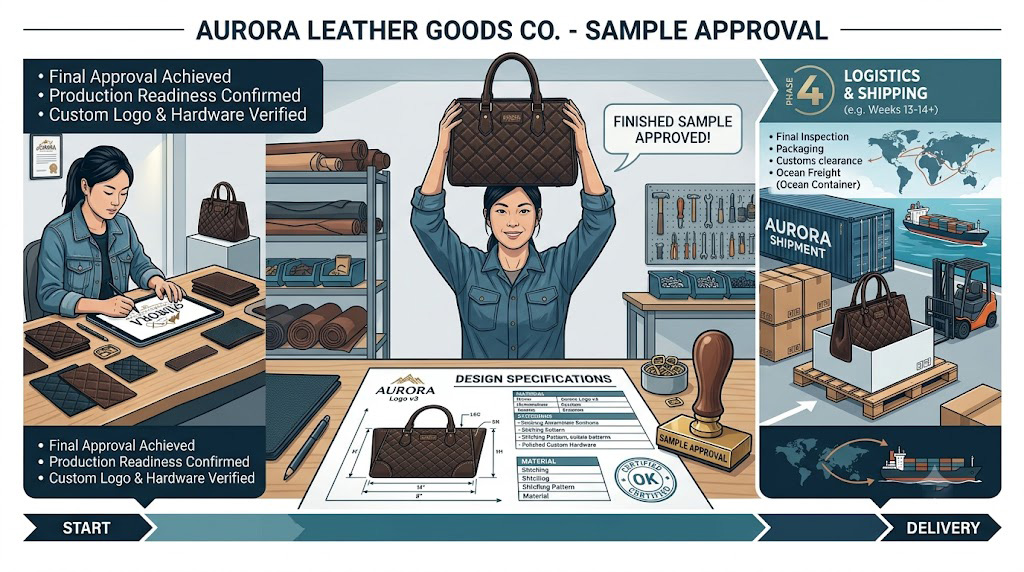
The Standard Proof Approval Workflow for a U.S. Importer
1. Digital mock-up proof (1–2 days): The factory overlays your artwork on a stock photo of the bag and sends a PDF. You review logo placement, size, and color. This is fast, free, and catches the obvious mistakes.
2. Pre-production sample (PPS) (7–14 days, including shipping): The factory produces a single bag using your exact specifications — same material, same decoration, same factory line that will make the bulk order. This sample is shipped to you via DHL/FedEx (you pay $30–$80 for shipping; sample cost is usually waived or refunded against the bulk order).
3. Your evaluation: Hold the bag. Touch the embossing. Stretch the quilting. Look at the print under daylight and indoor light. Compare the Pantone color to your brand swatch.
4. Written approval: Email the factory a clear “PPS approved, please proceed with bulk production” with your name, date, and PO number. Keep this email in your records forever — it is your legal protection if a dispute ever arises.
5. Optional “golden sample” retention: Ask the factory to keep a signed-off sample at their facility as the reference standard for QC during bulk production. This is industry best practice.
What to specifically inspect on a custom-decorated sample:
Embossing: Depth, sharpness, position, consistency across the same logo repeated 5+ times.
Printing: Color accuracy vs. Pantone, edge sharpness, ink adhesion (try scratching gently with a fingernail — it should not flake).
Quilting: Stitch straightness, evenness of puffiness, no puckering at seams, no thread breaks.
Do not skip step 2. I have seen $20,000+ bulk orders scrapped because the buyer approved a digital mock-up and never touched a physical sample.
6. How to Verify Durability and Quality Before Accepting a Bulk Shipment
This is the part nobody likes to talk about: a 5,000-bag shipment can fail catastrophically if the decoration wasn’t tested. Embossing can crack, printing can peel, and quilting can lose its puff after a few weeks of use. You need a three-layer verification process.
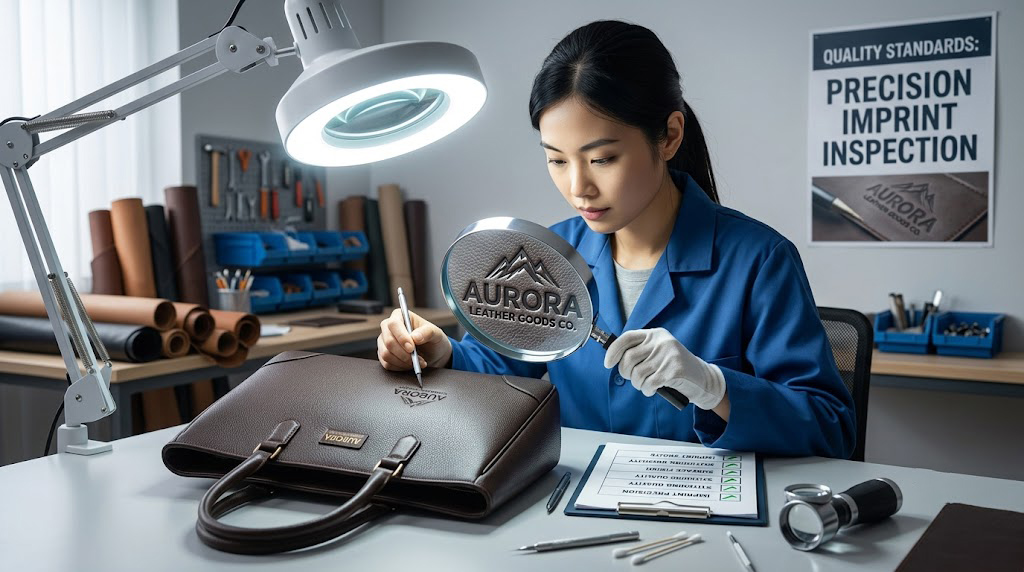
Layer 1: Factory Inline Inspection (Pre-Shipment)
Most Chinese factories perform an inline QC at the decoration station and a final QC before packing. Ask for:
Inline photos/videos of the decoration process (especially for embossing die setup and first print run)
AQL (Acceptable Quality Level) inspection — typically 2.5 or 4.0 for general consumer goods
A copy of their internal QC report with defect counts and lot numbers
Layer 2: Third-Party Inspection (Strongly Recommended)
Hire a third-party inspection company — the most common are Asia Inspection, SGS, Bureau Veritas, or QIMA — to inspect finished goods before they leave China. Cost is roughly $200–$400 per man-day, and they will:
Pull a random statistical sample (usually 10–20% of the lot, depending on AQL)
Test print adhesion using tape-pull or cross-cut tests
Verify Pantone color match with a spectrophotometer
Check embossing depth and consistency
Photograph any defects with the lot clearly labeled
Layer 3: Your Own Receiving Inspection in the U.S.
When the shipment lands:
Inspect at least 30–50 units at random
Check the embossing/print on a curved or stressed surface (handle, strap, base) — that’s where failure shows first
Test one bag in your actual usage scenario (carry it for a week) before signing off on the full lot
Quick DIY Durability Tests You Can Do on a Sample
Tape test: Apply strong clear tape to the printed area, press firmly, and rip it off. If ink comes off, the print will fail.
Rub test: Rub the printed/embossed area 50 times with a dry cloth and 20 times with a damp cloth. Look for wear.
Cold/heat cycle: Leave the sample in a hot car for 24 hours, then in a freezer for 12 hours. Look for cracking on embossed areas and ink peeling on printed areas.
Stretch test: For quilted bags, gently stretch the quilted panel. The stitches should not pop, and the puff should not deflate.
If any of these tests fail on a sample, they will fail at scale — and you’ll be dealing with customer returns, negative reviews, and a brand-damaging recall.
7. Material Compatibility: What Works with What
Not every decoration method works on every material. Before you commit to a design, make sure your base material supports your chosen decoration.
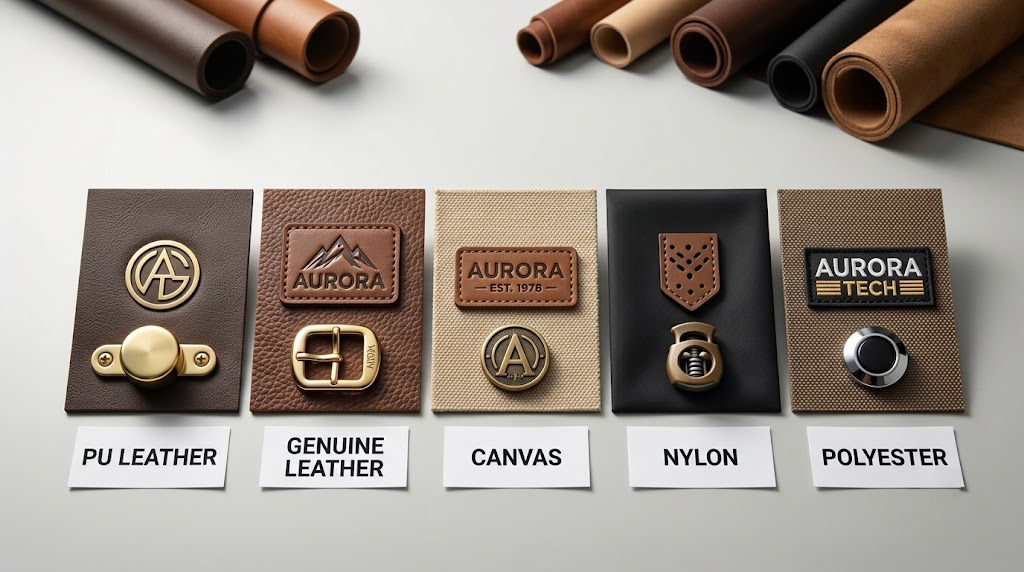
PU (polyurethane) leather: Accepts all three methods. Embossing on PU gives a clean, sharp impression. Printing on PU is excellent. Quilted PU is the most common combination.
Genuine leather: Embossing is the gold standard. Printing works but requires a leather-specific ink. Quilting is easy with a thin batting layer.
Canvas (cotton or polyester canvas): Screen printing and digital printing are perfect. Embossing doesn’t work well on woven canvas. Quilting is possible but adds bulk.
Nylon (ballistic, ripstop, etc.): Heat transfer and sublimation printing are ideal. Embossing requires high heat and pressure, which can warp thin nylon. Quilting works on thicker padded nylons.
Non-woven (PP fabric): Most commonly used for budget tote bags. Screen printing only — embossing and quilting aren’t practical.
When in doubt, ask the factory to send you material swatches with decoration samples — most factories maintain a sample library and will ship you 5–10 swatches for free or a small fee.
8. The Hidden Costs of Custom Decoration (Budget Accordingly)
Decoration is not free, and the per-unit cost is often misunderstood. Here’s a realistic breakdown of the additional fees you should budget for on a first order.
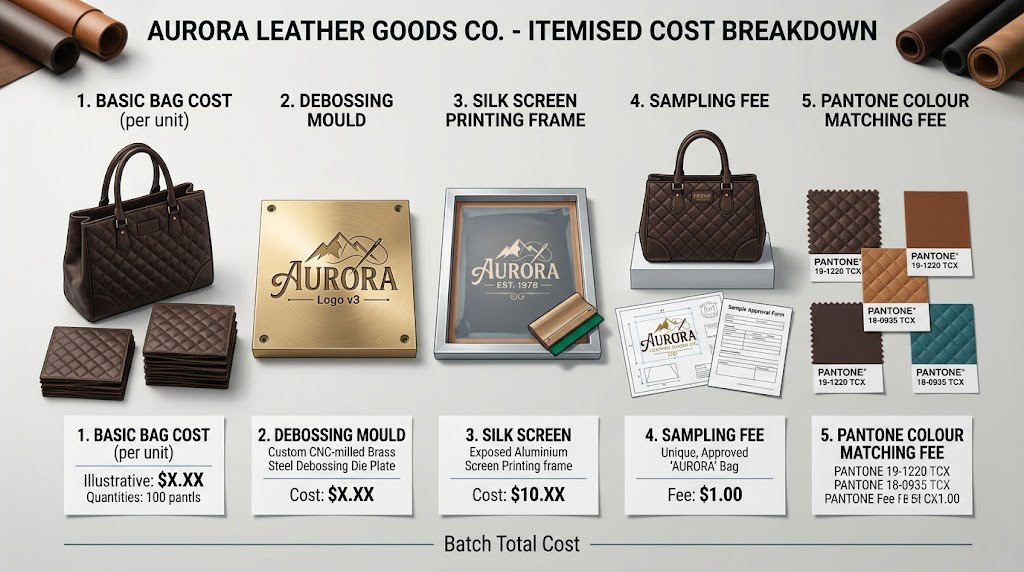
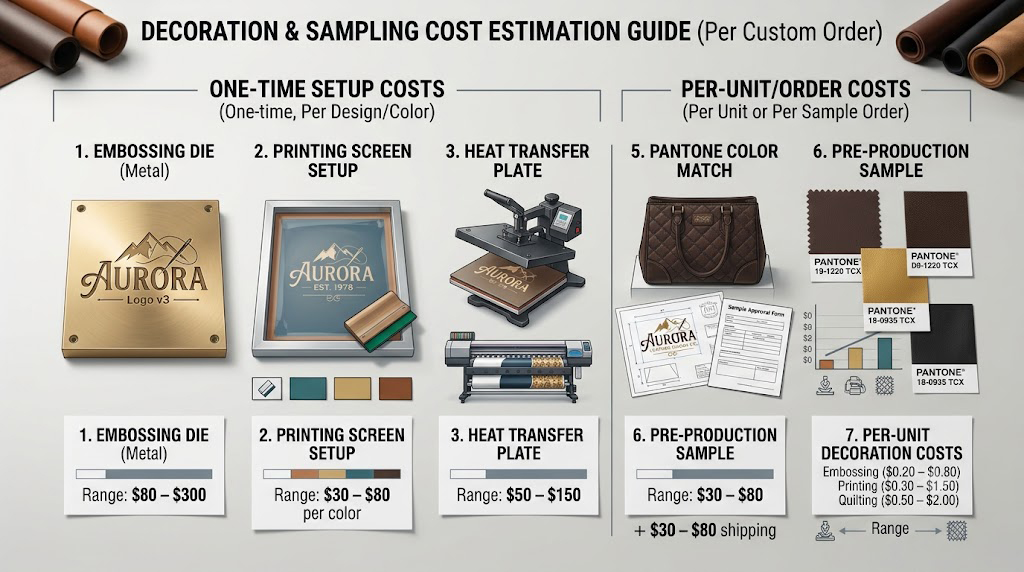
The biggest mistake U.S. buyers make is forgetting the one-time tooling fees on the first PO. A first order of 200 units with a $200 embossing die effectively adds $1/unit to your decoration cost. On a reorder of 1,000 units, that same die costs $0.20/unit. Tooling is an investment, not an expense.
9. Working with a Proof Approval Checklist (Use This With Every Order)
Before you sign off on any sample, run through this checklist. Print it. Laminate it. Use it every time.
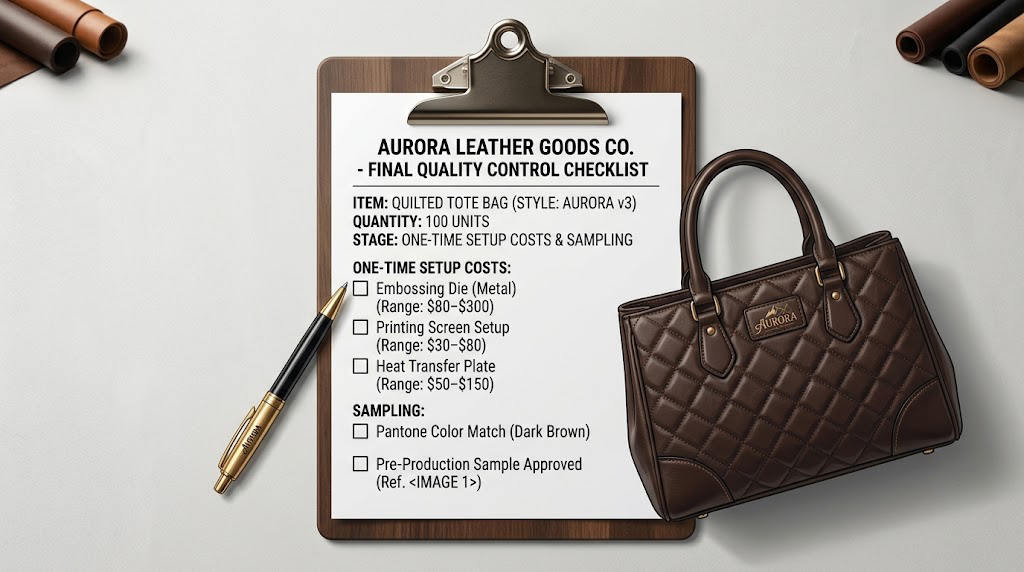
Logo placement matches the approved mock-up (position, height, centering)
Logo size is correct (measured in mm)
Embossing depth is consistent across the entire surface
Print color matches the supplied Pantone (compared under D65 daylight)
No visible ink bleeding, smudging, or color variation
Quilted panels are evenly puffed with no flat spots
All stitches are straight, even, and unbroken
Quilting pattern is symmetrical (left/right mirror match)
No puckering, bubbling, or wrinkling on the decorated surface
Tape-pull test passed (print adhesion)
Hardware (zippers, buckles, metal logo plate) is consistent with branding
Lining, seams, and edges are clean and undamaged
Sample matches the original tech pack in every detail
Photos of the approved sample saved to your project folder
10. Quilted Bags Are Trending — Here’s Why You Should Care
Quilting is the fastest-growing bag decoration trend of the past two years, and the numbers back it up. Search volume on Google for “quilted tote bag,” “quilted backpack,” and “puffer bag” has more than doubled year-over-year since 2022. Mainstream fashion brands — from high-end designers to mass-market retailers — have all released quilted collections, and the consumer appetite is clearly there.
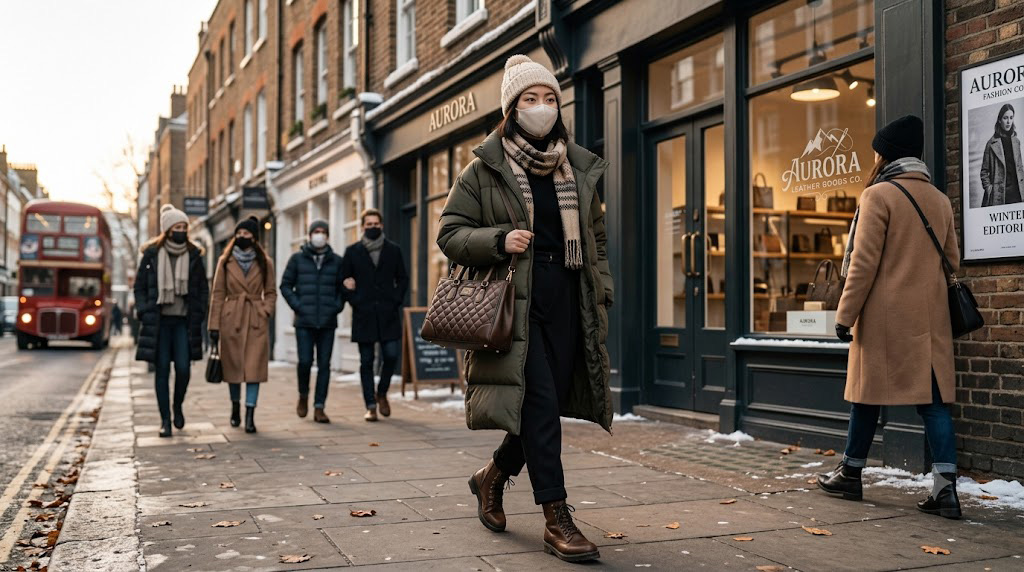
Why quilted bags work so well for independent brands:
Perceived value is high — quilting reads as “premium” and “crafted” even on moderately priced materials.
Custom branding is easy — a quilted diamond pattern with an embossed logo patch is a signature look that doesn’t require full custom tooling on the bag itself.
Margin is healthy — a $12 quilted PU tote can retail for $45–$80 in the U.S. with the right branding and photography.
The trend is broad — quilted totes, backpacks, crossbody bags, laptop sleeves, and even luggage are all riding the wave.
We’ve developed dozens of quilted bag styles specifically for our U.S. and European clients — diamond-quilted totes, vertical-channel puffers, basket-weave crossbodies, and logo-quilted backpacks. If you want to test the category with a low-risk first order, quilting is one of the best entry points into custom decoration.
Final Thoughts: Building a Branded Bag Business Takes More Than Decoration
Quilting, embossing, and printing are tools — what you do with them defines your brand. The difference between a $15 unbranded bag and a $60 branded bag isn’t just the decoration; it’s the consistency, the packaging, the photography, and the customer experience that surrounds it.
My three non-negotiable rules for any U.S. brand sourcing custom-decorated bags from China:
1. Always approve a physical sample. Digital proofs are useful but not contractual. The bulk run will look like the PPS, not the mock-up.
2. Invest in tooling as a one-time cost. A $200 embossing die spread over 5,000 units is 4 cents per bag. Don’t let MOQ pressure push you into skipping this step.
3. Use a third-party inspector on the first three orders. Once you’ve built trust with a factory, you can move to inline inspection only. Until then, pay for the safety net.
China remains the most capable and cost-effective bag manufacturing base in the world for branded products. The factories know what they’re doing. The materials are excellent. The decoration equipment is state-of-the-art. Your job as a U.S. importer is to ask the right questions, demand the right samples, and protect your brand at every step of the supply chain.
If you have a bag brand in development, or you’re scaling an existing line with custom decoration, I’d be happy to help you scope your first order, find the right factory, and structure your proof-approval workflow so nothing falls through the cracks.
Quick-Reference Summary: Sourcing Custom-Decorated Bags from China
Post time: Jul-06-2026