
How Chinese Bag Factories Use Digital Nesting to Cut Costs and Reduce Waste: A Buyer’s Complete Guide
When you’re sourcing bags from China at scale, every square inch of fabric matters. After visiting over 40 factories across Guangzhou, Yiwu, and Quanzhou, I’ve learned one truth: the difference between an average supplier and a great one often comes down to one technical detail — digital nesting optimization. Let me walk you through exactly what this technology means for your bottom line.
What Is Digital Nesting and Why Should a Bag Buyer Care?
Digital nesting (also called CAD marker-making) is the process of using software to automatically arrange pattern pieces on a digital fabric layout to maximize material usage. Think of it as Tetris for your bag panels — but executed by algorithms that respect grain direction, fabric defects, and pattern orientation.
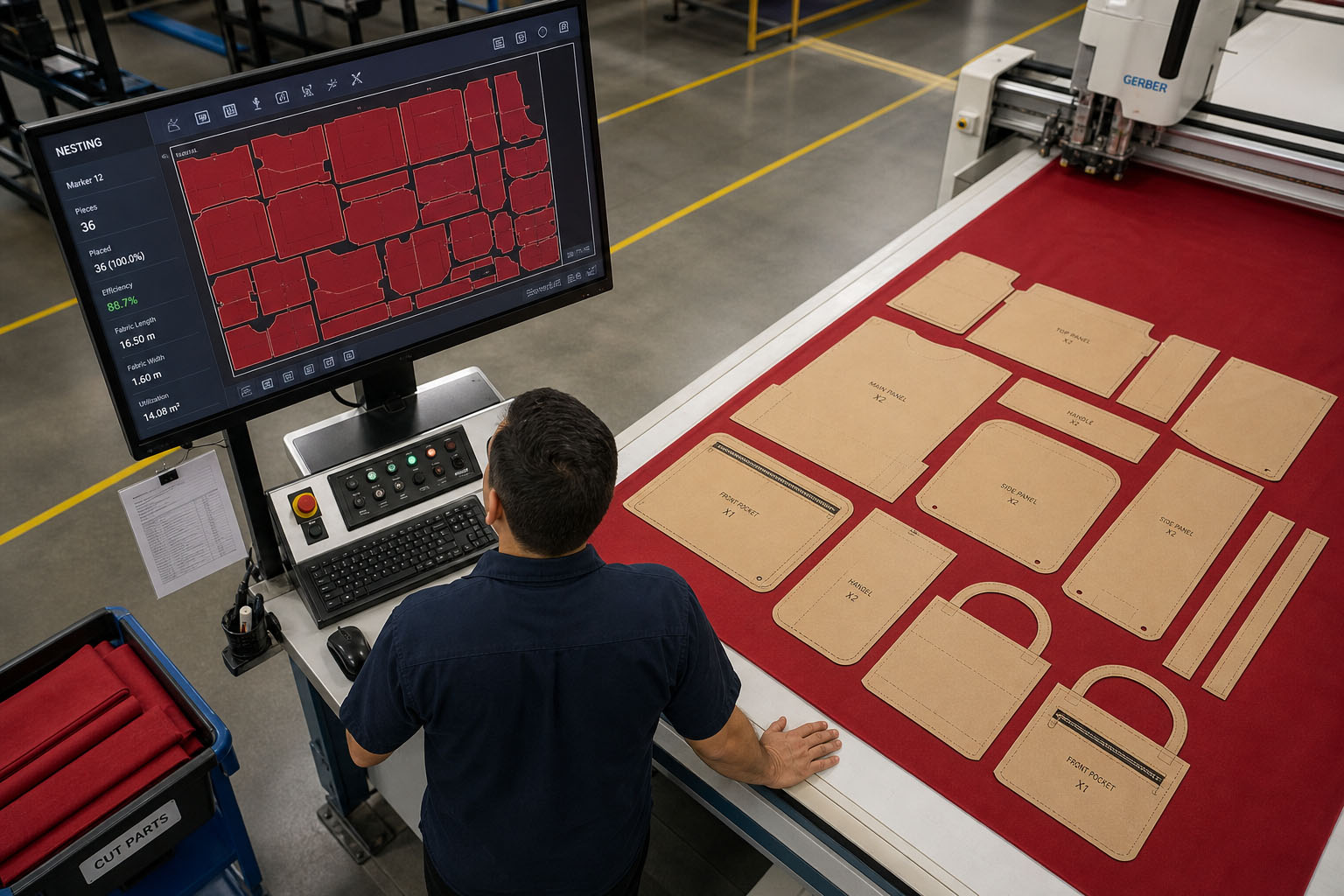
Before digital nesting, factories relied on manual layout — a skilled worker physically arranging cardboard templates on fabric. This method typically achieves 65–75% material utilization. Modern CAD-based systems push that number significantly higher, and the savings flow directly to your unit cost.
The most common software platforms used by reputable Chinese factories include:
Lectra (industry premium, used by LVMH-tier suppliers)
Gerber (AccuMark, popular in mid-to-high-tier factories)
Optitex (favored for fashion-forward and complex patterns)
Kineo (Siemens, growing presence in 2024–2025)
The Numbers: What Material Utilization Rate Can You Realistically Expect?
Based on my factory audits and supplier disclosures, here’s the honest benchmark:
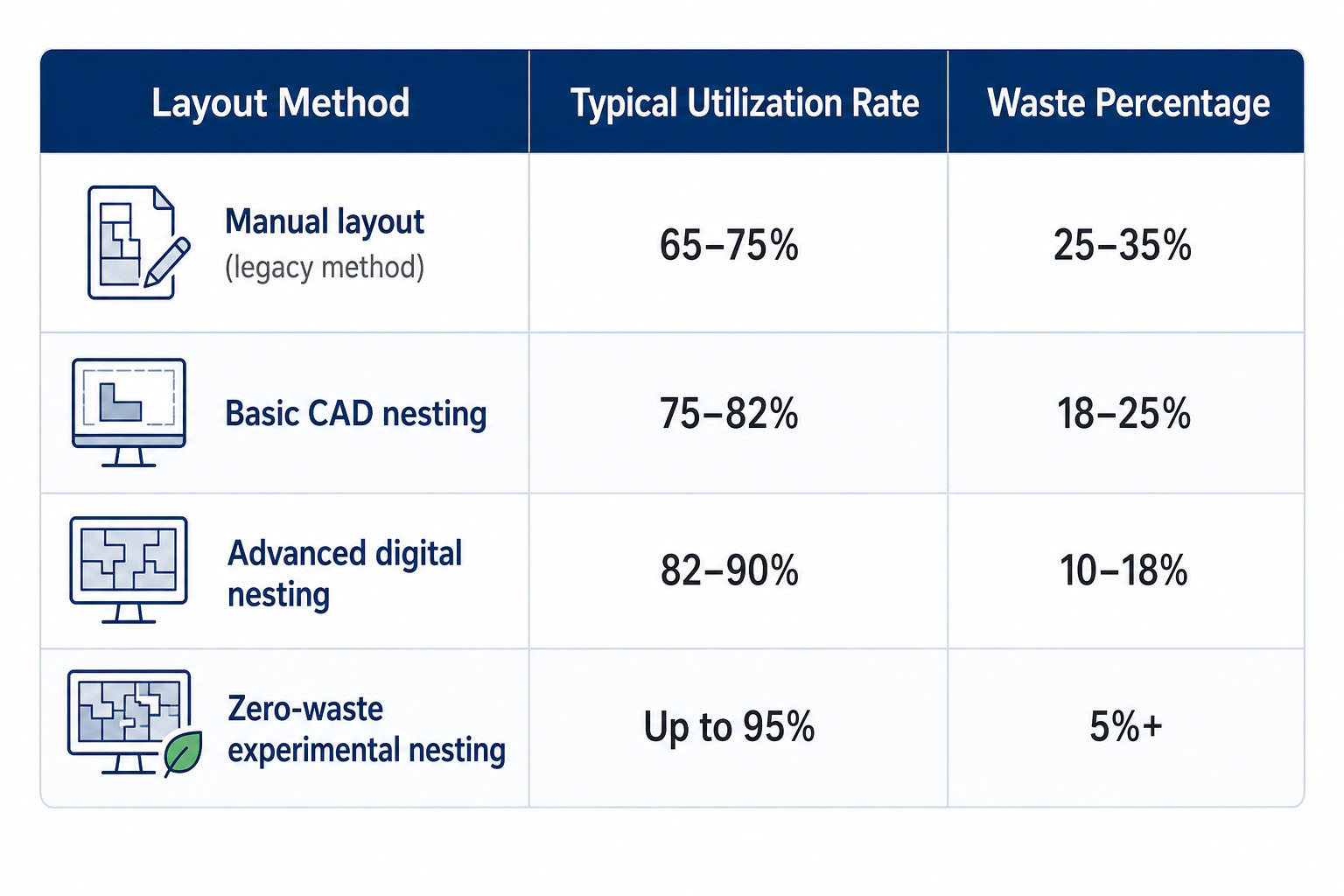
For a well-optimized digital layout, you should expect 75–90% utilization depending on bag complexity. Simple tote bags with rectangular panels nest more efficiently than curved handbags with many small components.
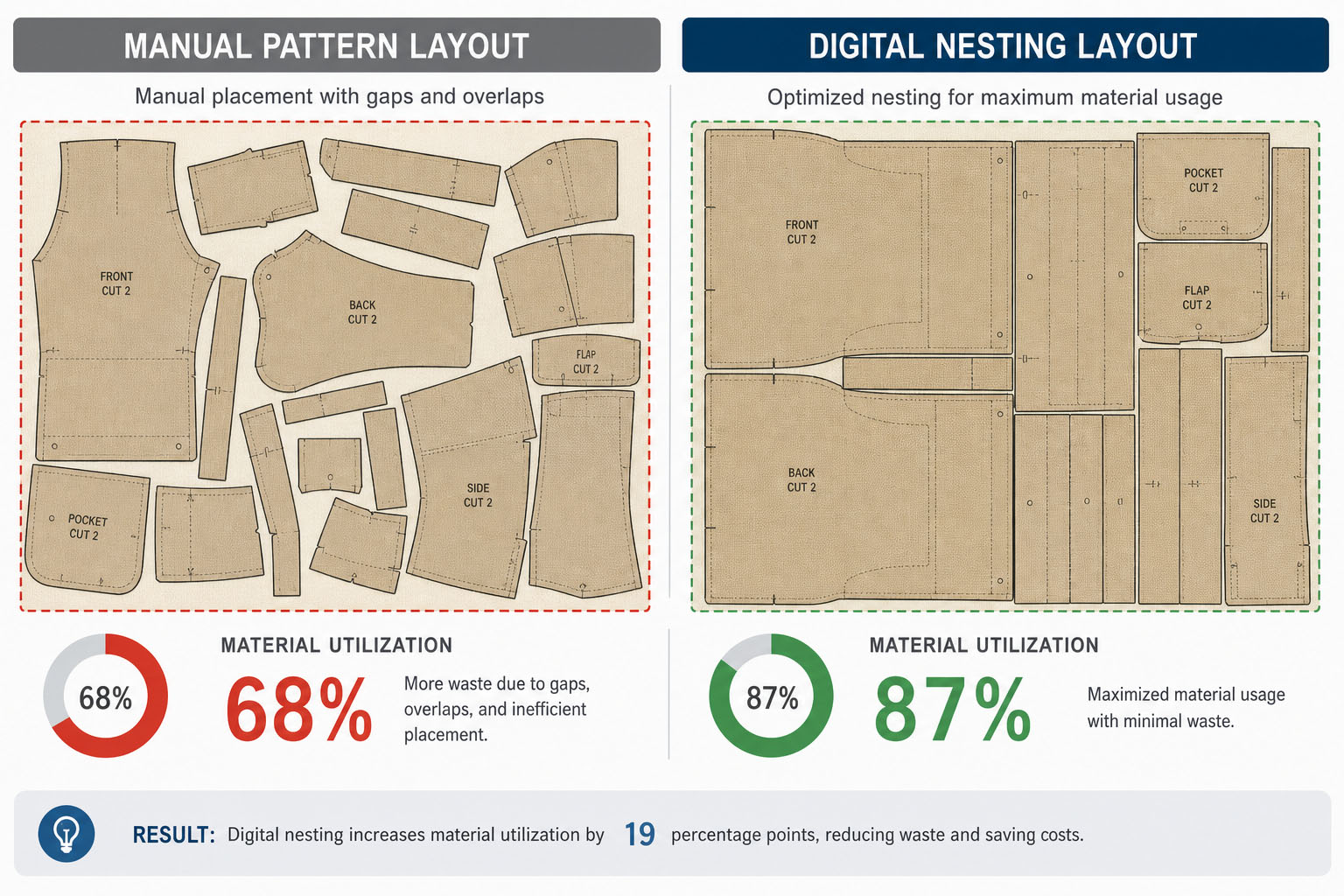
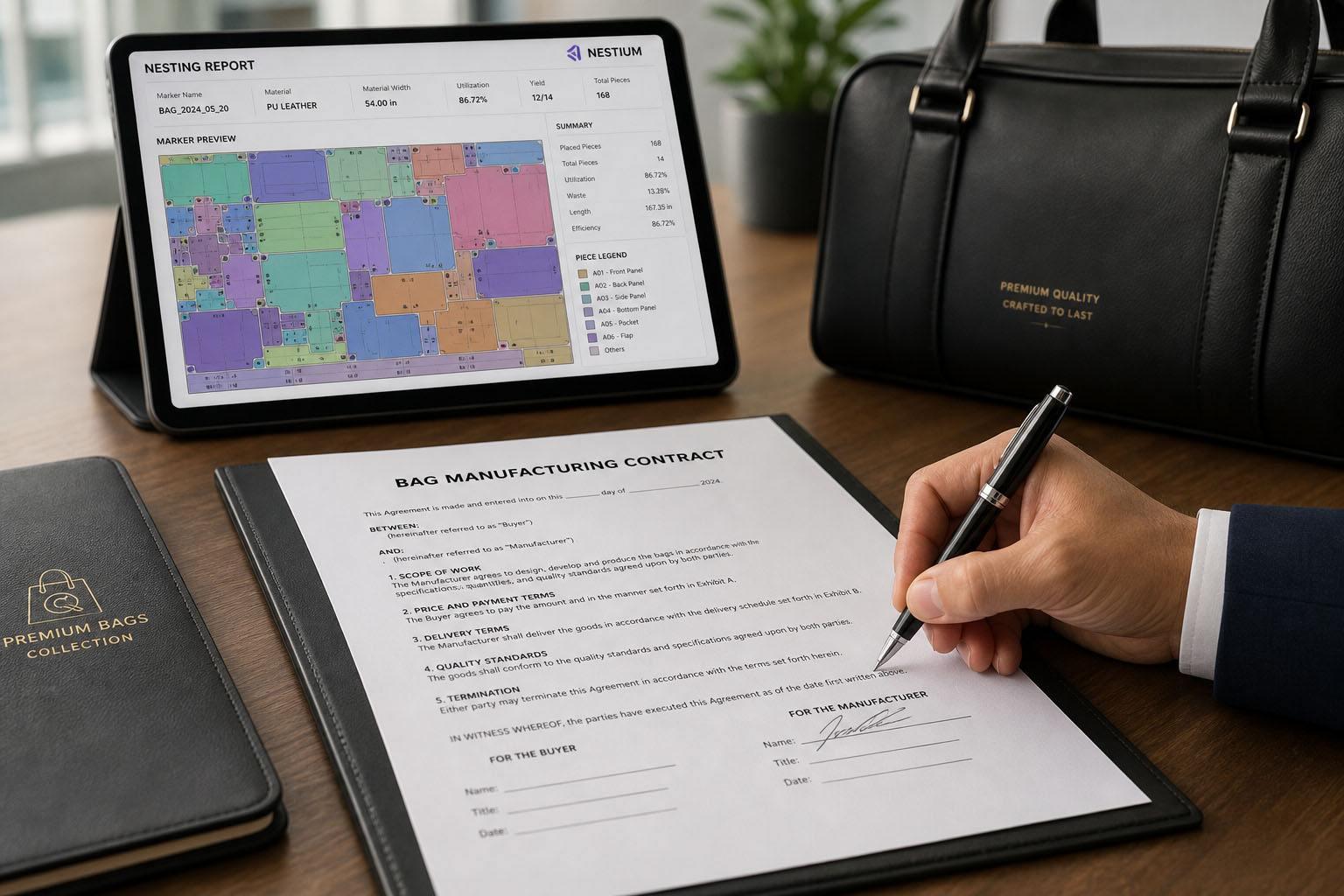
Pro tip for buyers: Always ask the factory for a nesting report before production. It shows the exact utilization rate, fabric consumption per unit, and waste percentage. If a supplier refuses to share this, consider it a red flag.
Cost Savings: How Much Actually Gets Passed to You?
This is where it gets interesting — and where many buyers leave money on the table.
Material typically represents 40–60% of a bag’s total production cost. If digital nesting reduces fabric waste from 25% to 12%, you’re looking at a 13 percentage point material reduction. On a $15 fabric cost per bag, that’s roughly $1.95 per unit in direct savings.
Realistic savings tiers I’ve observed:
Low-end factories (basic CAD): 3–7% material savings
Mid-tier factories (Gerber/Optitex): 8–15% material savings
Premium factories (Lectra + automated cutting): 15–20% material savings
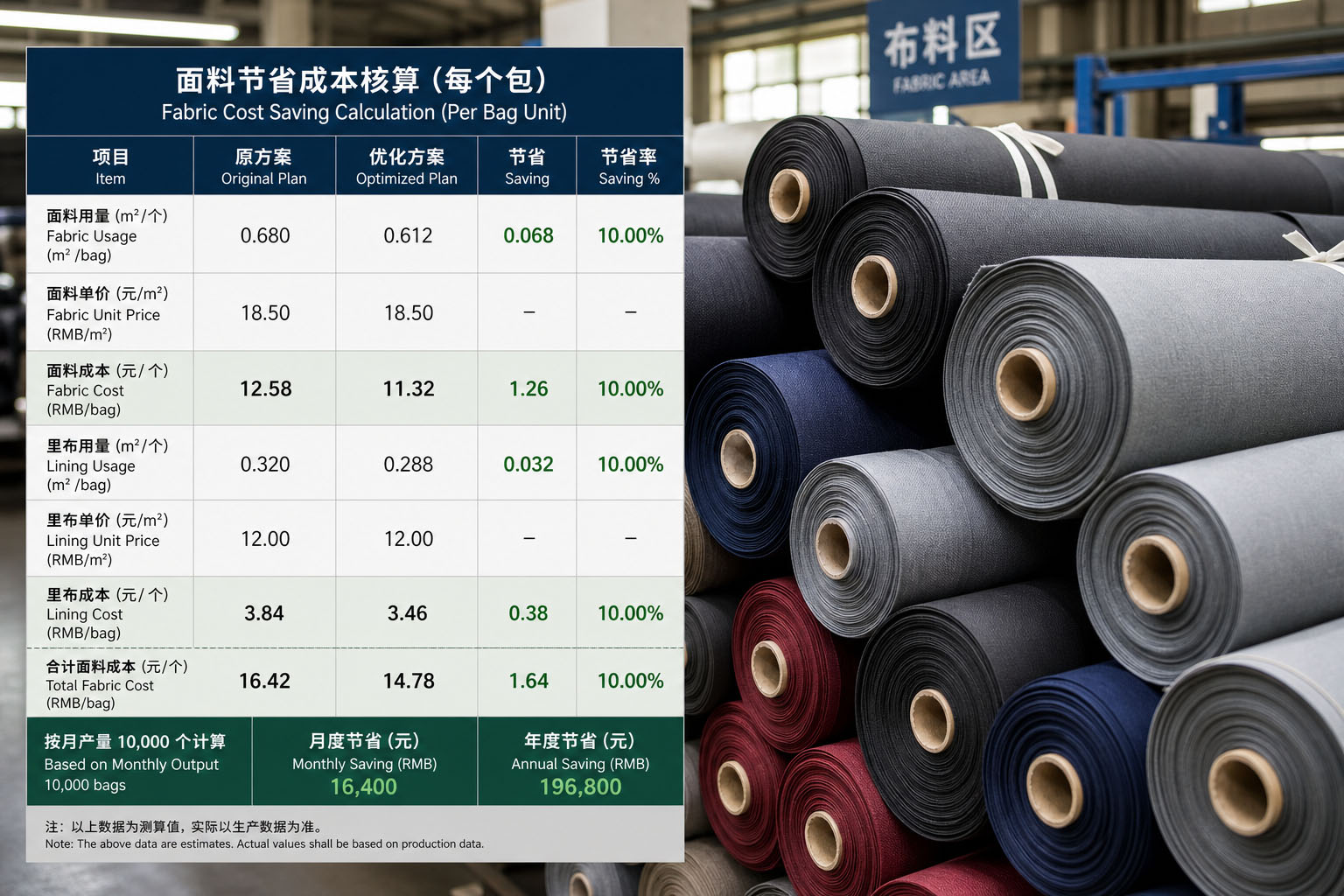
But here’s what most buyers miss: The savings aren’t only about fabric. Digital nesting also enables:
Accurate pre-production costing — you know the exact material consumption before placing the bulk order
Faster cutting preparation — what took 3–4 hours manually now takes 15–30 minutes
Precision integration with CNC cutting — the digital layout is executed by machine, eliminating human error in transferring patterns
On a 5,000-unit order, these efficiencies can translate to $0.50–$2.00 per unit in total cost reduction beyond just fabric savings.
The Dynamic Question: Do Factories Recalculate Nesting When Your Order Quantity Changes?
Yes — but only the good ones do it automatically.
When you change from a 500-unit test order to a 50,000-unit bulk order, the optimal fabric layout often changes because:
1. Different fabric roll widths may become available (full bolts vs. partial)
2. Defect density varies across fabric batches
3. Pattern matching requirements for printed or textured materials
4. Cutting machine bed size considerations for large production runs
A factory running enterprise-grade nesting software will recalculate the layout in minutes when you submit a revised PO. A factory still using semi-manual methods may simply scale up the original marker without re-optimizing — silently increasing your cost.
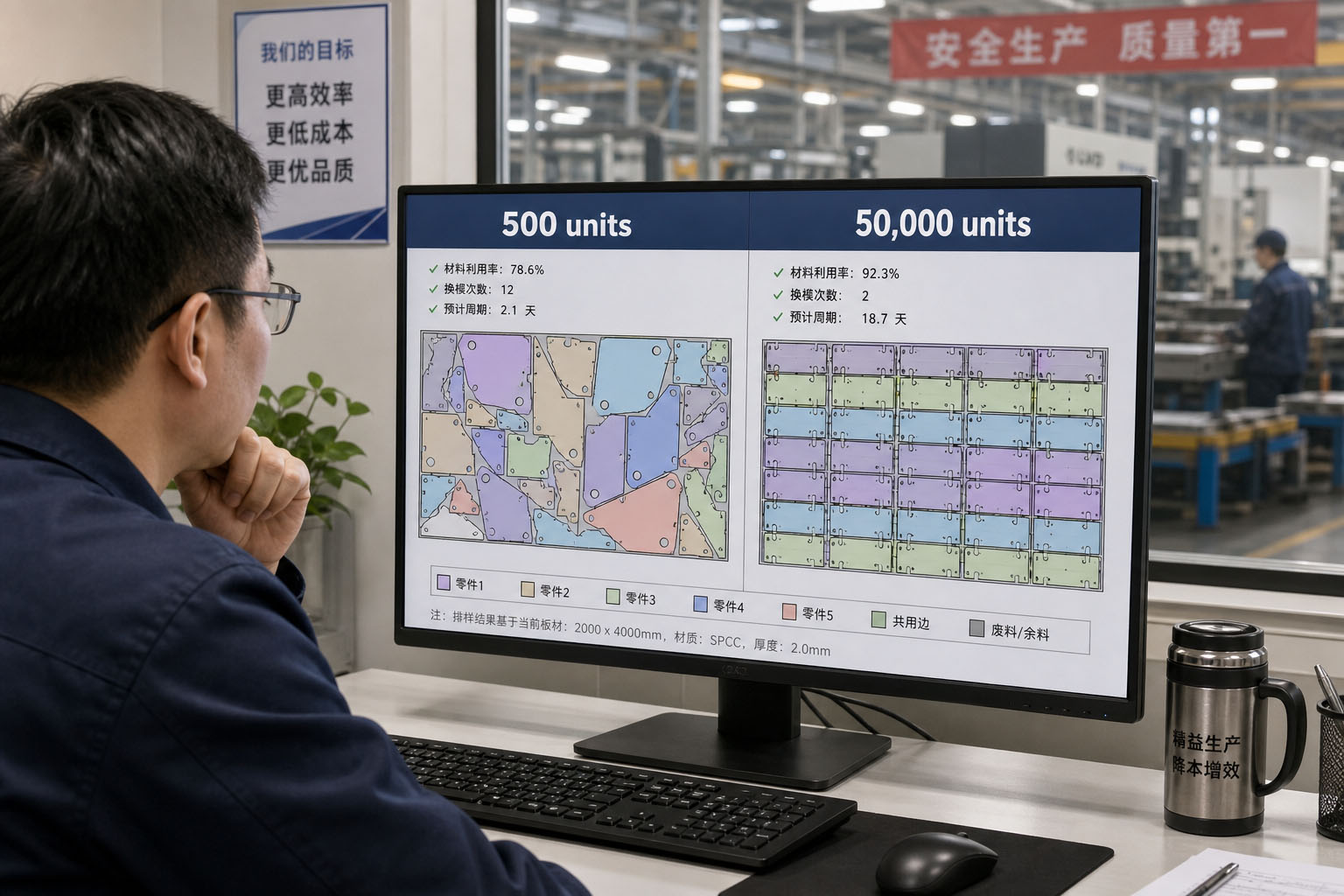
What to ask your supplier:
“When we increase from sample order to bulk order, will you generate a new nesting report and share the updated material consumption per unit?”
If they say yes and can demonstrate it with a side-by-side comparison, you’ve found a technically competent partner.
Minimum Order Quantity: When Does Digital Nesting Pay Off?
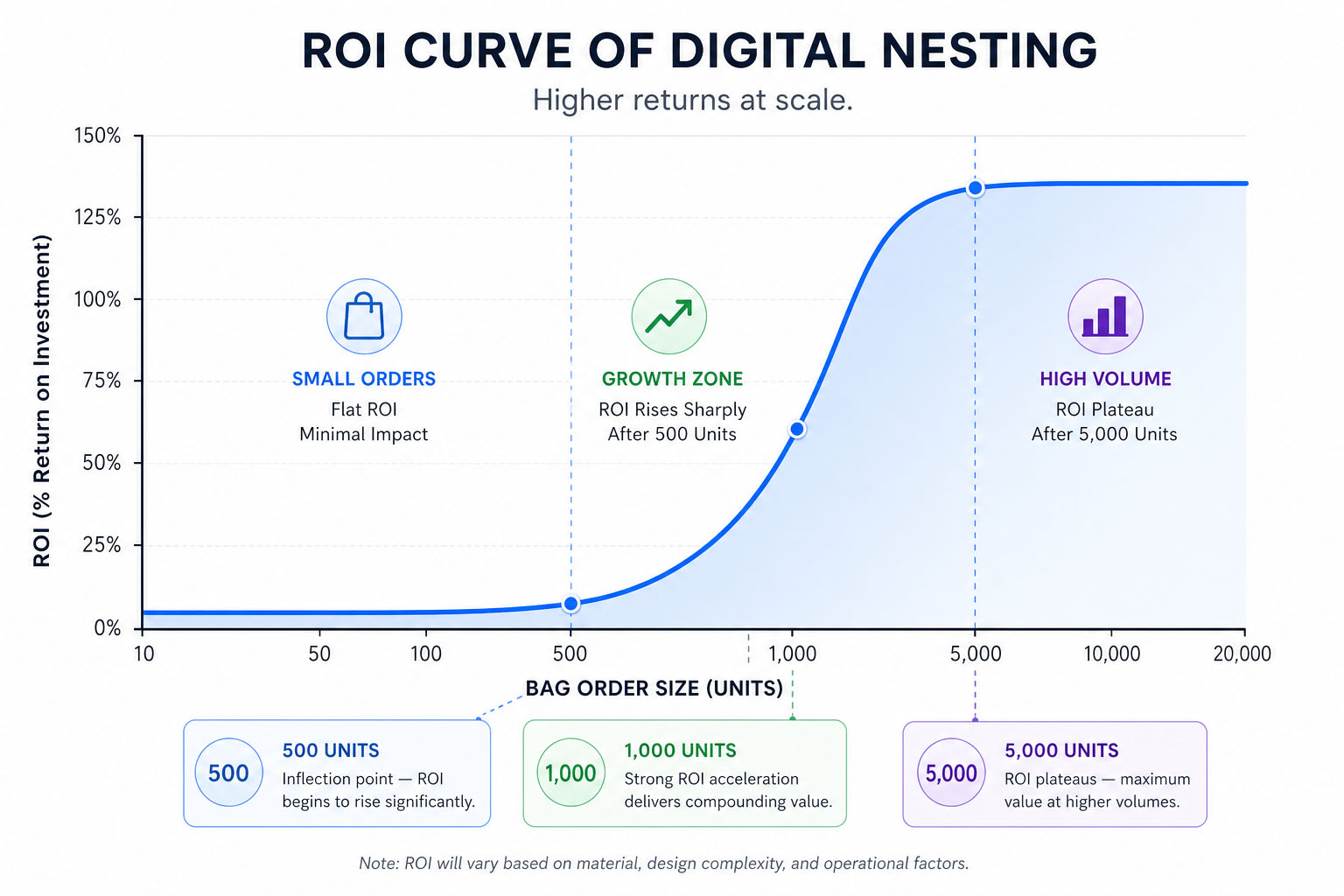
Here’s the practical reality: digital nesting optimization has a setup cost — software licensing, operator time, and pattern digitization. It doesn’t make economic sense for every order size.
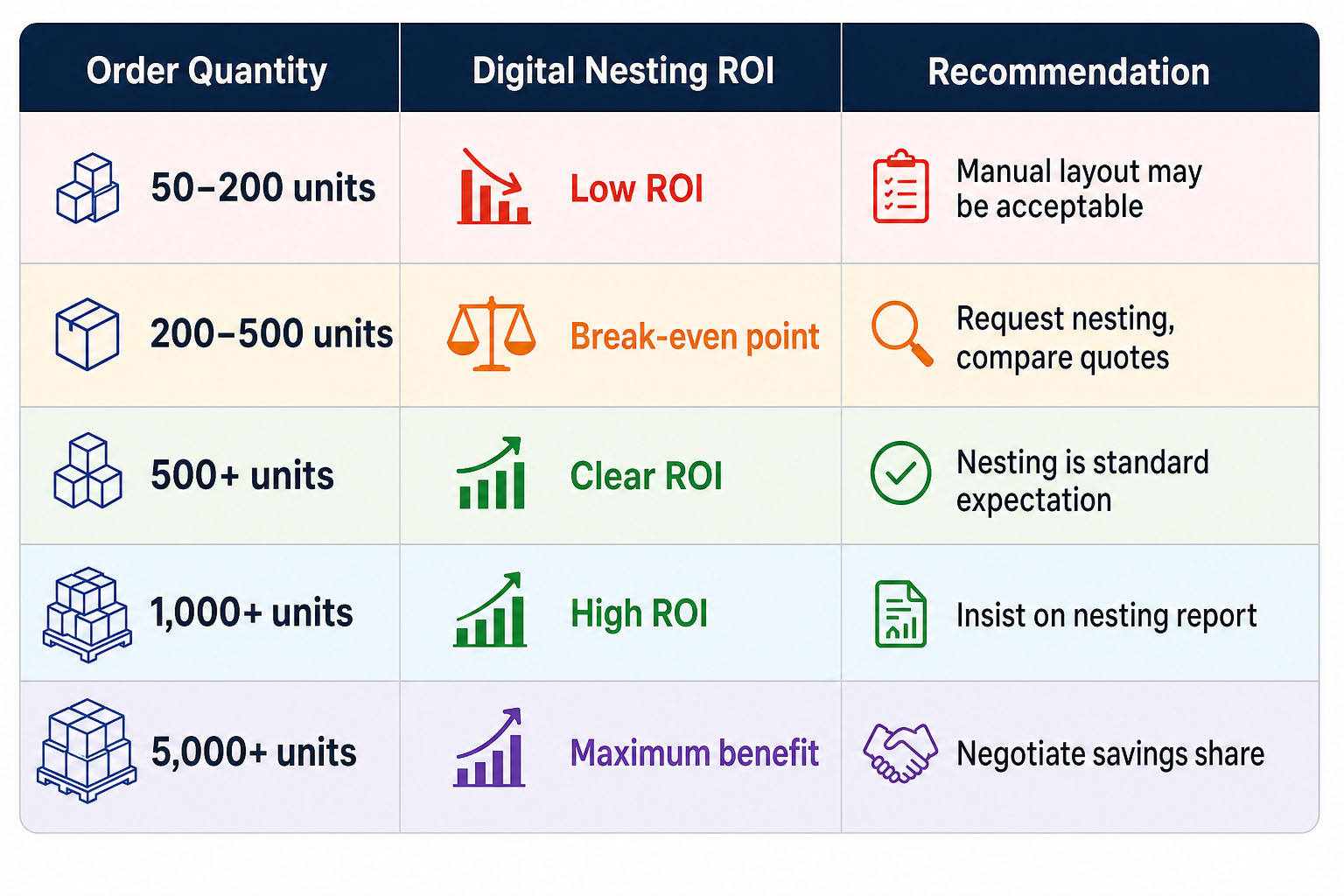
The sweet spot is 500+ units for most bag categories. Below that, the fixed cost of running optimization software can exceed the fabric savings.
However, if you’re sourcing premium materials like full-grain leather or technical fabrics (where waste costs $20+ per square foot), even 200-unit orders justify digital nesting.
One of the underappreciated benefits of advanced nesting systems is multi-material support. The same software that optimizes your main shell fabric can also plan:
Lining fabrics (often a hidden cost driver)
PU/PVC synthetic leather sheets
Canvas and nylon webbing
Reinforcement materials (interfacing, foam padding)
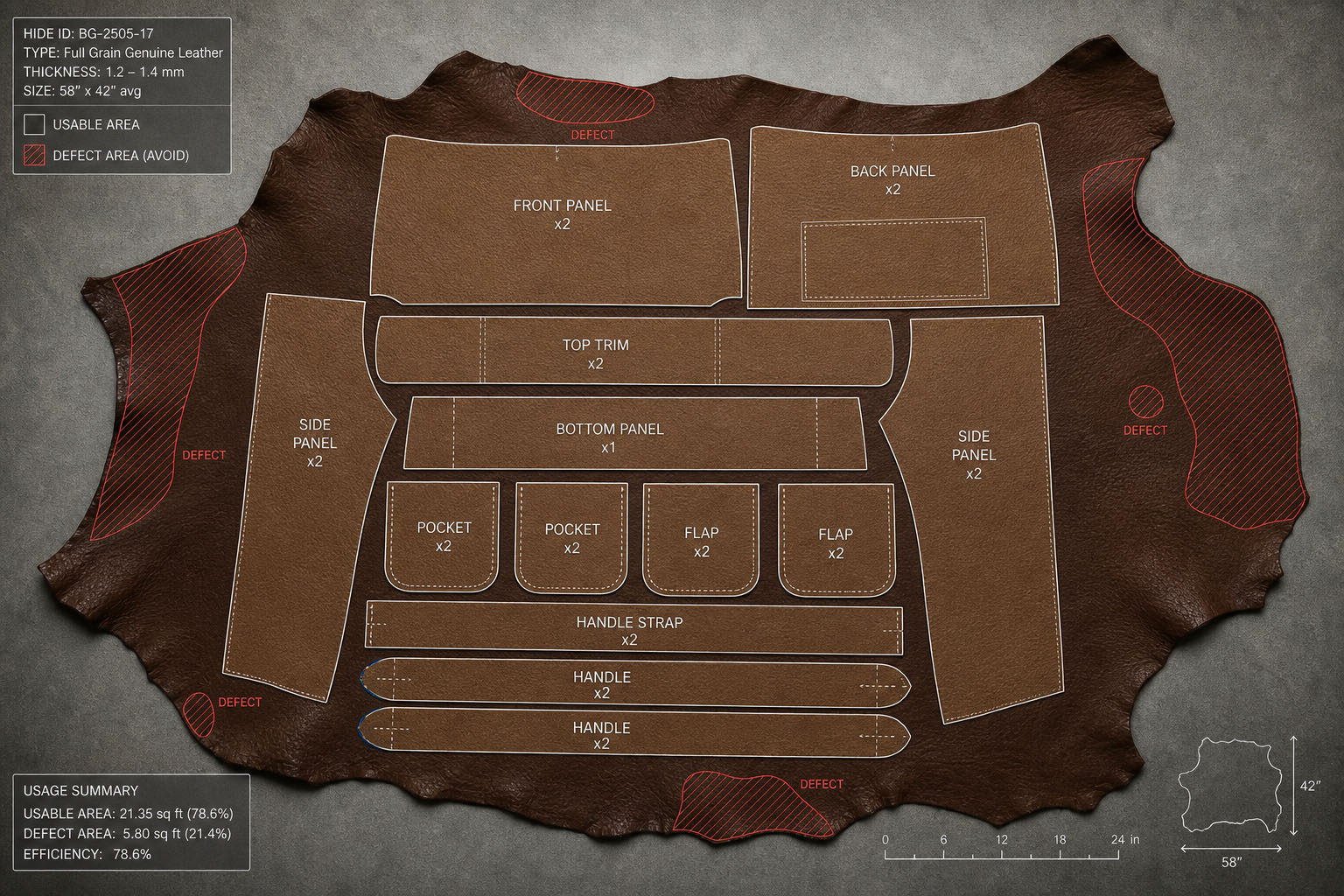
Genuine leather hides (irregular shapes, requiring specialized hide nesting)
For genuine leather specifically, digital hide nesting is a game-changer. Leather hides have irregular shapes, natural defects, and grain variations that make manual layout extremely wasteful. Software like Lectra’s Versalis or Gerber’s hide nesting module can push leather utilization from 60% to 80%+.
After years of sourcing bags from China, here’s the framework I use with every new supplier:
Step 1: Ask if they use digital nesting during the quoting stage (the supplier responses in the section confirm this is becoming standard).
Step 2: Request a sample nesting report for your specific bag design before paying any deposit.
Step 3: Compare the material consumption per unit across 2–3 suppliers — this is often where you spot inflated quotes.
Step 4: Include a clause in your purchase order requiring nesting efficiency confirmation as part of pre-production approval.
Step 5: For orders over 1,000 units, request a waste reconciliation report after production — comparing actual fabric used vs. the digital nesting estimate.
Digital nesting isn’t a luxury feature anymore — it’s table stakes for any serious bag factory. The technology has matured, the software is widely available, and the cost savings are real and measurable.
As a buyer, your job isn’t to understand the algorithms. Your job is to ask the right questions, request the documentation, and use the data to negotiate better pricing. A factory that can’t show you a nesting report is a factory that can’t show you where your money is going.
The factories that invest in digital nesting are the same factories that invest in quality control, on-time delivery, and long-term partnerships. Look for the signal.
Have questions about sourcing bags from China or want me to review your supplier’s nesting report? Drop a comment below or reach out via our [Contact page]. I personally read and respond to every message.
About the Author: Wen is the founder of Trust-U Bag, a US-based direct-to-consumer bag company sourcing premium bags from vetted Chinese manufacturing partners since 2016. ISPBAG has served over 100 customers and works with audited factories in Guangdong and Fujian provinces.
Related articles you might enjoy:
How We Vet Bag Factories in China: A 12-Point Checklist
Genuine Leather vs. PU: What Your Factory Isn’t Telling You
The True Cost of a $20 Handbag: A Factory Floor Breakdown
Post time: Jun-29-2026