
Published for US independent website bag retailers | Practical sourcing guide for direct‑from‑China bag procurement
Disclaimer: This blog is written for US‑based independent website sellers who source bags directly from Chinese factories. It covers critical compliance documentation, traceability requirements, core supplier interview questions, risk warning signals and practical operational suggestions to help you avoid costly sourcing mistakes when purchasing handbags, backpacks, tote bags and other bag products from China.

As a US‑based bag seller running your own e‑commerce website, sourcing bags directly from Chinese manufacturers is one of the most effective ways to control product costs, expand product lines and build private‑label bag collections. However, many independent store owners focus only on unit price, sample appearance and delivery schedule while overlooking one high‑stakes area: order‑specific archived production records, third‑party test reports and full‑chain traceability documents.
When you sell bags to American consumers, you are subject to strict US market compliance rules including CPSIA, Proposition 65 and REACH‑aligned chemical requirements. If product quality complaints, safety investigations or regulatory audits happen, you as the US importer bear primary legal responsibility. Without complete archived production, test and traceability paperwork for each production batch, you will have no valid evidence for dispute resolution, product recall handling or official compliance inspection. Many new US bag sellers learn this lesson only after receiving defective goods, facing customer claims or encountering regulatory inquiries.
This guide walks you through what documentation qualified Chinese bag factories should keep, what questions you must add to your RFQ, acceptable supplier responses, obvious red‑flag warnings and actionable next‑step workflows for your China‑sourced bag projects. It also covers four core practical questions every US bag buyer must clarify with Chinese suppliers: minimum‑order quantity and sample rules, OEM‑ODM customization capacity, production lead‑time and US‑bound shipping solutions, plus post‑delivery defect, return and quality‑dispute policies.
Why Production Archives, Test Reports and Traceability Matter for US Bag Importers
Many overseas buyers assume all Chinese export factories automatically save full‑set documents for every order. This is not the case. Document retention standards vary wildly between formal export‑oriented manufacturers, ISO‑certified factories and small informal workshops.
✅ Most established Chinese bag manufacturers archive production records digitally for each order, with typical retention periods of 3–5 years.
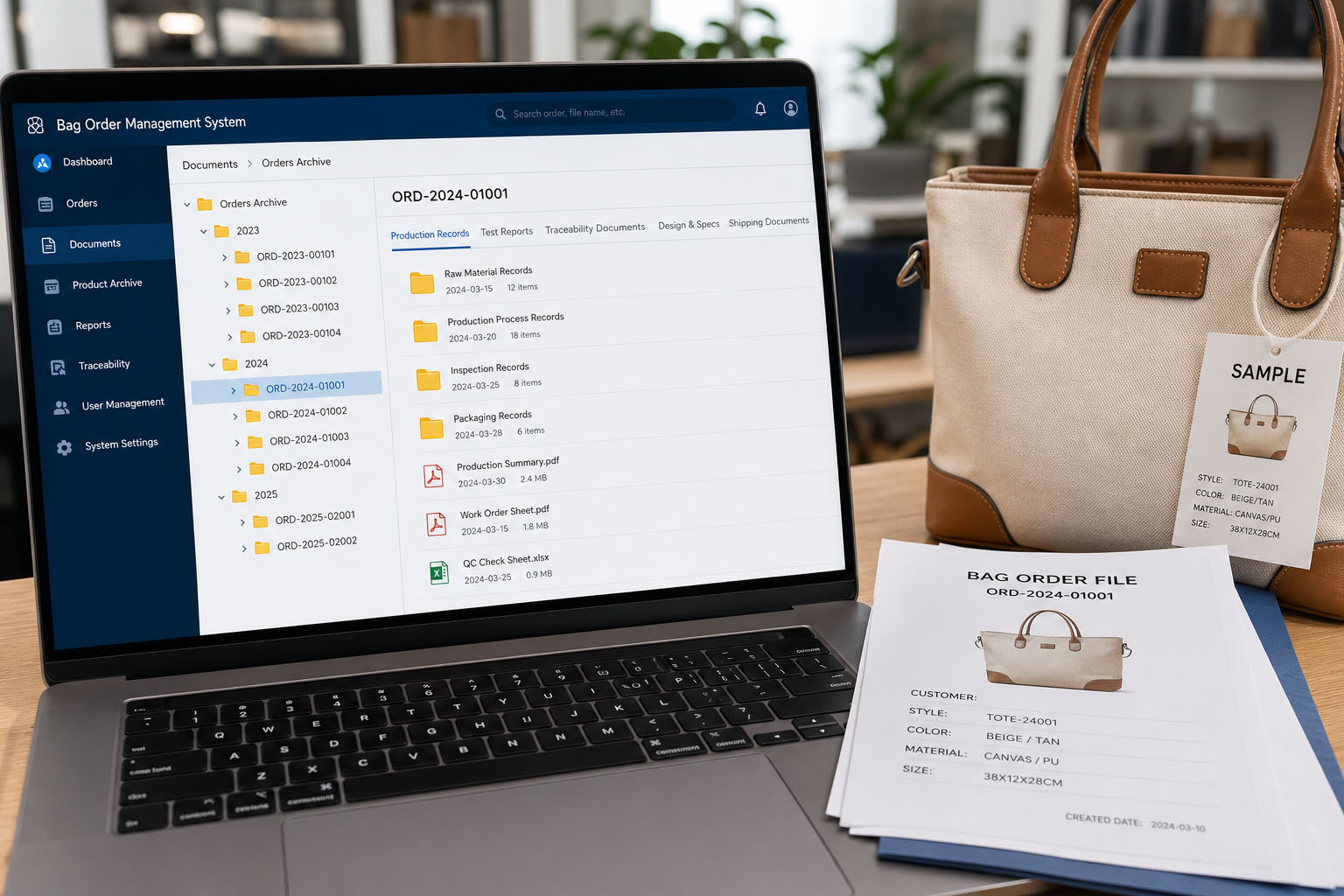
Well‑run export‑focused bag factories store order‑related files in digital systems rather than only keeping physical paper copies. A 3‑to‑5‑year retention cycle is standard for export‑oriented bag suppliers. This matches the risk‑exposure cycle for US importers, because consumer complaints or regulatory follow‑ups can arise months or even years after a shipment arrives in the United States. Small manual workshops may save documents for only several months or discard files once an order is finished, leaving you with zero supporting documentation when you need it.
✅ Export‑oriented factories commonly retain third‑party test reports (SGS, BV, Intertek) aligned with destination‑market regulations such as REACH, CPSIA, or Prop 65.
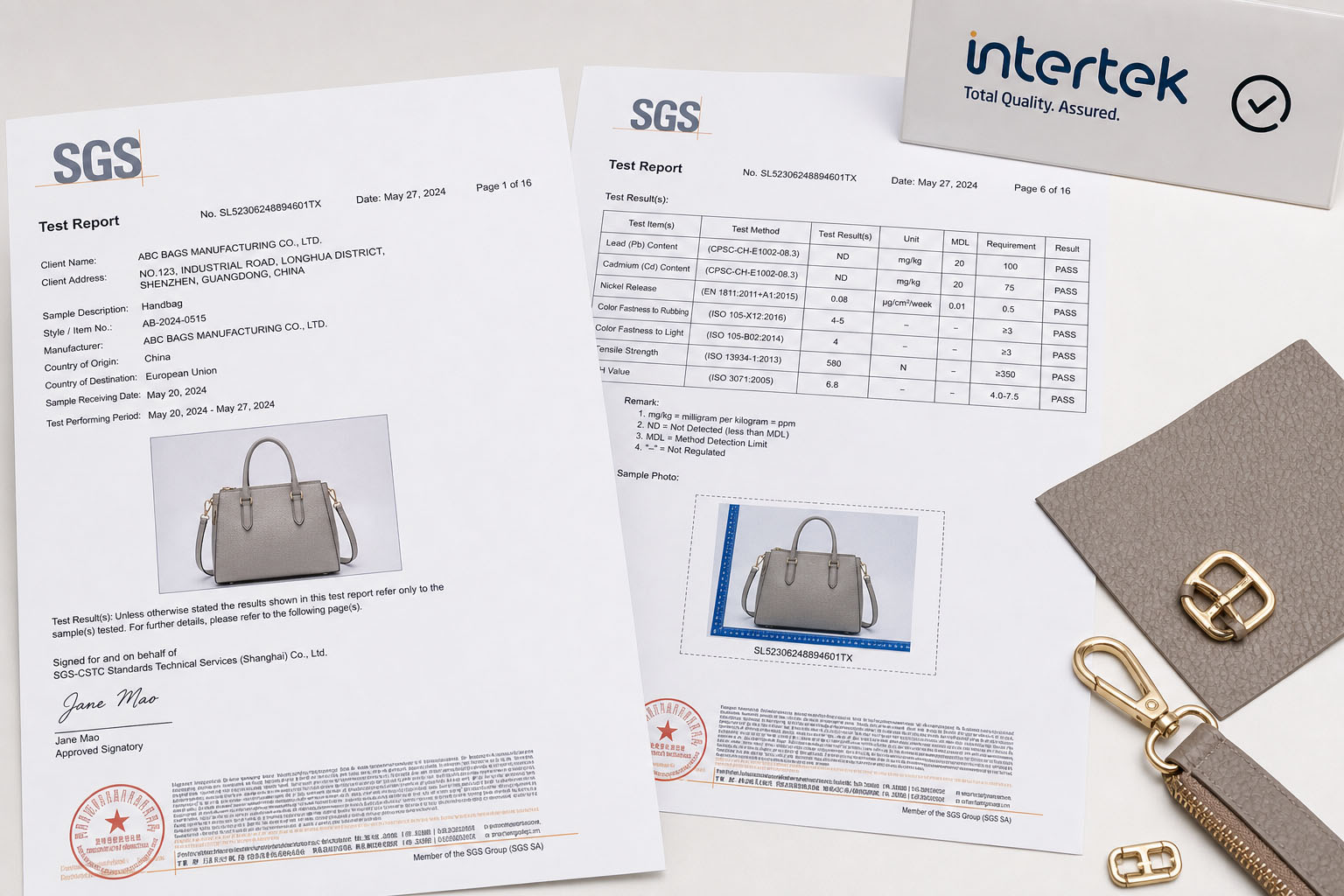
For bags sold inside the United States, chemical safety, heavy‑metal limits and physical‑performance requirements are non‑negotiable. Reliable Chinese bag exporters cooperate with internationally‑recognized accredited laboratories such as SGS, BV and Intertek. They generate test reports targeted to US market rules: CPSIA for items touching consumers, California Proposition 65 chemical‑exposure standards, and REACH‑restricted‑substance screening. These reports cover fabric, hardware, leather, lining and finished‑bag performance. Without valid third‑party lab reports, you face risks of marketplace removal, customer lawsuits and regulatory penalties in the US.
✅ Material traceability documents—including fabric, leather, and hardware origin certificates—are routinely maintained for compliance audits.
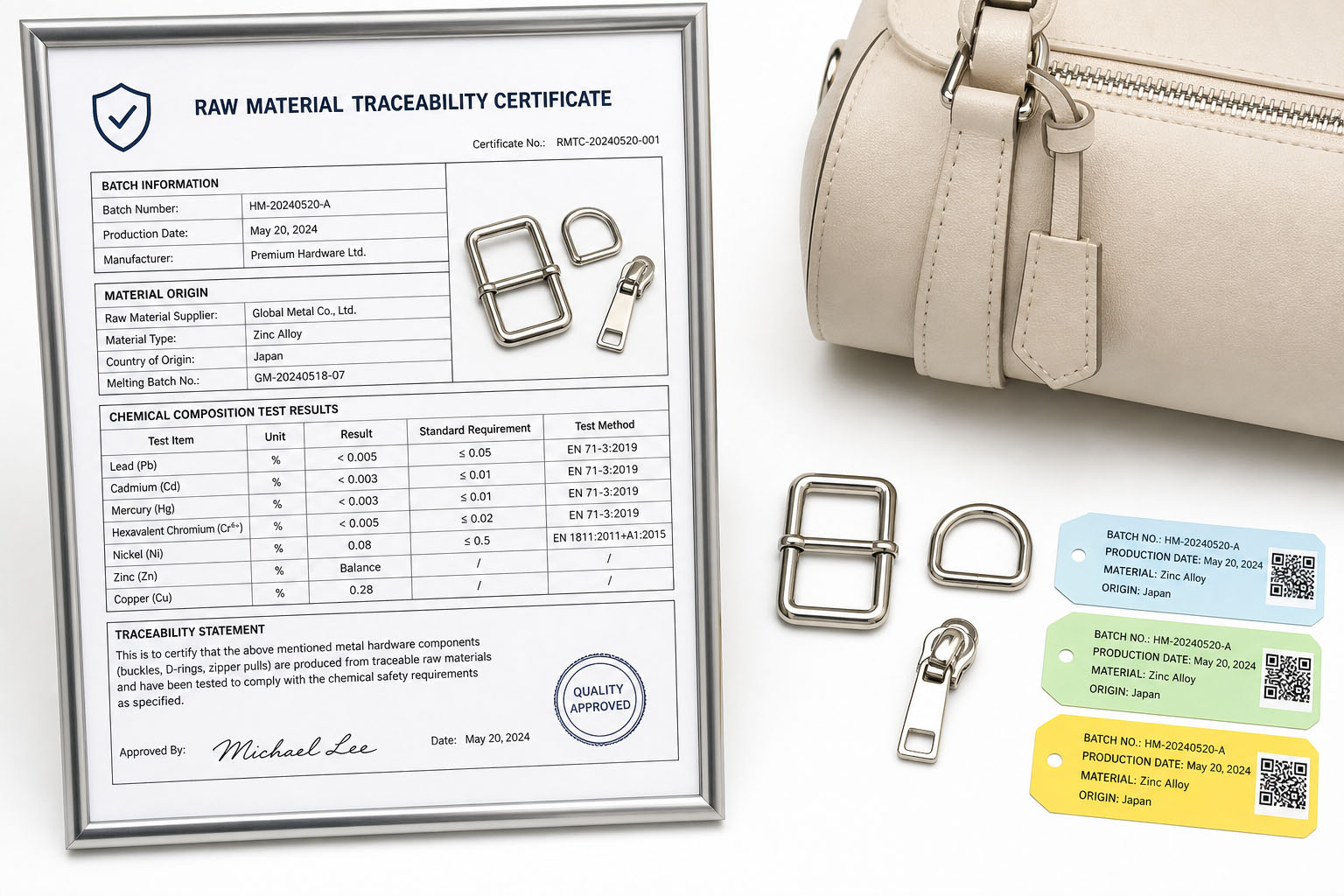
Traceability does not stop at finished‑bag inspection. Qualified suppliers keep origin certificates and batch records for every incoming raw‑material component: outer fabrics, lining fabrics, genuine or synthetic leather, zippers, buckles, metal hardware and plastic accessories. These documents become critical evidence during compliance audits. If one batch of hardware fails heavy‑metal testing, traceability paperwork lets you isolate the affected production lot instead of recalling your entire inventory.
✅ Production batch numbers, date codes, and lot records are standard practice, enabling traceability from raw materials to finished products.
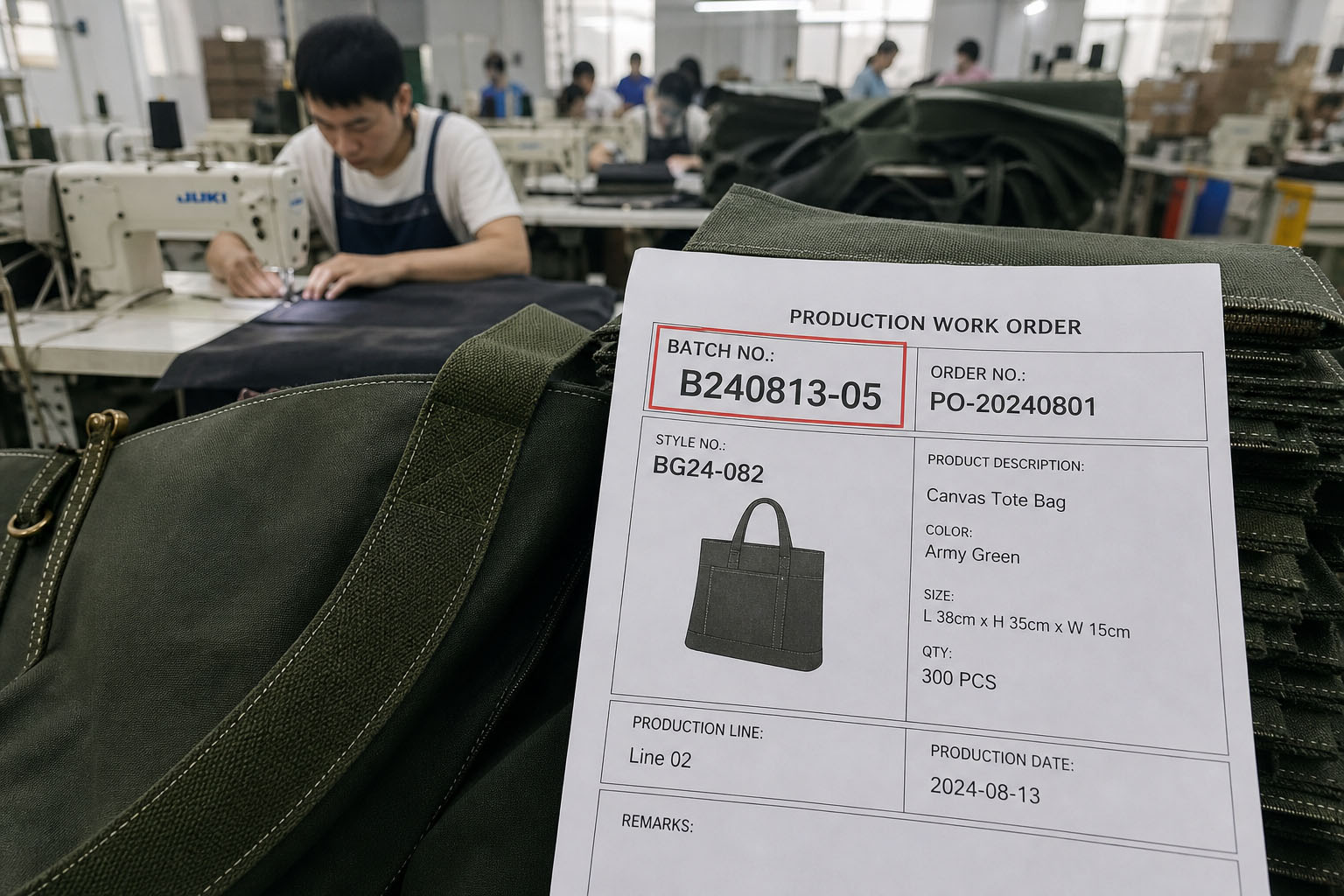
Professional bag factories assign unique batch numbers and production date codes to every production run. This creates a clear traceability chain: raw‑material batch → cutting lot → sewing workshop batch → finished‑goods inspection lot → export carton marking. Every exported carton can be linked back to its corresponding production batch. When quality problems emerge with a portion of your shipment, batch‑code records help you figure out whether the issue comes from one bad material batch or general factory‑process failure.
✅ Quality inspection reports covering IQC, IPQC, and OQC stages are typically documented and made available for repeat‑export buyers.
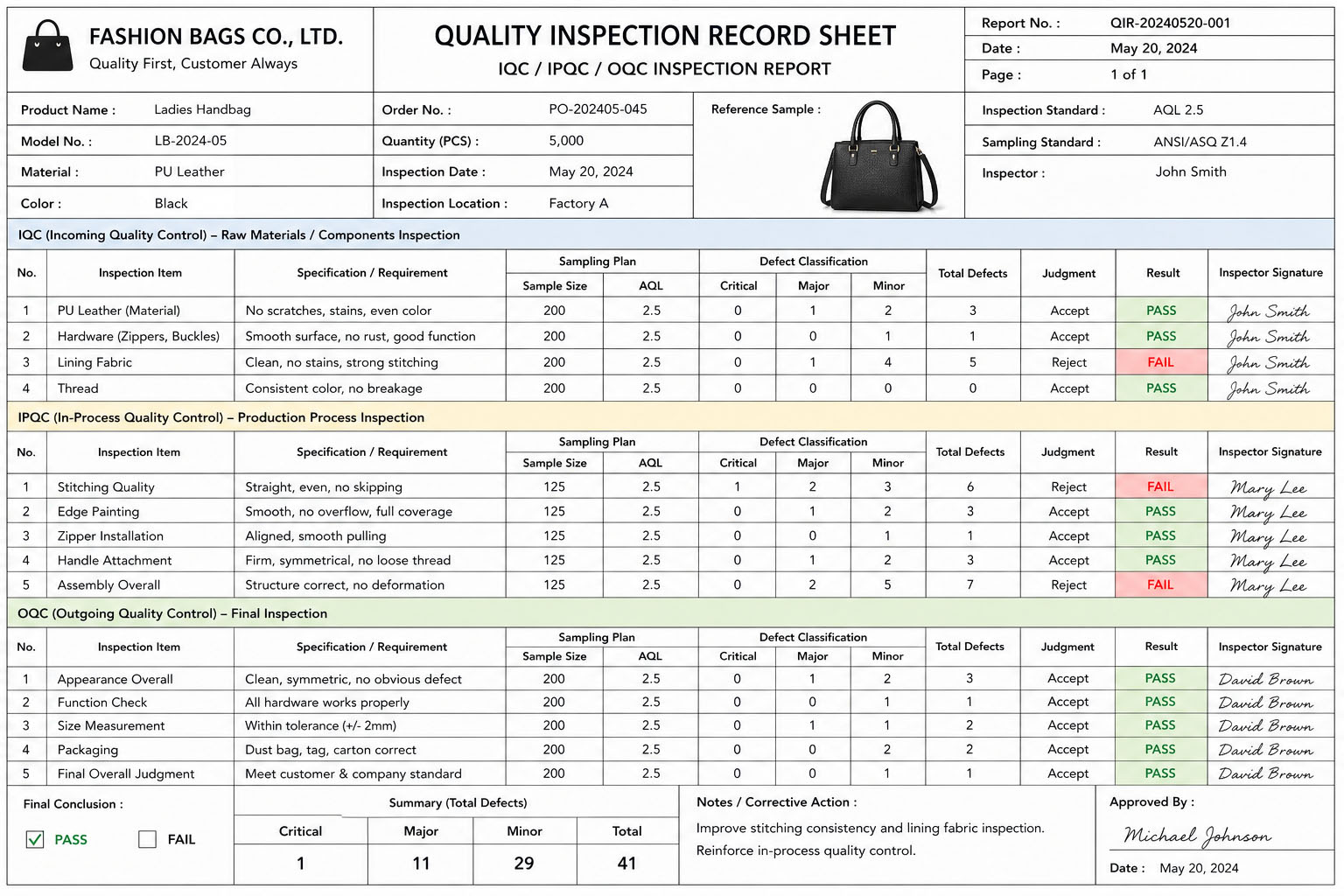
Complete quality‑control documentation includes three core inspection phases: Incoming Quality Control (IQC for raw‑material incoming checks), In‑Process Quality Control (IPQC for mid‑production sewing and assembly checks), and Outgoing Quality Control (OQC for final finished‑goods inspection). Established export factories fill out formal inspection sheets for each phase. Long‑term overseas buyers can request digital copies of these QC records for their orders. These records serve as objective proof when you negotiate quality‑dispute resolutions after delivery.
✅ Many factories issue a complete documentation package—QC reports, material data sheets, and compliance certificates—prior to shipment.
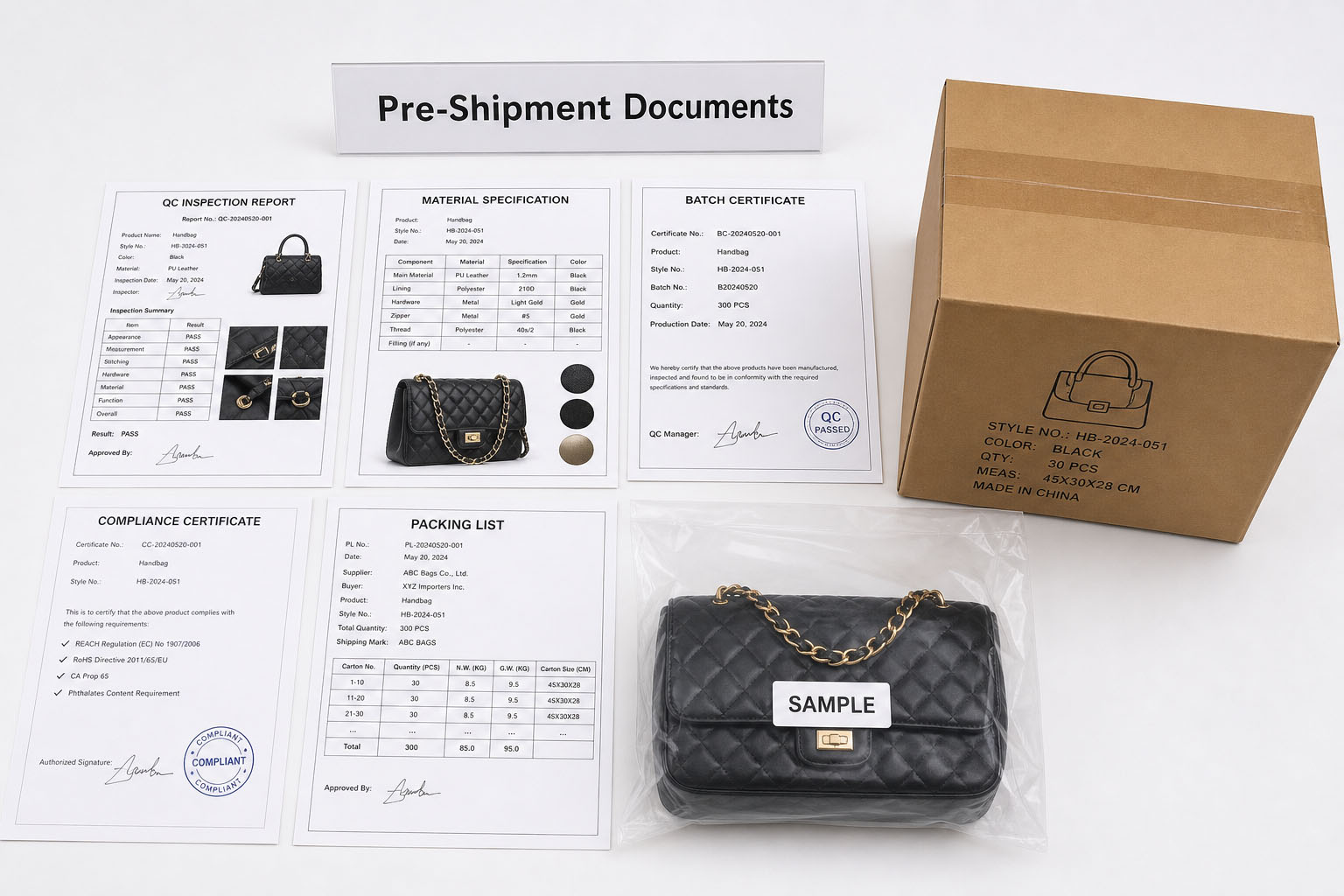
For formal export orders, many experienced suppliers assemble a pre‑shipment document package. This file set includes QC inspection reports, material specification datasheets, material‑batch certificates and compliance‑certificate copies. Buyers can review these documents before goods leave China, rather than scrambling to request paperwork long after cargo arrives at a US port.
✅ Smaller or semi‑formal workshops often lack structured retention systems, increasing the buyer’s need to request and store records independently.
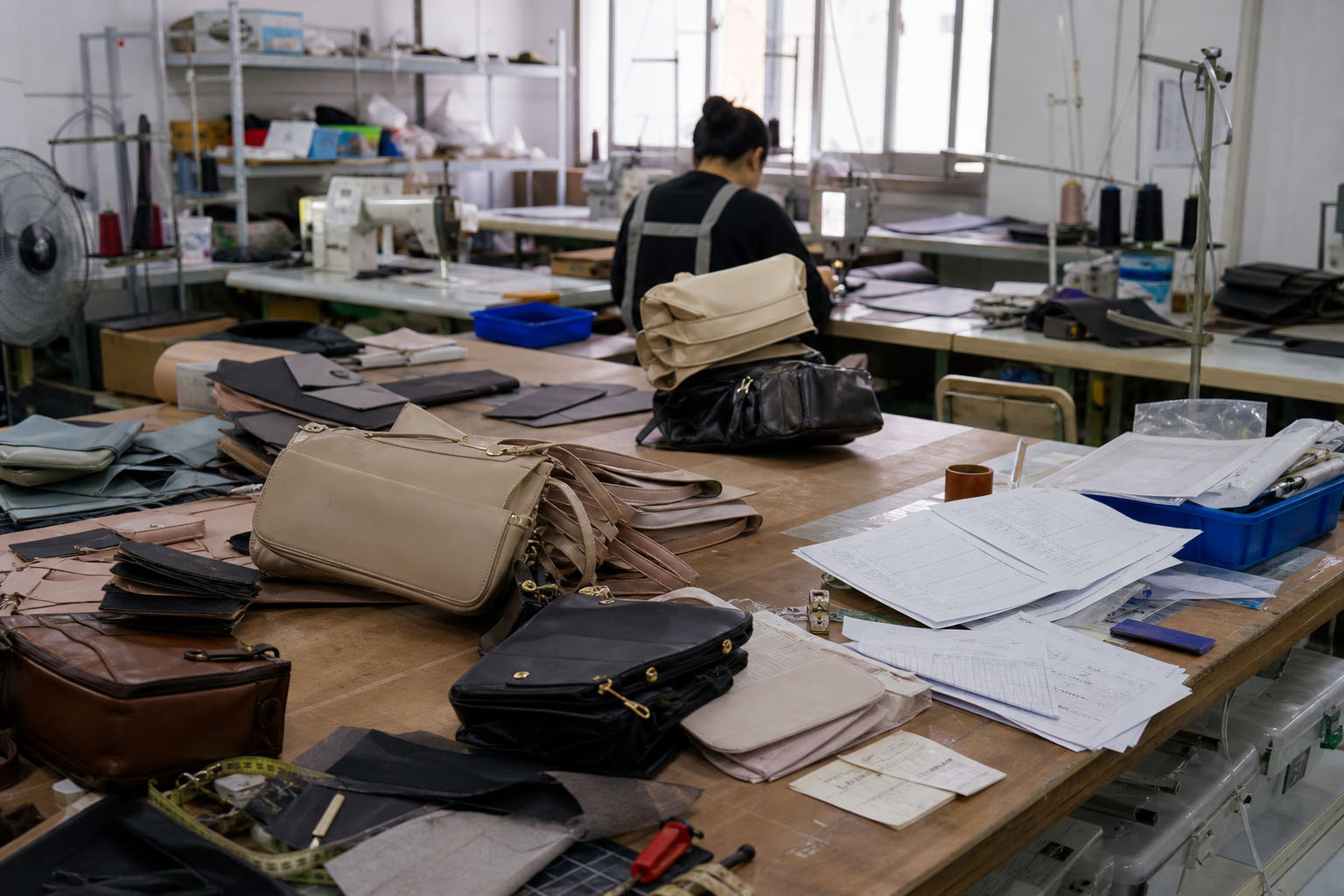
Cost‑focused small workshops can produce low‑priced bags, yet most of them do not have standardized digital‑document‑archiving workflows. They may keep physical samples but discard formal test reports, batch records and inspection logs once goods are shipped. If you cooperate with this category of supplier, you cannot rely on the factory to retain all required files. You must explicitly demand all documents before deposit payment and save all digital files on your own business storage system.
✅ Factories certified under ISO 9001 or BSCI generally follow stricter protocols for archiving order‑specific documents.
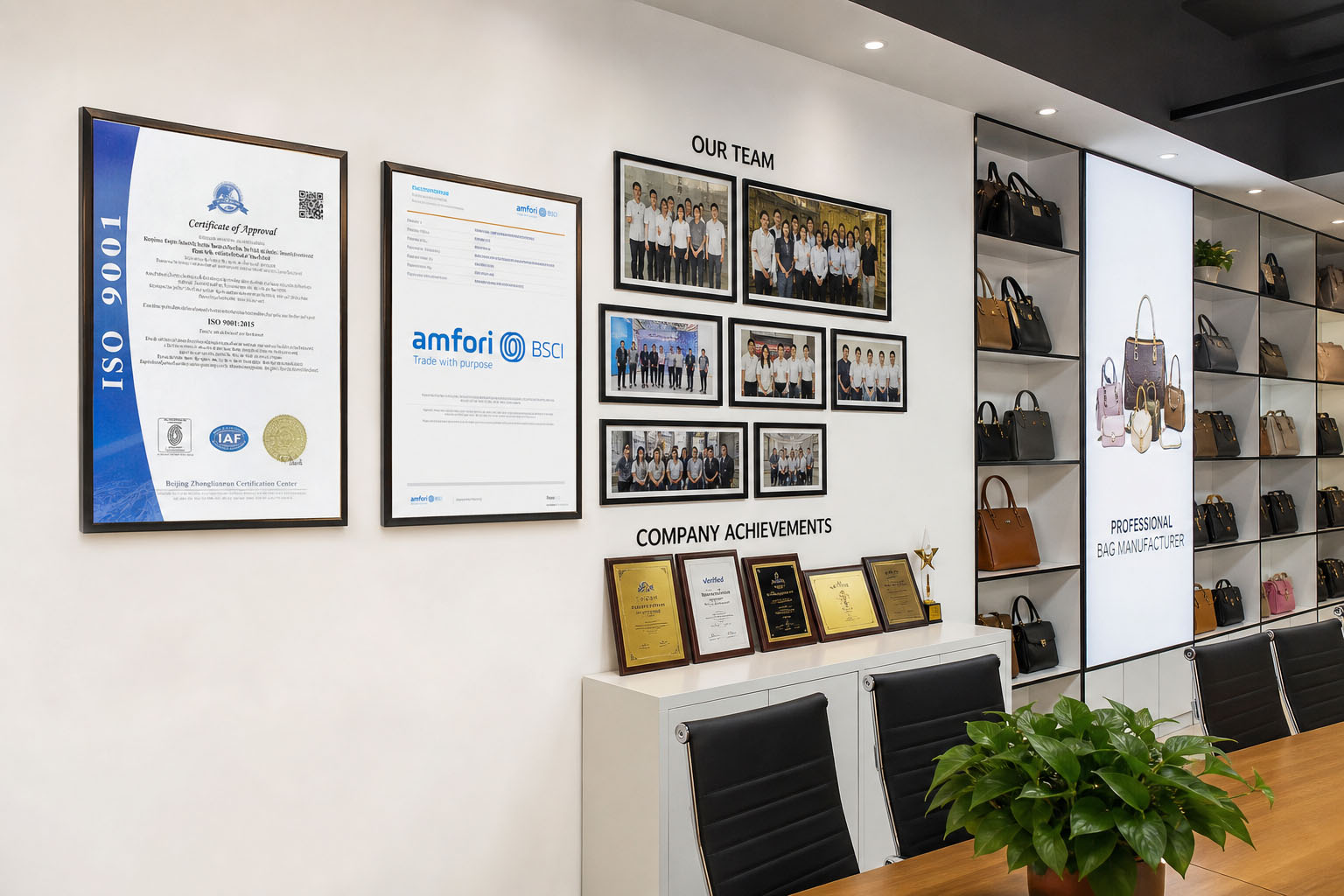
Factory social and quality‑management certifications reflect document‑management standards. Manufacturers holding ISO 9001 quality‑management‑system certification or BSCI social‑compliance certification are required to maintain complete order‑related records for audit purposes. These factories are far more likely to satisfy your archive‑and‑traceability requirements compared to non‑certified small workshops. Certification alone is not sufficient proof; you still need to review real‑order document samples.
✅ Custom or private‑label orders usually generate dedicated specification sheets and golden sample records for future production reference.
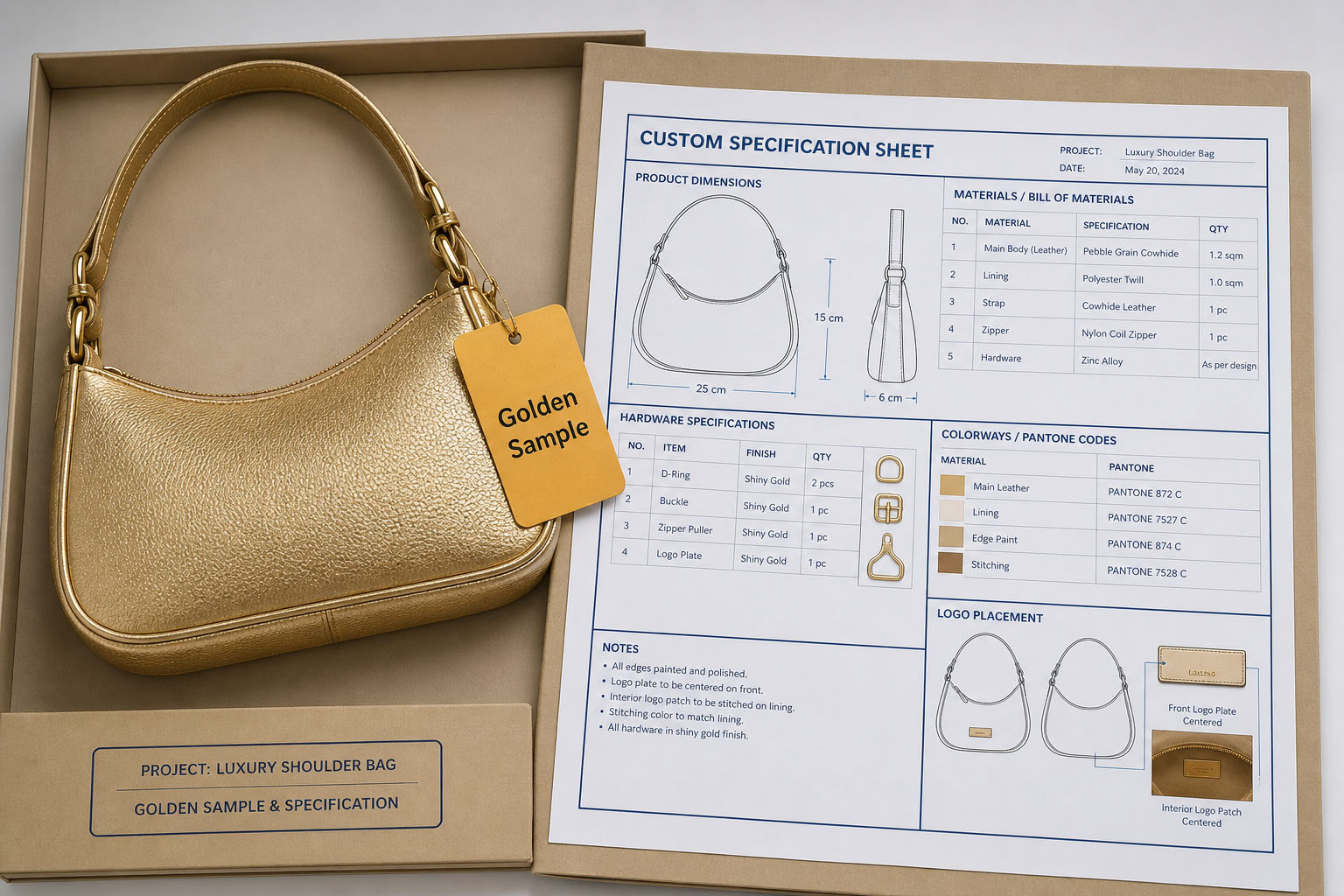
OEM and ODM private‑label bag orders create custom‑made spec sheets and golden‑sample files. These documents record confirmed dimensions, logo placement, material grades, hardware standards and workmanship requirements. Factories archive these records for repeat‑order reproduction. If you place follow‑up orders months later, golden‑sample and specification‑sheet archives prevent deviations from your agreed‑upon product standard.
✅ Some forward‑looking suppliers now provide cloud‑based or digital portal access to archived order documents for overseas buyers.
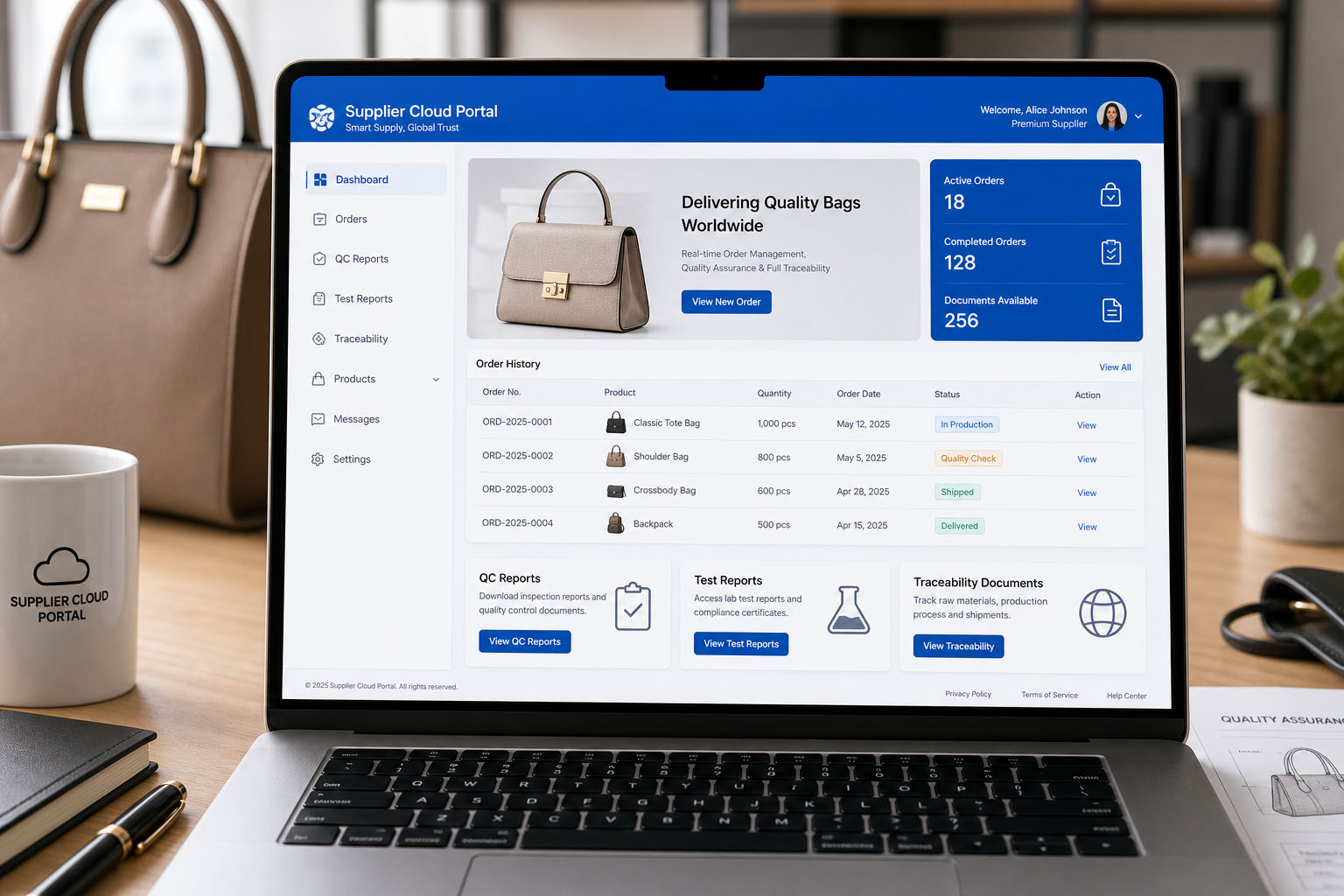
Several export‑oriented bag manufacturers have upgraded their service workflows. They provide overseas buyers with cloud‑storage‑portal access. You can log in and download archived production records, inspection reports and test‑report copies for your historical orders. This is a major convenience for US independent‑store sellers managing multiple batches of imported bag inventory.
To sum up: Reputable Chinese bag factories can and should archive production records, test reports, and traceability documents for each order, but you must specify this in writing and verify it before you pay a deposit. Many smaller suppliers won’t do this automatically. Do not treat document‑archiving as an optional extra service; treat it as a non‑negotiable order requirement written inside your purchase contract.
What Qualified “Archiving” Should Look Like for US‑Market‑Oriented Bag OEM‑ODM Manufacturers
For a professional bag manufacturer serving US e‑commerce sellers, the archived document system divides into three major modules: per‑order production records, test‑and‑compliance documents, and end‑to‑end traceability documents. You need to know exactly what deliverables you should demand.
1. Per‑Order / Per‑Style Production Records
Every individual style inside your order deserves independent archived files. Required items include:
1. Approved pre‑production sample (PPS) with photos, accurate product measurements, and formal sign‑off date. The pre‑production golden sample is your benchmark for mass‑production quality.
2. Bill of Materials (BOM): detailed list including material item codes, raw‑material‑supplier information, color codes, fabric thickness, and full hardware specification parameters.
3. Production‑process records: cutting‑work‑order documents, sewing‑line‑instruction sheets, in‑process inspection logs recorded during mass‑production.
4. Final‑inspection report following AQL inspection standards or your customized inspection standard, containing defect‑statistic data and pass‑or‑fail evaluation results.
5. Packing‑list documents and carton‑packing photos, verifying your private‑label branding, label printing and packaging requirements.
2. Test Reports and Compliance Documents
Lab‑test‑related documents are your core legal protection when selling bags inside the United States. Qualified document sets include:
- Laboratory test reports for raw materials and finished bags. Common test items cover fabric tensile strength, color fastness, zipper durability performance, plus chemical‑safety testing matching CPSIA, Prop 65 and REACH requirements. Each valid report must contain: tested‑product description and reference photos, adopted‑test‑method standards, test‑result data and final‑conclusion statements, testing‑laboratory name, unique report number and report‑issuing date.
- Valid copies of factory certificates (ISO 9001, BSCI, Sedex etc.), including certificate number, certification‑scope description and validity‑period dates.
3. Traceability Documents
Complete traceability builds a clear logical chain: order number → product style → production batch/lot number → raw‑material batches → specific production workshop line → quality‑inspection records → final shipment.
Qualified traceability capability means every exported carton can be traced backward to:
1. Corresponding raw‑material batches for fabric, lining, leather and metal hardware;
2. Exact production dates and workshop production lines;
3. Matching QC inspection logs and material‑test‑report files.
All above‑mentioned records need to be retained for an agreed‑upon time frame; 3‑5‑year retention is normal for export‑focused bag factories.
Practical Wording to Include Inside Your RFQ or Supplier Questionnaire
You cannot rely on verbal promises. All document‑archive and traceability requirements must be written into your request‑for‑quotation file and supplier questionnaire. Below is ready‑to‑use American‑English text you can copy directly:
> For each order, please confirm in writing that you:
> 1) Archive complete production records (approved sample, BOM, work orders, in‑process and final inspection reports, packing records).
> 2) Provide test reports from an accredited lab for materials and/or finished bags as required by the U.S. market.
> 3) Maintain traceability from raw materials through finished goods to shipment, and can provide traceability documents on request.
> 4) Retain these records for at least [X] years and share digital copies with us for each order.
After sending this requirement, add three critical follow‑up questions for each candidate supplier:
1. “Can you share a sample set of these documents from a recent non‑confidential order?”
2. “Which lab do you use for testing? Can we verify the report online or with the lab?”
3. “Do you subcontract any processes? If yes, how do you maintain traceability and records for subcontracted work?”
Many bag factories outsource printing, dyeing or special‑surface‑treatment work. If subcontracting exists, you need to understand how they manage documentation for outsourced procedures, otherwise traceability will break at subcontractor links.
Clear Red Flags: When You Should Treat a Supplier with High Caution
Watch for these warning signs during supplier communication. If multiple red flags appear at the same time, you should consider removing this supplier from your candidate shortlist:
1. The supplier states directly that they “don’t keep records” or “only keep physical samples with no formal archived documents.”
2. They cannot provide any real‑case examples of production records or QC inspection reports from past export orders.
3. They refuse to disclose the name of their testing laboratory or will not offer official test‑report numbers for verification.
4. Business‑license entity name, invoicing‑company name, bank‑account beneficiary name and certificate‑issuance‑subject name do not match one another. This may represent agency‑intermediary risk rather than direct‑factory cooperation.
Four Core Practical Questions Every US Bag Buyer Must Clarify with Chinese Suppliers
Besides document‑archive and traceability requirements, four classic sourcing questions determine whether your project can run smoothly. We also include realistic acceptable‑response references based on real‑world Chinese‑bag‑factory operation situations.
1. What is your minimum order quantity (MOQ) and sample policy?
MOQ standards differ greatly between custom‑OEM orders and ready‑stock items. Custom‑made private‑label bags normally have higher MOQ requirements because of mold‑opening, logo‑making and raw‑material‑procurement costs. Ready‑made‑in‑stock bag styles support small‑batch trial orders.
Sample policy is equally critical. You need to clarify sample‑production lead‑time, sample‑fee amount, whether sample fees can be deducted from formal‑order payments, and shipping cost for sending samples to US addresses. All these terms should be written into your quotation.
2. Do you offer OEM/ODM customization for designs, logos, and materials?
Qualified export‑oriented bag factories can provide full‑range OEM and ODM customization services. You can adjust product structure, artwork design, printed or embossed logos, fabric selection, leather grades, hardware accessories and color schemes according to your independent‑store product positioning.
When evaluating customization capacity, confirm whether the factory can produce custom‑specification BOM sheets and lock‑in golden‑sample archives for your private‑label project, which connects back to your document‑traceability requirements.
3. What are the production lead times and available shipping methods to the USA?
Production‑cycle rules separate custom orders and ready‑stock goods. For in‑stock ready‑made bag products, many Chinese bag suppliers can finish domestic packing within 7 working days after receiving payment. For mass‑production custom OEM‑ODM orders, production lead‑time depends on order quantity, custom‑process complexity and factory‑workshop‑schedule status.
For shipment to the United States, sea freight is the most‑common cost‑effective shipping solution. Two sea‑freight modes are available: you can appoint your own US‑targeted freight forwarder to pick up goods at the Chinese factory, or you can let the supplier arrange their cooperative freight‑forwarding company to complete container booking and export‑declaration work. You also need to confirm lead‑time for air‑freight options for emergency‑small‑batch replenishment scenarios.
4. What is your policy for defects, returns, and quality disputes after delivery?
Post‑delivery quality‑dispute handling is a high‑concern item for cross‑border bag buyers. Reliable Chinese suppliers set clear rules: when end‑customers find defective products after goods arrive in the US market, you as the buyer need to provide clear product photos and objective quality‑problem‑evidence materials. After verification, qualified suppliers support corresponding return‑and‑replacement solutions for defective‑item batches.
Important note: you must clarify in advance the division‑of‑cost standards for cross‑border return‑shipping fees, defective‑product re‑production cycles and compensation schemes inside your contract, rather than negotiating only after quality problems emerge.
Recommended Step‑by‑Step Sourcing Workflow for US Independent‑Site Bag Sellers
Follow these actionable steps to reduce your sourcing risk when buying bags from China:
1. Build a shortlist of 3‑5 Chinese bag manufacturers with existing US‑market‑export experience and valid certifications such as ISO 9001 or BSCI. Prioritize factories that have clear document‑archive and traceability‑management mechanisms.
2. Send your complete RFQ file, including all document‑archive, traceability, MOQ, OEM‑ODM, lead‑time‑shipping and post‑delivery‑quality‑dispute requirements, to all shortlisted suppliers.
3. Before paying any deposit payment, complete multi‑dimensional verification work:
- Verify the supplier’s formal business‑license legal‑entity information;
- Request and review real‑order sample sets of production records, lab‑test‑reports and traceability documents;
- For large‑volume orders, arrange third‑party‑factory audits or on‑site factory inspections to confirm workshop‑management and document‑archiving reality.
Final Thoughts
Sourcing high‑quality bags directly from China can bring huge profit margins and differentiated‑product advantages for your US‑based independent e‑commerce website. However, price and appearance are only part of the sourcing equation. Production‑record archiving, third‑party‑test‑report management and full‑chain traceability are invisible‑but‑vital foundations for stable long‑term business.
Do not assume suppliers will automatically provide all compliance documents. Put every requirement in written form inside your quotation and purchasing contract, verify document samples before deposit payment, and save all digital files on your own business‑system storage. Combined with clear communication on MOQ, OEM‑ODM capacity, lead‑time‑shipping and post‑delivery‑dispute policies, you will greatly lower import risks, better respond to US‑market compliance requirements, and lay a solid foundation for your bag‑brand growth.
If you share more details about your bag‑product categories (for example leather handbags, canvas tote bags, outdoor backpacks), target unit‑price range and expected MOQ, we can further refine a targeted test‑item and document‑checklist template for your US‑market bag‑sourcing project.
Post time: Aug-11-2026