
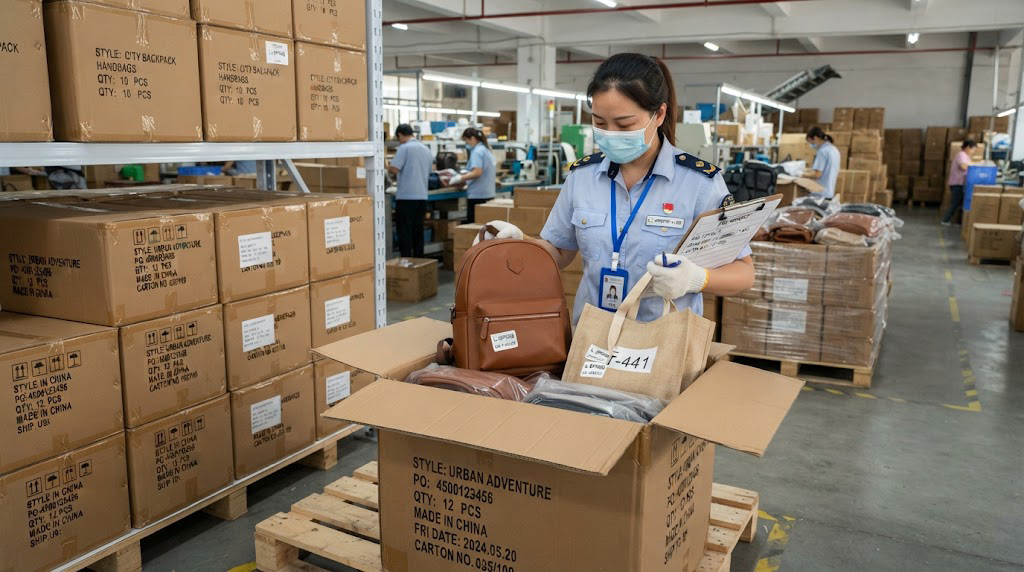
As a US‑based bag e‑commerce seller sourcing inventory directly from China, your biggest risk does not always come from defective raw materials or production flaws alone. Many online retailers face costly post‑shipment headaches: incorrect SKU assortments, wrong color ratios, misprinted hangtags and barcodes, damaged outer cartons, or even short‑shipped quantities that only get discovered after containers arrive at US ports. Once goods are loaded onto an ocean‑going container and shipped across the Pacific, reversing mistakes becomes extremely expensive. Returning large bag consignments is rarely practical, and filing damage or quality dispute claims is time‑consuming. That makes independent pre‑shipment quality control and container loading supervision one of your most critical safeguards when buying bags direct from Chinese factories.
Many new importers assume their Chinese suppliers will automatically run thorough final checks before container departure. While responsible factories conduct internal quality checks, factory‑run inspections are inherently biased toward passing goods for shipment. Internal checks cannot replace independent third‑party oversight focused on your exact specifications. This blog breaks down core quality‑control concepts, answers four high‑priority questions most US bag buyers ask before placing large purchase orders, and shares actionable templates and best practices you can deploy for your own bag import program. Whether you sell tote bags, fashion handbags, school backpacks, travel duffels, or cross‑body bags on your independent website, this practical guide will help you build consistent quality workflows for every container you import out of China.
Core Concepts: FRI, PSI and Container Loading Supervision for Bag Shipments
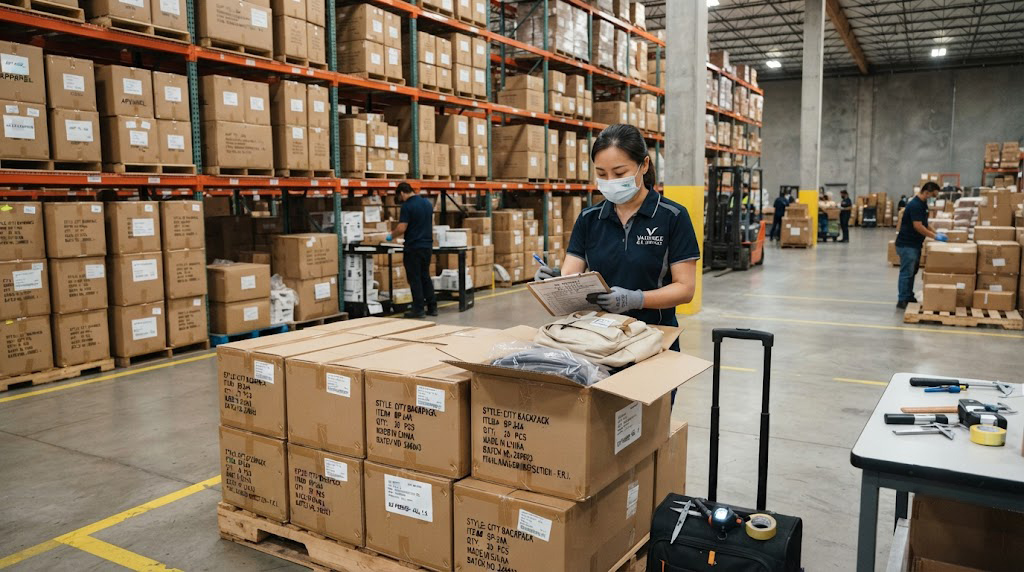
Final Random Inspection (FRI), also widely known as Pre‑Shipment Inspection (PSI), is the globally‑accepted standard quality practice executed right before container loading. Its core mission is validating total shipped quantity, SKU assortment accuracy, and full packaging compliance before goods leave factory premises. Leading global third‑party inspection service providers including SGS, Bureau Veritas, QIMA, and Asia Inspection deliver these independent audit services for overseas importers. To generate objective pass‑or‑fail outcomes, inspectors rely on well‑defined **AQL (Acceptable Quality Limit)** sampling standards, which set clear thresholds for acceptable defect rates within inspected bag lots.
Timing is critical for meaningful inspection results. Reliable FRI must take place only once **at least 80 percent of total order quantity is fully packed into finished export cartons**. If inspectors sample partially packed or unpacked product, sample sets will not represent your full production run, and inspection outcomes lose validity. During on‑site bag inspection, QC staff systematically verify every layer of packaging requirements: inner polybags for individual bags, paper hangtags, printed barcodes, outer master carton printing, and custom shipping marks specified on your purchase order.
Completed inspection reports include timestamped on‑site photos alongside detailed defect observations. These documented findings serve as key supporting legal evidence if quality disputes emerge later between you and your Chinese supplier. It is important to draw a clear distinction between standard pre‑shipment inspection and **Container Loading Supervision (CLS, also referenced as Container Loading Check or CLC)**. PSI / FRI audits product quality and packaging while goods sit inside the factory warehouse. CLS is a separate add‑on service focused exclusively on monitoring the physical container loading and sealing procedure. CLS mitigates unique risks: mixing‑up SKU cartons during loading, rough handling crushing bag cartons, or loading damaged product that passed earlier FRI but got mishandled in the warehouse staging area.
A pre‑approved, production‑locked **golden signed sample** is foundational for all bag inspections. Before mass production launches, you and your supplier sign off on a physical golden sample representing your approved style, material thickness, hardware, stitching standards, dimensions and finishing details. On‑site inspectors use this golden sample as the objective reference benchmark to compare against mass‑produced finished bags. Keep in mind third‑party inspectors only test and document requirements explicitly written inside your custom inspection checklist. Inspectors will not guess unwritten quality expectations. US independent‑site sellers must write clear, detailed quality criteria directly into checklists shared with both suppliers and QC firms.
To further lower import risk, smart buyers combine final pre‑shipment inspection with mid‑production monitoring visits earlier inside the manufacturing cycle. Early‑stage production spot‑checks catch material errors, wrong hardware, or stitching defects while production is still running, rather than discovering all flaws after 100 % of bags have already been manufactured and packed for export. This dual‑phase QC strategy drastically reduces the chance of receiving non‑conforming full‑container shipments to the United States.
What Does a Professional Container Loading Check (CLC / CLS) Actually Cover for Bags?
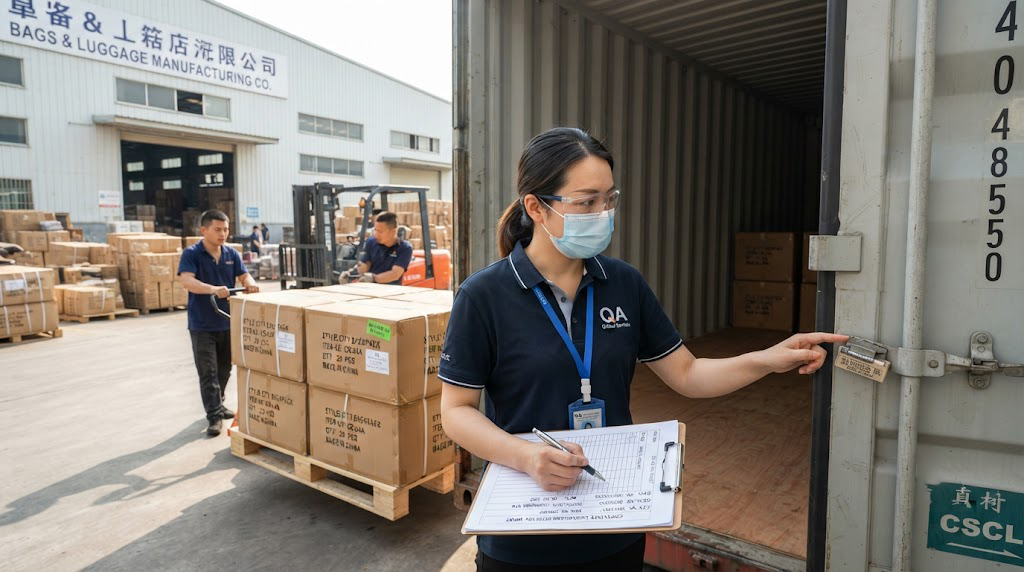
Numerous professional inspection agencies operating in China offer dedicated Container Loading Check services. This service executes verification *immediately before container sealing*, acting as your absolute final verification point before goods leave Chinese territory. CLC is normally scheduled to happen after you have completed your main pre‑shipment FRI inspection. Even if goods passed FRI in‑warehouse, errors can still unfold during loading, so this step adds an irreplaceable second layer of protection for US bag importers.
A properly executed CLC for bag shipments systematically validates four major categories: quantity and SKU assortment, packaging and labeling compliance, spot product conformity, plus container condition and loading process oversight.
First, inspectors count every loaded export carton and cross‑reference counts directly against your official packing list and commercial invoice. They verify correct ratios for every SKU, including different bag styles, colors, and size variants ordered on your PO. This step catches one of the most frustrating pain‑points for e‑commerce sellers: receiving the wrong mix of inventory that breaks your website stock planning.
Second, inspectors audit full packaging and labeling compliance. They confirm master cartons, inner polybags, hangtags, barcodes, and shipping marks exactly match your written product specifications and purchase‑order instructions. They perform visual spot‑checks for carton damage: crushing, moisture stains, tearing, or weak carton construction that would damage handbags and backpacks during ocean transit. Inspectors also observe stacking methods inside the container to avoid excessive weight pressing onto delicate bag cartons.
Third, inspectors randomly open selected cartons during loading for spot product conformity checks. They pull finished bags to cross‑validate style, fabric and hardware materials, workmanship quality, and physical dimensions against your signed golden sample. This quick spot check catches cases where acceptable‑quality goods tested in FRI get swapped out with substandard units in later‑loaded cartons.
Fourth, the inspector assesses the physical ocean‑freight container itself. They document interior cleanliness, dryness, and look for holes, rust, or residual contamination that could ruin fabric bags during long sea voyages. Throughout loading, the QC representative oversees handling practices to minimize rough dropping or throwing cartons. At loading completion, the inspector records container number and security seal numbers, and witnesses container sealing live on‑site.
This service typically takes place either inside the bag manufacturer’s factory warehouse or a third‑party freight‑forwarder staging warehouse. You must confirm the exact location with your supplier when negotiating your order terms.
> Email template you can send directly to your Chinese supplier within RFQ or PO communications:
>
> “Before container loading, do you allow a third‑party Container Loading Check (CLC) to:
> – Confirm total quantity and SKU assortment against our packing list;
> – Verify packaging, labeling, barcodes, and shipping marks;
> – Inspect container condition and supervise the loading and sealing process?
>
> If yes, please confirm:
> – Where the CLC will be performed (factory or forwarder’s warehouse);
> – Your standard loading checklist;
> – Whether you can hold loading until the inspector approves the container.”
Reputable Chinese factories and trading companies are fully familiar with this request. If your supplier refuses third‑party CLC, or states this inspection step is unnecessary, treat that response as a significant red flag. In such scenarios, strongly consider contracting an independent QC provider including V‑Trust, Pro QC, QIMA or Asia Quality Focus to conduct the container supervision regardless of supplier pushback.
Four Critical Questions US Bag Buyers Sourcing from China Need Answered
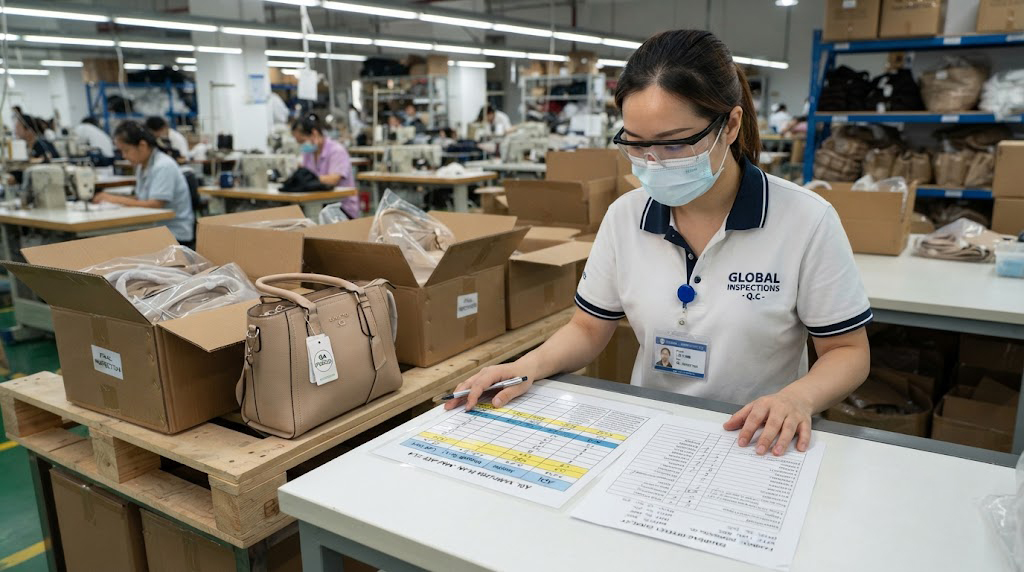
When negotiating direct‑from‑China bag sourcing, US independent‑store owners repeatedly confront four core practical questions around third‑party inspection: selecting appropriate AQL standards, understanding per‑man‑day inspection pricing, managing failed pre‑shipment inspection outcomes, and validating inspection‑report authenticity to avoid supplier‑influenced biased results. Below we break down each question with real‑world operational guidance for bag importers.
1. What AQL sampling standard should I apply to my bag shipment inspection in China?
AQL stands for Acceptable Quality Limit, the internationally‑recognized statistical sampling framework used to define maximum allowable defect rates within inspected production lots. For consumer hard‑goods such as handbags, backpacks, totes and travel bags, industry practice classifies defects into three tiers: critical defects, major defects, and minor defects. Critical defects represent safety hazards or fully non‑functional product. Major defects materially impact appearance, function or saleability for your US website. Minor defects represent small cosmetic imperfections that will not stop the bag selling to end customers.
For most US e‑commerce bag retailers importing consumer fashion bags, the most widely adopted industry standard is **AQL 0.65 for major defects and AQL 1.5 for minor defects**, with zero tolerance for critical defects. This configuration is standard for mid‑to‑higher‑quality retail‑grade bags sold on independent US websites. Buyers sourcing low‑cost promotional giveaway bags sometimes relax standards to AQL 1.0 major / AQL 2.5 minor, though this creates higher rates of customer returns on your US store.
You must write your exact chosen AQL levels explicitly inside your inspection checklist shared with both supplier and QC firm. Never leave AQL settings open for the inspection company to choose on your behalf. Remember AQL works together with sample size rules: inspection only delivers reliable outcomes when performed after at least 80 % of goods are fully packed into finished export cartons. Always reference your signed golden sample alongside your written AQL requirements.
2. How much does a third‑party pre‑shipment inspection typically cost per man‑day in China?
Pricing for third‑party QC inspection in China varies by geographic location, service scope, and which inspection vendor you select. Remote factory locations further from major tier‑one Chinese cities incur extra travel surcharges. For standard pre‑shipment FRI inspection as well as container loading supervision CLC / CLS services, the prevailing market rate across most industrial zones in China runs **USD 250 to 350 per inspector per man‑day.
One man‑day generally covers one QC inspector working a standard on‑site shift. Simple CLC loading supervision jobs can sometimes be completed within half‑day rates, while large multi‑SKU bag orders with thousands of units often need a full man‑day or multiple inspectors. You should schedule inspection services on your exact container‑loading day, only after production is fully finished and all cartons are completely packed and ready. When budgeting for your import project, remember inspection fees represent a small fraction of total container value, yet protect you from far‑larger losses stemming from bad inventory arriving in the United States.
3. What corrective actions are available if the final inspection fails before container loading?
Failing a pre‑shipment inspection before container loading is stressful, yet it is far better to resolve issues while goods remain in China instead of after ocean shipment completes. Several standard corrective‑action paths are open to US buyers when FRI or CLC returns a fail result.
First option: full 100 % sorting and rework at the factory. The supplier opens all relevant cartons, manually sorts defective bags out of the lot, repairs repairable defects such as loose stitching, mis‑attached hardware, or incorrect hangtags, and repacks goods correctly. Once rework finishes, you schedule a follow‑up re‑inspection for the corrected batch. Note that rework and re‑inspection fees are normally negotiated to fall onto the supplier if non‑conformance originates from factory production mistakes.
Second option: partial shipment rejection. You can accept the conforming portion of the order and reject defective units. The supplier keeps defective goods in China, manufactures replacement compliant bags, and ships replacements via later container or air freight, depending on your inventory timeline needs. This approach works well when only a subset of SKUs fail inspection, while other styles pass fully.
Third option: formal price negotiation and concession. If defects are exclusively minor cosmetic issues that you are willing to accept, you may negotiate a corresponding price discount off your original PO value. Under this scenario you explicitly document all known defects in writing, then authorize shipment despite the failed inspection result. This is a calculated business risk you take; you must plan for higher US‑side return rates on your independent e‑commerce site. This option should never be used for major functional defects.
Fourth option: full order rejection. In severe cases with widespread major defects, wrong materials, or complete SKU assortment mismatch, you have the contractual option to reject the entire order. The supplier absorbs loss of finished goods, and you restart manufacturing with either the same or an alternate Chinese factory. This is your most powerful remedy but also creates delays for your US website inventory roadmap.
Whichever corrective action pathway you select, always update your written purchase‑order terms ahead of time to clearly define responsibility for rework, re‑inspection charges, and shipment delays triggered by non‑compliant production.
4. How can I verify that the third‑party inspection report is authentic and not influenced by the supplier?
Supplier influence over QC results is a real concern for overseas importers. Factories may try to pressure local inspectors to soften findings to avoid shipment delays. US‑based sellers can implement several safeguards to guarantee report objectivity and authenticity.
First, contract only well‑established, independent QC firms whose revenue comes exclusively from buyer payments, not supplier fees. Avoid low‑cost local freelance inspectors introduced directly to you by your Chinese factory. Always pay inspection invoices yourself directly to the QC company; never permit your supplier to pay inspection costs on your behalf. If the supplier pays inspectors, inherent conflict‑of‑interest risk rises sharply.
Second, carefully audit every delivered inspection report. Authentic reports include unique non‑repeating report identification numbers, full inspector name and credentials, exact factory site address, comprehensive timestamped photos taken on‑site, carton‑count records, defect descriptions cross‑referenced against your checklist, plus pass‑or‑fail final determination. Cross‑check photos: images must show actual factory premises, real carton markings matching your PO, and real‑product shots, not stock photos or pre‑produced image files. You can validate report legitimacy by contacting the QC vendor’s head office directly using official public contact channels, not contact information forwarded over by your supplier. Provide them the report ID number to confirm report exists within their internal system.
Third, build contingency into your workflow. When high‑value orders are at stake, you can order unannounced random re‑audits: request the QC agency send a different second inspector to revisit the factory for spot verification, without advance notice sent to your bag supplier. You can also write into your PO that inspection reports are only advisory; you reserve full final authority to accept or refuse shipment regardless of the report’s pass/fail status.
Fourth, keep your golden sample and inspection checklist controlled entirely on your side. Send requirements directly to the QC provider, do not let the supplier edit or filter your checklist before inspectors receive it.
Final Takeaways for US Independent‑Site Bag Sellers
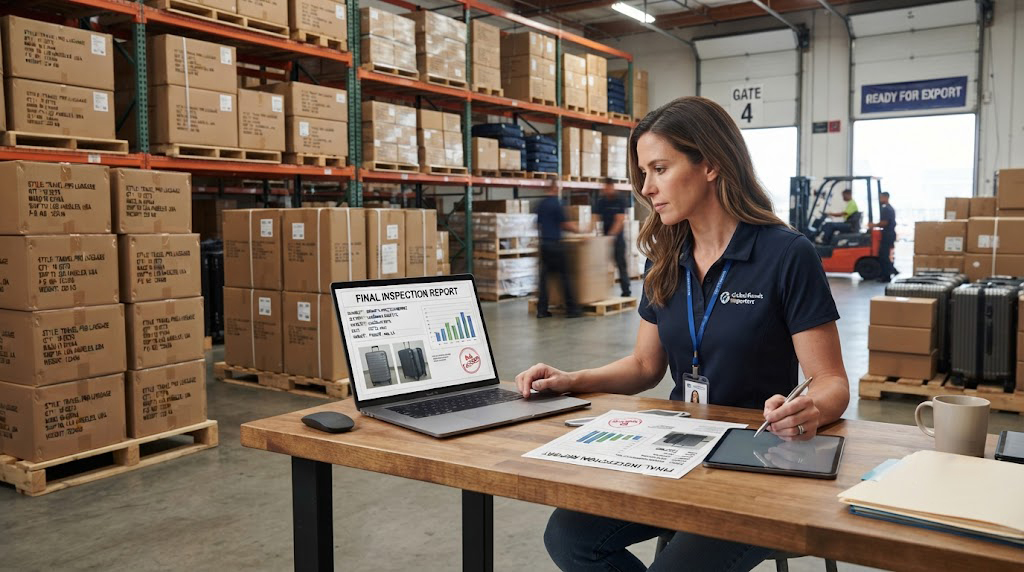
Sourcing bags from Chinese factories delivers excellent profit margins for US independent‑website retailers — yet quality control cannot be an afterthought. Final Random Inspection, paired with Container Loading Supervision, protects you against quantity shortages, wrong SKU mixes, labeling mistakes, and damaged packaging before containers sail toward US ports. Select appropriate AQL defect thresholds for your product tier, budget for realistic third‑party inspection man‑day costs, pre‑negotiate corrective‑action protocols for failed inspections, and implement controls to keep QC reporting independent from supplier influence.
Many importers only run inspection after production completes. Adding mid‑production monitoring visits further de‑risks your supply chain. Always formalize all quality expectations inside purchase orders and inspection checklists, anchored to your signed golden sample. When suppliers push back against third‑party inspection rights, treat that signal seriously.
If you share further details such as your primary bag categories (tote bags, backpacks, fashion handbags etc.) and typical order lot sizes, you can build a fully customized inspection checklist you can reuse for every future PO with your Chinese bag manufacturers. Investing in these quality‑control workflows reduces customer complaints, return rates, and expensive supply‑chain surprises, helping your US‑based independent bag business scale sustainably.
Post time: Aug-10-2026