
A buyer’s field guide to pre-production samples, sealing standards, and supplier communication — written by someone who has placed dozens of bag orders from China.
Why This Blog Post Exists
If you are a bag seller in the United States sourcing directly from Chinese manufacturers, you have probably come across the terms “PP sample,” “PPS,” “golden sample,” and “reference sample.” Some suppliers use them interchangeably. Others treat them as completely different things. The confusion is real — and the wrong assumption can cost you thousands of dollars in defective inventory, missed ship dates, and unhappy customers.
After sourcing backpacks, tote bags, duffels, and handbags from factories across Guangzhou, Yiwu, and Quanzhou for several years, I have built a system around pre-production samples that has saved me from at least three major production disasters. In this guide, I am going to walk you through every question you should be asking your Chinese bag supplier, exactly how to ask it, and what “industry standard” actually looks like in 2025.
This is not generic sourcing advice pulled from a textbook. This is what works when you are moving 2,000 to 20,000 units at a time.
1. What Exactly Is a “PP Sample” in the Bag Industry?
Understanding the terminology before you sign any purchase order
PP sample stands for Pre-Production Sample. It is produced after your lab-dip (color), fabric swatch, lining material, hardware, zipper, and trims have all been approved. The PP sample is the very first physical product made using the exact same materials, machinery, sewing operators, and production process that will be used during mass production.
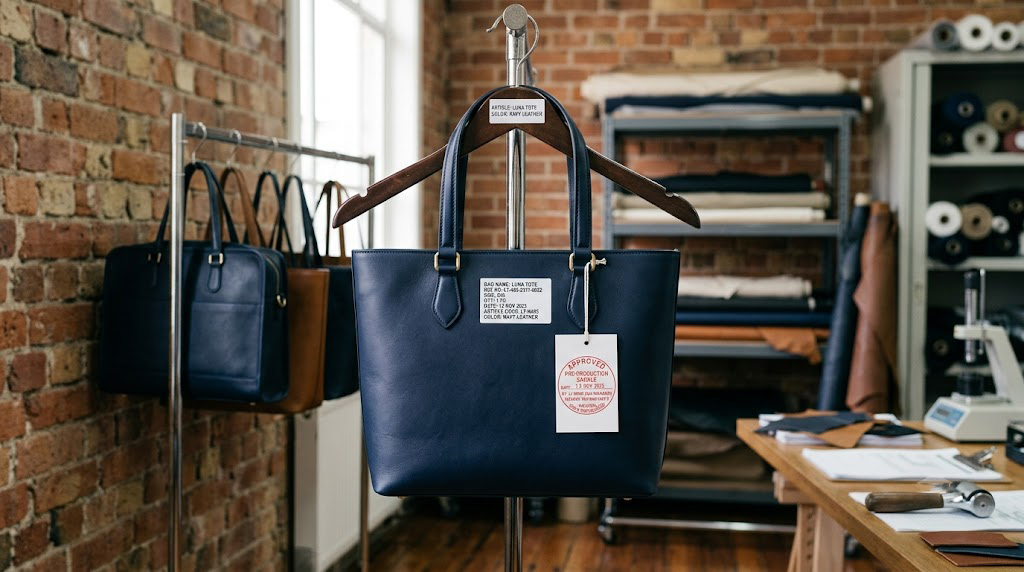
Figure 1: A sealed PP sample becomes the official “golden sample” used as the reference standard for every QC check during bulk production.
In simple terms: if your handbag is a movie, the PP sample is the rough cut that the director (you) signs off on before the studio (the factory) starts producing thousands of copies.
A reputable factory will:
Use the actual bulk fabric (not a substitute or stock material)
Use the actual hardware (zippers, buckles, D-rings, magnets) from the production batch
Sew it on the same production line that will run your bulk order
Apply your logo, label, and hangtag in the final intended position
Pro tip: If a factory offers to skip the PP sample or to use leftover sample-room materials, that is a red flag. They are optimizing for speed, not for your quality.
2. “Do Chinese Bag Factories Offer a PP Sample That Can Be Sealed as the Golden Sample?”
Yes — but only if you ask the right way
The short answer is yes, the majority of experienced Chinese bag manufacturers offer a PP sample, and the final approved version is sealed as the “golden sample” for bulk production reference. This is standard practice in any factory that exports to the US, EU, or Japan.
However, “offer” is the key word. Some factories will only do this if you specifically request it. The default workflow for many small-to-medium factories is:
1. Counter sample / development sample
2. Revised sample
3. PP sample (often skipped unless requested)
4. Bulk production
If you do not explicitly say “I want a sealed PP sample before bulk production starts,” you may end up with a factory that goes straight from a development sample straight into mass production. That is the single biggest mistake a new bag importer can make.
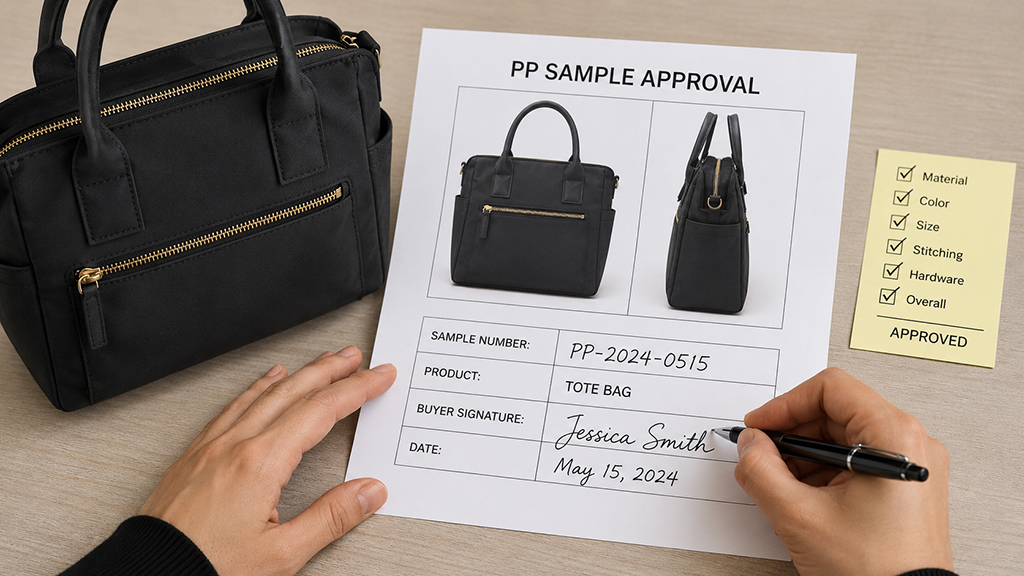
Figure 2: Formal sign-off documentation — the buyer’s signature, date, and sample number create a legally traceable approval record.
When I send my first inquiry to a new factory, the message I use is this:
“Before bulk production begins, do you provide a PP sample made with the final approved materials, hardware, and stitching? After I approve it, can we seal the sample as the golden sample for bulk production reference? I also need one sealed copy retained at your factory for the entire production run, and one shipped to me for my records.”
This single paragraph covers the four things you absolutely must lock down before you wire any deposit.
3. What Is the Typical Cost Difference Between a PP Sample and the Final Bulk Unit Price?
The math is more favorable than most buyers expect
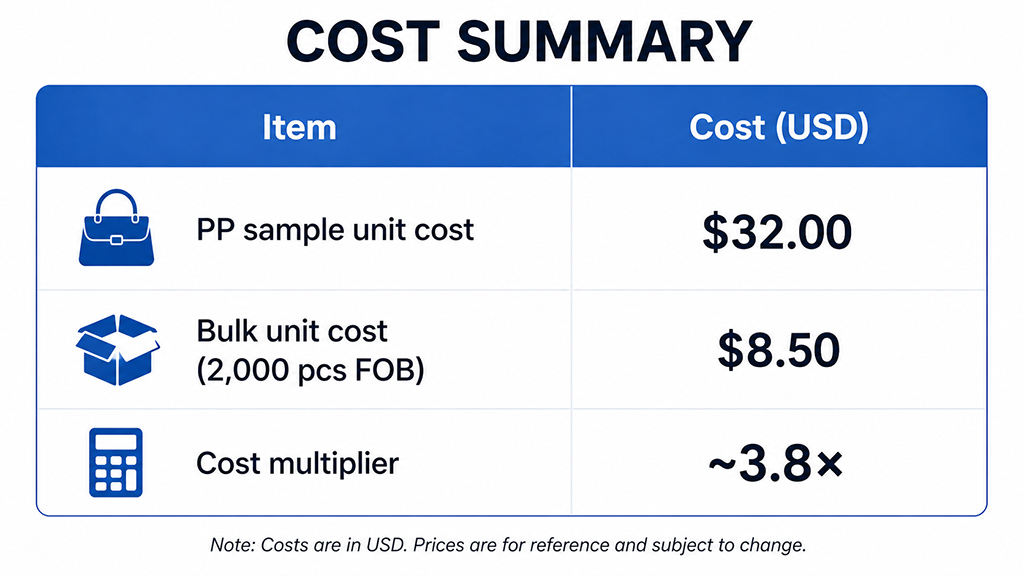
A common misconception among first-time importers is that the PP sample price is roughly the same as the bulk unit price. In reality, the PP sample typically costs 3× to 8× more per unit than the bulk FOB price, and sometimes even more for complex bags with multiple components.
Here is a real-world example from one of my recent backpack orders:
Why the gap is so wide:
Labor: The sample is cut and sewn by a senior sample maker, not a production-line worker. Sample makers in China earn roughly 2× to 3× the hourly rate of line workers.
Setup time: Setting up the cutting dies, adjusting the sewing machine, and calibrating the hardware takes the same amount of time whether you are making 1 bag or 1,000 bags.
Material sourcing: Small quantities of fabric, leather, and hardware are pulled from sample-room stock, which costs more per meter than bulk rolls.
Trims and components: Custom zippers, branded buckles, and engraved logos have minimum order quantities. For a single sample, the supplier often has to pay retail.
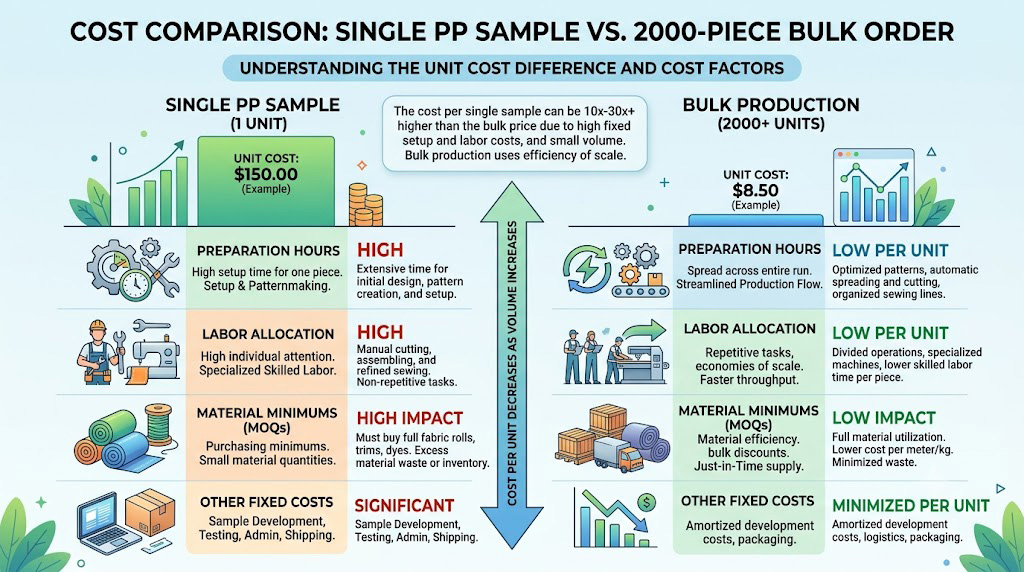
Figure 3: The cost gap between a single PP sample and a 2,000-piece bulk run — setup, labor, and material minimums all contribute to the multiplier.
How to negotiate smarter:
Ask if the PP sample cost can be refunded or credited against your bulk order once production is confirmed. Most reputable factories will agree to a 50% to 100% credit.
Request 3 PP samples instead of 1 — one to keep, one to ship to your US warehouse for your own QC reference, and one to send to your third-party inspector.
Never accept a “free” PP sample without written confirmation of what is included. Some factories will waive the sample fee but charge separately for materials, hardware, and shipping.
4. How Long Does It Usually Take to Receive PP Samples After Lab-Dip Approval?
Plan for 7 to 15 business days, with caveats
The standard turnaround for a PP sample in the bag industry is:
Simple bags (basic totes, drawstring bags, simple backpacks): 5 to 8 business days
Medium complexity (school backpacks, laptop bags, crossbody bags with multiple pockets): 8 to 12 business days
High complexity (premium handbags, technical outdoor packs, bags with molded bases or welded seams): 12 to 20 business days
The clock starts the moment you approve:
Lab-dip (fabric color)
Material swatches (main fabric, lining, padding, webbing)
Hardware (zippers, buckles, snaps, magnetic clasps)
Logo artwork and placement
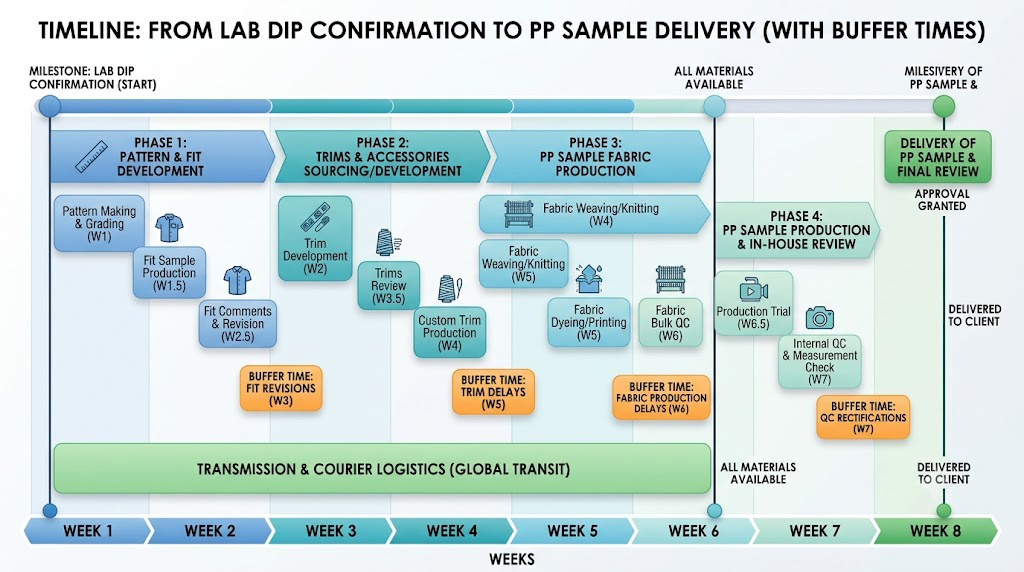
Figure 4: A realistic timeline from lab-dip approval to PP sample delivery — always add buffer days for shipping and revisions.
The hidden delays most buyers forget:
1. Material sourcing for sample quantities. If your bag uses a custom-printed fabric or a non-stock zipper, the sample room may need to wait 3 to 7 days for the supplier’s upstream vendor to deliver.
2. Hardware tooling. Custom metal logos, engraved buckles, or molded plastic components may need a soft-tool sample first.
3. Express shipping. DHL, FedEx, or UPS from China to the US takes 3 to 5 business days. Always add this to your timeline.
4. Revision rounds. Plan for at least one round of revisions. If you require two or three, add another 7 to 10 days per round.
My personal rule of thumb: Whatever the factory tells you, add 3 buffer days. Then add 3 more if it is peak season (August to November).
5. Can the Golden Sample Be Retained at the Factory for the Entire Production Duration?
Yes — and you should insist on it
A sealed golden sample kept at the factory is your single strongest protection against mid-production drift. When the line workers are sewing the 500th unit of the day, fatigue sets in, shortcuts get taken, and small deviations creep in. Having a sealed reference sample literally taped to the QC station keeps everyone honest.
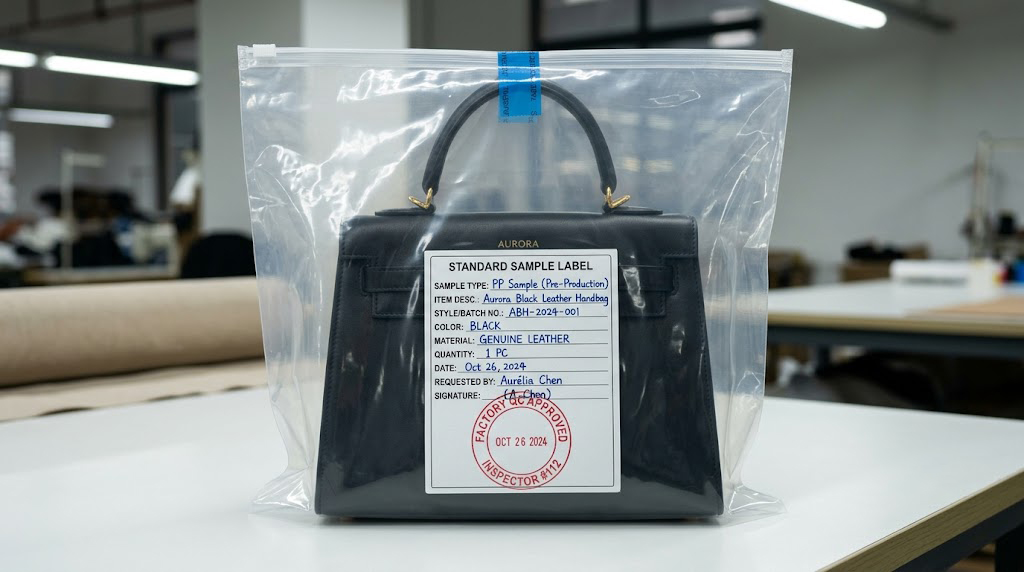
Figure 5: A properly sealed golden sample — usually stored in a clear plastic bag with a factory QC stamp and signed approval label.
What “sealed” should look like in practice:
The approved PP sample is placed inside a clear zip-lock or heat-sealed plastic bag
A factory QC stamp is applied across the seal
A label is attached with: sample number, approval date, buyer’s name, PO number, and the QC manager’s signature
The sample is stored in a dedicated reference sample cabinet, not in the sample room
A photo of the sealed sample is shared with you, and the factory agrees in writing not to unseal it for any reason without your written permission
A point most buyers miss: A new PP sample should ideally be created for each production order, even if the design is identical to a previous run. Fabric dye lots, hardware batches, and trim suppliers can change between orders, and your “old” golden sample may no longer be a true reference.
6. Does the Factory Require a Formal Sign-Off on PP Samples Before Bulk Production Begins?
It depends on the factory — make sure you make it mandatory
Some Chinese bag factories are rigorous about this and will not start bulk production without a written, signed, and dated approval on the PP sample. Others will wait for your “OK” on WeChat and call that sufficient. Neither approach is wrong in isolation, but only one approach protects you in a dispute.
What I require from every factory I work with:
1. Written approval email referencing the PP sample number and PO number
2. Signed and dated copy of the PP sample card (the factory issues this; I sign and scan it back)
3. A clear written statement that production will not begin until the approval is received
4. A photo of the sealed sample with my approval label attached
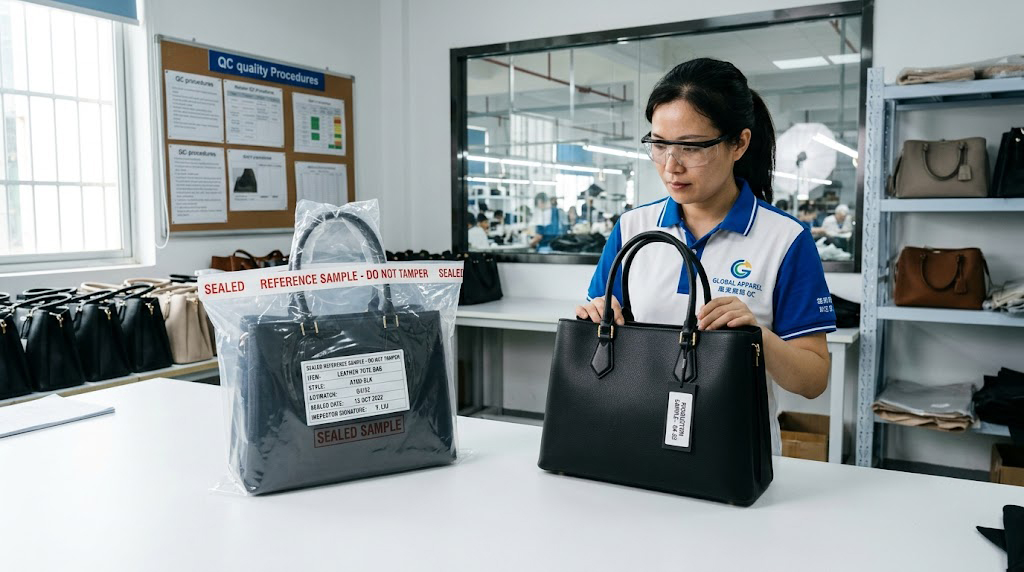
Figure 6: Inline QC inspections compare every bulk unit against the sealed golden sample to catch deviations before they become systemic.
Why this matters legally: If you ever need to file a claim, request a discount, or reject a shipment, the signed PP sample approval is the contractually binding reference. Without it, the factory can argue that you approved a different version, or that the changes were within “acceptable tolerance.”
The signature block I use on my sample approval cards:
Approved by: _ (printed name)
Title: _
Date: _
Sample # _
PO # _
Notes / exceptions: _
7. Photo and Video Documentation: A Small Step That Saves Big Headaches
Request it from day one
Before the factory seals the golden sample, ask them to record a short video that shows:
The sample being inspected piece by piece
The label and approval card being attached
The bag being placed into the sealed bag
The QC stamp being applied
The final sealed sample being placed in the storage cabinet
This 60-second video becomes your proof of condition at the moment of approval. If the factory later claims the sample was different, or if a dispute arises about a specific feature, the video is your evidence.
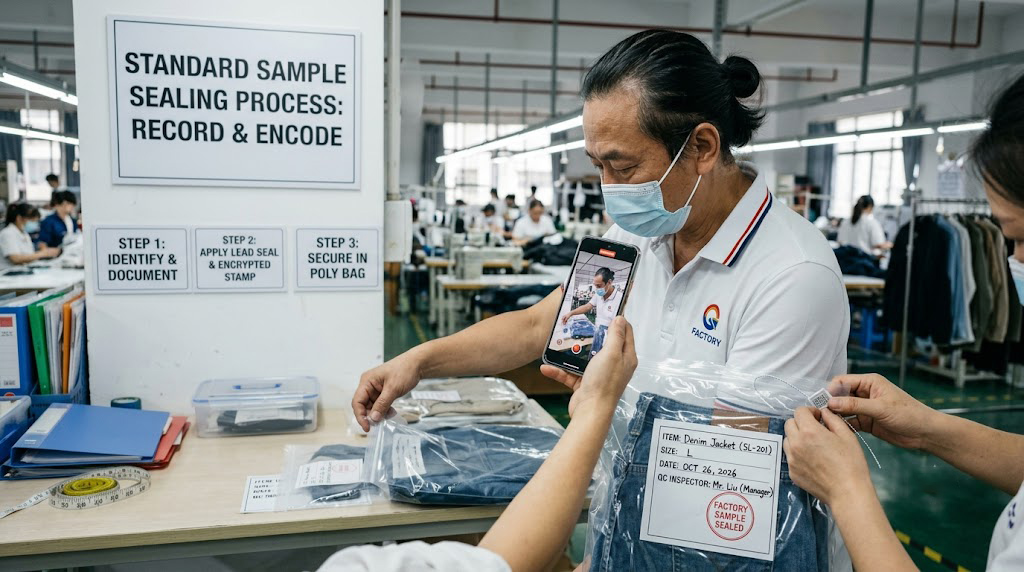
Figure 7: Recording the sealing process on video creates a time-stamped, traceable record of the approved sample condition.
A practical tip: Ask the video to include a today’s newspaper or a phone screen showing the date. This eliminates any argument about when the sample was sealed.
8. Common Misconceptions That Cost Bag Importers Money
Let me address three things I hear from new buyers all the time:
Misconception #1: “A counter sample is the same as a PP sample.”
It is not. A counter sample is what the factory makes to show you their interpretation of your design. A PP sample is made from final, approved materials. Many quality issues — wrong fabric hand-feel, off color, hardware that does not match — only show up at the PP stage.
Misconception #2: “Once I approve the sample, the bulk will match it exactly.”
Not necessarily. Bulk production introduces variables — different fabric rolls, different sewing operators, different machine calibrations. The PP sample approval is the target, and the golden sample is the reference for QC. Without inline inspections, even the best factory will produce some units that drift.
Misconception #3: “PP samples are a waste of money on repeat orders.”
If you are reordering the exact same design with the same factory, you can sometimes skip a new PP sample. But if the gap between orders is more than 6 months, or if any material or hardware has been changed (even slightly), request a new PP sample. The cost of a $30 to $50 sample is nothing compared to a $20,000 rejected shipment.
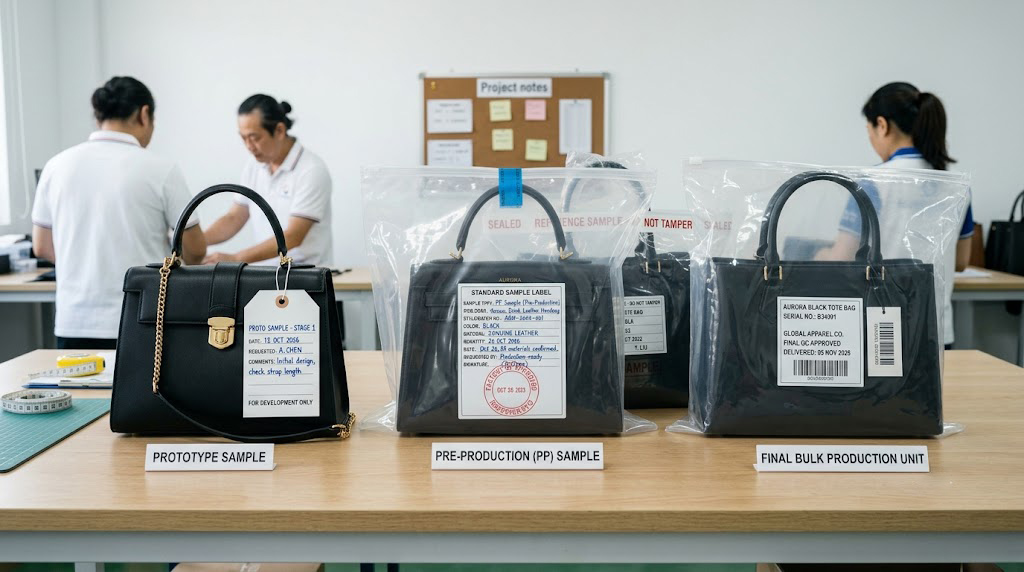
Figure 8: Counter samples, PP samples, and bulk production each serve a different purpose — skipping any step introduces risk.
9. The Message I Actually Send to New Bag Factories
Here is the exact inquiry I use when onboarding a new Chinese bag supplier. Feel free to copy and adapt it:
Hi [Supplier Name],
Thank you for your quotation. Before we move forward, I would like to confirm your sampling and quality control process. Please answer the following:
1. After lab-dip and material approval, do you produce a Pre-Production (PP) sample using the final approved materials, hardware, and trims?
2. Once I approve the PP sample, can it be sealed as the “golden sample” for bulk production reference? Will one sealed copy be retained at your factory for the entire production run?
3. What is the cost of one PP sample, and can this cost be refunded or credited against the bulk order?
4. What is the typical lead time from lab-dip approval to PP sample delivery (including shipping to the USA)?
5. Do you require written and signed approval of the PP sample before bulk production begins?
6. Can you provide photo and video documentation of the PP sample sealing process?
Please include this sampling and approval procedure in our Proforma Invoice.
Best regards,
[Your Name]
10. Final Thoughts: PP Samples Are Insurance, Not an Expense
Every time I have been tempted to skip the PP sample to save 2 weeks of lead time, I have regretted it. Every single time. The factories are not trying to trick you — they are optimizing for throughput. It is your job as the buyer to slow them down at the right moment so that you do not pay for that optimization later with rejected inventory, chargebacks, or unhappy end customers.
A well-run PP sample process does three things:
1. Verifies that the factory can actually execute your design with the materials you specified
2. Creates a binding, sealed reference that both parties agree to follow
3. Forces a documented pause in the production timeline so that you have one last chance to catch errors before thousands of units are made
If you are a US-based bag seller sourcing from China for the first time, or if you have been burned by quality issues in the past, building your entire sourcing workflow around the PP sample is the single highest-leverage decision you can make.
About the Author
I am an independent bag buyer and e-commerce seller based in the United States. I have been sourcing backpacks, handbags, duffels, and travel bags directly from Chinese manufacturers for several years, and I write about the real, unglamorous parts of the process — sampling, QC, supplier communication, and logistics — so other small and mid-sized bag brands can avoid the mistakes I have already made.
Have a question about sourcing bags from China? Drop it in the comments below or reach out — I read every message.
Disclaimer: Lead times, sample costs, and factory practices described in this article reflect typical industry experience as of 2025. Actual results vary by factory, product complexity, and order volume. Always confirm terms in writing before issuing a purchase order.
Post time: Jun-30-2026