
Adhesive Bonding in Bag Manufacturing: A Complete Guide for Smart Buyers
What every bag retailer should know about the invisible glue holding their products together
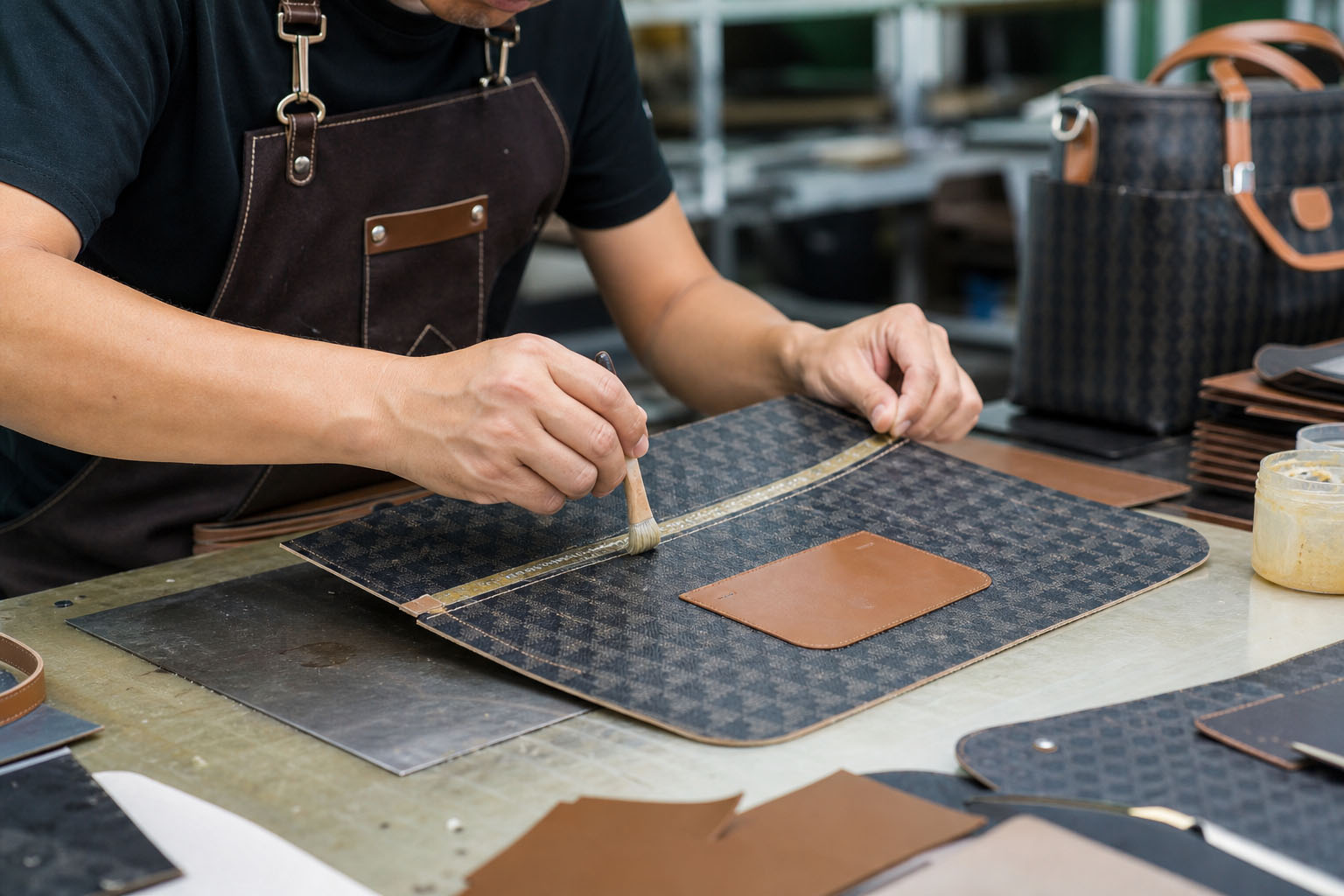
When you purchase handbags, backpacks, laptop sleeves, or travel totes from Chinese manufacturers, you probably focus on the obvious quality markers: leather grain, zipper smoothness, stitch density, and hardware finish. But there’s an invisible hero quietly holding your bag together — adhesive bonding. The glue used in select areas of your bag plays a critical role in how long that bag lasts, how it handles weight, and whether it survives a cross-continental ocean voyage in a shipping container.
After spending years sourcing bags directly from Chinese factories, I’ve learned that the difference between a premium product and a cheap one often comes down to the adhesive choices the factory made — and whether those choices were tested before shipment. This guide will walk you through everything you need to know about adhesive bonding in bag manufacturing, from the chemistry of industrial glues to the inspection techniques that separate reliable suppliers from risky ones.
Whether you’re a first-time importer or an experienced buyer expanding your private-label line, this article will help you ask the right questions, spot red flags, and ultimately source better bags for your customers.
Why Adhesive Bonding Matters More Than You Think
Most buyers assume stitching is the only thing that keeps a bag together. In reality, modern bag construction relies on a hybrid system where adhesive bonding and stitching work together — each compensating for the other’s weaknesses. Stitching provides mechanical strength, but it creates puncture holes, can unravel if a single thread breaks, and doesn’t seal against water. Adhesive bonding provides continuous surface contact, distributes stress across wider areas, and creates watertight seals — but it can fail under extreme heat, certain chemicals, or prolonged moisture exposure.
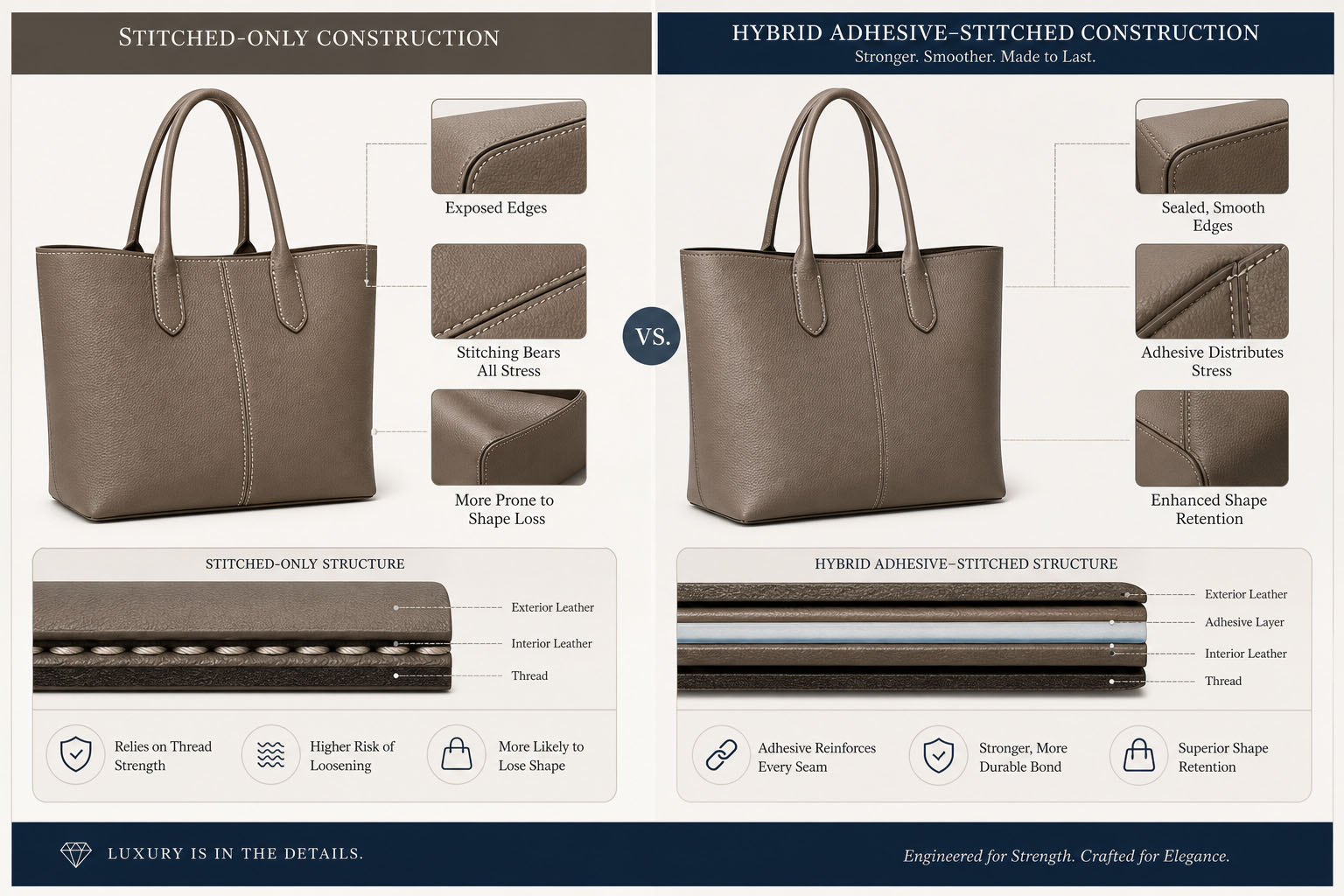
Insight 1: Adhesive bonding is used alongside stitching in Chinese bag factories to reinforce high-stress areas and extend overall product lifespan.
In our experience working with over 40 bag factories across Guangzhou, Yiwu, and Quanzhou, the most reputable manufacturers use adhesive bonding strategically in load-bearing zones. These are the areas where stitching alone tends to fail first: where the handle meets the body, where the bottom panel attaches, and around hardware installation points. The adhesive acts as a stress-distribution layer, preventing the stitching threads from bearing 100% of the tensile load.
When you evaluate a sample bag, try this simple test: pull firmly on the handle attachment point. If you feel the threads stretching or hear a slight tearing sound, the bag likely has insufficient adhesive reinforcement. A well-constructed bag should feel solid, with the load distributed across both the adhesive layer and the stitches.
The Critical Bonding Zones in Bag Construction
Not every part of a bag needs adhesive. The factories we’ve audited typically apply bonding in five key areas, each serving a distinct structural purpose.
1. Bottom Panel and Base Attachment
The bottom of a tote, duffel, or backpack takes the most punishment. It’s where the entire weight of the contents presses down, and it’s the surface that gets scraped against floors, car trunks, and airline conveyor belts.
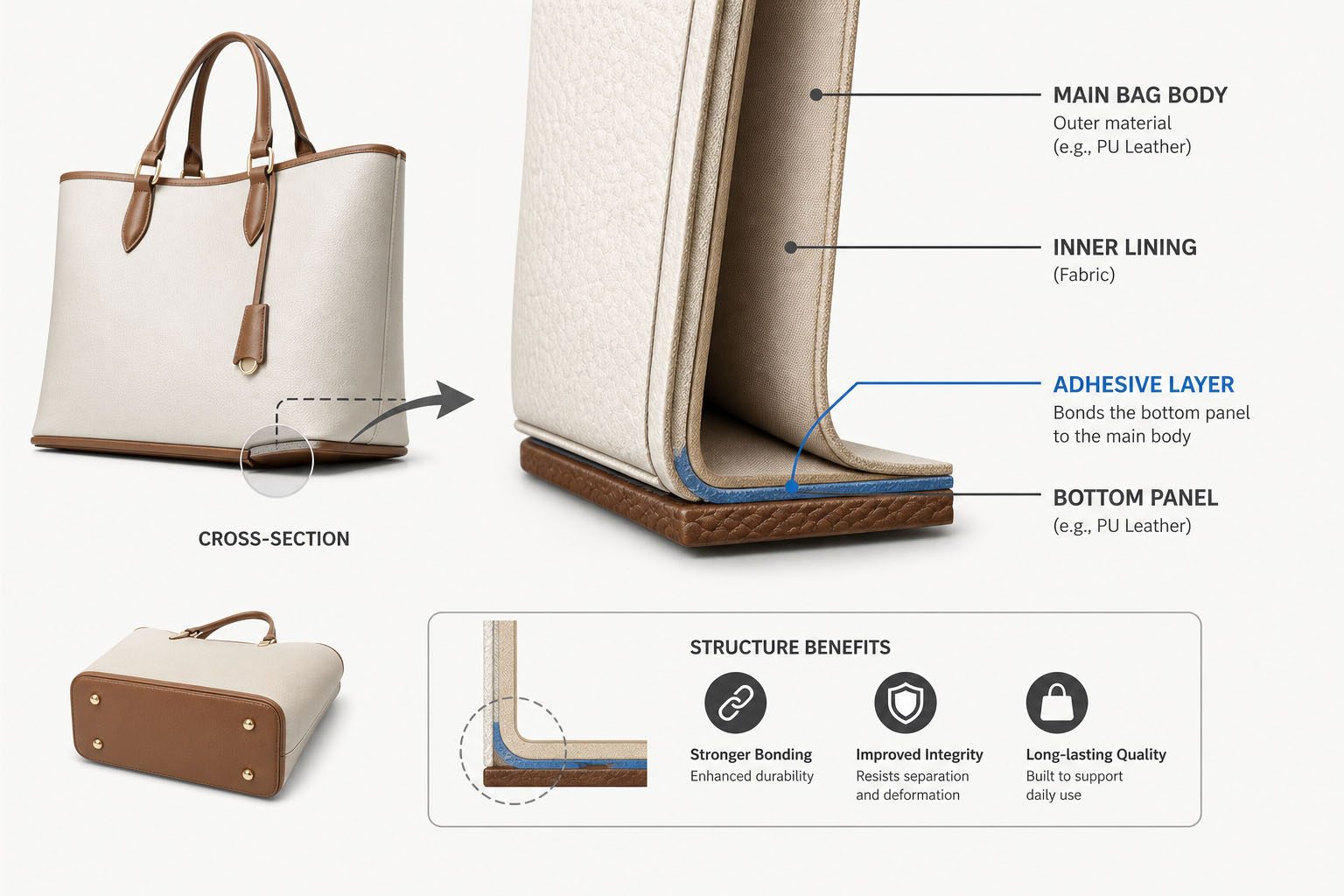
Insight 2: Bottom panel and base attachment typically combine stitching with contact adhesive or hot-melt glue to prevent separation under heavy load.
Chinese manufacturers typically use neoprene-based contact adhesives or hot-melt EVA adhesives for this application. The adhesive is applied to both surfaces, allowed to tack up, and then pressed together before final edge stitching seals the perimeter. This creates a sandwich construction that resists the “tray effect” — the tendency for a loaded bag’s bottom to sag and separate from the side walls.
When inspecting samples, look for visible glue squeeze-out along the bottom seam. A clean, minimal glue line indicates a controlled factory process. Excessive glue residue suggests manual application with poor quality control.
2. Logo, Patch, and Hardware Fixation
Brand identity elements need to stay attached through years of use. A peeling logo on a $200 handbag destroys the perceived value instantly.
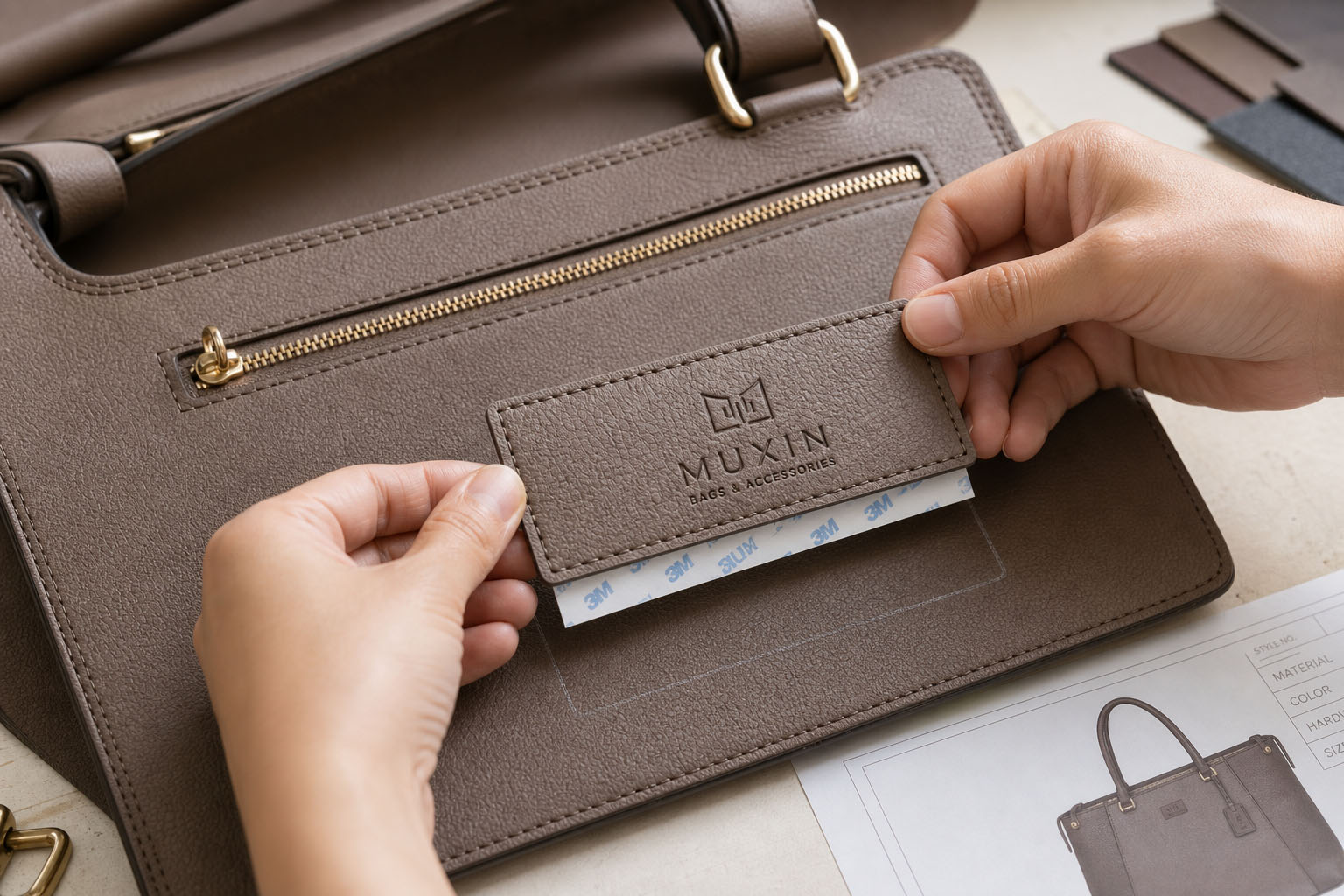
Insight 3: Brand logos, leather patches, and metal hardware are usually first bonded with adhesive, then stitched for permanent fixation.
The two-step process works like this: the factory applies a thin layer of contact adhesive to position the patch or logo precisely (this prevents shifting during stitching), then reinforces the attachment with perimeter stitching. The adhesive alone wouldn’t survive repeated flexing, and stitching alone would allow the patch to shift or pucker. Together, they create a permanent bond that looks clean and holds firm.
For metal hardware like D-rings, buckles, and logo plates, factories often use cyanoacrylate (super glue) or epoxy for initial positioning, then secure with rivets or stitching. Ask your supplier specifically which adhesive they use for hardware — a wrong choice here can stain leather or corrode metal finishes over time.
3. Composite Panels and Structured Walls
Laptop sleeves, camera bag inserts, and structured tote walls often contain multiple layers: outer fabric, foam padding, reinforcement board, and inner lining. These layers can’t be stitched together individually — it would create lumps and weak points.
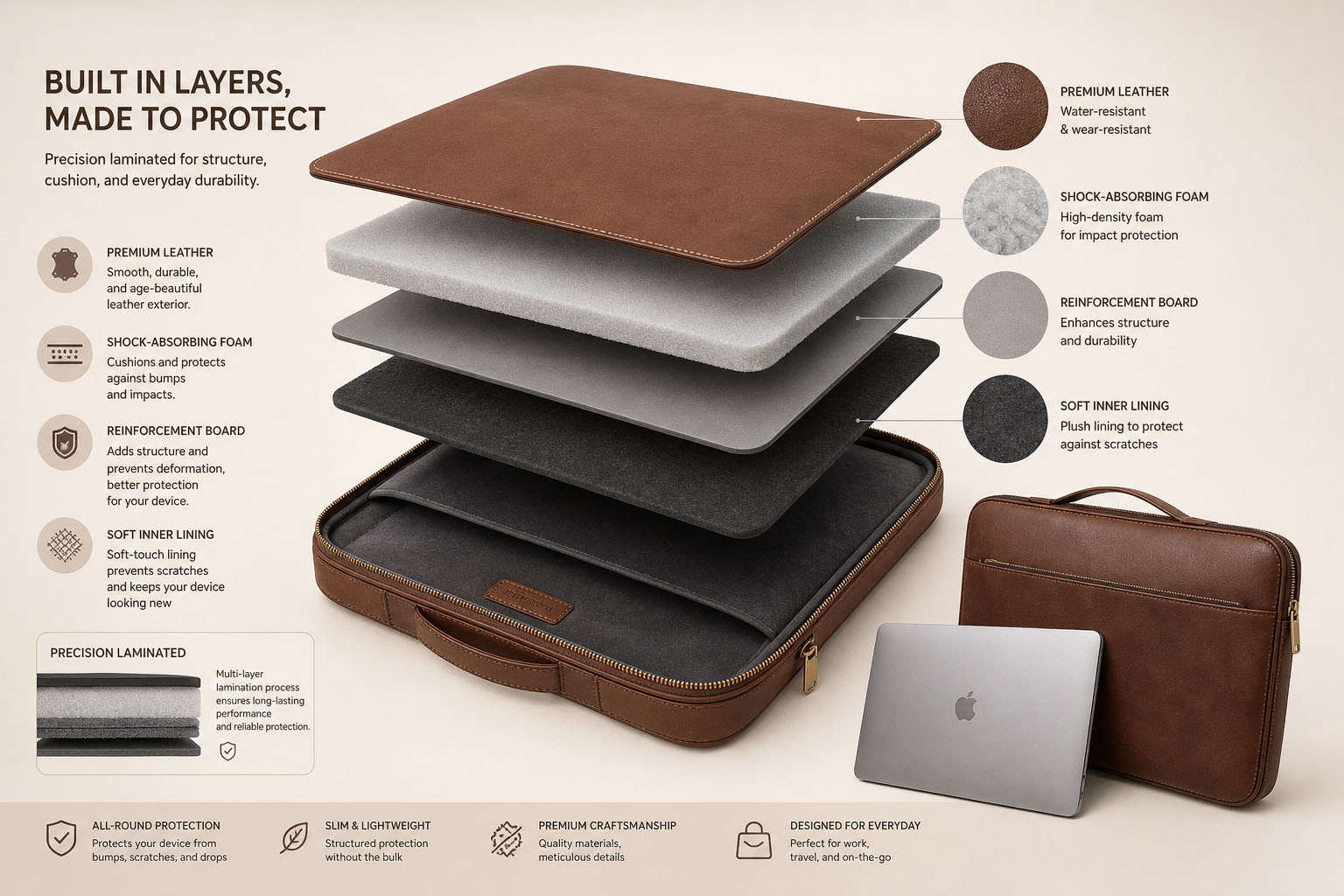
Insight 4: Composite panel construction (e.g., laptop sleeves, structured tote walls) relies on adhesive lamination to bond leather, foam, and reinforcement layers before final edge stitching.
This is where PU-based or acrylic-based laminating adhesives come into play. The factory uses roller systems or spray application to coat each layer, then presses them together under heat and pressure. The resulting composite panel is then sewn into the final bag structure. Without proper lamination, the layers would separate, creating bubbles, wrinkles, and structural failure.
If you sell laptop bags or camera inserts, this is the make-or-break quality factor. We’ve seen “leather” laptop sleeves delaminate within months because the factory used a cheap water-based adhesive instead of a proper solvent-based laminating glue.
4. Seam Sealing and Water Resistance
One underappreciated benefit of adhesive bonding is its ability to create continuous seals along seam lines.
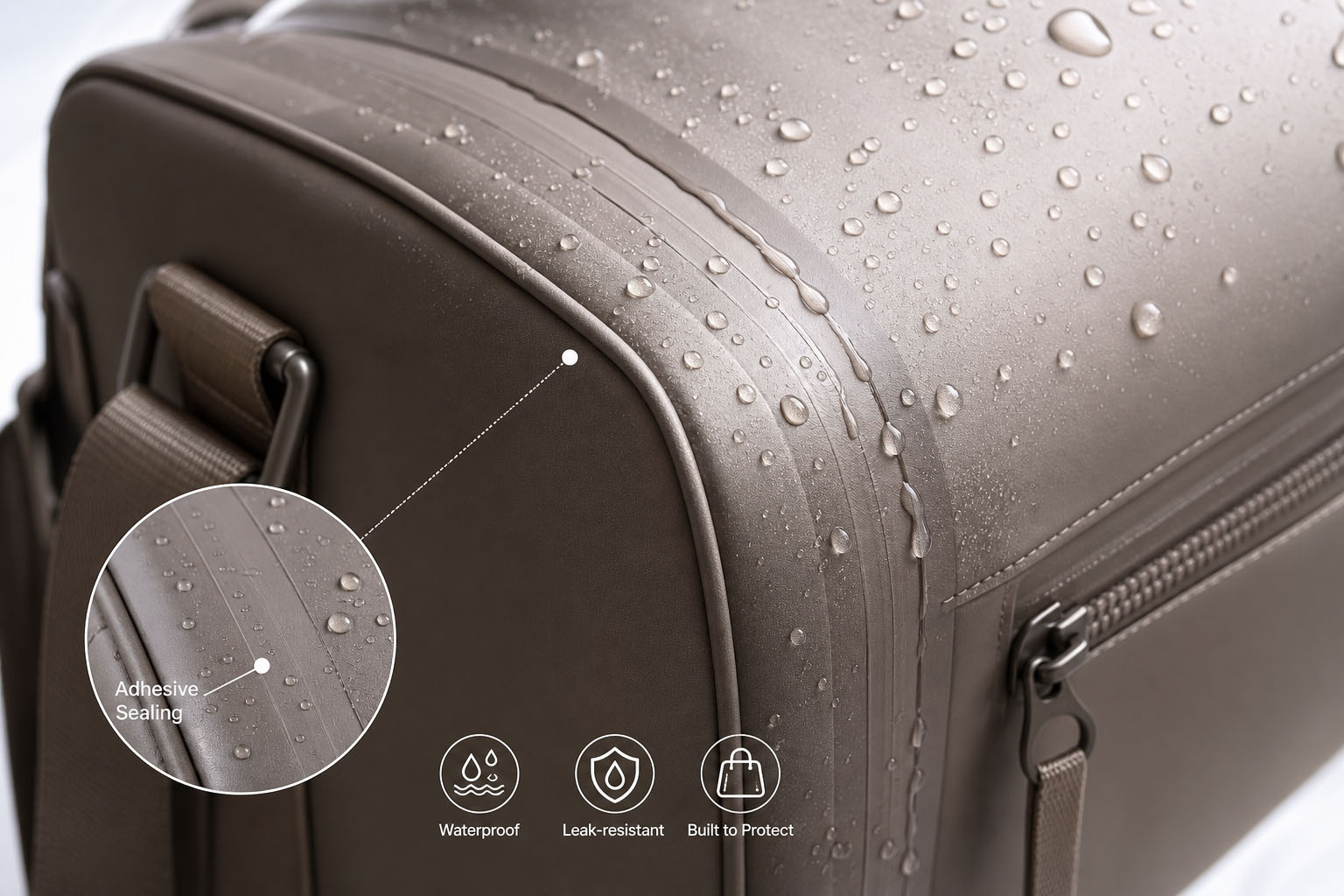
Insight 5: Adhesive bonding at seam junctions reduces water ingress and improves the water resistance of finished bags.
Even with tight stitching, the needle holes in fabric create pathways for water to enter. A thin bead of flexible polyurethane adhesive or silicone sealant along critical seam lines can dramatically improve water resistance — important for outdoor backpacks, camera bags, and commuter totes used in rainy climates.
Don’t confuse this with “waterproof” — only fully welded or taped-seam construction is truly waterproof. But for “water-resistant” claims on your product listing, adhesive seam sealing is the industry-standard technique that makes those claims legitimate.
The Chemistry: What Glues Are Actually Used?
Understanding adhesive types helps you evaluate supplier claims and spot substitutions that could compromise quality.
Insight 6: Most Chinese manufacturers use contact adhesives (neoprene-based) or hot-melt adhesives for these select bonding applications, applied manually or with simple roller systems.
Here’s a quick breakdown of the most common adhesives you’ll encounter in Chinese bag factories:
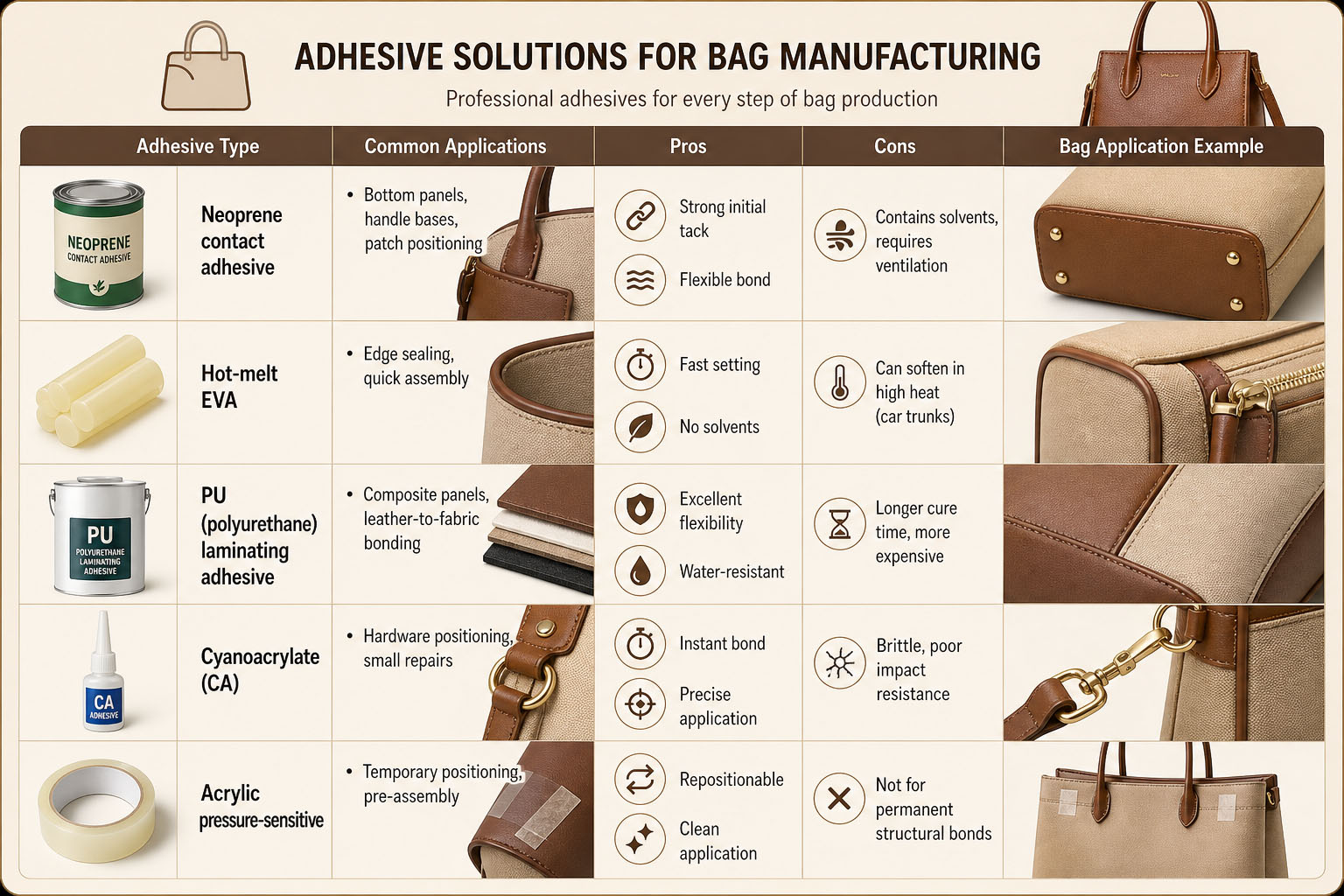
When discussing options with your supplier, ask for the technical data sheet (TDS) for the specific adhesive they’re proposing. Reputable factories keep these on file and share them freely. If a supplier can’t or won’t provide this documentation, consider it a red flag.
The Aesthetic Advantage of Hybrid Construction
Beyond durability, adhesive bonding enables design features that pure stitching cannot achieve.
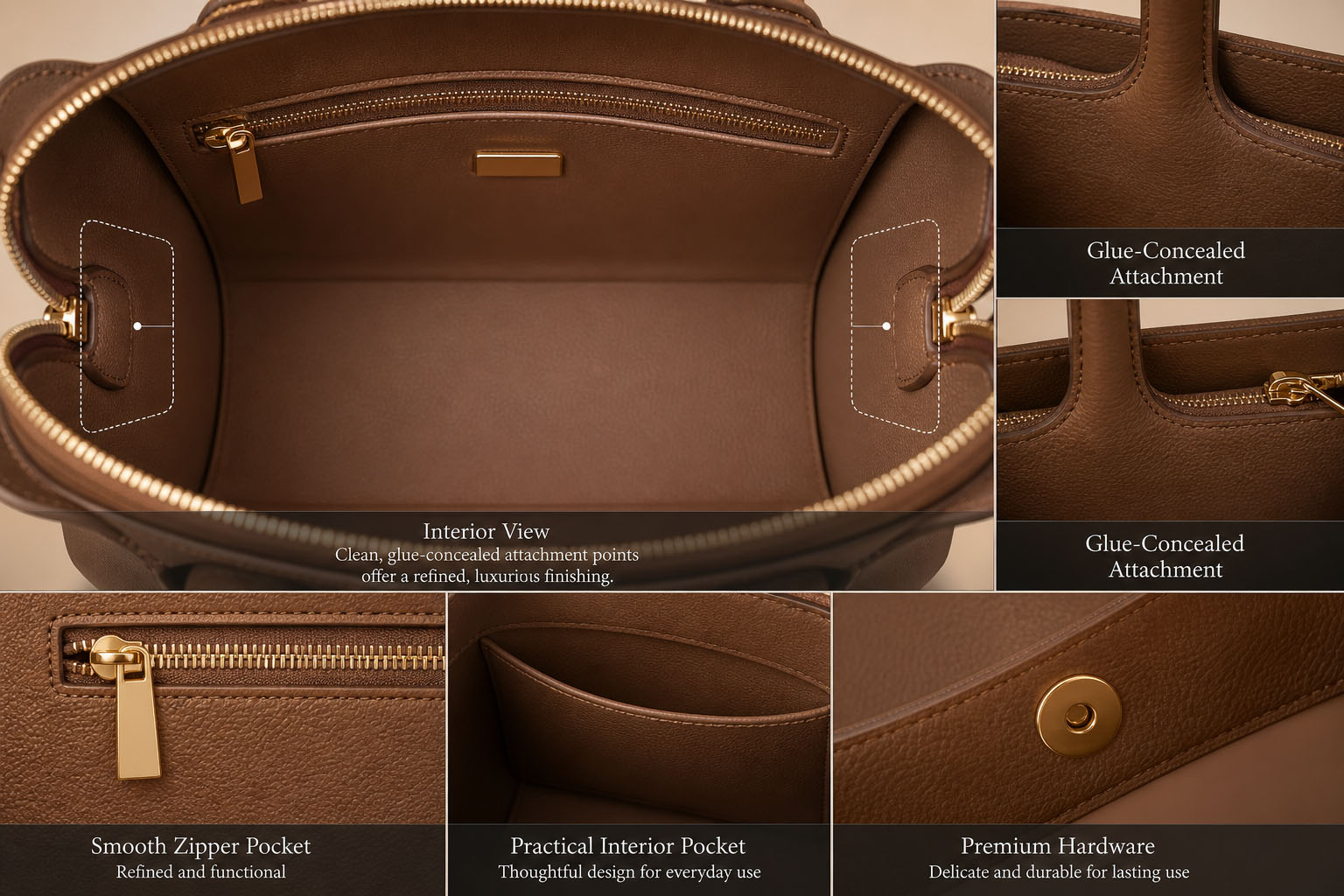
Insight 7: Hybrid adhesive-stitch construction allows cleaner exterior aesthetics, since attachment points can be concealed under linings, interlinings, or internal panels.
Think about a high-end designer tote: the exterior is unblemished, with no visible stitch lines at structural junctions. This is only possible because the internal attachment points are glued first, then hidden behind the lining. The lining is then attached with stitches that remain invisible from the outside.
This construction method also allows for softer, more flexible bag silhouettes. Pure stitching requires more material to create strong seams, which can make bags stiff and boxy. Adhesive bonding lets factories use thinner materials and create slouchy, organic shapes — a key selling point in the contemporary handbag market.
The Safety Net: Structural Redundancy
Perhaps the most important engineering principle behind hybrid construction is redundancy — the idea that no single failure should cause catastrophic product failure.
Insight 8: Combining adhesive with stitching creates structural redundancy, meaning a single failure point will not cause the bag to fall apart during use.
Imagine a backpack strap attached only with stitches. If the thread breaks (due to abrasion, UV damage, or overloading), the strap detaches immediately, and the bag becomes unusable. Now imagine the same strap bonded with adhesive AND stitched. If the stitches fail, the adhesive still holds the strap in place. If the adhesive degrades (due to heat or chemical exposure), the stitches still bear the load. The user has time to notice the issue and repair it before total failure occurs.
This redundancy is why premium bags last decades while cheap bags fail in months. It’s also why you should view “adhesive OR stitching” as a warning sign when reading supplier specifications — it suggests the factory isn’t committed to either system.
The Delamination Risk: Synthetic Leather Concerns
Not all materials bond equally well. Synthetic leathers present particular challenges that have caused significant quality issues in the industry.
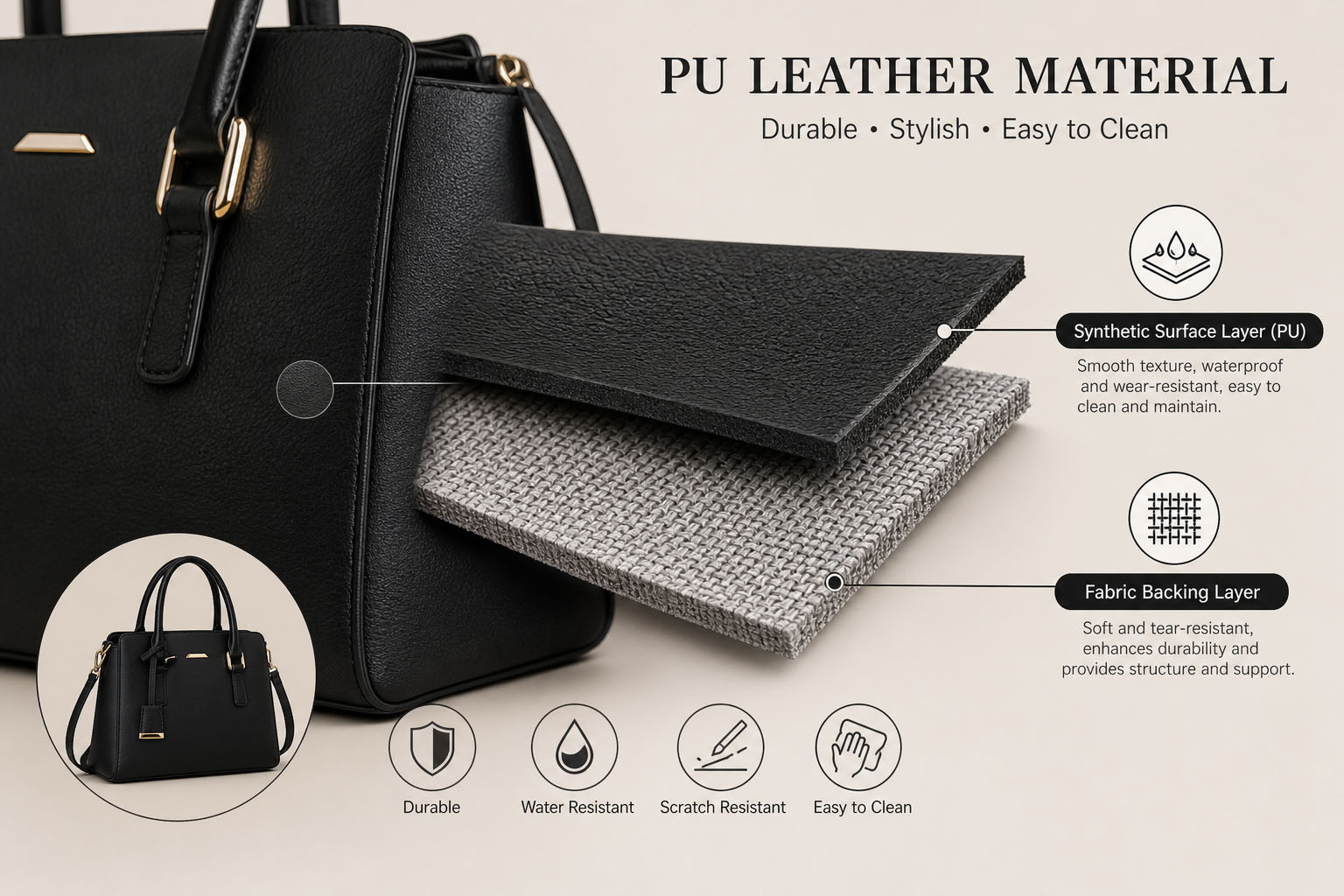
Insight 9: Synthetic leathers (PU, PVC) with adhesive backings are prone to delamination over time, so QC inspections should test both seam strength and bond peel strength separately.
PU and PVC leathers consist of a fabric backing (usually polyester or non-woven) with a synthetic surface layer. When factories bond these materials to other substrates, the adhesive must penetrate the fabric backing and form a mechanical interlock. If the bond isn’t strong enough, or if the adhesive is incompatible with the synthetic leather’s plasticizers, the layers separate over time — a failure mode called delamination.
We once received a shipment of 2,000 vegan leather totes where the surface material began peeling away from the backing within three months. The root cause? The factory had switched to a cheaper water-based adhesive to cut costs, but it didn’t bond well with the PVC’s plasticizer content. The lesson: always request peel strength testing on synthetic leather samples, using ASTM D903 or equivalent standards.
The Shipping Challenge: Adhesive Curing and Climate
Your bags don’t just sit in a climate-controlled warehouse after production. They travel across the Pacific in shipping containers that can reach 60°C (140°F) with humidity levels above 90%.
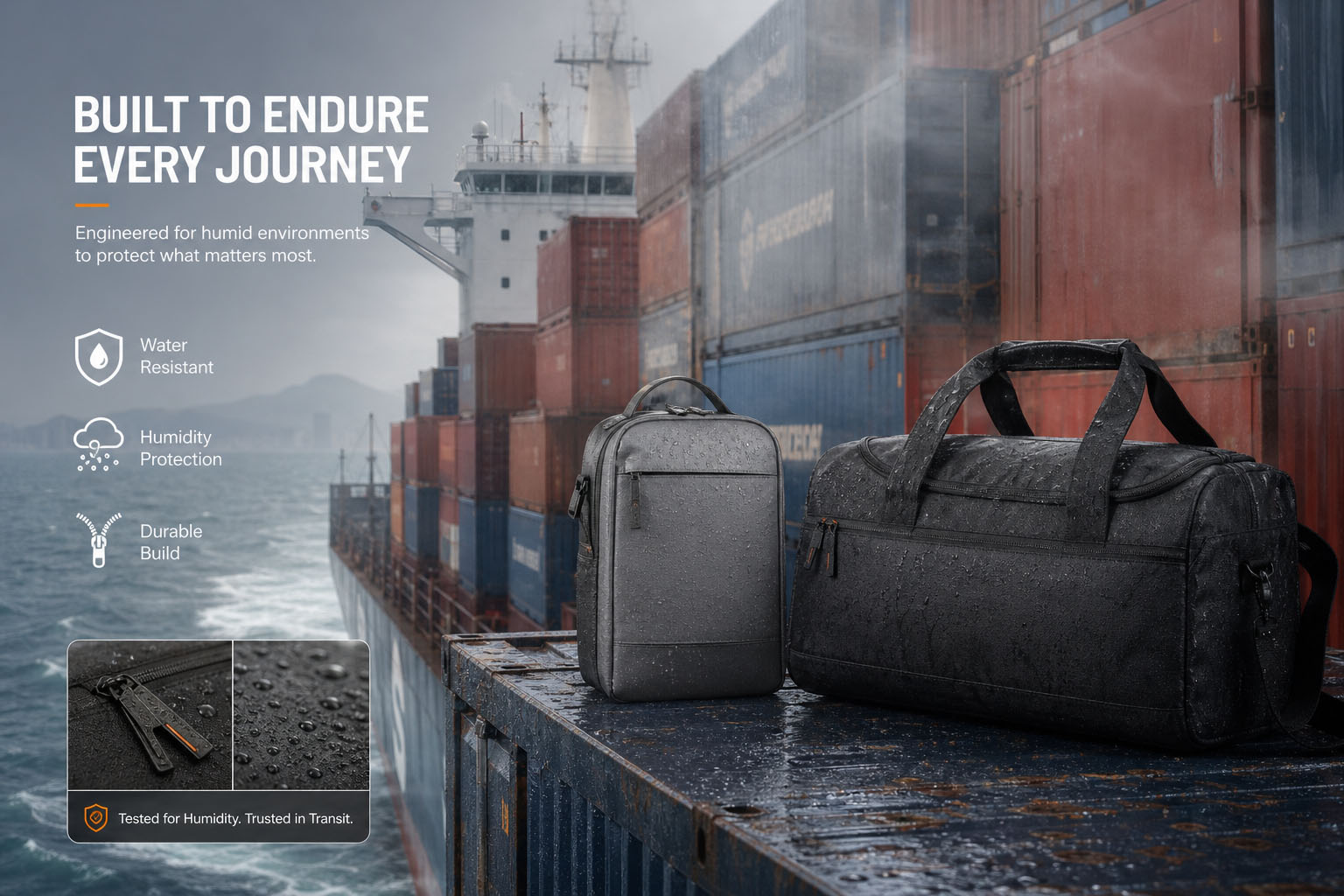
Insight 10: Long ocean shipping from China exposes bags to humidity and temperature swings, which can weaken under-cured adhesive bonds — buyers should specify adhesive type and request accelerated aging tests before shipment.
Adhesive bonds continue to cure for days or even weeks after application. If a factory ships bags before the adhesive has fully cured, the bonds are vulnerable to the temperature and humidity swings of ocean transit. The result: bags that arrive looking fine but begin falling apart within weeks of reaching your customer.
To prevent this, insist on two pre-shipment tests:
1. Accelerated aging test: Expose samples to 70°C and 95% humidity for 72 hours, then test bond strength. This simulates the worst-case shipping conditions.
2. Cure time verification: Ask the factory to document the minimum cure time before packing and confirm the production-to-shipment timeline allows for complete curing.
International Quality Standards for Adhesive Bonding
Several international standards govern adhesive bonding in consumer products. Familiarize yourself with these so you can reference them in supplier negotiations:
ISO 22636: Adhesives — Determination of resistance to water for water-borne adhesives
ASTM D903: Standard Test Method for Peel or Stripping Strength of Adhesive Bonds
ASTM D1876: Standard Test Method for Peel Resistance of Adhesives (T-Peel Test)
EN 13501: Fire classification of construction products (relevant for fire-retardant claims)
REACH compliance: EU regulation restricting hazardous chemicals in adhesives (important if selling to European customers)
California Proposition 65: Restricts certain solvents and chemicals (important for US sales)
Reputable Chinese factories should be familiar with these standards and able to provide test reports from accredited labs like SGS, Intertek, or Bureau Veritas.
Pre-Shipment Inspection: How to Detect Weak Adhesive Bonds
Visual inspection alone won’t catch adhesive failures. Here’s a practical inspection protocol you can implement with your QC team or third-party inspection service:
Step 1: Visual Examination
Look for excessive glue squeeze-out (indicates poor process control)
Check for glue stains on visible surfaces (cosmetic defect)
Inspect for bubbling or lifting on laminated panels
Step 2: Manual Stress Tests
Pull firmly on handles, straps, and attachment points
Try to separate bonded panels by hand
Squeeze bottom panels under simulated load
Step 3: Environmental Simulation
Place samples in a humid environment (bathroom steam) for 24 hours
Expose to direct sunlight for several days
Test in a car trunk during summer heat
Step 4: Documentation Review
Verify adhesive type and supplier
Confirm cure time was observed before packing
Check production date vs. shipment date
Request batch-specific test reports
For high-value orders, consider hiring a third-party inspection service like QIMA, Asia Inspection, or V-Trust to conduct these tests on your behalf. The cost is minimal compared to the risk of receiving a defective shipment.
Smart Questions to Ask Your Chinese Bag Supplier
Based on our experience, here are the key questions that separate professional suppliers from amateur ones:
1. “Which adhesive types do you use for [specific application], and can you share the technical data sheets?”
2. “What is the minimum cure time before a bag can be packed for export?”
3. “Can you provide peel strength test reports from recent production batches?”
4. “Do your adhesives comply with REACH and California Proposition 65?”
5. “Can you send a pre-production sample for our own testing before mass production?”
6. “What happens if our third-party inspection finds adhesive failures during pre-shipment inspection?”
A factory that answers these questions confidently and provides documentation is a factory worth working with. A factory that becomes defensive or evasive is telling you everything you need to know about their quality standards.
Final Thoughts: Adhesive Bonding as a Quality Differentiator
Here’s the truth about the bag industry: most buyers never think about adhesive bonding until something goes wrong. A handle detaches, a logo peels off, a laptop sleeve delaminates — and suddenly you’re dealing with customer complaints, returns, and reputational damage.
By understanding the role of adhesive bonding and asking the right questions upfront, you position yourself as a professional buyer who suppliers want to work with. You’ll receive better samples, more accurate quotes, and — most importantly — products that last.
The factories that invest in proper adhesive selection, application, and testing are the same factories that invest in leather quality, hardware durability, and stitching precision. Adhesive bonding isn’t a minor detail; it’s a window into the entire quality culture of a manufacturer.
Use this guide to start those conversations with your suppliers. Your customers may never know why your bags last longer than the competition — but your return rate will tell the story.
Looking for a bag supplier who takes adhesive bonding seriously? Contact our sourcing team to learn how we vet manufacturers and ensure every product meets our durability standards before shipment.
Post time: Jul-21-2026