
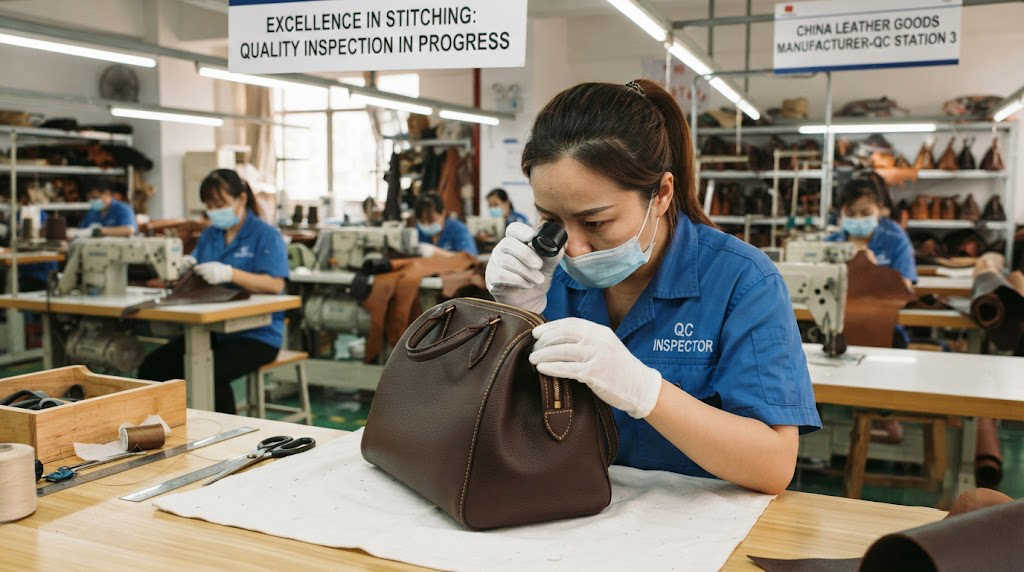
Why This Guide Exists
If you run an independent e-commerce brand that sources handbags, backpacks, totes, or duffels from China, you already know the uncomfortable truth: a beautiful sample is not a guarantee of a beautiful shipment. The 200-piece pre-production sample your supplier sent you? It was hand-finished, hand-picked, and quite possibly hand-carried to the courier office. The 2,000-unit mass production run that follows? It is built by a different team, on a different line, often under time pressure with a shipment deadline looming.
That gap — between what you approved and what you actually receive — is where AQL-based final random inspection becomes your single most powerful line of defense.
In this guide, I’ll walk you through exactly how we, as a U.S.-based bag brand buying directly from Chinese factories, structure our pre-shipment inspections. You’ll learn the AQL sampling levels that actually work for soft goods, the specific workmanship defects that trip up bag shipments most often, the seam-by-seam assessment process we use, and the exact contractual language we put in our purchase orders to keep suppliers honest when disputes arise.
By the end, you’ll have a ready-to-send message to your own factory and a clear quality framework you can hand to any third-party inspector.
1. What AQL Actually Means (And Why Most Buyers Get It Wrong)
AQL stands for Acceptable Quality Limit. It’s a statistical sampling system defined under ISO 2859-1 (and the equivalent ANSI/ASQ Z1.4 in the United States) that tells you, given a lot size, how many units to randomly pull from a finished-goods carton and how many defects in that sample are tolerable before the entire lot should be rejected.
For soft goods like bags, backpacks, and luggage, the most common AQL configuration looks like this:
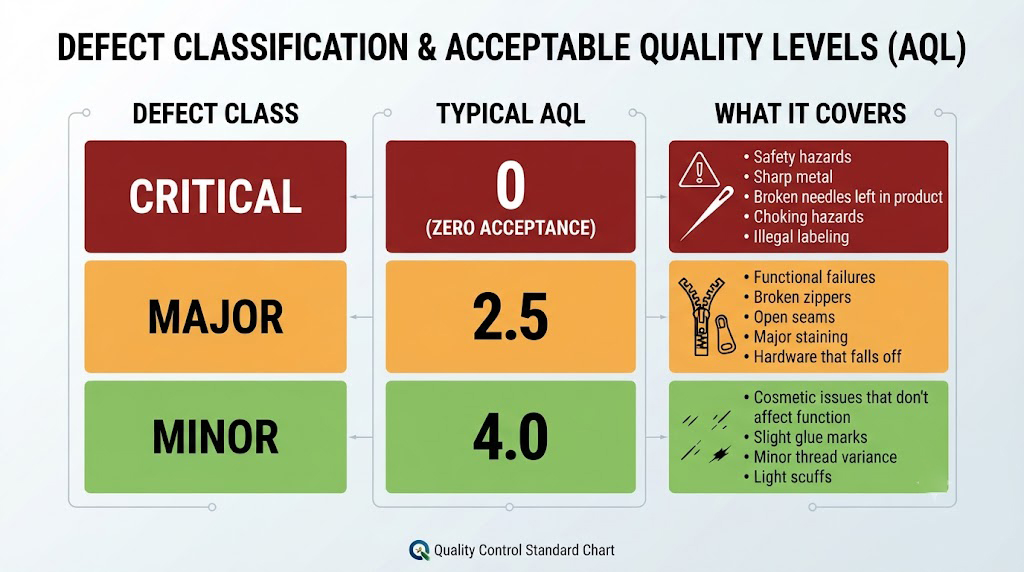
Our recommendation for bags and backpacks: AQL 1.0 for critical, 2.5 for major, and 4.0 for minor, sampled under General Inspection Level II. This is the configuration we use across our handbag, backpack, and travel bag orders, and it’s what most reputable third-party inspection firms (including the ones we work with) will default to if you ask them to inspect “to industry standard.”
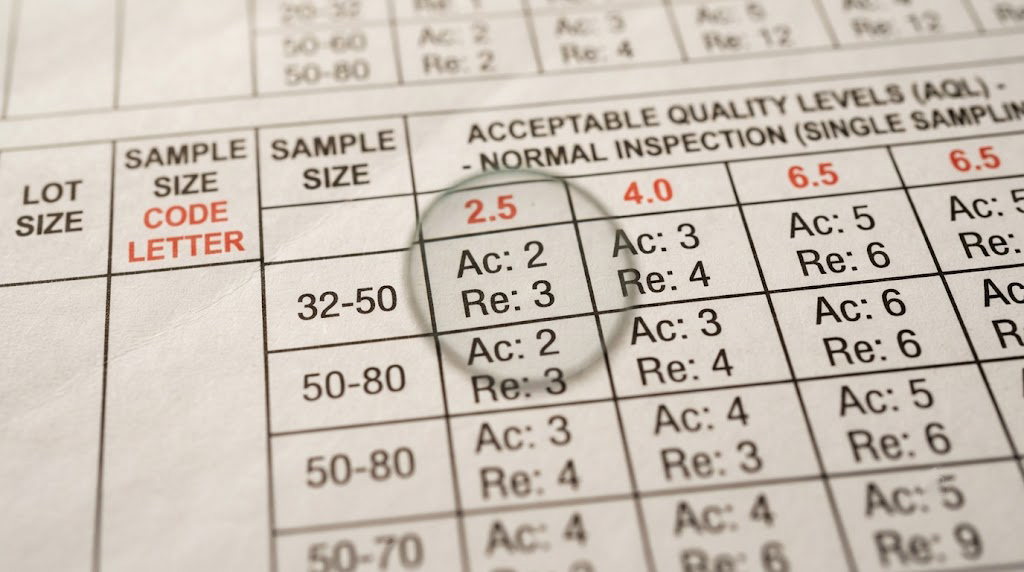
Why not AQL 4.0 across the board? Because at 4.0 for major defects, you’re essentially telling the factory that up to 4% of your shipment can have broken zippers, snapped straps, or open seams — and you’ll still accept it. For a $45 retail handbag, that math might feel tolerable. For a $180 leather backpack, it isn’t.
Why not AQL 1.0 for everything? Because AQL 1.0 is so strict it can result in lots being rejected for reasons that are statistically normal in mass production. The system is designed to balance the cost of inspection with the cost of letting defects through. The 1.0 / 2.5 / 4.0 split is the sweet spot for soft goods.
2. How We Assess Seam Stitching, Alignment, and Symmetry in Pre-Shipment Inspections
This is the part of the inspection where buyers either save their brand or set themselves up for a wave of returns. Let me walk you through our exact protocol.
2.1 Seam Stitching
We require 8–12 stitches per inch (SPI) using bonded nylon or polyester thread. Anything under 8 SPI is too loose and will unravel under load; anything over 12 SPI perforates the fabric unnecessarily and weakens it.
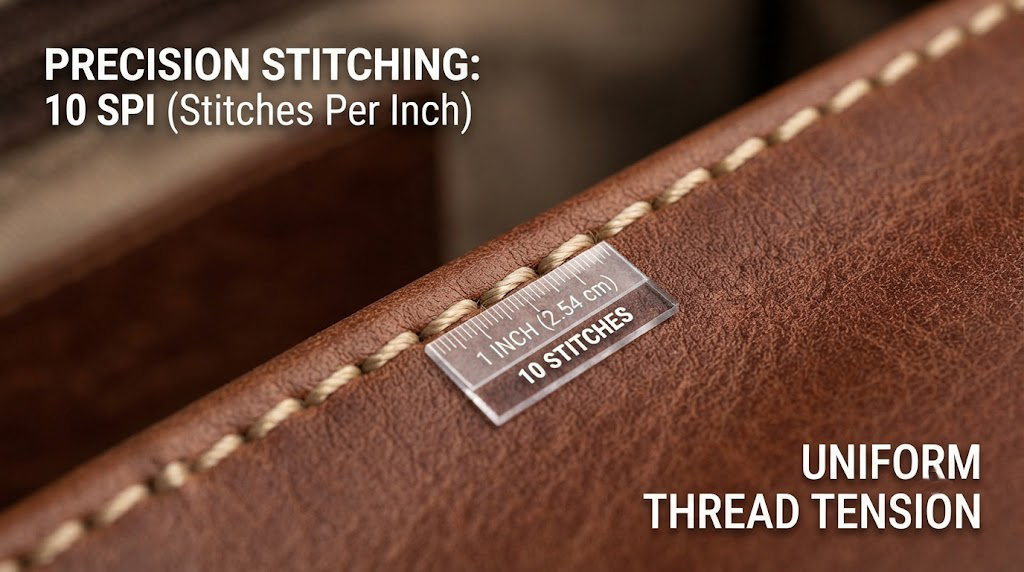
During the inspection, our inspector counts SPI on at least three seams per sample unit and checks for:
Skipped stitches — any visible gap where the needle missed
Broken threads — usually at seam intersections
Tension inconsistency — puckering or loose loops
Thread color match — should match the approved golden sample exactly
We also require backstitching or lock-stitching at every seam beginning, ending, and stress point. This is the reinforcement that prevents a bag from splitting open the first time someone overloads the main compartment. We reject on the spot if we see bar-tacks missing from strap bases, handle attachments, or zipper ends.
2.2 Pattern Matching and Grain Alignment
This is the single biggest giveaway of a cheap bag. Hold a luxury handbag next to a knockoff and look at the side seams where the panels join. On the luxury bag, the pattern flows continuously across the seam. On the knockoff, it shifts by a few millimeters and looks “off” without the viewer being able to articulate why.
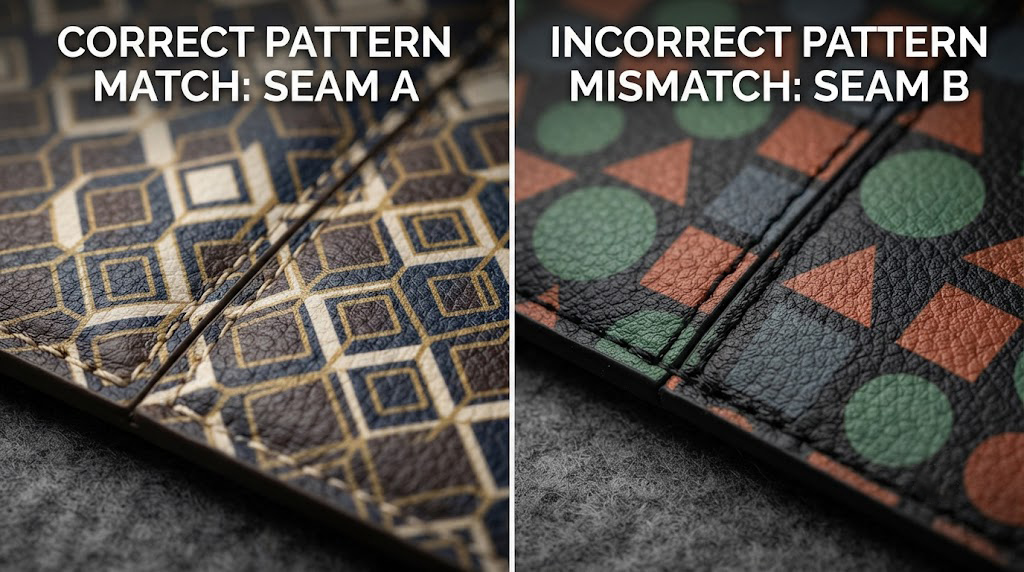
Our inspection checklist requires:
Pattern continuity across every joining seam
Grain direction matching on all panels (no horizontal vs. vertical mismatch)
Logo centering within ±2mm of approved sample placement
Hardware alignment: buckles, D-rings, and rivets positioned exactly per tech pack
Symmetrical pocket placement on internal and external compartments
2.3 Left-Right Symmetry
Bags are mirror-imaged objects, and humans are extremely sensitive to asymmetry. A handle that’s 3mm longer than its pair, a gusset that’s 2mm wider on one side, a base that doesn’t sit flat — these are the issues that generate “I just didn’t love it” returns, even when the customer can’t tell you exactly what’s wrong.
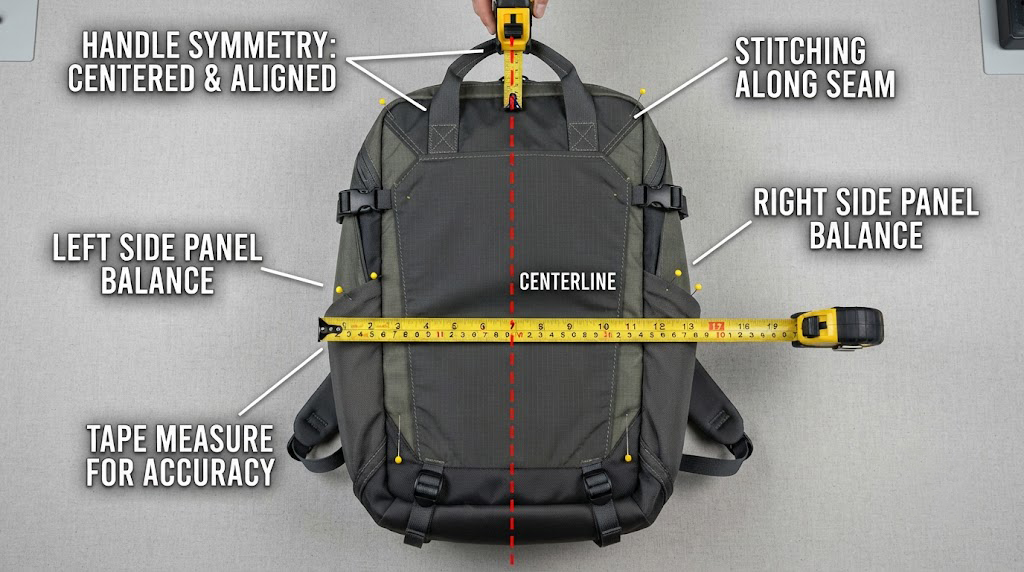
Our tolerance is no more than 3mm of visible unevenness on handle length, gusset width, strap position, or base flatness. Anything beyond that is a major defect. We use a simple ruler and a flat tabletop — no special equipment required.
3. The 10 Most Common Workmanship Defects We See in Chinese Bag Shipments
After running inspections on hundreds of container loads, certain defects show up again and again. Here’s the list, ranked roughly by frequency, that we screen for on every order:
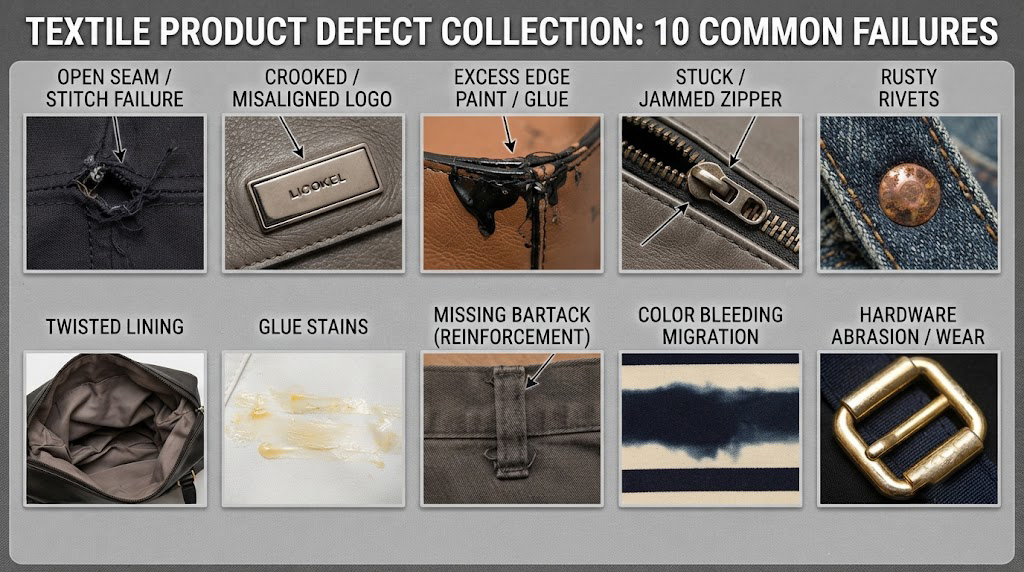
1. Open or skipped stitches at stress points, especially where straps meet the body of the bag.
2. Crooked or off-center logos — usually a result of the heat-press operator not using a jig, or a printed panel being placed slightly off during assembly.
3. Edge paint issues — peeling, cracking, or uneven thickness on exposed leather or synthetic edges. Edge paint is hand-applied in most factories and is one of the first places corners get cut under deadline pressure.
4. Zipper failure — teeth that don’t mesh, sliders that jam or detach, or pulls that come loose after minimal use. We test every zipper on every sample unit through a full open-close cycle.
5. Hardware defects — rust on “antique brass” finishes, sharp edges on D-rings, loose rivets, buckles that don’t latch. We verify hardware matches the approved spec sheet in finish, size, and weight (lightweight hardware is a frequent substitution).
6. Twisted or loose lining — internal fabric that bunches, twists, or has visible gaps where it was poorly tacked down.
7. Glue stains and residue — particularly on PU/PVC panels where the assembler used contact cement to position parts before stitching.
8. Missing backtacks at the start and end of every load-bearing seam.
9. Color bleeding or transfer — usually between a dark lining and a light exterior, or from a printed logo onto adjacent fabric.
10. Surface scuffs, scratches, or press marks — often from bags being stacked on each other in the packing process without tissue paper interleaving.
A clean inspection means zero of these in the sample (within the AQL tolerance). Two open seams in a 32-unit sample on a 2,000-piece lot? That’s a major defect count above the acceptance number for that lot size — and the shipment is held.
4. Contractual Terms You Need in Your Purchase Order
Inspection standards are only as enforceable as the contract that backs them. Below is the exact language (lightly adapted for this article) that we include in every Chinese factory purchase order. It’s written in clear English, mirrored in a bilingual annex, and signed by both parties before production kicks off.
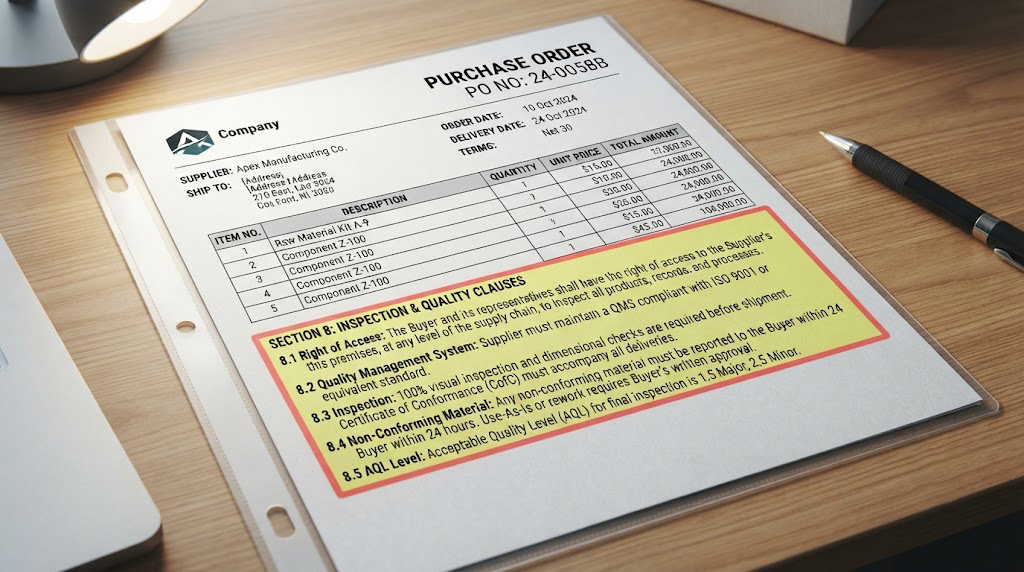
Clause 4.1 — Inspection Standard
“All goods shall be subject to a Final Random Inspection (FRI) based on ISO 2859-1 / ANSI/ASQ Z1.4, General Inspection Level II. Acceptable Quality Limits shall be: 1.0 for critical defects, 2.5 for major defects, and 4.0 for minor defects. The Buyer reserves the right to appoint an independent third-party inspection agency to conduct the inspection at the Seller’s facility after 100% of production is complete and not less than 80% of goods are packed in export cartons.”
Clause 4.2 — Defect Classification
“Critical defects include but are not limited to: sharp objects, broken needles retained in product, choking hazards, illegal or missing country-of-origin labeling, and any safety hazard. Major defects include but are not limited to: functional failure of zippers, snaps, buckles, straps, or closures; open seams; structural deformation; major stains or discoloration; and any defect rendering the product unsellable. Minor defects include cosmetic issues that do not affect function, salability, or compliance.”
Clause 4.3 — Rejection and Remediation
“In the event the lot fails to meet the AQL acceptance criteria, the Seller shall, at the Seller’s expense, undertake one of the following remedies within seven (7) working days: (a) rework the rejected units to meet specifications; (b) replace the rejected units with conforming units; or (c) issue a credit note for the value of the rejected units. The Buyer shall not be required to pay for any units rejected under this clause, and shipping of rejected lots shall not occur without written remediation approval from the Buyer.”
Clause 4.4 — Inspection Cost and Re-inspection Rights
“The cost of the first inspection shall be borne by the Buyer. In the event the first inspection results in a rejection, the cost of the re-inspection shall be borne by the Seller. The Buyer reserves the right to require re-inspection after any remediation activity.”
Clause 4.5 — Golden Sample Reference
“All inspections shall be conducted against a Golden Sample pre-approved in writing by the Buyer, accompanied by a fully dimensioned Technical Pack. Any deviation from the Golden Sample or Technical Pack requires written authorization from the Buyer prior to production.”
Clause 4.6 — Documentation
“The Seller shall provide a written inspection report with photographs for each inspection, including detail shots of any defects found, prior to shipment authorization. Shipment shall not be released until the Buyer has received, reviewed, and approved the inspection report in writing.”
These six clauses won’t eliminate every dispute, but they will eliminate 90% of the “but this is normal in our factory” conversations that go nowhere.
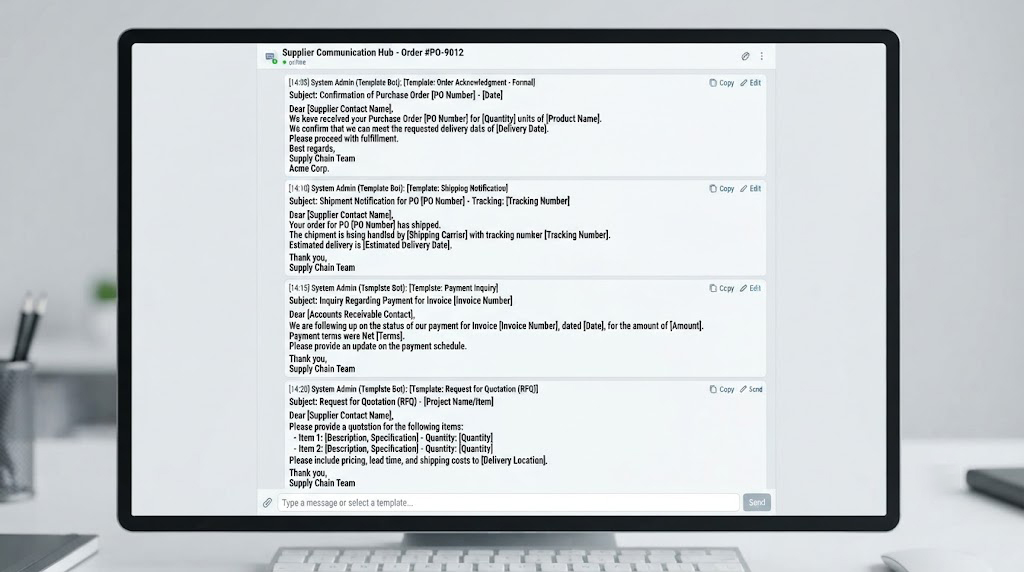
5. The Ready-to-Send Message to Your Supplier
Once you have the contractual language in place, here’s the message we send to every new Chinese bag factory before we place a trial order. Feel free to copy, paste, and adapt:
“Hello [Supplier Contact Name],
Before I place a trial order, I need to confirm a few things about your quality control process:
1. Do you support AQL-based final random inspection before shipment?
2. The inspection will need to cover seams, stitching density, alignment, symmetry, edge paint, zipper function, hardware, logo placement, lining, and overall workmanship. Can your internal QC team handle this, or do you recommend a third-party inspector?
3. What AQL standard do you typically work to for handbags and backpacks — specifically for critical, major, and minor defects?
4. Will you share the inspection report with photographs before I approve shipment release?
5. Are you open to a third-party inspector visiting your facility once production is 100% complete and 80%+ of goods are packed into export cartons?
Please confirm these points in writing. Once we agree, I’ll issue the purchase order with our standard quality clauses attached.
Thank you,
[Your Name]”
6. How We Schedule the Inspection (The Logistics That Matter)
A final random inspection is only meaningful if it happens at the right moment. Our standard protocol:
Production completion: 100% of units manufactured, including all trims and hardware installed.
Packing completion: At least 80% of goods packed in finished export cartons, with the remaining 20% accessible and identifiable.
Inspector arrival: 2–3 days before the booked cargo date, giving time for re-inspection if the first result is a failure.
Sample size: Determined automatically by the lot size under Level II. For a typical 1,000–3,000 unit order, the sample is 80–125 units.
Report turnaround: Inspector issues a same-day or next-day report with photo evidence; we review and either approve shipment or trigger remediation.
Pro tip: Never book your cargo vessel or flight freight before the inspection result is in your inbox. We’ve seen suppliers promise an “internal QC passed” report and then push for an early container pick-up. Hold the freight. Every time.
7. When to Use a Third-Party Inspector (And When Your Supplier’s QC Is Enough)
For orders under $5,000, a third-party inspection at $200–$350 per man-day can feel like overkill. For orders over $15,000 — and especially for first-time suppliers or new product constructions — it is the cheapest insurance you’ll ever buy.
Use a third-party inspector when:
It’s a new factory you’ve never worked with
It’s a new product construction (different material, hardware, or construction technique)
The order value exceeds $15,000
You’re shipping under a tight retail deadline (peak season, Black Friday, etc.)
The factory has a history of “almost-passing” inspections
Your factory’s internal QC is often sufficient when:
You’ve run 3+ successful orders with the same factory
The product construction is identical to your previous runs
The order is small and the financial exposure is low
You have your own staff visiting China who can do a walk-through
Reputable third-party inspection firms for soft goods sourced from China include Testcoo, QIMA, Asia Inspection, and V-Trust, among others. All of them will work to your AQL specification if you provide it.
8. Frequently Asked Questions
Q: Is AQL 2.5 strict enough for a premium bag brand?
For most premium and mid-premium bag brands, yes. AQL 1.0 across all categories creates an unworkable rejection rate and damages the supplier relationship. The 1.0 / 2.5 / 4.0 split is the industry-standard configuration for soft goods.
Q: Can I require the supplier to fix defects before shipment?
Yes — this should be in your purchase order (see Clause 4.3 above). The key is requiring re-inspection after the fix, with re-inspection costs charged back to the supplier on a second failure.
Q: What happens if the supplier refuses third-party inspection?
Walk away. Any reputable Chinese bag factory that exports to the U.S. or EU is accustomed to third-party inspections as a standard part of the procurement process. Refusal is a red flag.
Q: How do I handle a dispute when the supplier and I disagree on whether a defect is “major” or “minor”?
This is exactly why the Golden Sample and Technical Pack exist. Both documents should be signed off before production. When a dispute arises, the question isn’t “is this major or minor?” — it’s “does this match the Golden Sample and Tech Pack?” If yes, accept. If no, classify against your defect definitions and apply the AQL.
Closing Thoughts
Sourcing bags directly from China is one of the highest-leverage decisions an independent bag brand can make. The unit economics are unbeatable, the production capacity is unmatched, and the customization possibilities are endless. But the gap between a great sample and a great shipment is bridged by one thing: disciplined, contractually-anchored AQL inspection.
If you take one thing from this guide, let it be this — don’t let your supplier define your quality standard. You define it, in writing, before the first bulk fabric is cut. The inspection system, the sampling plan, the defect classifications, the remediation process, and the documentation requirements should all be signed, sealed, and referenced in every purchase order from day one.
Your customers will never see the AQL table you used. They’ll never read Clause 4.3 of your purchase order. But they’ll feel the difference every time they zip open a bag that works, lift a strap that holds, and look at a logo that’s perfectly centered.
That’s the entire game.
Have questions about setting up AQL inspection for your bag line, or want a sample purchase order quality clause template you can adapt? Drop them in the comments below — I read every one and reply personally.
Post time: Jul-29-2026