
Ultimate Guide to Sourcing Bags from China: Discounts, MOQs, Quality Checks, and Shipping for Small Businesses
As an independent online bag seller, sourcing from China can unlock massive profit margins—but only if you know how to navigate the market’s unwritten rules. From seasonal discounts to hidden customs fees, this guide breaks down everything you need to know to negotiate like a pro and build a reliable supply chain.
Unlock Hidden Discounts: Seasonal, Bulk, and Loyalty Incentives
Chinese bag suppliers offer a wide range of pricing incentives designed to reward volume, repeat business, and off-season ordering.
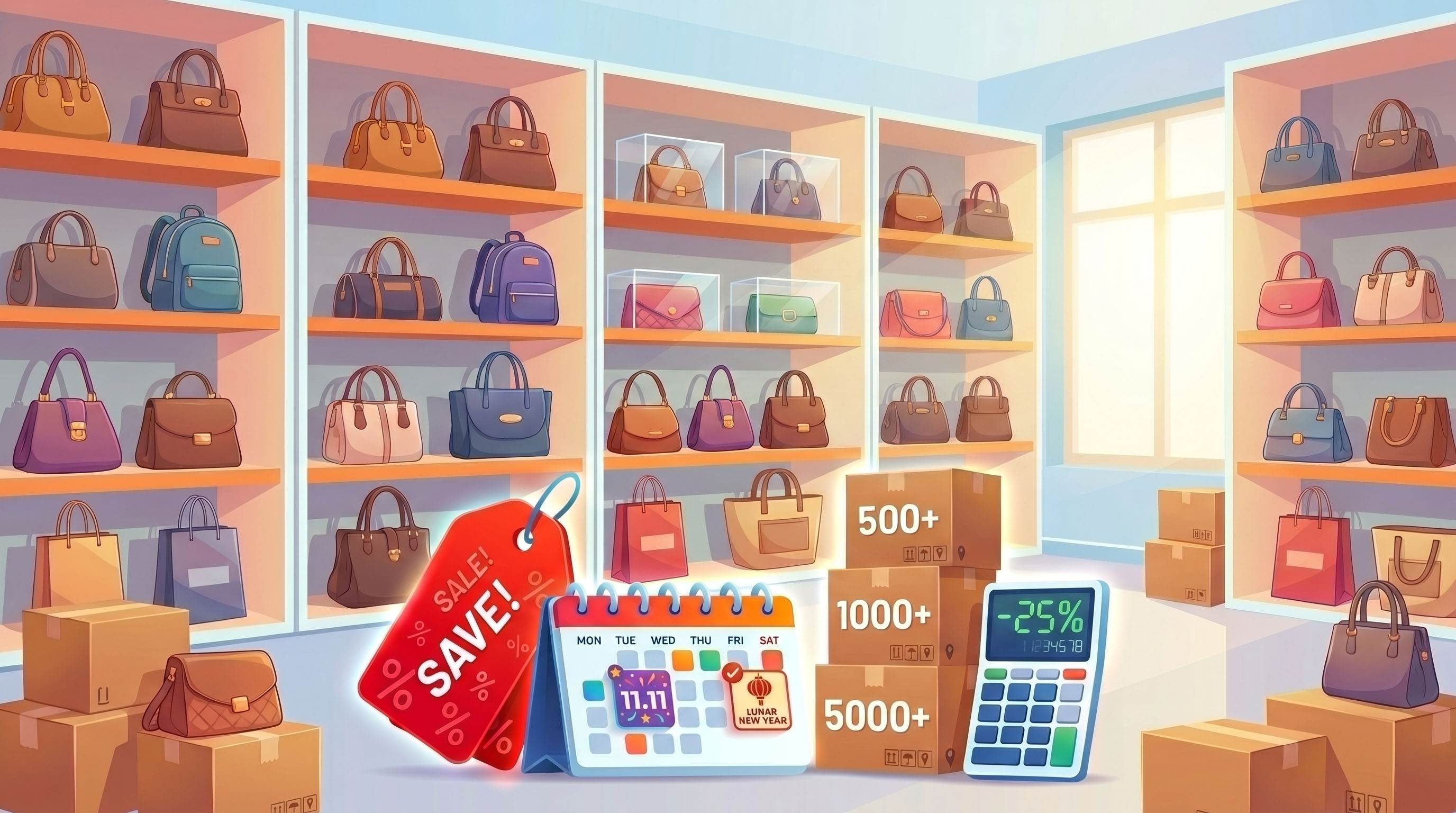
Here’s how to maximize your savings:
Tiered Bulk Pricing: Most suppliers offer sliding scale discounts at 500, 1000, and 5000 unit thresholds. For container-load orders (20,000+ units), you can secure discounts of 15-25%—the deepest cuts available.
Seasonal Promotions: Plan orders around key events to save big:
Chinese New Year and Singles’ Day (November 11): 5-15% sitewide discounts
Off-season (February-April): Negotiable margins of 10-15% due to slower production
Mid-year clearance (June-July): Unadvertised deals on surplus inventory
Loyalty & Repeat Order Perks:
3-8% discount on subsequent orders for repeat customers
Waived sample fees after 3+ confirmed orders
Quarterly commitment contracts lock in preferential pricing for 6-12 months
Bonus Savings Strategies:
Pre-pay a 50% deposit to unlock an extra 2-3% reduction
Use TT (telegraphic transfer) instead of LC (letter of credit) to cut costs by 1.5-3%
Bundle complementary products (e.g., pouches + totes) to increase negotiation leverage
Earn 2% credit on future orders through supplier referral programs
Chinese Bag Seasonal Promotions
Minimum Order Quantities (MOQs): Flexibility for Small Businesses
One of the biggest misconceptions about sourcing from China is that you need to order thousands of units upfront. The reality is far more flexible:
Standard MOQs: Most factories set base MOQs at 50-200 units for basic styles, but this varies by product complexity (custom logos or eco-materials may require higher minimums).
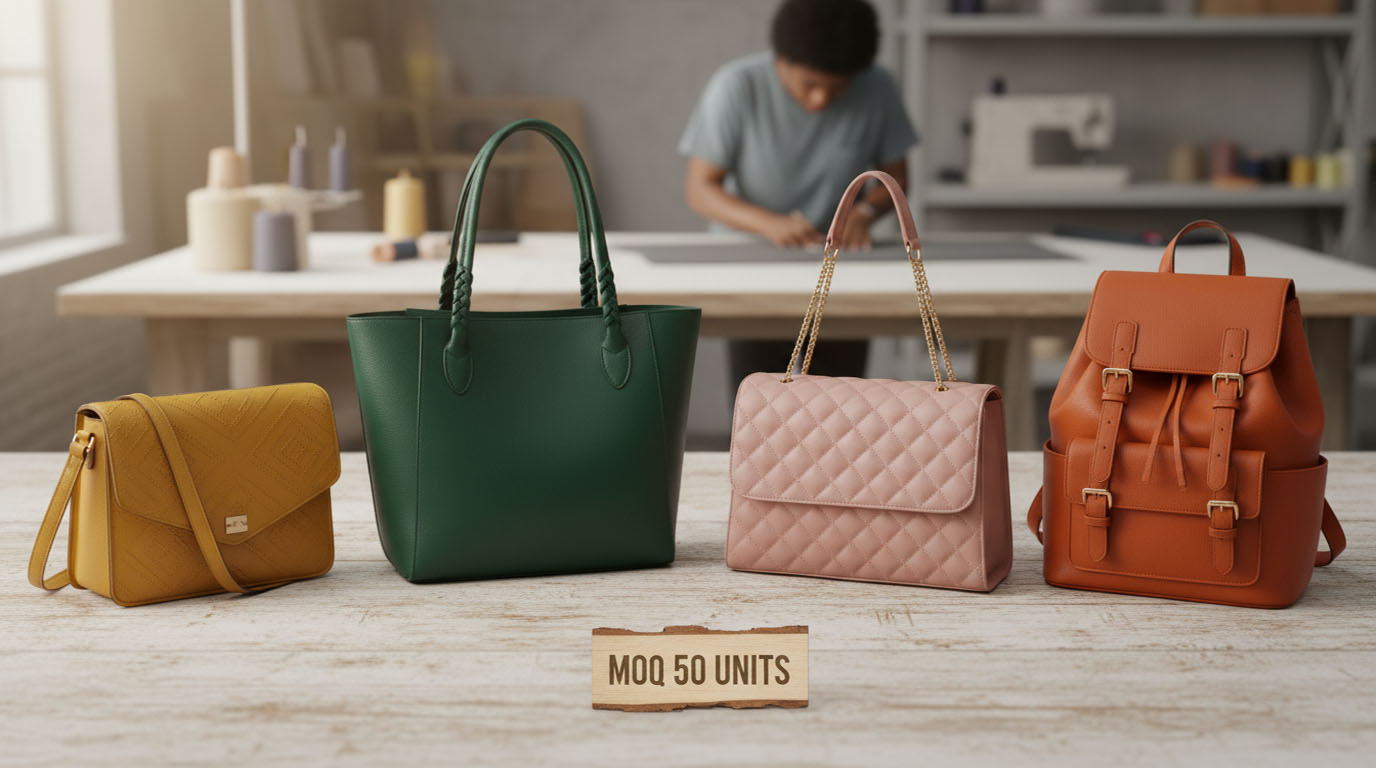
Mixed Order Flexibility: Many suppliers allow mixed designs or colors to qualify for bulk rates—so you can order 100 units total with 25 units of 4 different styles.
Custom Logo Exceptions: Orders with custom logos typically require 2000+ units to waive the 10% design fee, but some suppliers lower this threshold for repeat customers.
Small Business Workarounds: Start with a trial order of 50-100 units to test quality, then negotiate lower MOQs on subsequent orders once you’ve established a relationship.
Bulk Order Packaging Scene
Verifying Supplier Reliability & Quality Standards
Avoid costly mistakes by vetting suppliers thoroughly before placing an order. Here’s how to ensure you’re working with a reputable partner:
1. Factory Audits: Request a third-party audit (e.g., through BSCI or Sedex) to verify compliance with labor laws, safety standards, and quality control processes.
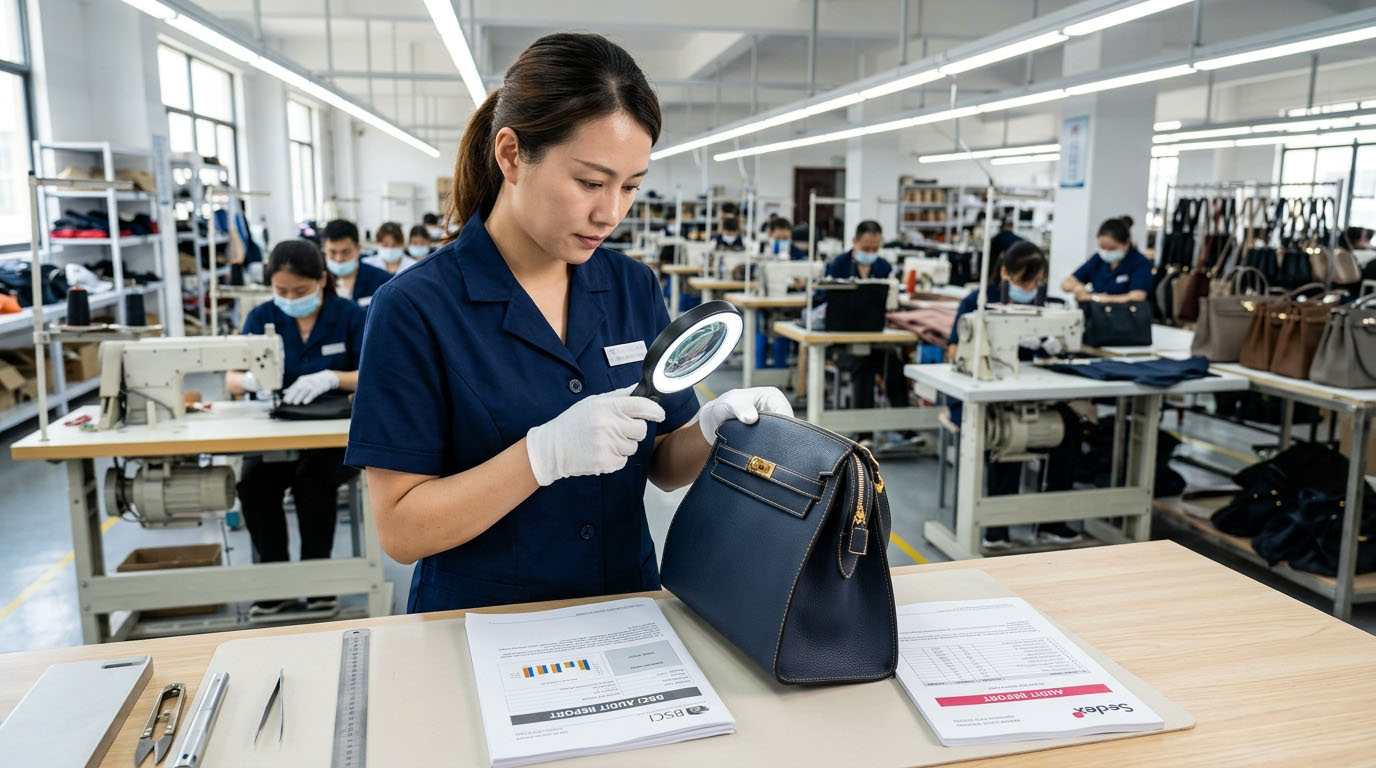
2. Sample Testing: Order production samples to check material quality, stitching, and finish. Pay attention to details like zippers, hardware, and lining durability.
3. Reference Checks: Ask for contact information of 2-3 international clients and follow up to ask about their experience with on-time delivery, product consistency, and communication.
4. Online Verification: Use platforms like Alibaba or Global Sources to check supplier ratings, years in business, and verified badges. Look for suppliers with a 4.5+ star rating and 95%+ on-time delivery rate.
5. Communication Test: Evaluate how responsive the supplier is to your questions. Bilingual (CN/EN) account managers often have greater discretionary authority to negotiate discounts and resolve issues.
Chinese Bag Factory Production Scene
Shipping Methods & Costs: Choosing the Right Option
Shipping costs can eat into your profits, so it’s important to choose the method that balances speed and affordability:
Sea Freight: The cheapest option for large orders (20ft/40ft containers). Transit time is 20-45 days, and costs start at $1,500-$3,000 per container.
Air Freight: Fastest for small to medium orders (100-500 units). Transit time is 3-7 days, with costs ranging from $3-$8 per kilogram.
Courier Services (DHL, FedEx, UPS): Best for urgent small orders (under 100 units). Transit time is 1-3 days, but costs are the highest at $8-$15 per kilogram.
Consolidation Services: For orders too small for a full container, use a freight forwarder to consolidate your shipment with other buyers to reduce costs.
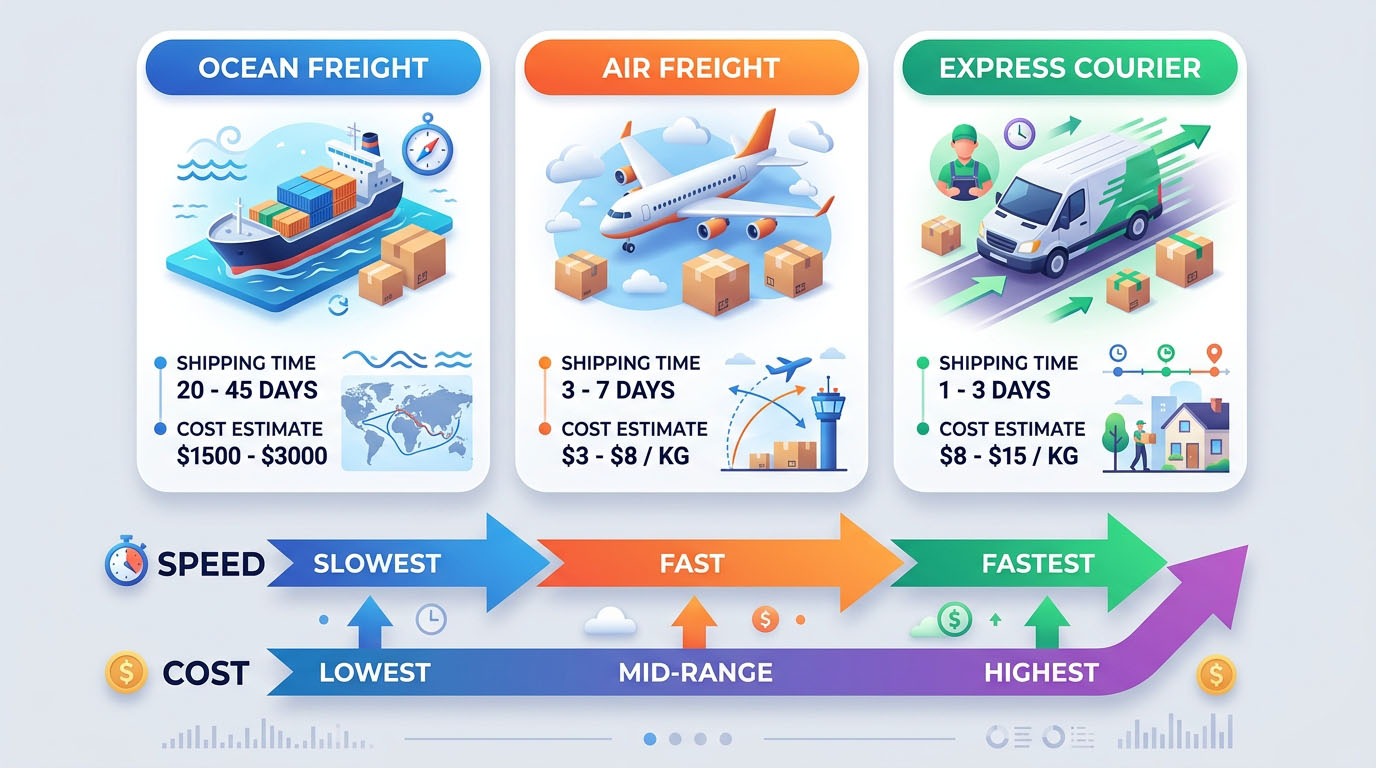
Bag Logistics & Transportation Scene
Hidden Fees & Customs Duties: What to Anticipate
Importing from China involves more than just product and shipping costs. Be prepared for these additional expenses:
Customs Duties: Duties vary by country and product type, but for bags, expect to pay 10-25% of the declared value. Check your country’s customs website for specific tariff codes and rates.
Import Taxes: Most countries charge a value-added tax (VAT) or goods and services tax (GST) on imported goods, typically 10-20% of the total cost (product + shipping + duties).
Brokerage Fees: If you use a customs broker to clear your shipment, expect to pay $100-$300 per shipment.
Inspection Fees: Some countries require mandatory inspection of imported goods, which can cost $50-$200 per shipment.
Storage Fees: If your shipment is delayed at customs, you may be charged storage fees of $50-$100 per day.
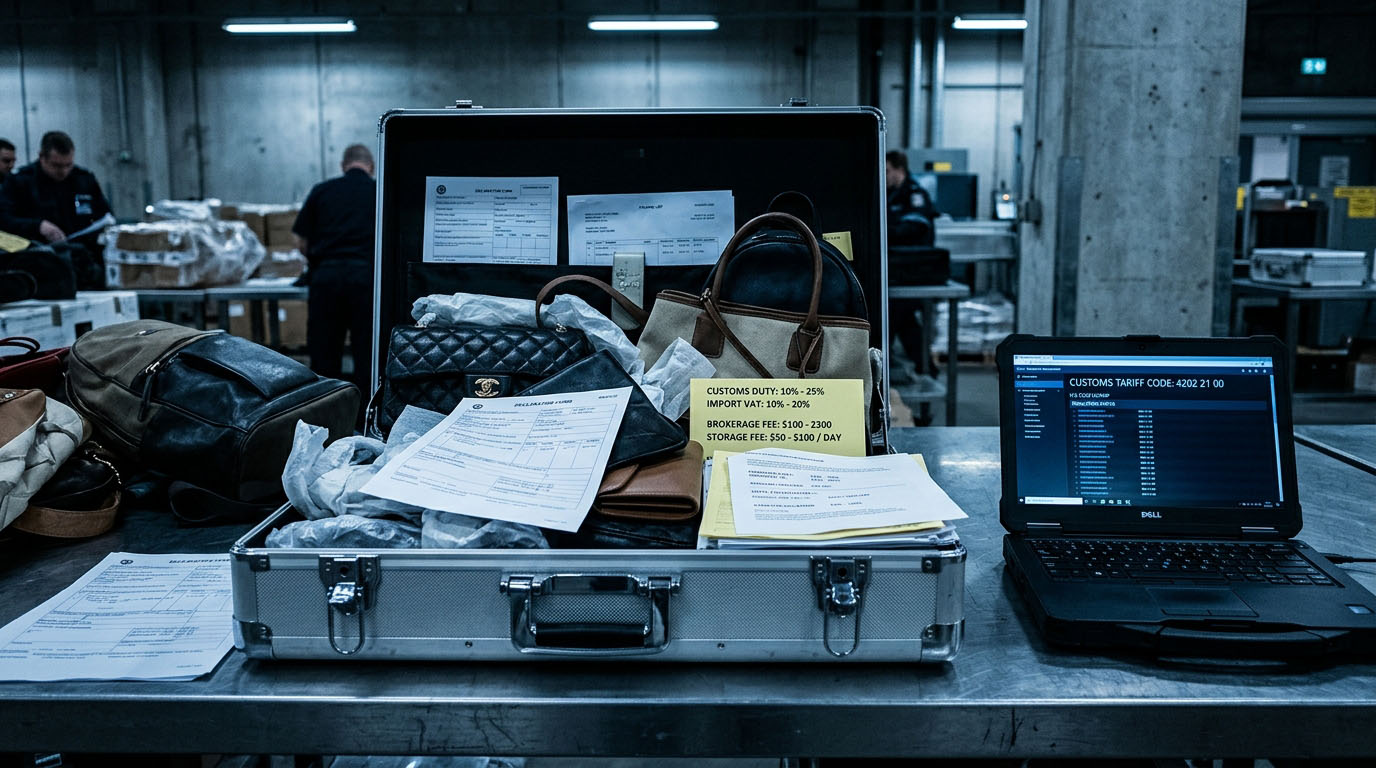
Customs Clearance Scene
Final Tips for Success
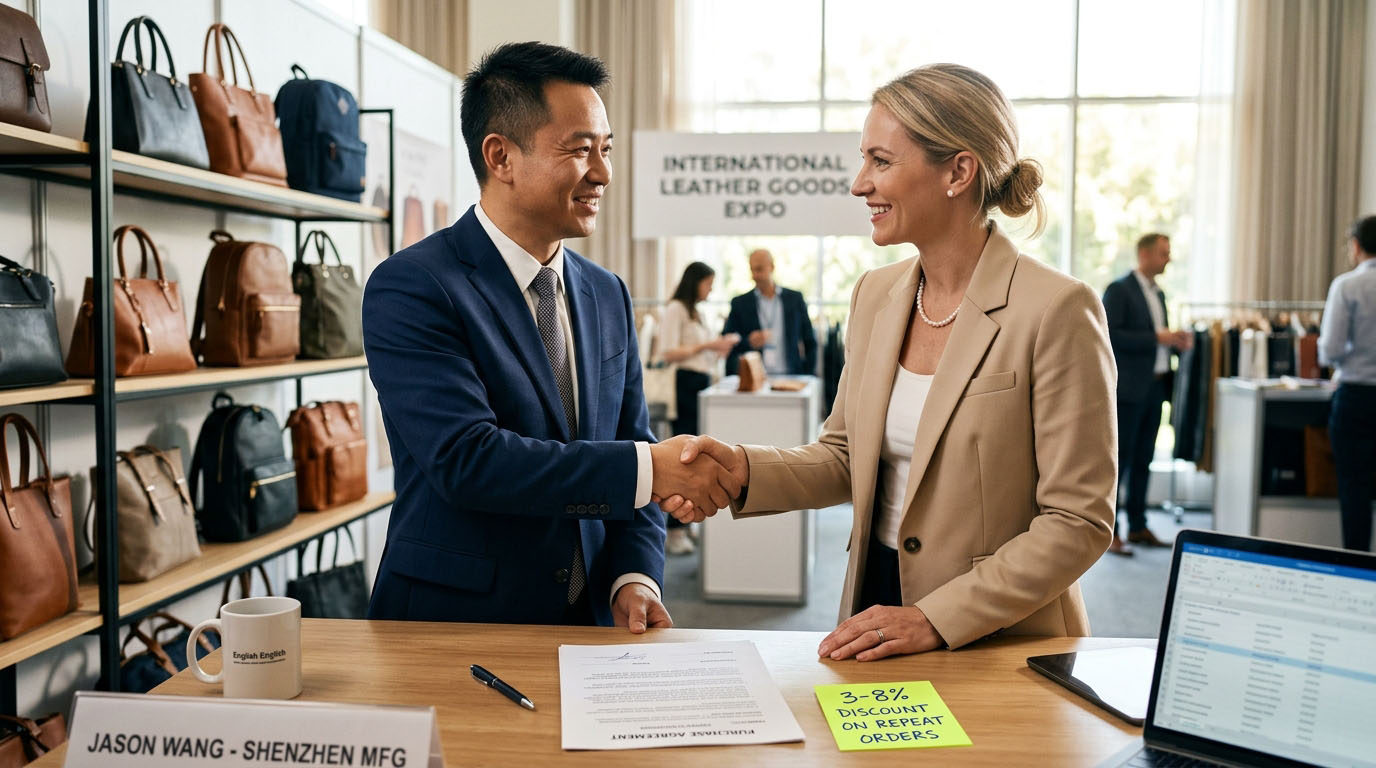
1. Negotiate Everything: Don’t accept the first quote—always ask for a discount or better terms. Suppliers expect negotiations, especially for repeat orders.
2. Get Everything in Writing: Make sure all pricing, MOQs, delivery times, and quality standards are clearly outlined in a formal contract.
3. Build Long-Term Relationships: Suppliers are more likely to offer better terms and priority service to loyal customers. Communicate regularly and pay on time to build trust.
4. Stay Informed: Keep up with changes in trade policies, currency exchange rates, and shipping costs to avoid unexpected expenses.
5. Work with a Freight Forwarder: A good freight forwarder can help you navigate shipping, customs, and documentation, saving you time and money.
By following these tips, you’ll be able to source high-quality bags from China at competitive prices, while minimizing risks and maximizing your profits. Whether you’re a new seller just starting out or an experienced importer looking to expand your supply chain, this guide will help you succeed in the global bag market.
Post time: Apr-17-2026