
Chinese Bag Factories & US Private‑Label Brands: A Complete Guide for B2B Buyers
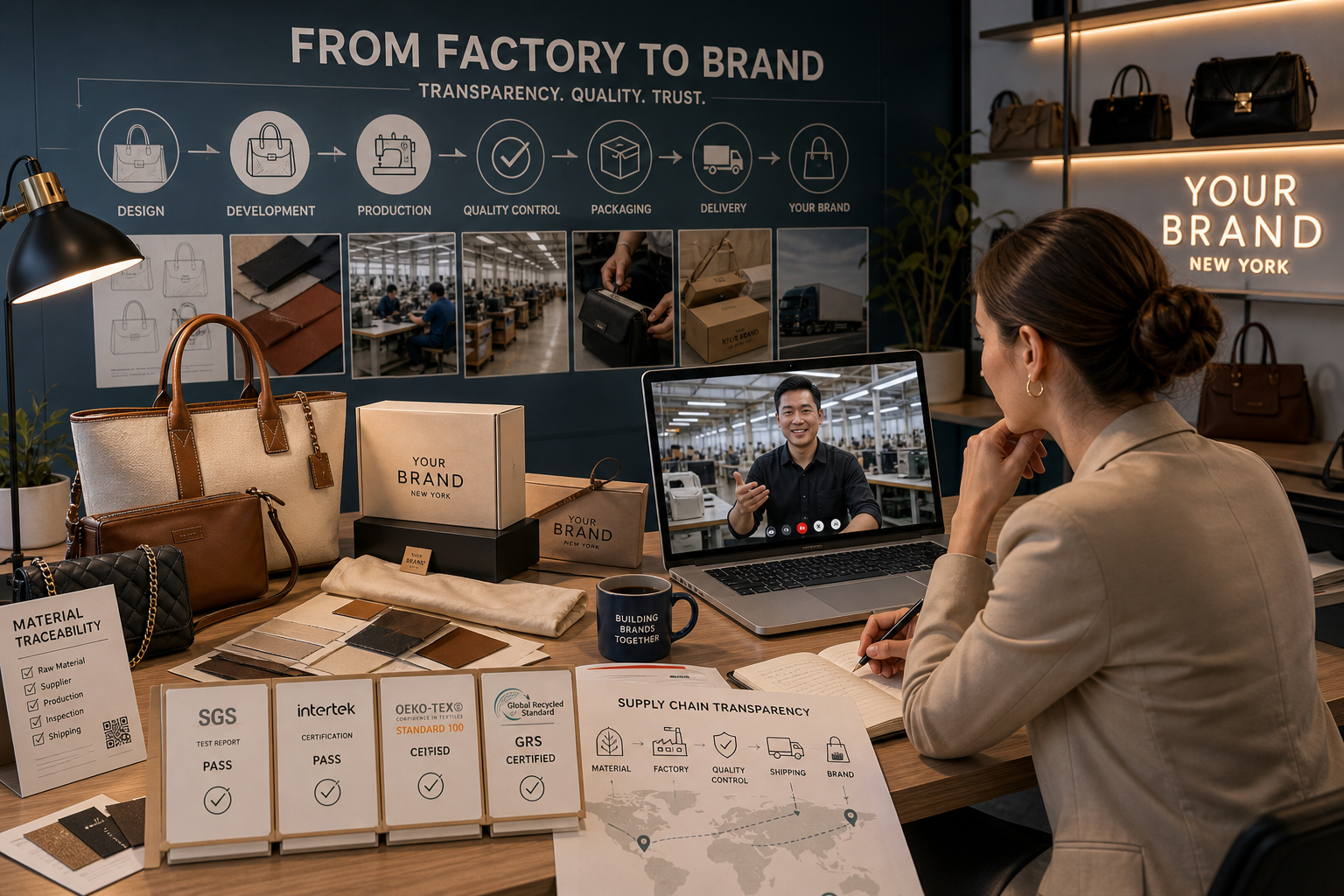
Running an independent US bag e‑commerce brand involves far more than designing attractive handbags, backpacks, and travel bags. Today’s online shoppers, wholesale partners, and regulators demand clear proof of material origins, reliable compliance documents, ethical sourcing, and protection of original designs. If you source directly from Chinese manufacturers, you’ve likely asked four core questions:
1. Can Chinese bag factories provide transparent material origin and complete supply‑chain documentation to support brand building?
2. What certificates and compliance paperwork are actually available for B2B purchasers?
3. What transparency standards do these factories follow in practice?
4. Can they create custom packaging and labelling for private‑label lines, and how do they protect your intellectual property?
This guide breaks down real‑world capabilities, limitations, verification methods, and contractual safeguards you need to build a trustworthy, legally compliant bag brand with Chinese OEM partners.
1. Material Origin & Supply‑Chain Documentation – What Factories Can Deliver
Many experienced Chinese bag factories are willing to provide material origin certificates that clearly state the production country of leather, woven fabrics, linings, and metal hardware. Reputable manufacturers can also supply traceability documents that connect each raw material to specific tanneries, textile mills, and hardware suppliers. Reliable suppliers share factory audit records and social compliance files, which you can publish on your brand website to demonstrate ethical sourcing to US consumers and wholesale clients.
For brands selling into the United States, chemical compliance paperwork is especially valuable. Trusted factories routinely prepare REACH and CPSIA documentation to meet US market entry rules. Many also offer batch‑specific quality inspection reports that record fabric specifications, tensile strength, and colour consistency for every production run. Larger, export‑focused factories have begun adopting digital supply‑chain transparency portals that give approved buyers real‑time access to sourcing logs and production records, removing much of the guesswork from overseas partnerships.
Sustainability‑focused brands gain extra advantages. A growing number of Chinese bag factories can supply carbon footprint documentation for raw materials, which strengthens your eco‑friendly positioning and simplifies ESG reporting for retail partners and conscious consumers. Factories with deep private‑label experience are willing to sign non‑disclosure agreements (NDAs) and exclusive sourcing contracts that lock in dedicated supply chains and prevent your custom material formulas or unique component selections from being shared with competing brands.
Top‑tier suppliers maintain permanent digital archives for every manufacturing batch, allowing you to trace finished handbags, backpacks, and travel accessories back to original material lot numbers. Many also help with US import preparation, assisting buyers in compiling customs paperwork, including correct HS tariff codes, country‑of‑origin declarations, and official material composition statements.
One critical reality: document availability does not mean identical transparency across every factory. Some small trading companies and low‑cost workshops only issue simple self‑written supplier declarations. Professional, long‑term export manufacturers, by contrast, track fabrics, leather, recycled fibres, metal hardware, packaging materials, and outsourced processes through formal, third‑party verified records. Before confirming large bulk orders, every US B2B buyer must create a standardised document checklist and send clear requirements to potential suppliers. Never assume transparency will be provided automatically.
2. Certificates & Compliance Documents – What to Request and Verify
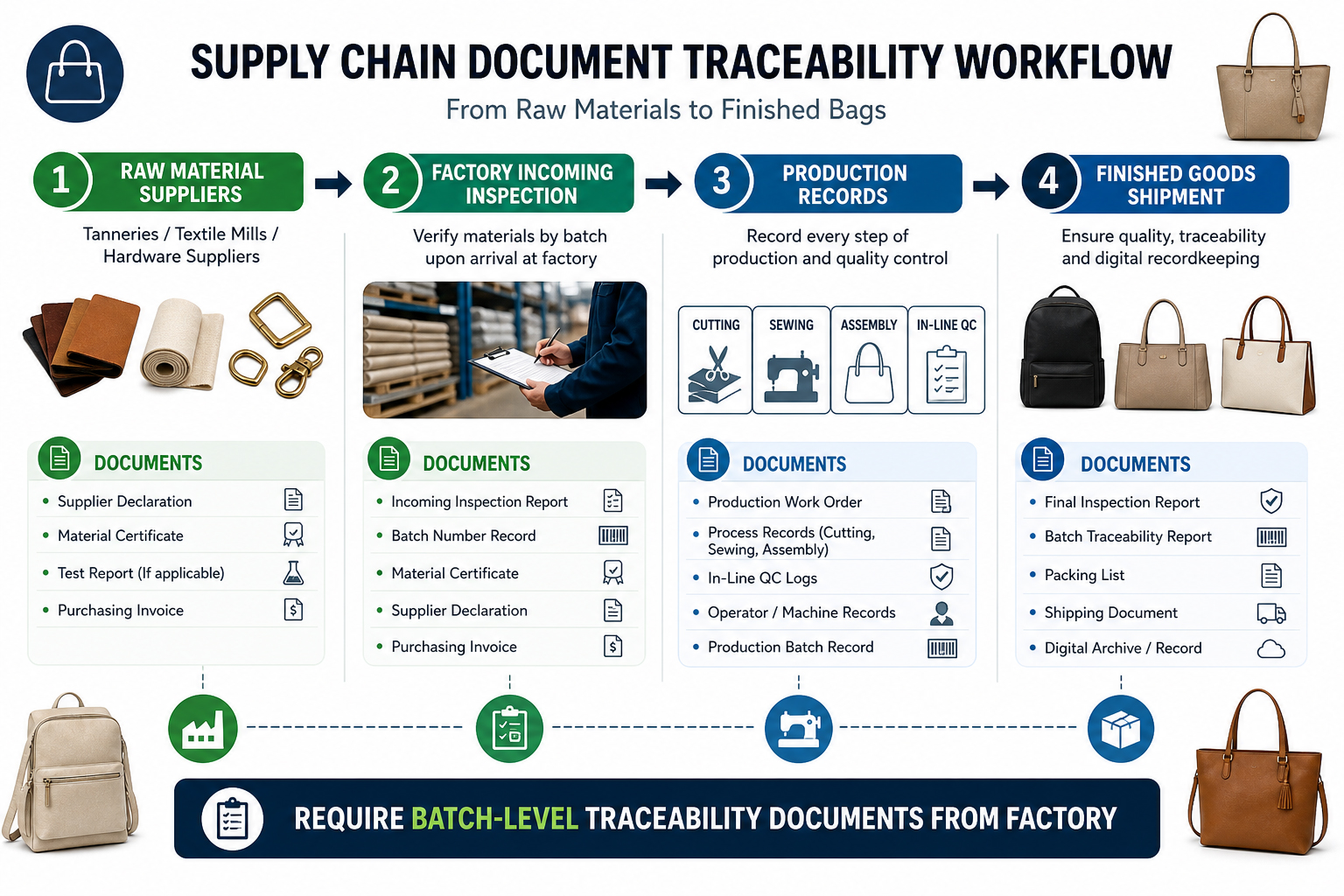
The short answer is yes – qualified Chinese bag factories can provide material certificates and full compliance documents for B2B buyers. However, you must communicate your exact standards well before sampling and mass production. Certain specialised tests carry extra laboratory fees, and different US states or customer groups enforce different chemical and safety rules. Your material selection directly determines which certifications you receive.
When vetting a new factory, request the following in writing:
A.Factory verification basics
* Official Chinese business licence
* Real production site photos or video tours
* Export history records
* Written confirmation that the company owns its own workshop (not just a trading middleman)
B.Complete material‑origin paperwork
* Detailed specification sheets
* Raw‑material supplier names
* Regional origin statements
* Fibre composition breakdowns
* Leather grades
* Formal bills of materials (BOM)
C.Supply‑chain evidence
* Visual material flow charts
* Supplier sworn declarations
* Purchasing invoices
* Unique batch numbers
* Full disclosure of subcontractors
D. Chemical safety documentation – the backbone of US market compliance
* Recent third‑party lab test reports from globally recognised organisations such as SGS, Intertek, TÜV, and Bureau Veritas
* Safety data sheets (SDS) and technical data sheets (TDS) for every coated fabric, synthetic leather, ink, and adhesive
* If selling in California, confirm the factory can complete California Proposition 65 testing for restricted heavy metals and toxic compounds
For recycled or sustainable materials:
* Generic marketing certificates are not enough – insist on shipment‑specific GRS or RCS transaction certificates. A general GRS certificate only proves the factory holds certification; it does not confirm that your exact bulk order contains verified recycled fibre.
* For eco‑textile claims, require OEKO‑TEX certificates that cover the precise fabric or finished bag, not unrelated textiles.
* If using cardboard or paper packaging, request FSC Chain of Custody documents to back environmental claims.
Leather products need separate verification:
* Leather origin statements
* Tannery contact information
* Chemical test results
* LWG certification if the factory markets sustainable leather
Social and ethical sourcing credibility comes from BSCI, SMETA, SA8000, or WRAP audit reports. Remember: a social audit certificate improves brand trust, but it does not deliver full end‑to‑end supply‑chain traceability.
Quality control files complete the package:
* Pre‑production sample approval forms
* In‑line workshop inspection logs
* Final random inspection reports
These create a verifiable quality trail for your brand.
US legal obligations differ by product type:
* Ordinary adult bags require a full ingredient list, finished‑product chemical testing, sample matching declarations, country‑of‑origin marking guidance, and standard export shipping paperwork. The factory must also agree in writing that no raw materials or production processes can be changed without your written consent.
* Children’s bags (backpacks and kids’ accessories) trigger stricter US safety rules – they may require dedicated third‑party testing and official Children’s Product Certificates (CPC) . Some general‑use accessories need a General Certificate of Conformity (GCC) .
As a US independent‑site seller, always share your target sales regions at the very beginning of negotiations. California rules, federal CPSIA standards, and state‑level chemical warning requirements shape every test your factory must perform.
Standardised inquiry template – use this to communicate clearly with Chinese suppliers:
“We are a U.S. brand selling bags online and require complete material and supply‑chain documentation. Please confirm whether you can provide:
* A complete bill of materials for each bag.
* The origin and supplier information for fabric, leather, lining, webbing, foam, zippers, hardware, labels, ink, coating, and packaging.
* Material flow charts and supplier declarations.
* Current REACH, CPSIA (where applicable), and California Proposition 65 test reports.
* Valid GRS, RCS, OEKO‑TEX, FSC, or LWG certificates where relevant.
* Third‑party factory audit reports and information about subcontractors.
* Batch‑level or shipment‑specific certificates and transaction documents.
* Written confirmation that materials cannot be substituted without our approval.
* Pre‑production sample approval and final inspection reports.
* Please send certificate numbers, issuing organisations, validity dates, certificate scope, and the legal name and address shown on each certificate.”
Never accept vague marketing claims such as “we use premium eco‑friendly materials.” A professional supplier responds with concrete certificate numbers, laboratory test dates, and traceable batch records.
3. Supply‑Chain Transparency Practices – What to Expect on the Ground
Supply‑chain transparency is no longer a luxury for modern US bag brands – it is a competitive selling point. When visiting Chinese manufacturing partners, you will find a wide spectrum of practices.
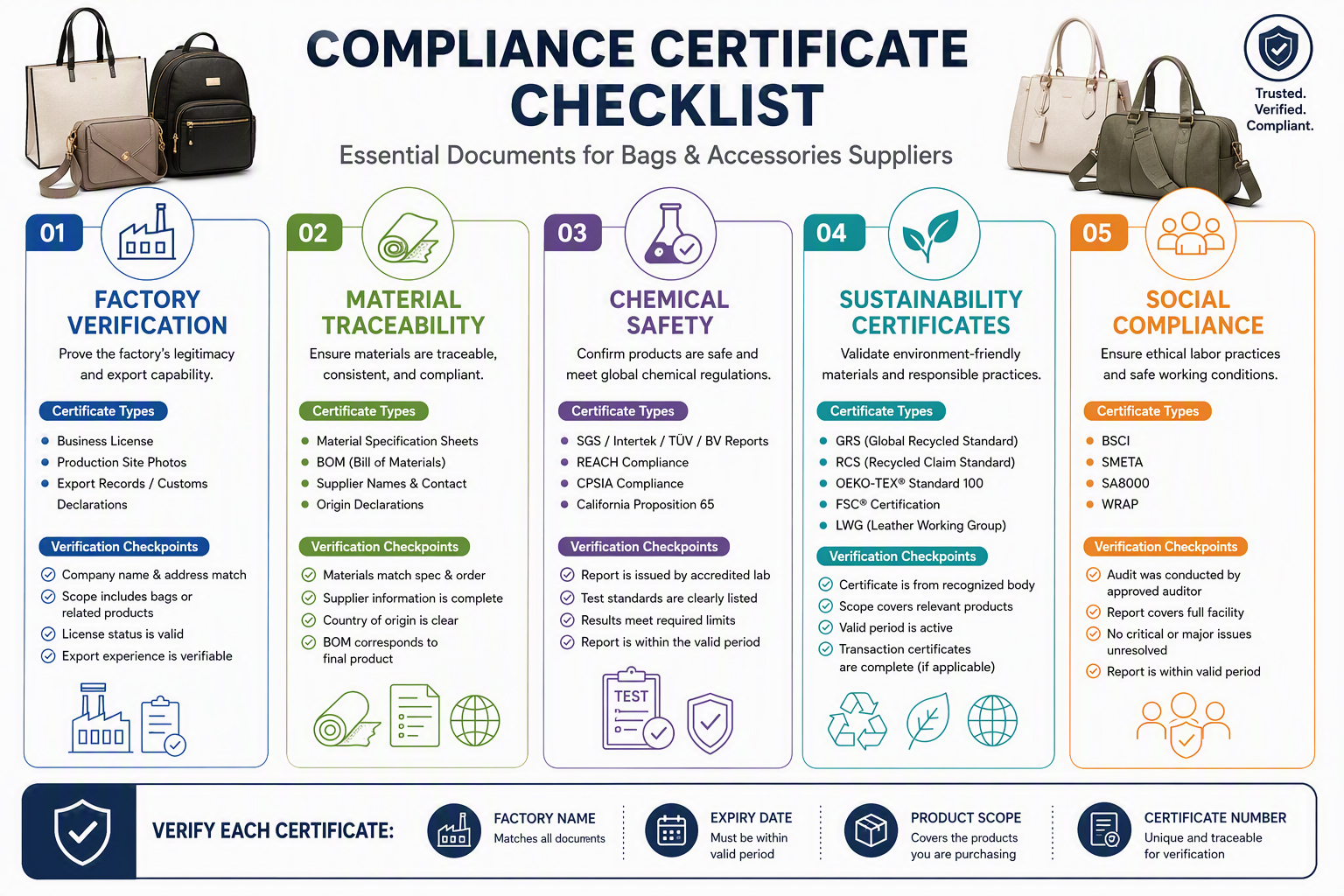
The most professional export‑oriented factories build structured traceability workflows:
* Record every incoming raw‑material delivery
* Attach unique lot codes
* Store supplier contracts
* Archive laboratory test results for years
* Larger operators deploy cloud‑based digital systems to track orders from sample confirmation, cutting, stitching, and quality inspection all the way to finished‑goods loading.
Many factories can reveal tier‑1 raw‑material suppliers and country‑of‑origin information. However, most manufacturers protect commercially sensitive upstream vendor data and may decline to disclose every distant sub‑supplier by name. This is normal and reasonable in global manufacturing. You do not need unlimited access to every minor subcontractor – what you need is enough verifiable proof to confirm material origin, chemical safety, and sustainability claims on your brand website.
Strong transparency requires enforceable purchase terms. Add the following to your formal purchasing contract:
* Documentation rules
* Material substitution bans
* Independent pre‑shipment inspection rights
* Testing cost allocation
* Financial compensation for non‑compliant goods
This turns verbal promises into legally binding obligations.
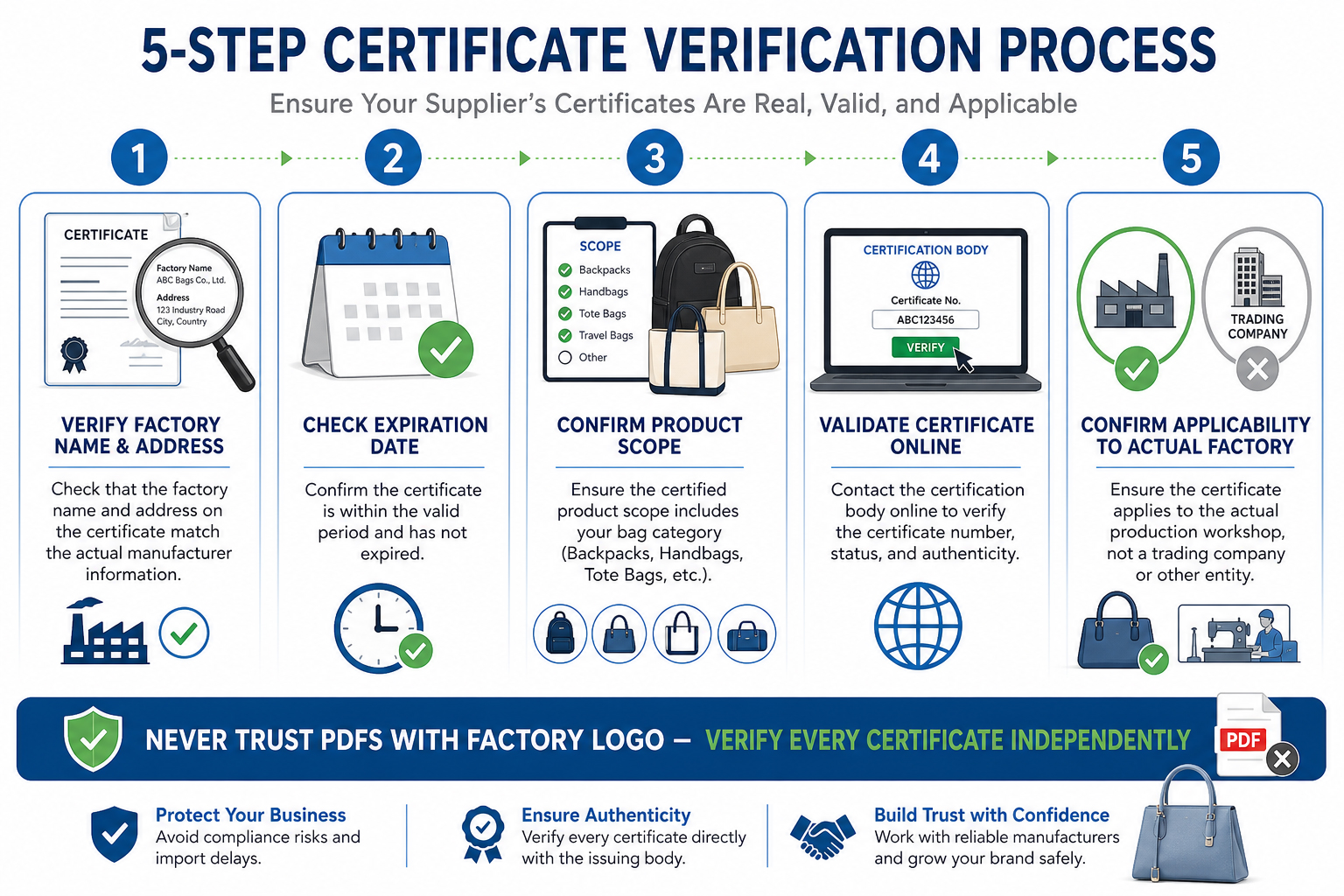
Always verify every document independently – do not trust PDFs printed with a factory logo. Check five critical points for each certificate and lab report:
1. Confirm the legal name and factory address on the certificate match your actual manufacturer.
2. Verify expiration dates – ensure the certification remains valid.
3. Confirm the listed product scope includes handbags, backpacks, leather, textiles, or recycled fibres relevant to your design.
4. Contact the certification body online using the certificate number to validate authenticity.
5. Make sure the document applies to your actual production workshop, not an unrelated trading company.
Inspect lab reports carefully. Reliable test paperwork lists the tested sample description, testing date, full material composition, and accredited laboratory details. Reports should be recent and match your current sample design. Before shipment, reserve the right to hire an independent inspector to audit finished goods and cross‑check batch documentation. For recycled and sustainable marketing claims, shipment‑specific transaction certificates are mandatory – generic certificates only prove factory certification status; they cannot verify that your particular container contains certified sustainable materials.
4. Custom Packaging & Labelling – What Factories Can Do for Private‑Label Brands
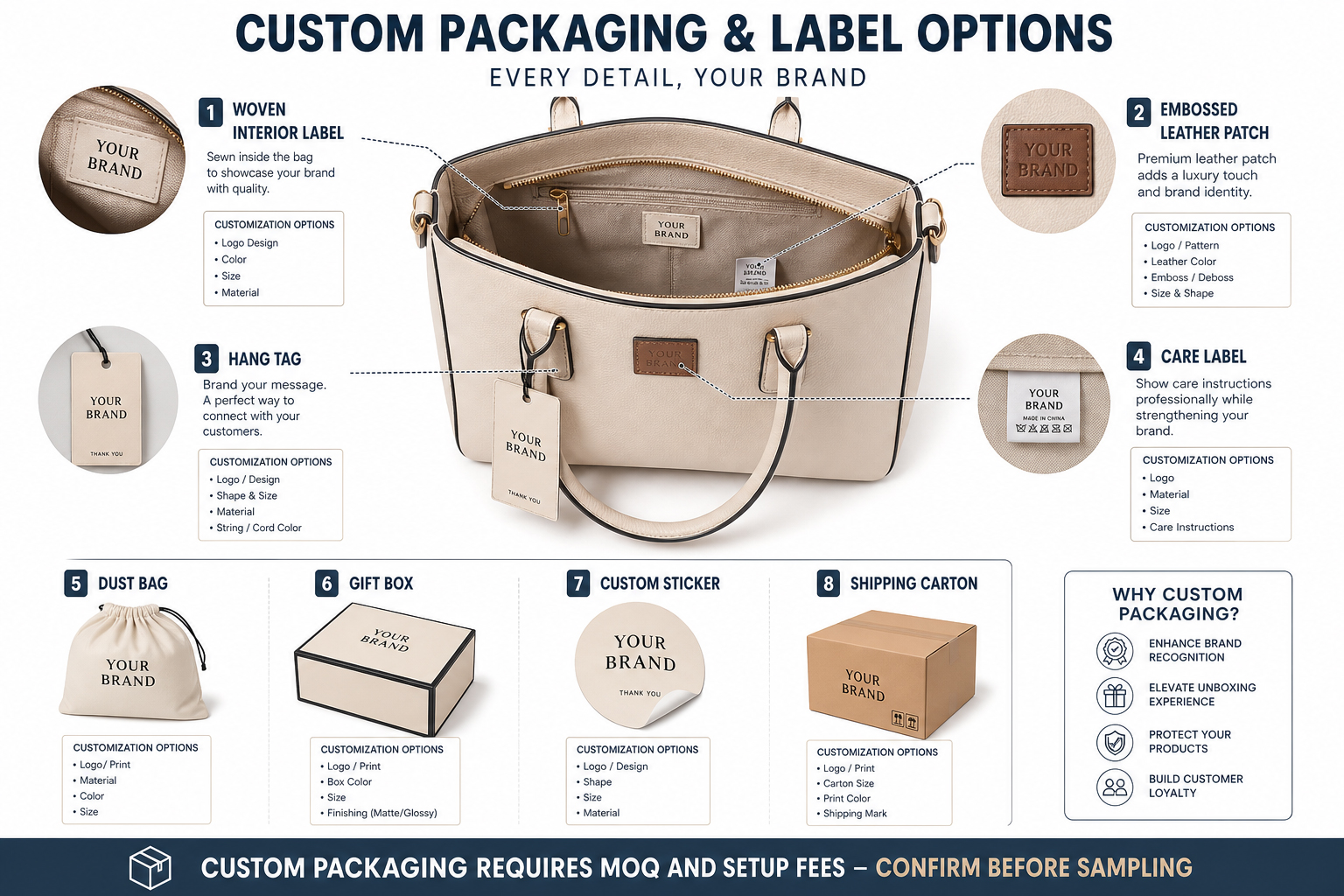
Chinese bag factories are fully capable of providing custom‑made packaging and labelling services built exclusively for private‑label brand development. This represents huge value for US independent‑site sellers competing in a crowded online marketplace. Stock generic tags and plain plastic packaging make your products indistinguishable from mass‑market wholesale goods. Bespoke labels, printed dust bags, branded gift boxes, instruction cards, and shipping cartons create a unique brand identity that resonates with American consumers.
You can work with factories to design:
* Woven interior labels
* Embossed leather patches
* Paper hang tags
* Size stickers
* Care instruction cards printed with your brand logo, website address, and country‑of‑origin markings
Many manufacturers accept custom dust bags, tissue paper, and premium gift boxes for high‑end fashion lines. Experienced private‑label teams can follow your packaging artwork files, recommend suitable materials, and produce pre‑production packaging samples before mass manufacturing begins.
Keep two practical limitations in mind:
* Custom packaging usually requires minimum order quantities (MOQs) and extra setup fees for printing plates and mould creation.
* Small trial orders may not support highly complex bespoke packaging.
Communicate your packaging budget, MOQ expectations, and artwork guidelines at the sampling phase. Integrate label and packaging specifications into your technical product file and final purchase contract. This prevents last‑minute errors, incorrect logo placement, or low‑quality printing after bulk production starts.
5. Intellectual Property Protection – How Factories Handle Your Original Designs
Original designs are the most valuable asset of your US bag brand. Many overseas buyers worry that Chinese factories will copy custom handbag silhouettes, hardware shapes, and pattern details and sell identical products to competitors. Factory protection of your intellectual property depends mostly on formal contracts rather than automatic internal safeguards.
Reliable suppliers will sign at your request:
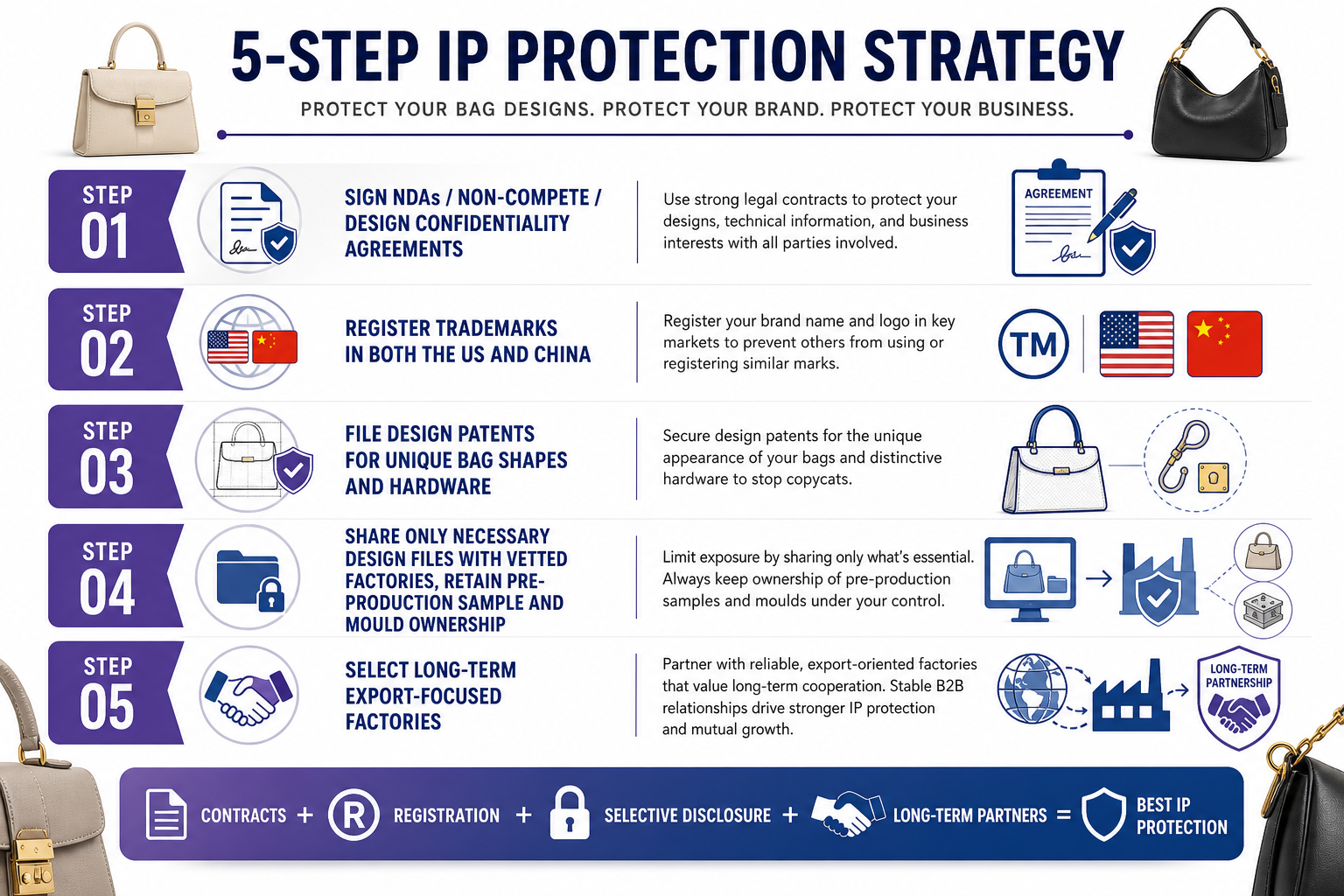
* Non‑disclosure agreements (NDAs)
* Non‑compete clauses
* Design confidentiality contracts
These legal documents prohibit factory managers, pattern makers, and subcontractors from copying, reselling, or sharing your original sketches, 3D samples, technical drawings, and custom hardware moulds with third‑party buyers. Serious manufacturers maintain confidential design folders, restrict sample access to authorised staff, and limit outside visitors from viewing unreleased private‑label projects.
Contracts must include clear penalties for IP violations – state what happens if the factory reproduces your design for competing brands or leaks technical data to outside traders. While an NDA reduces risk, it cannot eliminate every threat.
You should also:
* Register trademarks for your brand name and logo in both the United States and China.
* File design patents for unique bag shapes, custom metal clasps, and distinctive decorative elements whenever possible.
Adopt additional risk‑reduction habits:
* Avoid sharing your full best‑selling design portfolio with unvetted small workshops.
* Send only necessary technical drawings to approved factories.
* Keep pre‑production samples and mould ownership in your name.
* Confirm that custom moulds created for your brand remain your legal property after production finishes.
* Select long‑term, export‑focused factories that rely on repeat US brand partnerships instead of quick one‑off wholesale sales. Factories building stable B2B relationships have stronger incentives to protect confidential designs and preserve their global reputation.
Final Takeaways for US Independent‑Site Bag Buyers
Building a successful American bag brand through direct Chinese sourcing requires careful planning and professional supplier evaluation. Trustworthy Chinese bag factories can deliver transparent material origin records, comprehensive compliance certificates, customised private‑label packaging, and contractual intellectual property protection. Even so, capabilities differ widely across workshops. Avoid vague marketing language and prioritise suppliers that provide traceable batch records, valid third‑party certificates, and detailed written documentation.
All purchase contracts must include:
* Document requirements
* Testing responsibilities
* Material substitution rules
* Inspection rights
* IP protection terms
Before production, confirm US federal and California‑specific regulatory rules. Use customised packaging to strengthen your unique brand image. When you combine thorough supplier vetting, clear written standards, and enforceable agreements, Chinese OEM partners become a powerful foundation for sustainable, transparent, and profitable private‑label bag sales on your US independent website.
Post time: Sep-04-2026