
Circular Bags: A Buyer’s Guide to Take-Back, Repair, and Resale Programs from Chinese Manufacturers
How U.S. bag retailers can verify circular capabilities and turn sustainability into a real competitive edge
The U.S. bag market is in the middle of a quiet but significant shift. Consumers are no longer satisfied with a “buy it and forget it” relationship with the products they carry. The Ellen MacArthur Foundation and countless brand-side studies confirm that circular models — those designed to keep products in use longer and reduce waste — are now baseline expectations rather than premium differentiators. For independent bag retailers sourcing directly from China, this raises a real question: can your supplier actually support take-back, repair, and resale programs, or are you being told what you want to hear?
In this guide, we’ll break down the four most important questions to ask Chinese bag factories, walk through ten realities you should know before placing your first circular order, and show you exactly how to screen suppliers into Tier 1, Tier 2, and Tier 3 capability brackets. By the end, you’ll have a ready-to-send supplier message and a clear understanding of what sustainable sourcing really looks like at the OEM/ODM level.
The Four Questions Every U.S. Bag Buyer Should Ask
Before you send a single inquiry, you need a clear framework. These four questions cover the full closed-loop cycle: collection, restoration, redistribution, and financing. Write them down and send them verbatim to every supplier you evaluate.
1. Can the factory directly operate or partner with a take-back program that collects used bags from U.S. end consumers for recycling or resale?
This is the entry point. Take-back is the front door of any circular system. If a factory can’t describe how a used bag physically gets from a customer in California or New York back into a recycling or resale stream, the rest of the conversation is theoretical.
2. Does the factory offer in-house repair services — including zipper replacement, strap re-stitching, and lining renewal — to extend the bag’s usable life?
Repair is the most mature and accessible circular service in the Chinese bag industry today. It’s also the one most likely to be real rather than aspirational. Even factories without formal take-back can often refurbish damaged units and supply spare parts.
3. What resale or refurbishment infrastructure does the factory support, and are repaired or renewed bags resold as B-grade, outlet, or upcycled inventory?
Resale is the final piece. If a bag can be returned and refurbished, where does it go next? B-grade channels, outlet partners, and upcycled product lines each have different economics. A factory that can articulate this — even with a partner — is significantly more credible than one that can’t.
4. How are take-back, repair, and resale programs funded — through the buyer, the factory, or a shared sustainability budget — and what is the typical cost impact per unit?
Circularity has a price. You need to know whether you’re paying a $1-per-bag sustainability fee, a $5-per-bag premium, or a larger brand-level investment. This question also reveals whether the factory has actually done the math — a strong signal of operational maturity.
These four questions won’t guarantee a perfect supplier, but they will eliminate the majority of factories that simply aren’t ready for circular commerce.
Ten Realities of Circular Sourcing from Chinese Bag Factories
After working with factories across Guangdong, Zhejiang, and Fujian — the three provinces that produce the vast majority of the world’s bags — we’ve identified ten patterns that shape what’s actually possible in the market today. Each is grounded in real supplier behavior, not aspirational marketing.
1. Take-Back Programs Are Still Rare at the Factory Level
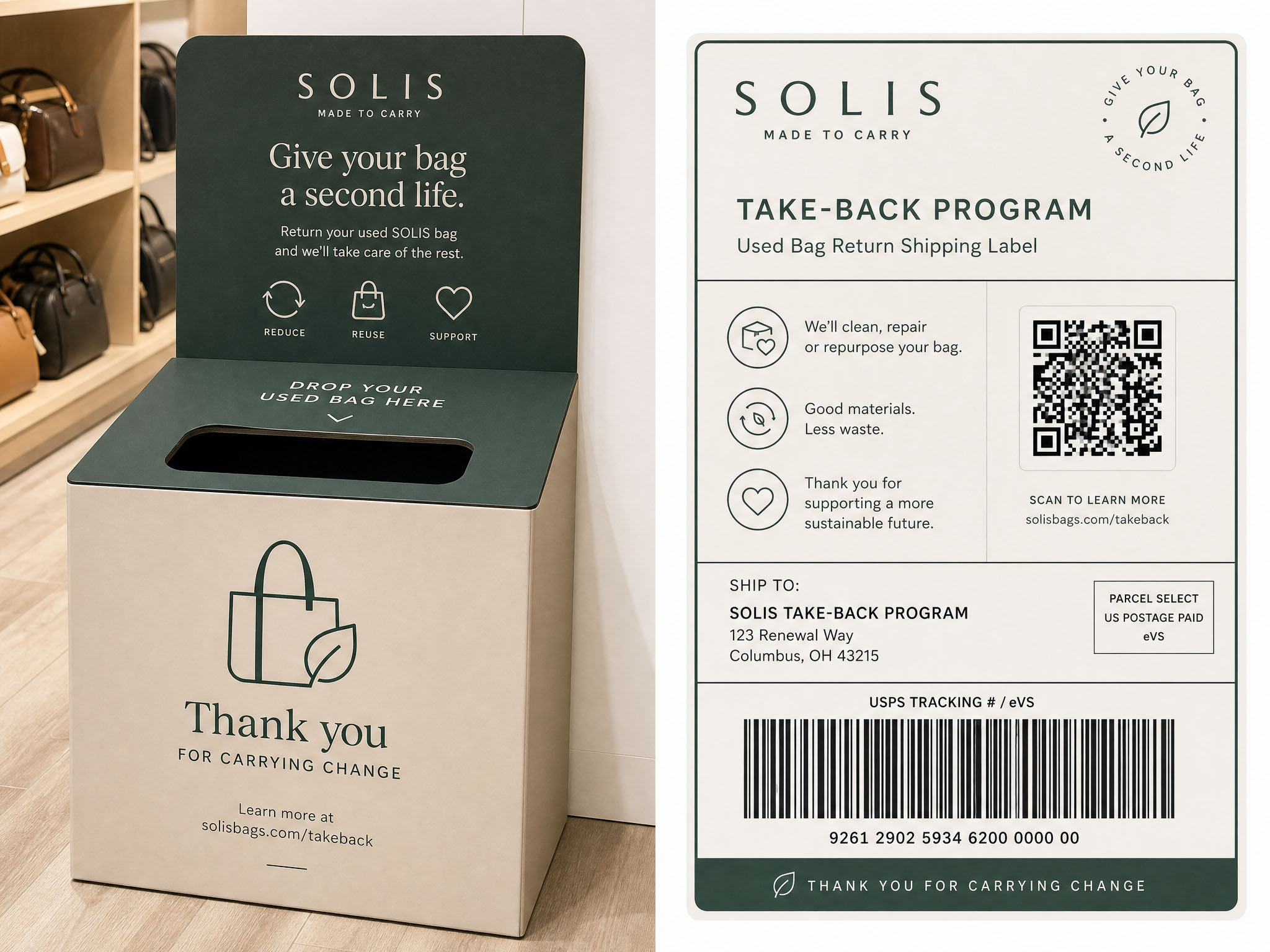
A formal take-back collection point in a retail setting — most Chinese factories have not yet built this internally.
Only a small number of leading Chinese bag factories currently operate formal take-back programs. The majority rely on third-party logistics partners or brand-managed schemes to handle reverse flow. If a factory tells you they “run a take-back program,” press for specifics: who collects the bag, who pays for the return shipping, and where the bag ends up. The honest answer from most suppliers will be that they support a brand-led program, not a factory-led one — and that’s okay, as long as they say so clearly.
2. Repair-Friendly Construction Is the Most Common Circular Service
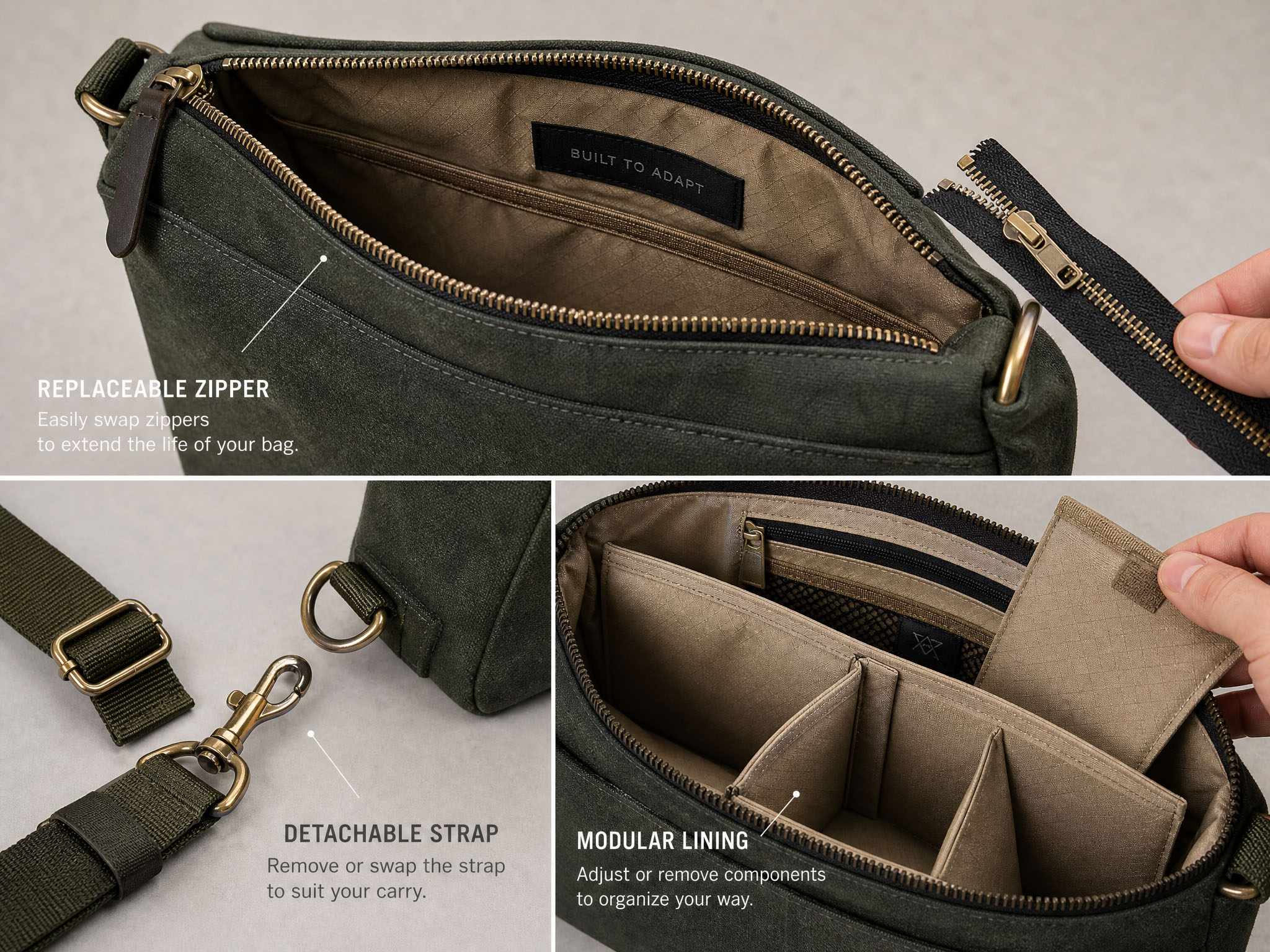
Modular construction — replaceable zippers, buckles, and linings — is the foundation of repair-friendly design.
Repair-friendly construction is the most common form of circular service offered by Chinese factories today. This includes replaceable zippers, swappable buckles, detachable straps, and linings that can be re-stitched or replaced without damaging the outer shell. Industry consensus holds that extending product lifespan is the single most effective way to reduce a bag’s environmental impact — which is why this design philosophy matters far beyond aesthetics. When evaluating a factory, ask for a sample and try to remove a zipper or a strap. If the construction allows it, you’ve found a supplier that understands lifecycle design.
3. Spare-Part SKUs Can Be Pre-Produced with Your Bulk Order
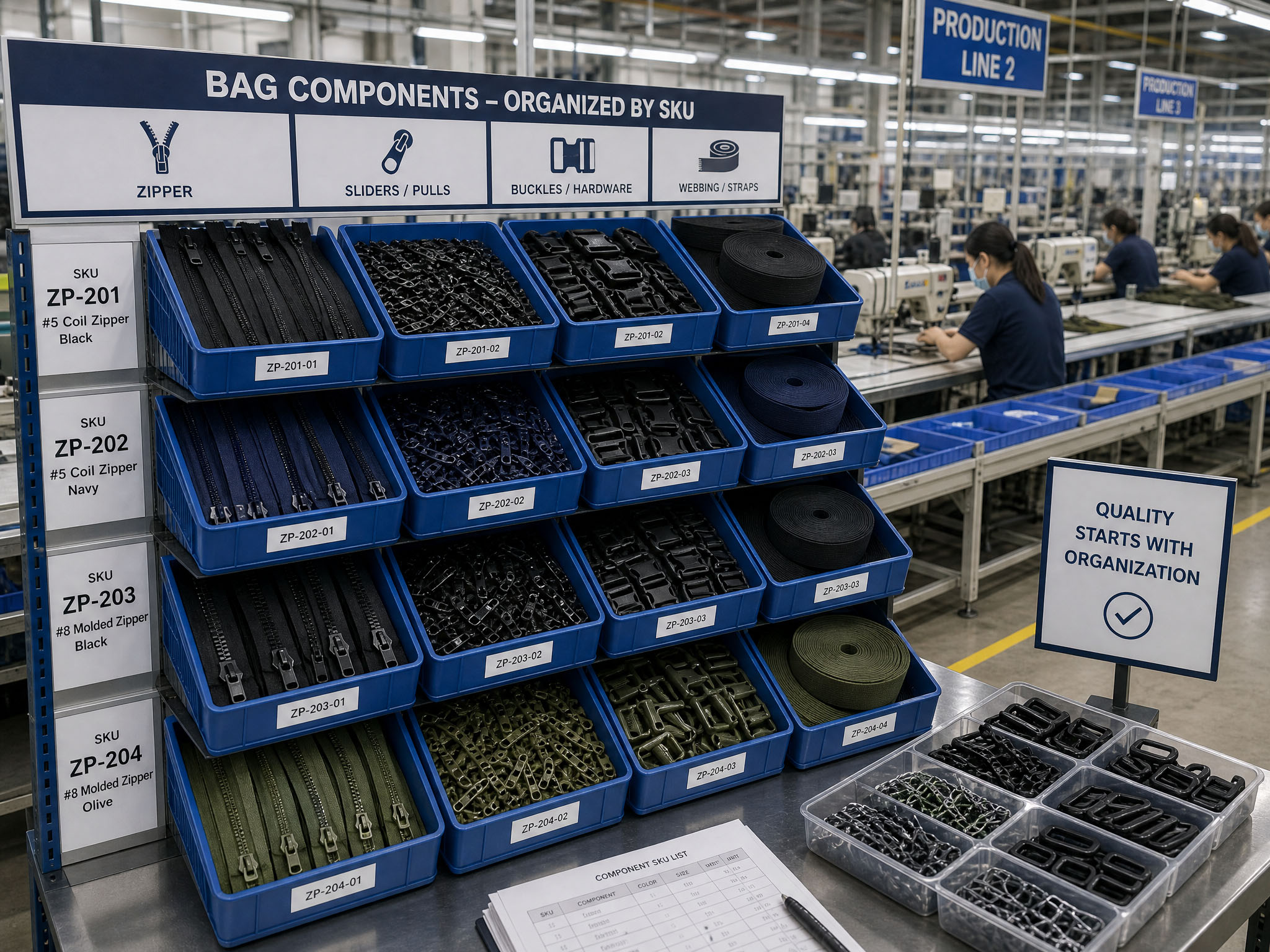
Pre-produced spare parts alongside main bulk orders simplify brand-led repair fulfillment.
Experienced OEM/ODM factories can pre-produce spare-part SKUs — zippers, sliders, buckles, webbing — at the same time as your main bulk order. This is one of the most underused tools in the buyer’s toolkit. By building spare parts into your purchase order, you can run a small but functional repair program from your own warehouse, fulfilling customer requests without waiting for a factory production cycle. The marginal cost is often minimal because the materials and labor are already on the line.
4. Used Bags Rarely Ship Directly from the U.S. to China
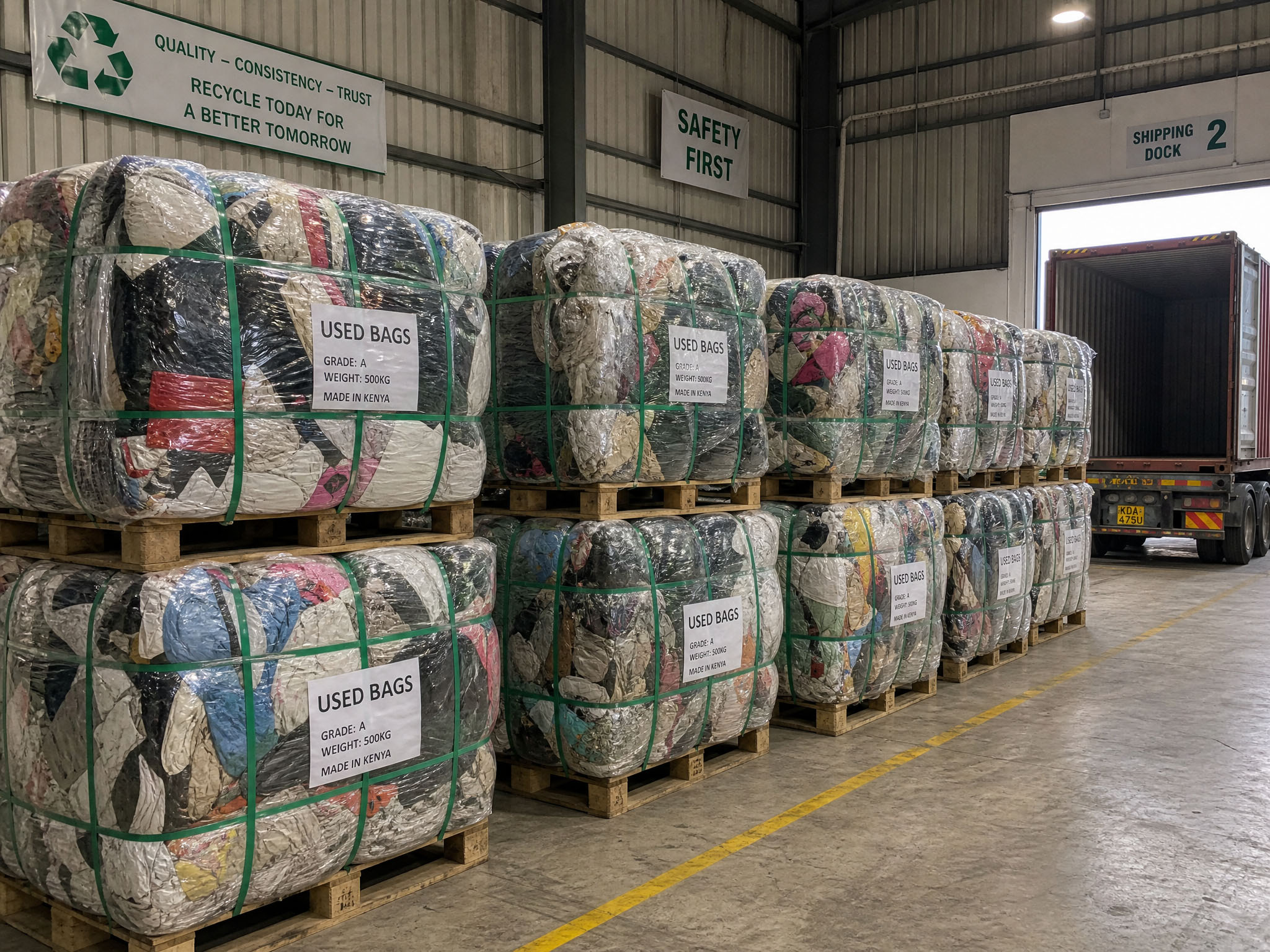
Most take-back programs consolidate used bags in the U.S. before shipping bales to recyclers.
Take-back logistics from U.S. end consumers to China are rarely direct. Most programs consolidate used bags domestically — through reverse-logistics partners like CheckSammy or Returnity — then ship bales to Asian or domestic recyclers for processing. This model is more carbon-efficient than one-off consumer returns and aligns with how the U.S. recycling market is actually structured today. Make sure your factory partner understands this reality and isn’t promising a direct consumer-to-China shipping model that would be both expensive and environmentally questionable.
5. Resale and Refurbishment Are Emerging Factory-Side Offerings
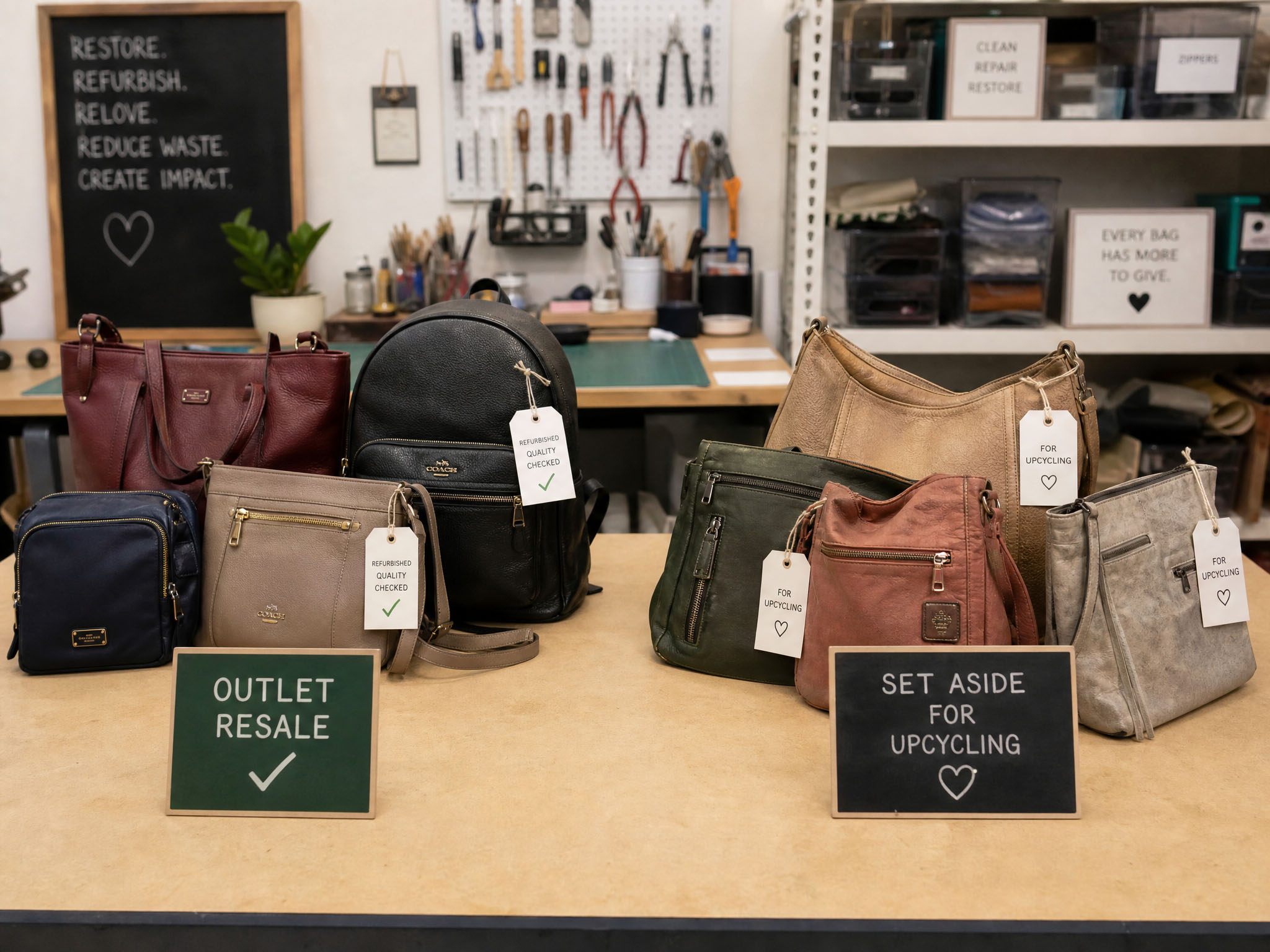
Damaged or returned bags being sorted into B-grade resale, outlet, or upcycled inventory lines.
Chinese factories experienced in circular flows are increasingly offering resale and refurbishment services. Damaged or returned bags — instead of being landfilled — are resold as B-grade, outlet, or upcycled inventory. This represents a meaningful shift from the historical default of waste-stream disposal. As a buyer, you can ask your factory to set aside returned units from your own orders and refurbish them into a parallel inventory stream for your outlet or sample-sale channel. It’s a quiet but powerful way to add margin and reduce waste at the same time.
6. Closed-Loop Branding Is Now a U.S. Consumer Expectation
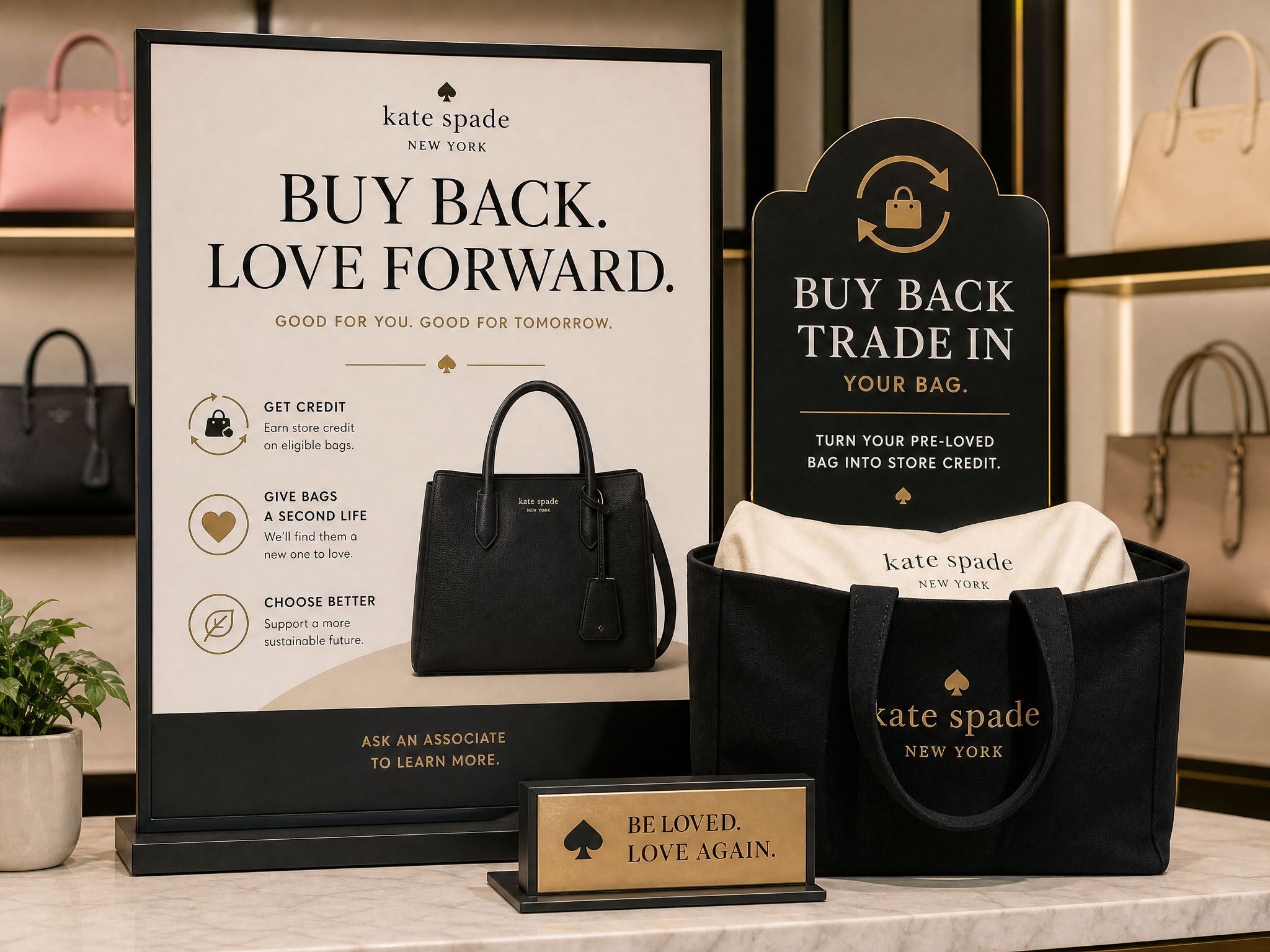
“Buy Back” and “Trade In” signage is becoming a standard retail feature across the U.S.
Closed-loop branding — “buy back,” “trade in,” or “second life” messaging — is now a U.S. consumer expectation and is increasingly specified in B2B procurement briefs sent to Chinese factories. If your competitors are already running these programs and you aren’t, you’re losing conversion among Gen Z and millennial buyers in particular. The good news: you don’t need a perfect program to start. A simple “trade in your old bag for 20% off your next one” is a viable entry point that most factories can support, and it positions you as a brand that thinks in decades rather than seasons.
7. Digital Product Passports Are a Real Production-Stage Option
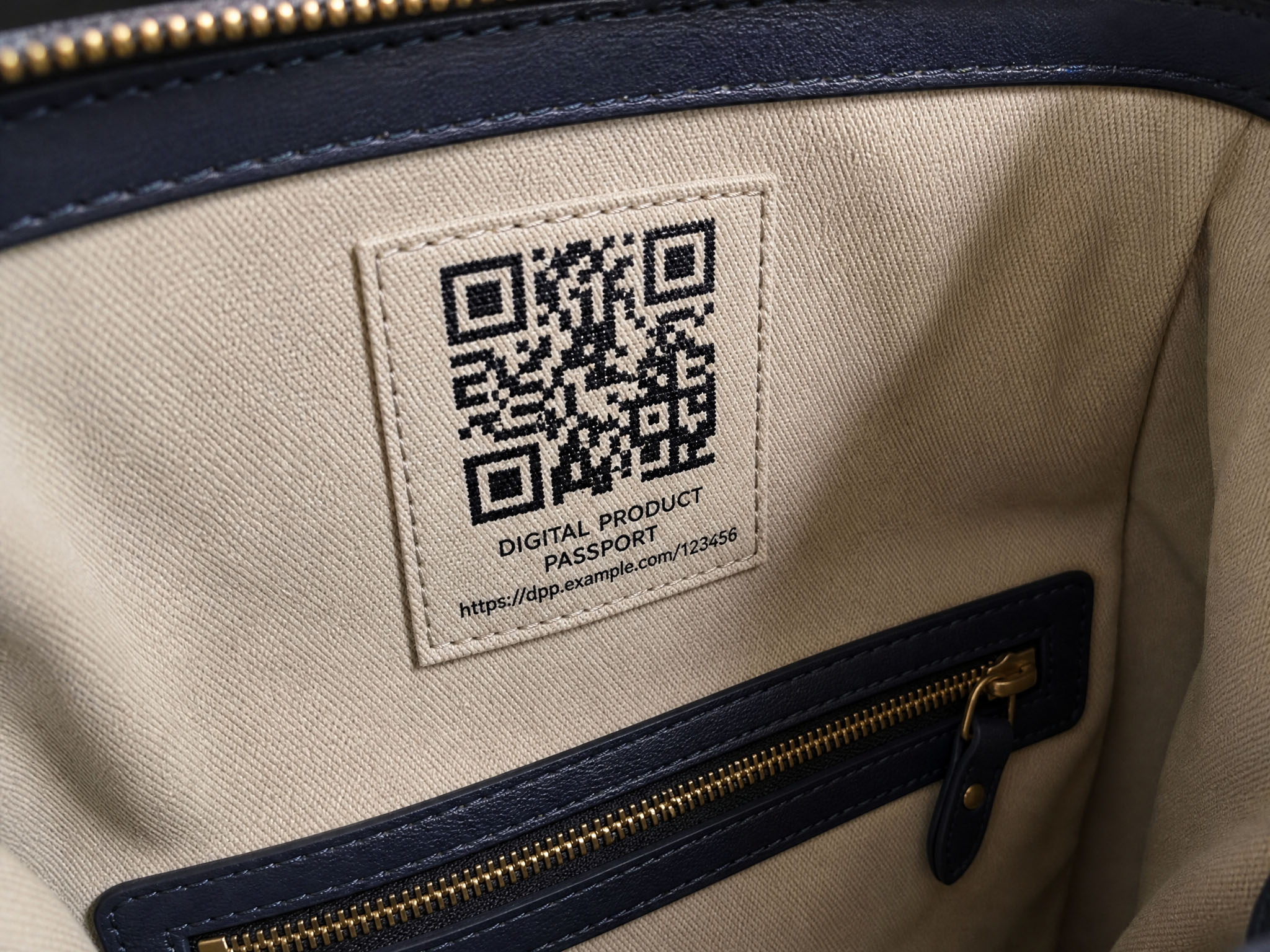
QR-code-based digital product passports enable brand-managed take-back, repair history, and resale authentication.
Chinese factories can integrate QR-code-based digital product passports into bags at the production stage. These digital IDs enable brand-managed take-back registration, repair history tracking, and resale authentication post-purchase. For an independent e-commerce site, this is a powerful tool: it lets you verify authenticity if a customer resells a bag secondhand, track the repair history if it comes back to you, and link the customer to a take-back offer at the right moment. Most factories can add a stitched-in or printed QR code for under $0.20 per unit at the production stage.
8. Per-Unit Sustainability Fees Are Standard Practice
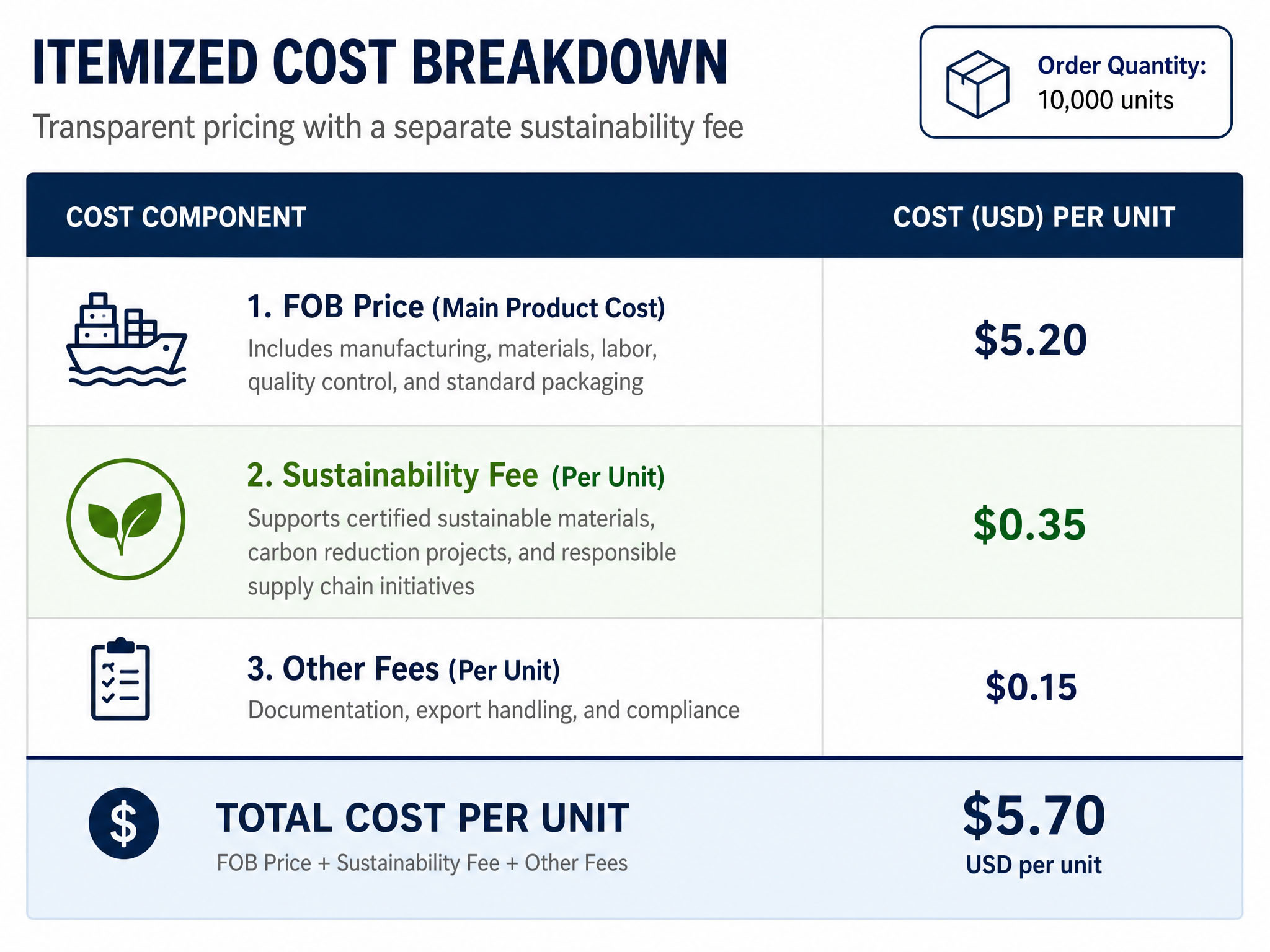
A per-unit sustainability fee of $1–$5 per bag can be built into the FOB price and administered by the factory.
Take-back and resale programs can be funded through a per-unit sustainability fee of $1–$5 per bag, built directly into the FOB price. Most factories are willing to administer this fee on the buyer’s behalf — collecting it, holding it, and deploying it against verified circular services. This model works especially well for independent retailers because it avoids the need to set up a separate sustainability fund or partnership contract from day one. You start small, prove the model, and scale the fee as the program grows.
9. Refurbished Bags Retain 30–60% of Original Retail Value
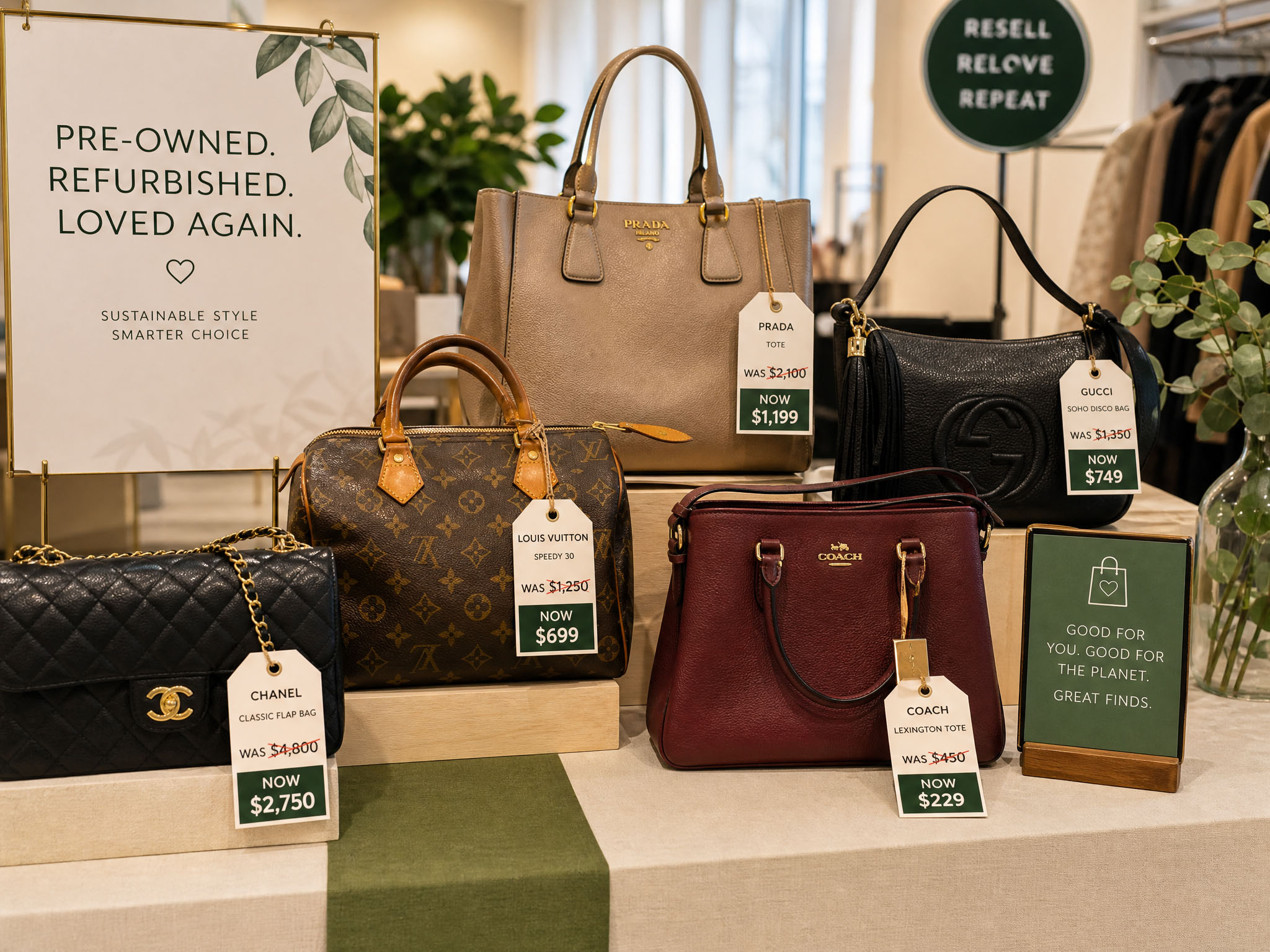
Repaired bags typically retain 30%–60% of original retail value on resale channels.
Repaired bags typically retain 30%–60% of the original retail price on resale channels, and factories can offer light refurbishment — cleaning, re-stitching, hardware replacement — at a fixed per-unit service fee, often in the $5–$15 range. For an independent retailer, this opens a secondary revenue stream: you can offer repair services to existing customers as a paid add-on, then resell the refurbished unit at a meaningful margin. Some bag brands have built entire product lines around this model, and it works particularly well for heritage and travel categories.
10. ISO 14001 Certification Is a Strong Credibility Signal
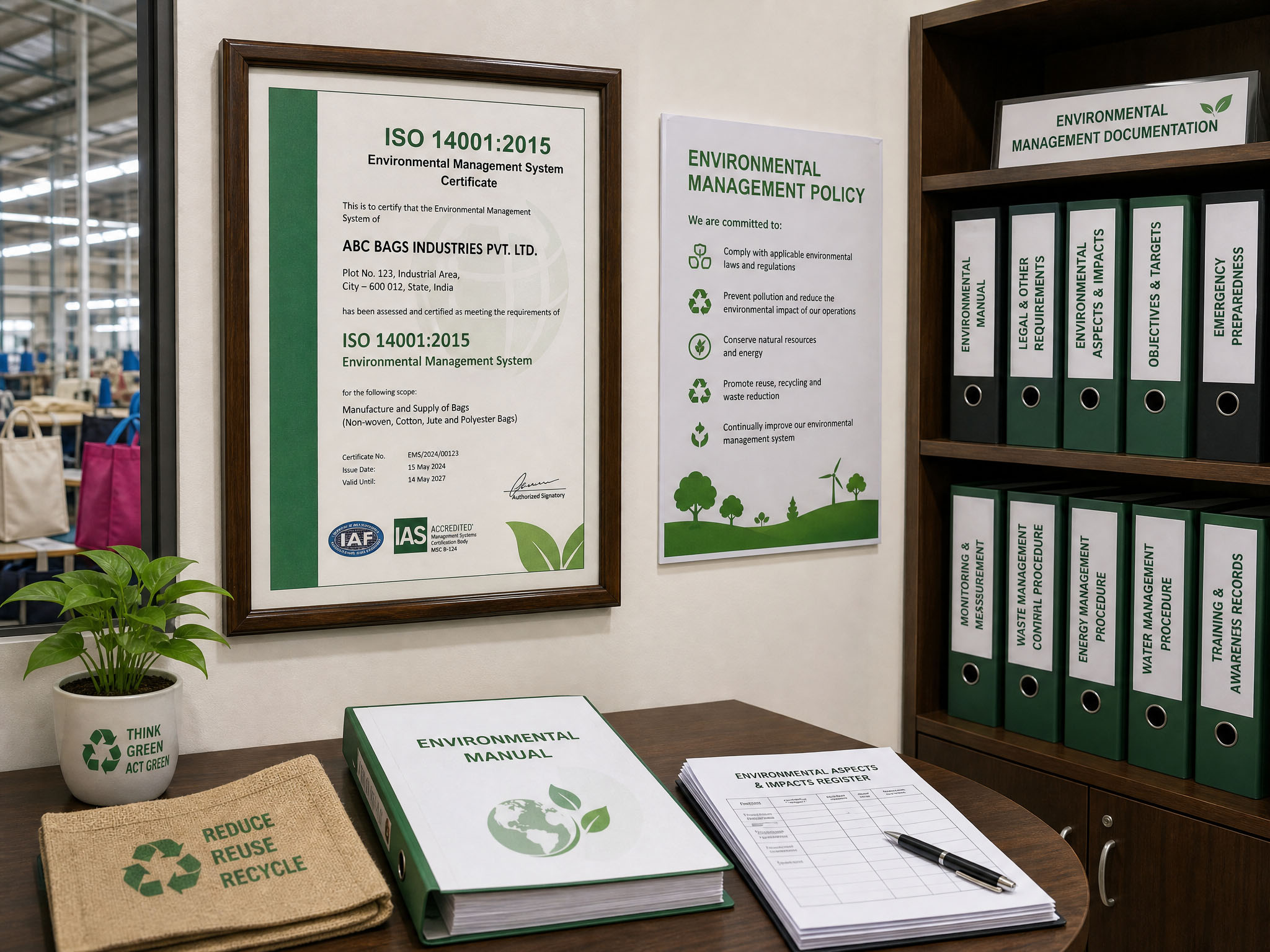
ISO 14001 environmental management certification signals a factory’s readiness to support circular programs.
Factories with ISO 14001 environmental management systems are better positioned to support take-back, repair, and resale programs with documented material-flow accounting and verifiable waste-diversion reporting. This certification doesn’t guarantee circular capability on its own, but it indicates that the factory has the systems in place to track materials, document diversion rates, and produce the kind of reporting your customers and regulators will increasingly demand. In a sourcing decision between two otherwise equal suppliers, ISO 14001 is a clear tiebreaker.
How to Judge the Answers You Get Back
A good answer to your circular questions is not just “yes.” It should include a process, a clear allocation of responsibilities, and proof of execution. Circular systems only work when collection, sorting, repair, and recovery are actually organized — and most factories will use vague language if pressed.
If a supplier says they can “support” take-back, ask whether they do it in-house or through a partner. If they say “yes” to repair, ask for a sample unit, a description of the repair process, and the per-unit cost. If they mention resale, ask for photos of a refurbished unit, the channel it was sold through, and the price it fetched. If they can’t produce any of these, you’ve got a marketing claim, not a capability.
A practical rule of thumb: any factory that has actually run a circular program will have at least one case study, one photo, and one contactable reference. If all three are missing, the capability is theoretical.
Tier Your Suppliers Before You Commit
For your website business, we recommend screening suppliers into three tiers before placing any order:
Tier 1: Factory can only make new bags. These suppliers are capable production partners but offer no circular services. Suitable for buyers who are not yet ready to invest in sustainability infrastructure.
Tier 2: Factory can make bags and offers repair/refurbishment support. These suppliers can support a basic repair program, supply spare parts, and refurbish returned units. This is the realistic starting point for most independent retailers, and it gives you a credible story to tell.
Tier 3: Factory supports take-back, repair, refurbishment, and resale — either directly or through partners. These suppliers represent the strongest sustainability position. Brands like Coach have demonstrated that the model works in the Chinese market, but Tier 3 capability remains more common at the brand level than at the average OEM factory level.
For most buyers, Tier 2 is the realistic starting point, and Tier 3 is the goal. If you can find even one Tier 3 factory in your supplier portfolio, you have a meaningful sustainability story for your U.S. customers — and a real hedge against the long-term environmental and regulatory risks that closed-loop brands are increasingly seen as avoiding.
Send This Message to Your Chinese Suppliers
Use the following short message to start the conversation:
“Do you support circular services for bags, including take-back, repair, refurbishment, and resale? If yes, please share your process, photos, service partners, lead times, MOQ, and any examples of existing programs.”
If a supplier responds with details, follow up with the four core questions in this article. A serious factory will treat the inquiry as a normal B2B conversation; a less mature one will deflect or overpromise. If you’d like a complete bilingual supplier questionnaire ready to send, we can prepare one for you in English and Chinese.
Final Thoughts
Circular take-back, repair, and resale programs are no longer a “nice to have” in the U.S. bag market. They are increasingly a baseline expectation, a regulatory hedge, and a competitive differentiator. As a buyer sourcing from China, you should treat them as a supplier capability to verify — not as a guarantee. By asking the right four questions, understanding the ten realities outlined above, and tiering your suppliers accordingly, you can build a sourcing strategy that is both commercially sound and environmentally credible.
The factories that are ready for this are out there. The work is in finding them — and in asking the questions that separate real capability from a polished website.
Post time: Jun-21-2026