
Color Fastness Testing for Bags: A Complete Buyer’s Guide to Sourcing from China
When you’re importing handbags, backpacks, or luggage from Chinese manufacturers, color fastness is one of those quality specifications that separates a reliable product from a costly return nightmare. As a U.S.-based bag buyer sourcing directly from China, understanding color fastness testing isn’t just a “nice-to-have” — it’s essential for protecting your brand reputation, avoiding customer complaints, and ensuring CPSIA compliance.
In this comprehensive guide, we’ll break down everything you need to know about color fastness testing for bags, including the four key test categories, international standards, minimum acceptable ratings, how to verify supplier test reports, and U.S. compliance requirements.
What Is Color Fastness and Why Does It Matter for Bags?
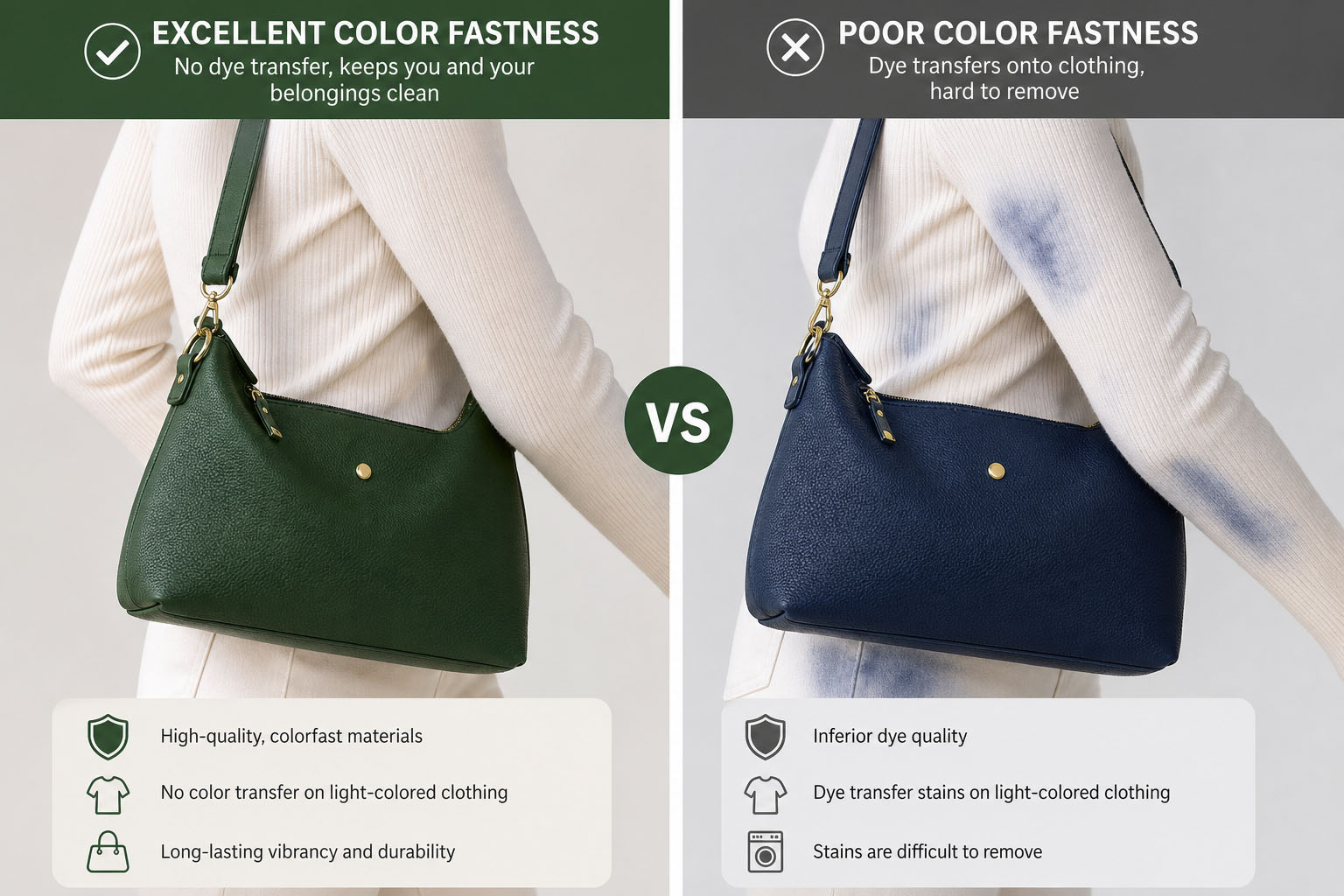
Color fastness refers to a material’s resistance to color change or color transfer when exposed to various conditions during normal use. For bags, this means whether the dye will stay put when rubbed against clothing, exposed to sunlight, splashed with water, or contacted by perspiration.
The four primary color fastness tests for bags evaluate resistance to:
Rubbing (Crocking) — whether color transfers onto clothes or hands
Light — whether color fades under sunlight or indoor lighting
Water — whether color changes or bleeds when wet
Perspiration — whether sweat causes fading or staining
A bag with poor color fastness can result in dye transfer onto customer clothing, skin staining, and increased product returns — all of which directly harm your brand reputation and bottom line.
H2: The Four Types of Color Fastness Tests Explained
1. Rubbing Fastness (Crocking Test)
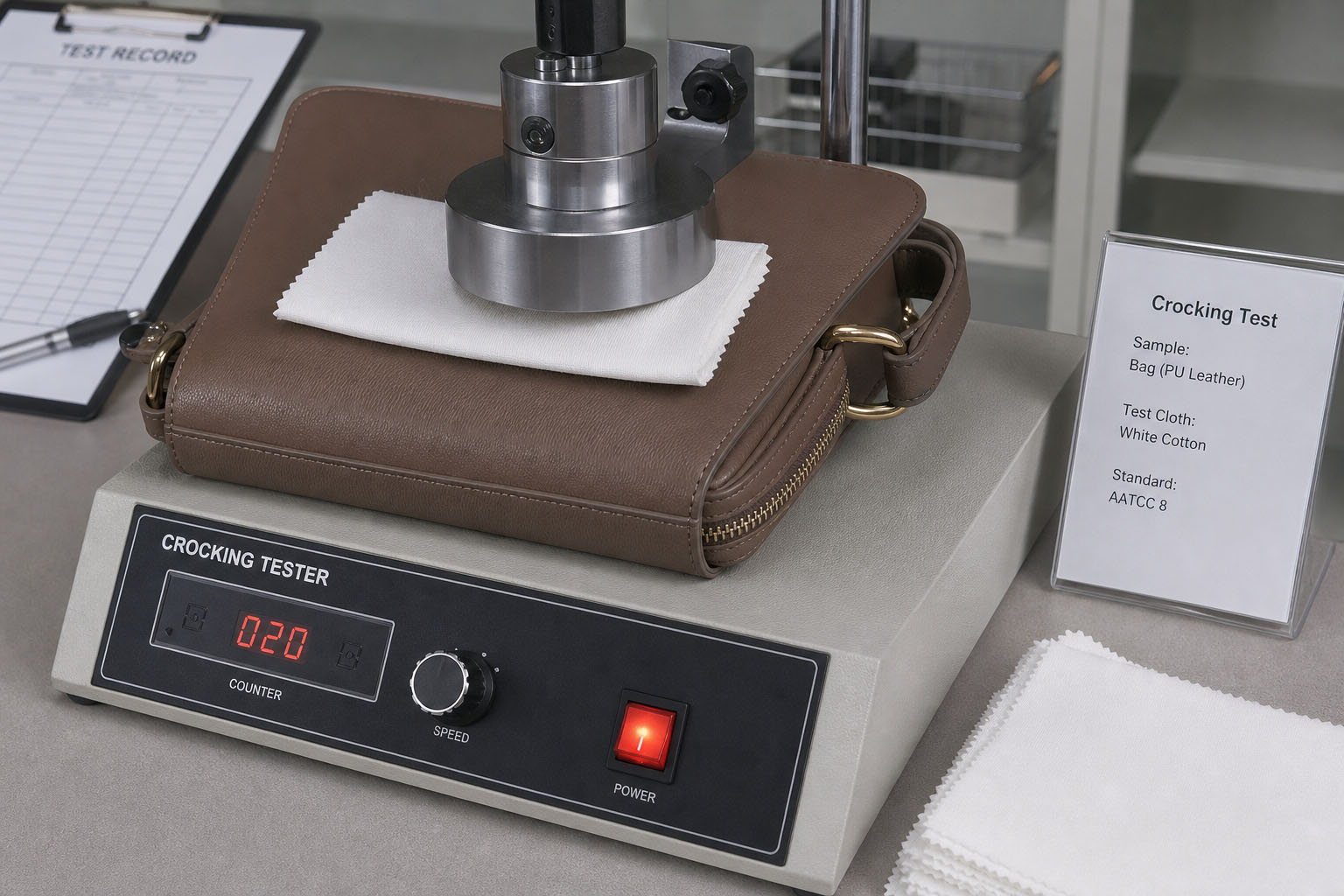
The crocking test uses a crockmeter — a mechanical device that rubs a standard white cloth (dry and wet) against the bag material under controlled pressure. This simulates the friction a bag experiences during daily use, such as being carried against clothing or set down on surfaces.
What to look for: Lower ratings indicate higher color transfer, meaning the bag will likely stain light-colored clothing, white shirts, or upholstery.
2. Light Fastness
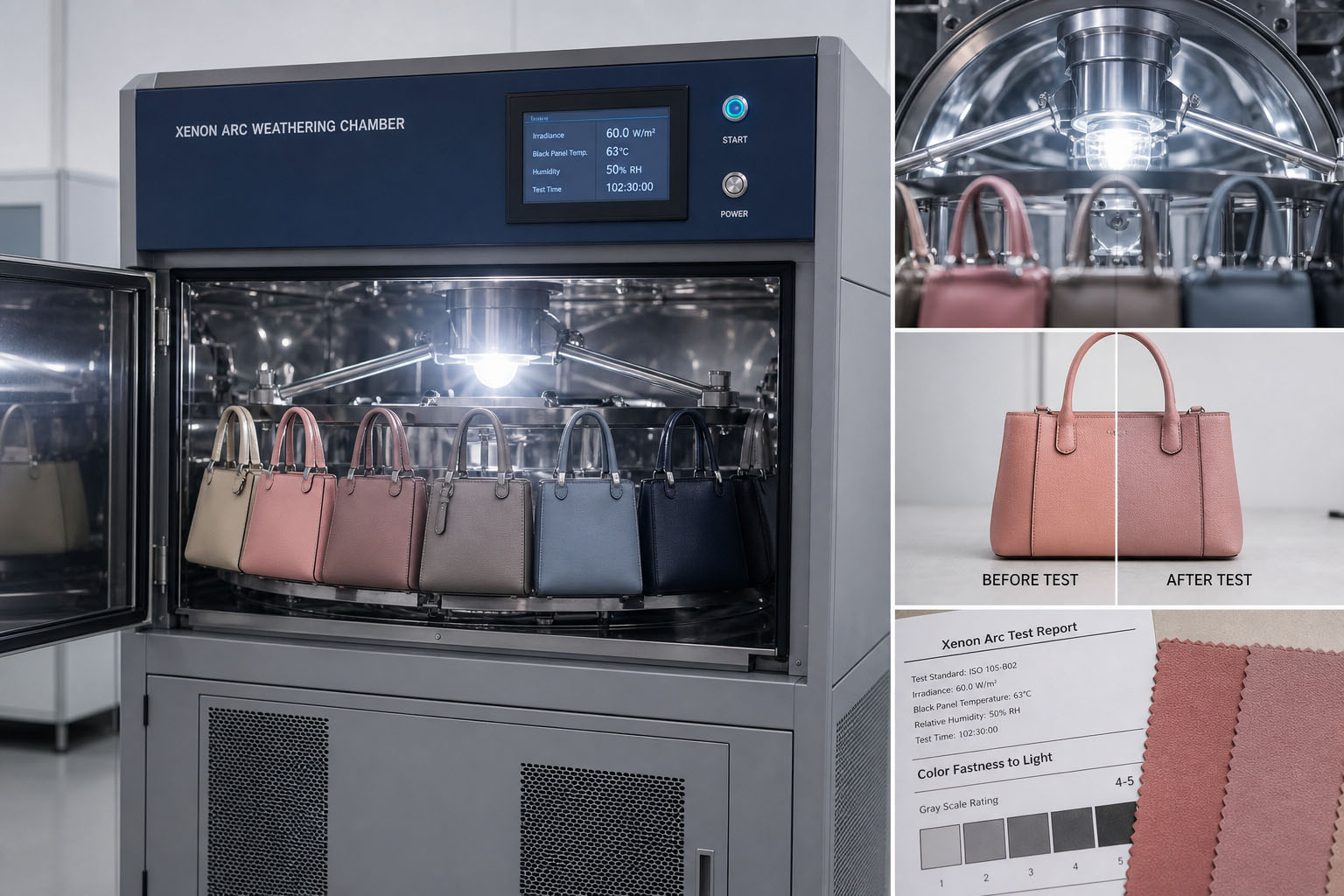
Light fastness testing exposes bag materials to xenon arc or carbon arc lamps, simulating prolonged sunlight exposure under controlled laboratory conditions. This test is particularly important for bags that will be displayed in store windows, used outdoors, or carried frequently in daylight.
Why it matters: UV exposure can cause dyes to break down chemically, leading to fading, yellowing, or color shifts that make a product look aged far before its time.
3. Water Fastness
Water fastness testing evaluates color bleeding and staining when bag materials are soaked or exposed to moisture. This includes both the bag’s main body and any lining materials that might transfer dye when wet.
Critical for: Backpacks, travel bags, diaper bags, and any product likely to encounter rain, spills, or humid storage conditions.
4. Perspiration Fastness
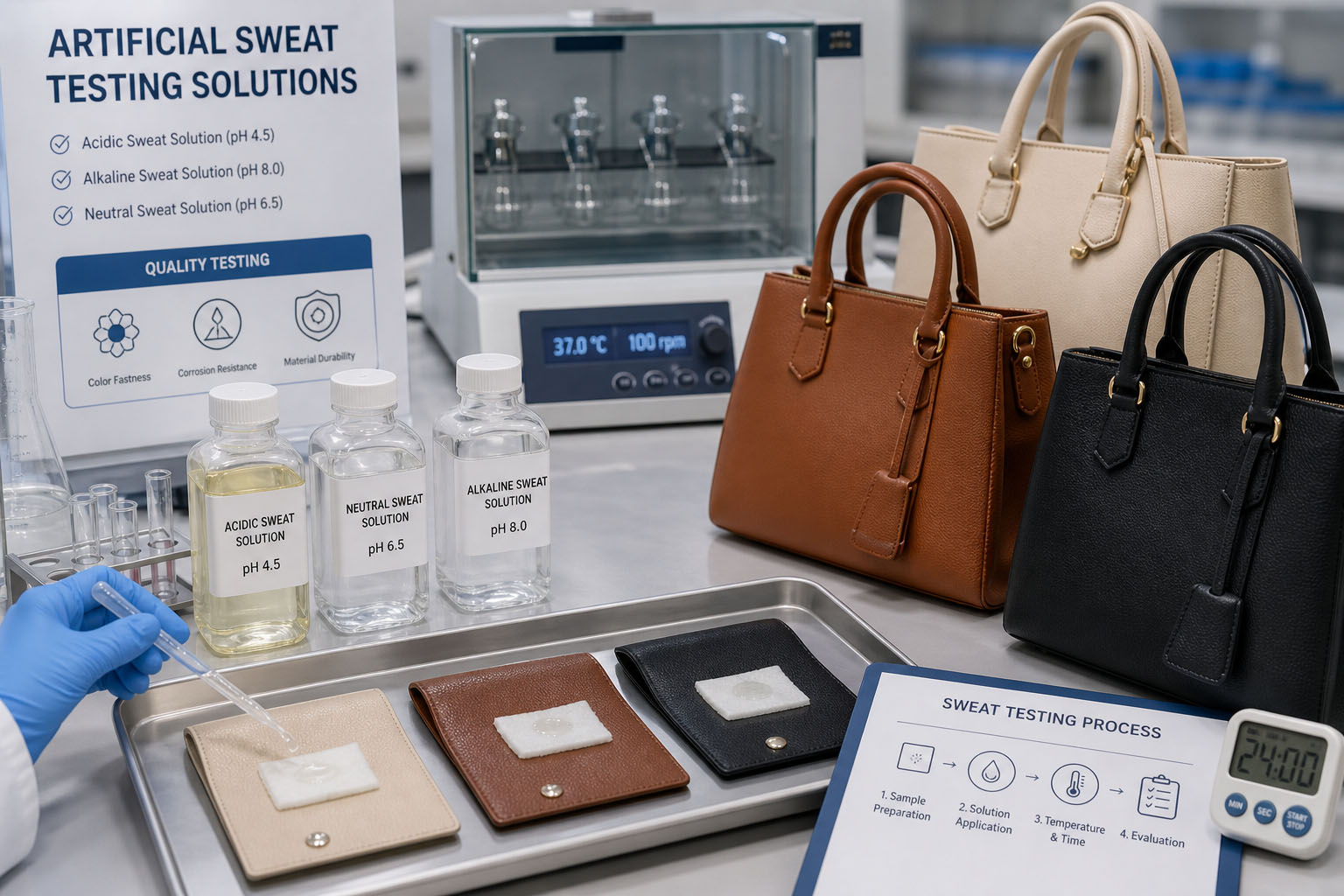
Perspiration testing uses artificial sweat solutions (both acidic and alkaline) to replicate real-world wear conditions. This test is especially relevant for bags that have direct skin contact, such as shoulder straps, backpack straps, and handles.
The science behind it: Human sweat is slightly acidic (pH around 4.5–5.5) but can become more alkaline due to bacterial activity. Test solutions simulate both conditions to ensure colors hold up against actual human use.
H2: What Standard Test Methods (ISO/AATCC) Apply to These Four Color Fastness Tests for Bags?
Understanding which standards your Chinese supplier uses is critical because different markets and retailers accept different certifications. Here are the most commonly referenced standards in the bag manufacturing industry:
Rubbing Fastness Standards
ISO 105-X12 — Textiles: Tests for colour fastness — Part X12: Colour fastness to rubbing
AATCC TM 8 — Colorfastness to Crocking (the U.S. standard most American retailers prefer)
Light Fastness Standards
ISO 105-B02 — Colour fastness to artificial light (xenon arc fading lamp test)
AATCC TM 16.3 — Colorfastness to Light (xenon arc)
Water Fastness Standards
ISO 105-E01 — Colour fastness to water
AATCC TM 107 — Colorfastness to Water
Perspiration Fastness Standards
ISO 105-E04 — Colour fastness to perspiration (both acidic and alkaline)
AATCC TM 15 — Colorfastness to Perspiration
Pro tip for U.S. buyers: If you’re selling through major U.S. retailers (Target, Walmart, Macy’s, Nordstrom, etc.), they typically require AATCC standards rather than ISO. Always confirm which standard your supplier is using and whether it matches your end buyer’s requirements.
Chinese manufacturers also commonly reference GB/T standards (China’s national standards), which are largely harmonized with ISO. However, for U.S. import purposes, AATCC or ISO reports are usually more recognizable and trusted.
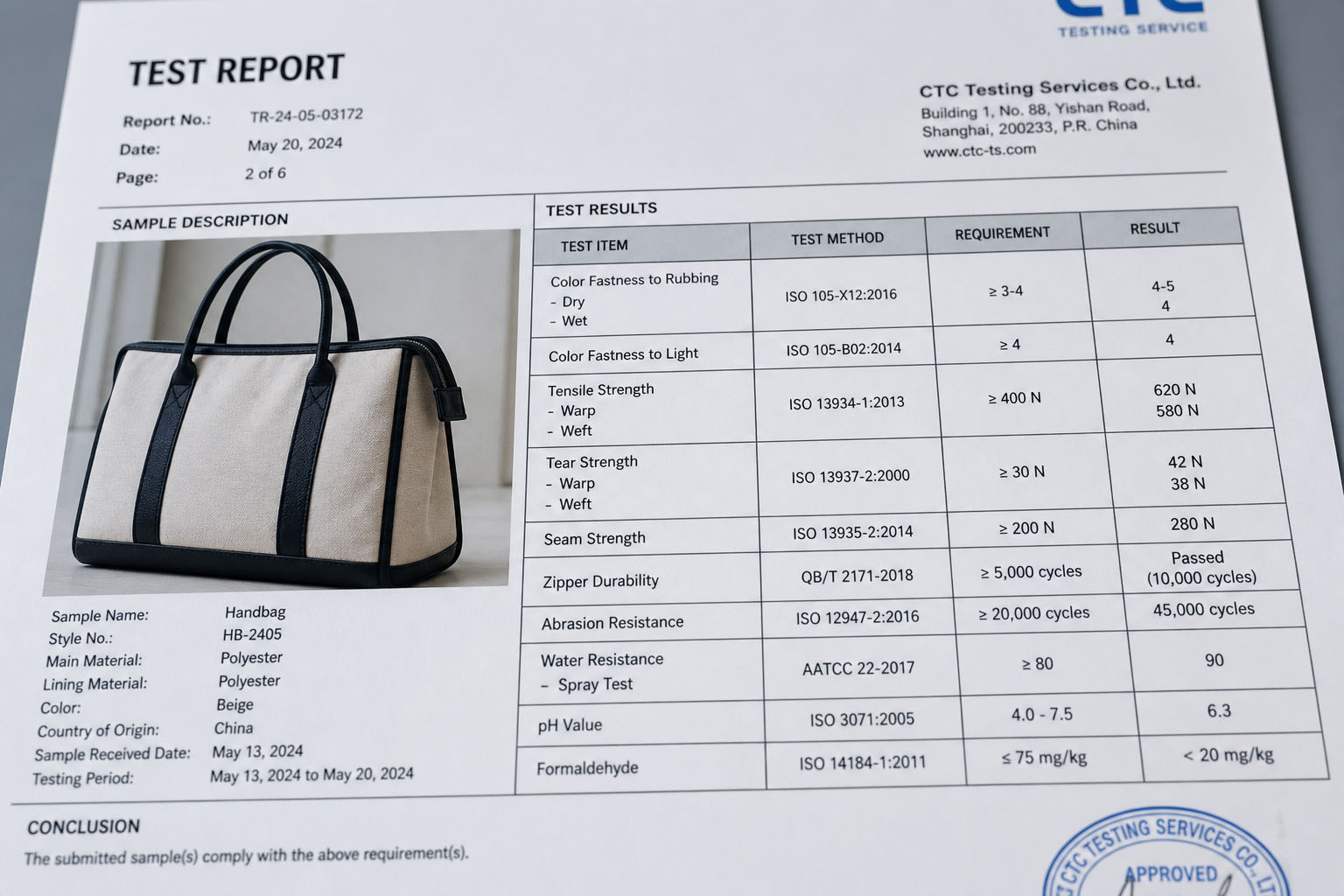
H2: Which Color Fastness Rating Is the Minimum Acceptable Threshold for Handbags, Backpacks, and Luggage Sold in the U.S.?
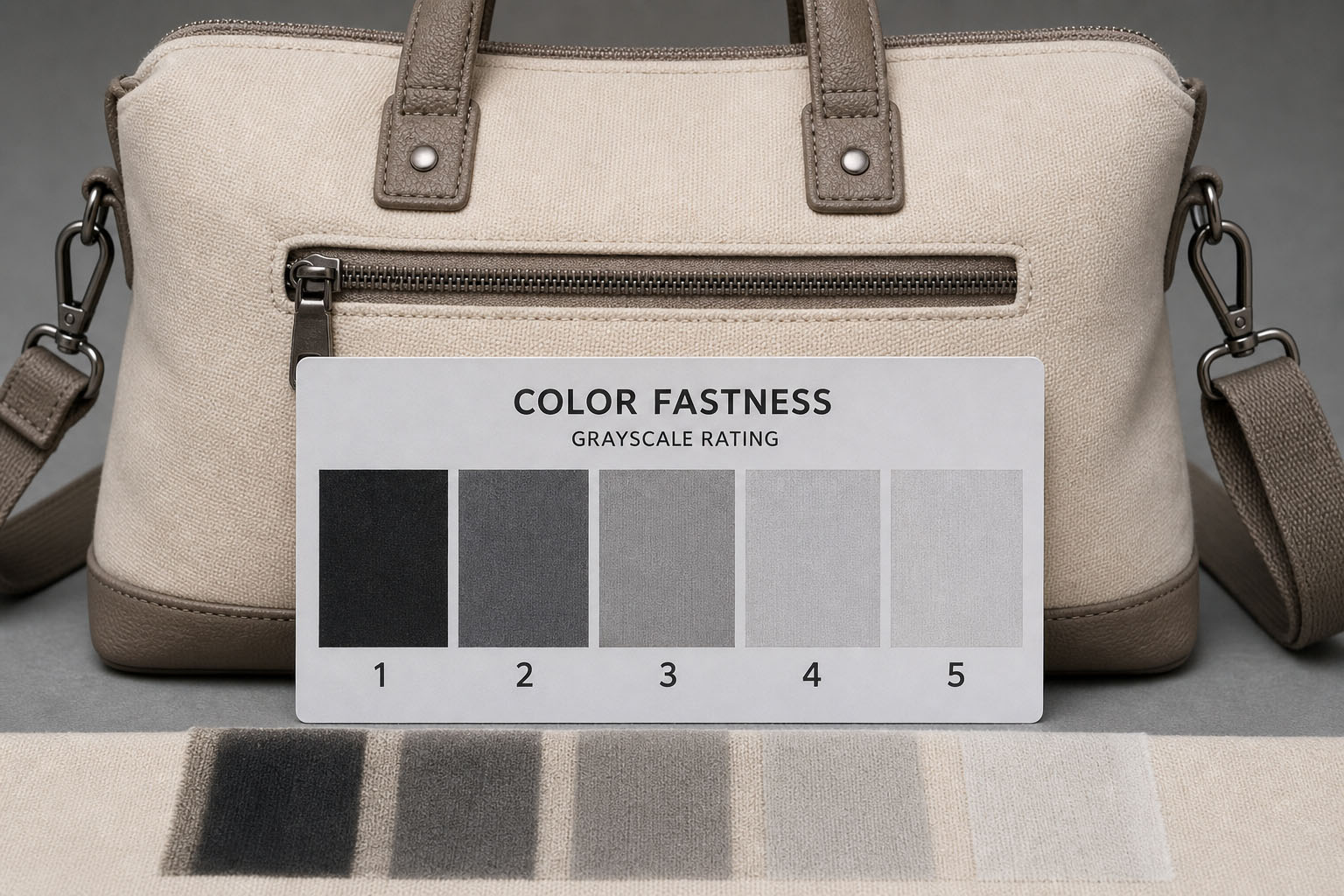
Color fastness is rated on a 1–5 grading scale, with 5 indicating excellent resistance to color change or transfer. A rating of 1 means very poor resistance, while 3-4 is generally considered acceptable for most applications.
Here’s the industry breakdown for U.S. market acceptance:
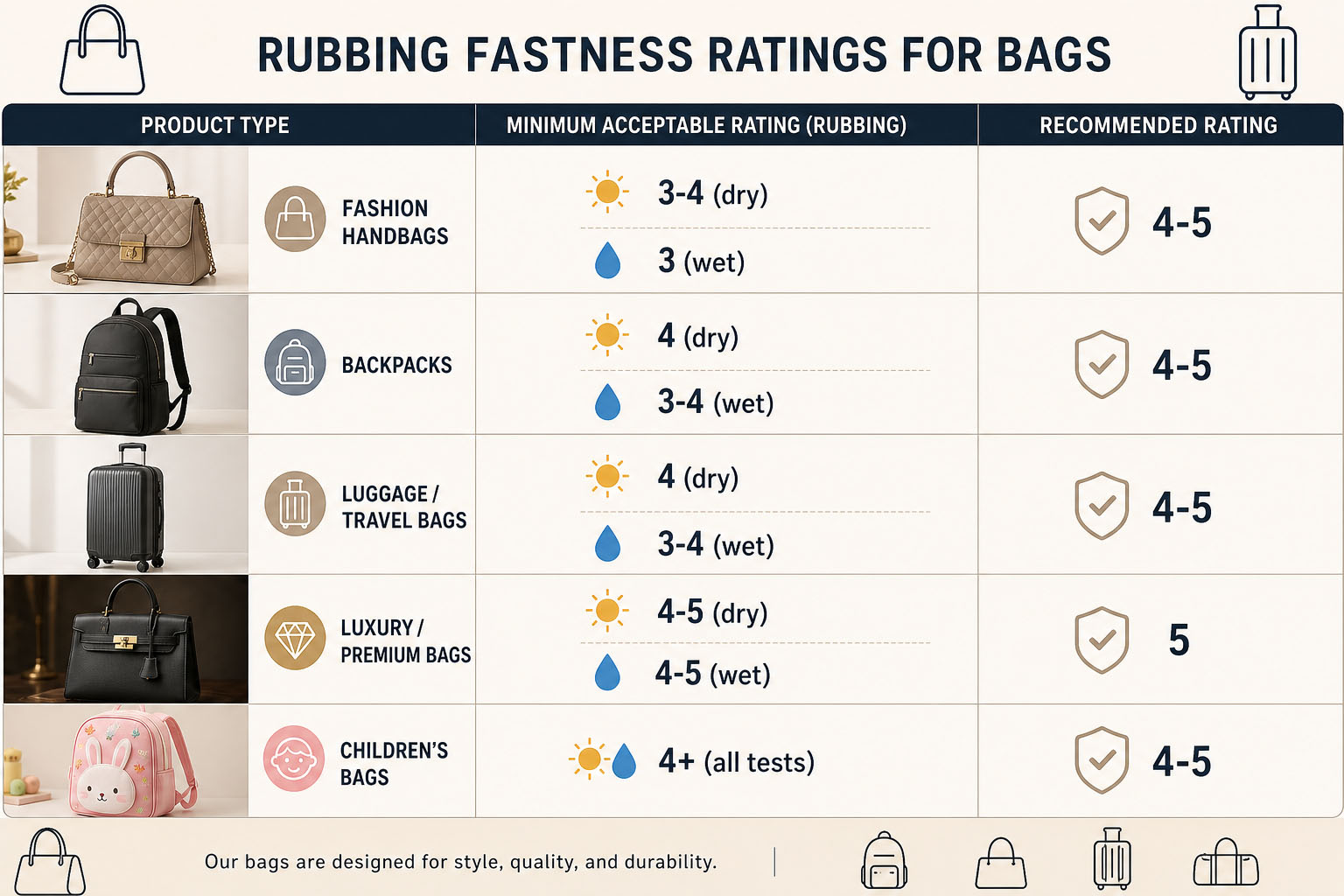
General Guidelines for U.S. Market:
Rubbing fastness: Minimum 4 (dry), 3 (wet) for most retail applications
Light fastness: Minimum 4 on the blue wool scale
Water fastness: Minimum 3-4 (rating of color change and staining)
Perspiration fastness: Minimum 3-4 (especially for strap and handle materials)
For premium, export-oriented, and luxury bags, higher ratings (typically 4–5) are essential to meet buyer expectations and justify higher price points. If you’re positioning your brand in the mid-to-high-end market, don’t accept anything below 4 on any test.
Industry insight: When in doubt, ask your supplier to test all bag components — straps, linings, zippers, trims, and the main body. Materials react differently, and a bag with an excellent main body rating can still fail overall if the lining or trim bleeds.
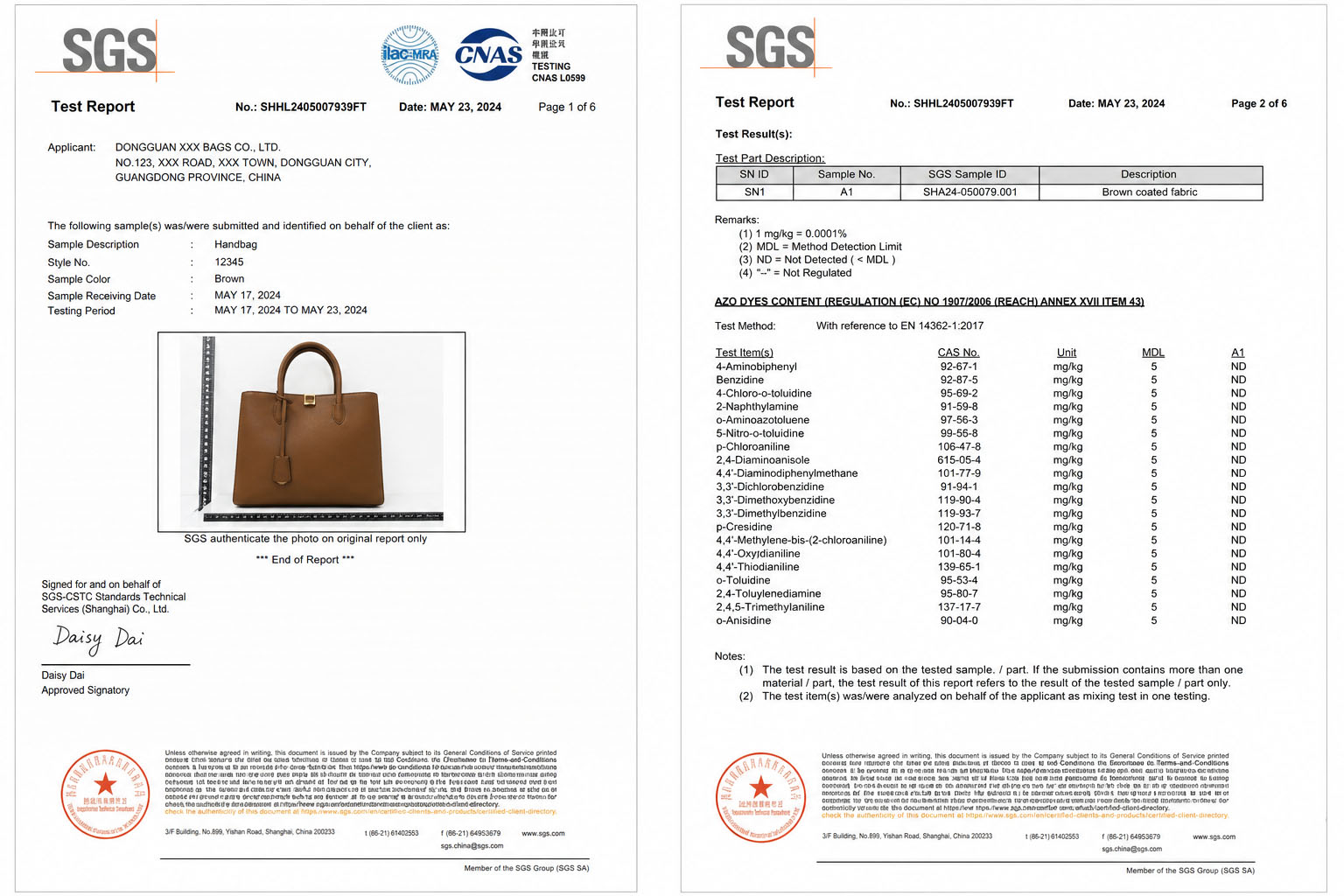
H2: How Can I Verify the Authenticity of Color Fastness Test Reports Provided by Chinese Bag Suppliers?
This is one of the most critical questions for any buyer sourcing from China. Unfortunately, fake or altered test reports are a real concern in the industry. Here’s your verification playbook:
1. Check the Testing Laboratory’s Accreditation
Legitimate test reports come from accredited laboratories. Look for:
CNAS accreditation (China National Accreditation Service for Conformity Assessment)
CMA certification (China Metrology Accreditation)
Third-party international labs like SGS, Intertek, Bureau Veritas, or TÜV
AATCC or ISO certification marks on the report
2. Verify Report Details
Authentic reports include:
Laboratory name, address, and contact information
Sample description matching your product
Test method reference (ISO 105-X12, AATCC TM 8, etc.)
Specific test results with numerical ratings
Testing date and report number
Authorized signatures and/or stamps
3. Request Original Reports, Not Copies
Ask suppliers to provide the original PDF report with embedded metadata. Check the file properties for creation date, author information, and any signs of editing.
4. Cross-Reference with the Lab Directly
Most legitimate testing labs have online report verification systems. You can typically search by report number to confirm authenticity. Major labs like SGS and Intertek offer this service.
5. Look for Red Flags
Be cautious if:
The report doesn’t specify which standard was used
Ratings are suspiciously high (5 across the board) on every product
The report is older than 6-12 months for a new product
The testing lab cannot be found in any database
The supplier refuses to use a third-party lab you specify
6. Conduct Your Own Pre-Production Testing
For high-value orders or new suppliers, consider sending samples to your own third-party testing lab in the U.S. (such as Bureau Veritas, SGS North America, or ATS Labs). The cost is minimal compared to the risk of receiving substandard products.
Pro tip: We recommend building this language into your purchase orders: “Color fastness test reports must be from CNAS-accredited or international third-party laboratories, dated within 6 months of shipment, and verifiable through the lab’s online system.”
H2: Are There Specific U.S. Retailer or CPSIA Compliance Requirements Related to Color Fastness for Imported Bags?
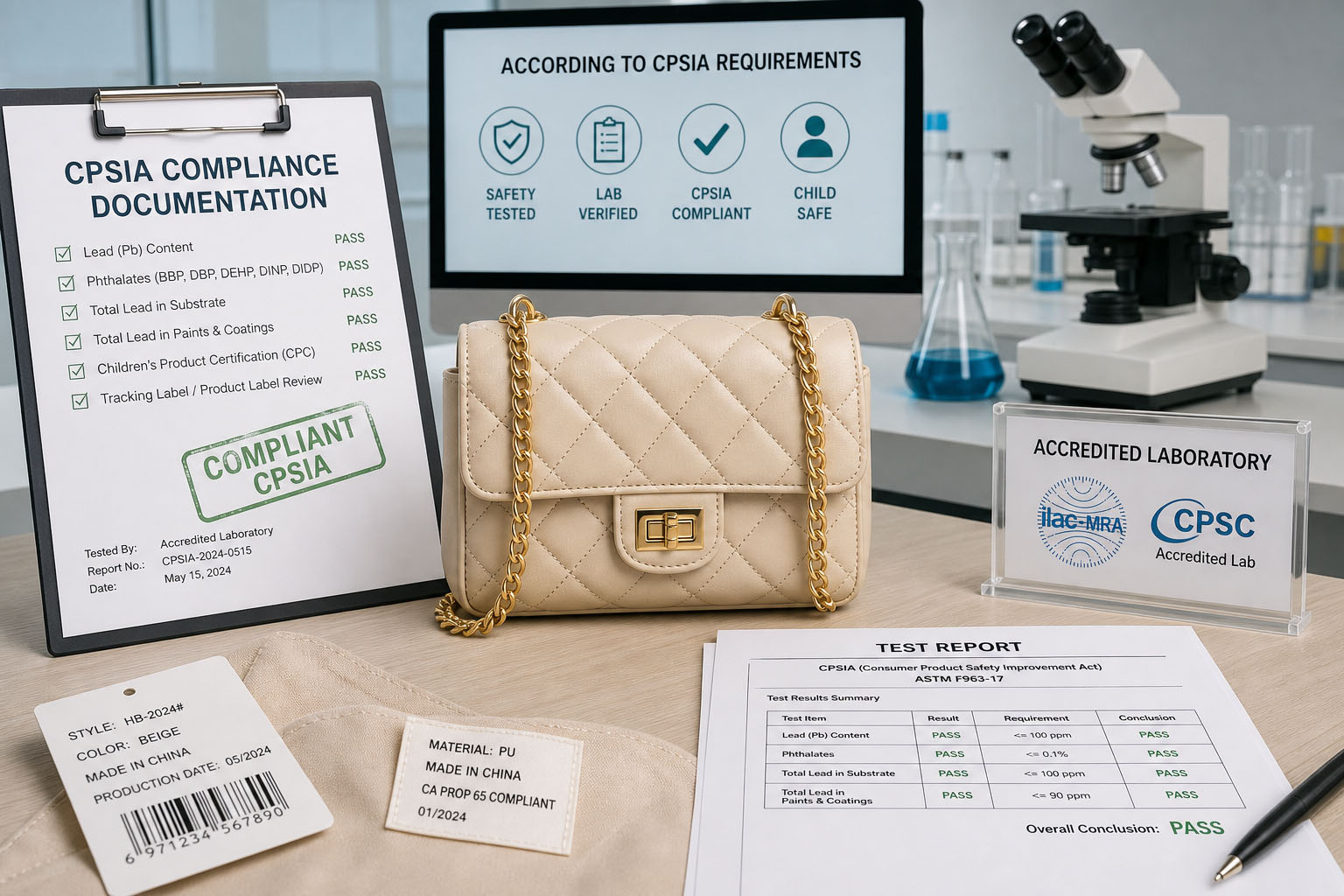
Yes — and this is where many importers get caught off guard. While CPSIA (Consumer Product Safety Improvement Act) primarily focuses on lead content, phthalates, and physical safety, color fastness intersects with these requirements in important ways.
CPSIA Connection to Color Fastness
CPSIA regulates the use of certain dyes and colorants, particularly in children’s products. Some azo dyes that break down under perspiration or skin contact can release carcinogenic amines. Therefore, perspiration fastness testing indirectly relates to CPSIA compliance through chemical safety testing (specifically, EN 14362 or AATCC TM 15 combined with chemical analysis).
Major U.S. Retailer Requirements
Different retailers have varying color fastness thresholds:
Target: Requires minimum 4 (dry rubbing) and 3 (wet rubbing) for handbags, often 4+ for backpacks
Walmart: Similar to Target, with strict AATCC TM 8 and TM 15 requirements
Costco: Higher standards, often requiring 4-5 across all tests
Macy’s/Bloomingdale’s: Premium standards, typically 4+ on all color fastness tests
Amazon (premium brands): Increasingly strict requirements to maintain brand integrity
Additional U.S. Compliance Considerations
1. FTC Care Labeling Rule — Requires accurate care instructions, which relate to color fastness claims
2. California Proposition 65 — Strict chemical requirements that can be affected by dye stability
3. State-specific regulations — Some states have additional chemical restrictions on imported textiles
The Bottom Line
If your bags are intended for children (under 12), CPSIA compliance becomes even more critical, and you may need additional testing beyond standard color fastness. We always recommend working with a compliance consultant or third-party testing partner familiar with U.S. import requirements.
H2: Why Pre-Production Testing Is Non-Negotiable for Importers
Conducting pre-production sample testing helps identify color issues early, reducing rework costs, shipment delays, and order disputes. Here’s our recommended testing protocol:
Before Production:
1. Request material samples from your supplier
2. Send to a third-party lab for the four color fastness tests
3. Verify ratings meet your minimum thresholds
4. Document baseline results for future comparison
During Production:
1. Conduct in-line inspections (typically at 10-20% and 70-80% completion)
2. Random sampling for additional color fastness tests on finished products
3. Compare results to your baseline
After Production, Before Shipment:
1. Pre-shipment inspection with random sample testing
2. Final color fastness verification if production volume is high
3. Quality control documentation for your records
The cost of prevention vs. the cost of failure: A full panel of color fastness tests typically costs $200–$500 per sample. Compared to a recalled shipment, rejected cargo, or a wave of customer complaints, this is a minimal investment.
Conclusion: Building a Quality-First Sourcing Strategy
Color fastness testing might seem like a technical detail, but it’s actually one of the most practical indicators of overall bag quality. When you partner with Chinese manufacturers who take color fastness seriously, you’re more likely to receive products that meet other quality standards as well — because a supplier who invests in proper testing typically invests in their materials, processes, and quality control systems.
Key takeaways for U.S. bag buyers:
Always require the four color fastness tests: rubbing, light, water, and perspiration
Specify ISO or AATCC standards based on your end buyer’s requirements
Set minimum ratings of 4 for most tests, 4-5 for premium products
Verify every test report’s authenticity through lab cross-referencing
Understand CPSIA and retailer-specific compliance requirements
Invest in pre-production testing to avoid costly mistakes
At Trust-U Bag, we’ve built our reputation on sourcing bags that meet the highest international quality standards. Every product in our catalog has passed rigorous color fastness testing, and we provide full documentation to our wholesale and retail partners.
Ready to source bags that meet U.S. quality standards? Contact our team for sample testing reports, compliance documentation, and a quote tailored to your specific requirements.
Have questions about color fastness testing or need help interpreting a supplier’s test report? Drop them in the comments below, and our quality assurance team will respond within 24 hours.
Post time: Jul-28-2026