
The Complete Guide to Sourcing Trend-Focused Bags from China for Niche Markets
Expert Insights for Independent Website Sellers
As the global bag market continues to evolve, more small business owners running independent e-commerce stores are looking to source products from China. However, navigating the complexities of trend forecasting, design collaboration, and quality verification can feel overwhelming—especially when you’re competing against established brands with deeper pockets.
This guide draws from extensive industry research and real-world sourcing experience to help you understand exactly how to leverage Chinese manufacturers for trend-driven bag collections. Whether you’re selling minimalist crossbody bags, eco-friendly totes, or specialized travel accessories, you’ll find actionable strategies to build a competitive product line.
Understanding What Chinese Suppliers Actually Offer
The Reality of Manufacturing vs. Design Capabilities
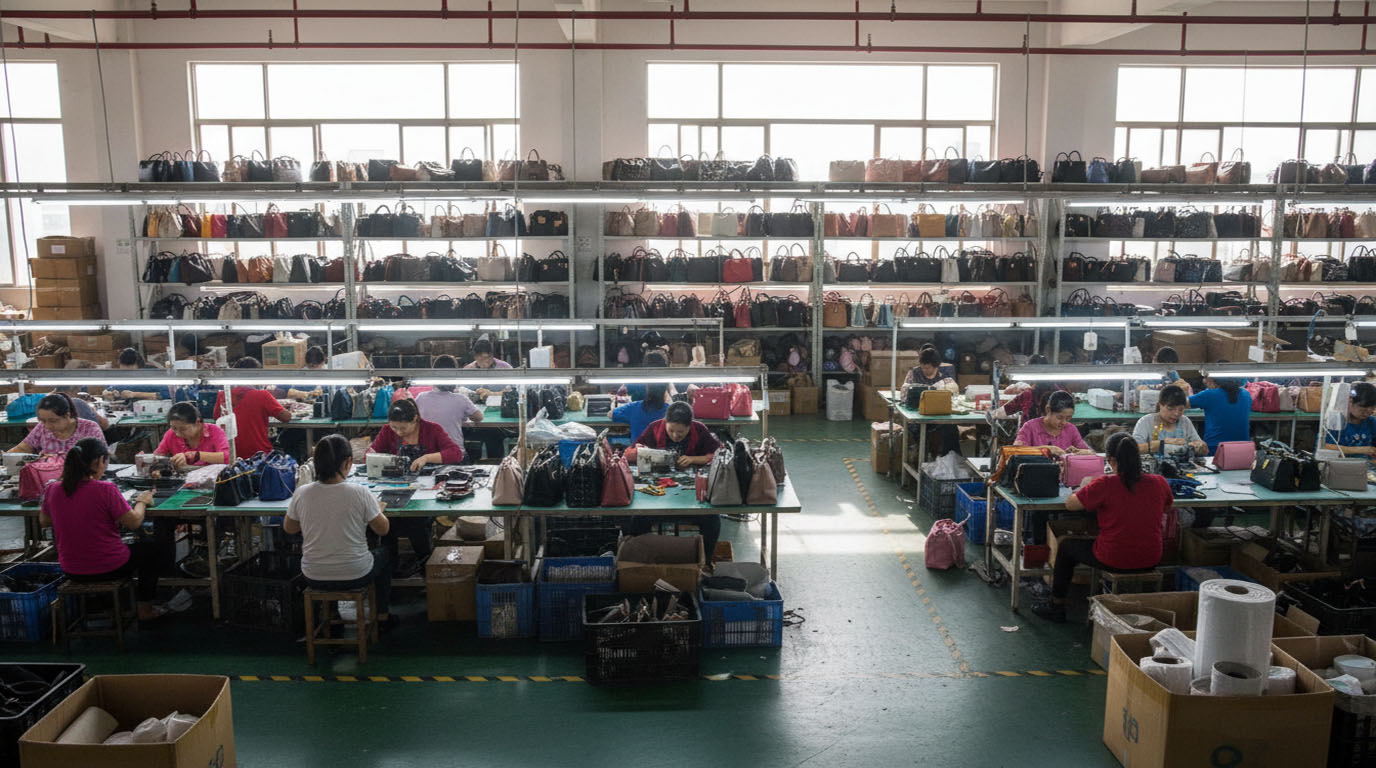
One of the most important distinctions to understand early in your sourcing journey is the fundamental difference between production capacity and trend research capabilities. Most Chinese bag manufacturers specialize in execution rather than creative direction. They excel at taking designs and producing them at scale with consistent quality—but when it comes to generating original trend insights, their expertise is limited.
This doesn’t mean you can’t access valuable design support. It means you need to approach supplier relationships with realistic expectations and a clear understanding of what each party brings to the table.
According to industry analysis, suppliers in major manufacturing hubs like Guangzhou and Pinghu typically offer basic design adaptation services, including minor modifications to existing product lines. These adaptations might include adjusting strap lengths, changing hardware finishes, or modifying pocket configurations based on your specifications.
Where True Trend Intelligence Comes From
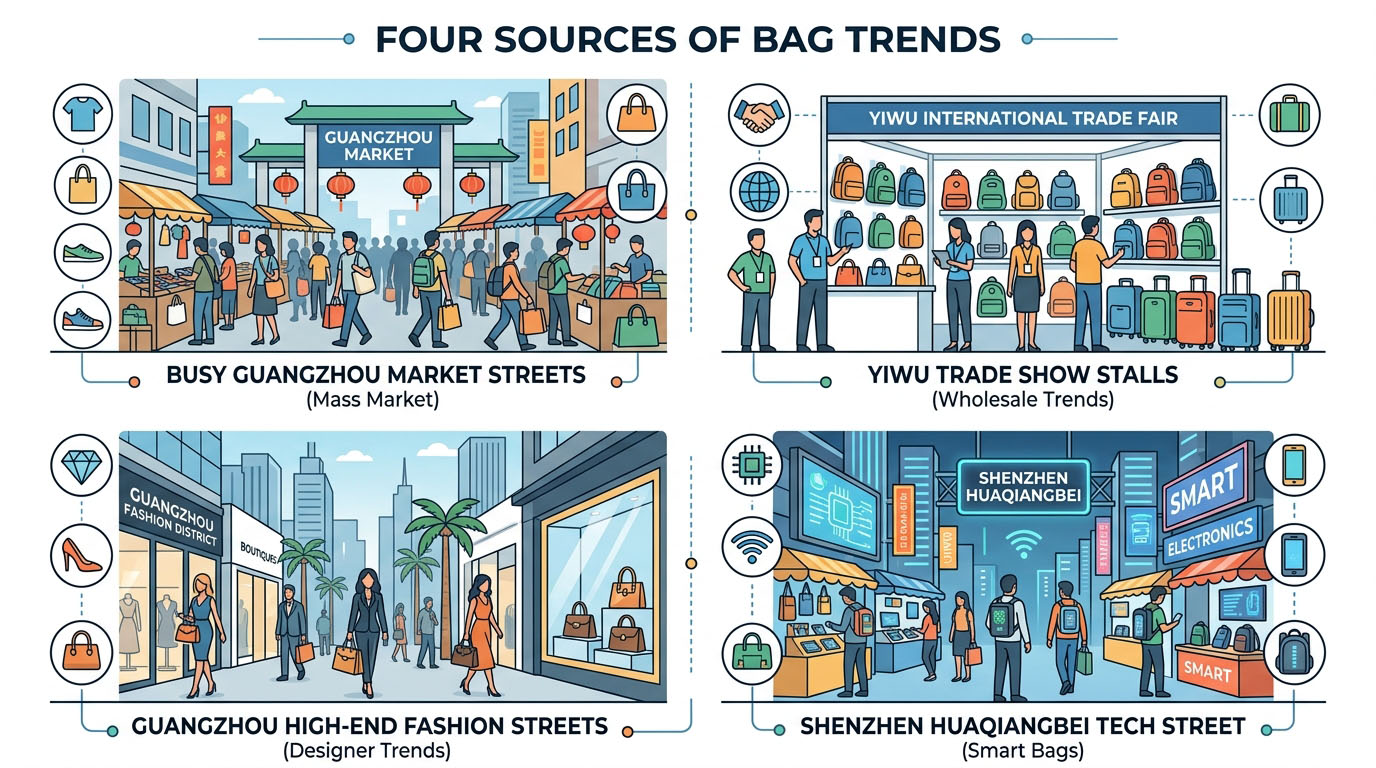
If you’re seeking genuine trend forecasting, consider these proven sources:
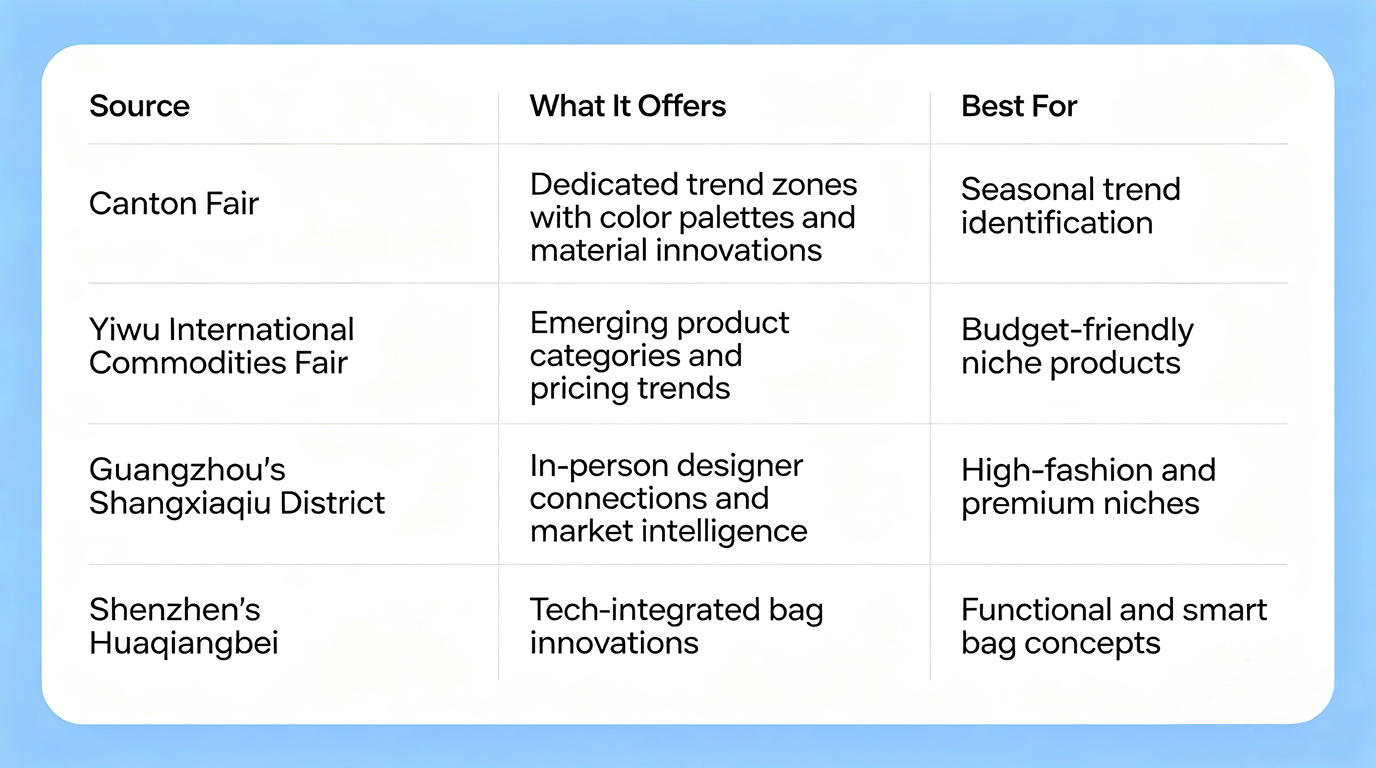
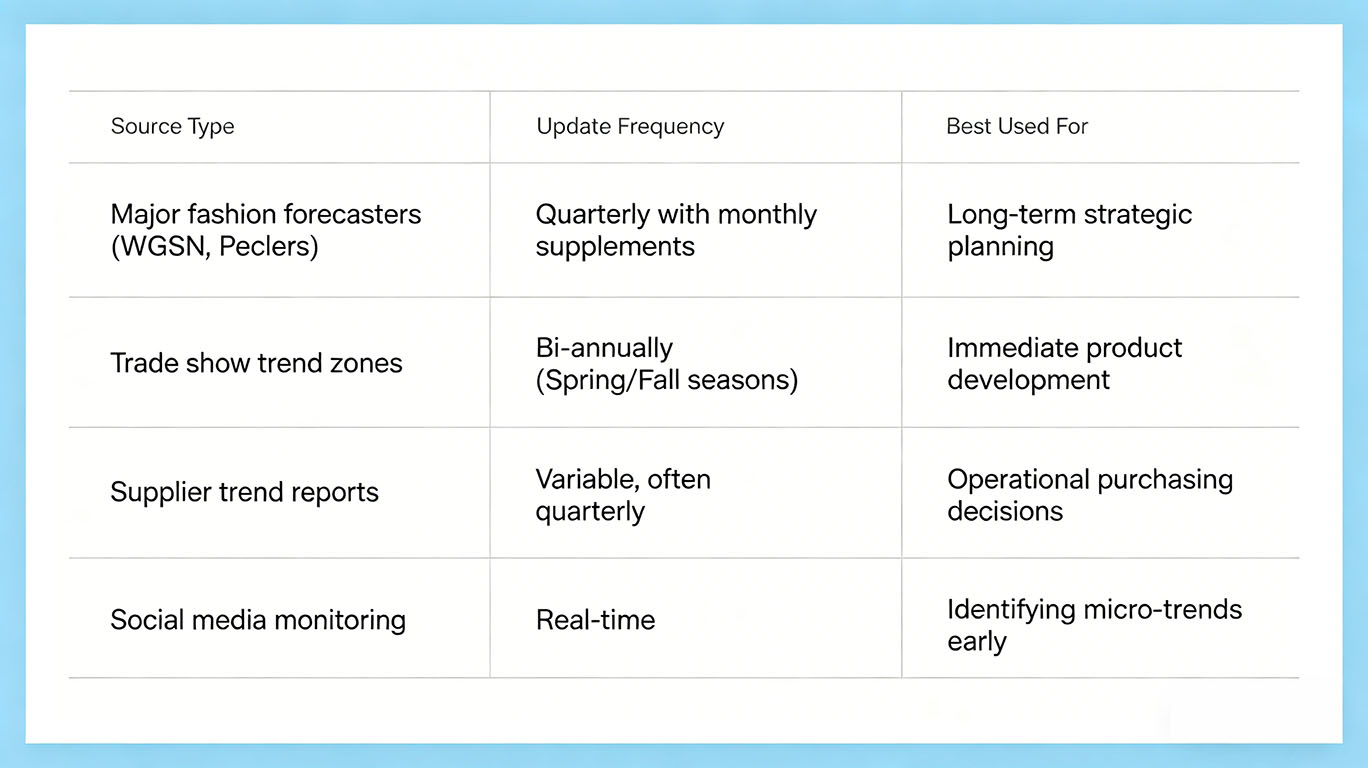
Trade shows remain one of the most reliable ways to access authentic trend information directly from manufacturers who are actively monitoring Western fast-fashion brands. While this creates a natural lag behind true market leaders, it also means you can often find proven trends rather than gambling on unproven directions.
Verifying the Reliability and Quality of Trend Forecasts
Red Flags to Watch For
Not all trend forecasts from suppliers are created equal. Industry experts note that many manufacturers simply monitor Western fast-fashion brands and replicate their designs—this isn’t genuine trend research, it’s trend following with significant delays.
Warning signs that a supplier’s “trend expertise” may be superficial:
Vague responses when asked about specific consumer demographics
Inability to explain why certain styles are trending
Copying designs from major retailers without understanding the underlying appeal
No portfolio of previous trend-informed successful products
Reluctance to share market research methodology
How to Validate Supplier Claims
Direct communication with factory representatives yields more effective design feedback than communicating through trading companies or intermediaries. When evaluating a potential supplier’s trend capabilities, ask specific questions:
“Can you show me three examples of bags you’ve produced in the past six months that reflected emerging trends? What consumer insight drove those design choices?”
A reliable supplier should be able to demonstrate recent popular styles, explain material and color recommendations, and connect their suggestions back to concrete market observations.
The Role of Verified Suppliers
Online B2B platforms like Alibaba and Made-in-China feature verified suppliers who explicitly list design and OEM services in their profiles. Look for suppliers who:
Have detailed portfolios showing diverse design capabilities
Display client testimonials specifically mentioning trend collaboration
Offer sample development support as part of their standard process
Demonstrate knowledge of your specific sales channel (Amazon, Shopify, TikTok Shop)
Understanding the Costs Associated with Trend Forecasting
What’s Typically Included vs. Extra
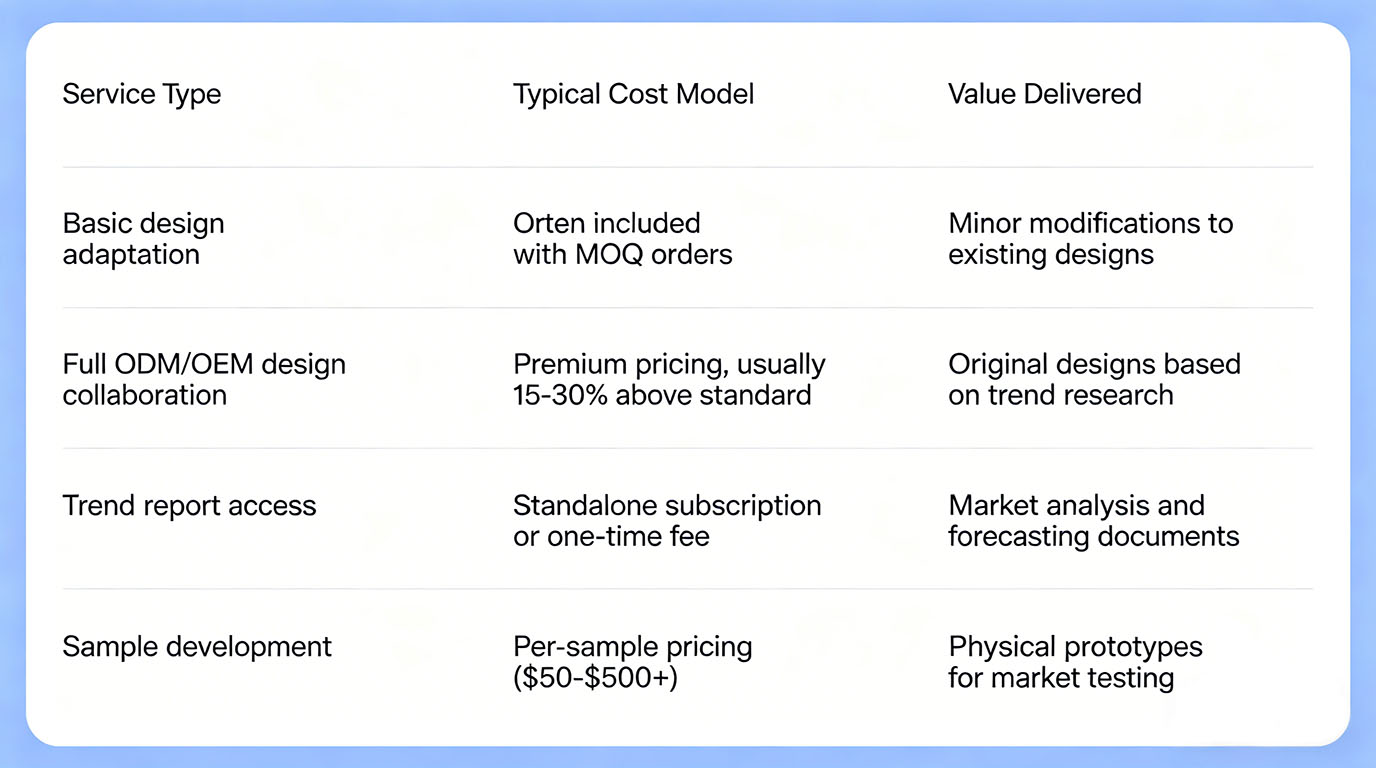
Product development and trend consultation services are typically offered as paid add-ons rather than complimentary offerings. This is an important budget consideration for small businesses.
Common cost structures you may encounter:
Strategies to Maximize Value
Minimum order quantity requirements often determine the level of customization and design support a supplier will provide. Consider these approaches:
Combine orders across complementary niche products to increase your bargaining power for design consultation without raising per-unit costs significantly. If you’re sourcing crossbody bags and laptop totes from the same supplier, you’re likely to receive better design support than if you only ordered one category.
Build long-term partnerships strategically. Suppliers generally excel at technical manufacturing capabilities while lacking in-depth knowledge of specific niche consumer preferences—but they become more invested in your success over time. Long-term partnerships increase the likelihood of receiving proactive design suggestions and early access to new product developments.
Adapting Designs for Your Target Market
The Collaboration Framework
Effective design adaptation requires clear communication from your end. Documenting design specifications with visual references, material samples, and target price points dramatically improves the quality of design feedback received from Chinese suppliers.
Your design brief should include:
Target customer profile: Age range, lifestyle, income level, geographic focus
Sales channel specifics: Amazon FBA requirements, Shopify aesthetic standards, TikTok visual trends
Price point constraints: Both retail target and landed cost ceiling
Regulatory considerations: Material restrictions for different markets (REACH compliance for EU, CPSIA for US)
Visual references: Pinterest boards, competitor examples, mood images
Navigating Regulatory Requirements
Different markets have varying regulations regarding materials, chemicals, and manufacturing processes. A competent supplier should understand:
European Union: REACH regulation compliance, leather tanning restrictions
United States: CPSIA testing requirements, California Prop 65 considerations
Australia: Australian Consumer Law requirements
United Kingdom: UKCA marking post-Brexit
When discussing design adaptation, explicitly ask potential suppliers about their experience with your target market’s regulatory environment. This demonstrates professionalism and helps identify suppliers who can genuinely support your expansion goals.

Technical vs. Creative Adaptation
Suppliers generally excel at technical manufacturing capabilities while lacking in-depth knowledge of specific niche consumer preferences. Your role is to bridge this gap by providing the consumer insight; their role is to translate that into producible designs.
For example, if you’re targeting eco-conscious urban professionals, you might specify:
Recycled materials with verifiable certifications
Clean, minimal aesthetic appealing to sustainability-minded consumers
Durability features that justify premium pricing
Packaging that reinforces environmental values
The supplier then takes these parameters and applies their manufacturing expertise to create viable products.
Update Frequency and Market Timing
How Often Are Trend Forecasts Updated?
Trend forecasting operates on seasonal cycles, but the frequency of updates depends on the source:
Aligning With Chinese Manufacturing Cycles
Seasonal production calendars in China require buyers to plan niche collections at least 4-6 months in advance to align with supplier manufacturing cycles. This timeline is critical:
Sample development: 2-4 weeks after design finalization
Production scheduling: Depends on factory workload, typically 3-6 weeks
Shipping and customs: 2-6 weeks depending on method chosen
Buffer time: Always include 2-3 weeks for unexpected delays
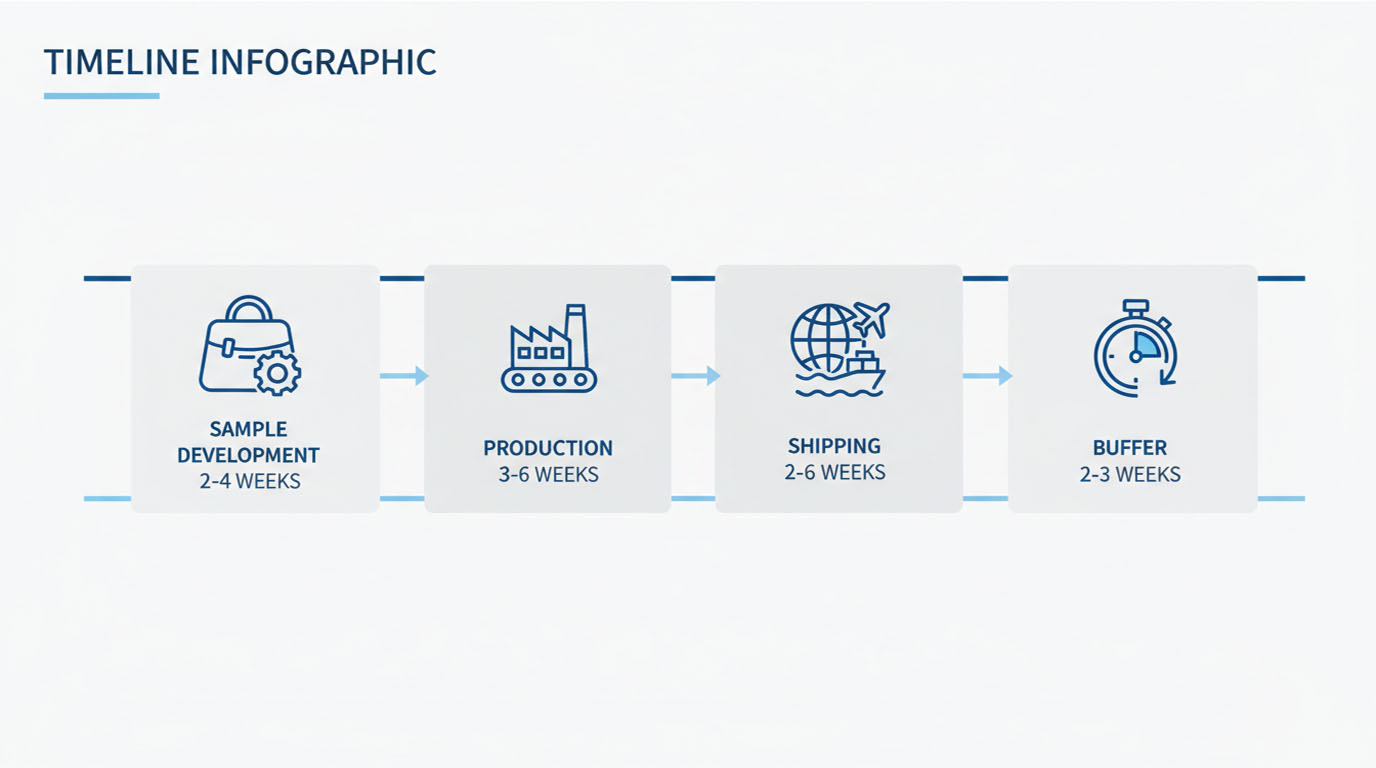
Lead time constraints directly affect a supplier’s ability to incorporate trend-based design changes into production schedules. If you’re working with a tight trend window, communicate this clearly upfront so the supplier can assess feasibility.
Catching Trends Early
Social media monitoring tools enable small businesses to identify micro-trends early, which can then be communicated to suppliers for rapid product development. By watching platforms like TikTok, Instagram, and Pinterest, you can spot emerging preferences before they hit mainstream awareness.
When you identify a promising micro-trend, reach out to your supplier network immediately. The earlier you can communicate emerging demand, the more likely you are to secure production slots during peak manufacturing periods.
Practical Advice for Small Online Bag Sellers
Starting Your Sourcing Journey
Since you sell bags online from home, start with a narrow niche and test a small set of designs first. Focus on one segment—like minimalist crossbody bags, laptop totes, or travel bags—before ordering in larger volume. This approach makes it easier to compare supplier suggestions with real customer demand.
Recommended approach for beginners:
1. Select one niche category with clear target customer definition
2. Request samples from 3-5 suppliers to compare quality and design interpretation
3. Test market response with a small initial order (50-100 units)
4. Document lessons learned about supplier communication and product-market fit
5. Expand gradually based on validated demand
Building Effective Supplier Relationships
Niche market expertise varies significantly among suppliers, with those serving premium or specialized segments demonstrating greater design collaboration willingness. When searching for suppliers, look for those who already work with similar niches—even if they’re not in the bag industry specifically.
A supplier experienced with premium outdoor gear, for instance, may bring valuable insights about durable materials and functional design that transfer well to a niche like adventure-focused bags.
Sample Development Best Practices

Prototype and sample development phases allow buyers to test niche market concepts before committing to full production runs. Use this phase wisely:
Request multiple material options to evaluate durability and aesthetic appeal
Test samples under real conditions your customers would encounter
Gather feedback from potential customers before finalizing orders
Negotiate sample costs upfront and clarify whether they apply to future orders
Key Questions to Ask Your Supplier
When reaching out to potential suppliers, use this framework to assess their trend and design capabilities:
Essential Questions
1. “Do you provide trend forecasts for bags in my target market?”
2. “Can you suggest designs for a niche audience, such as travel, work, school, eco-friendly, or fashion bags?”
3. “Do you support custom materials, colors, logos, and packaging?”
4. “Can you show best-selling styles for the current season?”
5. “Can you create samples based on my target price and customer group?”
Sample Message You Can Send
Consider reaching out with a message like this:
“I’m a small online bag seller focused on [your niche]. I’m looking for a supplier who can provide trend forecasts and design suggestions tailored to my target customers. I want help choosing styles, materials, colors, and packaging that will resonate with [describe your audience]. Ideally, I’m looking for low-MOQ options for initial testing before scaling up. Can you share examples of how you’ve helped other sellers in similar niches?”
Emerging Tools and Technologies
Digital sourcing tools and AI-powered platforms are increasingly bridging the gap by offering trend analytics integrated with supplier matching. These technologies can help you:
Identify emerging trends through aggregated social media data
Match with suppliers whose capabilities align with your niche requirements
Access real-time pricing comparisons across multiple manufacturers
Track production status and quality metrics throughout the process
Some platforms now offer AI-generated design concepts that can be refined through collaboration with manufacturer design teams. This hybrid approach—combining algorithmic trend detection with human manufacturing expertise—often produces the best results for niche market positioning.
Conclusion: Building Your Competitive Advantage
Sourcing bags from China for niche markets requires a balanced approach that combines realistic expectations with proactive strategy. While most manufacturers excel at execution rather than creative direction, significant design support is available—especially for buyers who:
Communicate clearly about target customers and market positioning
Build long-term relationships with strategically selected suppliers
Provide detailed design briefs with visual references and specifications
Plan ahead to accommodate Chinese manufacturing timelines
Verify supplier claims through direct communication and sample testing
By understanding the landscape of what’s available—and what’s not—you can position your independent store as a serious player in the niche bag market. The combination of your market knowledge, supplier manufacturing capabilities, and emerging digital tools creates opportunities that weren’t accessible to small sellers even five years ago.
Start narrow, test thoroughly, and expand strategically. Your path to building a trend-responsive, quality-focused bag business begins with the right supplier relationships and a commitment to understanding your customers deeply.
Ready to Start Sourcing?
Begin by identifying 3-5 potential suppliers who match your niche requirements. Request samples, ask detailed questions about their trend capabilities, and don’t rush the relationship-building process. The investment you make now in finding the right partner will pay dividends in product quality, design innovation, and long-term business growth.
Post time: Apr-21-2026