
From Factory Floor to Front Door: A Buyer’s Complete Guide to Cleaning, Surface Treatment & Defect Prevention When Sourcing Bags from China
As a U.S.-based bag retailer who sources directly from Chinese manufacturers, I’ve learned one hard truth: a beautiful handbag on a supplier’s website can arrive at your warehouse looking completely different if cleaning, surface treatment, and packaging protocols aren’t nailed down in writing. This in-depth guide walks you through every question you should be asking your Chinese factory partner — and exactly what answers you should expect.
Why Cleaning and Surface Treatment Should Be Your First Conversation — Not Your Last
When you place a bulk order for handbags, backpacks, totes, or crossbody bags, the visual quality of the finished product is the single most important factor that drives customer reviews, return rates, and repeat purchases. Yet most Western buyers focus exclusively on stitching, hardware, and material specs — and forget about what happens between the moment a bag comes off the production line and the moment it lands in a customer’s hands.
Oils, fingerprints, and adhesive residue are the silent killers of bag aesthetics. They show up in product photos, get magnified under retail lighting, and — worst of all — make customers think your brand is sloppy.
The question every buyer should ask upfront:
“Do your bags undergo cleaning and surface treatment to remove oils, fingerprints, and adhesive residue before packing and shipment?”
If your supplier hesitates, gives a vague answer, or says “we just wipe them down,” that’s a red flag. The cleaning stage is a systematic process, not a casual gesture. According to industry guides on surface preparation, cleaning and degreasing are standard pre-finishing steps because oils and fingerprints can compromise both adhesion and final surface quality — and adhesive residue must also be removed during this same phase.
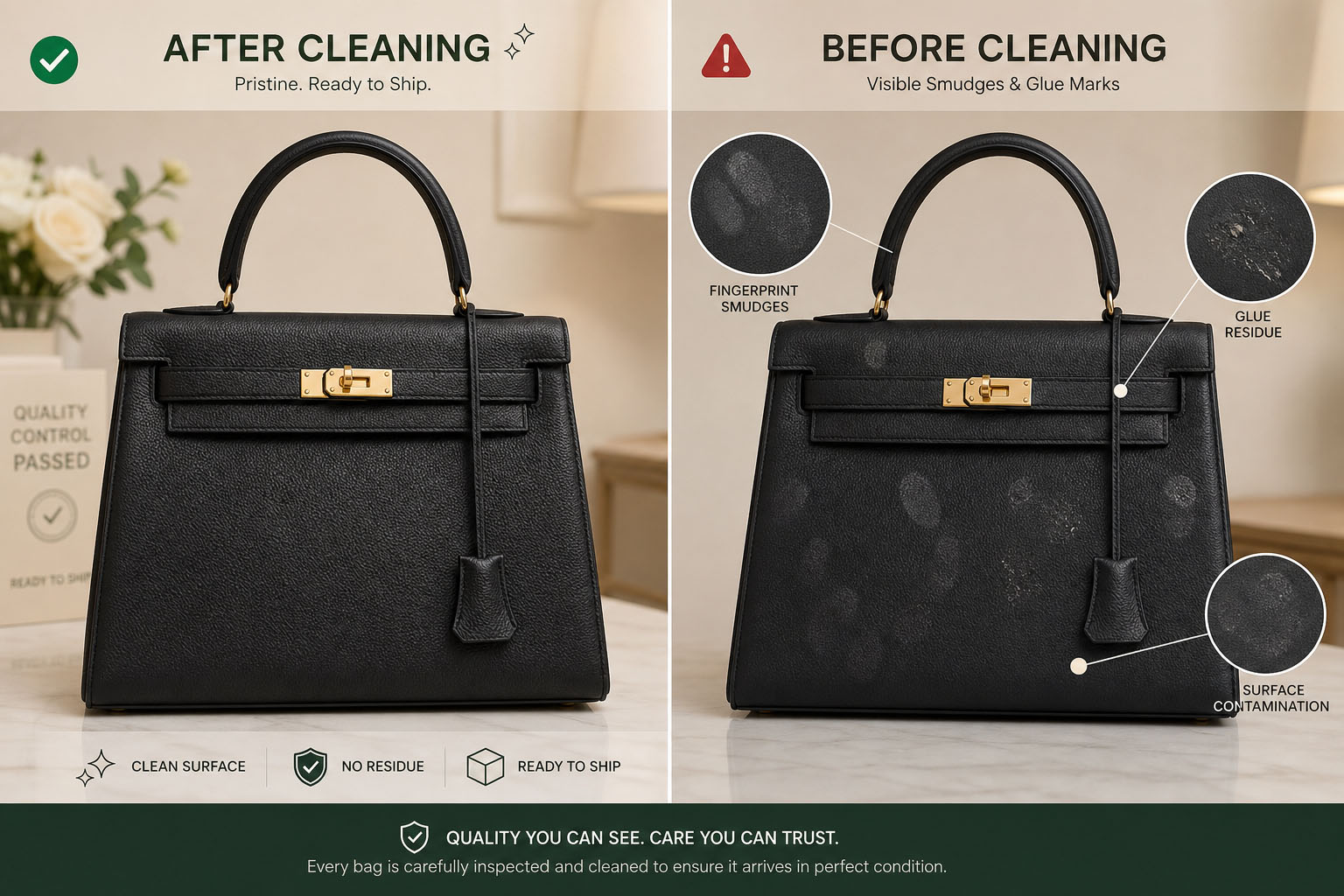
Question 1: Do Manufacturers Actually Remove Oils, Fingerprints & Adhesive Residue Before Shipment?
Yes — reputable Chinese factories do, and here’s the standard process you should expect:
What “Surface Treatment” Really Means in a Chinese Bag Factory
Pre-shipment surface treatment in most well-run facilities typically begins with degreasing using isopropyl alcohol (IPA) or specialized industrial solvents designed to eliminate handling oils and fingerprint residue from every bag surface. This isn’t a luxury step — it’s a baseline quality requirement for any factory that wants to ship to the U.S. or EU without rejections.
After degreasing, final-stage wiping is performed with microfiber cloths and anti-static cleaners to remove any lingering adhesive residue left behind by labels, protective films, packing tape, or barcode stickers. This step is critical because many factories apply stickers, hangtags, or QC passes directly to the bag during production, and that adhesive can ghost-mark the surface if not properly lifted.
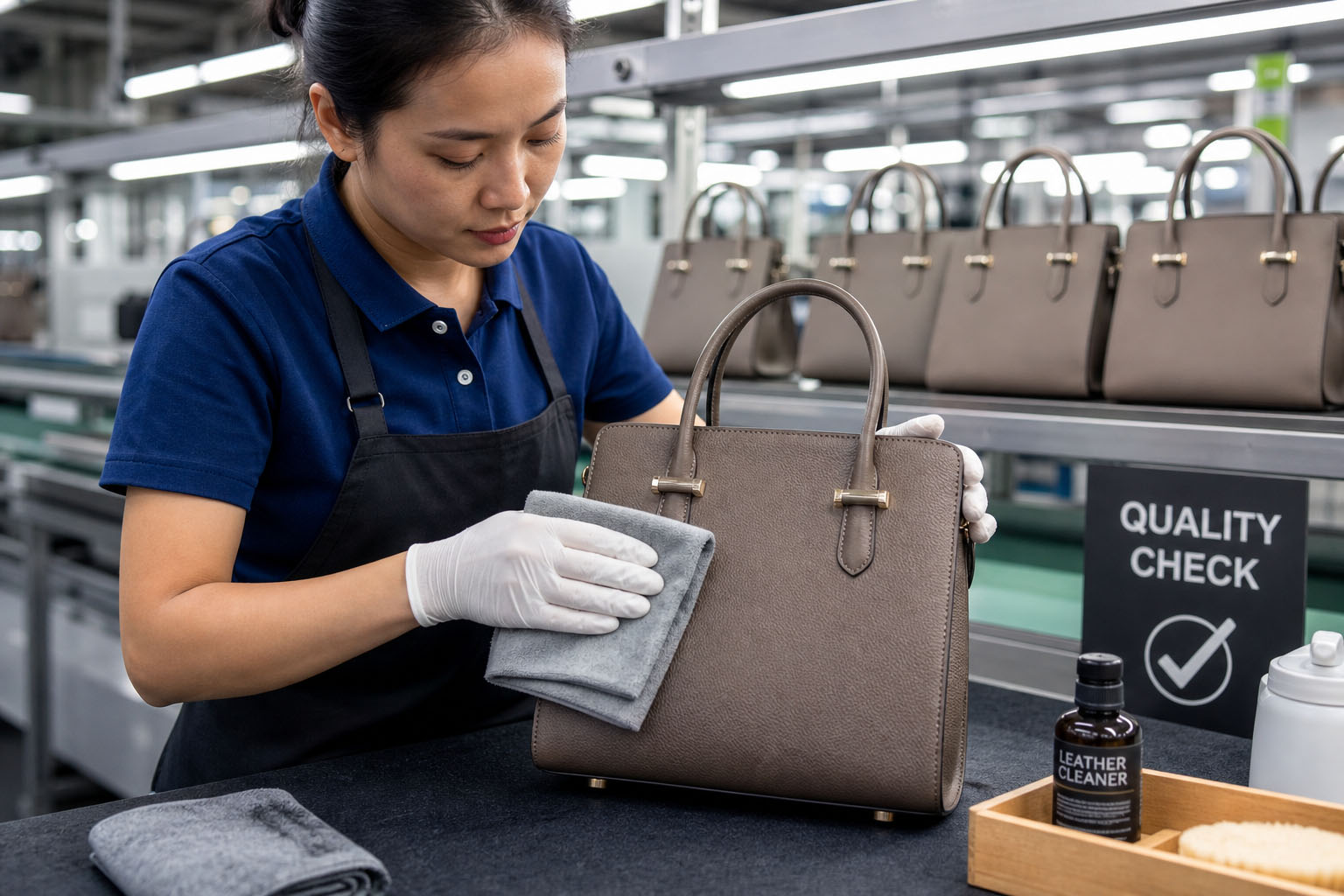
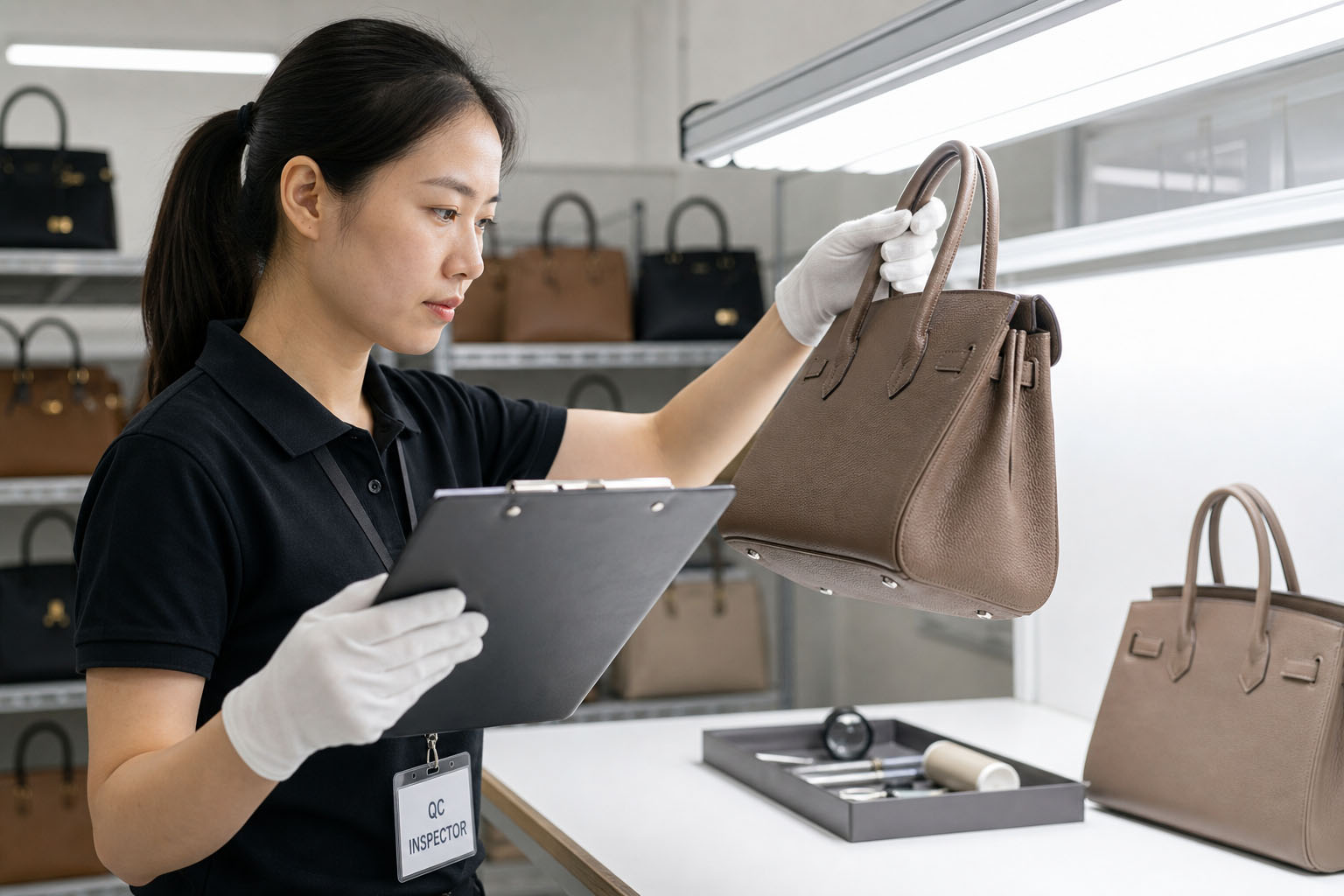
The QC Inspection Step You Should Be Aware Of
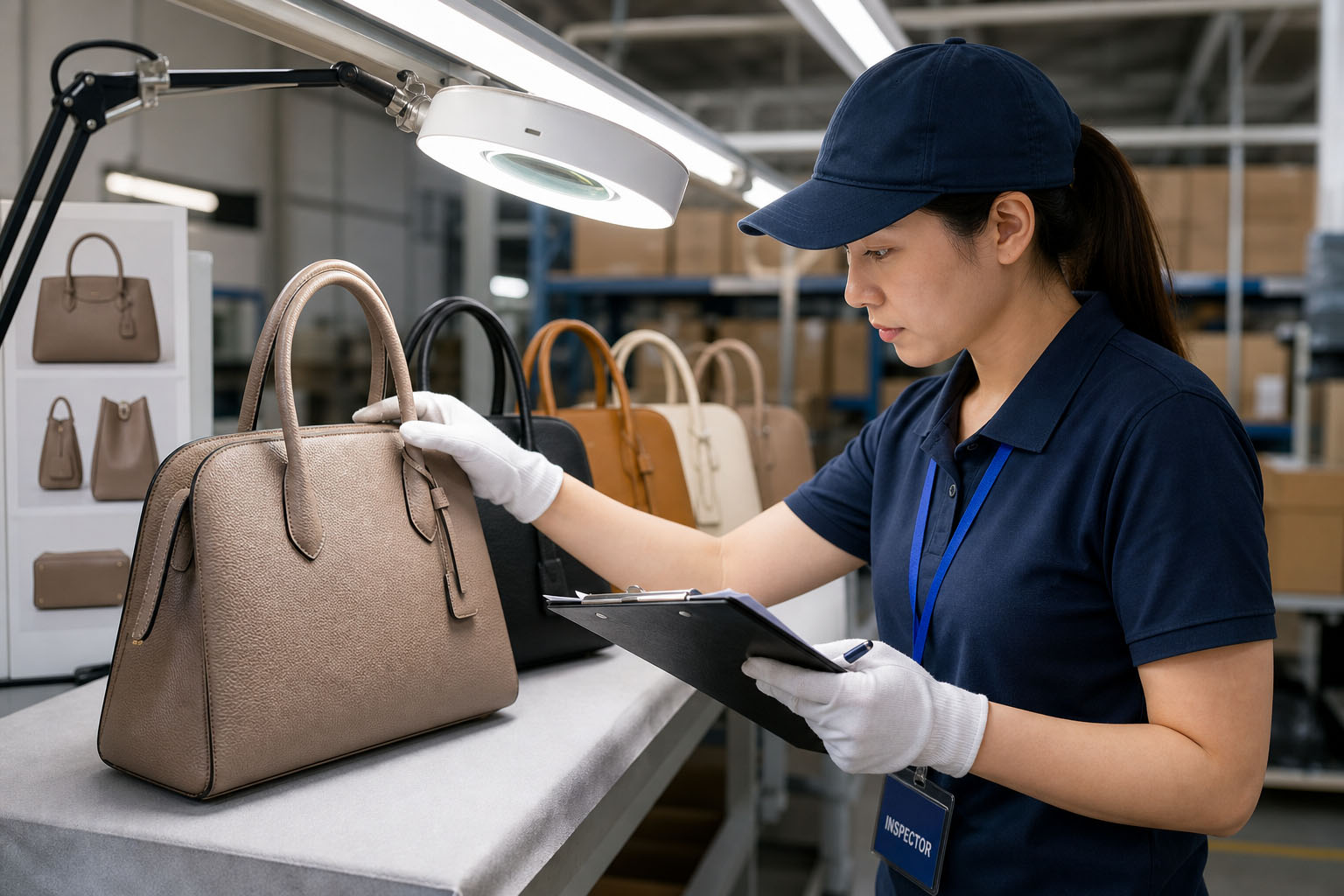
Before any bag goes into its polybag, it should pass a visual QC inspection specifically checking for smudges, fingerprints, and glue marks. Defective units should be re-cleaned, not packed. A factory that packs dirty bags is a factory that doesn’t understand the U.S. retail market.
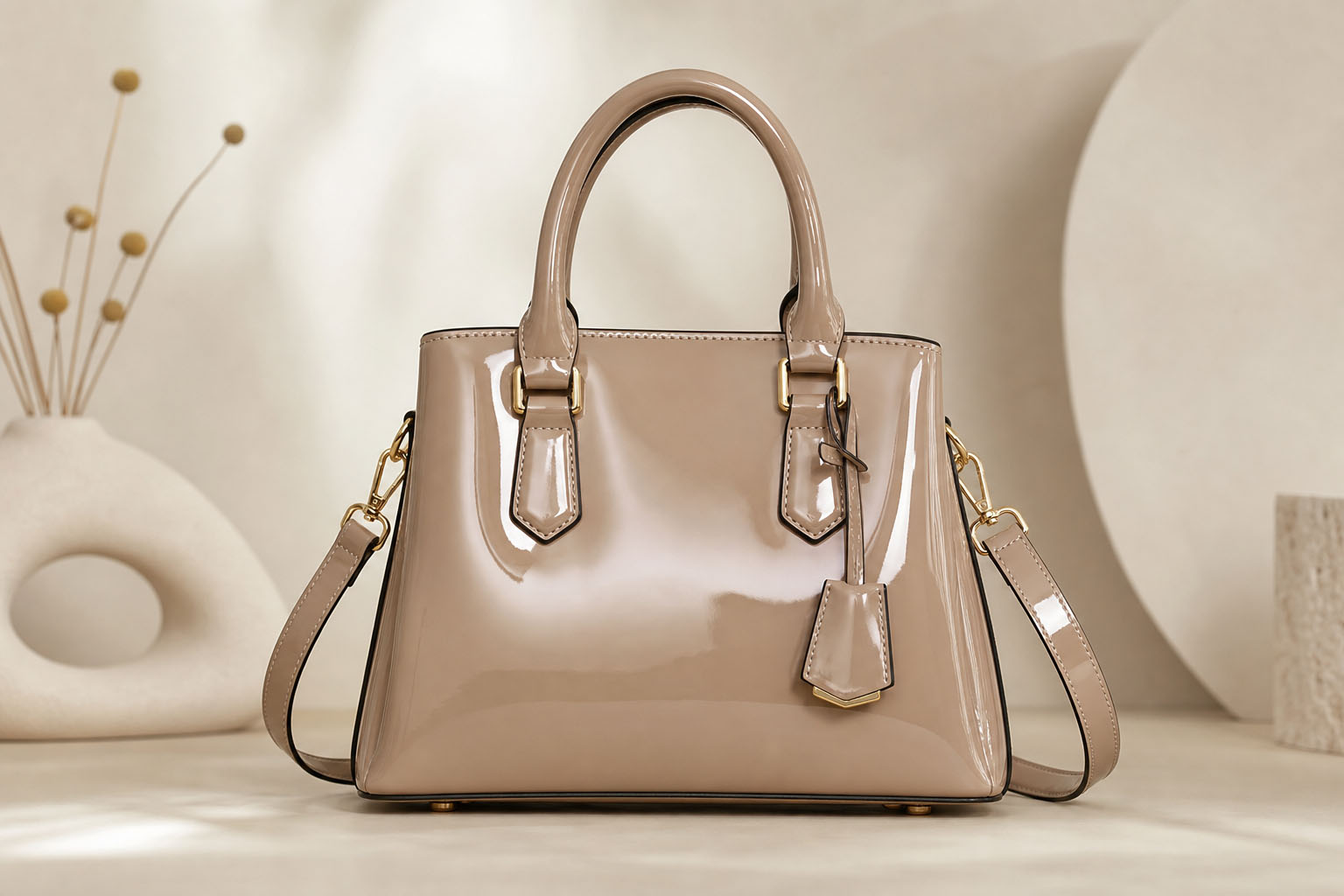
A Note on Leather and PU Bags
For leather and PU (polyurethane) bags, there’s an additional advantage: these materials often undergo a conditioning or coating process that not only protects the surface but actually masks minor surface contaminants while creating a uniform, photo-ready finish. Think of it as a built-in safety net for the cleaning process.
Question 2: Which Cleaning Agents and Techniques Are Safe for Specific Bag Materials?
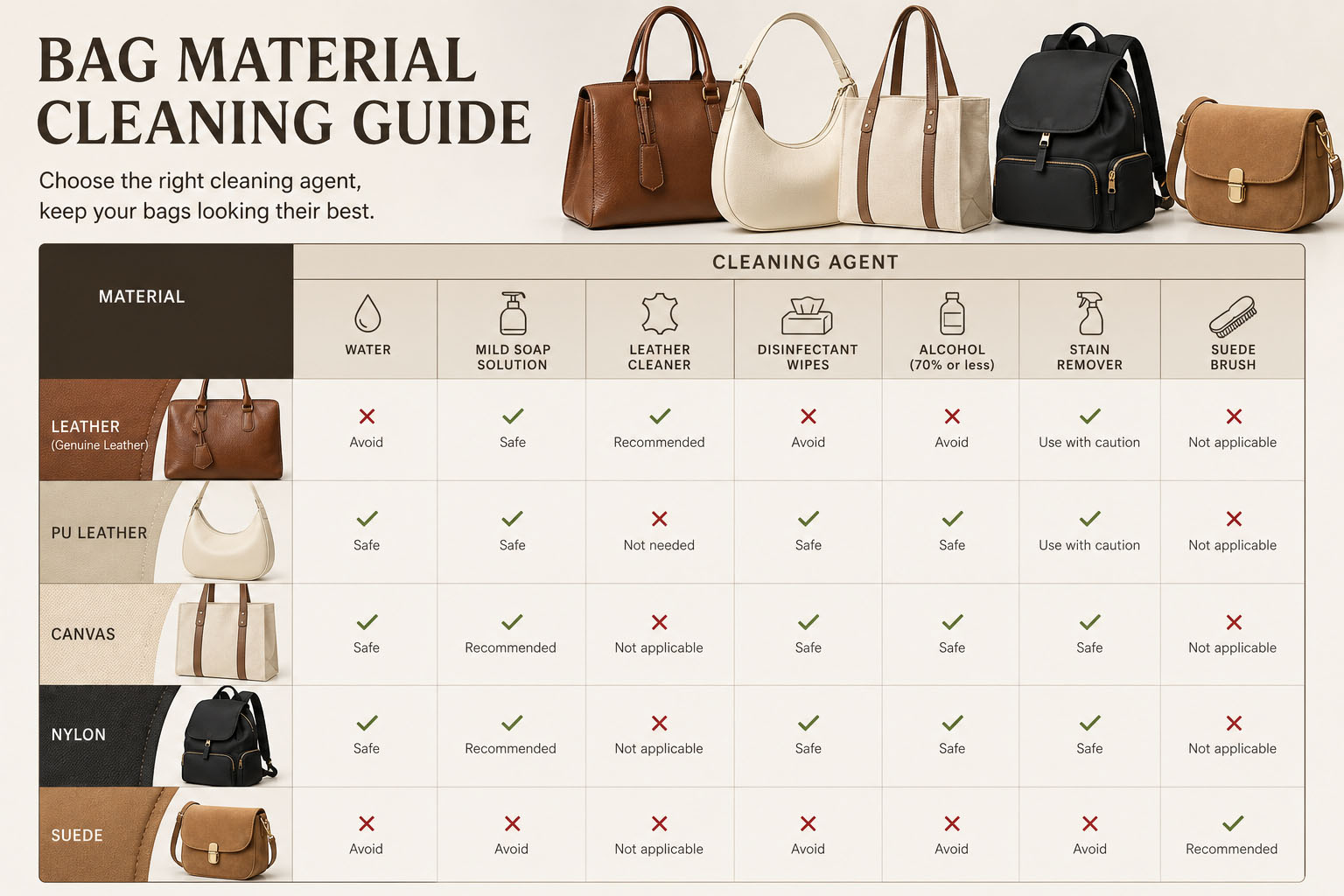
This is the question most buyers forget to ask — and it’s the one that can save you from a catastrophic order. What works on canvas will destroy suede. What strips oils from nylon can leave streaks on patent leather. Here’s your material-by-material breakdown:
Genuine Leather Bags
Safe agents: pH-balanced leather cleaners, mild IPA solutions (diluted), specialty leather degreasers
Technique: Soft microfiber wiping in a single direction; never saturate the surface
Avoid: Harsh solvents (acetone, turpentine), bleach, or any alcohol concentration above 70%
Special note: Genuine leather should be conditioned after cleaning to restore natural oils and prevent cracking
PU / PVC / Faux Leather Bags
Safe agents: Diluted IPA, mild soap solution, anti-static sprays
Technique: Gentle circular wiping with a clean microfiber; air dry before packing
Avoid: Abrasive cleaners, oil-based conditioners (they can soften or discolor the coating)
Special note: PU surface treatments are often baked into the manufacturing process, so post-production cleaning should be minimal and gentle
Canvas, Cotton & Fabric Bags
Safe agents: Mild detergent solutions, water-based spot cleaners
Technique: Spot treatment with a soft brush; avoid soaking unless the bag is pre-washed
Avoid: Solvents of any kind — they’ll leave permanent rings and may damage printing or dye
Special note: Printed or dyed canvas requires extra care to prevent color bleeding
Nylon & Polyester Bags
Safe agents: Mild soap, diluted IPA, anti-static sprays
Technique: Wipe with a barely damp cloth; nylon is forgiving but attracts lint
Avoid: Harsh scrubbing or bleach
Special note: Anti-static treatment is especially helpful because nylon attracts dust in shipping containers
Suede & Nubuck Bags
Safe agents: Specialized suede erasers and brushes only
Technique: Dry cleaning methods; never introduce moisture unless using a suede-specific shampoo
Avoid: Any liquid cleaner, IPA, or conditioner
Special note: This is the highest-risk material for surface marks — insist on glove-wearing handlers
The Follow-Up Questions You Must Ask Your Supplier
After you receive their answer, drill down with these specific questions:
What cleaning method do you use for each material in my order?
Do you use alcohol-based, water-based, or solvent-based cleaning?
Who performs the cleaning — the production line worker or a dedicated cleaning station?
Do you inspect for fingerprints or glue marks before packing?
Can you provide photos or a QC checklist before shipment?
These questions force the supplier to think procedurally — and they signal that you’re a buyer who knows the difference between marketing language and actual factory practice.
Question 3: What Quality Standards Do Chinese Manufacturers Follow for Surface Finishing?
This is where institutional knowledge separates the professionals from the amateurs. China doesn’t have a single national standard for “handbag surface finishing,” but reputable manufacturers follow a combination of:
International Standards Your Supplier Should Know
ISO 9001 — General quality management systems
AQL (Acceptable Quality Limit) sampling — Used for visual defect inspections, including surface cleanliness
REACH & CPSIA compliance — For chemical safety (relevant because some cleaning agents must be non-toxic)
Buyer-specific QC protocols — Many large retailers like Target, Walmart, and major department stores have their own surface-cleanliness standards
What “Good” Looks Like in Practice
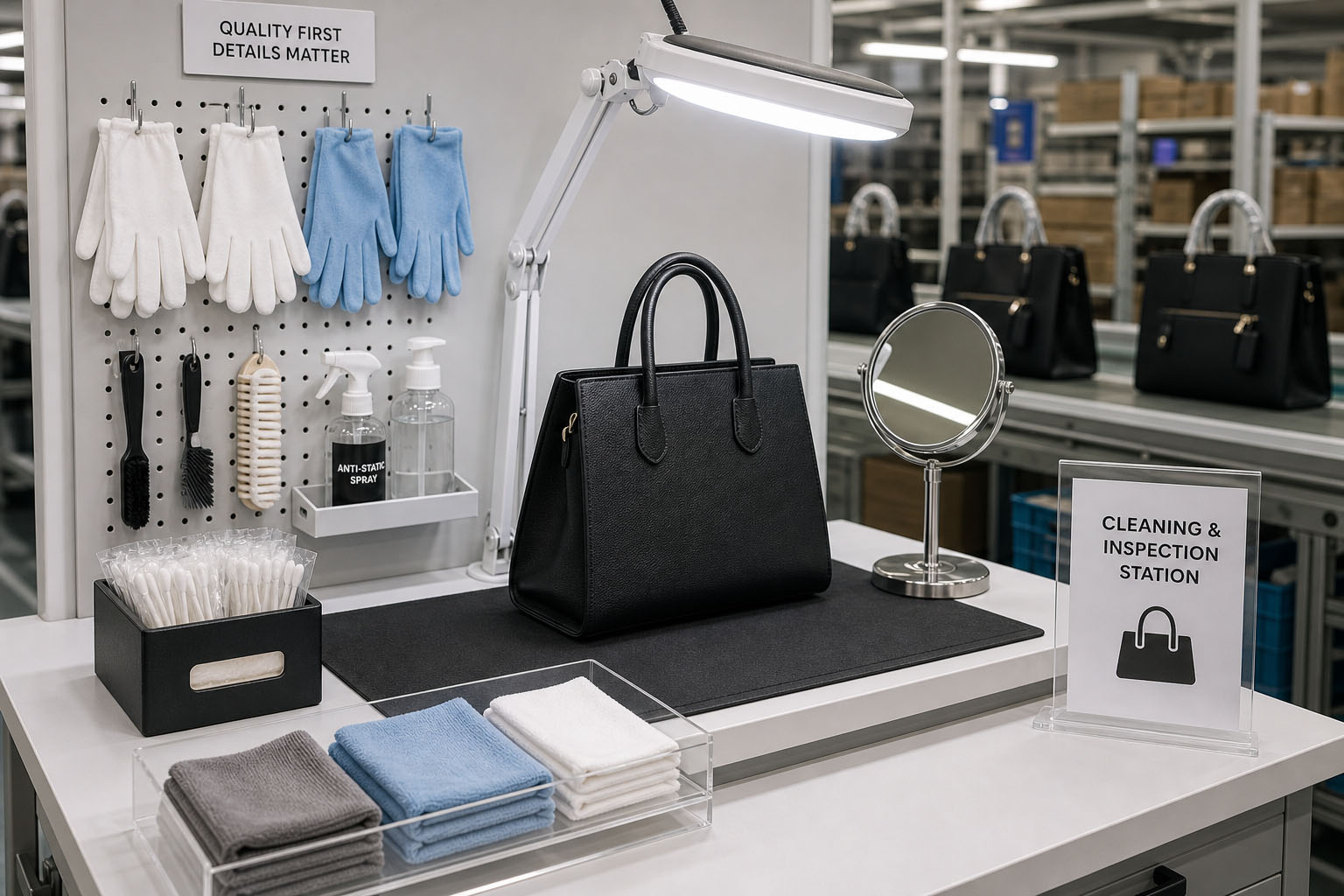
A factory with mature surface-finishing standards will have:
A dedicated cleaning station separate from the production line
Workers wearing cotton gloves during the final handling stages
A documented cleaning SOP (Standard Operating Procedure) for each material
Inspection lighting specifically designed to reveal fingerprints and smudges
A rework loop for bags that fail the visual cleanliness check
The Hidden Risk: Humidity
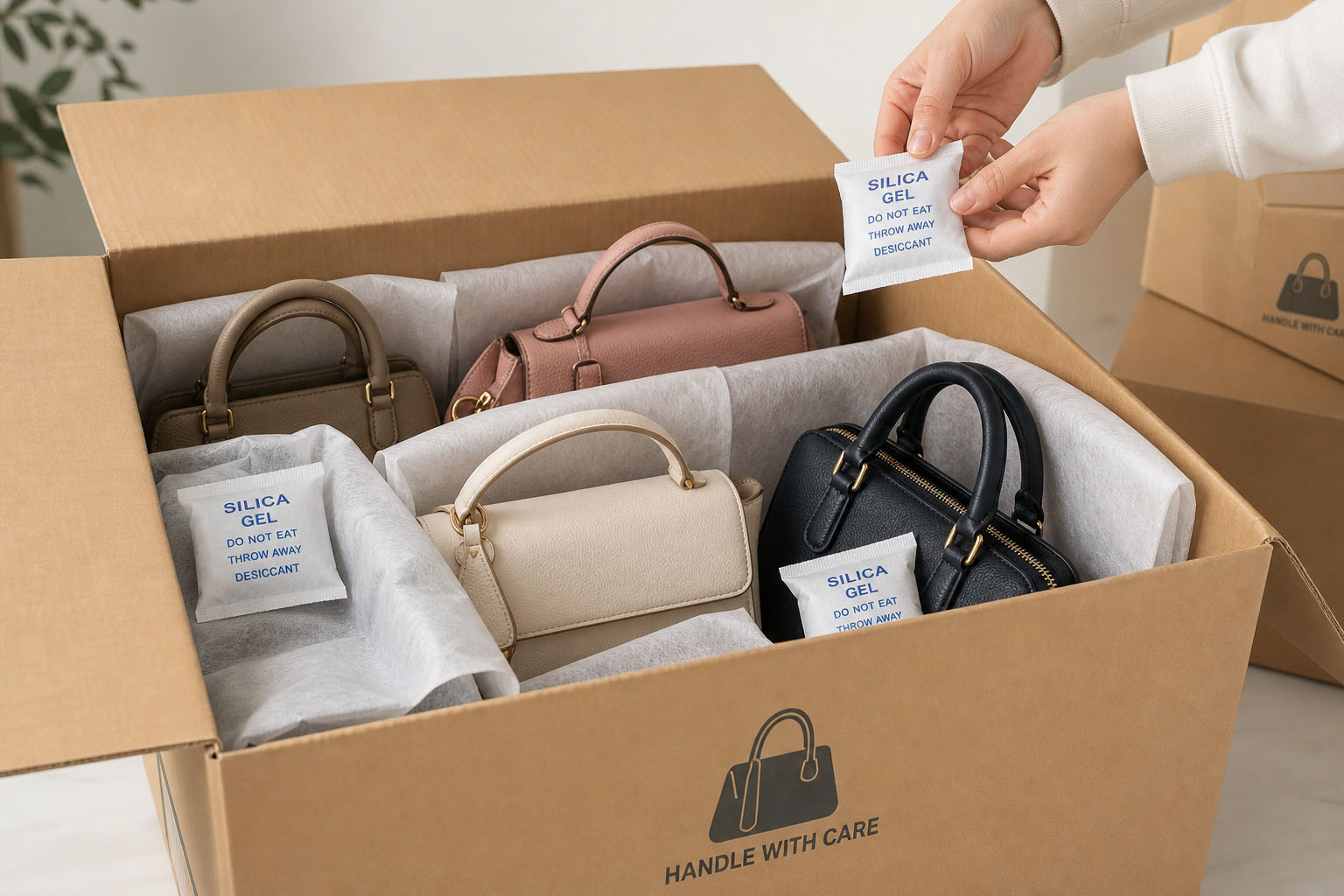
Here’s something most Western buyers never consider — bags stored in humid warehouses are far more prone to sticky adhesive residue. Humidity reactivates old adhesive from removed labels, making the surface tacky and dusty-attracting. The fix is simple but often overlooked: sealing cartons with silica gel packets minimizes this risk during ocean freight, which can take 25-40 days from Shenzhen to Los Angeles.
Question 4: How Should Bags Be Packaged to Prevent Oils, Fingerprints, and Residue During Shipping?
Even the cleanest bag can be ruined by poor packaging. Here’s the packaging hierarchy I require from every Chinese supplier I work with:
The Non-Negotiable Basics
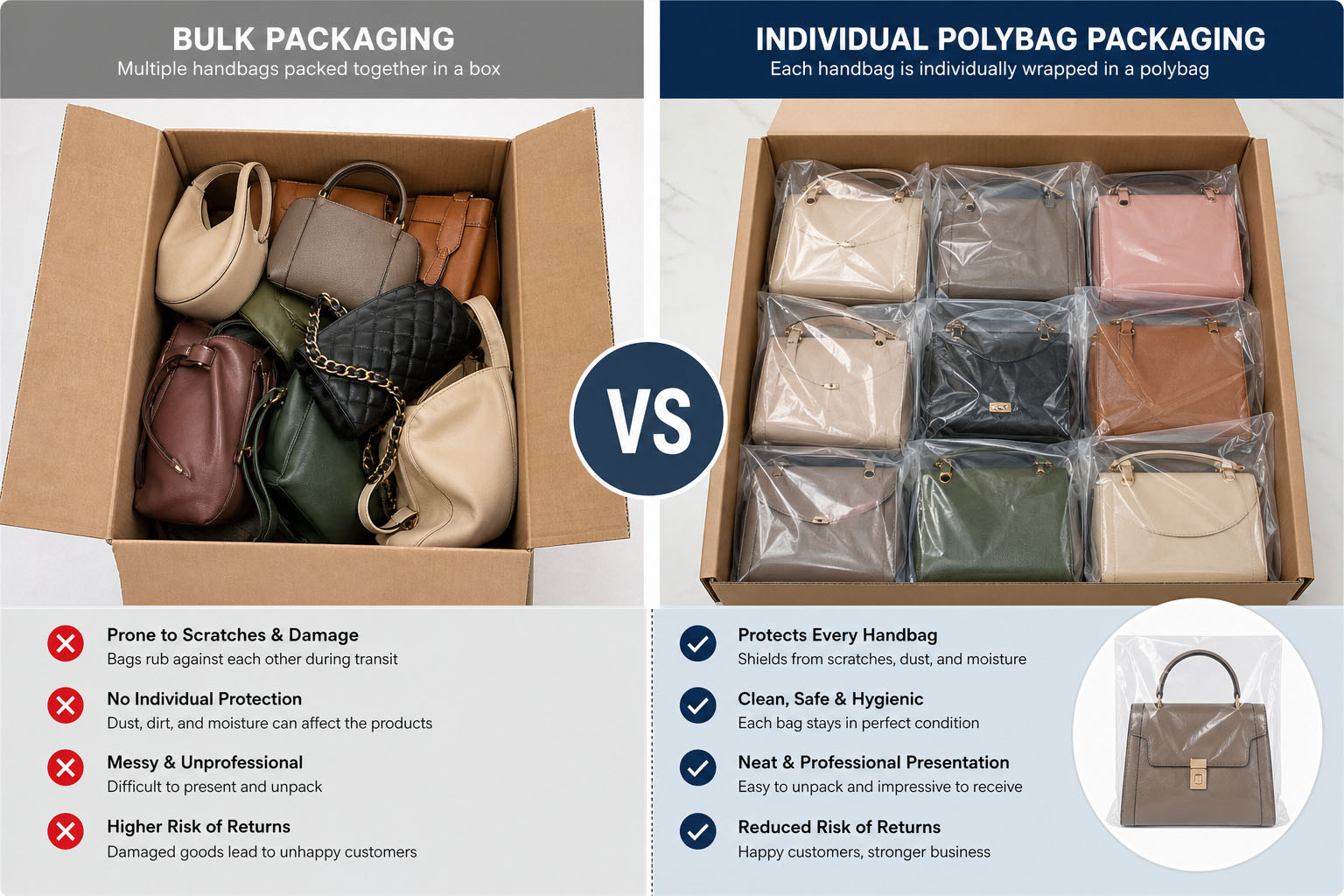
1. Individual polybag wrapping — Each bag in its own clear polybag to prevent direct contact between units
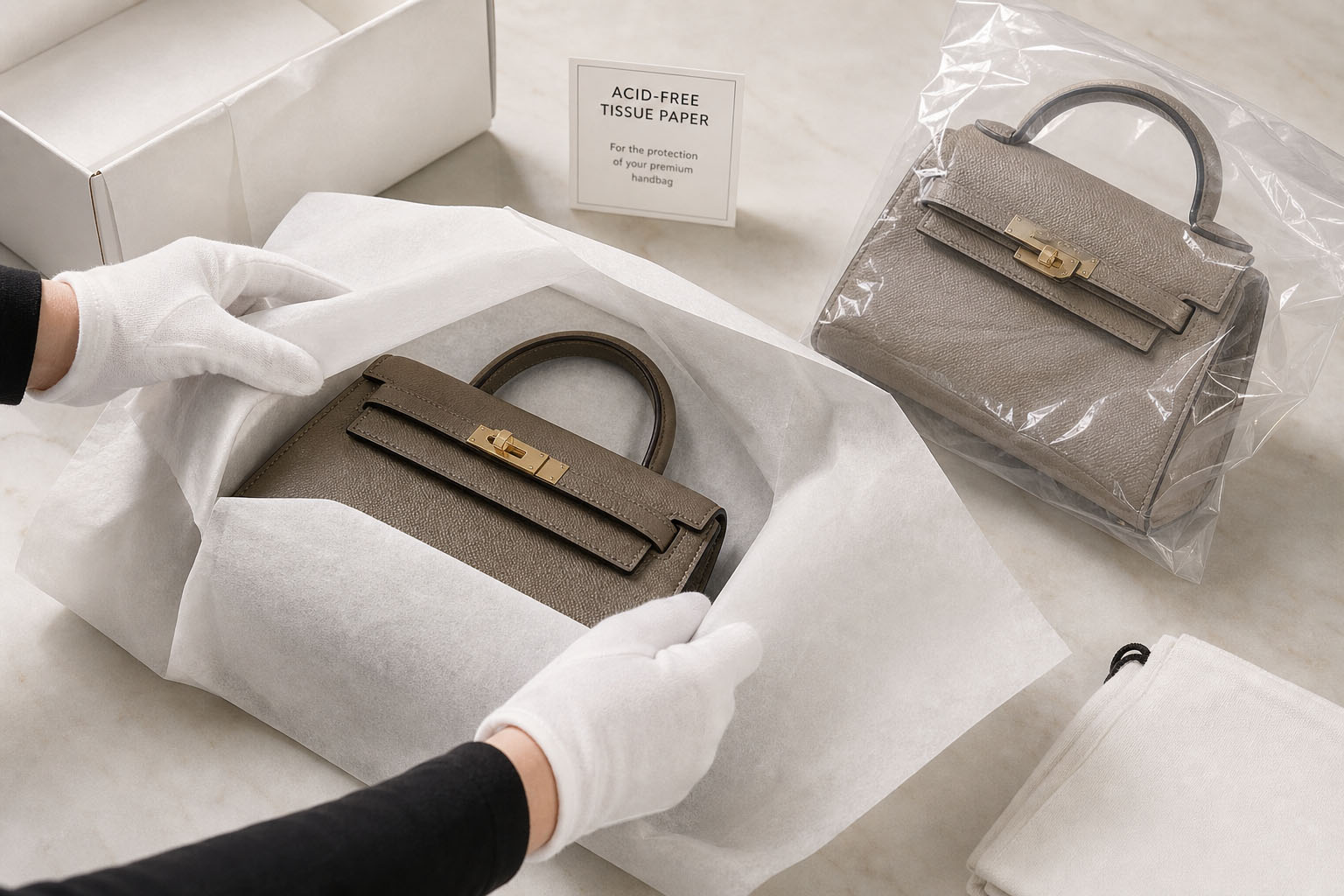
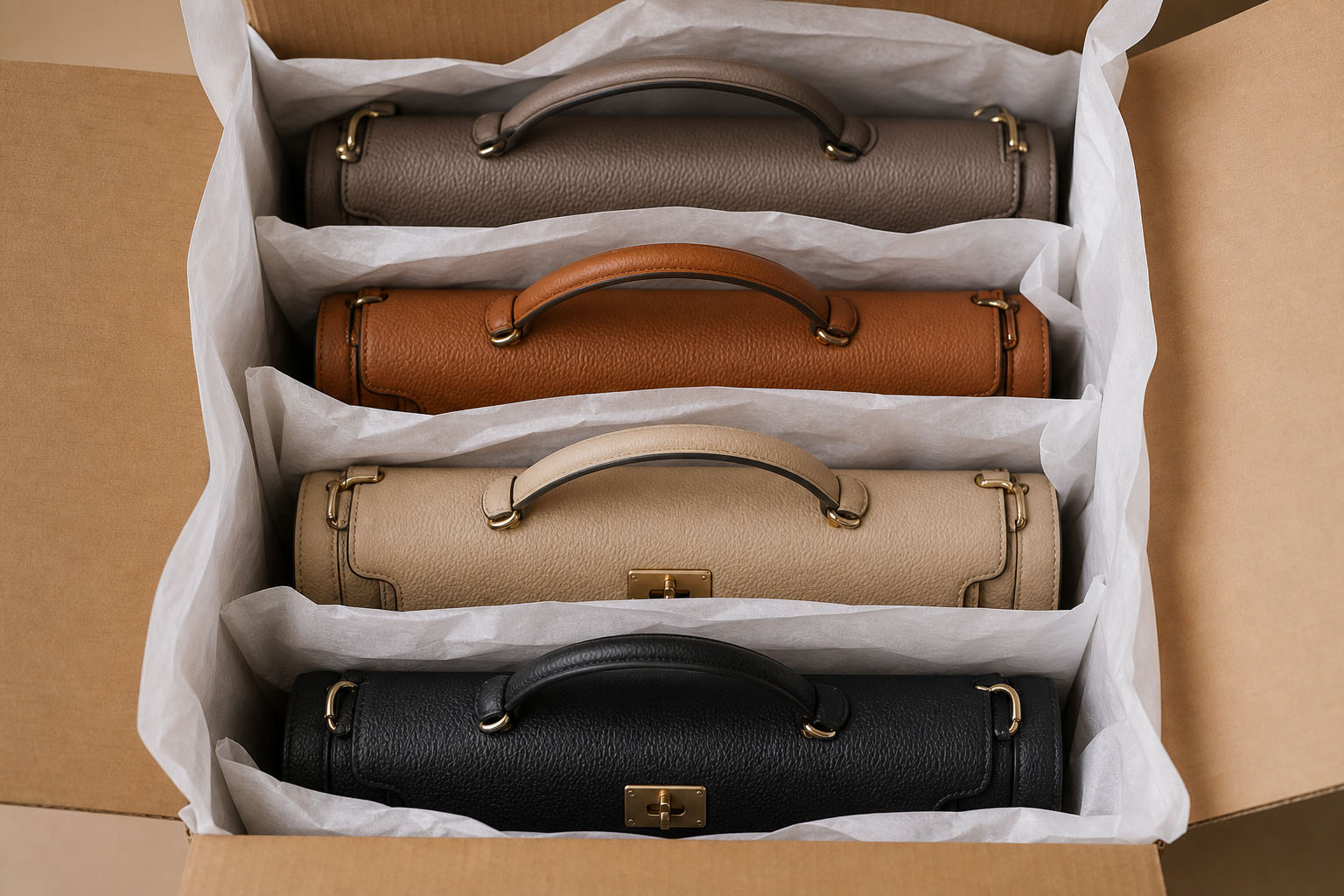
2. Tissue paper lining — Acid-free tissue paper between bag and polybag to prevent dye transfer
3. Silica gel packets — Especially for ocean freight to humidity-sensitive regions
4. Glove-wearing handlers — For premium leather and suede orders, workers must wear clean cotton gloves during the packing process
5. Bubble wrap or foam corners — For structured bags (briefcases, hard-case backpacks) to maintain shape
Premium vs. Standard Packaging Protocols
For standard orders, the polybag + silica gel + master carton combo is sufficient.
For premium leather orders — anything above the $50 retail price point — I insist on acid-free tissue paper between bags to prevent dye transfer and oil absorption from hands during packing. This single addition has dramatically reduced my returns for “mysterious stains” that turned out to be handler-induced oil marks.
Why Bulk-Packed Bags Are a Risk
Let me be direct: bulk-packed bags may still show handling marks when they reach your warehouse. If your supplier defaults to throwing 20 bags into a single plastic sack with no internal separation, your fingerprint and oil transfer problems will start at the factory and multiply with every worker who handles the carton. Requesting individual polybag wrapping or tissue paper lining reduces fingerprint and oil transfer during transit — and it’s a low-cost upgrade that pays for itself many times over.
Question 5: How Can Buyers Specify and Verify Surface Treatment Requirements with Chinese Suppliers?
This is where most buyer-supplier relationships fall apart — not because the factory can’t deliver, but because the buyer never put the requirements in writing. Here’s my exact playbook:
Step 1: Put It in the Purchase Order
Specifying “cleaning prior to shipment” in your purchase order holds suppliers accountable for removing residues before export packaging. Don’t bury it in a general “QC requirements” section. Call it out as a separate line item:
“Each unit must undergo final surface treatment (degreasing, fingerprint removal, adhesive residue removal) using material-appropriate cleaning agents. Cleaning must occur after all labels, hangtags, and protective films are removed and before individual polybag packaging.”
Step 2: Request Photo Documentation
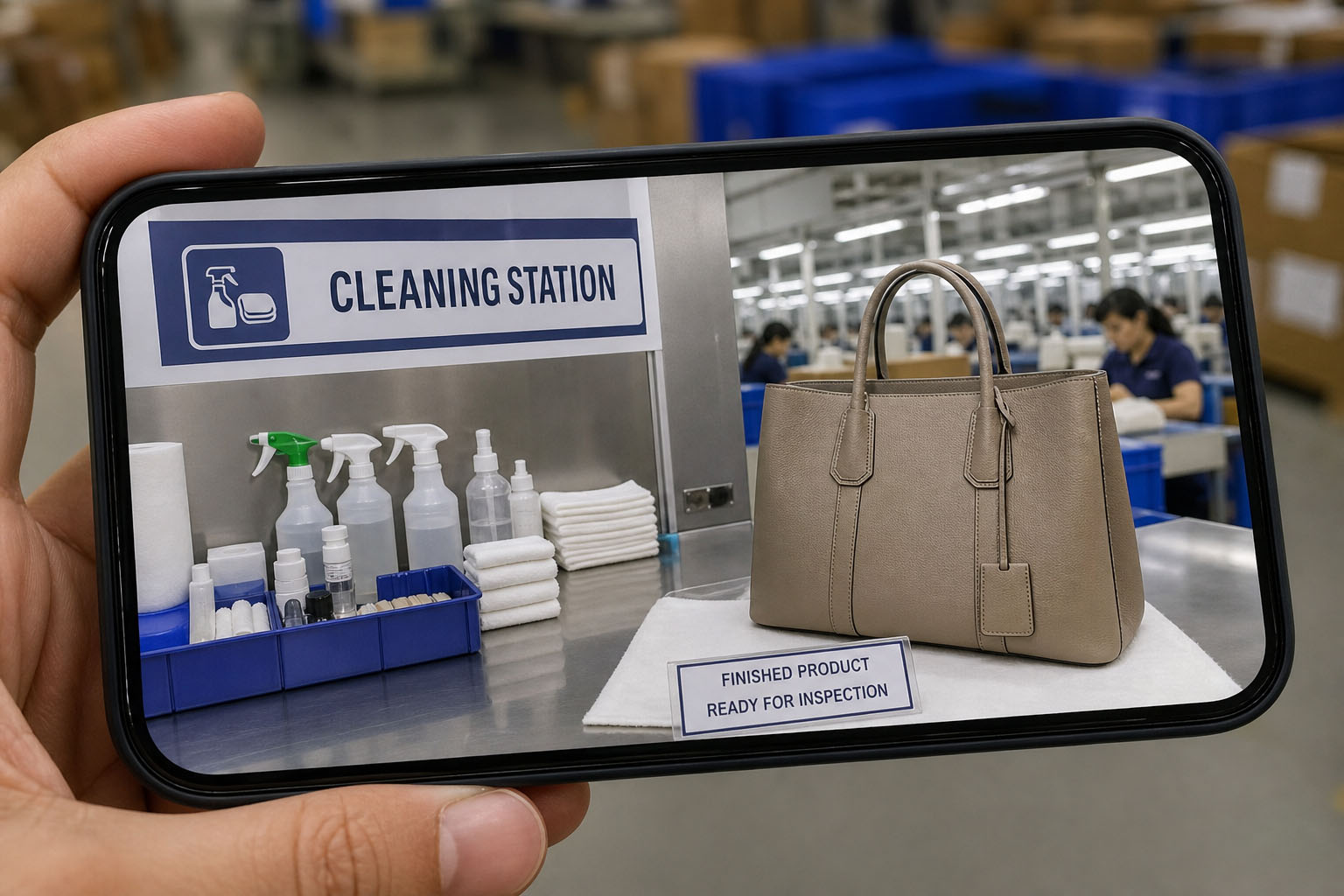
Requesting factory photos of the cleaning station and finished goods before container loading helps verify that surface treatment protocols are actually followed. Specifically ask for:
A photo of the cleaning station with materials visible
A photo of a random sample bag after cleaning, before polybag
A photo of the packed master carton interior
A short video of the cleaning process if possible
Step 3: Use Third-Party Inspection Services
This is the move that separates serious importers from hobbyists. Third-party inspection agencies in China (e.g., QIMA, SGS, AsiaInspection) offer specific “cleanliness and surface defect” add-on checks that flag fingerprint, oil, and adhesive issues against AQL standards. The cost is typically $200-$400 per inspection — a fraction of the cost of receiving a contaminated 5,000-unit order.
When booking the inspection, specifically request the “Surface Cleanliness Add-On” and provide them with reference photos of what you consider acceptable vs. unacceptable.
Step 4: Build It Into Your Annual Quality Review
If you’re ordering 3+ times per year from the same factory, your cleaning protocol should be a standing item in your quarterly business review. Suppliers respect buyers who track these metrics — and they’ll prioritize your orders accordingly.
The Buyer’s Quick-Reference Checklist
Before you place your next bag order from China, run through this list:
✅️Cleaning agent question — Have you confirmed which cleaning agents will be used for each material?
✅️ Material-specific SOP — Have you received a written cleaning procedure for leather, PU, canvas, nylon, and suede separately?
✅️QC inspection protocol — Is there a documented visual cleanliness check with defined pass/fail criteria?
✅️ Packaging specifications — Have you specified individual polybag + tissue paper + silica gel for each order?
✅️Glove handling — Have you required glove-wearing handlers for premium or light-colored bags?
✅️Photo verification — Will your supplier send cleaning station and finished goods photos before container loading?
✅️ Third-party inspection — Have you booked a surface cleanliness add-on with QIMA, SGS, or AsiaInspection?
✅️ PO language — Is “cleaning prior to shipment” explicitly written into your purchase order?
Final Thoughts: Surface Treatment Is Not a Luxury — It’s a Competitive Advantage
Here’s what I’ve learned after importing over 200,000 bags from China across the past decade: the difference between a $20 handbag and a $50 handbag in the customer’s mind is almost entirely surface quality. Stitching, hardware, and material matter — but the first 3 seconds of customer perception are driven by shine, cleanliness, and finish.
When you take the time to specify, verify, and enforce surface treatment protocols with your Chinese suppliers, you’re not just preventing defects. You’re building a brand that customers trust on first contact. You’re reducing returns, eliminating negative reviews, and creating a product that photographs beautifully in your Shopify listings, Amazon A+ content, and Instagram ads.
The cleaning step is invisible to your customer — and that’s exactly the point. When it’s done right, nobody notices. When it’s done wrong, everybody notices.
Make it invisible. Make it a system. Make it part of your supplier contract today.
Have questions about a specific bag material, supplier negotiation, or QC workflow? Drop them in the comments below — I answer every reader question personally.
Post time: Jul-23-2026