
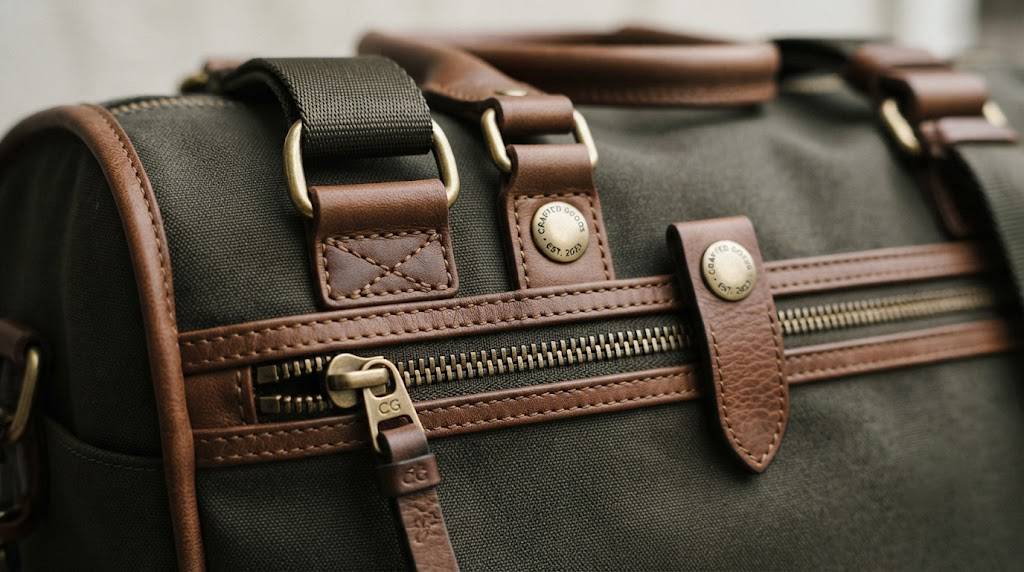
Premium bag hardware is the difference between a product that lasts decades and one that returns to your warehouse after three months.
Why This Guide Matters for Your Bag Business
If you are a US-based bag brand sourcing directly from Chinese manufacturers, you already know that hardware is the soul of a bag. Consumers may forgive imperfect stitching or a slightly off-color fabric, but a zipper that jams on day one, a buckle that pops open under load, or a D-ring that snaps off the strap will generate returns, negative reviews, and chargebacks faster than almost any other defect.
As a bag buyer, asking your supplier the right questions about hardware function testing is not just a quality control step — it is a brand protection strategy. The reality is that most defective bags returned to US e-commerce sellers trace their failure back to one of three things: a broken zipper, a loose rivet, or a corroded metal fitting. None of these failures are visible in a product photo, and most of them are preventable with the right testing protocols at the factory level.
This guide consolidates the ten most critical quality insights every bag importer should demand from Chinese suppliers, the AQL inspection standards professional buyers apply, and the US safety regulations that govern metal hardware on imported bags. Use it as your standard reference when evaluating new suppliers, auditing existing ones, and writing your own QC specifications.
Part 1: What Hardware Function Testing Actually Covers
When a serious bag supplier tells you they perform “hardware function testing,” they should be able to demonstrate — not just claim — that all four major categories of hardware have been individually verified for performance. Below are the four core components.
1. Zippers: Smooth Gliding, No Snagging, No Separation
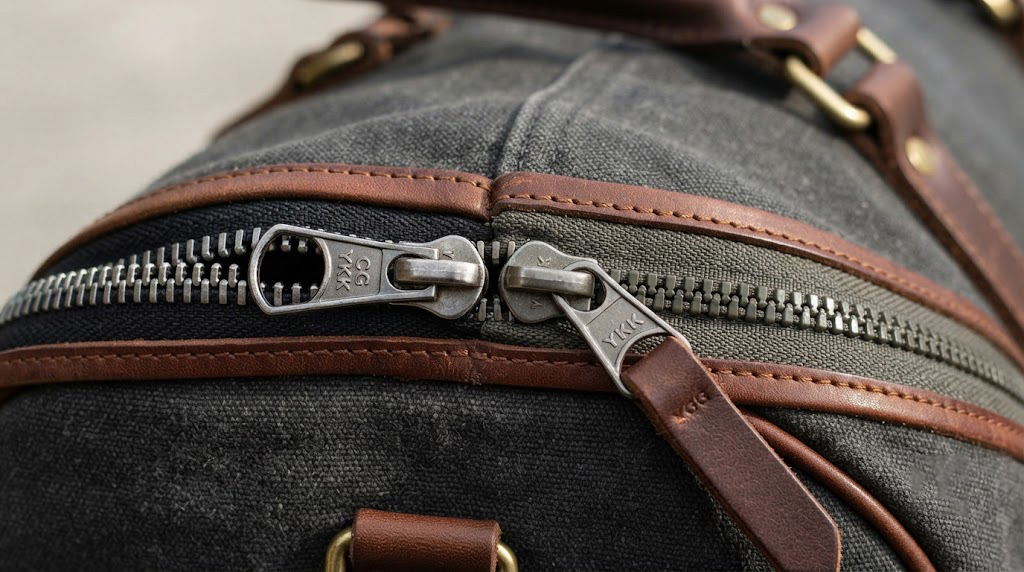
Zippers are the most failure-prone component on virtually every bag category — backpacks, handbags, luggage, laptop bags, and totes. A proper function test verifies that the zipper slider glides smoothly along the chain in both directions, the teeth or coil interlock correctly without gaps, and the pull tab does not detach under tension. For double-pull zippers (common on luggage and duffels), both sliders must be tested independently and in tandem.
The industry standard for repeat-cycle testing is 500 to 1,000 open-close cycles per zipper, simulating roughly 1–2 years of normal consumer use. YKK, the world’s largest zipper manufacturer, publishes its own internal test methods that most reputable bag factories follow as a benchmark.
2. Snap Closures: Spring Tension and Engagement Force
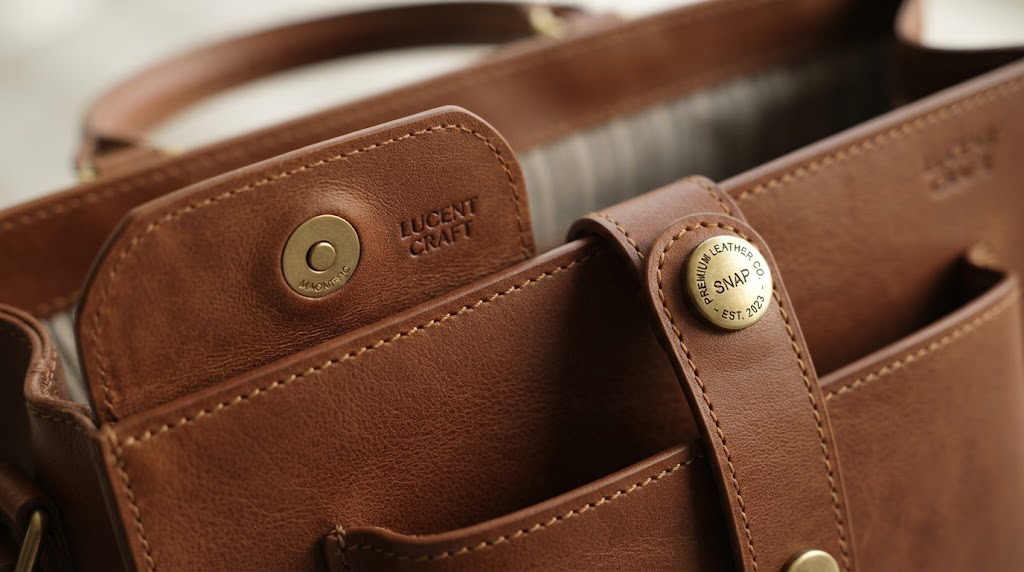
Snap closures — both metal press studs and magnetic snaps — must be tested for spring tension consistency and engagement force. The snap should fasten with a clear, audible “click” that confirms secure closure, but should release with reasonable force, not require a tool to open. Deformation after repeated fastening is a common defect on cheap snaps and indicates low-grade spring steel.
For magnetic snaps, suppliers should test the magnetic pull strength (typically measured in grams) to ensure it does not weaken after 500+ cycles. Magnetic snaps that lose 30% or more of their pull force after testing should be rejected.
3. Buckles: Load Capacity and Locking Reliability
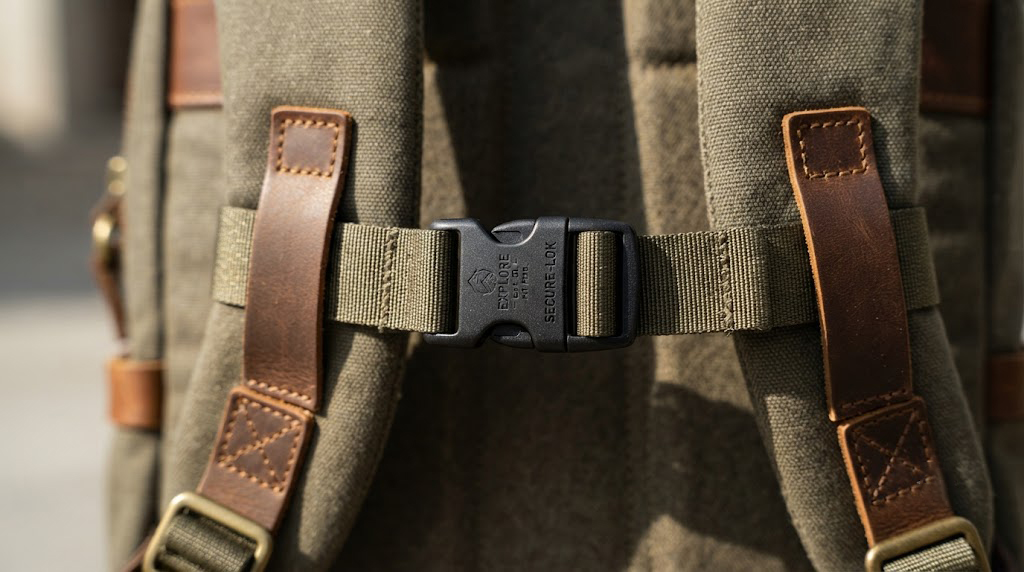
Buckles — particularly side-release buckles on backpacks, messenger bags, and tactical bags — should undergo load testing and release testing. The buckle must withstand the specified weight capacity (commonly 30–50 kg for standard backpacks) without cracking, deforming, or releasing under load. The release mechanism should be intentionally difficult to trigger accidentally but easy to operate intentionally.
A common failure on cheaper buckles is stress cracking at the spring point after repeated flexing, or the male/female sides failing to lock fully when engaged at speed. Both are caught only with a physical function test, not a visual inspection.
4. Strap Adjusters: Smooth Sliding and Holding Strength
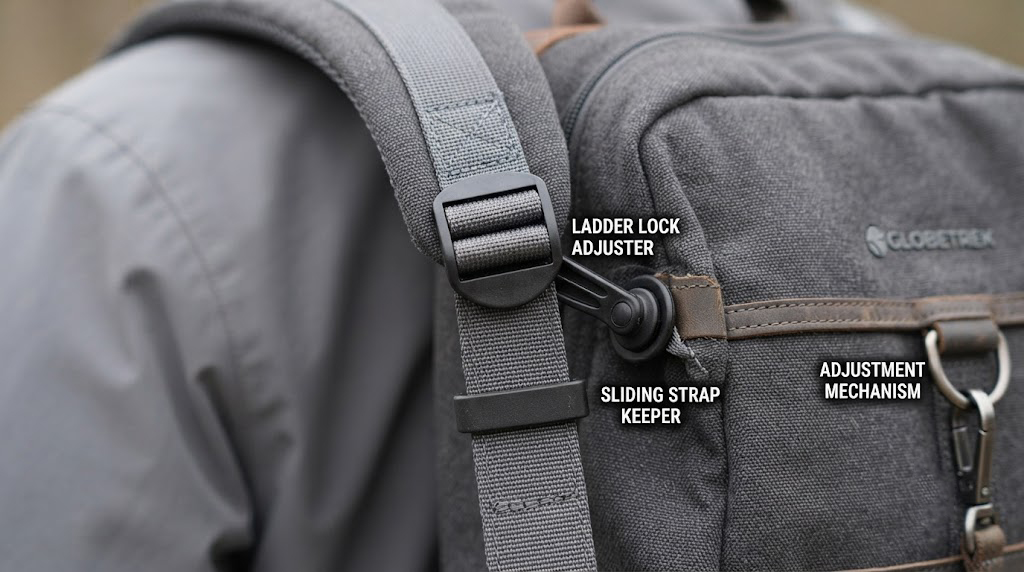
Adjusters (also called sliders or tri-glides) control strap length on shoulder bags, backpacks, and crossbody bags. A proper test confirms that the strap slides smoothly through the adjuster under tension but holds position firmly once set. The most common defect is an adjuster that lets the strap slip during carry — a frustrating user experience that leads to returns and 1-star reviews.
Suppliers should also test the adjuster’s holding strength by applying a static load (typically 5–10 kg) for a defined period and verifying the strap does not creep or slip.
Part 2: Quality Tests Your Bags Must Pass Beyond Hardware Function
Hardware function testing is necessary but not sufficient. A complete bag quality program covers materials, construction, and finishing alongside the moving parts. Here are the additional tests every supplier should perform.
5. Corrosion Resistance for All Metal Hardware
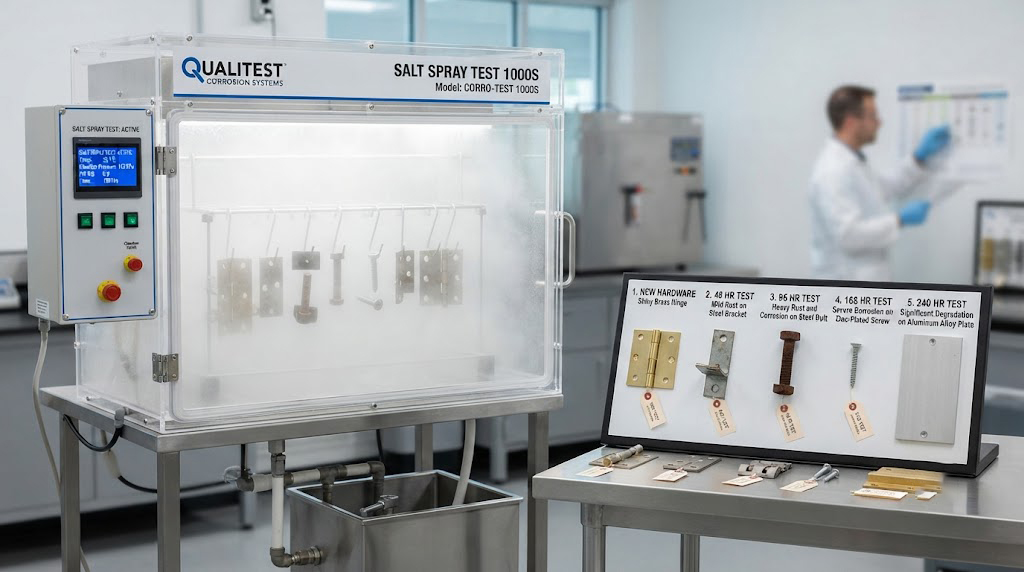
Any metal hardware on a bag — zippers, buckles, rivets, D-rings, logo plates, feet, key hooks — must pass corrosion resistance testing before shipment. The industry standard is the salt spray test (ASTM B117 or ISO 9227), where hardware samples are exposed to a saline mist for a defined period (typically 24, 48, or 96 hours depending on the spec) to simulate months or years of exposure to humidity, sweat, and rain.
Bags that fail this test show rust, tarnishing, pitting, or finish degradation within weeks of consumer use — a particularly damaging defect for premium and leather goods where buyers expect longevity. For plated hardware (nickel, chrome, antique brass, gunmetal), the test also verifies that the plating does not flake, peel, or discolor.
6. Hardware Attachment Strength
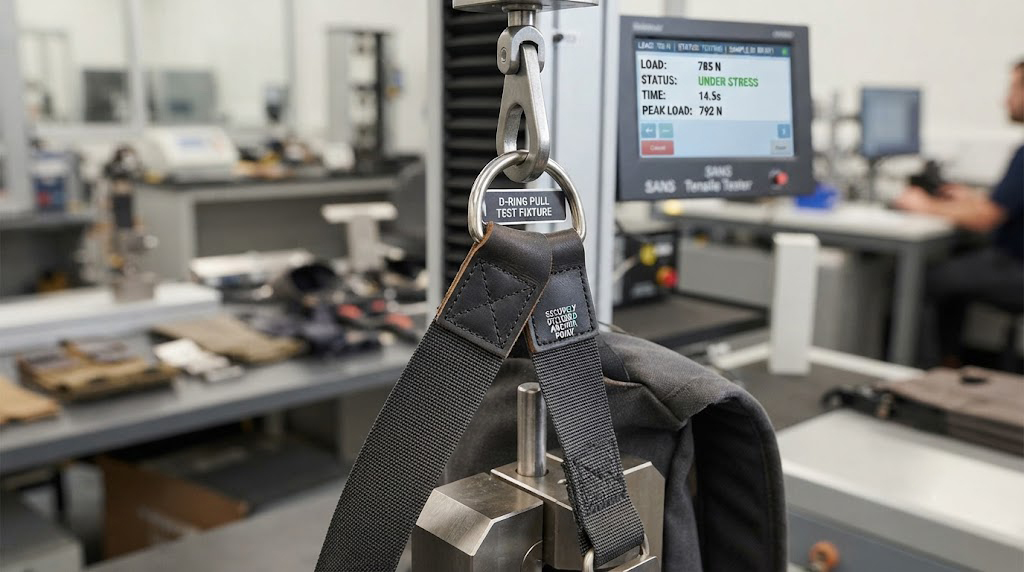
Hardware is only as good as the way it is attached to the bag. Pull-strength testing verifies that rivets, D-rings, O-rings, snap hooks, and shoulder strap connectors remain firmly secured to the bag material under stress. The test uses a calibrated pull gauge to apply force perpendicular to the attachment point until failure, with documented minimum thresholds (typically 20–50 kg depending on the hardware type and bag category).
Common attachment defects include loose rivets, popped stitching around D-rings, and sewn loops that tear out under load. These are the failures that lead to bags literally falling off customers’ shoulders — and the resulting refund requests.
7. Regulatory Compliance Testing for the US Market
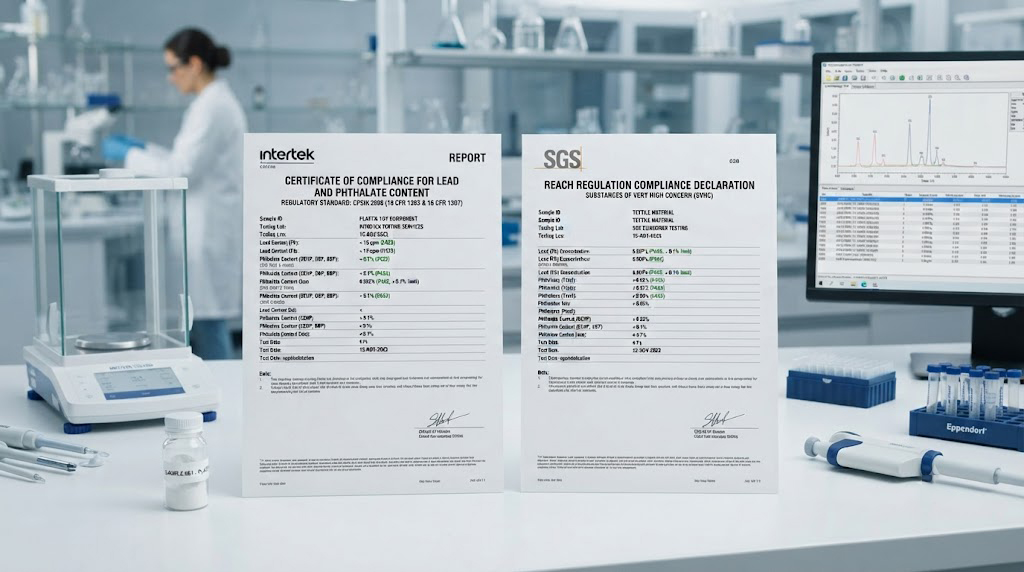
For bags sold in the United States, hardware and trim must comply with several federal and state-level regulations. The two most important are:
CPSIA (Consumer Product Safety Improvement Act) — restricts lead content in metal hardware and phthalates in any plastic or coated components, especially for bags marketed to or used by children.
REACH compliance — for hardware containing substances regulated under the EU’s REACH framework, even when selling into the US, because REACH-restricted substances are increasingly being mirrored in US state laws (notably California’s Prop 65).
Reputable suppliers should be able to provide third-party test reports (from SGS, Intertek, Bureau Veritas, or TÜV) confirming that hardware is lead-free, cadmium-free, and nickel-release compliant within the thresholds set by CPSIA and Prop 65.
Part 3: How Chinese Suppliers Actually Test Durability and Corrosion Resistance
Understanding how a Chinese supplier conducts their internal QC testing helps you evaluate the depth of their program. The best factories run tiered testing at multiple stages.
8. Cycle Testing on Zippers and Buckles
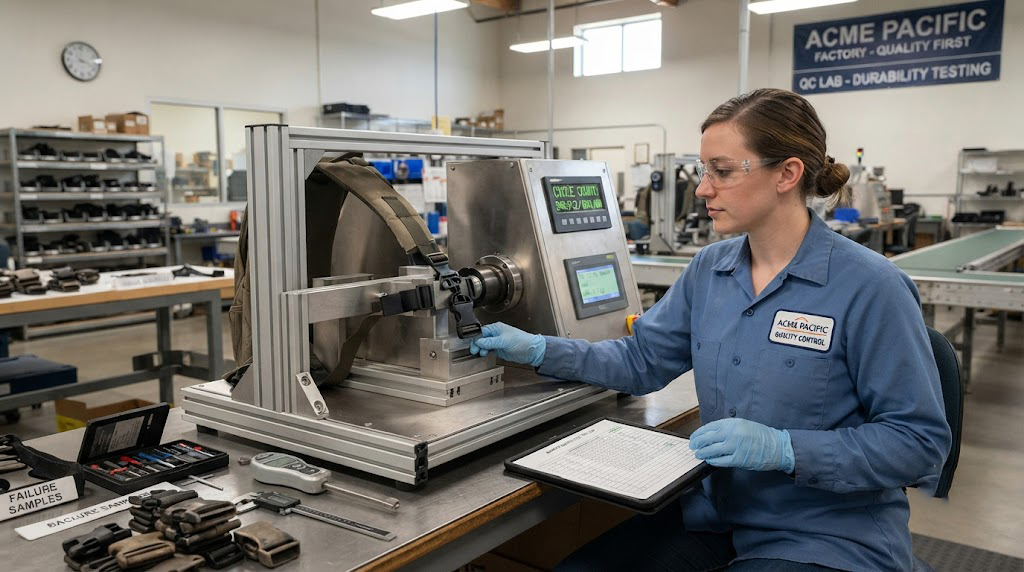
Cycle testing simulates real-world use by mechanically opening and closing zippers and fastening/unfastening buckles hundreds or thousands of times. Most professional bag factories use either manual cycle testing (a QC operator physically operating the hardware 500–1,000 times) or automated cycle testing machines (for higher-end production runs).
The purpose is to identify premature failure points — typically weak springs, soft mold-cast buckles, or zipper sliders that lose alignment under wear. Samples that fail cycle testing indicate a batch-level issue, and the supplier should pull the lot for re-inspection rather than ship defective units.
For the most demanding product categories (luggage, tactical bags, premium leather goods), insist on 1,000+ cycle tests rather than the minimum 500.
9. AQL Sampling at Three Inspection Stages
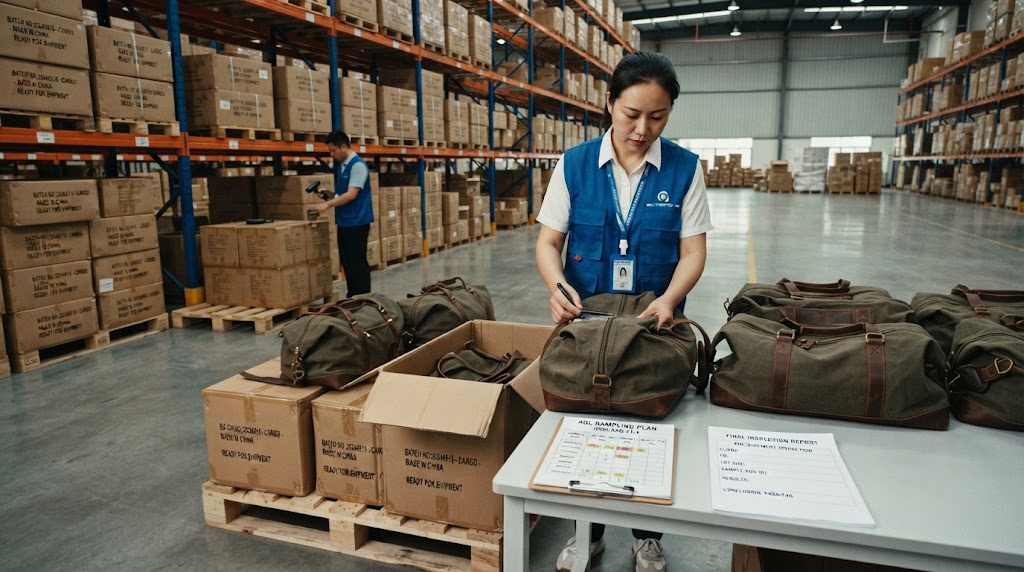
Serious suppliers integrate hardware function testing into their Acceptable Quality Level (AQL) sampling at three distinct stages:
1. Pre-Production Inspection (PPI) — Confirms that raw materials and components (including hardware sourced from subcontractors) meet specifications before production begins.
2. During Production Inspection (DUPRO) — Conducts functional testing on partially completed goods when roughly 30–50% of the order has been produced, catching systematic defects early.
3. Pre-Shipment Inspection (PSI) — The final inspection on finished, packed goods, with the most rigorous AQL sampling applied.
For bag hardware, the typical AQL standard is AQL 2.5 for major defects (function failure, broken hardware, sharp edges) and AQL 4.0 for minor defects (cosmetic scratches, slight color variation) under the ISO 2859-1 general inspection standard.
Buyers should always require a documented test report with photographs, defect classifications, and pass/fail criteria from the PSI. Verbal assurances are not acceptable for bulk orders.
Part 4: AQL Standards Applied to Bag Hardware in Pre-Shipment Inspections
AQL — Acceptable Quality Limit — is the statistical sampling standard used by virtually every professional inspection company worldwide. For bag hardware, the most commonly applied AQLs are:
AQL 2.5 for critical defects (function failure, broken zippers, buckles that release under load, sharp edges)
AQL 4.0 for major defects (loose rivets, deformed hardware, finish defects visible on the outside of the bag)
AQL 6.5 for minor defects (slight cosmetic variations, minor scratches on non-visible surfaces)
The inspection sample size depends on the order quantity. For example, for an order of 1,001–3,000 units, the standard sample size under General Inspection Level II is 125 units, with an accept/reject threshold based on the AQL. Your inspection company (or your supplier’s in-house QC team) should be able to provide the exact sampling table for your order size.
Pro tip: Always specify AQL standards in your purchase order and contract. Verbal agreements on “good quality” are unenforceable.
Part 5: US Safety Regulations for Metal Hardware on Imported Bags
When you import bags into the United States, several federal and state regulations apply specifically to metal hardware. Failure to comply can result in CPSC recalls, customs seizures, and significant fines.
Key Regulations to Verify
CPSIA (16 CFR Part 1500) — Limits lead content in metal components to 100 ppm for children’s products and 300 ppm for general consumer products. All metal hardware (zippers, snaps, buckles, rivets, decorative elements) must comply.
California Prop 65 — Requires warning labels for products containing chemicals known to cause cancer or reproductive harm, including lead, cadmium, and certain phthalates. Many major US retailers require Prop 65 compliance as a baseline, even for products sold outside California.
Nickel Release (ASTM F2923 / EU Nickel Directive) — Although this is an EU standard, it is increasingly referenced in US contracts, especially for costume jewelry-style hardware on fashion bags. The limit is 0.5 µg/cm²/week for items in prolonged skin contact.
CPSIA Tracking Labels — Bags must have permanent tracking labels with the manufacturer’s name, location, production date, and batch information.
Your supplier should provide third-party test certificates from accredited labs (SGS, Intertek, BV, TÜV) for all of the above. Never accept a supplier’s self-declared compliance without lab backup.
Part 6: Your Pre-Purchase Checklist for Sourcing Bags from China
Before placing a bulk order, run your potential supplier through this 10-point verification checklist:
1. Hardware function testing — Do they test zippers, snaps, buckles, and adjusters individually for smooth operation?
2. Cycle testing — Can they document 500–1,000 cycle tests on zippers and buckles per production lot?
3. Corrosion resistance — Do they perform salt spray testing on all metal hardware? At what duration (24, 48, or 96 hours)?
4. Attachment strength — Do they run pull-strength tests on rivets, D-rings, and strap attachments?
5. CPSIA / Prop 65 compliance — Can they provide current third-party test reports from SGS, Intertek, or equivalent labs?
6. AQL sampling — Do they follow AQL 2.5 / 4.0 standards at pre-production, DUPRO, and pre-shipment stages?
7. Documented QC reports — Will they provide a written inspection report with photos and pass/fail classification before shipment?
8. Material traceability — Can they name the source of their hardware (YKK, SBS, Prym, or proprietary)?
9. Sample approval process — Do they produce and ship a sealed pre-production sample (PPS) for your written approval before bulk production begins?
10. Remediation policy — What happens if defects are found in the shipped goods? Replacement, credit, refund?
If a supplier cannot answer “yes” to at least 8 of these 10 questions, keep looking.
Sample Message to Send Your Chinese Supplier
Use this professional email or WhatsApp message template to start the conversation:
“Hello [Supplier Name],
We are a US-based bag brand and we are evaluating your factory for a bulk order of [product type]. Before we proceed, we need to confirm your quality control procedures, specifically:
1. Do you perform hardware function testing on zippers, snaps, buckles, and adjusters to verify smooth operation, repeated use, and durability?
2. Can you share your QC inspection standard and a recent pre-shipment test report?
3. Do you test metal hardware for corrosion resistance (salt spray)?
4. Can you provide third-party compliance certificates for CPSIA, Prop 65, and REACH?
Please send your responses along with your most recent inspection report. We look forward to building a long-term partnership with a supplier that meets US quality standards.
*Best regards,
[Your Name]*
[Your Company]”
Final Thoughts: Quality Hardware Is a Brand Investment, Not a Cost
Sourcing bags from China offers tremendous advantages in cost, scalability, and customization — but only when the supplier treats hardware quality as a non-negotiable standard, not an optional upgrade. The few cents saved per unit by using lower-grade zippers, buckles, or snaps will cost you hundreds of dollars in returns, customer service time, and brand reputation damage.
The ten insights in this guide represent the minimum acceptable QC framework for any serious bag importer. Build them into your supplier evaluation process, your purchase contracts, and your ongoing quality audits. Your customers will never thank you for hardware that works — they simply expect it. But they will absolutely notice when it doesn’t.
Need help auditing your current supplier or building a custom QC specification for your next bag order? Our team works with US bag brands of every size — from emerging e-commerce sellers to established private label brands — to streamline sourcing from China and ensure every shipment meets your quality standards. Contact us for a free sourcing consultation.
Post time: Jul-24-2026