
How to Choose Bag Customization from Chinese Factories to Boost Repeat Orders: A Complete B2B Buyer Guide
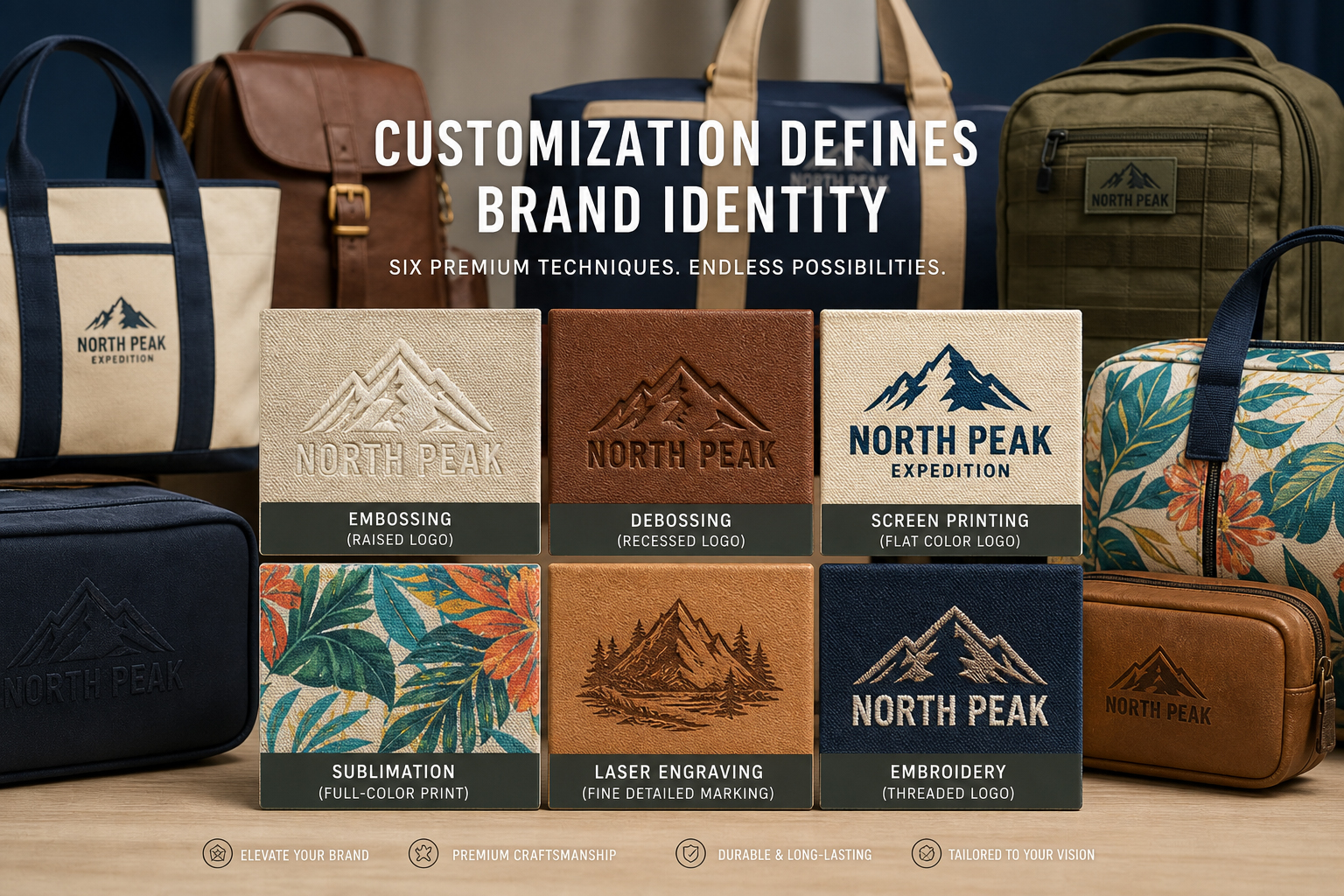
As an American online bag retailer sourcing directly from Chinese manufacturers, you know that product quality, price competitiveness, and reliable lead times shape your business success. However, many cross‑border sellers overlook one decisive growth driver: smart, scalable customization. The right branding techniques do not merely decorate your bags; they build recognizable brand identity, encourage returning customers, and create predictable reorder cycles with your overseas suppliers.
This guide breaks down the common customization methods offered by Chinese bag factories for B2B buyers, explains setup fees and mold costs, clarifies typical MOQs for printed and sublimated bags, and reveals how professional factories manage design files and color matching. We will also share a practical, product‑by‑product strategy to select custom techniques that maximize reorder potential for your US independent website.
1. Common B2B Customization Methods Chinese Bag Factories Provide
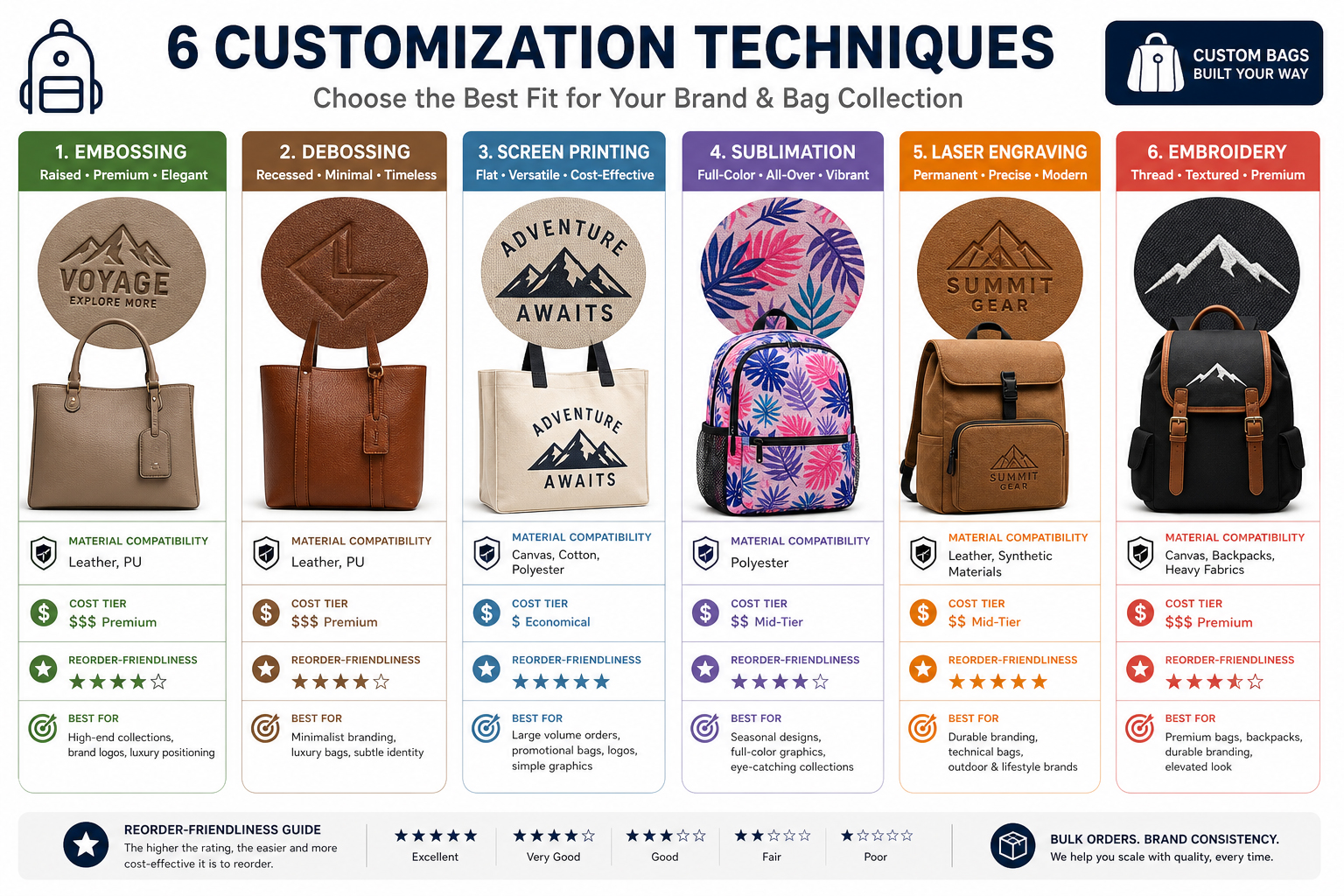
Chinese bag manufacturers offer a wide menu of branding options for wholesale buyers. The most mainstream services include embossing, debossing, screen printing, and sublimation printing. Besides these four core processes, reputable suppliers can provide heat transfer printing, laser engraving, embroidery, woven or jacquard labels, and customized interior linings and woven tags. Each technique delivers a unique texture, price point, and brand positioning effect, which directly influences whether your customers will come back for new batches.
Embossing creates raised logos or patterns on leather, PU, vegan leather and thick coated fabrics. It generates a distinct tactile, high‑end texture that shoppers can feel by touch. When embossing becomes your signature brand mark, loyal customers actively recognize your products, forming stable reorder demand.
One obvious limitation of embossing is material dependency. If the fabric is too thin, the raised pattern may deform or look cheap after repeated folding and daily wear. It works best for premium‑positioned collections rather than lightweight thin tote bags.
Debossing, also known as blind debossing without foil, presses a recessed logo into the material. It matches perfectly with minimalist and quiet‑luxury brand aesthetics. Unlike bright printed graphics, subtle indented branding focuses on texture rather than flashy colors, building long‑term brand recognition. For high‑end handbags made of genuine leather or vegan leather, debossing is one of the most reorder‑friendly customization choices.
Screen printing remains the most cost‑effective volume customization solution. It is widely applied on canvas, cotton, nylon, polyester and non‑woven PP fabrics. This method performs best for simple, bold logos with one to four solid colors. For lifestyle totes and everyday promotional bags, screen printing supports large‑batch production and consistent reproduction, creating high reorder potential for your best‑selling core items. Its main weakness is poor performance on gradient or photographic artwork.
Sublimation printing bonds dyes deep inside compatible polyester fabrics instead of laying ink on the surface. It delivers vivid full‑color, all‑over prints with photographic details and complex patterns. Seasonal limited editions and patterned backpacks rely heavily on sublimation to refresh product lines continuously, bringing repeated seasonal reorders. But buyers must note the material restriction: sublimation rarely works well on cotton, leather or most dark‑colored textiles.
Additional premium choices expand your branding flexibility. Laser engraving leaves permanent, wear‑resistant marks on leather and synthetic surfaces. Embroidery adds durable luxury logos to canvas backpacks and denim bags. Woven jacquard branding creates repeating signature patterns, though higher development costs limit frequent artwork changes. Many experienced Chinese factories combine multiple customization processes in a single production run, such as debossed front logos plus woven interior labels, helping brands form a complete, consistent image across every product detail.
2. Setup Fees and Mold Costs for Embossing and Debossing
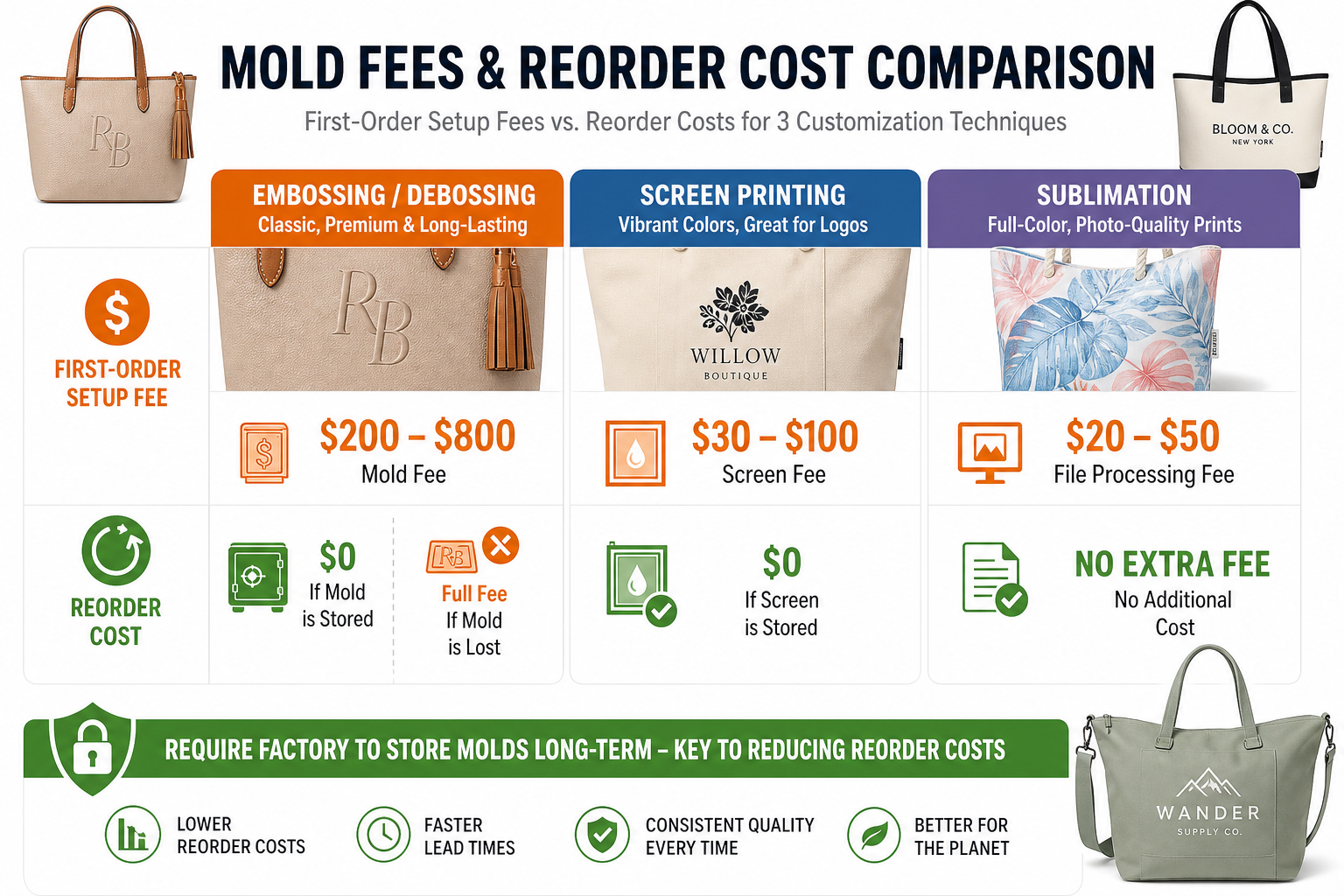
A top concern for US B2B importers is hidden upfront charges. Embossing and debossing require custom metal dies or molds. In most cases, Chinese factories charge separate one‑time setup fees or mold costs, and the exact price varies according to logo size, pattern complexity, material hardness and processing depth.
You must clarify two critical rules before confirming orders. First, ask whether the factory stores finished dies and printing screens after production. Many reliable suppliers keep molds for long‑term cooperative buyers. If the tooling is preserved, you avoid repeated mold charges on subsequent reorders, which greatly reduces your repeated‑order cost and improves profit margins. Some smaller workshops discard dies once the bulk order finishes, forcing you to pay mold fees again every time you restock.
Second, confirm if setup costs are refundable when order quantities reach a negotiated volume. Do not accept vague replies from suppliers. Put storage duration, ownership of dies, and re‑setup charges into written agreements. For long‑term brand building, stored tooling is one of the most valuable advantages of working with a stable Chinese factory.
Screen printing also generates screen‑making fees for new artwork, while sublimation usually charges digital file‑processing fees instead of expensive physical molds. Compared with embossing and debossing, sublimation has lower repeated‑order fixed costs when you change patterns regularly, making it suitable for seasonal design updates.
3. MOQ for Custom Printed and Sublimated Bags
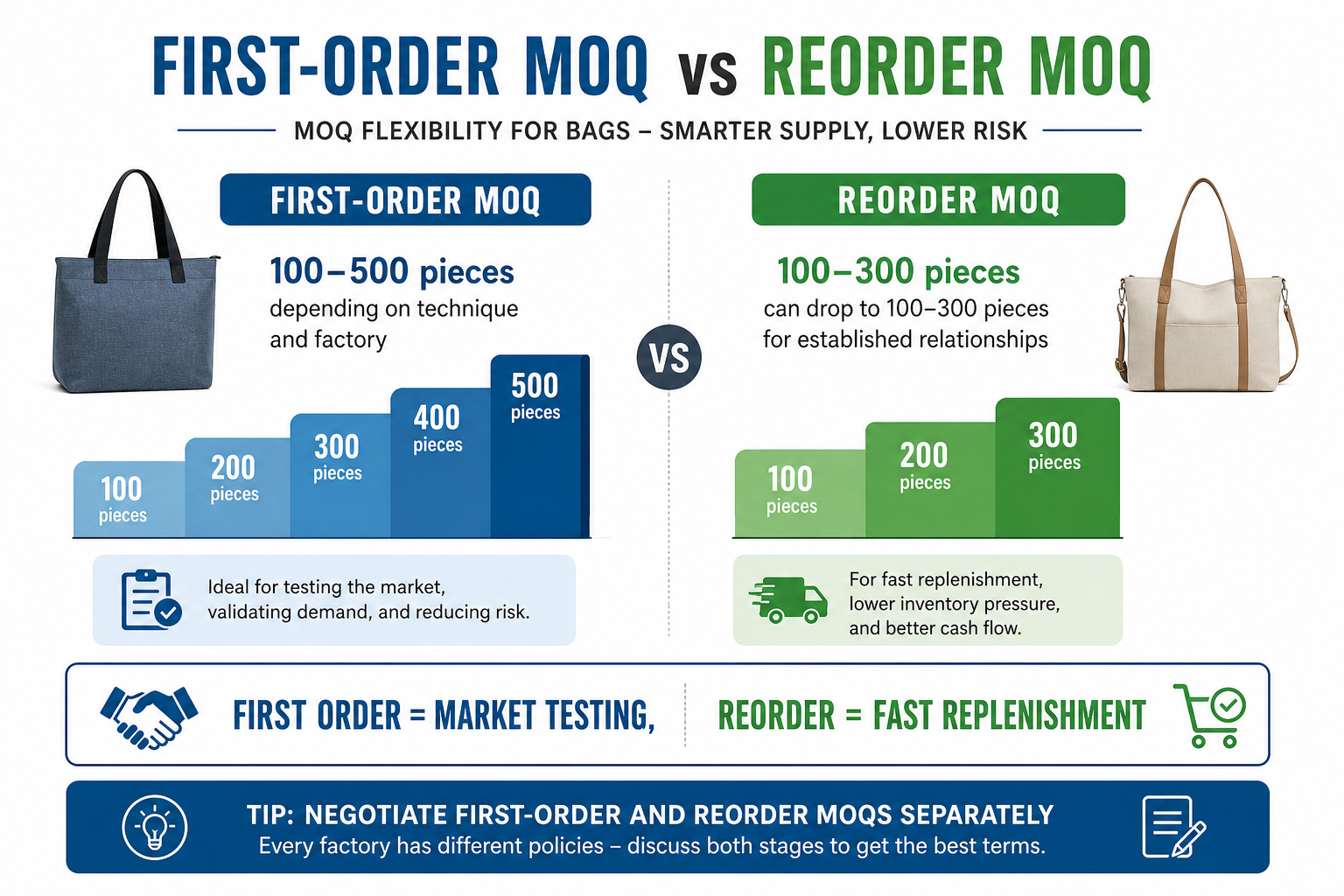
Minimum order quantity is another major factor controlling your inventory risk and reorder strategy. There is no universal fixed MOQ across all Chinese bag factories. For customized bags with screen printing or sublimation, the typical first‑order MOQ ranges from 100 pieces to 200 pieces per design. However, actual requirements change drastically by bag style and factory scale.
Some specialized manufacturers accept trial runs of only 50 units for simple blank bags with basic logos. Non‑woven promotional bag suppliers often set MOQs at 500 pieces because their production lines are optimized for large‑volume wholesale. The biggest professional tip for independent‑store sellers is separating first‑trial MOQ and reorder MOQ during negotiation.
Many factories relax quantity limits for repeat buyers. You can negotiate reorder MOQs of 100–300 pieces even when the initial order demands a larger batch. This is extremely valuable for US online merchants. Once a design proves popular on your website, you can replenish small‑lot stock quickly without overstocking capital.
Avoid signing contracts with identical high MOQ terms for both new development and restocking. Smart sourcing strategy uses low‑quantity tests for new seasonal patterns, then increases batch sizes only after sales data confirms strong market demand. Do not commit to expensive custom fabrics or huge minimums before validating customer preferences.
4. How Chinese Factories Manage Design Files and Color Matching
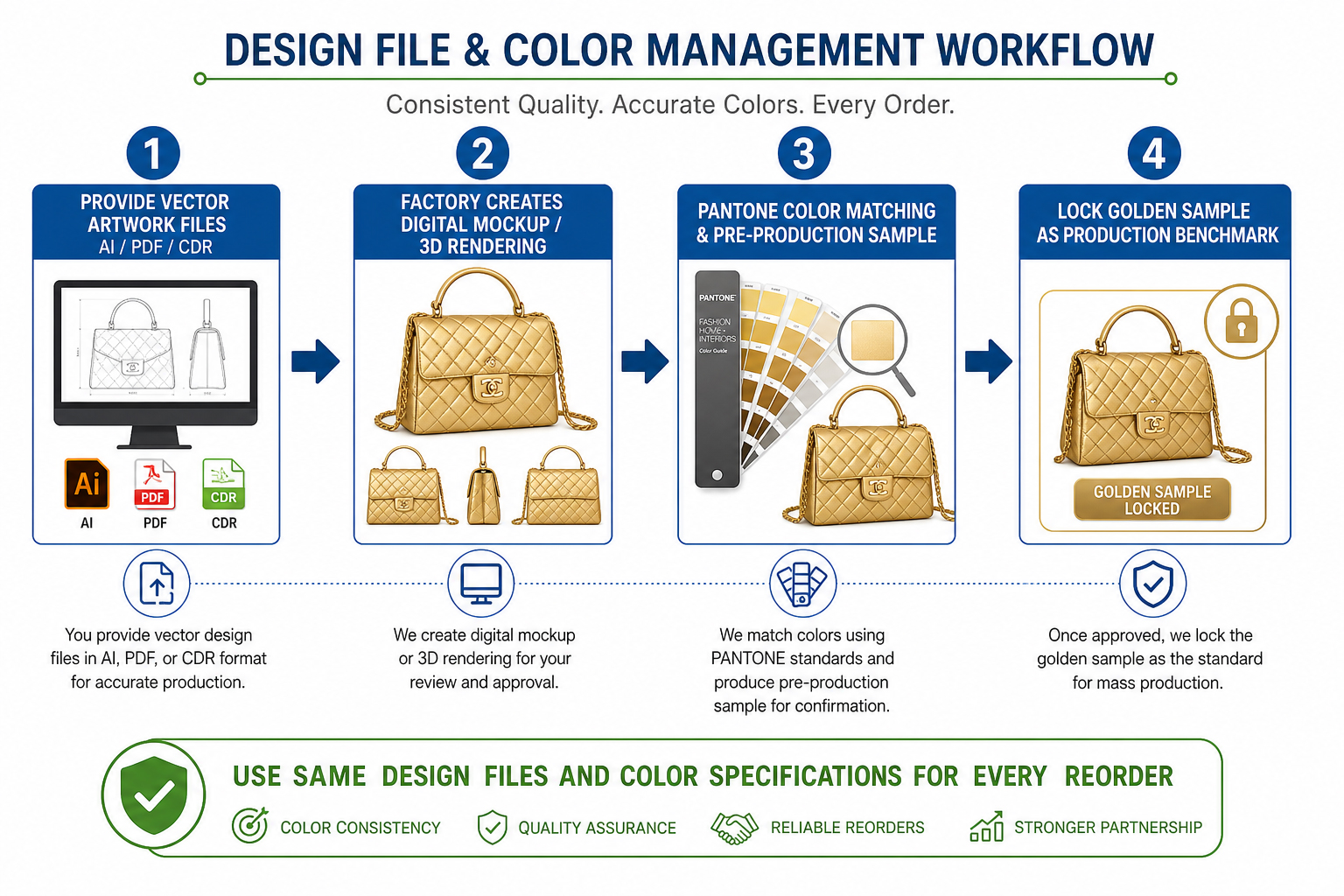
Color inconsistency across batches is one of the most frequent complaints from overseas bag buyers. Trustworthy Chinese factories follow standardized workflows for design files and color matching.
First, suppliers require editable vector artwork, such as AI, PDF or CDR files, rather than low‑resolution raster pictures. Blurry JPG images cause distorted printing and unclear embossed outlines. Professional factories will create digital mockups or 3D renderings before sampling, allowing you to preview logo size, placement and color effects without cutting physical materials. This shortens revision cycles and speeds up reorder preparation.
For color matching, factories reference official Pantone color swatches to produce pre‑production samples.
Once you approve the sample color, the factory locks that physical sample as the production benchmark for mass manufacturing. Experienced vendors maintain an approved “golden sample” in‑house for every custom style. During bulk production and pre‑shipment inspection, finished bags are compared side‑by‑side with this sealed reference sample to control color deviation, logo position error and fabric thickness tolerance.
As a buyer, you must preserve the confirmed vector files, Pantone numbers, exact logo coordinates, fabric weight, coating specifications, lining composition, hardware color and zipper models. Keep all technical specifications unchanged for reorders. If you alter artwork, ink colors or print positions every season, each restock becomes a brand‑new custom project, raising factory costs and extending lead times. Stable specifications create consistent product quality and smoother reorder cycles.
5. Customization Roadmap by Bag Category for Higher Reorder Rates
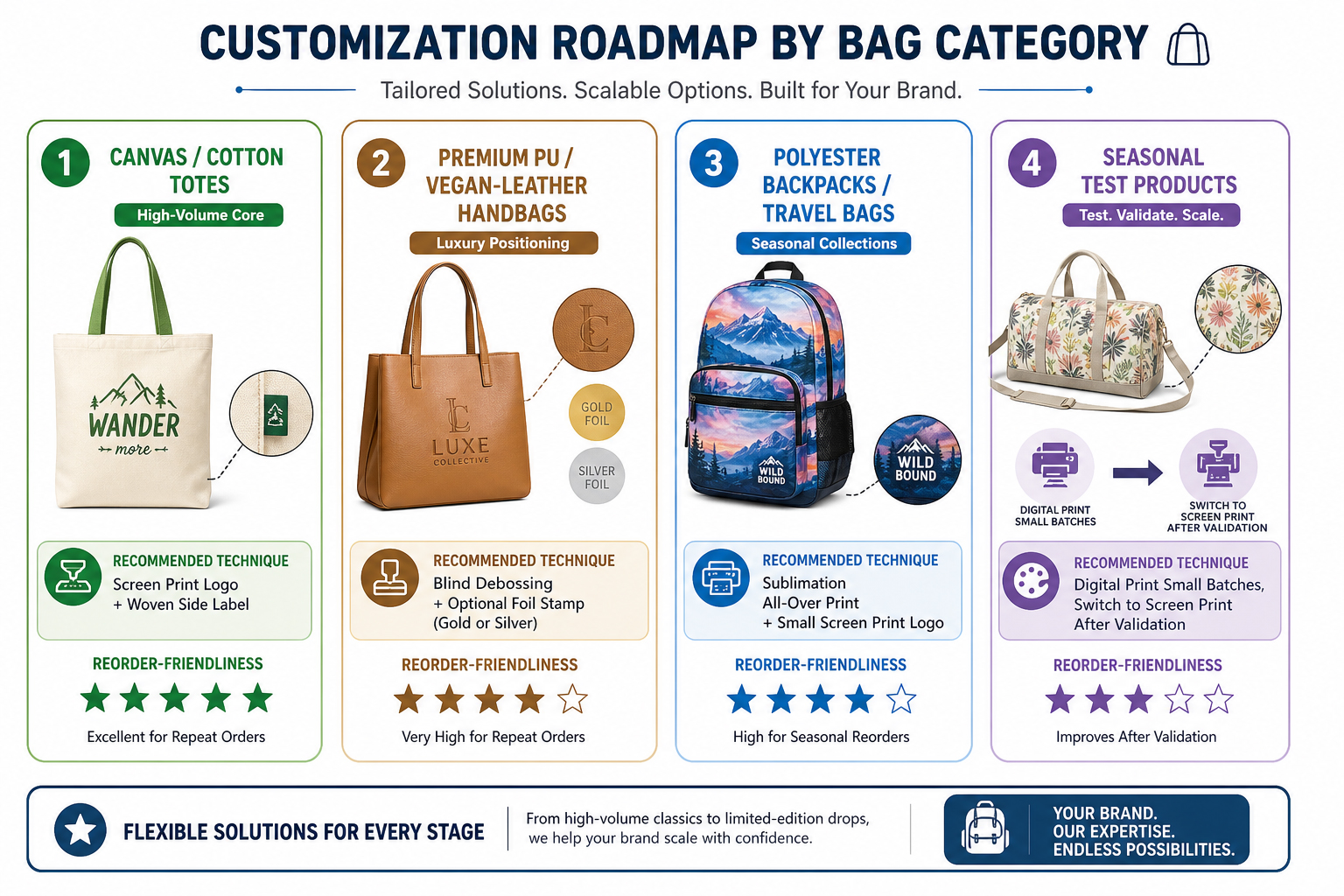
For US independent bag websites, the best custom solutions are not the fanciest techniques, but options that build steady brand recognition, maintain durability and keep reproduction costs predictable. We divide the recommendation into four product categories for clear implementation.
Everyday Canvas and Cotton Tote Bags
Choose one‑color or two‑color screen printing for the main logo. Add a small woven brand label on the side seam and a printed interior care label. This combination balances affordability and brand visibility, ideal for high‑volume bestsellers. Do not frequently adjust logo placement or ink shades. Retain a stable core tote design and launch new fabric colors or sizes instead. Repeat customers will purchase multiple color variants while your supplier enjoys simplified, repeatable production.
Premium PU and Vegan‑Leather Handbags
Blind debossing delivers quiet luxury branding. You can upgrade to debossing with gold or silver foil for stronger fashion appeal. Use embossing only when the raised texture is the core selling point. Always request physical pre‑production samples, because debossing results heavily rely on material thickness, surface coating and leather grain. Since blind debossing does not depend on ink color matching, batch‑to‑batch uniformity is easier to guarantee for recurring orders.
Polyester Backpacks, Travel Bags and Patterned Styles
Sublimation is the top choice for full‑color all‑over patterns and illustrations. Pair it with a small bold screen‑printed chest logo or embroidered woven patches for layered premium branding. Sublimation lets you apply multiple patterns to the same base bag shape without developing new molds. This gives your online store flexible seasonal collections while keeping construction unchanged, lowering supplier development risk and encouraging regular restocks.
Seasonal Test Products and New Launches
Use digital printing or heat transfer for small test batches. After a design gains positive sales feedback, switch to screen printing for larger restocks. Sell blank base bags with removable patches and hangtags. This tactic avoids heavy upfront investment in expensive dies and large MOQs until market demand is proven.
6. Practical Rules That Actually Generate Reorders
Custom printing and logos alone cannot guarantee repeated purchases. You need to build reproducible standards into your supply chain.
Fix consistent logo placement, for example centered 8 cm below the top seam on every bag colorway.
Archive finalized vector artwork, Pantone references, print dimensions and position markers permanently.
Lock stable material specifications, including fabric density, coating type, lining, hardware finish and strap width.
Require the factory to keep a sealed golden sample for ongoing quality comparison.
Negotiate reduced MOQs specifically for repeat orders.
Confirm long‑term storage of printing screens and embossing dies and clarify re‑setup fees.
Allow flexible fabric or logo color changes without modifying the basic bag construction.
Standardize branded hang tags, polybags, barcode stickers, carton markings and country‑of‑origin labels for every restock.
Supplier capability varies widely. Some factories store dies indefinitely for loyal buyers; others delete files after shipment. Clarify these terms before placing deposits.
7. Essential Questions to Send to Chinese Suppliers
Copy these professional questions into your inquiry templates to avoid misunderstandings and select reliable long‑term partners:
Which logo method offers the best wear resistance for my exact fabric?
Can you produce a pre‑production sample using identical material, logo dimension, color and bulk‑run process?
What are the MOQs for the first order and separate repeat orders?
Are screen charges, printing plates, embossing dies included in the quotation?
Will you archive dies and design files for future restocks?
Do new setup fees apply on every reorder?
Can you guarantee identical logo position and color shade across different production batches?
What tolerances are allowed for logo offset, bag dimension, fabric weight and color difference?
How does the printed surface perform after rubbing, washing, folding and long‑term sunlight exposure?
Can you supply pre‑shipment inspection reports and bulk‑production photos?
Are fabrics, coatings and inks compliant with US import regulations for my product category?
Can you attach my customized packaging, UPC barcodes, care labels and origin labels?
8. Ready‑to‑Use Starting Sourcing Strategy
For your initial product collection, build three clear tiers without overcomplicating your supply chain. First, a high‑volume canvas tote line with simple one‑color screen printing as your affordable core SKU. Second, a premium vegan‑leather handbag collection with blind debossed branding and optional foil stamping for higher profit margins. Third, patterned polyester backpacks with full sublimated artwork for seasonal refresh and website visual attraction.
Keep the basic bag construction unchanged across different colors. Only swap fabric shades, print colors or surface patterns. This simple system creates three price levels and distinct brand styles while maintaining manageable production complexity. When one design sells well, your factory can quickly reproduce restocks without repeated expensive development work.
Final Thoughts
Customization is not just a cosmetic add‑on for wholesale bags. It is a strategic sourcing tool that shapes your brand identity, controls long‑term manufacturing costs and drives sustainable repeat orders. Screen printing powers mass‑market bestsellers; debossing builds luxury positioning on synthetic leather; sublimation brings vibrant seasonal patterns to polyester bags.
Before committing to large custom batches, evaluate factory die‑storage policies, reorder MOQs, color‑matching workflows and sample‑keeping rules. Choose stable, reproducible branding solutions over overly complicated decorations. By combining the right customization techniques with strict technical specifications and golden‑sample quality control, US independent bag sellers can build a resilient Chinese supply chain that continuously supports online store growth and loyal customer repurchases.
Post time: Sep-03-2026