
How Professional Buyers Can Ensure Their Bags Arrive in Perfect Retail-Ready Condition
A wholesale bag inspection workspace with various bag styles laid out for quality checking
When you source bags from Chinese manufacturers, you’ve probably experienced this scenario: the supplier sends pre-shipment photos, the bags look decent, but when the shipment arrives at your U.S. warehouse, you find that many bags have been compressed during shipping, folded in transit, or simply lost their original showroom shape. This is where light ironing or steam pressing becomes a critical part of your post-inspection quality control process.
As a professional bag buyer operating a U.S.-based e-commerce business, understanding how to communicate with your Chinese supplier about proper bag restoration techniques is essential. This guide will walk you through everything you need to know — from safe temperature ranges to alternative reshaping methods — so you can confidently request the right finishing treatment for your inventory.
Why Bag Shape Restoration Matters for U.S. Retailers
Before diving into the techniques, let’s address the “why.” When your customers receive a bag, the first impression is the shape and structure. A bag that arrives flat, wrinkled, or distorted can:
Trigger returns and negative reviews on Amazon, eBay, or Shopify
Reduce perceived product value, especially for premium and designer-inspired styles
Create additional costs in your U.S. warehouse for manual re-shaping
Damage your brand reputation for “as-described” product accuracy
Insight 1: Steam pressing is generally safer than direct ironing for most bag materials, including leather, canvas, and synthetics.
This is why we always recommend that our buyers request light steam pressing as part of their supplier’s standard inspection workflow. The key is “light” — you want shape restoration, not a flattened, over-processed product.
Question 1: Light Ironing or Steam Pressing — Which Is Better?
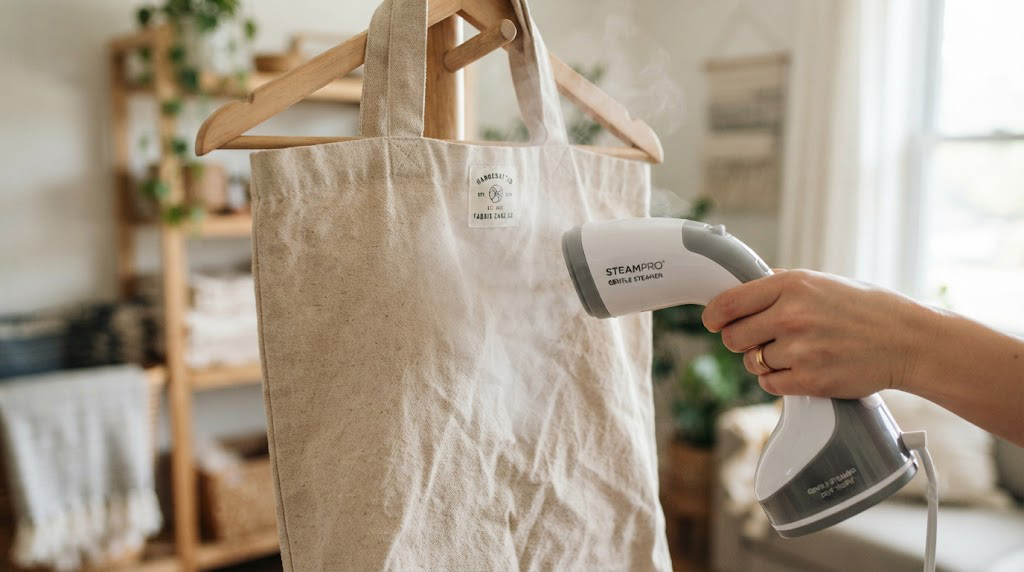
The short answer: Steam pressing wins in most scenarios, but light ironing with proper technique has its place.
Steam Pressing Advantages
Steam works by relaxing the fibers in the bag material, allowing them to return to their original form without direct heat contact. This is particularly important for:
Coated materials (PU, PVC) that can melt or shine under direct heat
Embroidered or printed areas that can be damaged by iron plates
Structured bags where you want to maintain form without crushing padding
When Light Ironing Is Acceptable
For plain canvas totes, cotton-polyester blends, or simple promotional bags, light ironing with a pressing cloth can be efficient. The technique is to:
1. Set the iron to the lowest effective temperature
2. Use a clean cotton cloth as a barrier
3. Press down briefly (2-3 seconds) and lift — never slide
4. Avoid seams, zippers, and decorative elements
Insight 2: Low-temperature steam effectively relaxes fibers and removes shipping wrinkles from fabric bags without direct heat contact.
What to Tell Your Supplier
Here’s the exact language to use in your QC specification sheet:
“After inspection, please use light steam pressing to restore bag shape. Use low-temperature steam, hold the steamer 6-8 inches from the bag surface, and avoid direct steam contact on hardware, zippers, or printed areas.”
Insight 3: Direct ironing should be avoided on coated, laminated, or PU materials, as it can cause melting, discoloration, or shine marks.
Question 2: Safe Temperature Ranges for Different Bag Materials
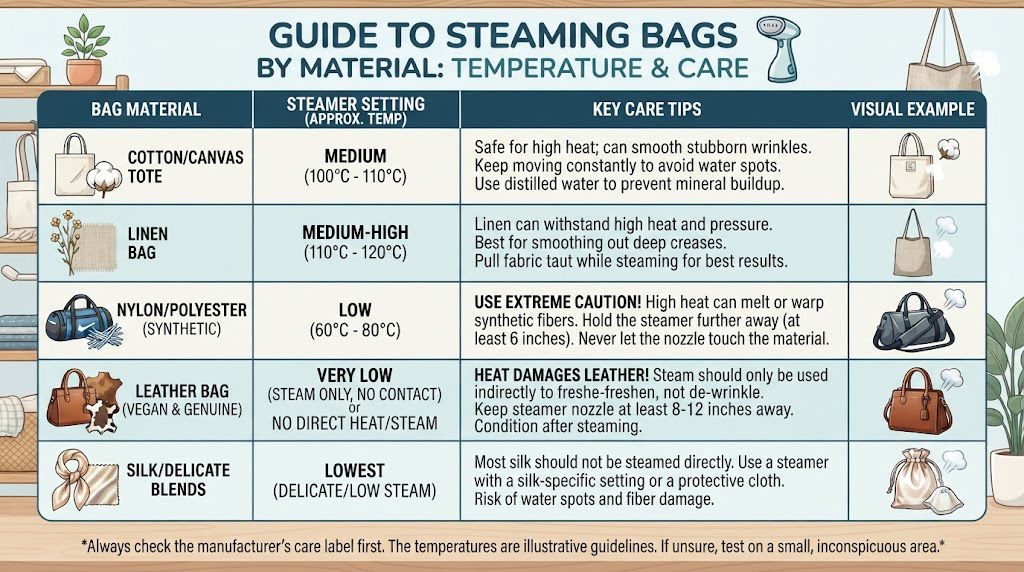
Not all bag materials are created equal. Here’s a professional breakdown your supplier should follow:
Canvas and Cotton Bags
Steam temperature: 100-110°C (212-230°F)
Iron setting (if needed): Medium heat with pressing cloth
Hold time: 3-5 seconds per section
Genuine Leather
Steam temperature: 80-90°C (176-194°F) at a distance
Iron contact: NEVER direct contact
Technique: Steam from 8-10 inches away, then reshape by hand
PU/PVC Synthetic Leather
Steam temperature: Maximum 70°C (158°F)
Iron contact: Never
Note: These materials are highly heat-sensitive
Nylon and Polyester
Steam temperature: 90-100°C (194-212°F)
Iron setting: Low with pressing cloth
Caution: Can melt at high temperatures
Insight 4: A pressing cloth should always be used as a barrier when ironing is necessary to prevent direct heat damage to the bag surface.
Pro Tip for Mixed-Material Bags
If your bag has both canvas body and leather trim, instruct your supplier to follow the lowest temperature setting of the most delicate material. This prevents the leather from drying out while the canvas is being treated.
Insight 5: Genuine leather bags respond better to controlled steam applied at a distance, never direct iron contact, which can dry out and crack the leather.
Question 3: Can Steam Pressing Damage Zippers, Hardware, or Interior Linings?
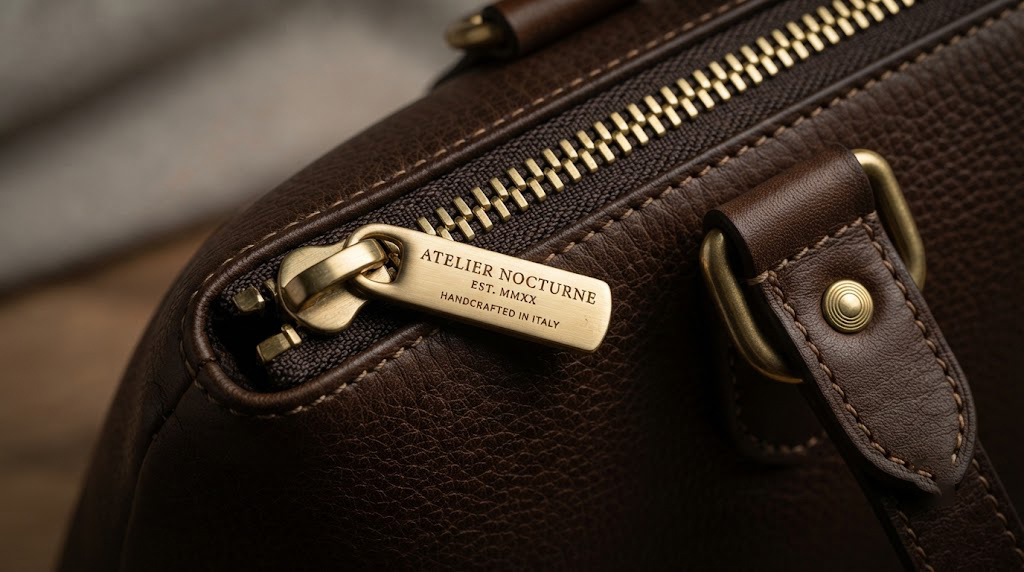
This is one of the most common concerns from U.S. buyers, and for good reason — a damaged zipper or tarnished hardware can mean an instant return. The answer is nuanced: steam itself won’t damage quality hardware, but improper technique absolutely can.
Zippers
Metal zippers: Generally safe with steam, but prolonged exposure can cause discoloration
Plastic/coated zippers: Can warp or melt under high heat
Best practice: Keep steam nozzle moving; never focus on one spot for more than 3 seconds
Metal Hardware (Buckles, Rings, Rivets)
Quality metal hardware tolerates steam well
Risk: Cheap electroplated hardware may discolor with prolonged moisture
Solution: Wipe hardware dry immediately after steaming
Interior Linings
This is where most damage occurs
Synthetic linings can warp
Fabric linings can develop watermarks
Protection method: Place a dry cloth inside the bag during steaming to absorb excess moisture
Insight 6: Testing any heat or steam method on an inconspicuous area first is essential to verify material compatibility and prevent visible damage.
What to Request in Your Supplier Agreement
Ask your manufacturer to provide a sample test on one bag before processing the full order. Document the results with photos, then approve the method before full production runs.
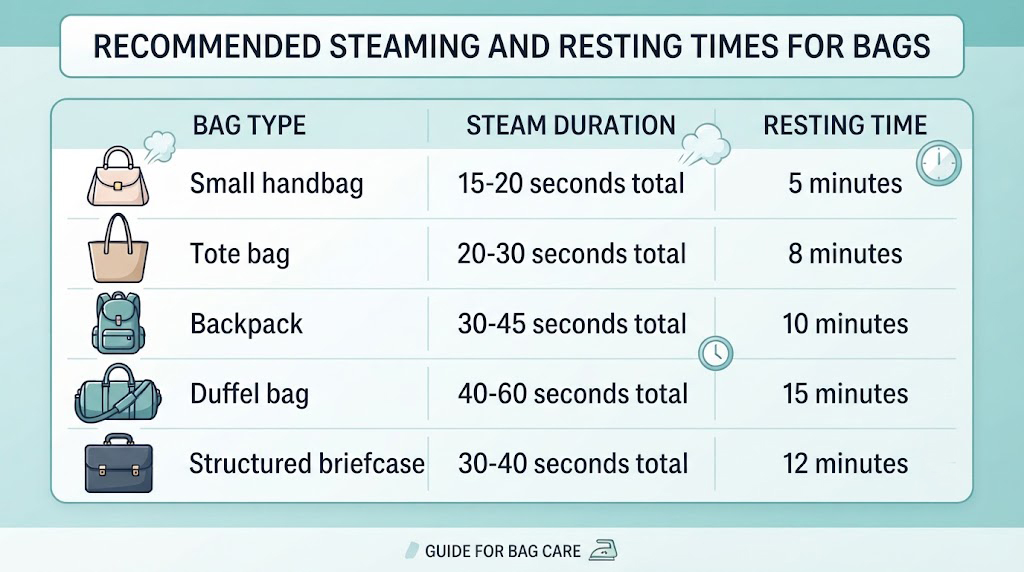
Question 4: How Long Should Steam Be Applied?
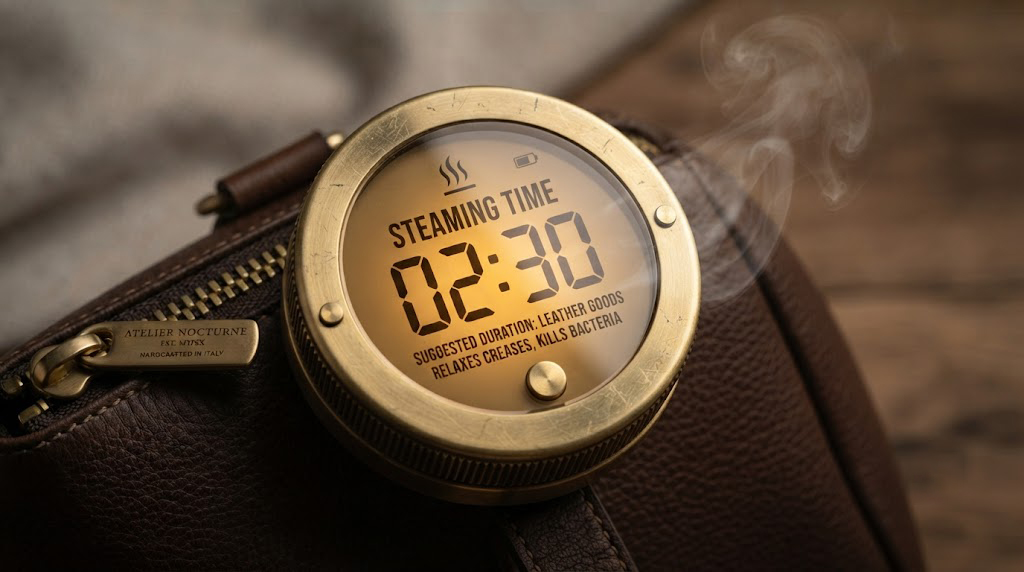
Timing is everything. Over-steaming creates a different set of problems — moisture damage, mold risk, and even shape distortion as the bag becomes too soft.
Recommended Steam Application Times
The Two-Phase Method
Professional bag restoration uses a two-phase approach:
1. Active Steaming Phase (15-30 seconds): Apply steam evenly across the bag surface
2. Shaping Phase (while warm): Use hands or a shaping form to gently mold the bag into its original form
Insight 7: For structured bags such as briefcases or backpacks, steaming combined with gentle reshaping while warm helps restore the original form.
Critical Warning
Never re-steam a bag that is still damp from a previous session. This is the #1 cause of moisture damage and mold growth in newly manufactured bags.
Insight 8: Excessive steam exposure can lead to moisture penetration, watermarks, or mold growth on absorbent materials like canvas or suede.
Question 5: Alternative Methods to Reshape Bags Without Heat or Steam
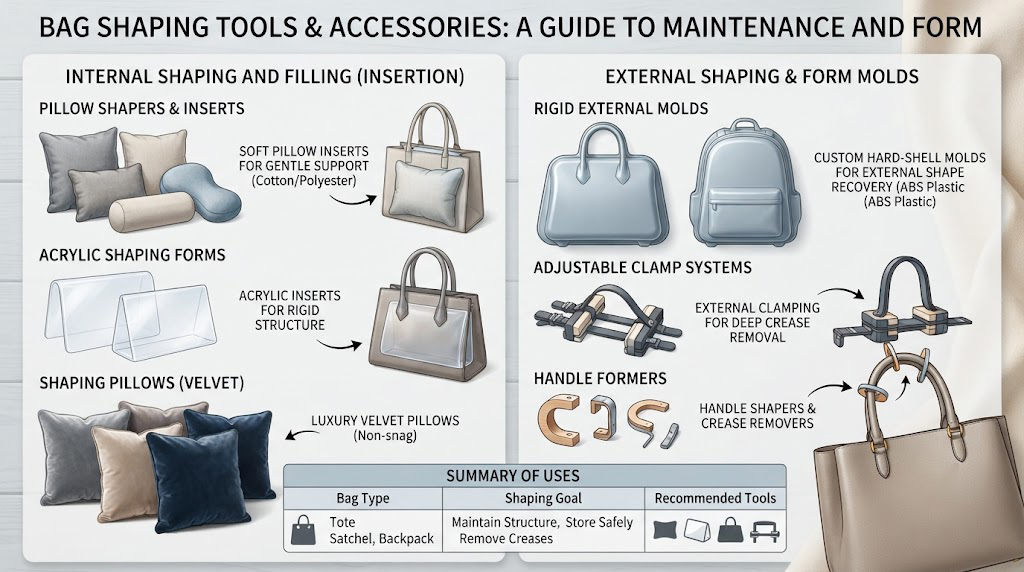
Heat isn’t your only option. In fact, for certain bag types — especially delicate leather goods or vintage-inspired designs — heat-free methods are preferable.
Method 1: Stuffing and Air-Drying
Best for: Leather handbags, structured totes
Process: Fill the bag with acid-free tissue paper or bubble wrap
Duration: 24-48 hours
Result: Naturally returns to original form
Method 2: Cool Air Blow-Drying
Best for: Suede, nubuck, delicate synthetics
Process: Use a hair dryer on the COOL setting from 12 inches away
Duration: 2-3 minutes per bag
Result: Removes moisture while maintaining shape
Method 3: Professional Bag Inserts and Forms
Best for: High-end designer-style bags
Process: Use custom-sized bag shapers or purse inserts
Duration: Permanent solution
Result: Maintains shape through shipping and storage
Method 4: Weight-Setting
Best for: Flat-folded canvas bags
Process: Place bags under light, even weight for 12-24 hours
Duration: Overnight
Result: Smooths out shipping wrinkles
Insight 9: Bags should be allowed to fully air-dry in a well-ventilated area after steaming to prevent moisture damage, odor, and shape distortion.
Combining Methods
For best results with stubborn wrinkles on heat-sensitive materials, combine stuffing (Method 1) with cool air-drying (Method 2). This gives you the benefits of both without any heat-related risks.
Insight 10: Professional restoration or bag-specific cleaning services are recommended for high-end or designer items rather than DIY heat or steam methods.
Professional Recommendations for B2B Bag Buyers
Wholesale bag order ready for shipping from supplier
Based on our experience working with hundreds of U.S. bag retailers, here are our top recommendations for incorporating bag restoration into your supplier QC process:
1. Create a Detailed Specification Sheet
Don’t rely on verbal agreements. Provide your supplier with written instructions that include:
Acceptable methods (steam vs. iron)
Temperature limits for each material
Timing requirements
Areas to avoid (hardware, prints, embroidery)
Expected end-result photos
2. Request Pre-Production Samples
Before placing a bulk order, ask for 2-3 sample bags to be processed using your preferred method. This eliminates guesswork and prevents costly mistakes.
3. Build Restoration into Your Unit Cost
Bag restoration adds minimal cost (typically $0.10-$0.30 per bag) but dramatically improves retail readiness. Factor this into your negotiations.
4. Specify Drying Conditions
Always require that bags are air-dried in a well-ventilated area, never stacked while damp. This prevents the musty smell that leads to customer complaints.
5. Consider Your End Customer
If you’re selling on Amazon or to retail chains, your buyer expects “retail-ready” presentation. If you’re selling to crafters or for DIY customization, less finishing is acceptable. Adjust your QC standards accordingly.
Communicating with Chinese Suppliers: Sample Script
When discussing bag restoration with your supplier, use clear, specific language. Here’s a complete script you can adapt:
“Hi [Supplier Name], for this order I would like to add light steam pressing to the inspection process. Please use a handheld steamer on low heat setting. Keep the steamer 6-8 inches from the bag. Do not apply direct steam to zippers, metal hardware, or printed logos. After steaming, please stuff the bags with tissue paper and let them air dry for at least 4 hours before packing. Please send me a video of the process on 2-3 sample bags before processing the full order. Thank you.”
This level of detail eliminates ambiguity and ensures your supplier understands exactly what you need.
Common Mistakes to Avoid
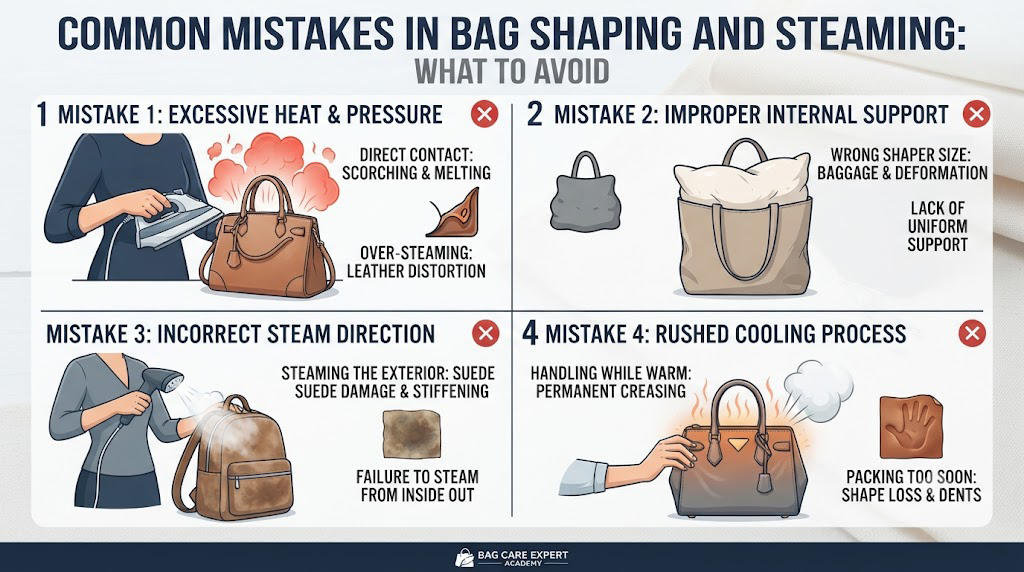
Even experienced buyers make these errors. Avoid them to protect your inventory:
1. Over-steaming: More is not better. Excessive steam causes more damage than no steam at all.
2. Skipping the test sample: Always test on a small batch first.
3. Ignoring humidity levels: If your supplier’s facility is in a humid region (common in southern China), drying time must be extended.
4. Using high heat for speed: Suppliers sometimes crank up the heat to work faster. This is a red flag.
5. Forgetting the pressing cloth: Never let iron plates touch bag surfaces directly.
6. Not allowing proper drying: Packing damp bags leads to mold, which is unrecoverable.
Conclusion: Elevate Your Bag Business with Proper Finishing Standards
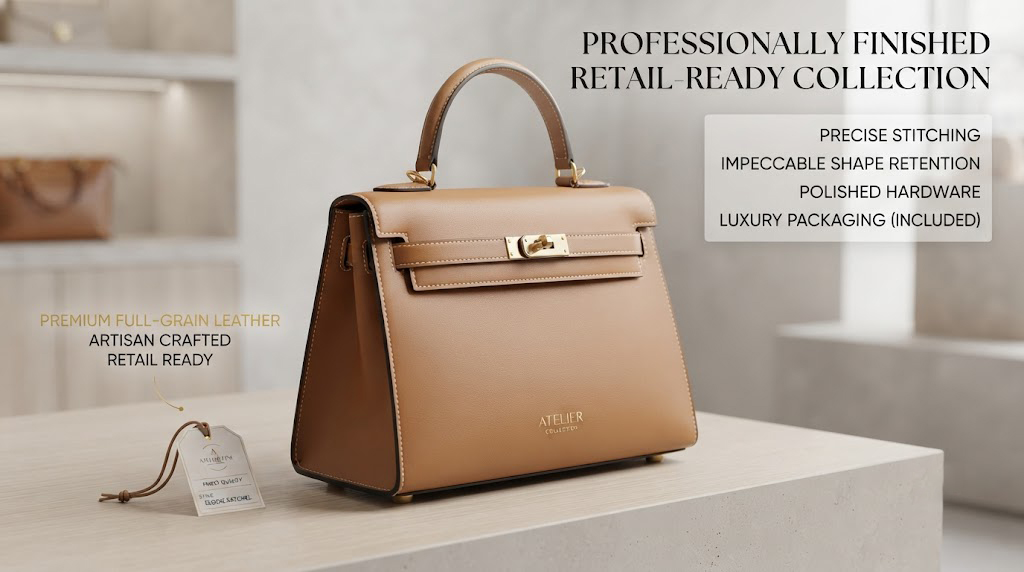
In the competitive U.S. bag market, the difference between a 5-star review and a return often comes down to presentation details that customers can’t even articulate — they just feel that one bag is better made than another. Shape, structure, and finish are silent selling points that your Chinese supplier can deliver with the right post-inspection process.
By mastering the techniques of light ironing and steam pressing — and clearly communicating your expectations to your supplier — you position yourself as a professional buyer who understands the craft, not just the price.
Key Takeaways:
Steam pressing is safer than direct ironing for most bag materials
Temperature control is critical — match the heat to the most delicate material
Hardware and zippers can withstand steam with proper technique
Timing matters — 15-60 seconds is usually sufficient
Alternative methods like stuffing and air-drying work for heat-sensitive items
Clear supplier communication prevents costly mistakes
When you source bags from China, you’re not just buying a product — you’re investing in a process. Make sure that process includes professional bag restoration, and your customers will notice the difference.
Looking for a wholesale bag supplier who understands the importance of retail-ready finishing? Contact our team today to discuss how we can help your U.S. bag business grow with quality manufacturing, careful inspection, and proper post-production care.
Post time: Jul-31-2026