
Published for US‑based bag online retailers importing directly from Chinese manufacturers
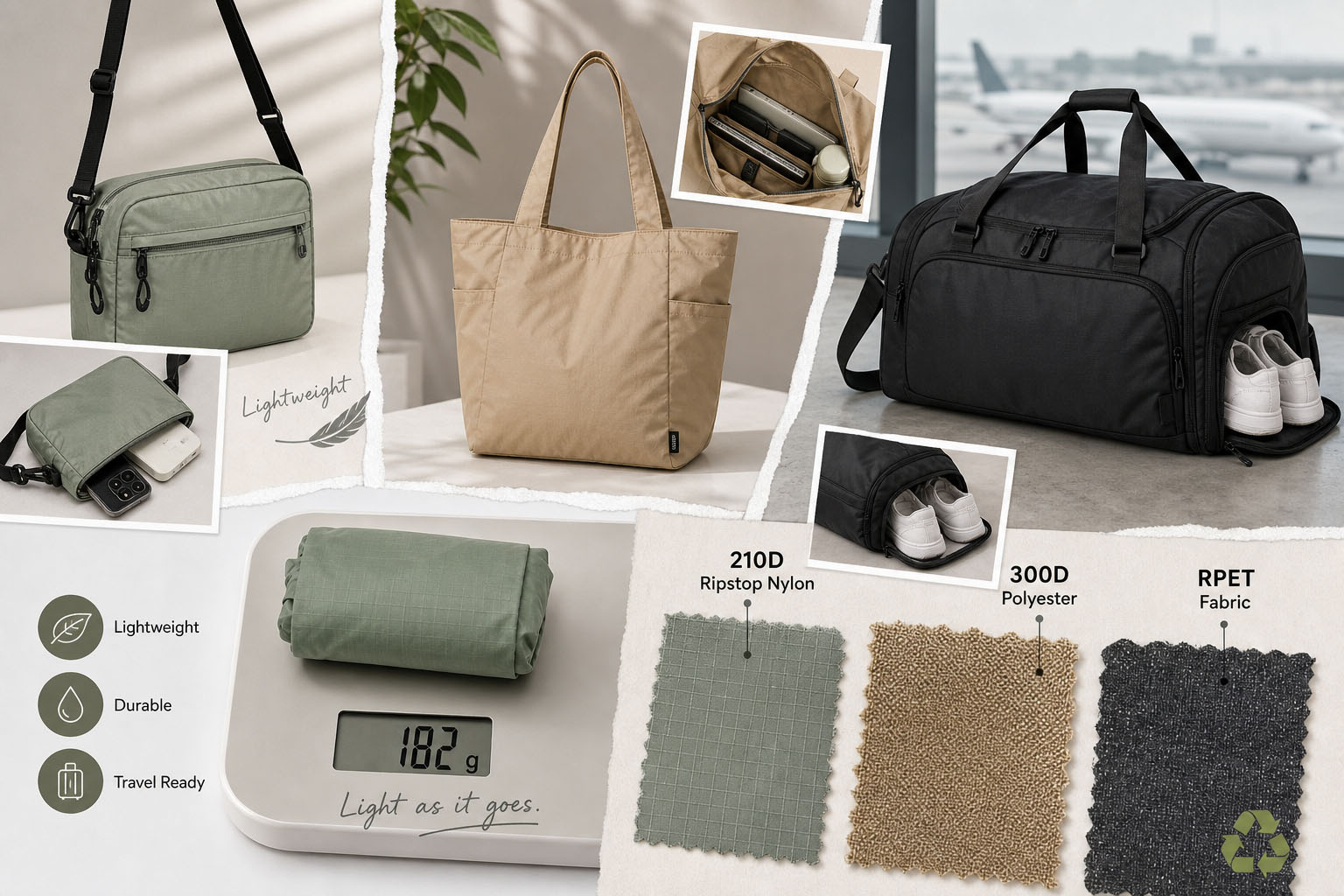
Importing bags directly from Chinese factories gives US independent‑website sellers huge profit potential, yet many e‑commerce operators overlook one critical variable: **bag weight**. Lightweight material selection shapes not only end‑user product experience but also landed cost, shipping expense, product durability and long‑term customer satisfaction. For crossbody bags, tote bags, and travel bags sold on US‑based websites, balancing low weight, acceptable durability, and competitive FOB pricing becomes a core competitive advantage for independent store operators. This article breaks down practical, factory‑verified sourcing knowledge: commonly‑used lightweight fabrics, typical empty‑bag weight benchmarks, durability trade‑offs, abrasion‑testing standards, and how fabric specification impacts your per‑unit FOB price as well as China‑to‑USA shipping expenses. All insights come from real‑world communication with Chinese bag‑making suppliers, helping you craft precise RFQs and avoid costly sourcing mistakes.
Do Chinese Bag Factories Prefer Lightweight Materials for Export‑Oriented Crossbody, Tote and Travel Bags?
Most Chinese bag manufacturers actively recommend lightweight fabrics for crossbody, tote, and travel bags for US market orders. The core driver lies in global logistics economics for cross‑border trade. Freight expense constitutes a large share of total landed cost for US online retailers, so lighter finished goods directly improve your gross margin.
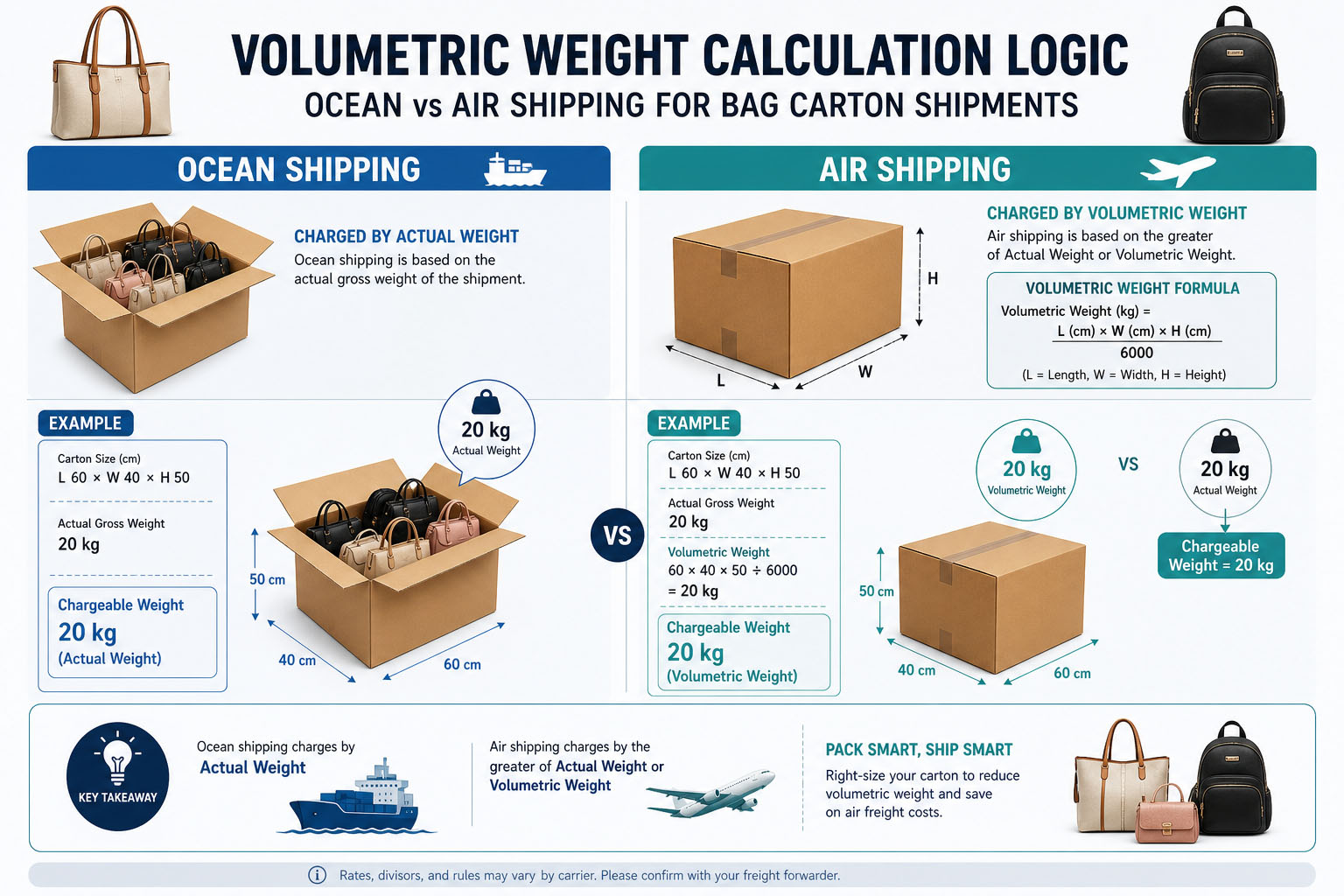
Carriers apply the higher value between actual weight and dimensional weight for air freight and parcel courier services. Even for ocean container shipments, lighter bags allow more finished units inside one container before hitting container weight limits, cutting per‑unit inland trucking and terminal handling fees. Chinese suppliers fully understand that American buyers compare total landed cost: FOB factory price plus international freight plus import duties. Factories will voluntarily propose lightweight construction schemes to keep your overall import cost competitive.
Lightweight material suggestions will not be pushed unconditionally. Two exceptions exist. If your brand targets premium‑luxury positioning, where consumers expect full‑grain leather, heavy thick canvas, and heavy metal hardware, factories will strictly follow your heavy‑weight specifications. If your marketing highlights heavy‑duty rugged performance and you explicitly state weight reduction is not a priority, suppliers will abandon lightweight optimization. In all other general‑market e‑commerce scenarios targeting mainstream US consumers, lightweight construction is the default preferred solution from Chinese bag‑making facilities.
Common Lightweight Fabrics Used by Chinese Factories for Crossbody & Tote Bags
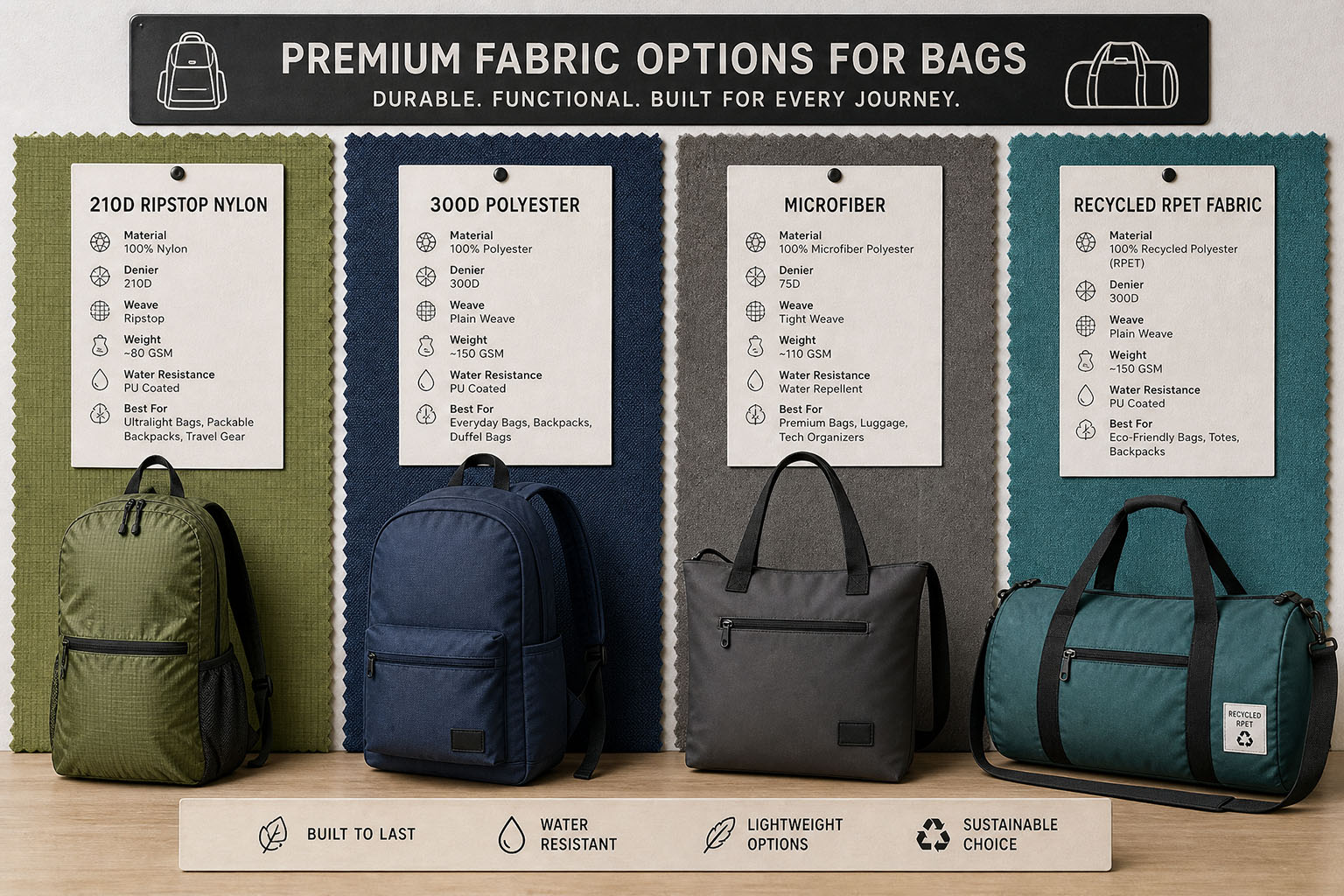
Chinese bag factories deploy a stable portfolio of lightweight textiles tailored for cross‑body bags, tote bags and travel luggage goods. Each material carries distinct strength‑to‑weight performance, price points and end‑market suitability.
210D Ripstop Nylon
210D ripstop nylon ranks among the most widely‑specified lightweight fabrics for export‑focused bags. The ripstop grid weave resists small‑scale tearing while maintaining low overall fabric weight. It is frequently applied to crossbody bags and compact travel pouches. This nylon variant often receives PU or TPU water‑resistant coating. It delivers decent tear strength at very low gram weight, ideal for buyers prioritizing shipping‑cost reduction.
300D Polyester
300D polyester represents the workhorse fabric for mass‑export crossbody bags and casual totes. It balances low weight, decent abrasion performance and moderate unit cost. Recycled RPET polyester, made from recycled plastic bottles, is a fast‑growing variant of 300D polyester, heavily requested by US eco‑conscious independent‑store brands. 300D polyester accepts coating treatments for water repellency without dramatic weight gain.
Microfiber
Microfiber is a synthetic leather alternative. It delivers leather‑like hand feel with significantly lower weight than genuine leather. Factories deploy microfiber for fashion‑oriented crossbody bags and fashion totes. Buyers should note: microfiber varies widely in density. Low‑GSM microfiber cuts weight but sacrifices scratch‑resistance; thicker microfiber improves durability but erodes your lightweight‑saving goals.
Light‑weight canvas & poly‑poplin
Traditional heavy canvas creates substantial weight. Chinese suppliers offer low‑GSM lightweight canvas and poly‑poplin for tote‑bag orders. When you voice shipping‑cost concerns, factories will downgrade canvas GSM instead of switching to full synthetic textiles, preserving the canvas aesthetic while trimming finished‑bag weight. Non‑woven PP appears for low‑cost promotional‑grade tote projects.
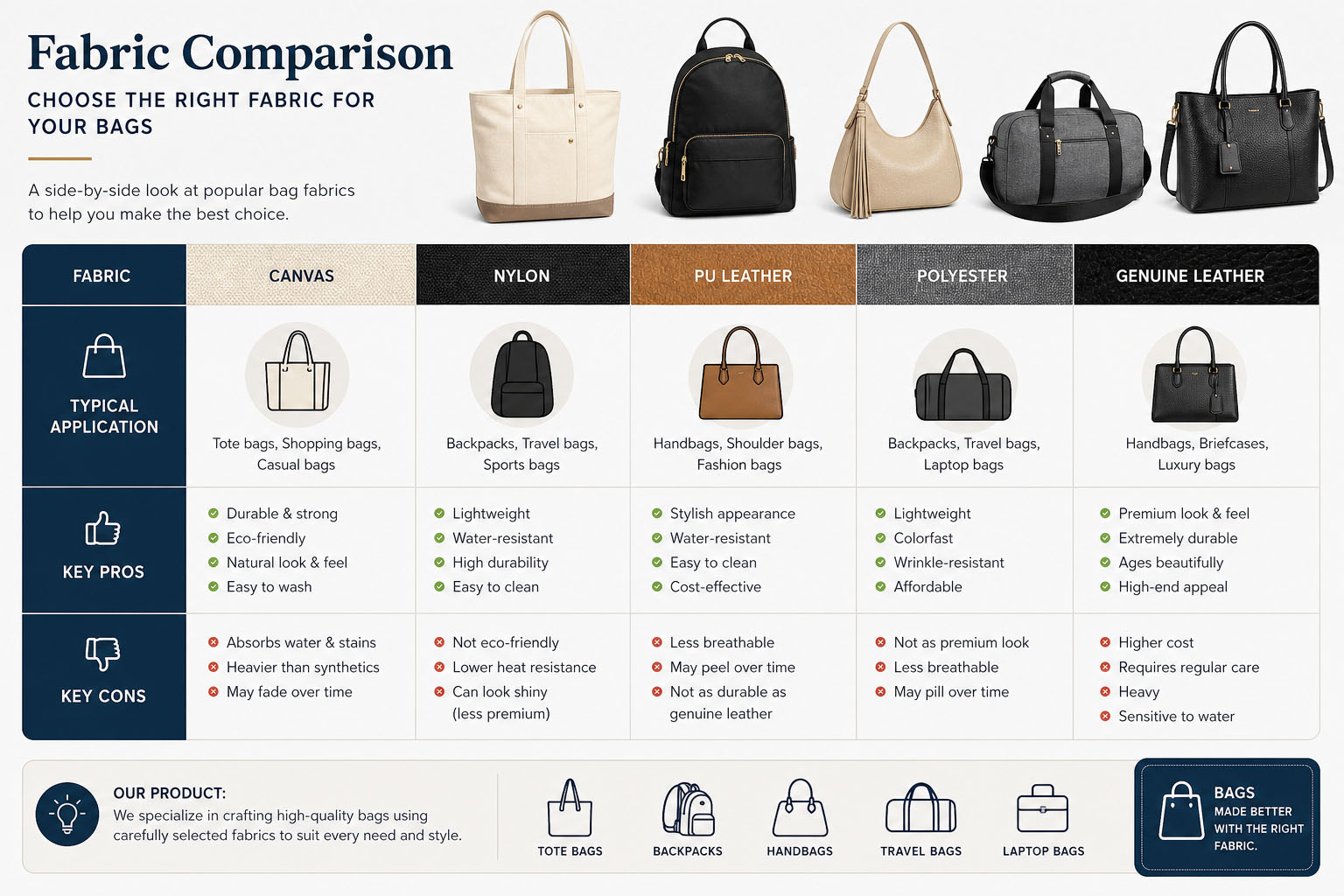
For travel‑oriented duffels, weekender carry‑on bags, factories expand material options to 420D polyester‑nylon blends. Besides base textiles, manufacturers optimize total bag weight through secondary design tweaks: thinner lining fabric, lightweight webbing straps, and reduced heavy metal hardware. These design adjustments cut final product weight without obvious visual downgrade for end consumers.
Typical Empty‑Bag Weight Ranges for Chinese‑Manufactured Crossbody, Tote and Travel Bags
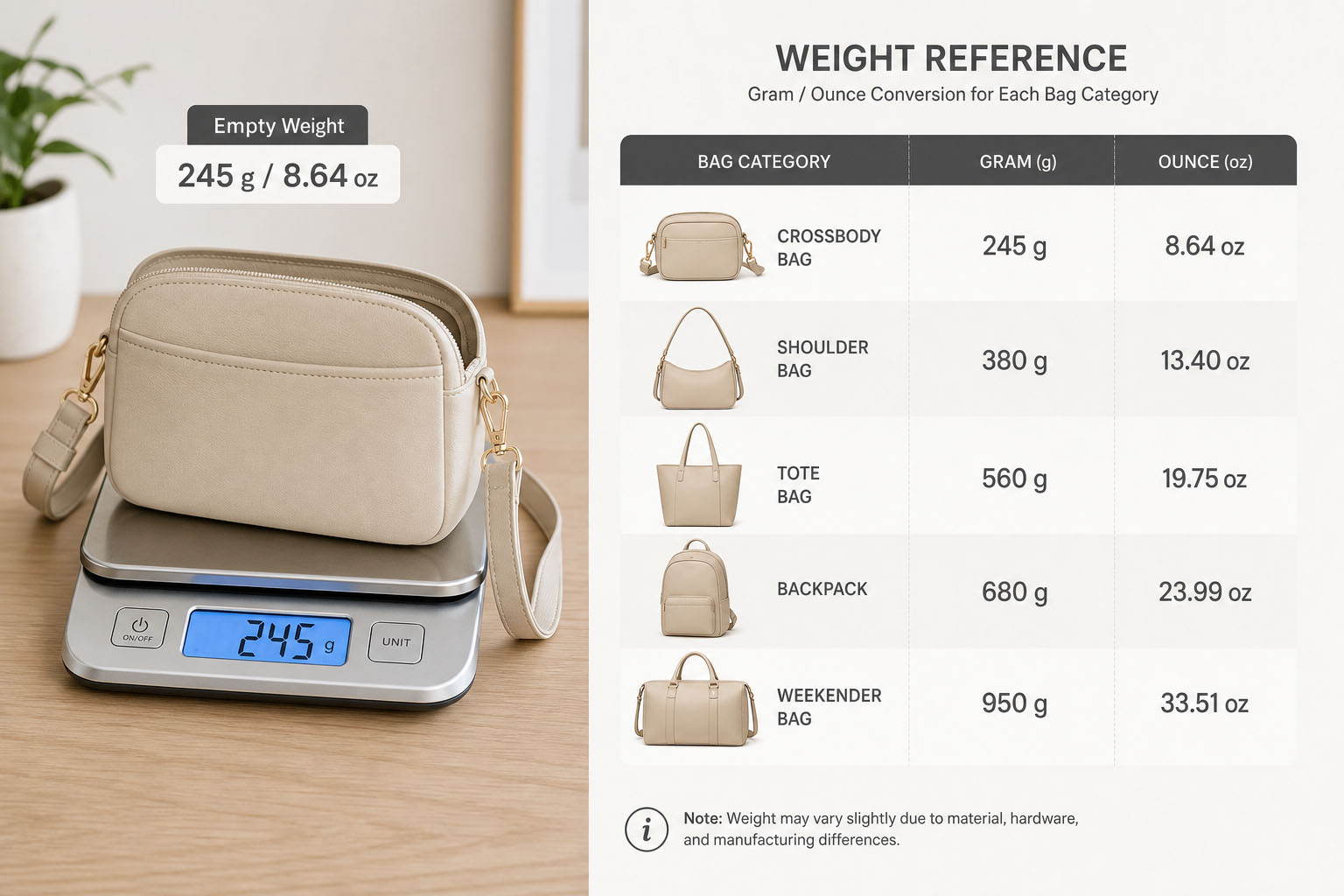
Empty‑bag weight is a critical data point you must request inside every quotation. For mainstream e‑commerce‑grade goods exported to the United States, most finished empty‑bag targets sit **under 500 grams**, with category‑specific typical ranges below.
Crossbody Bags
Standard daily‑use crossbody bags from Chinese factories normally run **150 g‑320 g (5.3‑11.3 oz)**. Ultra‑light minimalist styles can drop to 120 g. Fashion‑focused crossbody bags with metal hardware or microfiber construction trend toward the upper end of this bracket. Heavy‑leather crossbody products can exceed 500 g, these are non‑lightweight premium‑segment exceptions.
Tote Bags
Light‑weight promotional‑style tote bags range from 100 g‑220 g. Fashion daily‑use synthetic‑fabric tote bags land at **220 g‑400 g (7.8‑14.1 oz)**. Thick heavy canvas totes will go over 500 g, which should be avoided if you are optimizing for shipping cost.
Travel Bags (duffels, weekender carry‑on)
Compact lightweight travel duffels and weekend‑sized bags from Chinese suppliers commonly sit **300 g‑500 g (10.6‑17.6 oz)**. Oversized heavy‑duty expedition‑grade travel luggage will exceed this weight ceiling; those belong to separate heavy‑duty product lines.
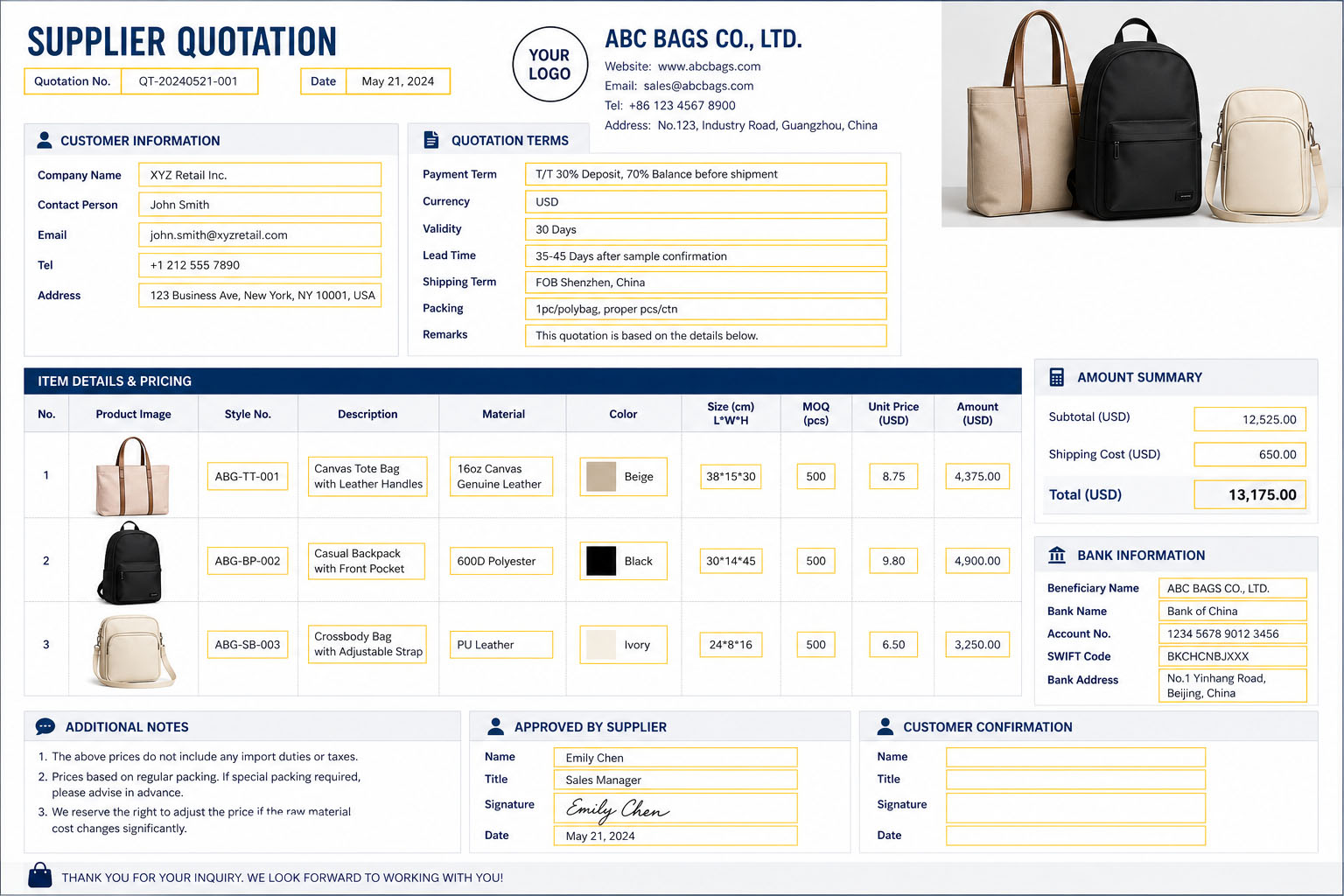
When requesting quotations from factories, explicitly demand finished empty‑bag weight in grams or ounces for every sample or quotation variant. You also need full packing specifications: units per export carton, carton CBM volume, and carton gross weight. These datasets allow you to precisely calculate landed cost per unit before confirming mass production.
Does Switching to Light‑Weight Fabrics Reduce Load‑Bearing Capacity and Long‑Term Durability?
This is the highest‑risk blind spot for US independent‑store sellers. Reducing fabric weight does not automatically mean poor performance, but improper lightweight specification will damage product quality and trigger high return rates on your US website.
Load‑bearing capacity is not purely decided by base fabric. Stitching density, seam reinforcement, webbing strap material, hardware quality, and bottom‑panel reinforcement all govern how much weight a bag can safely hold. You can select lightweight fabric while specifying reinforced seam construction to preserve load‑bearing performance. However, if you push fabric GSM too low without corresponding structural upgrades, tearing and seam failure will appear under regular load.
Long‑term durability must be assessed via standardized abrasion testing. Chinese bag‑making factories deliver abrasion‑resistance test reports following two global mainstream standards: Martindale (ISO 12947) and Wyzenbeek (ASTM D4157).
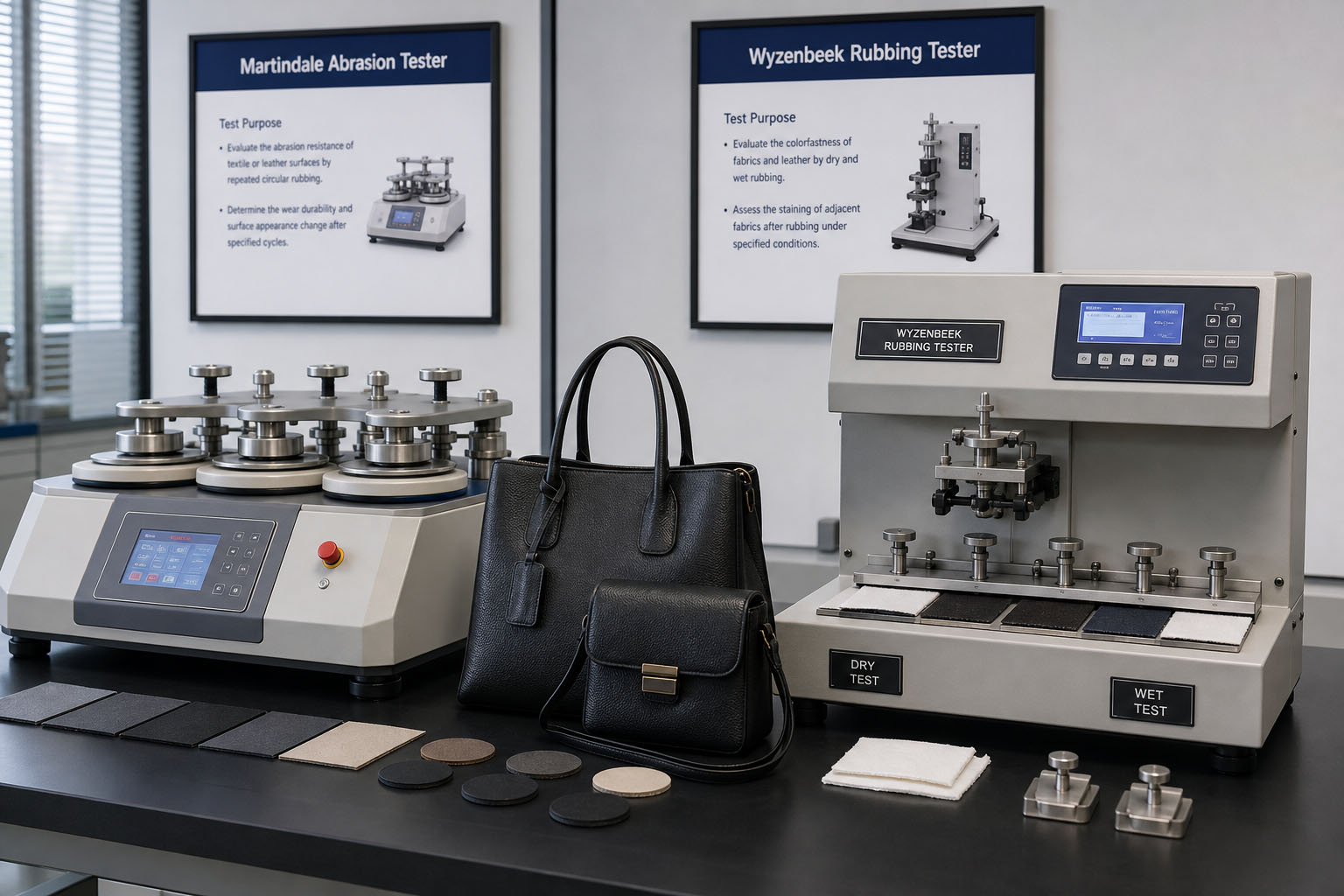
Wyzenbeek test outputs are measured in **double rubs**. Martindale test outputs are measured in **cycles or rubs**. Third‑party certification from SGS, Intertek, or BV can be provided by most Chinese suppliers upon buyer request.
Industry‑accepted performance benchmarks are well‑defined:
- Heavy‑commercial‑use bags: 30 000+ Wyzenbeek double rubs OR 40 000+ Martindale cycles
- Daily‑use handbags: 10 000‑15 000 Wyzenbeek double rubs
- Travel and outdoor‑oriented bags: minimum 20 000+ Wyzenbeek double rubs
Important caveats: Abrasion‑resistance ratings are fabric‑specific. Nylon, polyester, canvas, PU‑coated textiles each have unique baseline durability values. Martindale and Wyzenbeek results cannot be directly converted one‑to‑one, though industry practitioners widely apply a rough practical conversion: 1 Wyzenbeek double rub ≈ 3 Martindale cycles.
Surface protective coatings including PU, PVC and TPU greatly lift abrasion‑resistance scores. Yet these coatings carry their own failure risk: after long‑term wear, surface layers may crack or peel, hurting real‑world service life, even with high lab‑test rub numbers.
Fabric abrasion test scores cannot represent total bag durability. Zipper quality, stitching thread specification, and seam construction are separate test items. High fabric rub‑count results cannot compensate for cheap zippers or loose stitching.
Chinese factories support customizable durability tiers. As a buyer, you may set minimum rub‑count requirements aligned with your target US‑market price point and expected product service life. When you select lightweight fabrics, you must communicate your abrasion‑resistance threshold clearly. Do not only ask for “lighter material” without attaching durability KPIs, otherwise factories may supply ultra‑low‑grade thin fabric that generates negative customer reviews on your independent website.
How Fabric Weight Influences FOB Unit Price and China‑to‑USA Dimensional‑Weight Shipping Expense
Fabric density directly drives two core cost buckets for US importers: factory FOB price, and cross‑border shipping cost from China to United States.
Thinner, lower‑denier fabric generally reduces raw‑material input cost, which tends to pull down per‑unit FOB quotation. But this correlation is not absolute. If you add high‑performance water‑resistant TPU coating, recycled‑content RPET material, or special anti‑abrasion finishing to lightweight textiles, unit FOB cost may rise even while finished‑bag weight goes down. You should compare full quotations side‑by‑side: do not chase lower weight blindly without checking FOB pricing.
Shipping cost impact operates on two fronts: actual weight and dimensional‑weight. Many lightweight bags are soft‑packed without rigid boxes. Even if single‑item actual weight is very low, bulky expanded volume will trigger dimensional‑weight surcharges for air freight and express courier shipments. Two different fabric options may produce similar finished‑bag weight, yet different packed‑volume profiles, creating different dimensional‑weight charges.
Ocean sea freight is less sensitive to single‑unit weight but still has hard container‑weight limits. Lighter‑weight finished goods let you fit more product units into one 20ft or 40ft container before you hit maximum container weight limits, spreading fixed ocean‑freight expenses across more saleable inventory units.
For your independent‑store business, total landed cost equals FOB price + international freight + import duty + local US logistics cost. You need to run comparisons for multiple fabric‑weight proposals from suppliers, calculating full landed cost per sellable unit, instead of only comparing FOB factory prices. A slightly higher FOB cost paired with substantially reduced per‑unit international‑shipping expense can deliver better overall profit margin for your US‑based web store.
Practical Sourcing Scripts & Quotation Checklist for Talking with Chinese Bag Suppliers
When you communicate with Chinese factories, vague requests like “please make bags light” produce inconsistent outcomes. You should deploy clear, targeted sourcing language, and define a fixed quotation checklist for every vendor RFQ.
Recommended email / chat language for supplier communication:
> “We are highly sensitive to per‑unit shipping cost for our US‑based e‑commerce store. Please propose the lightest material and construction solution that still meets our defined quality and product‑warranty requirements.
> For crossbody bags, tote bags and travel bags, kindly evaluate polyester, nylon or RPET textile alternatives instead of heavy canvas or full‑grain leather, to cut our air‑freight and ocean‑freight landed‑cost exposure.
> Please provide fabric GSM / denier options together with finished empty‑bag weight for each alternative, so we can complete accurate landed‑cost modelling.”
Mandatory data you should force every supplier to include inside formal quotations:
1. Exact fabric type plus denier / GSM specification (example: 210D ripstop nylon, 300D RPET polyester)
2. Finished empty‑bag weight in grams or kilograms for each material variant
3. Full export‑packing parameters: quantity per export carton, carton dimension, CBM volume per carton, carton gross weight
4. Abrasion‑performance target: minimum Wyzenbeek double‑rub or Martindale‑cycle value; clarify if third‑party lab certification (SGS / Intertek / BV) is available
5. Key hardware and stitching specifications: zipper grade, seam‑reinforcement scheme
If you share your target retail price point, your mix of bag categories, and whether you mainly ship inventory via sea freight or air freight, suppliers can further refine material suggestions tailored for your US‑market independent‑store business.
Final Takeaways for US Independent‑Website Bag Retailers
Lightweight‑material sourcing for crossbody, tote and travel bags is not simply “choosing thinner cloth”. It is a systematic trade‑off game among fabric specification, physical weight, lab‑verified durability, FOB factory price, and trans‑Pacific shipping expense.
Chinese bag‑making factories have abundant lightweight‑material options including 210D ripstop nylon, 300D polyester, recycled RPET, microfiber and low‑GSM canvas. Empty‑bag weight under 500 grams is achievable for most mainstream e‑commerce‑grade crossbody, tote and compact‑travel‑bag SKUs. Reducing weight does not automatically destroy durability, but you must lock down standardized abrasion‑test benchmarks (Wyzenbeek double rubs / Martindale cycles), and do not overlook stitching, seam‑reinforcement and hardware quality. Always request full packing‑volume and finished‑weight data so you can calculate real landed‑cost per unit.
US sellers operating independent websites gain tangible competitive edges when they master this sourcing knowledge: you can deliver well‑performing lightweight bags to end consumers, while keeping import‑logistics expenditure under control and protecting long‑term product‑review ratings on your storefront.
Post time: Aug-21-2026