
Logo Durability for Custom Bags: A Complete Buyer’s Guide for Canvas, Leather, Nylon & Polyester
Meta suggestion for your blog: Whether you source canvas totes, leather handbags, nylon backpacks or polyester sports bags, your custom logo defines your brand. This guide breaks down logo application methods, expected service life, resistance to washing, sunlight and abrasion, and factory testing standards to help US bag buyers select the most durable branding for custom bag inventory.
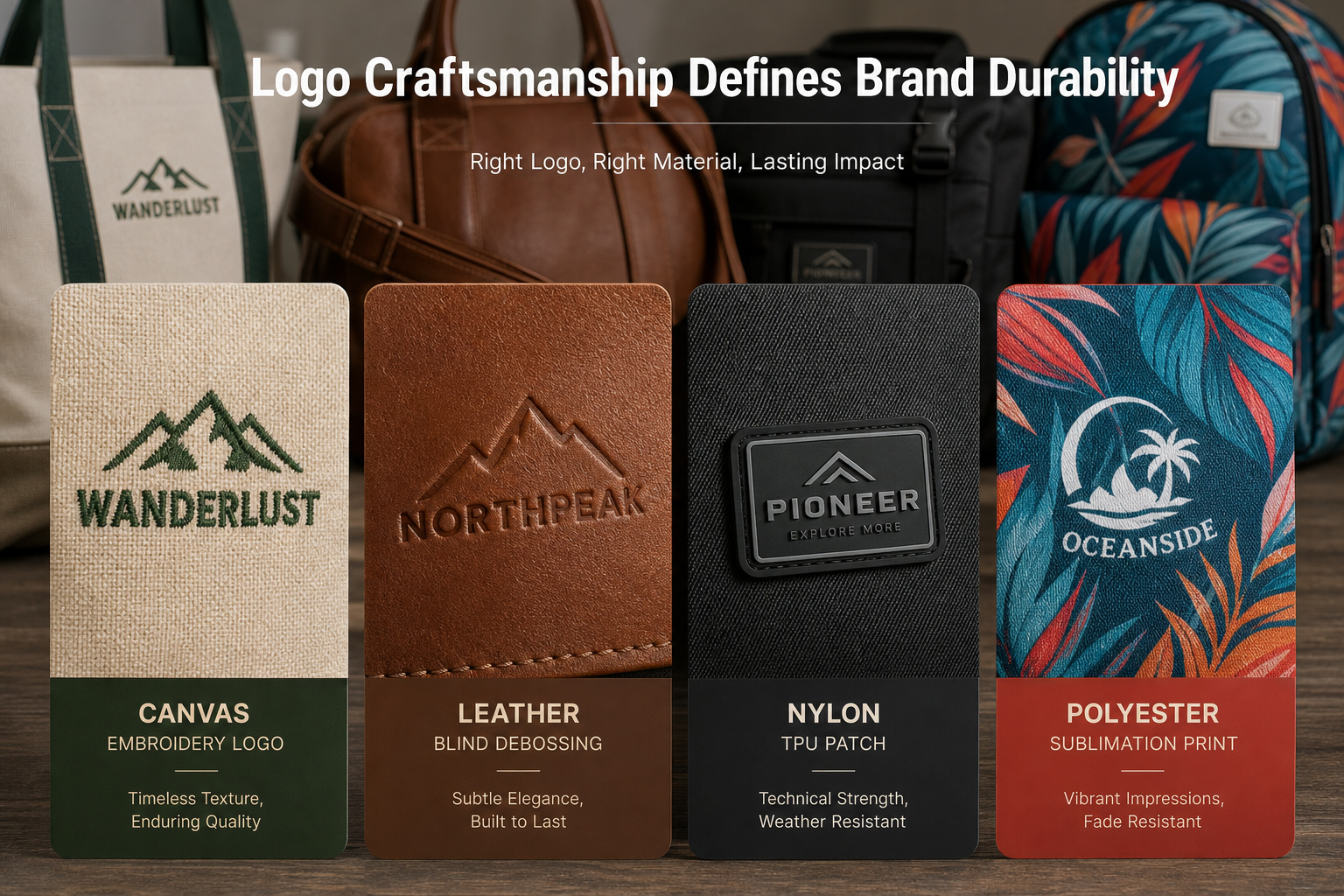
Branding is the soul of every bag product sold on your US e-commerce store. A beautiful bag can lose brand value quickly when its logo fades, cracks, peels or rubs off after a few months of customer use. Many importers focus only on artwork and cost when ordering custom bags from Chinese manufacturers, overlooking one critical factor: logo long-term durability across different bag substrates.
Different bag materials — canvas, genuine leather, PU leather, nylon and polyester — respond very differently to embroidery, debossing, heat transfer, screen printing, sublimation and patch branding. There is no universal logo method that performs perfectly on all fabrics and leathers. Daily friction, repeated washing, UV sunlight exposure and continuous bending will degrade logo finishes at different rates.
This guide is written for US bag importers and independent website sellers. It compares common logo techniques, expected service life, resistance tests, material-specific recommendations, and key questions you must ask your Chinese suppliers before bulk production. We will also share practical sourcing specifications and quality control practices to reduce defective inventory and customer complaints.
How Long Do Different Logo Methods Last on Canvas, Leather, Nylon and Polyester Bags?
One of the most frequent questions bag buyers ask Chinese factories is the expected lifespan of custom logos under normal daily use. Many buyers mistakenly assume all permanent-looking logos will last for the full service life of the bag. In reality, longevity depends heavily on substrate, logo process, raw materials and factory craftsmanship.
Embroidery delivers the highest long-term durability on canvas bags. Stitched logos resist abrasion and washing far better than most printed methods. With proper thread selection and backing, well-made embroidery on canvas can remain intact and legible for many years of regular use.
Debossing and hot stamping are the most durable logo options for leather goods. When pressure is applied to compress the leather surface, the logo impression becomes a permanent part of the hide. This mark will not easily peel off like surface printing.
Sublimation works uniquely on polyester and nylon. The dye chemically bonds into fiber structure rather than sitting on top of fabric. This creates outstanding resistance to fading and peeling compared with surface printed logos.
Sewn-on woven labels or leather patches outperform adhesive glued patches on all bag materials. Glue bonds break down over time from flexing, moisture and temperature changes. Most glued patches start delaminating within 2 to 3 years, while double-stitched leather patches on canvas can stay intact and readable for years.
Fully cured screen printing on canvas and polyester can survive more than 50 wash cycles without obvious degradation. The ink remains bonded to the fabric surface as long as the factory completes proper heat curing during production.
Metal logo plates fixed by rivets or screws offer the longest-lasting branding on leather and heavy canvas. In many cases, the metal logo remains intact even after the bag fabric wears out.
Heat transfer vinyl is a popular low-cost option, but it degrades faster than screen printing or embroidery on nylon and polyester. UV exposure and repeated fabric bending will gradually make the vinyl crack, lift and peel.
PVC or rubber molded patches have strong abrasion resistance and perform better than printed logos on nylon. This makes them a common choice for outdoor bags, tactical packs and sports bags.
Adding a UV-resistant top coating over printed logos on nylon and polyester greatly improves outdoor color retention and extends service life for products exposed to sunlight.
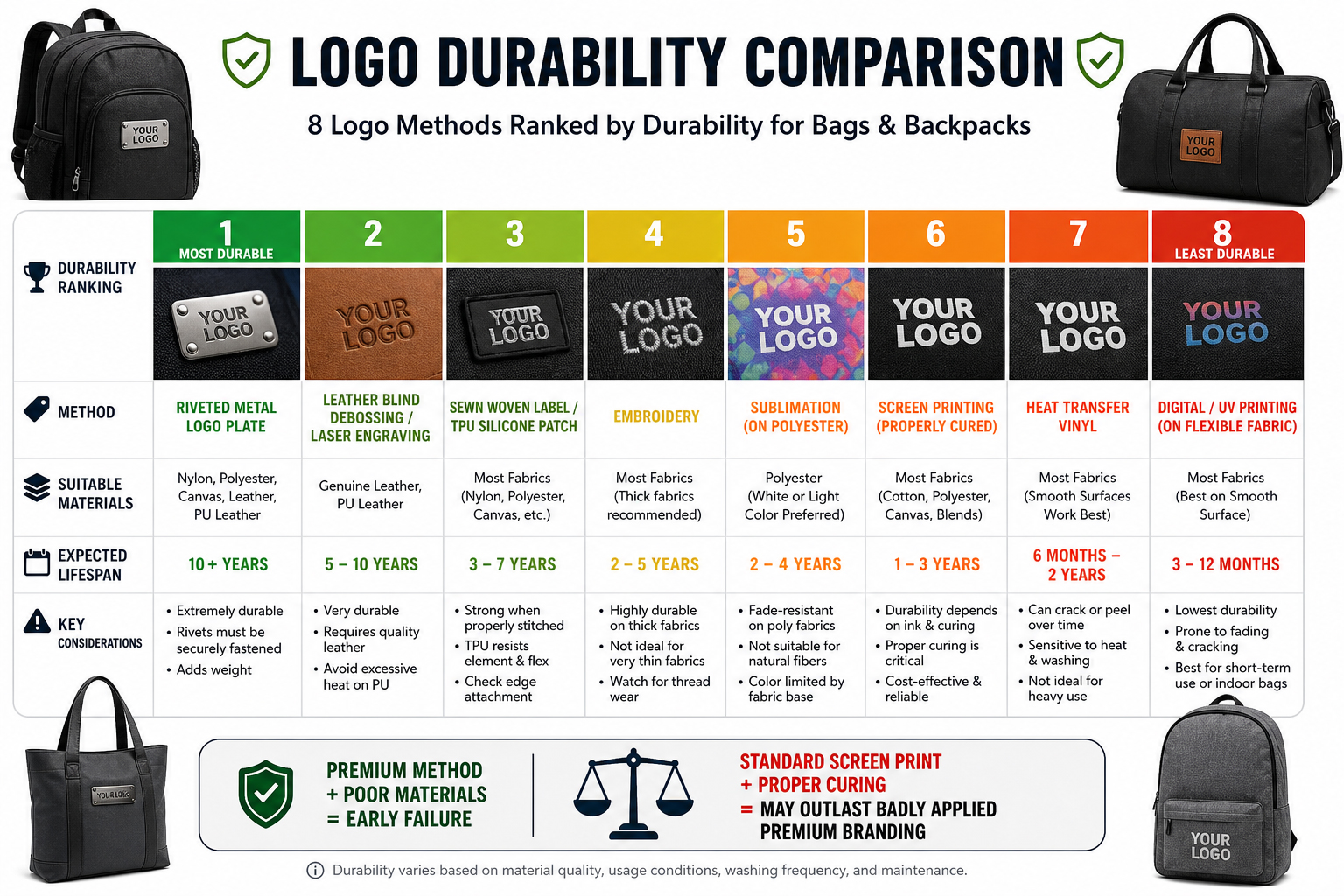
Which Logo Method Has the Best Resistance to Washing, Sunlight and Abrasion on Nylon and Polyester Bags?
Nylon and polyester are dominant materials for backpacks, outdoor gear, gym bags and travel luggage. End users often expose these bags to rain, repeated washing, strong sunlight and heavy friction. Not all logo processes hold up well under these harsh conditions.
Many buyers assume metal logos are the top choice for nylon and polyester bags against washing, sunlight and abrasion. While riveted metal badges have excellent wear resistance, metal plates add stiffness and weight. They are not suitable for lightweight soft nylon or thin polyester fabrics, and sharp edges may scratch users or catch during washing.
For most nylon bags, sewn woven labels and TPU or silicone patches are the preferred durable solution. Sewn construction avoids peel risk entirely. Heat-sealed TPU and silicone patches stay flexible, waterproof and resistant to rubbing. Embroidery also lasts well, but factory teams must be careful: needle holes can damage waterproof coatings on coated nylon and create leak points. Improper stitching may weaken fabric panels.
Sublimation is the premium full-color solution for light-colored polyester. Since dye penetrates into polyester fibers, the logo will not peel. It maintains color stability through washing and UV exposure when using high-quality sublimation ink. Sublimation cannot work on dark fabrics because the base fabric color will cover the printed design.
Screen printing with high-performance, fully cured ink works well for simple solid logos on polyester. Ordinary heat transfer prints look clean on new bags, but the film layer will lift after repeated washing and abrasion. UV coating can be applied over printed logos to block UV rays and reduce fading for outdoor products.
Embossing vs Printing: Which Is More Durable for Genuine Leather and PU Leather Bag Logos?
Leather bags split into two main categories: genuine leather and PU / vegan leather. Logo performance differs sharply between these two substrates. Many buyers confuse embossing and debossing, and underestimate how quickly surface printed leather logos wear out.
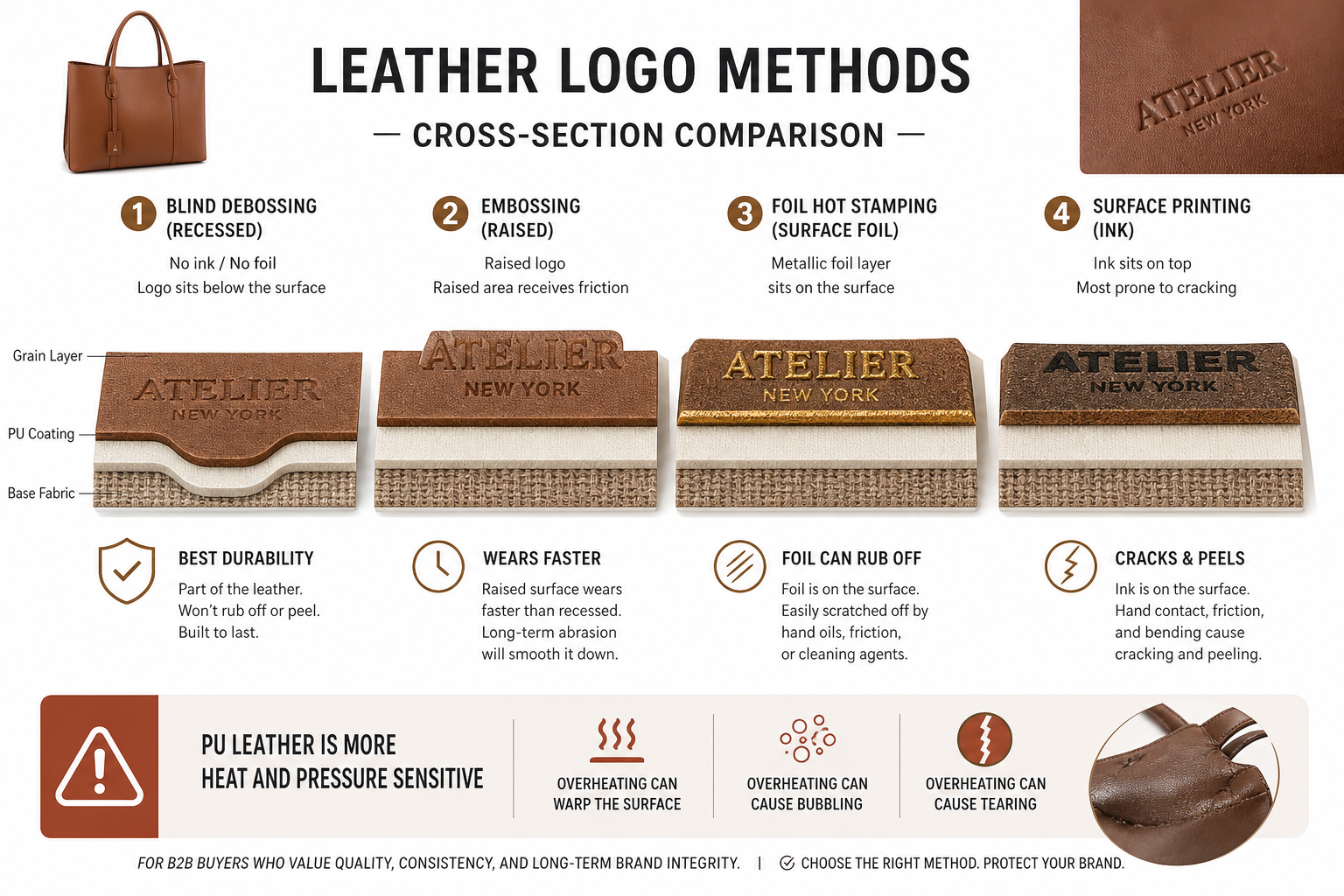
For leather goods, blind debossing is the most durable choice. Blind debossing creates a recessed logo pressed into leather without added ink or foil. The logo sits below the material surface, so daily rubbing does not directly wear away the mark. Embossing creates a raised logo on leather. Raised embossed areas receive constant friction during use, so embossed marks will wear faster than recessed debossed logos over time.
Foil hot stamping creates an attractive luxury metallic finish, but foil layers sit on the leather surface. Scratches, hand oils and cleaning chemicals will gradually erase foil details. Laser engraving works on selected leather types. Always request physical samples, as laser heat can burn or discolor leather surfaces.
Surface printing on genuine leather and PU leather is the least durable option. Printed ink sits on top of the leather surface. Hand contact, friction and bending will crack and wear away printed logos quickly.
PU leather is more sensitive to heat and pressure than genuine leather. Too much heat or pressure during debossing or embossing can warp, bubble or tear thin PU material. If you want metal badges on PU bags, stitched badges are safer than glued metal plates. Glue may separate from artificial leather over time.
Material-by-Material Logo Selection Guide
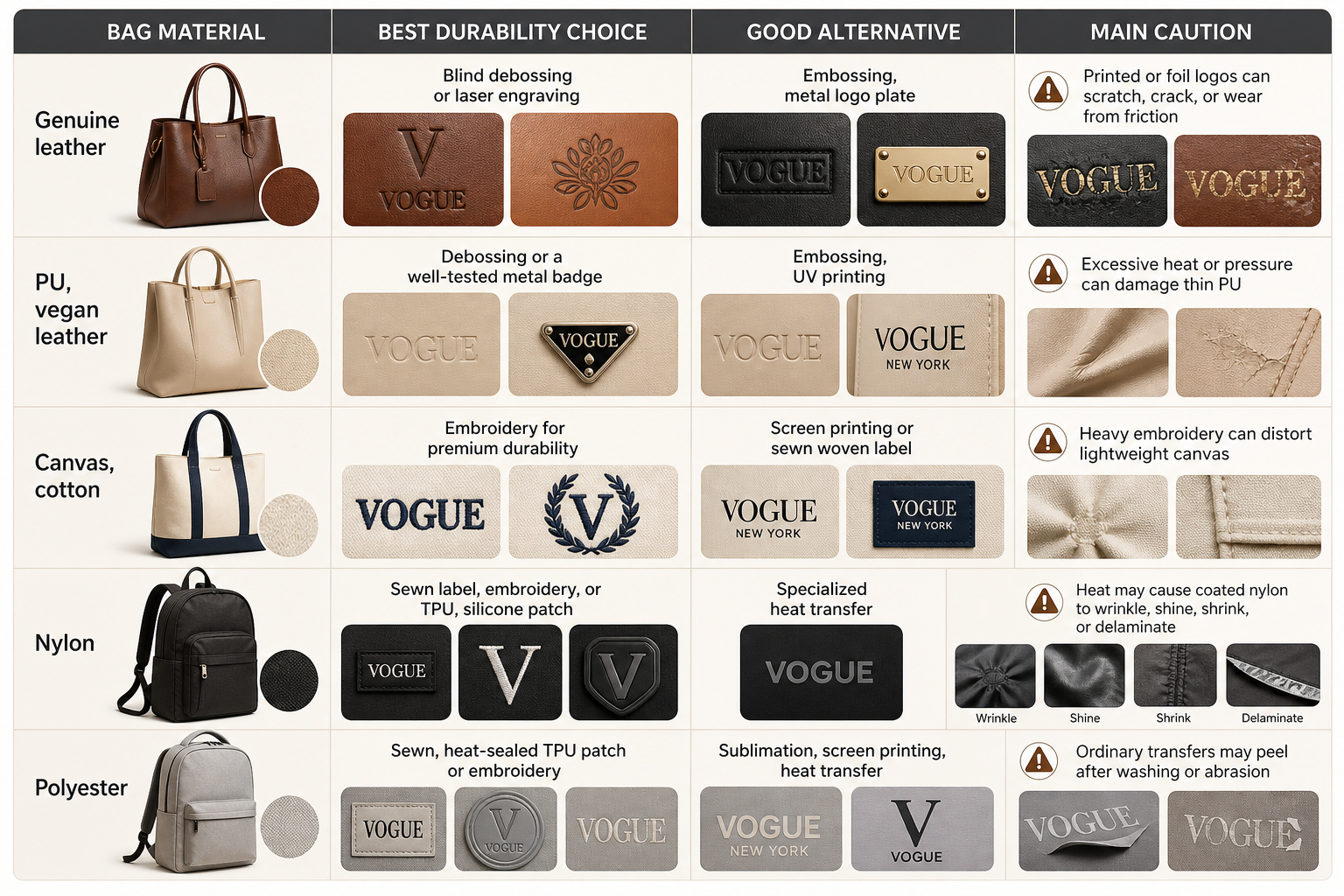
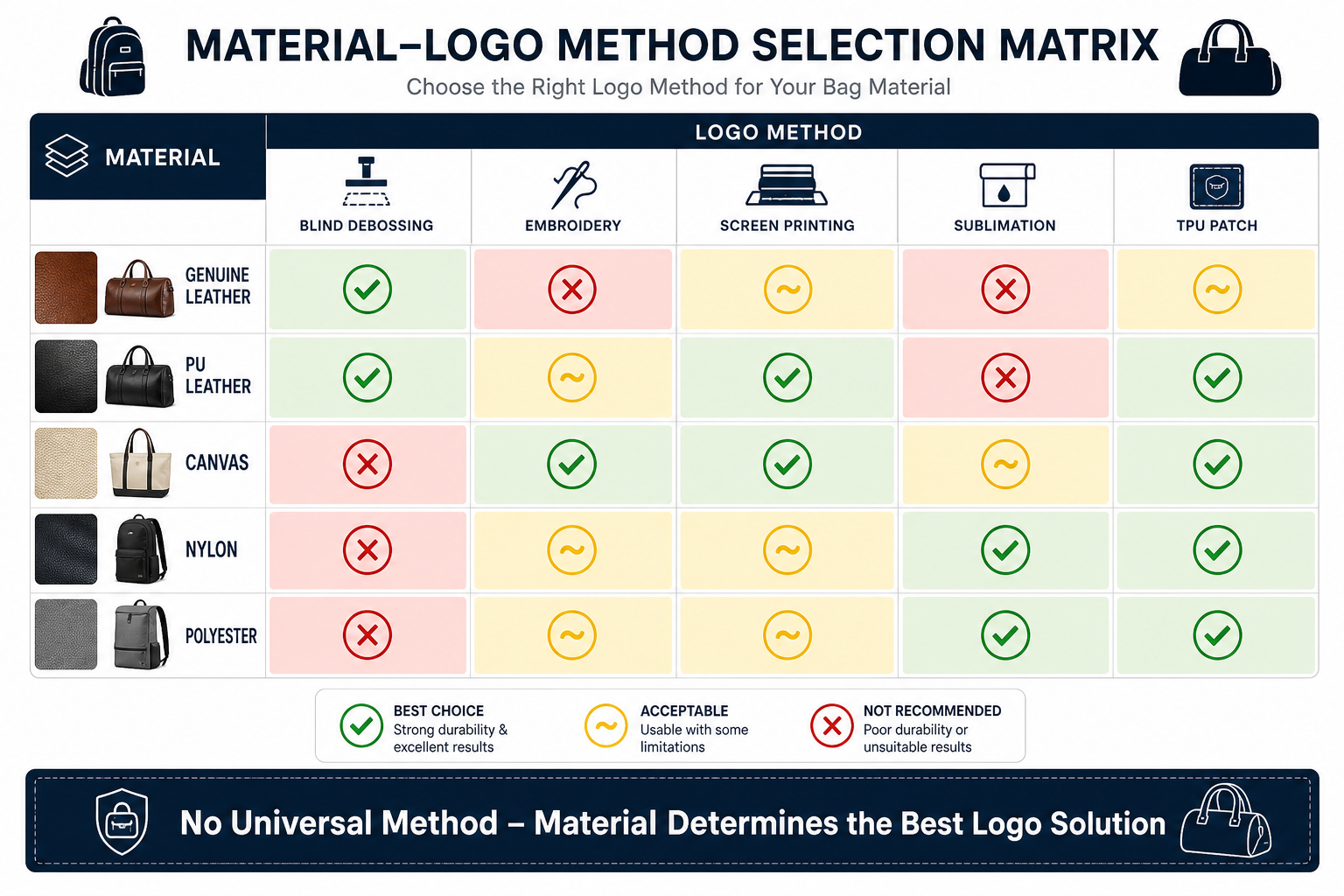
No single logo technology works best for all bag materials. The following table summarizes the best durable options, acceptable alternatives and critical pitfalls for each substrate.
Genuine & PU Leather Bags
Blind debossing remains our top recommendation for leather handbags. It delivers subtle branding and excellent long-term durability. For luxury visual appeal, you can select gold or silver foil stamping, but you must communicate to customers that foil will wear with heavy use. Riveted metal badges are extremely durable when mechanically secured, not glued. Laser engraving needs pre-production sampling because leather grain variation changes final results.
Canvas Totes & Canvas Bags
Screen printing with fully cured ink is the most cost-effective choice for large runs of canvas totes with simple 1–3 color logos. It handles large artwork well. Embroidery is ideal for small and medium logos requiring maximum physical durability. Woven labels are perfect for fine text and intricate details. Avoid dense, oversized embroidery on thin canvas fabric; heavy stitching pulls fabric and creates puckered, stiff panels.
Nylon Backpacks & Outdoor Nylon Bags
Sewn woven labels and TPU or silicone patches are the most reliable options for nylon outdoor bags. Patches can be stitched around edges or heat sealed, offering strong resistance to water, abrasion and repeated handling. TPU and silicone patches are widely used on tactical, sports and outdoor bags for flexibility and wear resistance. Embroidery is durable, but test waterproof coating integrity after stitching. Heat transfer can achieve clean results only when factories use matched temperature, pressure and adhesive film for your exact nylon fabric.
Polyester Sports Bags
Your logo selection for polyester depends entirely on artwork style. Sublimation is ideal for light-colored polyester with full-color detailed graphics, as dye integrates into fiber. Screen printing works best for simple bold logos. Heat transfer fits small batch orders and complex designs, but durability depends entirely on film quality and factory application skills. Sewn patches are the safest heavy-duty option for high-abrasion sports bags.
General Durability Ranking of Logo Processes
This ranking acts as a practical purchasing reference for US bag importers. It is not absolute, because poor execution can make a premium logo method fail faster than basic screen printing. Fabric coating, ink formula, adhesive quality, curing temperature, stitch density and end-use environment all change real-world performance.
1. Leather blind debossing or laser marking
2. Sewn or riveted metal logo plate
3. Sewn woven label or TPU/silicone patch
4. Embroidery
5. Sublimation on polyester
6. Properly cured screen printing
7. Heat transfer vinyl
8. Unspecified digital or UV printing on flexible fabric
Always remember: a high-end logo technique made with low-quality raw materials or improper factory settings will fail early. A well-cured standard screen print can outlast badly applied premium branding.
Quality Testing Standards Chinese Factories Use for Logo Durability Before Bulk Shipment
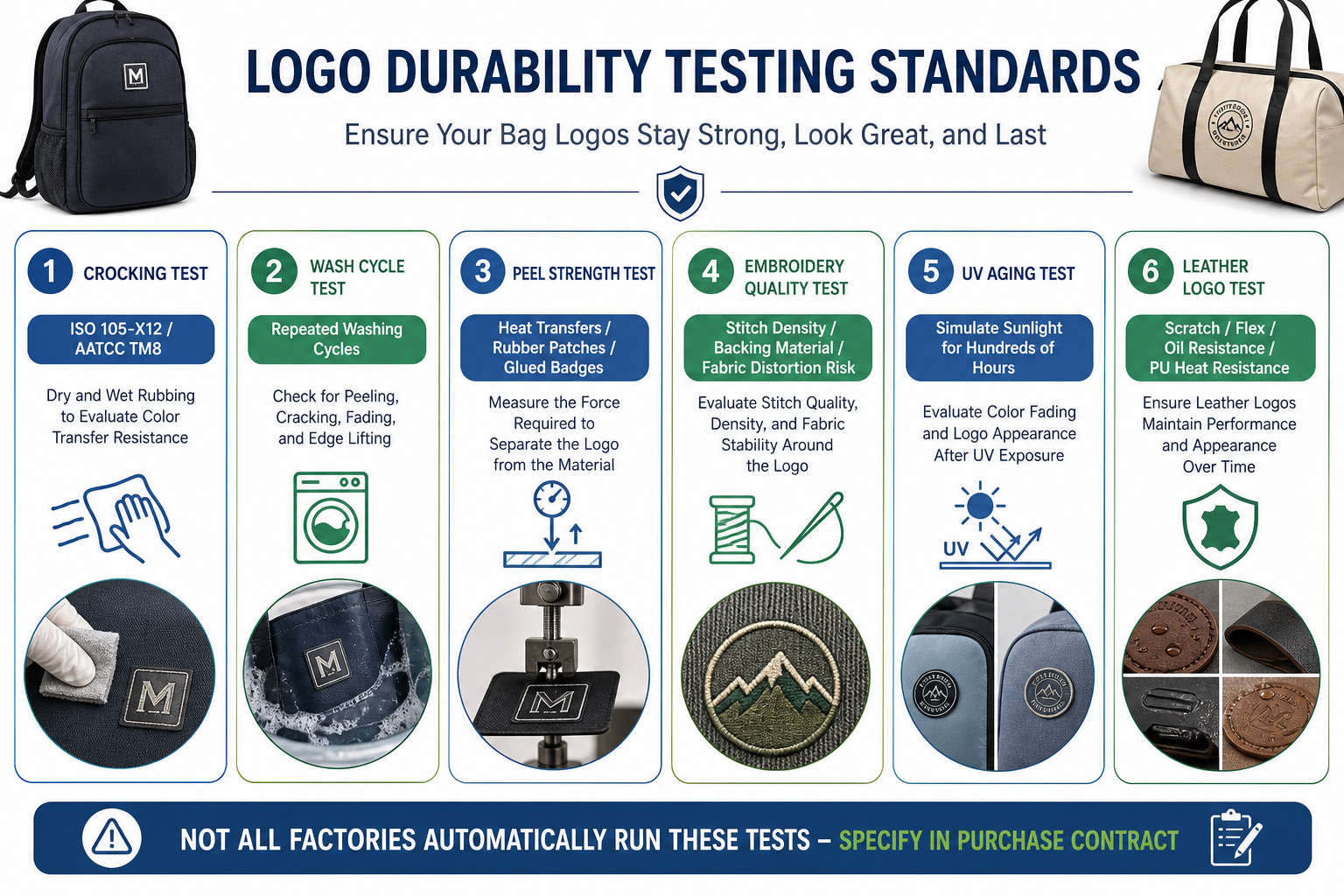
Reputable Chinese bag manufacturers perform standardized textile and leather tests to verify logo durability before mass shipment. As a US buyer, you should request test reports and sample validation rather than trusting verbal promises.
Two globally recognized rub testing standards are widely used in bag manufacturing: ISO 105-X12 and AATCC TM8. Both measure crocking — color transfer during dry and wet rubbing. These tests simulate everyday friction when customers touch, carry or rub the bag against clothing.
For printed and transfer logos, factories run wash cycle tests. Samples go through repeated washing cycles to check peeling, cracking, fading and edge lifting. You can ask suppliers for the number of completed wash cycles before logo failure, plus before-and-after photos of test samples.
Peel strength tests apply to heat transfers, rubber patches and glued badges. The test measures how much pulling force is required to separate the logo layer from the bag substrate. Low peel strength means logos will lift easily after bending and washing.
Embroidery quality tests check stitch density, backing material and fabric distortion risk. Factories use cut-away or tear-away backing to stabilize stitching. Without proper backing, embroidery will pull lightweight fabric out of shape.
For outdoor products, UV aging testing exposes logo samples to simulated sunlight over hundreds of hours. This test evaluates color fading for bags sold in sunny climates.
Leather logo tests focus on resistance to scratch, flex and oil contamination. PU leather also undergoes heat resistance testing to confirm debossing and printing will not deform under temperature changes.
Not all factories automatically run these tests. Many small manufacturers skip formal lab testing unless buyers explicitly require it in the purchase contract. Pre-production sample testing by your team remains the most reliable verification method. Bend, scratch, wash and rub your approved samples for several days to simulate real customer use before approving mass production.
Critical Questions to Ask Your Chinese Bag Suppliers
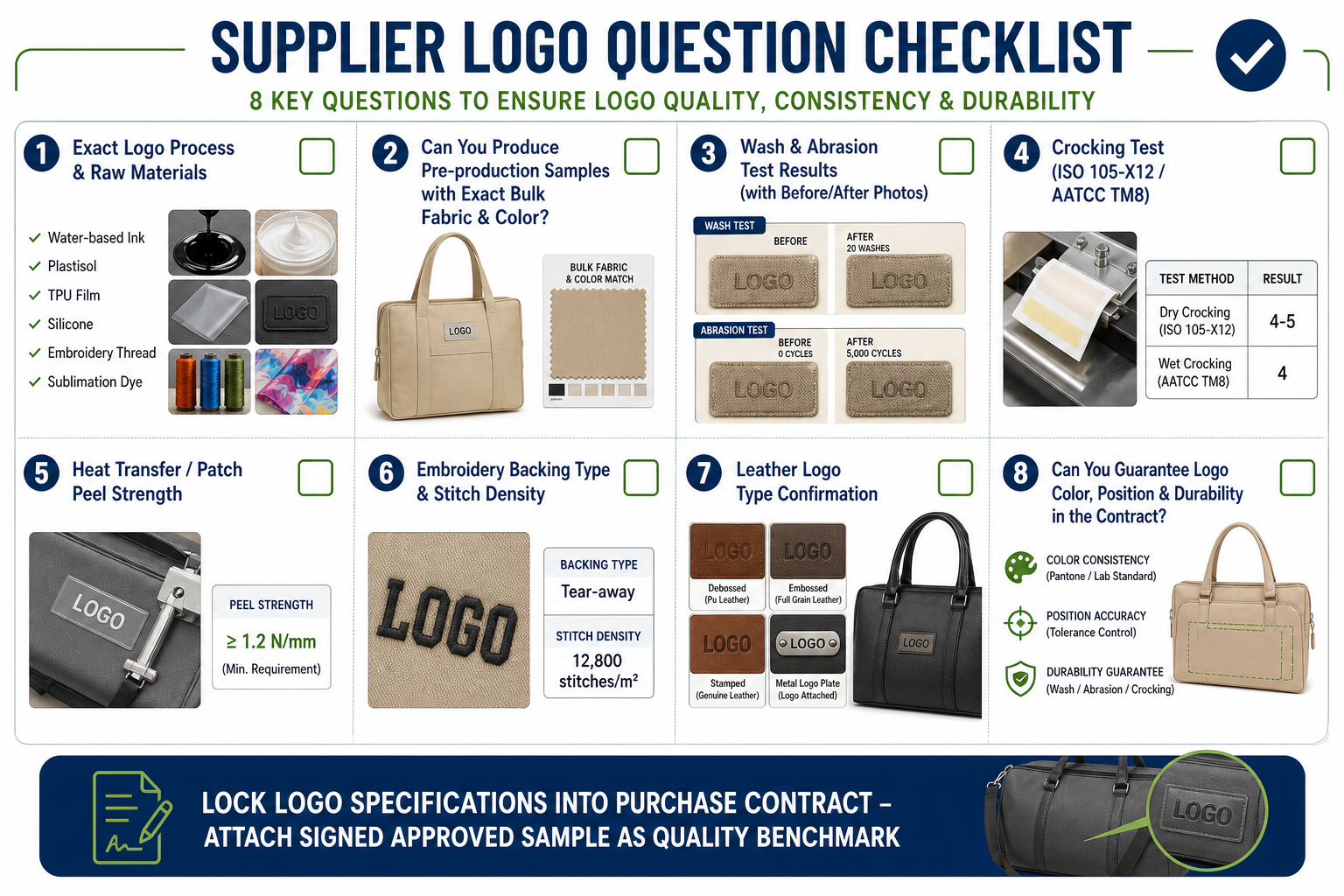
Use these questions during supplier communication and include requirements in your purchase order. Clear specifications reduce disputes and defective cargo.
* Which exact logo process and raw materials will you use? Confirm if it is water-based ink, plastisol ink, PU transfer film, silicone, TPU, embroidery thread, sublimation dye or other material.
* Can you produce physical pre-production samples made with the exact bag fabric and color you will use in bulk? Never approve a logo only from digital renderings.
* What are your wash and abrasion test results? Request before-and-after photos and full test conditions.
* For fabric logos, can you complete dry and wet crocking tests following ISO 105-X12 or AATCC TM8 standards?
* For heat transfers and patches, what peel strength result can you provide? How many wash cycles and abrasion cycles can the logo survive before lifting, cracking or peeling?
* For embroidery, what backing type and stitch density will you apply? Confirm whether stitching will distort your bag fabric.
* For leather products, confirm whether the logo uses blind debossing, foil stamping, embossing or surface printing. Also confirm whether the material is genuine leather, bonded leather, microfiber or PU leather, as results vary significantly.
* Can you guarantee logo color, position tolerance and durability performance inside the formal purchase order? Attach the signed approved sample as quality benchmark and define defect acceptance standards.
Recommended Default Logo Specification for Mixed Bag Product Lines
If your independent website sells a mixed bag collection covering leather handbags, canvas totes, nylon backpacks and polyester sports bags, use this standardized sourcing framework:
* Leather handbags: blind debossed logo
* Canvas totes: screen printing for large economical orders; embroidery or woven labels for premium lines
* Nylon backpacks: sewn TPU/silicone patch or sewn woven label
* Polyester sports bags: sublimation for full-color artwork; screen printing for simple logos; TPU patch for heavy outdoor use
Final Takeaway for US Bag Sellers Sourcing from China
Your custom logo is a permanent mark on your brand reputation. A logo that fails quickly creates product returns, negative reviews and lost customer trust on your US website. Cost and artwork aesthetics should never be your only decision points. Always match logo technology to your bag material and end-user environment.
The safest workflow for every order is clear specification → pre-production sample creation → manual durability testing by your team → formal sample approval → bulk production with factory quality testing. Never skip sample validation. Even experienced factories can make mistakes when switching fabric batches or logo materials. By selecting the right logo method, defining test requirements and locking standards into your purchase order, you will deliver durable branded bags and build long-term brand trust with your US customers.
Post time: Sep-11-2026