
Microfiber Shedding in Synthetic Bags: What Every U.S. Bag Buyer Needs to Know Before Sourcing from China (2025 Buyer’s Guide)
Last updated: 2025 | Reading time: ~14 minutes
Why “Does It Shed?” Is the New “Is It Waterproof?”
Three years ago, the most common question a U.S. bag buyer asked a Chinese factory was whether the fabric was waterproof. Last year, it became “is it PFAS-free?” This year, a quieter but more scientifically grounded question is rising to the top of every responsible brand’s sourcing checklist: how much microfiber does this bag shed?
Walk into any oceanographic research lab, scroll through the latest IPCC reports, or read the front page of a single-issue environmental publication, and you’ll find the same statistic repeated with uncomfortable consistency: synthetic textiles are now one of the primary sources of primary microplastic pollution in marine environments, and a meaningful share of those microplastics originate as microfibers shed from the bags, jackets, and backpacks we use every day.
For a U.S. bag brand selling through Shopify, Amazon, or a DTC website, this is not just a sustainability talking point. It is a regulatory reality that is arriving on a faster timeline than most importers expect. The European Union is preparing mandatory microfiber-shed labeling under the Ecosystem Services and Product Sustainability Regulation (ESPR), and forward-thinking U.S. brands are already pre-empting similar requirements by working with their Chinese suppliers to reduce fiber release at the source.
This guide is written for independent-station sellers and small-to-mid-size bag brands who want to source responsibly from China — without sacrificing margins, MOQs, or design flexibility. We’ll cover the four questions you absolutely must ask, the ten material and finishing insights that will reshape your next production run, and the supplier communication playbook that turns vague “eco-friendly” promises into verifiable specifications.
The Four Questions You Must Ask Your Chinese Factory
Before we get into the deeper material science, let’s establish the foundation. If you only have time to ask your supplier four questions during your next RFQ, these are the ones that matter. Each one is designed to force a specific, falsifiable answer — not a marketing platitude.
Question 1: Testing and Documentation
“Can the factory provide third-party test reports — such as ISO 9073 or ASTM D4970 — measuring microfiber shedding from synthetic bag fabrics?”
ISO 9073 (the textile nonwovens testing family) and ASTM D4970 (Standard Test Method for Pilling Resistance and Other Related Surface Changes of Textile Fabrics) are the two methodologies most often cited when measuring fiber release. A reputable factory should be able to provide either or both on request, dated within the last 12 months, on the exact fabric you intend to source. Generic mill data on a different fabric is not sufficient. A test report on a 600D polyester is not a substitute for a test report on your 600D polyester with your specified finish.
Question 2: Material Alternatives
“Which natural fibers, recycled synthetics, or bio-based alternatives does the factory recommend as low-shedding substitutes for nylon and polyester?”
This question forces the factory to demonstrate that they understand the difference between a marketing claim and a material specification. Look for specific answers: organic cotton, hemp, linen, jute, recycled nylon (Econyl), bio-PET, PLA-based fibers, or cellulose-based options like Tencel/Lyocell. Vague answers like “we can do eco materials” are a red flag.
Question 3: Finishing Technology
“What shed-reduction finishing technologies — such as yarn pre-coating, tight-weave construction, or thermal bonding — does the factory apply to minimize fiber release?”
This is the most technical question and the one that separates commodity factories from serious ones. Yarn pre-coating, thermal bonding, high-density weaves, and ripstop patterning are all real, commercially available technologies. The answer you receive should reference at least one specific process by name, with a quantitative reduction claim.
Question 4: Performance Trade-offs
“How do microfiber-reduction treatments affect the bag’s hand-feel, water repellency, breathability, and overall production cost?”
Honest suppliers will tell you the trade-offs. A yarn pre-coating that reduces shedding by 40% will also change the hand-feel — sometimes softer, sometimes stiffer. A tighter weave may reduce breathability. A thermal-bonded finish may add 5%–12% to unit cost. Any factory that says “no trade-offs” is not being honest with you.

10 Insights That Will Reshape How You Source Bags from China
The following insights come from hands-on work with U.S. brands and Chinese factories across the natural-fiber, recycled-synthetic, and conventional-synthetic categories. Each one is something your factory probably won’t volunteer unless you ask — and each one has real implications for your product, your margins, and your brand story.
Insight 1: Microfiber Shedding Is Now a Regulated Risk, Not Just a Sustainability Buzzword
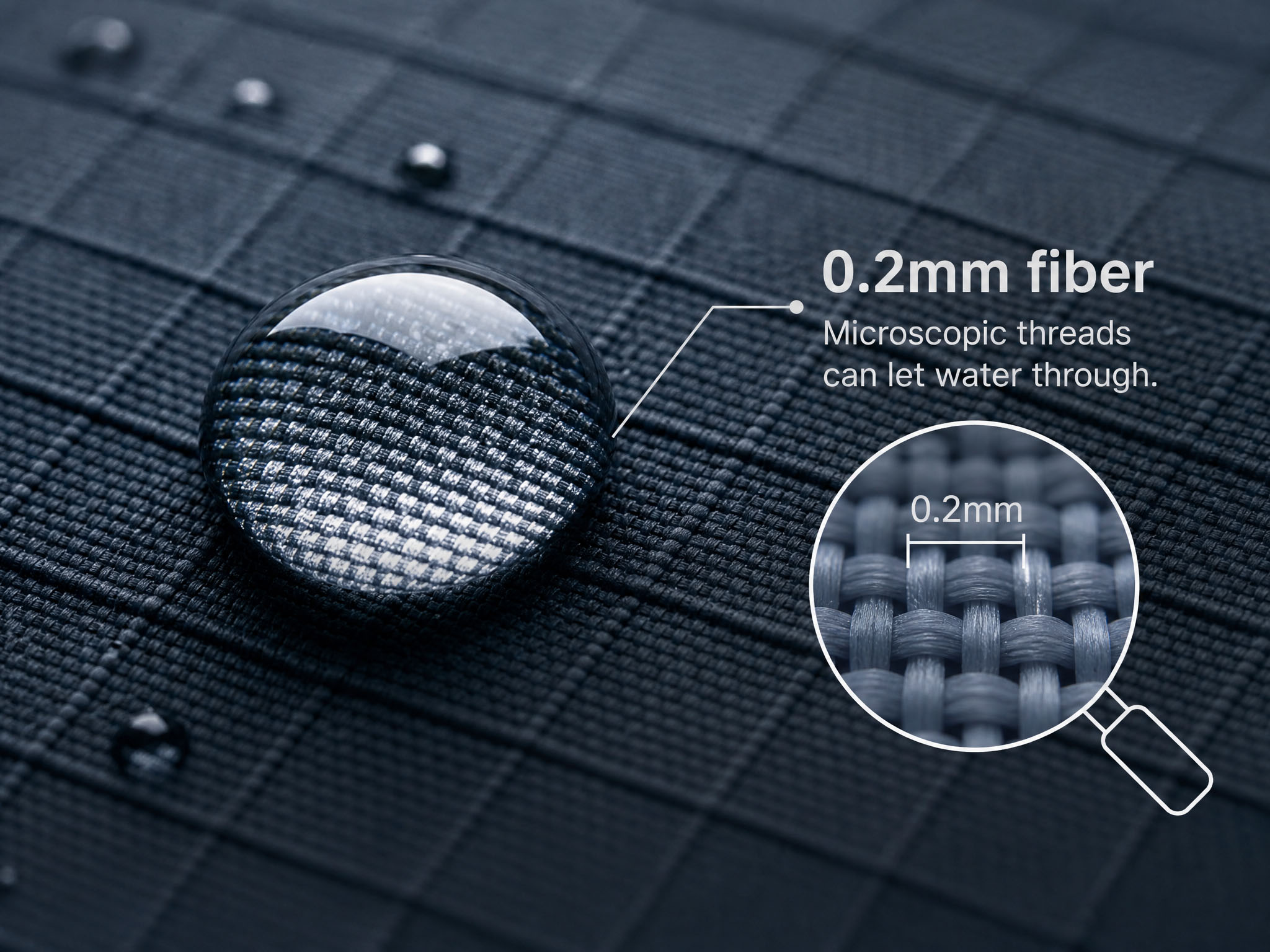
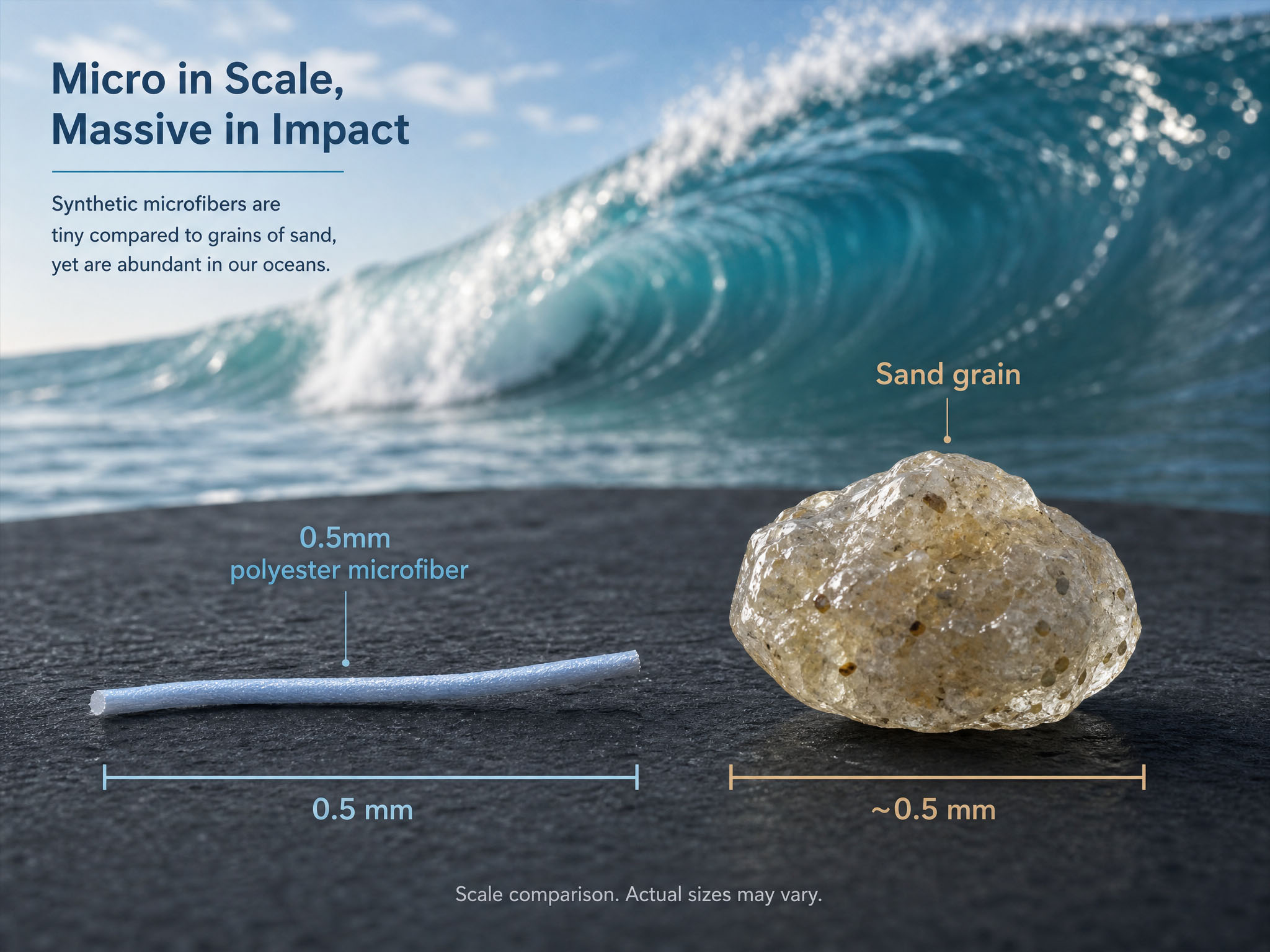
Microfiber shedding — the release of tiny synthetic fibers during use, washing, and disposal — is now a recognized source of ocean plastic pollution driving buyer scrutiny. A single home wash of a synthetic-fabric backpack can release hundreds of thousands of microfibers into wastewater, most of which pass through treatment plants and into rivers, lakes, and oceans. The Ellen MacArthur Foundation, the Ocean Conservancy, and academic researchers at UC Santa Barbara and Plymouth Marine Laboratory have all published peer-reviewed data on this. The EU’s ESPR framework will require microfiber-shed disclosure on textile labels within the next 24–36 months, and U.S. state legislatures are watching closely. If you are a U.S. brand selling across state lines, the safe assumption is that this is coming to your category within three to five years.
Insight 2: Tight Weaves, High Denier, and Ripstop Patterns Are the Factory’s First Line of Defense
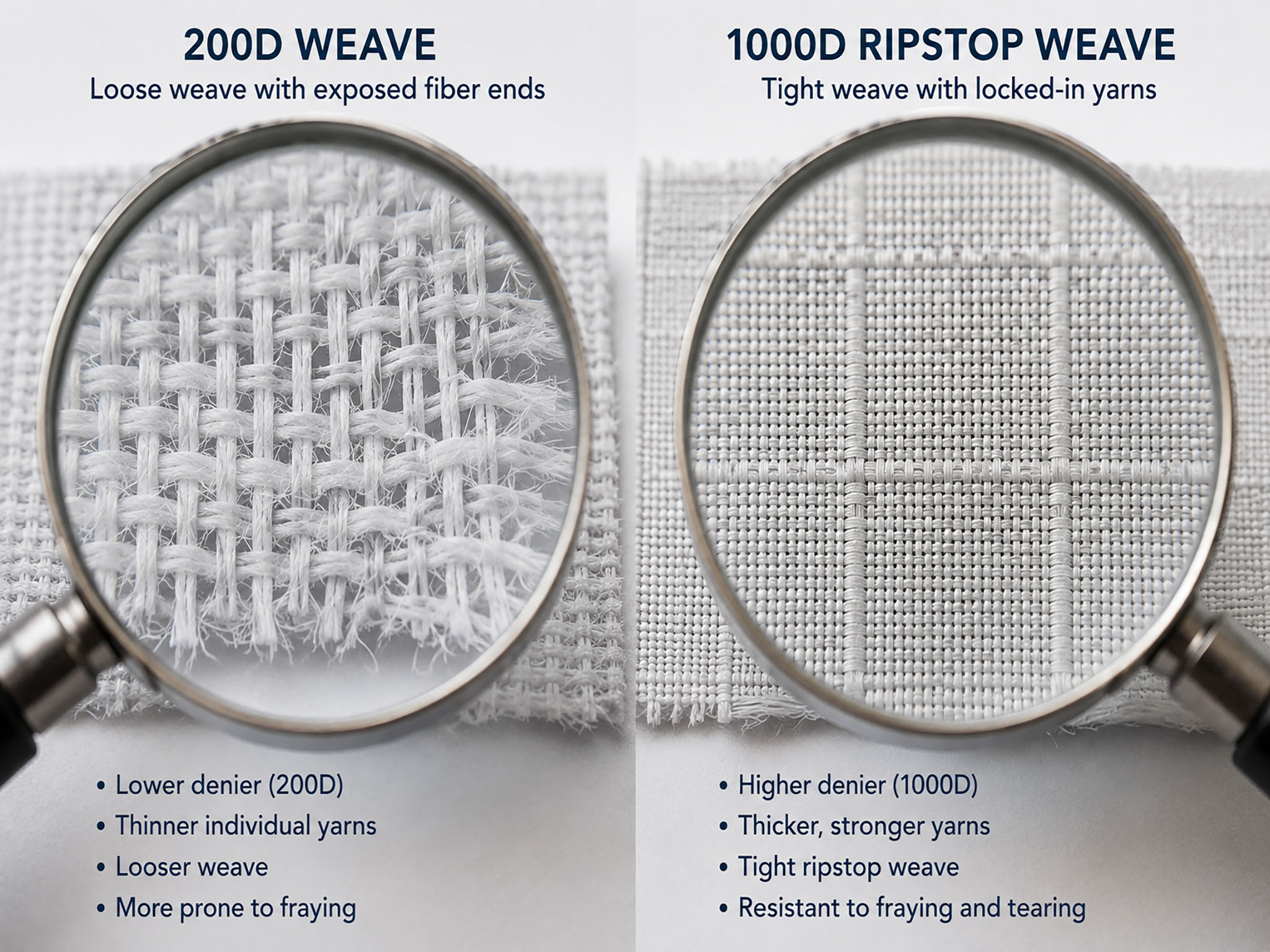
Tight-weave construction, high-density denier counts, and ripstop patterns are commonly used by Chinese factories to reduce fiber release from nylon and polyester bags. A 1000D cordura with a tight plain weave will shed dramatically less than a 200D ripstop with a loose weave, even when both fabrics weigh the same. The structural reason: tightly packed yarns physically constrain each other, so individual filaments have less room to break free during abrasion or washing. When evaluating a fabric, ask the factory for the thread count (T), the denier (D), and the weave pattern (plain, twill, ripstop, oxford). A higher T + higher D + tighter weave is the cheapest, most accessible microfiber-reduction strategy available — and it typically costs nothing extra.
Insight 3: Yarn Pre-Coating and Thermal Bonding Can Cut Fiber Release by 30%–70%
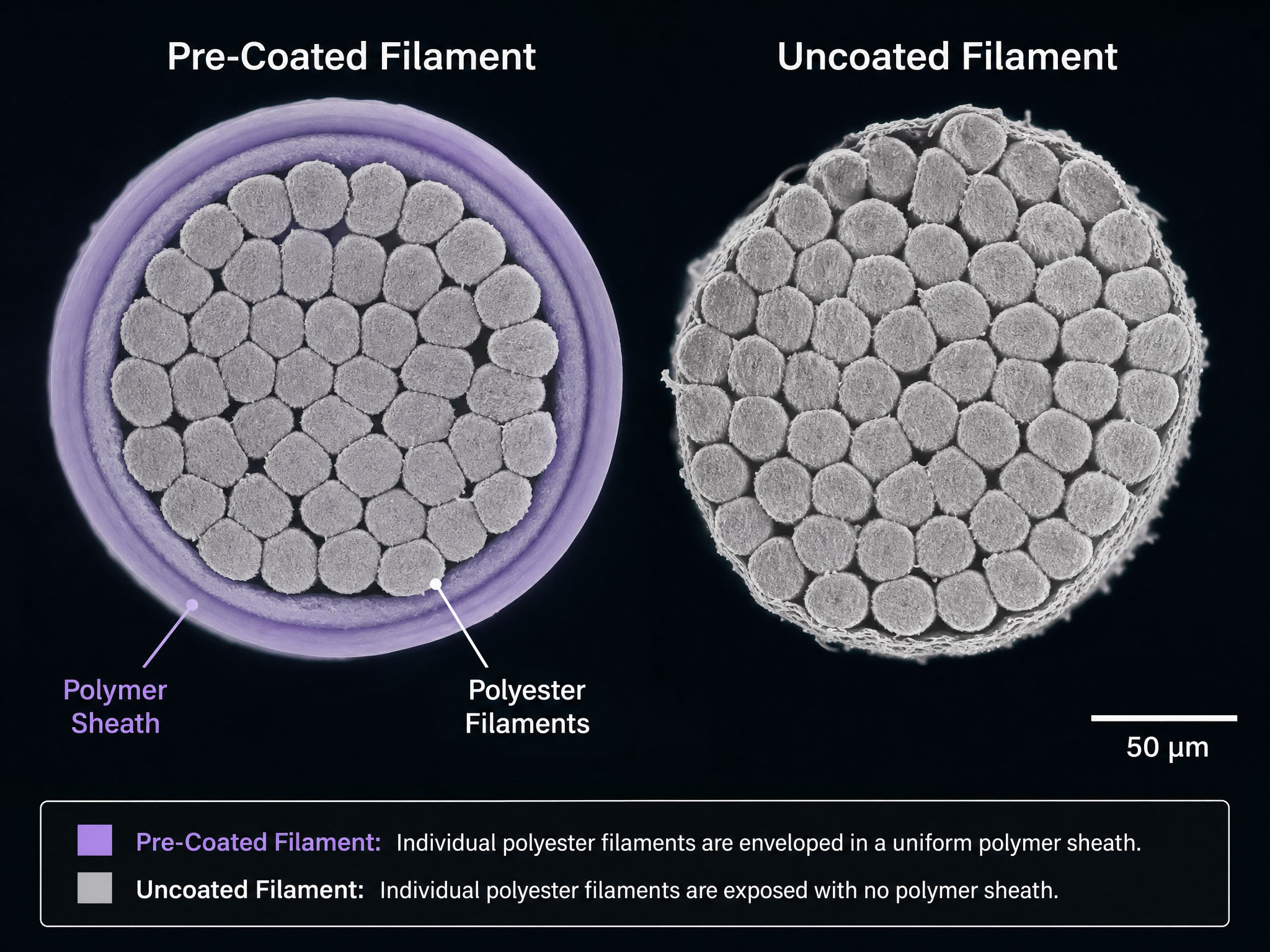
Yarn pre-coating and thermal-bonding treatments lock fibers in place during fabric finishing, reducing microfiber release by 30%–70% in third-party tests. Yarn pre-coating is applied at the fiber-spinning stage — the yarn is dipped or extruded through a polymer coating that welds loose filaments together before weaving. Thermal bonding happens at the finishing stage, where controlled heat and pressure fuse the surface fibers into a more stable matrix. Both technologies are widely available in Chinese finishing mills, particularly those serving the outdoor and athleisure markets. Ask the factory specifically: “Do you offer yarn pre-coating, and on which fiber types?” If they look confused, escalate to “Can you source pre-coated yarn from your upstream supplier?”
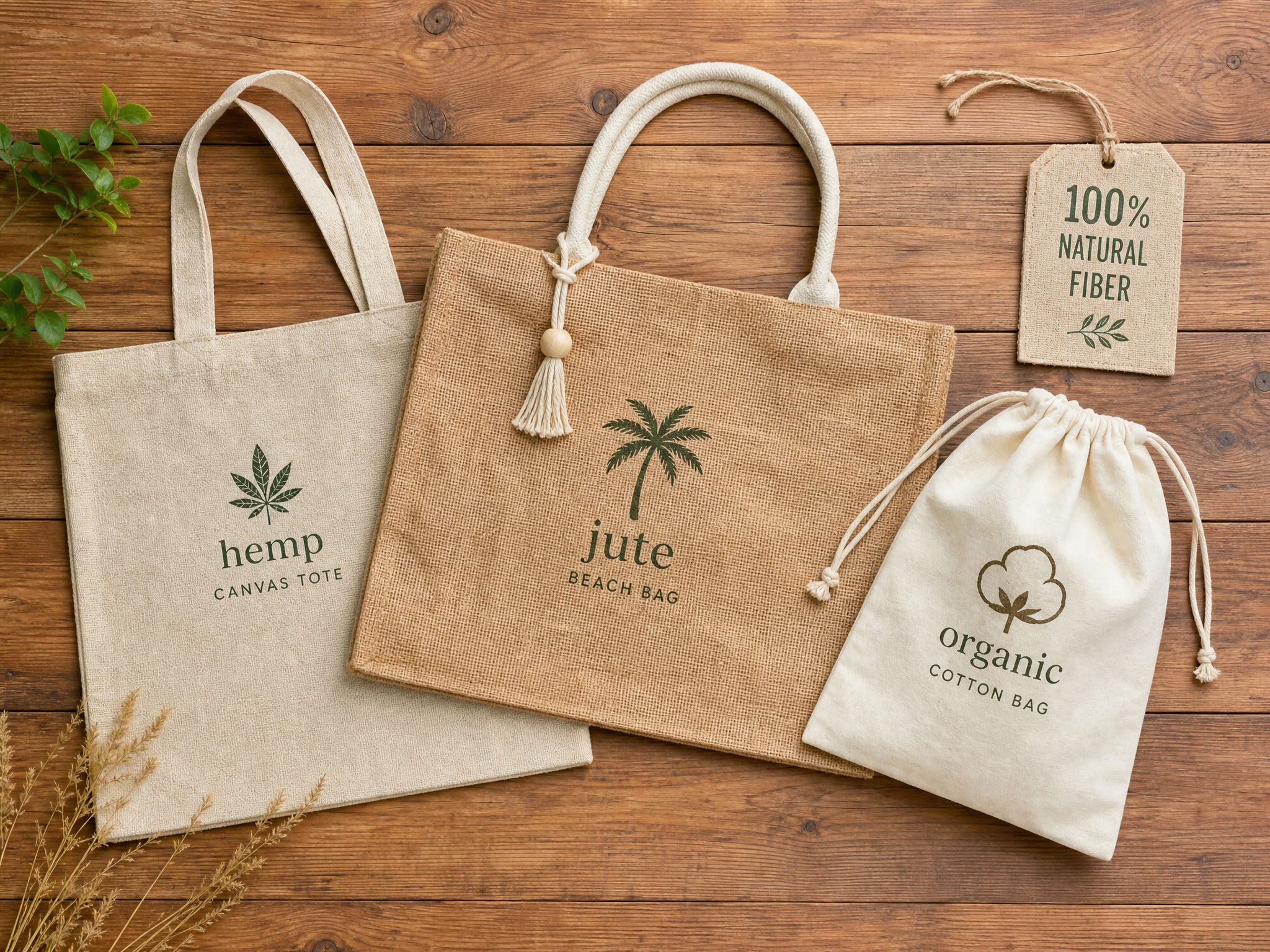
Insight 4: Natural Fibers Are the Most Underrated Low-Shed Option for Casual Bags
Natural fibers — such as organic cotton, hemp, linen, and jute — are increasingly offered as low-shed substitutes for fashion totes, backpacks, and casual bags. The key advantage: natural cellulose fibers biodegrade in marine and soil environments, so any fibers that do shed do not persist as long-term plastic pollution. Hemp and linen in particular have excellent tensile strength, low linting characteristics, and a heritage aesthetic that resonates with U.S. consumers. Jute is the workhorse of the category — cheap, abundant, and well-understood by virtually every natural-fiber bag factory in Guangzhou, Yiwu, and Qingdao. For a U.S. brand targeting the sustainable-fashion segment, a 12 oz hemp canvas tote with a cotton webbing handle is a credible, scalable, and commercially proven product.
Insight 5: Bio-Based Synthetics Are Emerging — But Verify Before You Scale
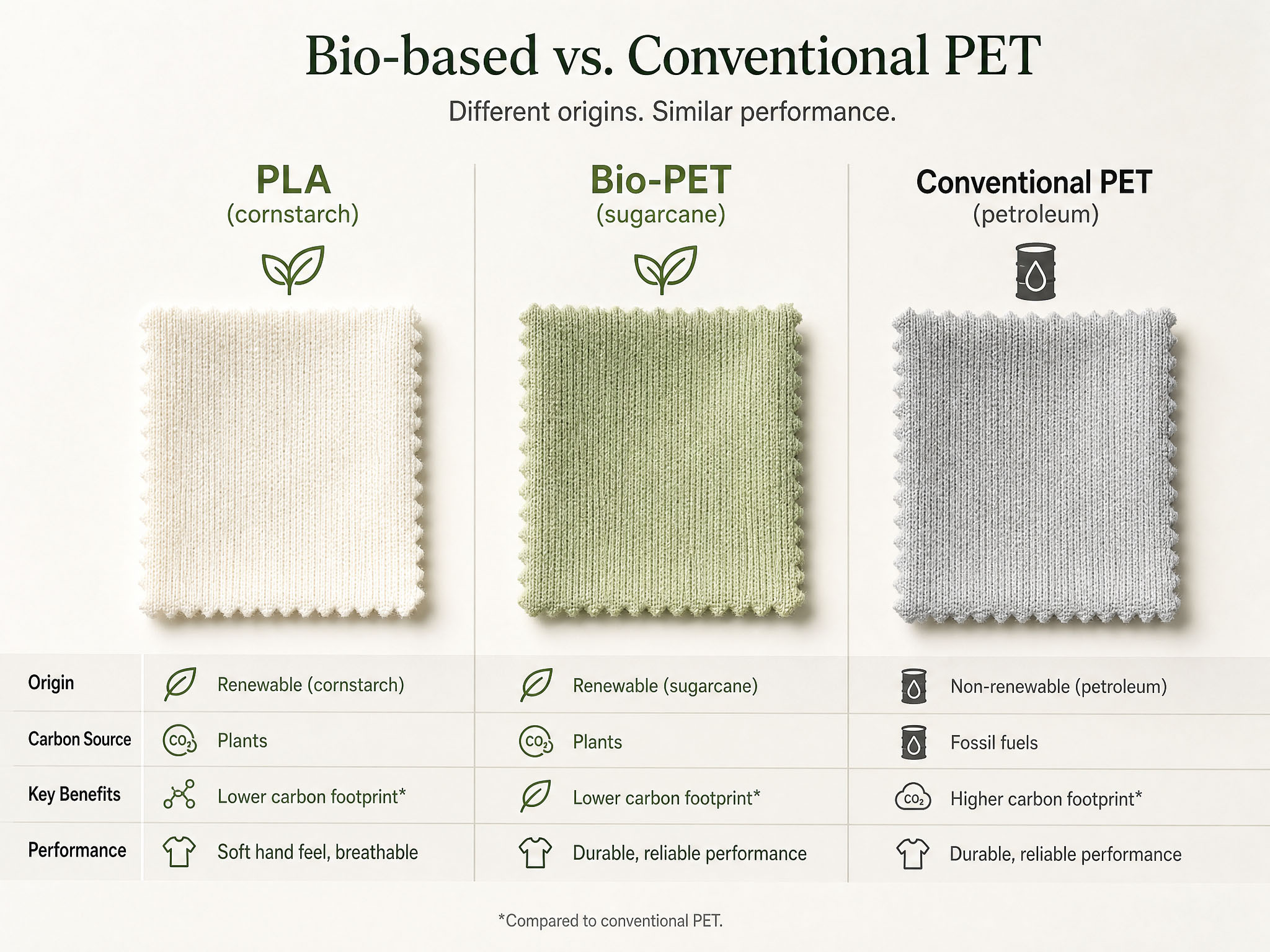
Bio-based synthetics — including PLA (polylactic acid), cellulose-based fibers, and bio-PET — are emerging as low-shed substitutes for petroleum-based polyester. PLA is derived from cornstarch or sugarcane, is industrially compostable, and can be spun into a polyester-like fabric. Bio-PET is chemically identical to petroleum-PET but made from sugarcane ethanol, so it has the same performance with a lower upstream carbon footprint. The honest caveat: bio-based synthetics are still a small share of Chinese mill capacity, and pricing is typically 15%–30% above conventional polyester. They are best suited for limited-edition drops and sustainability-positioned SKUs, not for high-volume core lines. Always request a pre-production sample and a third-party biodegradability or bio-based-content certification.
Insight 6: Unlined Bags Shed Less Than Lined Bags — and That’s a Design Win
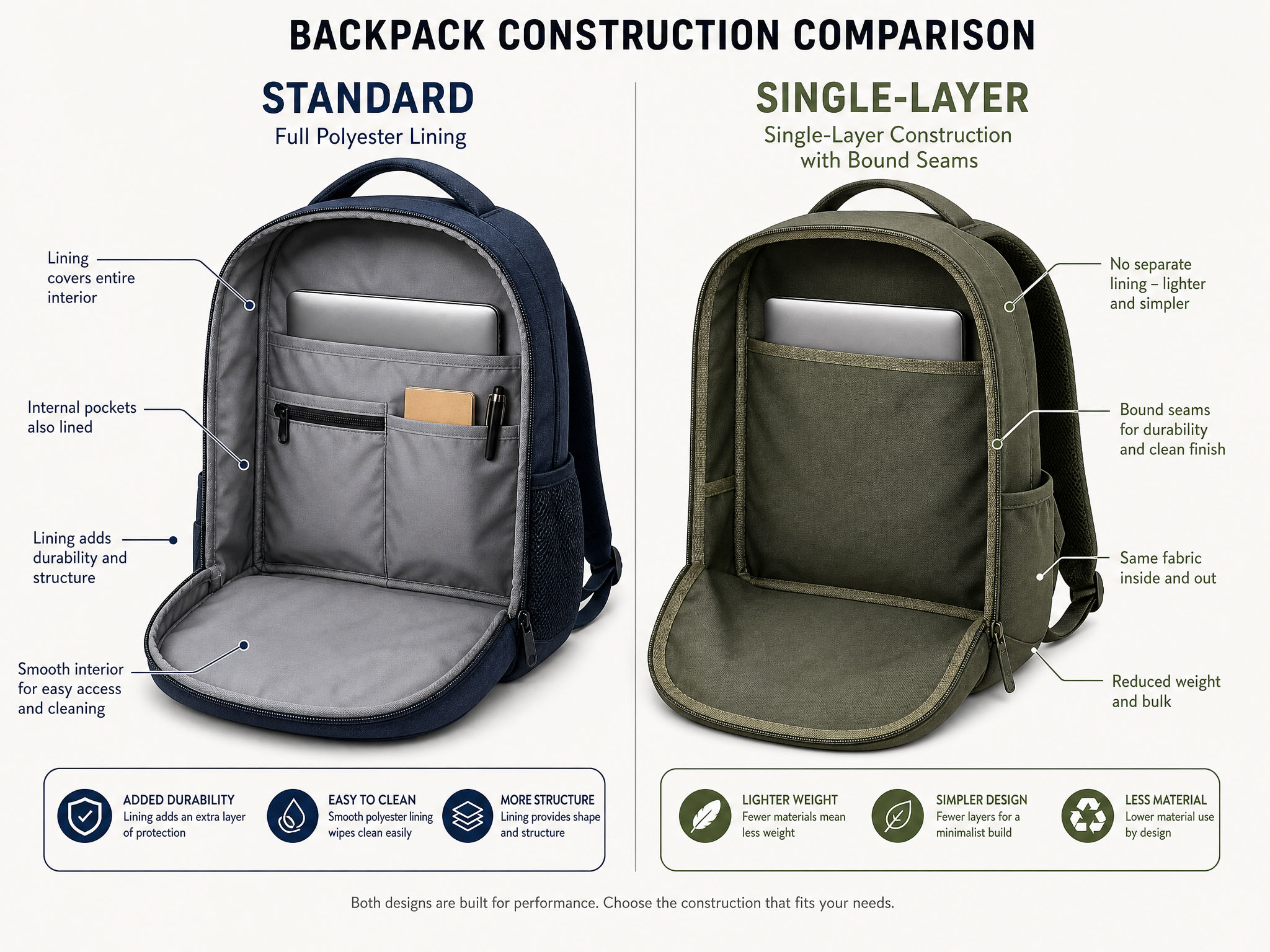
Synthetic bags without internal linings shed fewer microfibers than lined bags, and factories can now offer unlined or single-layer designs on request. The reason is straightforward: a lining adds a second layer of fabric, with its own cut edges, its own seams, and its own abrasion surface against the outer shell. A well-designed single-layer backpack with a clean rolled or bound interior can shed 20%–40% less than a comparable two-layer construction. This is a free design lever. Talk to your factory about whether your style can be re-engineered as a single-layer product. You’ll save on material cost, weight, and assembly time — and you’ll have a stronger sustainability story.
Insight 7: Pre-Washing Fabrics Before Cutting Removes Loose Surface Fibers
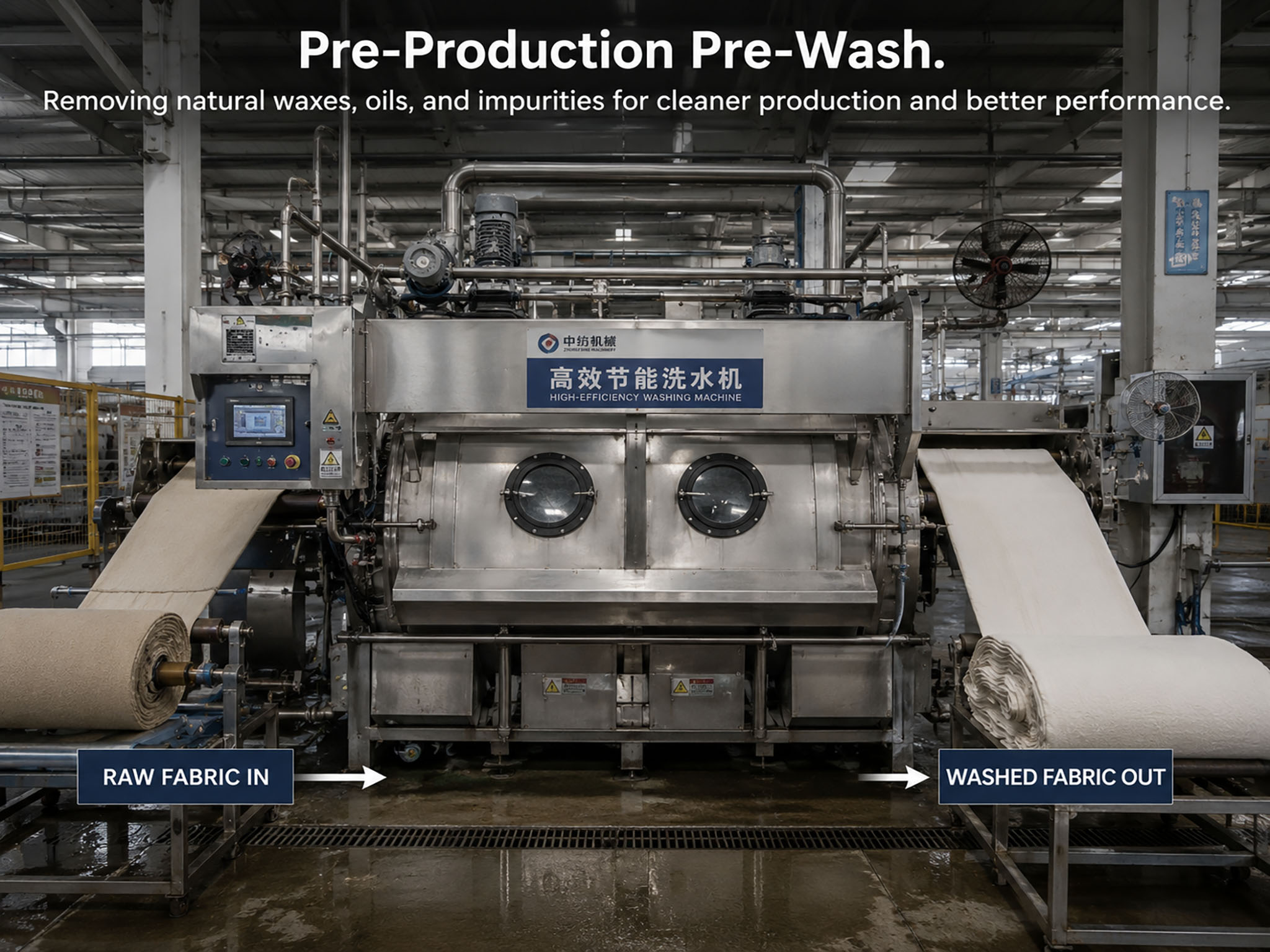
Pre-washing fabrics before cutting — using industrial stone-wash or enzyme-wash processes — removes loose surface fibers and reduces in-use shedding. This is a finishing step, not a material substitution, and it is widely available at Chinese mills. The fabric is washed in industrial machines (sometimes with pumice stones, sometimes with cellulose enzymes) before being cut and sewn, removing the loose fiber ends that would otherwise shed during the customer’s first few uses. The trade-off: pre-washing adds 3–7 days to lead time and can shift the color slightly, so always order a pre-production wash-and-color-fastness test before signing off on the finish.
Insight 8: Yarn Cross-Section Matters — And Few Buyers Ask About It
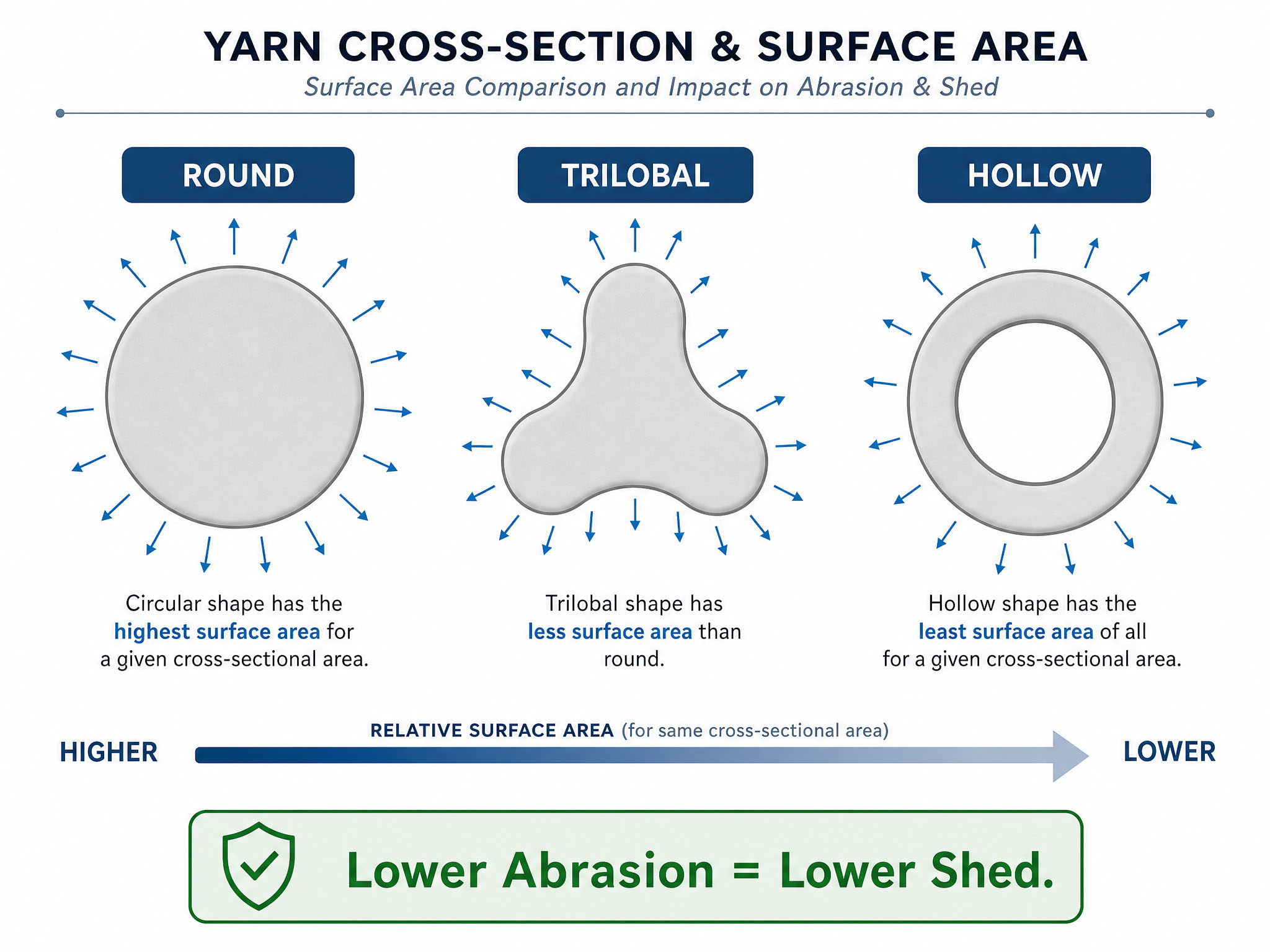
Yarns with trilobal or round cross-sections shed less than flat or hollow fibers, and many Chinese mills can supply custom cross-section yarns on request. A round cross-section presents less surface area to abrasion and is mechanically more robust than a flat or hollow cross-section. Trilobal fibers (three-lobed, like a clover) are popular in upholstery for their visual luster, but they are not the most durable choice for a bag that will be abraded daily. This is a level of specification that goes beyond 99% of buyer conversations — but it can be a real differentiator if you are engineering a premium, ultra-durable product line. Ask your factory’s upstream yarn supplier what cross-section options are available and request a comparative abrasion test.
Insight 9: Microfiber-Capture Linings Are a Real, Sailable Innovation
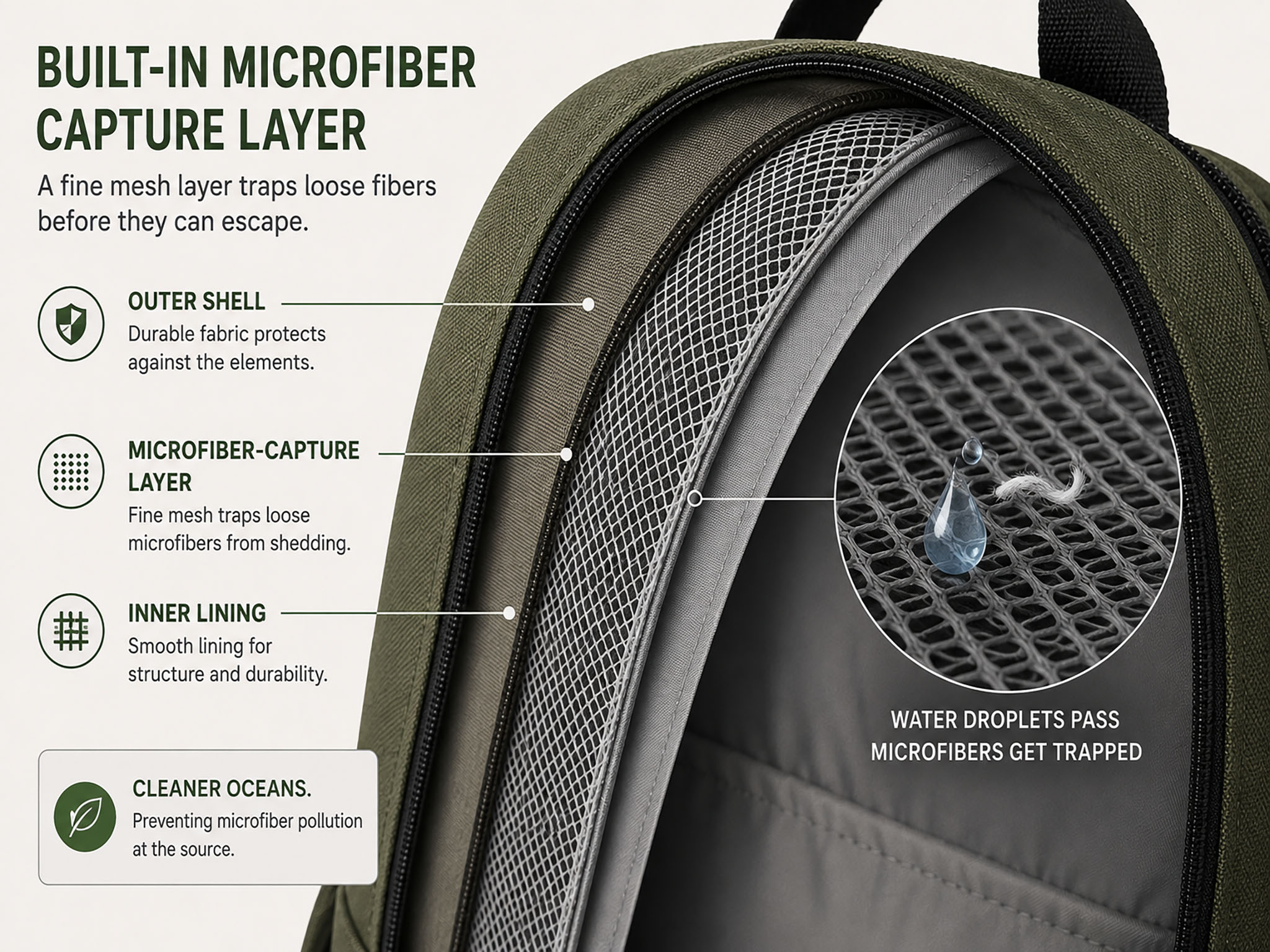
Internal microfiber-capture linings — using activated-carbon or fine-mesh filters sewn into linings — can trap loose fibers before they reach washing water. This is a newer technology, pioneered by a handful of European brands and now being adopted by a small number of forward-looking Chinese factories. The concept: a fine-mesh or activated-carbon-treated layer is integrated into the bag’s lining or constructed as a removable wash bag. Loose fibers shed during the wash cycle are caught by the filter, and the filter can be cleaned or replaced periodically. For a U.S. brand, this is an underutilized innovation story. Patagonia-style reproofers and Guppyfriend wash bags have educated consumers on the concept; a built-in capture lining is the next logical step.
Insight 10: Extending Product Life Is the Most Underrated Sustainability Strategy
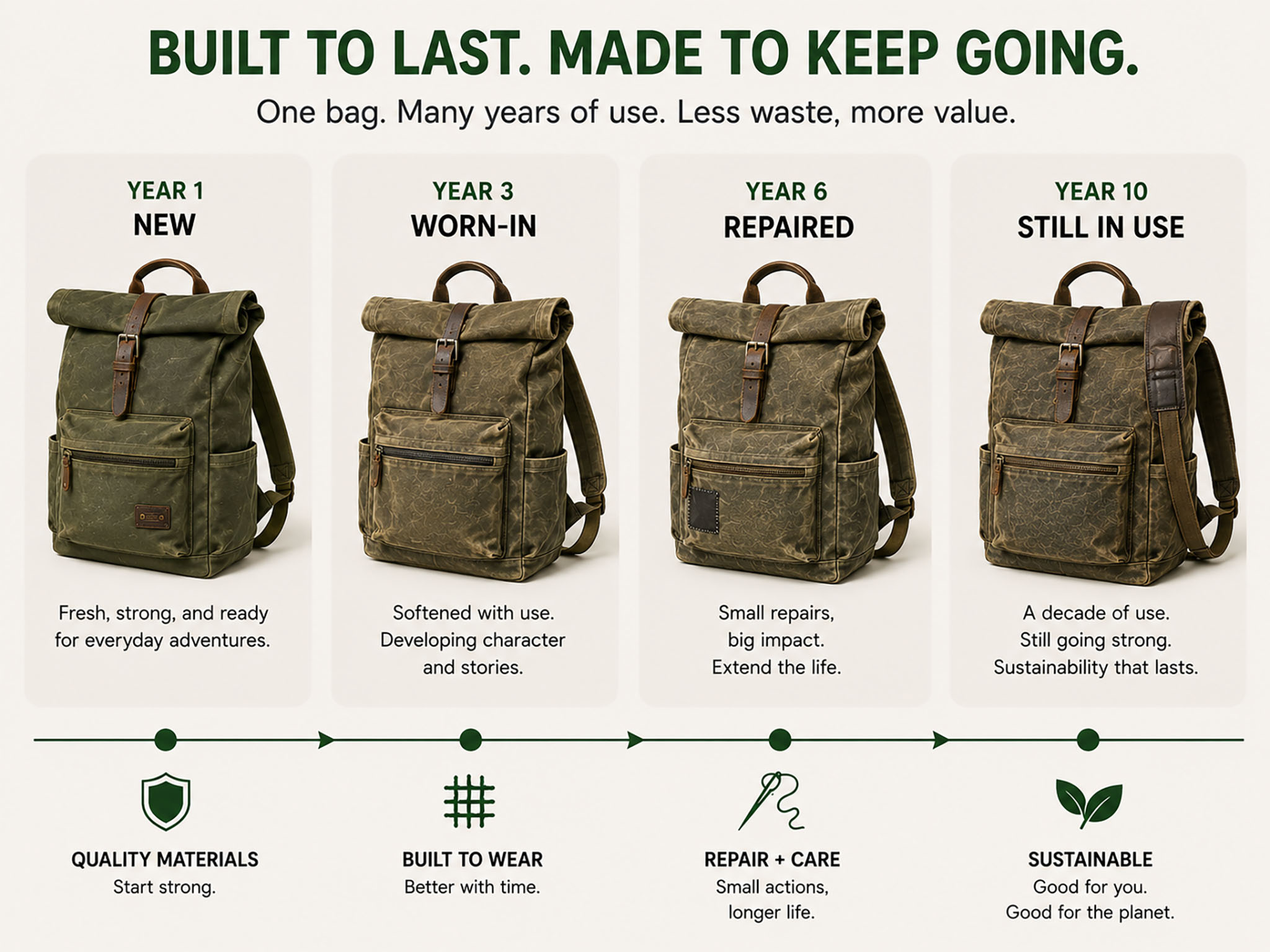
Extending product life is widely recognized as the most effective way to reduce a bag’s overall environmental impact. A bag that lasts ten years and is used daily has roughly one-tenth the lifecycle impact of a bag that lasts one year and is replaced ten times — even before you account for the microfiber shedding differential. This insight reframes the entire sustainability conversation. The most responsible bag you can sell is not the one that sheds the least — it is the one that is built to last, repaired when damaged, and used for as long as possible. Communicate this on your product pages. Offer repair services or replacement parts. Build durability into your product specs (reinforced stitching, bartack reinforcements at stress points, YKK zippers, replaceable shoulder straps). A “buy once, use for a decade” message is more credible than a “we use natural fibers” message.
The Supplier Communication Playbook
Walking into a sourcing negotiation without specific language is the fastest way to get a vague “yes, we can do eco-friendly.” Below is a clean, professional inquiry message you can send directly to Chinese factories via Alibaba, WeChat, or email. It is designed to elicit specific, comparable responses.
Subject: U.S. Market Sourcing Inquiry — Low-Shed Natural Fiber & Bio-Based Bags
Hi,
I am sourcing bags for the U.S. market through my own e-commerce site. I am specifically interested in low-microfiber-shed options and would like to ask the following:
1. Do you supply bags made from natural fibers such as jute, hemp, organic cotton, or linen? Please share fabric weights, weaves, and color options.
2. Do you offer bio-based synthetics or bio-based PU / vegan leather alternatives for bags? Please specify the bio-based content percentage and any third-party certifications.
3. What finishing technologies do you apply to reduce microfiber shedding, linting, or abrasion? Specifically: yarn pre-coating, thermal bonding, pre-wash processes, or tight-weave construction.
4. Can you provide third-party test reports for shedding (ISO 9073 or ASTM D4970), abrasion resistance, and durability?
5. Can you provide sample bags (paid samples are fine) so I can compare hand feel, wear, and shedding before placing a production order?
Please also share:
MOQ per style / per colorway
Sample cost and lead time
Production lead time
FOB pricing for 500 / 1,000 / 3,000 unit quantities
Thank you for your time. I look forward to your response.
Best regards,
[Your Name]
[Your Company]
Your Three-Factory Sourcing Shortlist
For a U.S. bag brand serious about reducing microfiber shedding, I recommend shortlisting Chinese factories in three distinct groups and running parallel RFQs:
Group 1 — Natural-Fiber Specialists. Look for factories in Yiwu, Qingdao, or Hebei that have at least three years of natural-fiber bag experience. Expect MOQs of 300–500 units per style, with hemp and jute as the most commercially mature options.
Group 2 — Bio-Based Synthetic & Vegan Leather Factories. Smaller pool, but growing rapidly. Look for factories that work with Tencel, PLA, mushroom leather (Mylo), or cactus leather (Desserto), and that can supply bio-based-content certifications.
Group 3 — Conventional Factories with Low-Shed Finishing Capability. The largest pool, but quality varies. Use this group to source conventional nylon/polyester bags with verified shed-reduction finishes (yarn pre-coating, thermal bonding) and third-party test reports.
Run the same inquiry message to all three groups. Compare responses on material options, finish technology, test reports, MOQ, and price. The factory that gives you the most specific, falsifiable answers is usually the most reliable partner.
Conclusion: Build the Spec Into Every RFQ, Not Every Apology
The transition to low-shed bag construction is following the same trajectory as the PFAS-free transition: it is no longer a question of if, only a question of when. The EU’s ESPR framework will make microfiber-shed disclosure mandatory within 24–36 months, and U.S. state and federal regulation is moving in the same direction. The Chinese supply chain has heard the message — most reputable tier-one and tier-two factories can already deliver natural-fiber, bio-based, or shed-reduction-finished bags at price points and MOQs that are workable for independent U.S. brands.
The differentiator for your brand will not be whether you offer a low-shed bag — that will be table stakes within three years. The differentiator will be the depth of your documentation, the honesty of your trade-off communication, and the durability of the product you put into the market.
Build the spec into every RFQ. Demand the test report on every order. Communicate the trade-offs honestly on your product pages. Repair, not replace, becomes your brand promise. That is how you turn a microfiber-shed compliance burden into a long-term customer trust advantage.
Post time: Jun-15-2026