
Published for US‑based independent bag e‑commerce merchants | Practical sourcing insights for buying bags direct from Chinese manufacturers
For US‑based bag website owners buying inventory directly from Chinese factories, packaging is far more than just putting your handbags, tote bags, backpacks, and cross‑body bags into boxes. Poorly sized inner boxes, under‑spec master cartons, inadequate moisture protection, and inefficient container loading lead to real‑world losses: crushed corners, scuffed bag surfaces, mildew‑ruined inventory, unexpected freight surcharges, and costly warehouse receiving delays. Many importers focus only on bag design, material quality, and unit pricing, while overlooking how carton sizing, drop‑test performance, palletization, and ocean‑transit moisture control directly shape landed cost and final sellable inventory rates. A core sourcing question every US bag buyer must ask Chinese suppliers: **Are they sizing inner and master cartons to optimize container loading and reduce shipping damage?
This article breaks down critical packaging and container‑loading questions you need to clarify with your Chinese bag suppliers. It covers drop‑test standards, palletization & shrink‑wrap services, anti‑mildew safeguards for long ocean transit, realistic FCL container utilization benchmarks, and actionable best‑practice advice you can bring directly into supplier negotiations and purchase order specifications. Whether you are ordering backpacks, fashion handbags, travel duffels, or everyday tote bags for your independent website, these details separate smooth, profitable direct‑from‑China sourcing from expensive shipment headaches.
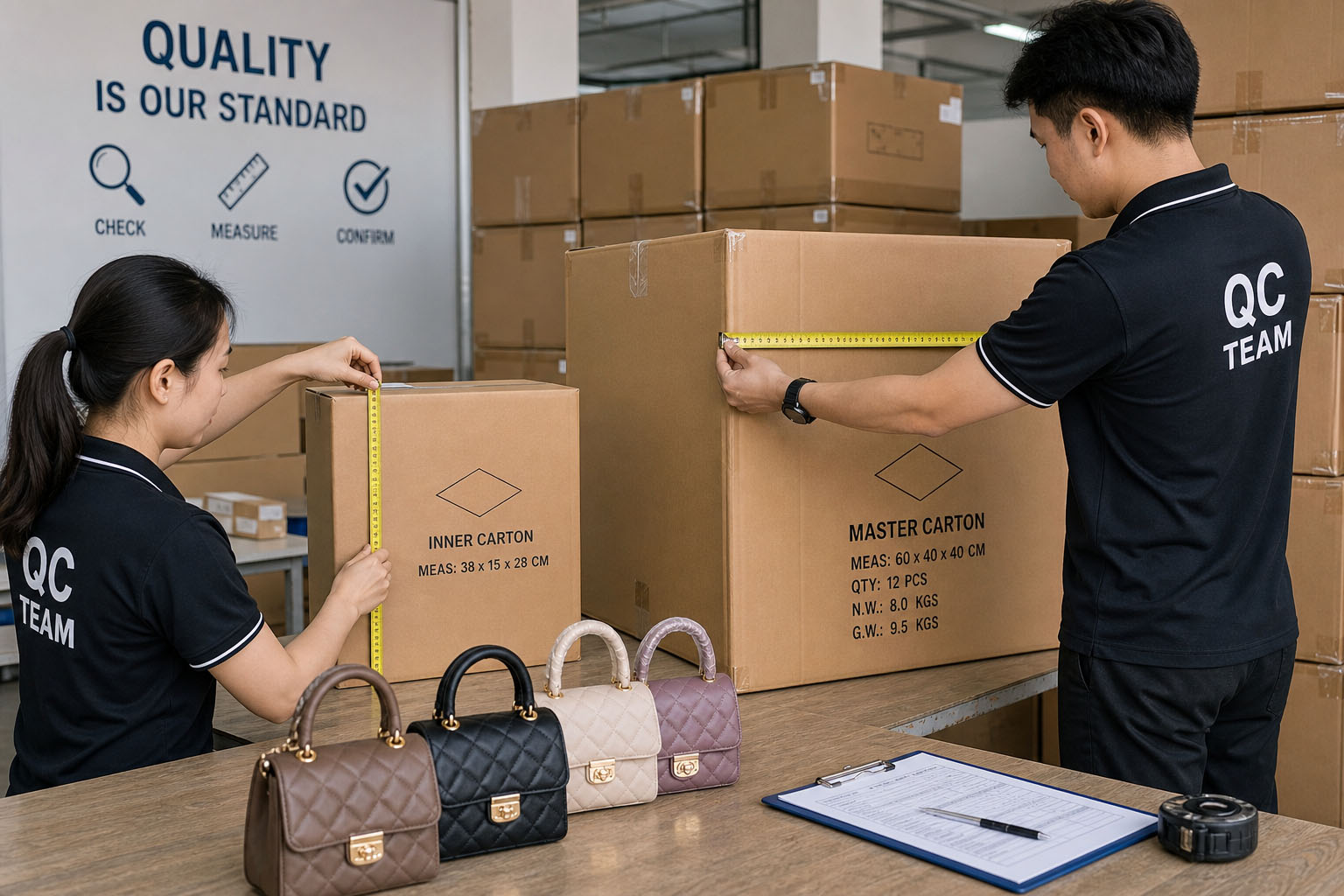
Core Sourcing Questions for Chinese Bag Suppliers
When vetting potential bag manufacturers in China, you must move past general assurances of “good export packaging”. Frame concrete, technical questions that force factories to document their real‑world packaging workflows. Four high‑priority questions form the foundation of your packaging due‑diligence process.
1. What drop‑test standards do Chinese bag suppliers follow for their master cartons?
Drop testing simulates rough handling across factory loading, port lifting, ocean freight, and US warehouse receiving. Not all Chinese bag factories follow identical testing protocols. Some smaller workshops skip formal drop testing entirely, relying only on past experience. Established export‑oriented factories run standardized drop tests on fully packed inner‑plus‑master carton assemblies to confirm bags survive impact events.
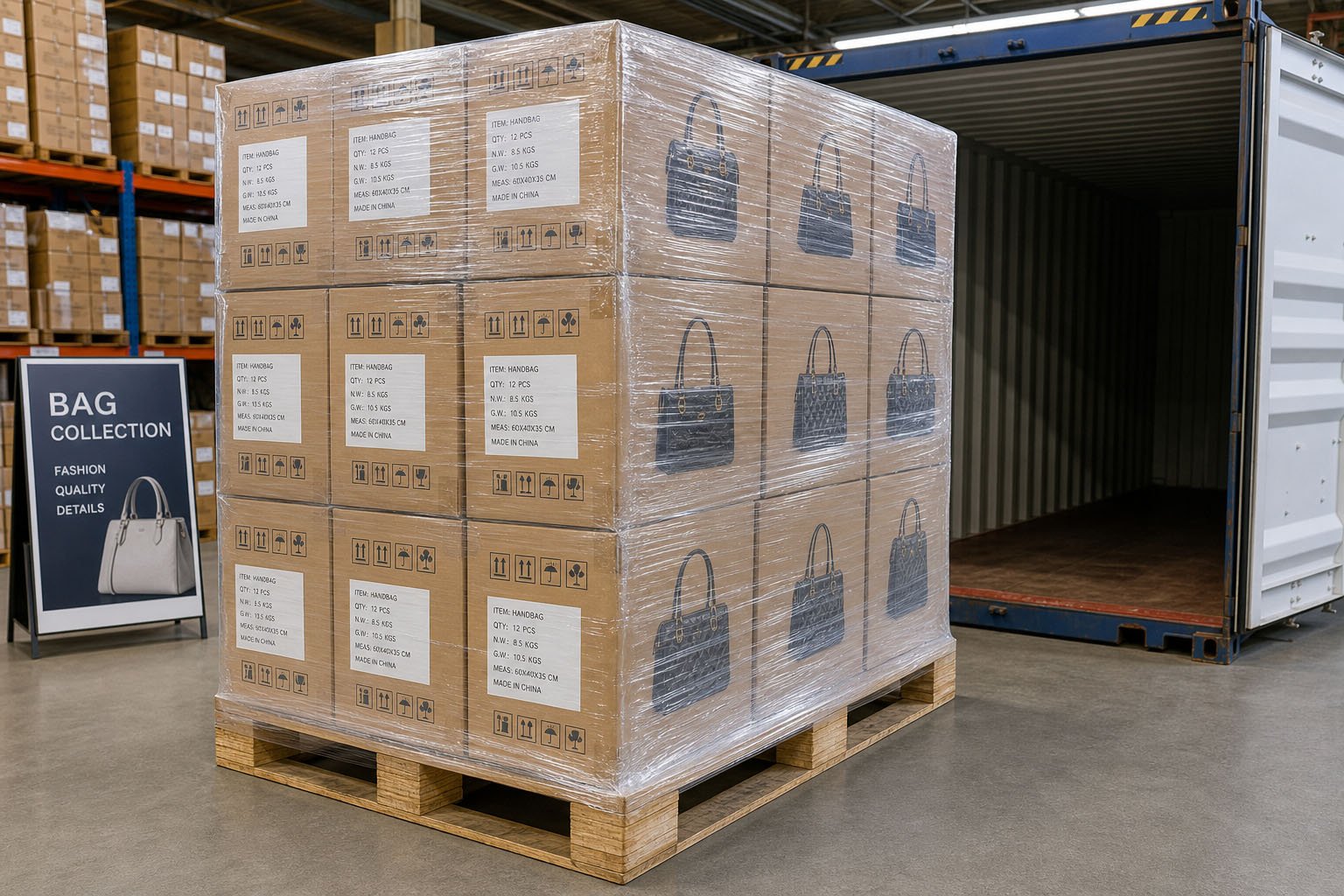
2. Are suppliers offering palletization and shrink‑wrapping to minimize handling damage during loading?
Palletization and shrink‑wrap are not universal free services. Some factories simply stack loose master cartons directly inside the FCL container. Without stable pallets and shrink‑wrap, cartons shift during loading and sea transit, leading to scuffed boxes, crushed corners, and damaged bag inventory. You need to confirm whether palletization and shrink‑wrapping are included, optional, or come with extra fees.
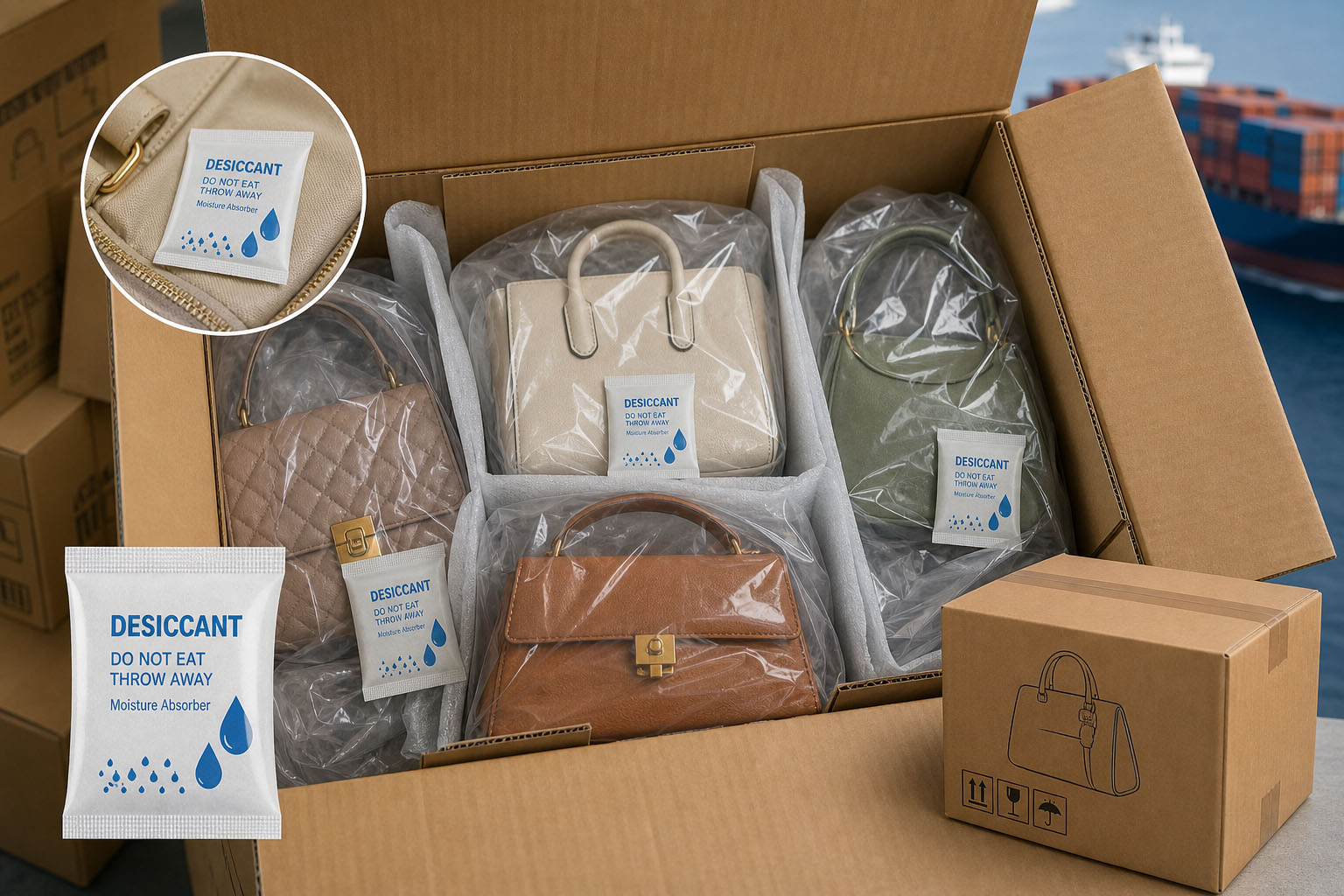
3. How do suppliers protect the goods from moisture and mildew during 25+ days of sea transit to the USA?
Ocean shipping from China to United States West Coast commonly takes 25 days or longer. Inside sealed metal shipping containers, temperature swings create condensation known as “container rain”. Moisture seeps into cartons and fabric bags, triggering mildew, mold stains, and permanent product damage. Many new importers underestimate this risk, only discovering mildew‑ruined stock when containers arrive at US receiving warehouses.
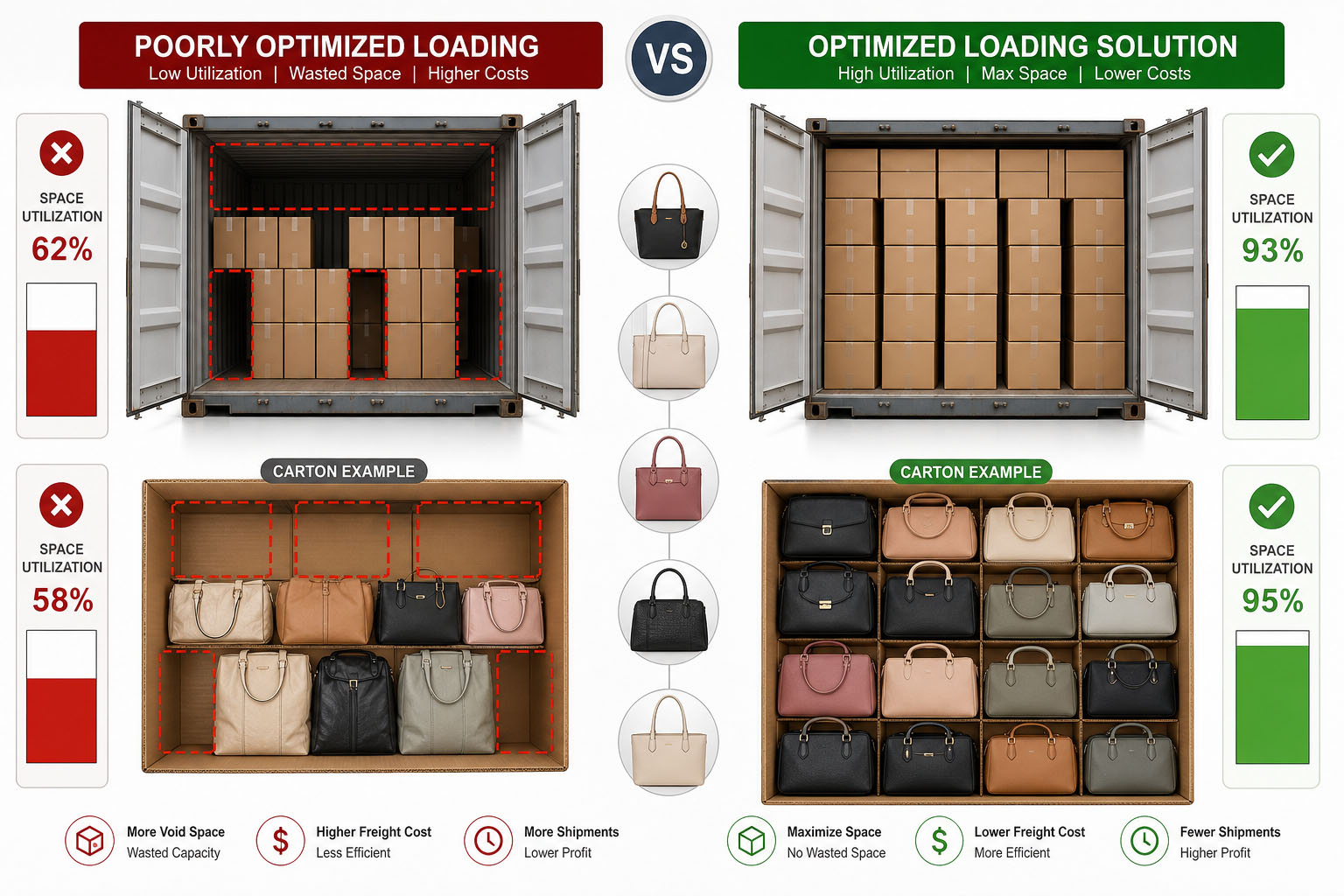
4. What FCL container utilization rate can optimized master cartons typically achieve?
Container utilization directly impacts your per‑unit freight cost. Poorly sized master cartons create wasted void space inside 20ft or 40ft HQ containers. Lower utilization means you pay for container volume you cannot fill. Understanding realistic utilization benchmarks helps you evaluate supplier packing plans and spot unrealistic supplier promises.
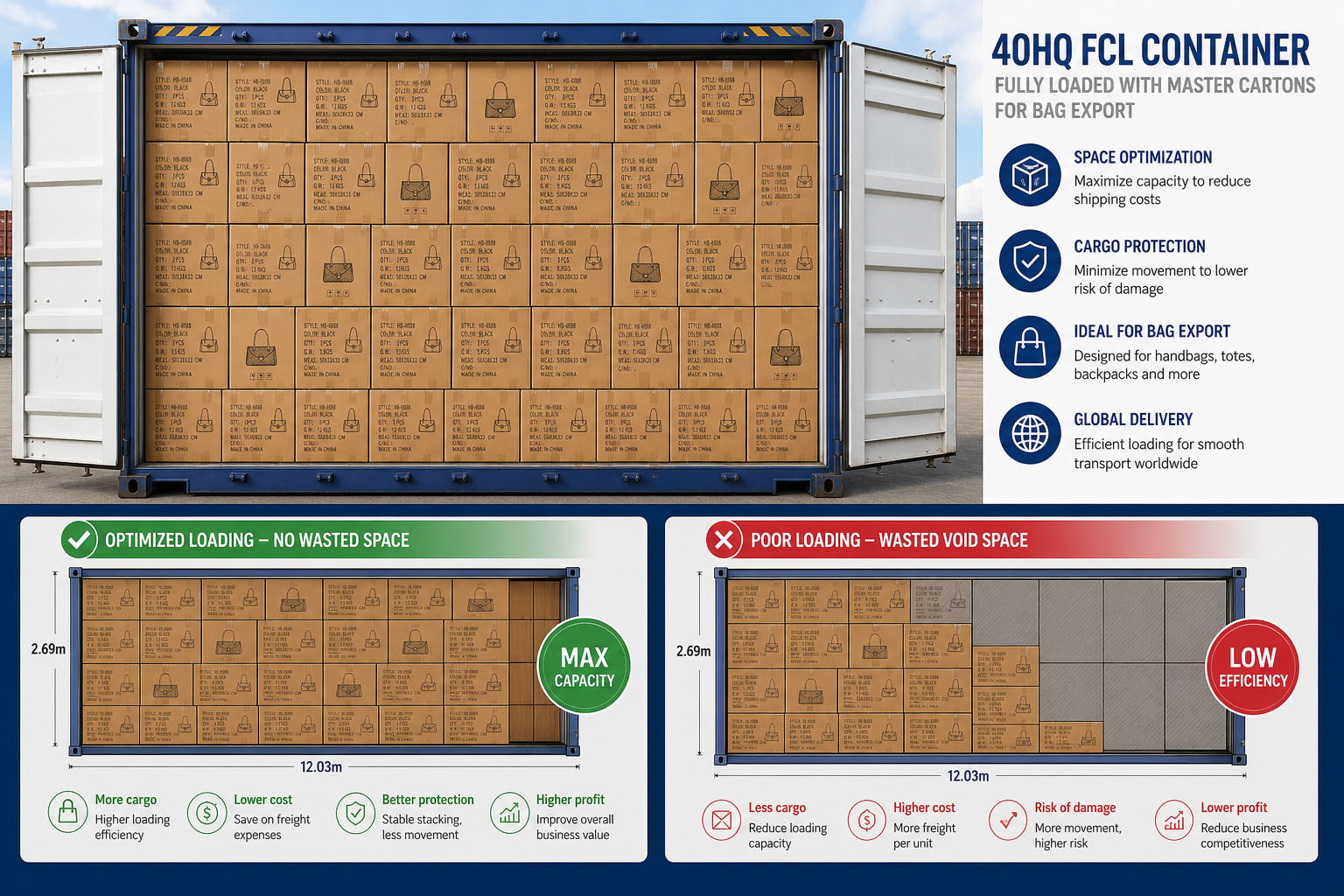
Industry Best‑Practice Insights for Bag Export Packaging from China
Below are field‑proven industry insights gathered from working with established Chinese bag export factories. These technical points give you concrete benchmarks to compare supplier proposals and write your purchase‑order packing specifications.
Insight 1: Established factories deploy standardized master carton dimensions for container fit
Most established Chinese bag factories design master cartons in standard dimensions (e.g. 60 × 40 × 40 cm) to maximize fit in 20ft and 40ft HQ containers. Carton base sizes are selected to tile neatly inside standard container interior measurements. Custom oversized or odd‑shaped master cartons look tempting for special large‑size bags, but they drastically reduce container fill efficiency and drive up per‑piece ocean freight expense. For US e‑commerce sellers running mixed‑SKU bag orders, keeping master cartons close to these common export sizes delivers consistent freight performance.
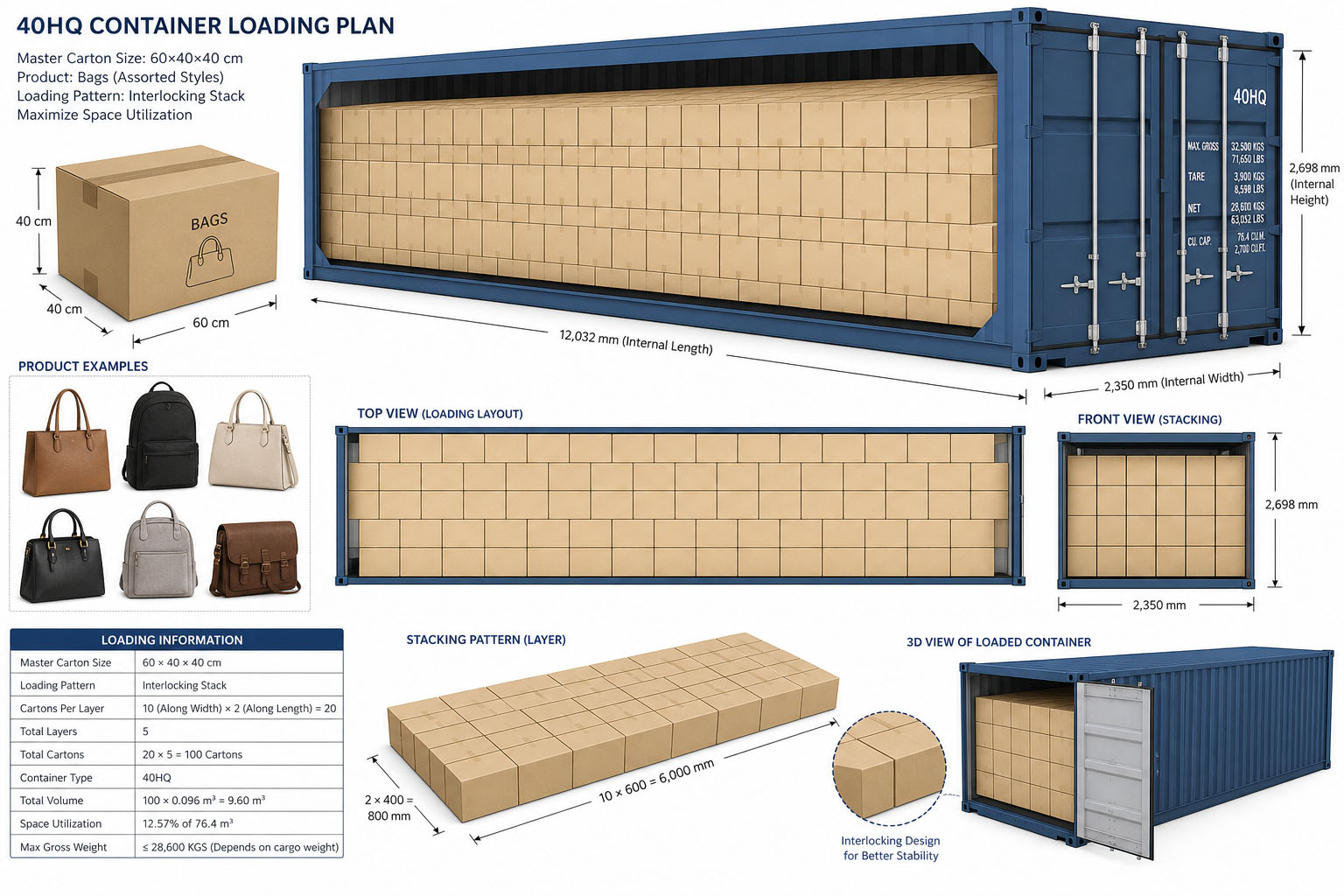
Insight 2: Custom‑sized inner cartons or individual poly bags prevent abrasion and in‑box shifting
Inner cartons or individual poly bags are custom‑sized per bag style to prevent surface abrasion and in‑box movement during transit. Each bag style — handbag, backpack, crossbody, tote — has unique length, width and depth. Using one‑size‑fits‑all inner poly bags or inner boxes leaves excess empty space. Inside the carton, bags slide back and forth across weeks of ocean vibration. Hardware such as zippers, metal buckles, and rivets scratch leather and synthetic bag surfaces. Custom‑fit inner packaging holds each unit securely and preserves finished‑goods cosmetic condition for your US customers.
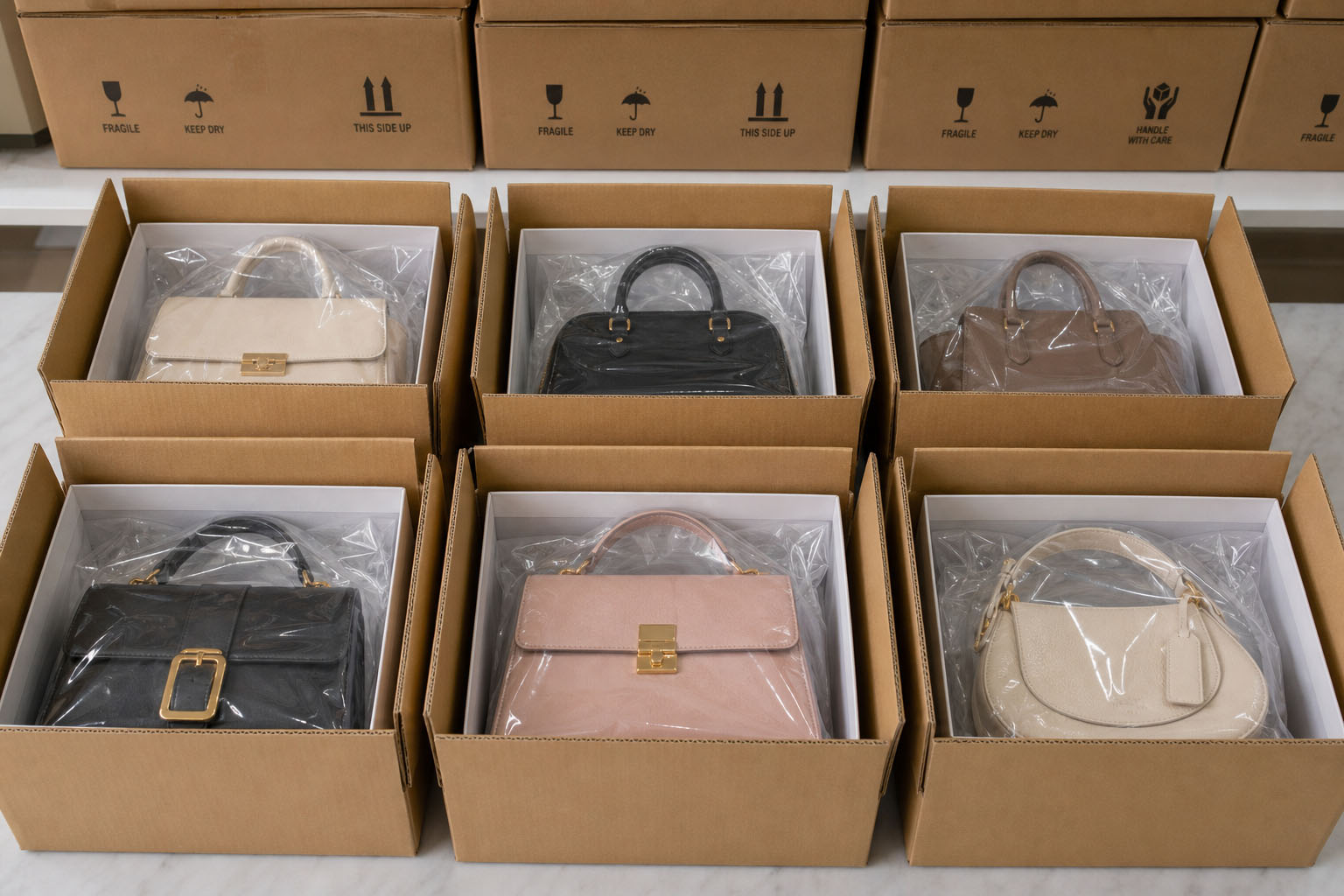
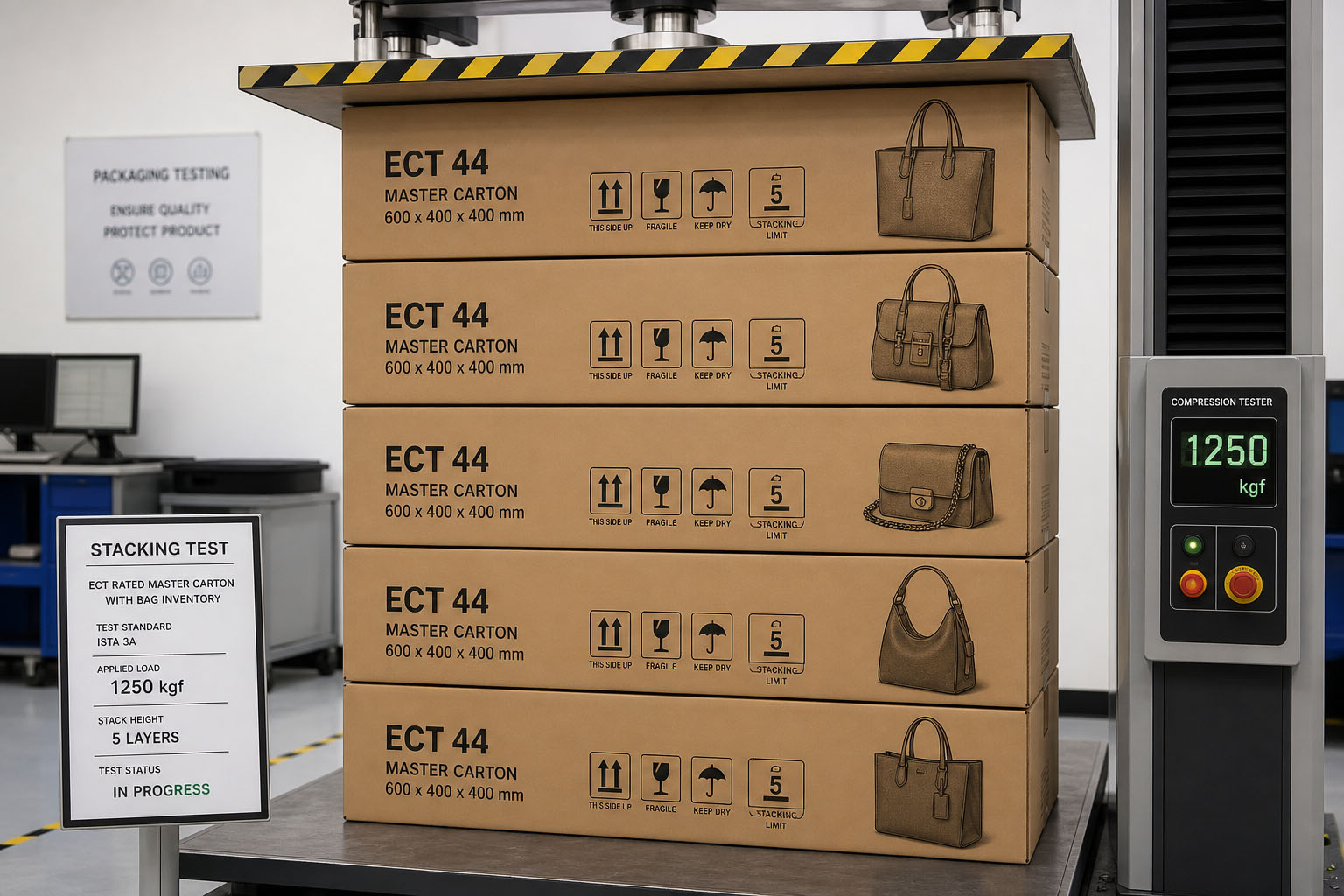
Insight 3: ECT‑rated master cartons support multi‑layer stacking without crushing damage
Master cartons are typically rated ECT 32–44 to support 5‑7 layers of stacking without crushing damage. ECT (Edge Crush Test) rating measures how much vertical edge‑pressure corrugated cardboard can withstand. Inside containers and US warehouse racks, master cartons are stacked vertically. Low‑ECT thin cardboard will collapse under upper‑layer weight, crushing bag corners and distorting bag shapes. For heavier bag styles such as travel duffels and laptop backpacks, target suppliers using the higher end of this ECT range. Always ask suppliers to document the ECT rating for your production run’s master cartons.
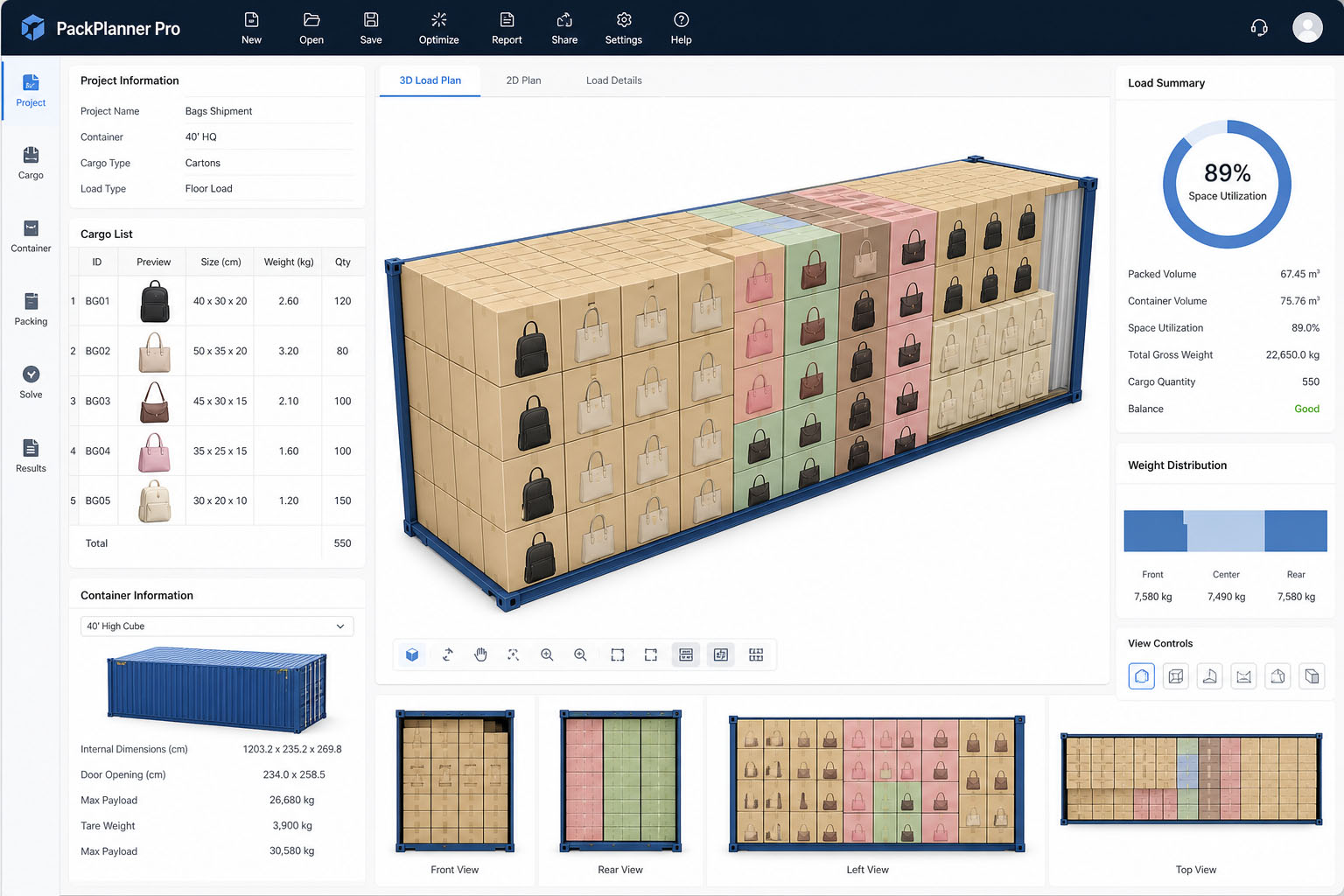
Insight 4: Container‑loading software optimizes carton arrangement and cuts wasted space
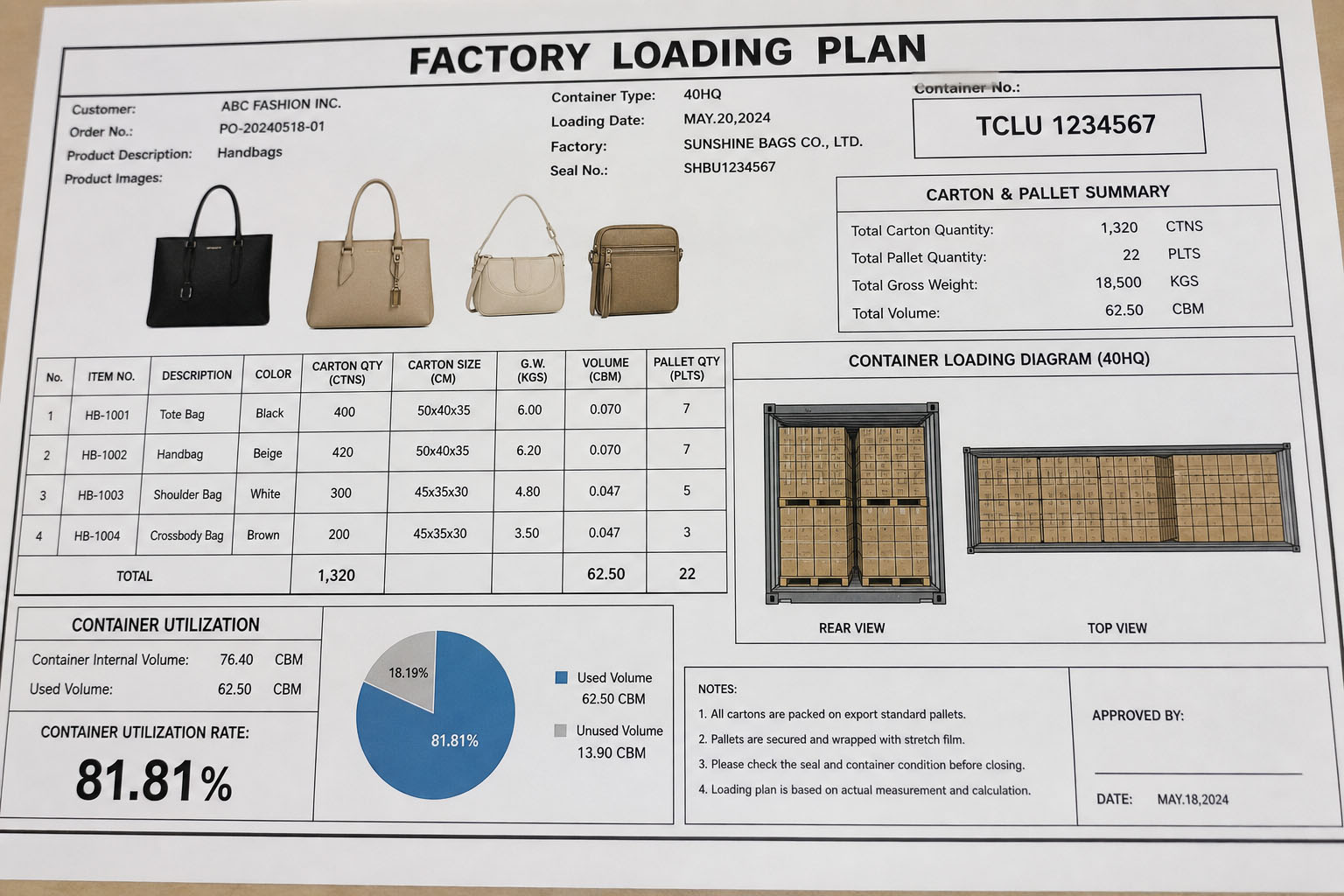
Container‑loading software (e.g. Cube‑IQ, LoadPlanner) is widely used to calculate optimal carton arrangement and minimize wasted space. Good suppliers do not rely on manual guesswork for container stuffing. They input master‑carton dimensions, gross weights, and pallet dimensions into specialized loading software. Outputs include exact carton quantities per container, stacking patterns, and projected volume‑utilization percentage. As a US buyer, you have every right to request a copy of this loading plan for your FCL shipment.
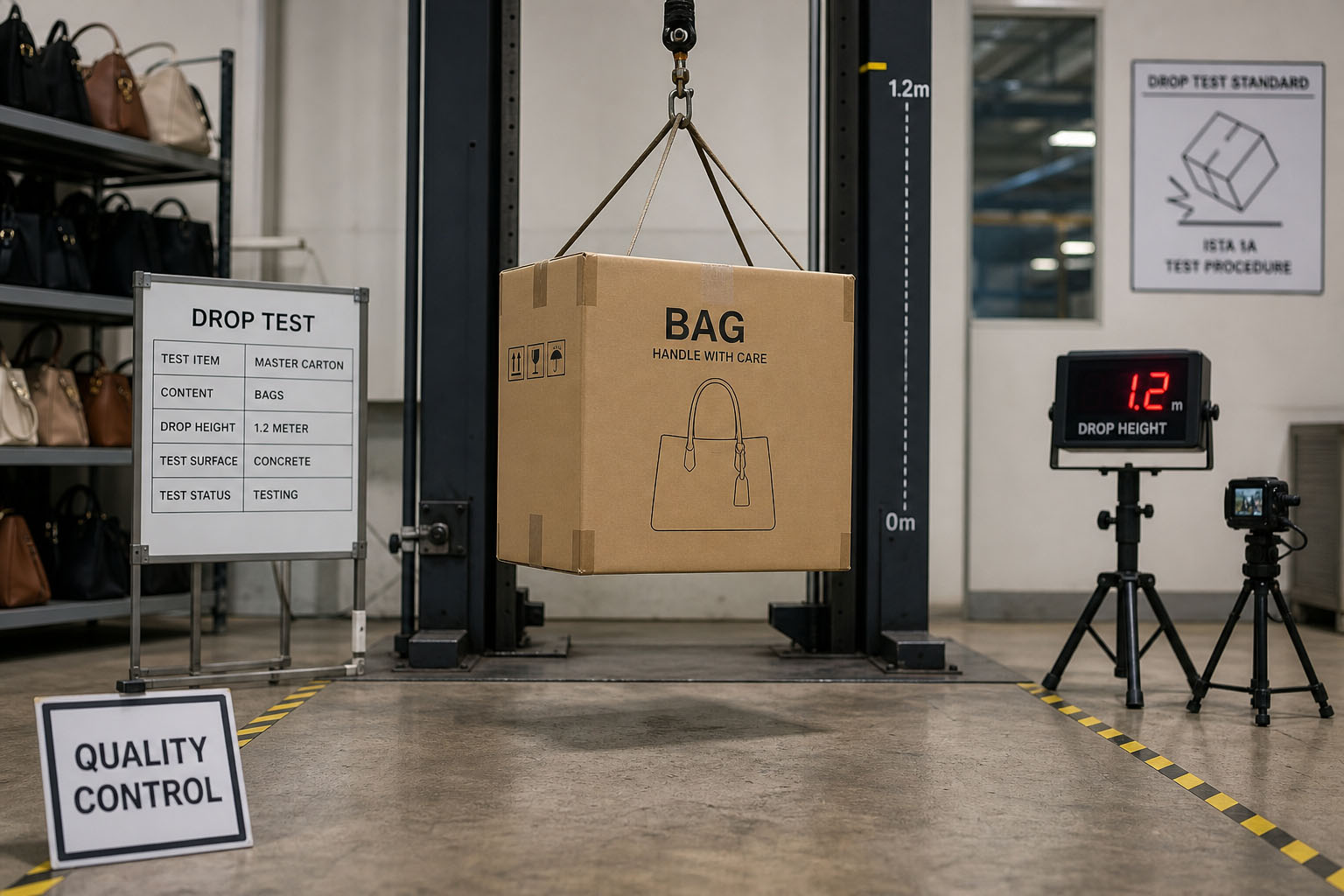
Insight 5: 1.2‑meter (4‑foot) drop‑testing validates combined inner‑and‑master‑carton protection
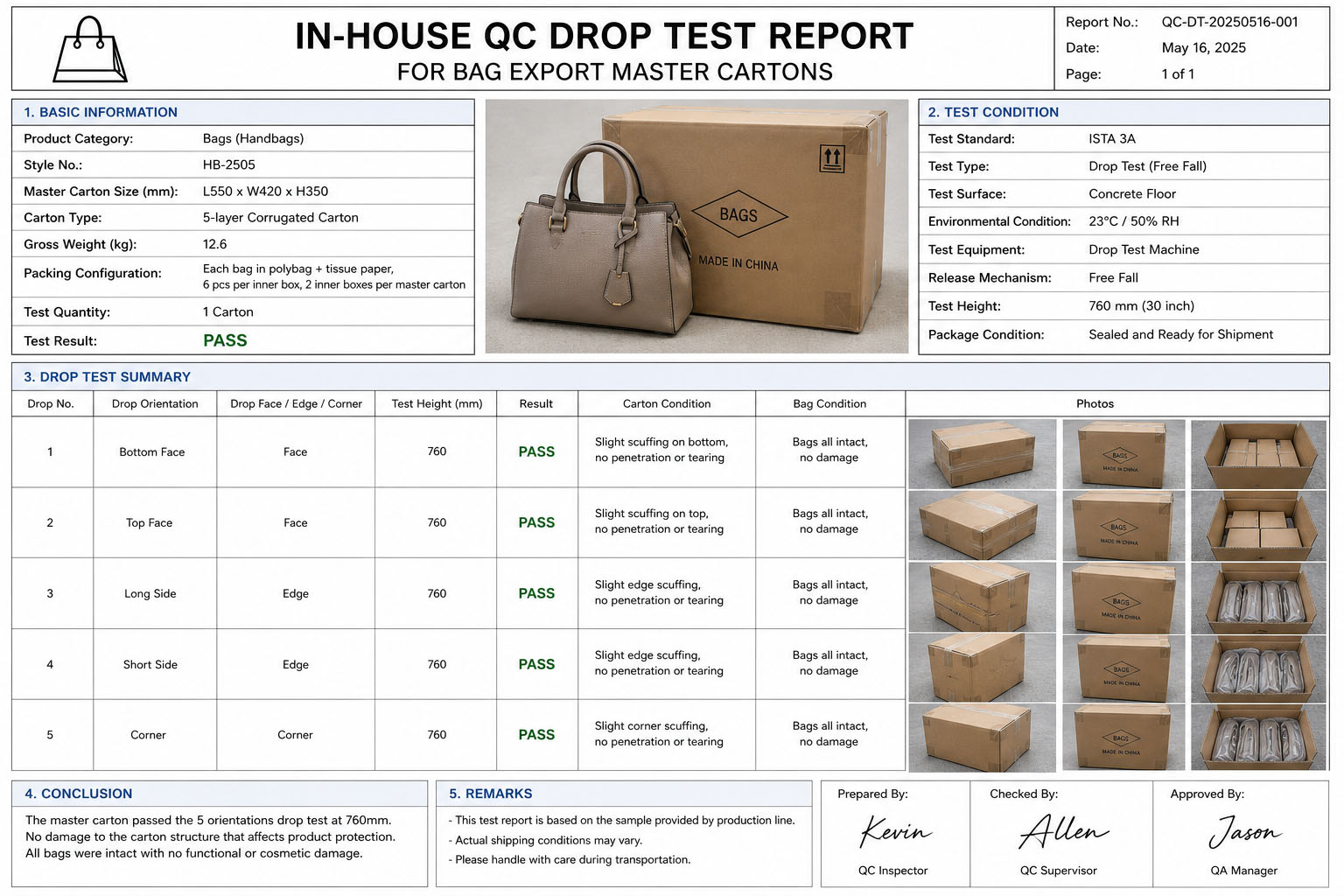
Drop tests (usually 1.2 m / 4 ft) are conducted to verify that inner + master carton configurations protect contents from impact damage. This standard test replicates drops from loading docks, forklift mis‑handling, and container‑loading bumps. Test samples use fully packed cartons, with actual bags inside — not empty boxes. If a supplier cannot confirm they perform this drop‑test procedure for bag shipments, you face higher risk of cosmetic product damage arriving at your US warehouse.
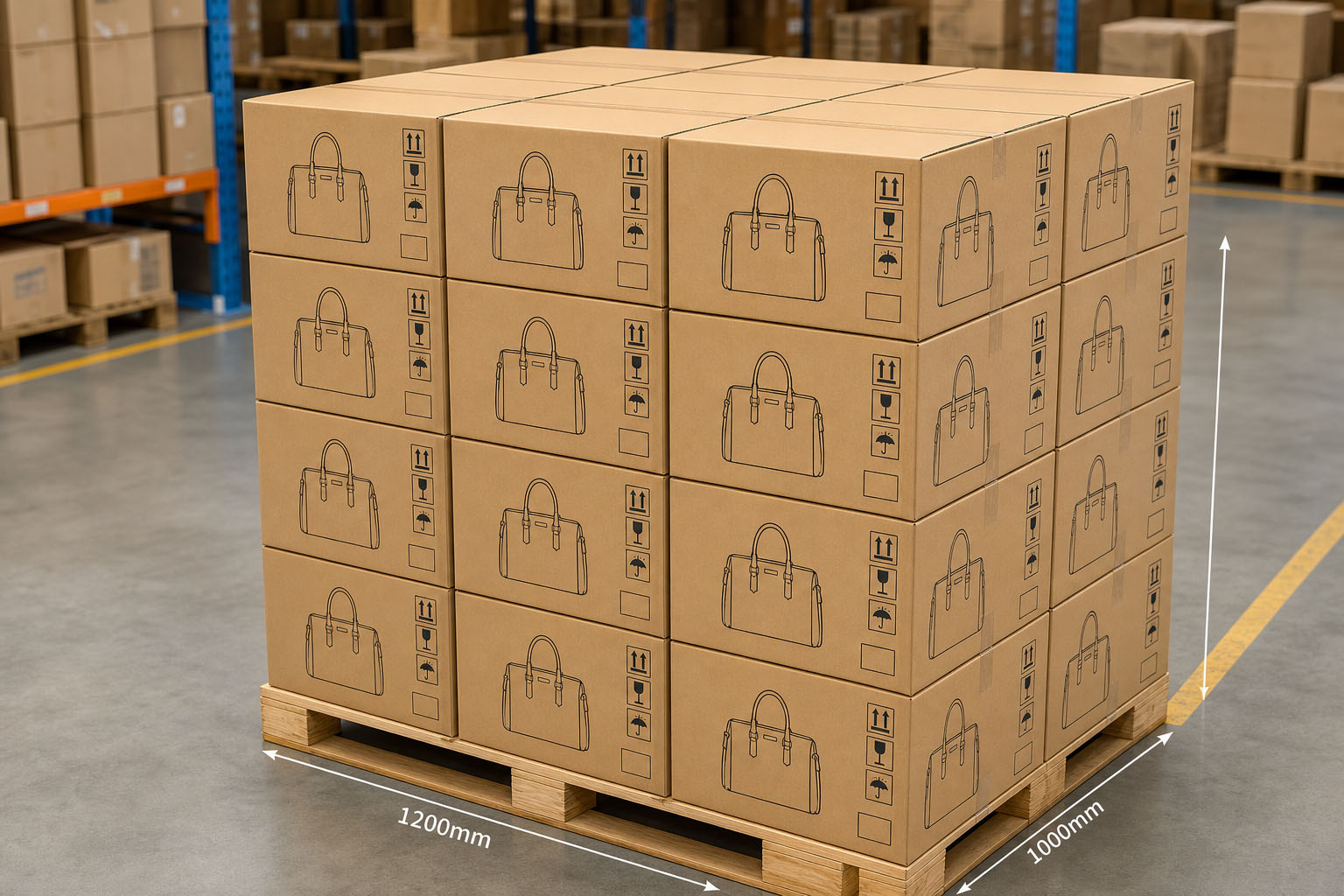
Insight 6: Carton dimensions align with global pallet standards for smooth US warehouse receiving
Cartons are sized to align with standard pallet dimensions (1200 × 800 mm or 1200 × 1000 mm) for smoother US warehouse handling. When master‑carton footprints match standard pallet sizes, cartons sit evenly across pallet decks without overhang. Overhanging carton edges get crushed by forklifts and adjacent pallets. US third‑party logistics (3PL) warehouses charge extra labor fees for poorly palletized incoming inventory. Matching carton sizing to pallet standards lowers your US‑side receiving costs.
Insight 7: Interior protective materials reduce corner crushing and bag creasing
Cardboard dividers, tissue paper, and corner protectors are commonly inserted between bags to reduce corner crushing and creasing. Fashion‑oriented bags are highly sensitive to creases and corner dents. Simply dumping multiple bags into one inner carton creates pressure marks that make products unsellable on your US website. Suppliers should specify which protective inserts apply for each bag style within your order. High‑end handbag SKUs require more robust corner‑protection treatment than basic canvas tote bags.

Insight 8: Void‑fill materials stop cargo shifting during ocean‑vessel movement
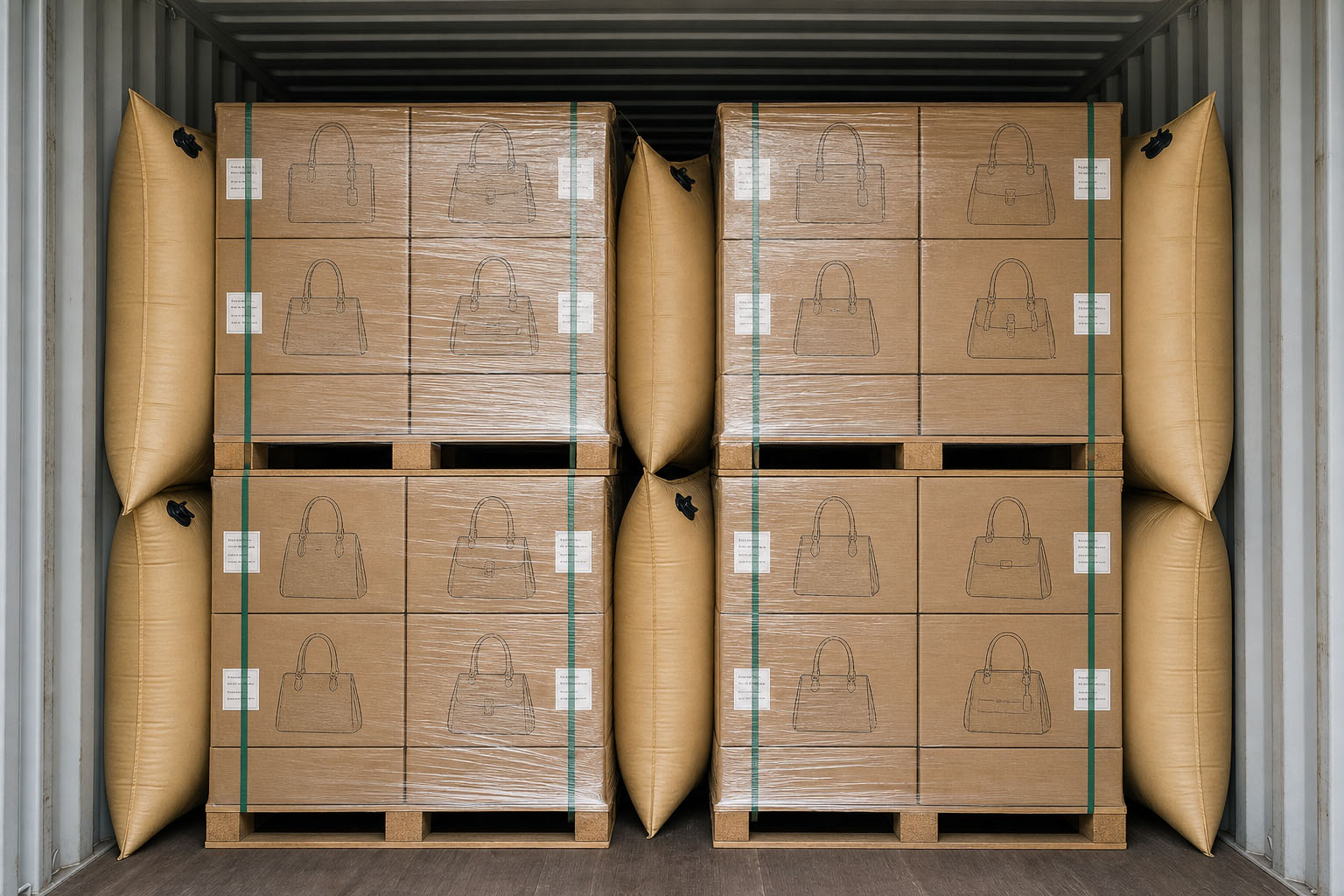
Dunnage airbags or foam void fillers are placed between pallets and container walls to prevent load shifting during ocean transit. As vessels roll across open ocean, palletized cargo can slide sideways inside the metal container. Shifting pallets tear shrink‑wrap, topple stacked cartons, and destroy large portions of your inventory. Dunnage airbags fill gaps between cargo and container steel walls, locking the whole load securely in position for the multi‑week sea journey to USA ports.
Insight 9: Master‑carton gross‑weight limits comply with US OSHA ergonomic receiving rules
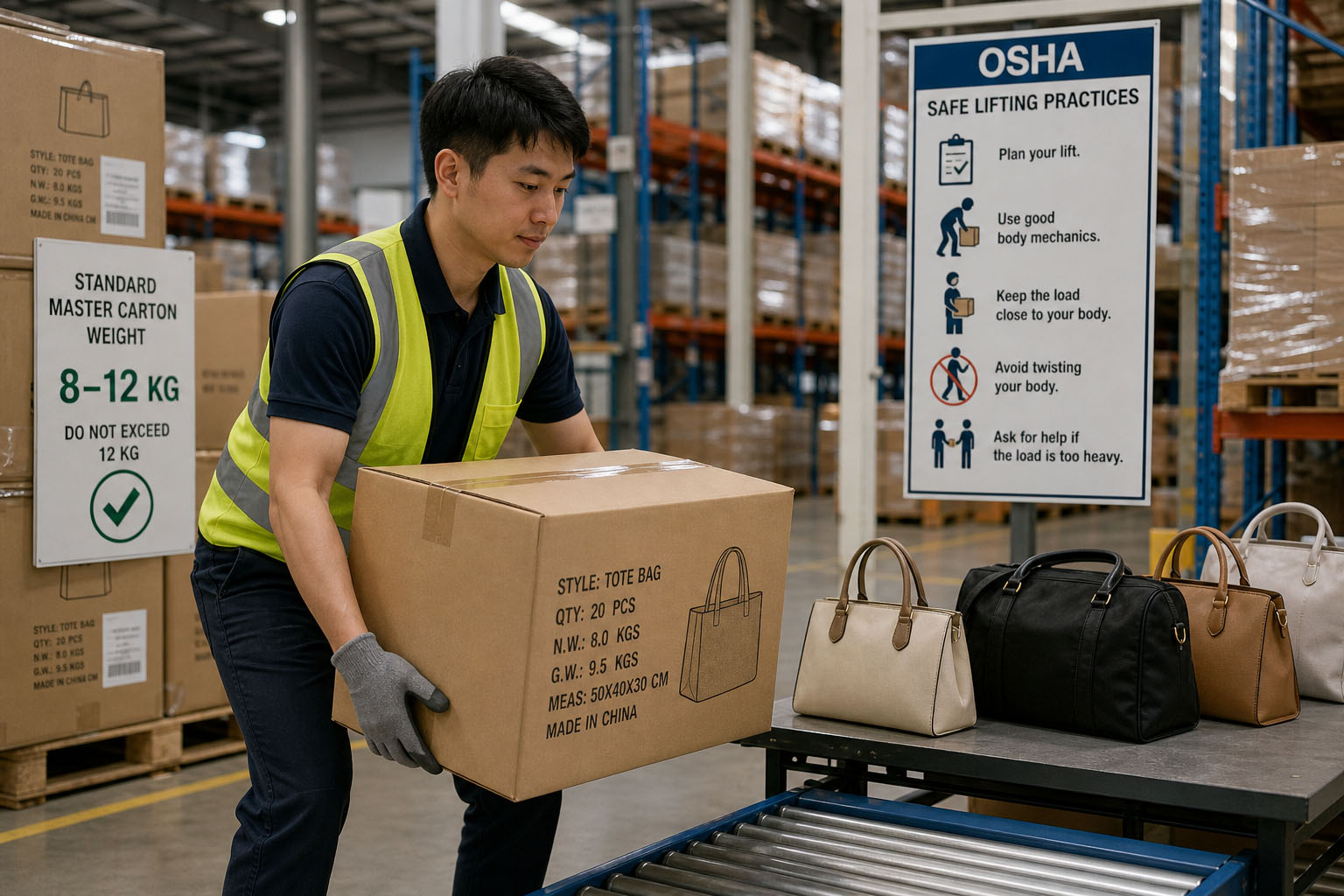
Master carton gross weight is typically kept under 20 kg to comply with OSHA ergonomic standards for US receiving. US warehouse workers manually unload many cartons. Extra‑heavy master cartons create workplace‑safety hazards. 3PL warehouses may refuse to handle over‑weight boxes, or add surcharges. When you negotiate packing specs, enforce a maximum gross‑weight per master carton, and get this written into your purchase‑order terms.
Insight 10: FOB suppliers provide formal loading plans with target container‑utilization metrics
FOB suppliers usually provide detailed loading plans specifying carton quantity per container and target volume utilization rates of 85‑95%. 85‑95 % is the realistic industry target range for well‑optimized master‑carton FCL shipments of bags. Be cautious if a factory claims 98‑100 % utilization; those numbers are almost always unachievable with real‑world bag‑packed cartons, pallets, and required safety gaps. Request written loading documentation before production finishes.
Direct Answer to Your Core Supplier‑Qualification Question
Yes — many suppliers size inner and master cartons to optimize container loading and reduce shipping damage.
That said, this capability is not universal across every Chinese bag factory. Small workshops focused exclusively on low unit‑price goods frequently skip carton‑optimization steps. As a US independent‑website bag buyer, you cannot assume your supplier will automatically implement all these best practices. You must explicitly require optimized packing, document requirements in your PO, and verify samples and loading documentation before shipment departs Chinese ports.
Critical Points to Discuss During Supplier Negotiations
Several high‑impact topics deserve explicit discussion with every prospective bag supplier. These points directly affect freight cost, product condition upon arrival, and US‑warehouse processing expense.
First, master‑carton versus inner‑carton dimensions and gross‑net weights directly drive freight quotes and final loading plans. Every cent of your ocean‑freight calculation depends on actual packed dimensions and weights, not the bare bag dimensions. If suppliers quote pricing based on estimated carton sizes, your landed‑cost projections will be wrong. Always lock in finalized carton measurements before confirming mass‑production.
> Reference resource: [Master Carton Dimensions for Export | SizeMarker](https://www.sizemarker.com/blog/master-carton-dimensions-export)
Second, provide your supplier with complete packing specifications upfront. Include units per inner carton, inner‑carton quantity per master carton, full outer‑carton length‑width‑height, and both net weight and gross weight per master carton. Complete specs allow factories to generate accurate quotations, realistic container‑loading simulations, and avoid last‑minute packing changes after production completes. Incomplete packing information creates costly surprises when cargo reaches the port.
> Reference resource: [Master Carton Dimensions for Export | SizeMarker](https://www.sizemarker.com/blog/master-carton-dimensions-export)
Third, explicitly ask suppliers about right‑sized cartons engineered to fit standard shipping‑container internal dimensions, minimizing empty void space to improve cube utilization. Encourage factories to run container‑loading software simulations for your specific SKU mix. Factories sometimes reuse old existing carton stock to save their own costs, even if those boxes deliver poor container‑fill performance for your order. Push back if they propose repurposed non‑optimized cartons.
> Reference resource: [Optimize Packing & Shipping Costs | Foho Packaging](https://fohopackaging.com/optimize-packing-shipping-costs/)
Practical Field Notes for US‑Based Bag Importers
Container stuffing and space optimization are standard practices within China‑USA international ocean shipping. Even so, do not accept verbal descriptions only. Request explicit carton dimension sheets and full packing configuration documents from each supplier you evaluate. Require physical pre‑shipment packing samples so you can inspect inner packaging, master‑carton quality, and weight before mass goods ship out.
If you are mixing multiple different bag SKUs inside one FCL container, loading complexity increases. Different bag styles produce different inner‑box and master‑box sizes. Mixed‑SKU shipments require extra‑careful loading‑plan simulation. Communicate your full SKU list early so the factory can plan mixed‑container arrangements properly.
> Reference resource: [Optimize Packing & Shipping Costs | Foho Packaging](https://fohopackaging.com/optimize-packing-shipping-costs/)
Deep Dive into Your Four Key Supplier Questions
1. What drop‑test standards do Chinese bag suppliers follow for their master cartons?
Qualified export‑focused bag factories commonly perform 1.2 meter (4‑foot) drop tests on fully‑loaded master carton assemblies, covering multiple faces, edges, and corners of the box. This is the de‑facto practical standard for consumer‑goods export shipments to North America. It is important to emphasize: testing must use real packed‑out boxes with actual bags inside, not empty cartons.
Some factories reference general ISTA testing protocols; others run their own in‑house QC drop‑test procedures. During supplier communication, ask for brief test‑report records or photos from past bag production runs. Smaller domestic‑oriented Chinese factories may conduct zero formal drop testing. If you work with those vendors, your risk of in‑transit product damage rises significantly.
2. Are suppliers offering palletization and shrink‑wrapping to minimize handling damage during loading?
Many experienced export bag suppliers can provide palletization and shrink‑wrapping services, but this is not always included within base FOB pricing. Some factories default to loose carton stuffing directly into containers to cut their own labor expense. Loose‑loaded cartons suffer far higher rates of impact damage during loading and ocean transit.
Palletized, shrink‑wrapped unit loads stabilize your cargo. Forklifts move whole pallet units rather than handling individual cartons, reducing carton drops and bumps. Confirm whether palletization and shrink‑wrap are included, optional, or carry extra per‑pallet charges. Specify pallet requirements clearly within your purchase‑order terms. Specify standard export‑pallet sizes matching US‑warehouse receiving requirements.
3. How do suppliers protect the goods from moisture and mildew during 25+ days of sea transit to the USA?
For 25+‑day ocean voyages crossing the Pacific Ocean, qualified suppliers deploy multi‑layer anti‑moisture protection. Common measures include moisture‑absorbing desiccant packets placed inside each master carton, sealed inner polybags for individual bags, and sometimes anti‑mildew paper interleaved between fabric‑bag surfaces.
Container rain from temperature fluctuation inside steel shipping containers is the main threat. Desiccants absorb trapped airborne humidity. Sealed polybags block condensed moisture from directly touching fabric and synthetic bag surfaces. You should ask suppliers exactly what anti‑moisture steps they will apply for your specific bag materials. Fabric bags, canvas bags, and faux‑leather bags are especially vulnerable to mildew damage on long ocean crossings. Do not rely only on “we use good packaging” verbal replies; write moisture‑protection requirements into your PO.
4. What FCL container utilization rate can optimized master cartons typically achieve?
With properly sized master cartons aligned to container and pallet dimensions, bag‑shipment FCL volume utilization normally lands inside the 85 %‑95 % range for 20ft or 40HQ containers. This is realistic working performance for mixed‑SKU bag orders.
Several factors pull utilization down: non‑standard odd‑size cartons, mandatory safety gaps around pallets, pallet thickness itself, and mixed‑SKU box‑size variation. Any supplier promising consistent 97 %+ utilization should raise your caution flag. Such high numbers are rarely achievable for real‑world finished‑bag cargo. Always review the supplier’s software‑generated loading plan to verify projected utilization before approving shipment arrangements.
Final Takeaways for US Independent‑Site Bag Sellers
When you buy bags directly from Chinese manufacturers for your US‑based e‑commerce website, unit price and bag design are only half of your sourcing story. Packaging engineering — inner‑carton sizing, master‑carton strength, drop‑test validation, palletization, moisture defense, and container‑utilization planning — exerts massive influence over your landed cost, your rate of sellable inventory, and your US‑warehouse receiving experience.
Treat packaging specifications as a core part of product sourcing, not an afterthought. Ask the four key questions outlined in this article during factory vetting. Require written packing specifications, loading plans, and reference QC documentation. Confirm all requirements inside your purchase‑order contract. Well‑managed export‑packaging practices reduce costly shipment damage, stabilize your per‑unit freight expense, and help your finished bags arrive in perfect condition ready to fulfill orders on your US website.
Post time: Aug-05-2026