
Posted for US‑based independent bag e‑commerce store owners | B2B Sourcing Guide
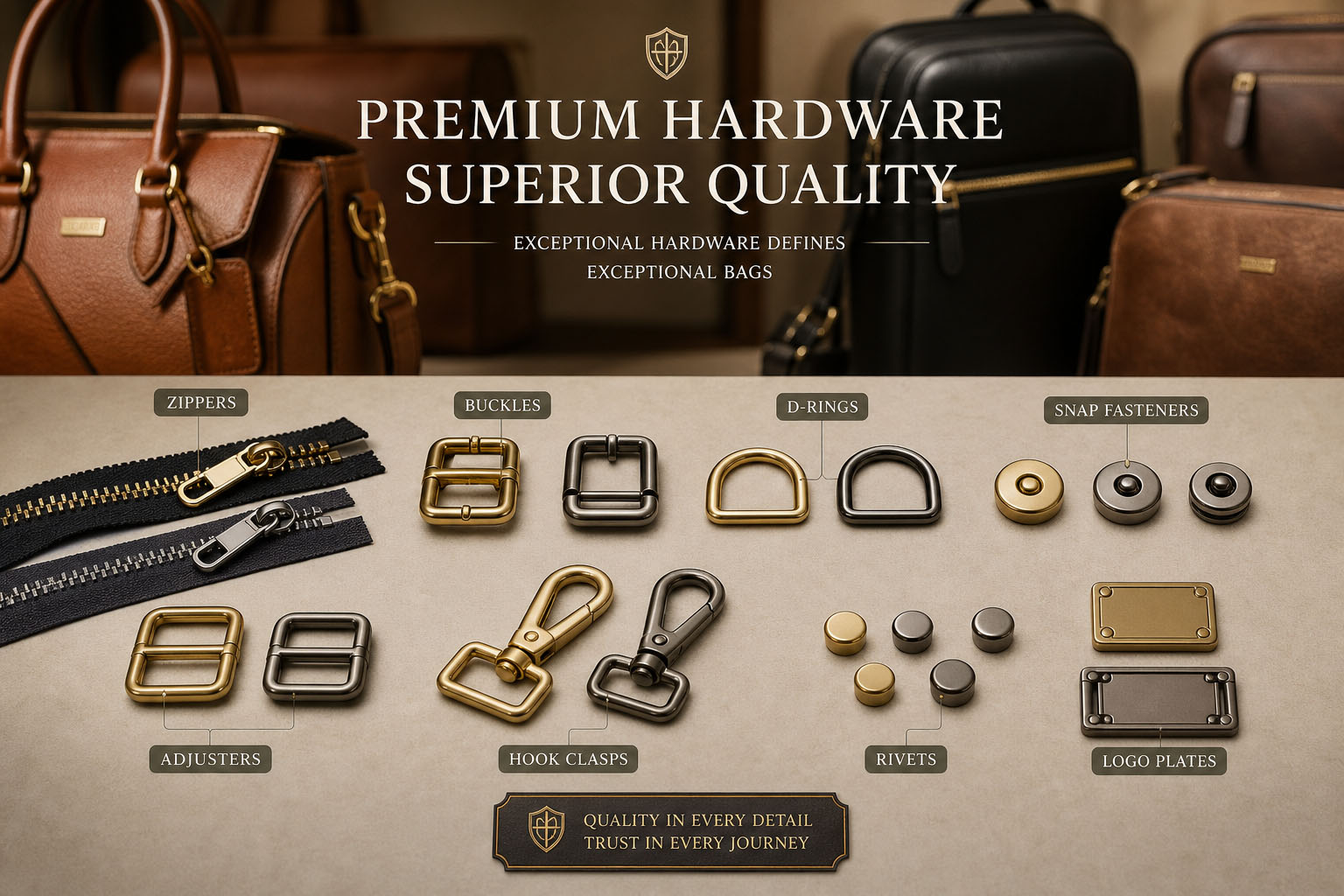
For online bag sellers, customers judge product quality long before they read full product descriptions. The first tactile experiences‑‑the glide of a zipper, the solid click of a buckle, the weight of metal hardware‑‑shape perceived value more than fabric or exterior design alone. Many US independent sellers source bags directly from Chinese factories, yet hardware specifications remain one of the most frequently misunderstood parts of the sourcing workflow. Wrong hardware choices lead to negative reviews, high return rates, and damaged brand reputation. This deep‑dive guide breaks down zipper brand comparisons, metal buckle material differences, OEM‑ODM custom logo capabilities, on‑site quality‑control procedures, and actionable supplier checklists for your China bag‑sourcing projects.
When negotiating orders with Chinese bag manufacturers, hardware specification sits at the core of product performance and retail positioning. Hardware decisions directly influence perceived product quality, real‑world durability, customer satisfaction, and final landed cost. Every US bag importer must clarify these critical details before confirming mass production, rather than discovering hardware defects after inventory arrives at your US warehouse.
Zipper Options: Genuine YKK, SBS, and Budget Generic Alternatives
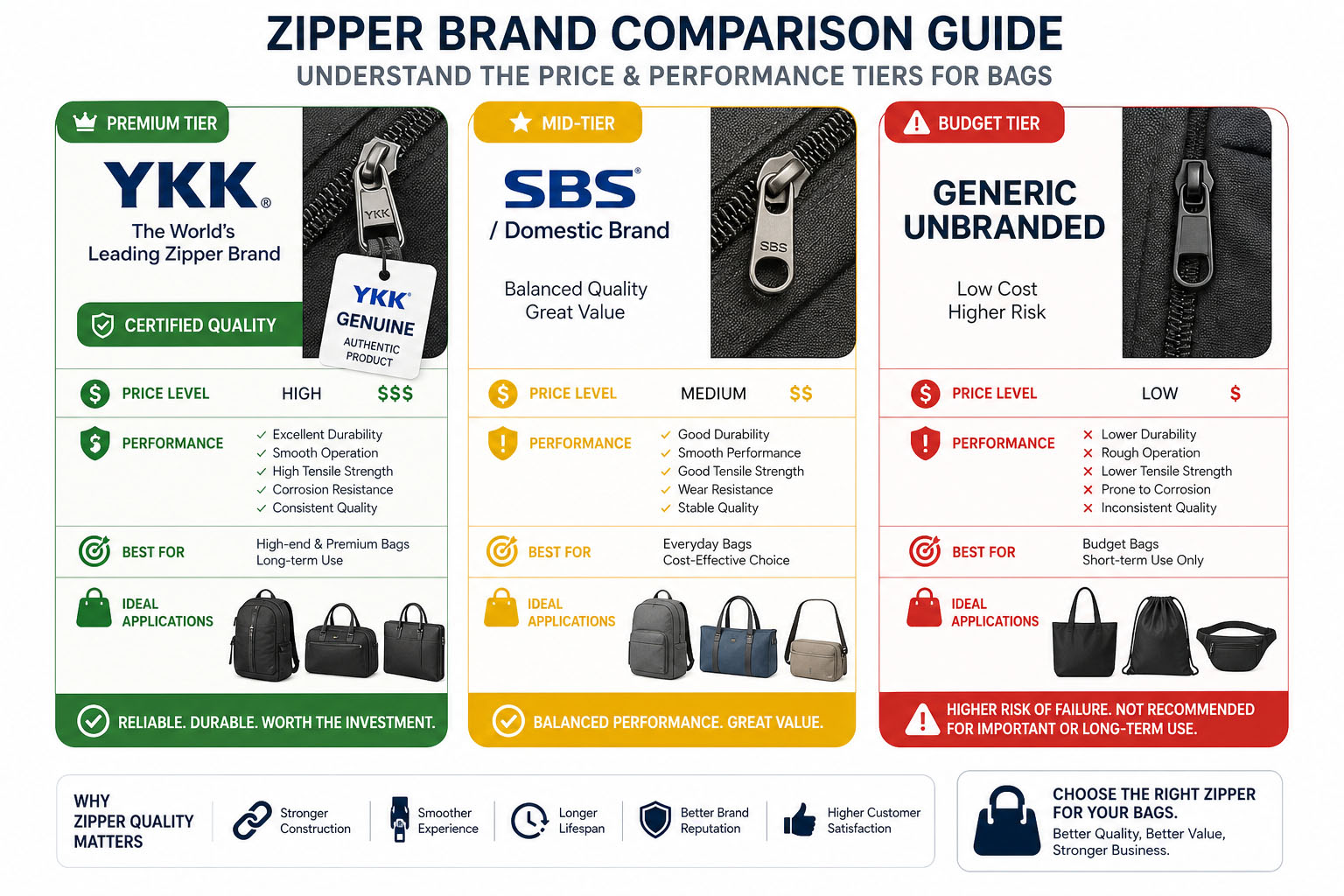
US consumers widely recognize the YKK zipper brand as an iconic mark of reliable bag quality. Many mid‑range and premium US bag brands highlight “Genuine YKK zippers” on product pages as a core selling point. Chinese export‑focused bag factories offer tiered zipper selections to match different price brackets, and it is vital for independent sellers to understand the gaps between premium branded zippers and cost‑saving substitutes.
Chinese bag manufacturers commonly offer YKK zippers as a premium upgrade option. SBS, YCC and HSD are the most widely‑used reputable domestic Chinese zipper alternatives for mid‑tier production. Low‑cost generic no‑brand zippers fill the budget segment.
Genuine YKK hardware delivers consistent smooth operation, strong pull resistance, and long cycle‑life performance. However, not every factory automatically supplies authentic YKK parts. Some Chinese workshops source low‑cost YKK replicas or counterfeit hardware to lower unit costs without informing overseas buyers. Visual appearance alone cannot separate real YKK from knock‑off copies.
**Sourcing Tip**: To verify genuine YKK supply, request official brand authorization letters, purchasing invoices from authorized YKK distributors, and cross‑check physical sample markings before bulk order confirmation. Never rely only on photos provided by suppliers.
SBS and comparable Chinese branded zippers represent a balanced middle option. Their performance works well for many mid‑price bag lines, delivering acceptable smoothness and service life at noticeably lower per‑unit cost versus YKK. Generic unbranded zippers carry elevated risk of snags, jamming, early tooth failure, and high post‑delivery return rates, and are best reserved only for ultra‑low‑price promotional merchandise.
When you evaluate zippers, pay attention not only to brand name, but also series classification and size specifications, including metal, Vislon, waterproof variants and common dimensions such as #5, #8 and #10. Marketing phrases such as “lifetime guaranteed zippers” in the US market almost always reference genuine YKK hardware, as generic alternatives cannot support such brand‑backed performance promises.
Buckle & Metal Hardware: Zinc‑Alloy (Zamak) vs. Lower‑Grade Alloys, Weight, Durability and Cost
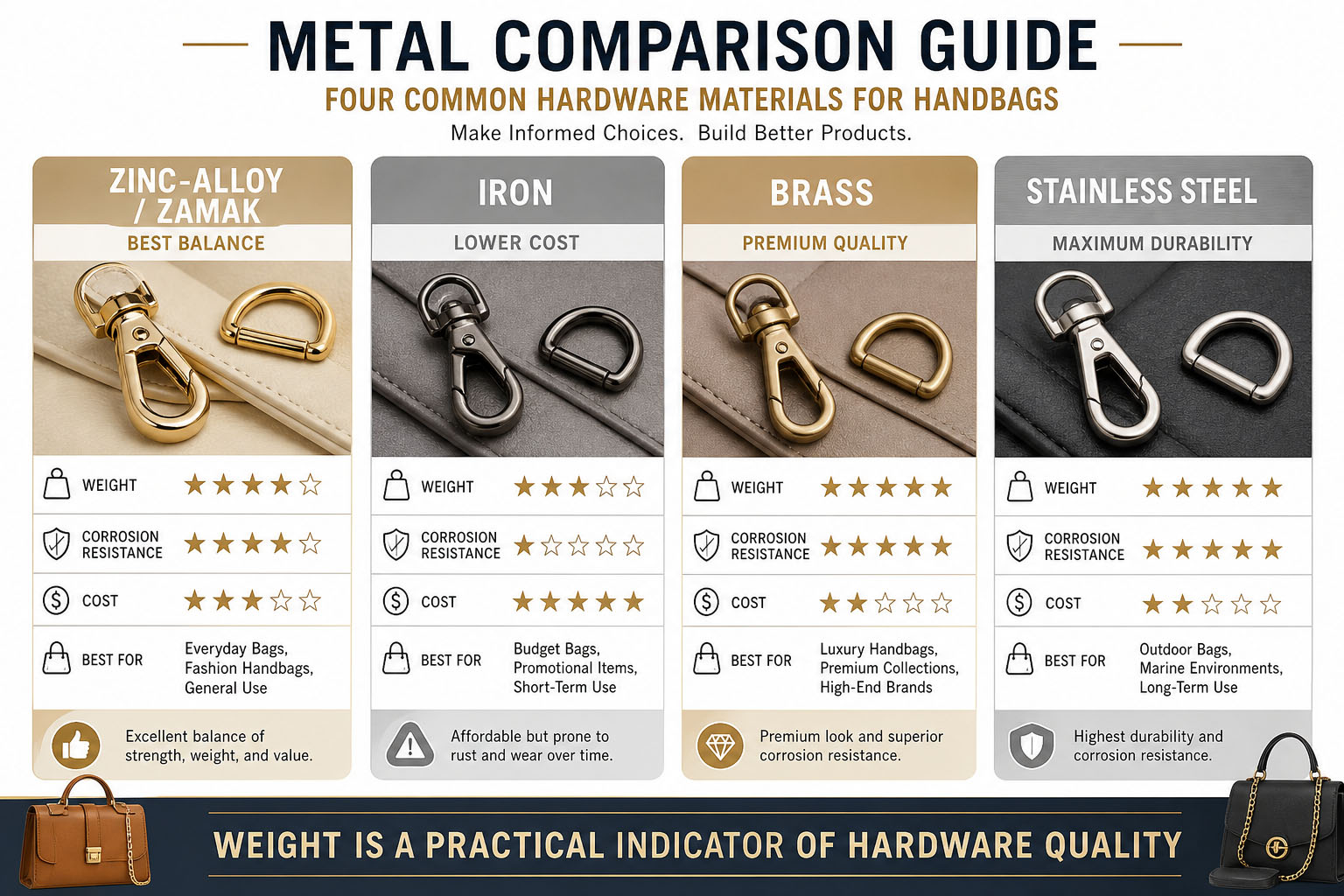
Metal buckles, adjusters, D‑rings and snap hooks heavily shape how American shoppers assess bag quality. Weight, material composition, surface plating finish, corrosion resistance and mechanical strength create clear gaps between hardware grades. Chinese bag factories deploy multiple metal material options: zinc alloy (Zamak), iron, aluminum, brass, and stainless steel.
Zinc‑alloy (Zamak) is the workhorse for export‑oriented quality‑focused bag production. It strikes a practical balance of manufacturing feasibility, plating compatibility, mechanical strength and competitive cost. This material can achieve diverse surface finishes including chrome, nickel, gunmetal, antique brass, and nickel‑free plating options critical for US retail, where nickel‑allergic consumers represent a notable market segment.
Weight serves as a practical real‑world indicator of hardware quality. Heavier buckles and pullers typically signal denser, better‑formulated metal composition and improved durability. Light‑weight thin‑wall low‑grade alloy hardware cuts per‑piece cost, yet tends to bend under load, tarnish quickly, crack, or suffer peeling plating after short‑term customer use.
Brass and stainless steel deliver superior durability and outstanding corrosion resistance compared to standard zinc alloy. These higher‑end materials come with significantly higher unit costs, so they are normally reserved for high‑ticket premium backpacks, outdoor gear and luxury‑segment bags.
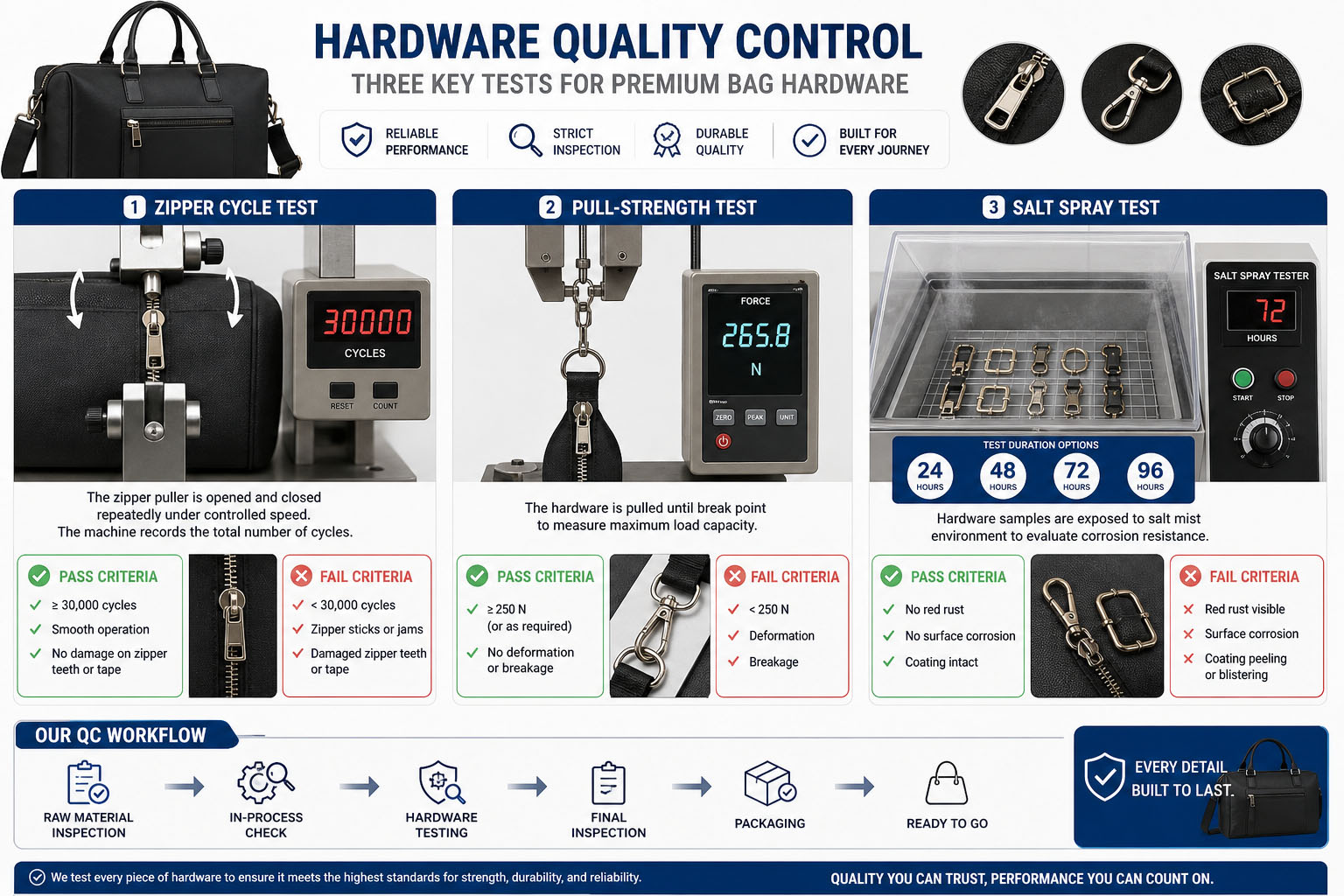
Surface finish is not purely cosmetic. Different plating options change both visual styling and long‑term wear‑resistance. For bags sold in coastal US regions or outdoor‑use merchandise, anti‑corrosion performance becomes non‑negotiable. Factories run salt‑spray corrosion tests, most commonly ranging from 24 hours up to 96 hours, to evaluate plating quality and anti‑tarnish performance. Always ask suppliers for available salt‑spray test reports for the exact hardware grade specified for your order.
Buckle mechanical performance is measured by load‑bearing capacity. Standard bag hardware usually delivers 20 kg to 80 kg breaking load capacity. High‑strength hardware for heavy‑load backpacks or travel luggage commands a clear price premium over general‑purpose fashion‑bag buckles.
You must draw a clear distinction in supplier communication: not all “alloy buckles” are equal. When a factory quotes “alloy hardware”, explicitly confirm whether this refers to standard zinc‑alloy Zamak, or cheaper mixed low‑grade alloy. Vague terminology is a top source of quality discrepancies between pre‑production samples and final bulk goods.
OEM / ODM Customization: Custom Logos & Unique Designs on Zipper Pullers, Sliders and Buckles
Private‑label differentiation is essential for US independent bag sellers competing against Amazon mass‑market merchandise. A frequently asked question for Chinese bag manufacturers is the feasibility of custom‑branded metal hardware.
**Yes. Buyers can fully customize zipper pullers, sliders and buckles with proprietary logos, graphics and original designs via standard OEM and ODM services from most export‑qualified Chinese bag factories.**
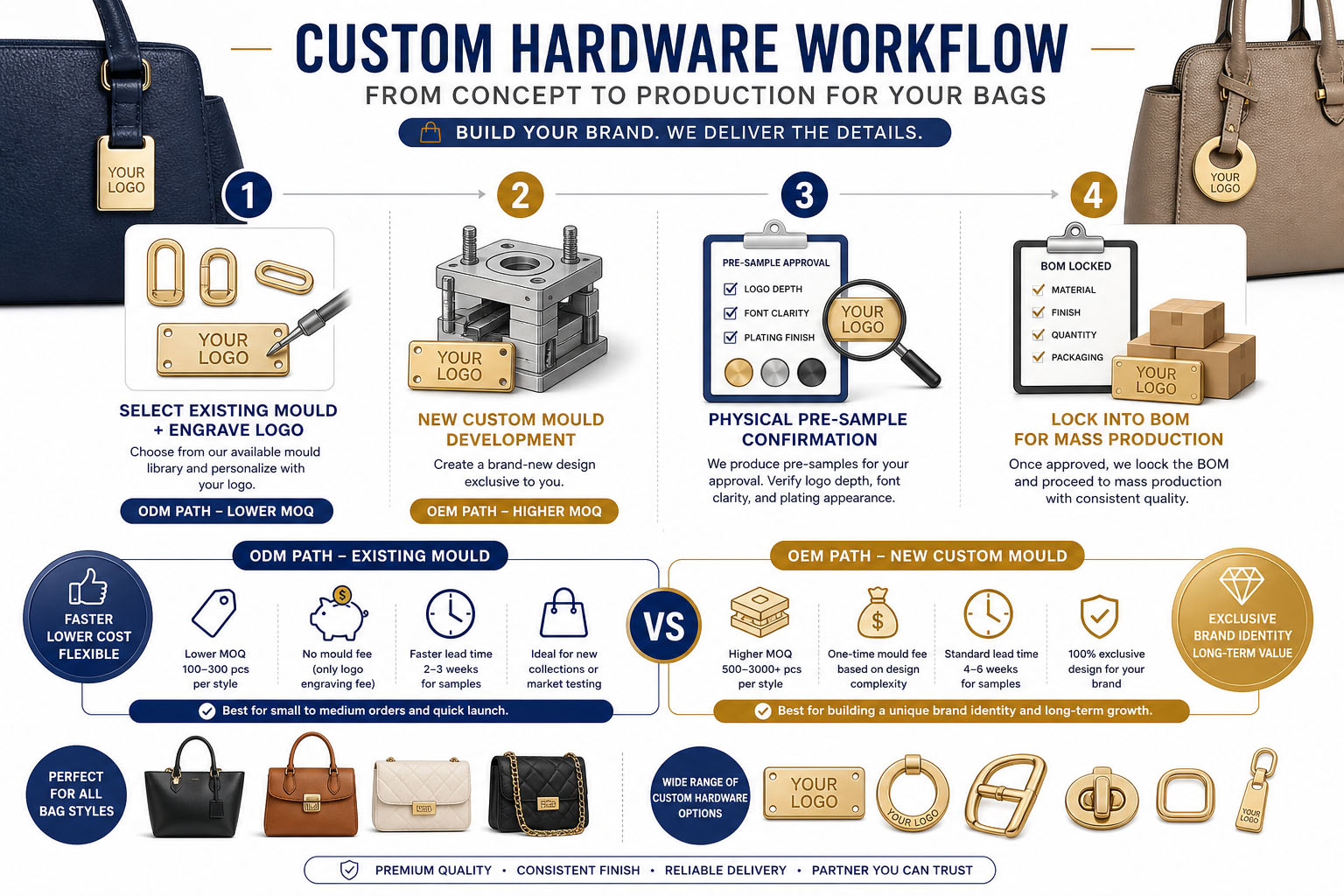
Custom hardware falls into two main workflows. Under ODM arrangements, you select existing hardware moulds from the supplier’s library, and add your engraved or debossed brand logo onto the ready‑made pieces. This approach features lower minimum‑order quantities and shorter lead times, and fits most startup and mid‑size independent store operators.
For fully original shapes, unique contours or completely bespoke buckle geometry, OEM tooling is required. New custom moulds incur one‑time tooling charges and demand higher MOQ thresholds. This path suits established brands aiming for strong market differentiation and exclusive hardware styling that competitors cannot easily copy.
Important practical points for custom hardware projects:
1. Confirm minimum order quantities for logo‑etched versus brand‑new custom moulds in writing.
2. Request physical hardware pre‑samples before full mould production, to verify logo depth, font clarity and plating appearance.
3. Lock customized hardware items into your formal BOM (bill of materials). This prevents factories from substituting generic un‑branded hardware during mass production to reduce internal costs.
4. Clarify ownership terms for custom tooling: confirm whether you own the mould after payment, or whether the factory retains tooling property rights.
Custom branded metal hardware becomes excellent marketing content for your independent‑store product pages. Shoppers perceive engraved logo hardware as proof of genuine private‑label production, raising overall brand trust.
In‑Line QC & Factory Testing: How Chinese Factories Verify Zipper Smoothness and Buckle Load‑Bearing Performance
Even premium‑spec hardware materials will fail without consistent factory quality‑control workflows. Many overseas buyers only inspect finished complete bags, overlooking hardware‑focused inline quality checks happening during production.
Qualified Chinese bag factories perform targeted hardware testing during inline QC inspections, before hardware is assembled onto finished bag bodies. Two core testing categories cover your highest‑risk points: zipper performance and buckle mechanical strength.
For zippers, factories run endurance cycle testing to assess long‑term smoothness. Zippers open and close repeatedly for hundreds or thousands of cycles, checking for sticking, jamming, tooth separation, slider damage or fabric snagging. Pull‑strength testing measures how much force the zipper assembly can withstand before failure. Visual inspection also checks surface scratches, misaligned teeth and defective sliders.
For metal buckles and connecting hardware, gravity‑based load‑bearing testing is standard practice. Test weights hang on buckles, D‑rings and adjusters for set durations, verifying no bending, cracking or detachment under rated load limits. Hardware items that deform or break during testing are rejected before assembly onto bags.
Beyond mechanical performance, plating quality gets validated through salt‑spray corrosion testing as previously mentioned. This procedure detects premature tarnishing, peeling plating and rust risk, critical for merchandise sold in humid or coastal US locations.
Critical sourcing risk: Not all factories conduct these tests internally. Some smaller workshops skip formal hardware testing entirely and only perform superficial visual checks.
Your supplier agreement should confirm which hardware tests are performed, pass‑fail criteria, and whether formal test reports can be furnished for your order. Always compare mass‑production pre‑shipment samples side‑by‑side against your originally‑approved pre‑production sample, paying close attention to hardware weight, feel, branding, and finish. Locking your full BOM in writing protects you against unapproved material downgrades between sample and bulk shipment.
Practical Supplier Checklist for US Independent Bag Sellers
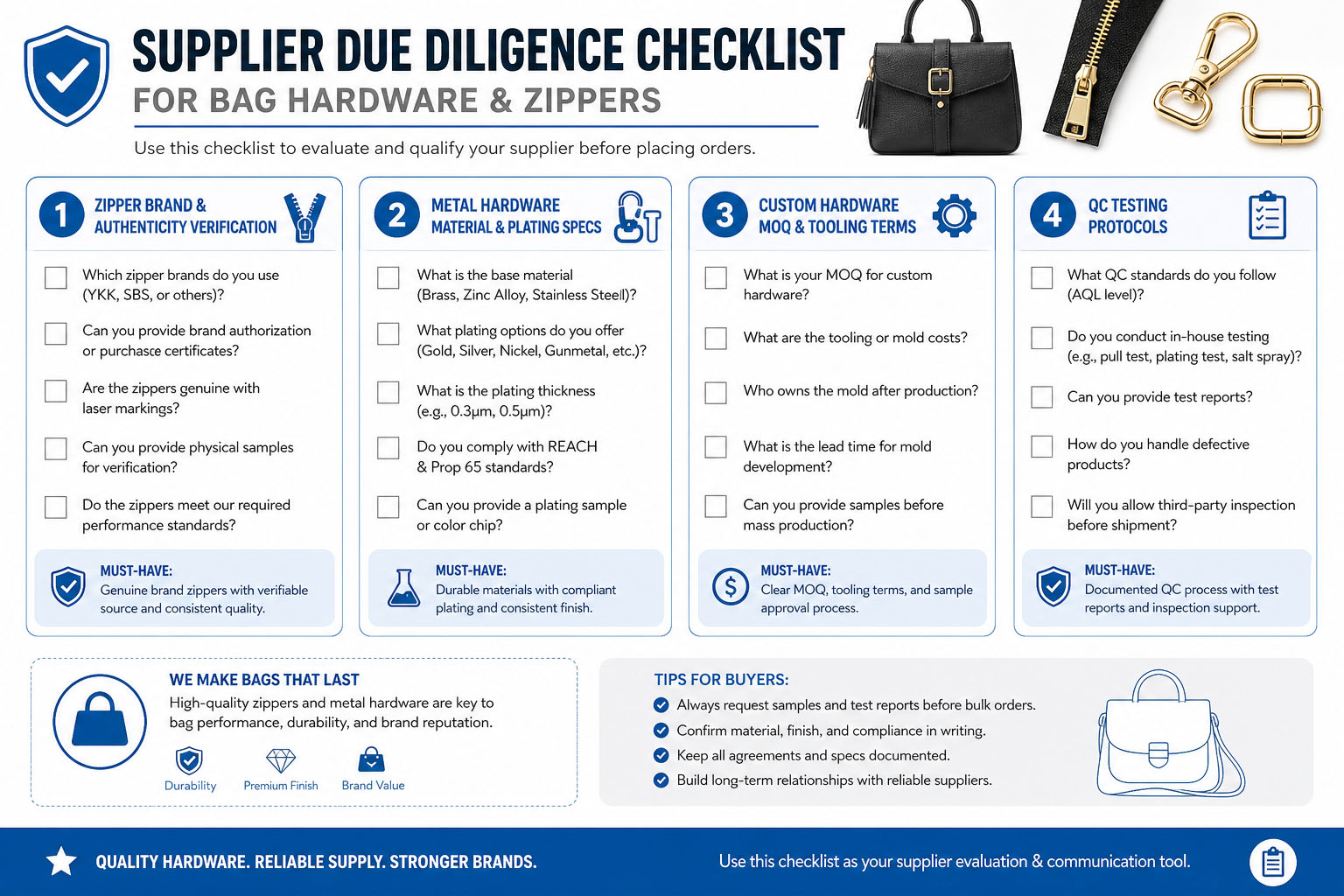
Use these structured questions in written communications with Chinese bag factories or trading companies. Secure written replies and supporting documents, rather than verbal assurances only.
1. Zipper brand, grade and authenticity
1. Which zipper brands can you supply: YKK, SBS, YCC, or generic unbranded?
2. For YKK supply: which series and size numbers will you use for this project?
3. Can you provide official YKK distributor authorization or purchasing documentation to prove genuine YKK parts?
4. What is the per‑unit cost difference across YKK, reputable domestic branded, and generic zipper options for my bag model?
2. Buckle & metal hardware specifications
1. What exact metal material are these buckles: zinc‑alloy (Zamak), iron, aluminum, brass or stainless steel?
2. What plating finish will be applied? Do you offer nickel‑free plating options?
3. Can you share plating‑related specifications and salt‑spray corrosion‑resistance test reports?
4. What is the rated load‑bearing capacity for our selected buckles? What is the price gap between standard‑grade and premium‑grade plated hardware?
3. OEM‑ODM custom hardware requirements
1. What are MOQs for logo‑engraved existing‑mould zipper pulls and buckles?
2. What are tooling fees, lead‑time and MOQ if we need fully original custom‑shape hardware? Who owns the finished mould?
3. Will custom‑logo hardware be locked within our official BOM for mass‑production orders?
4. Quality control and testing protocols
1. What zipper endurance cycle and pull‑strength testing do you perform? What are your pass criteria?
2. Do you complete buckle load‑bearing gravity testing inline during production?
3. Are salt‑spray anti‑corrosion tests completed for this hardware grade? Can reports be provided?
4. Will you produce pre‑production samples with 100% identical hardware as planned for bulk goods?
5. How do you prevent unapproved hardware substitution during mass‑production runs?
Translating Hardware Specs Into Your US‑Focused Store Marketing
All of this sourcing due diligence delivers extra value when you translate verified hardware specs into clear customer‑facing copy on your independent e‑commerce website. US online shoppers actively look for concrete quality signals instead of vague marketing buzzwords like “high‑quality hardware”.
Example product‑page messaging you can adapt:
“Built with genuine YKK zippers for reliably smooth, long‑term daily use.”
“Solid zinc‑alloy buckles with nickel‑free plating, built for durability and skin‑friendly everyday wear.”
When customers can read concrete hardware details, they better understand your product value proposition, which reduces returns and strengthens organic review quality. Hardware specifications become real competitive differentiation against competitors selling bags assembled with unmarked generic metal parts.
Closing Thoughts
Hardware is a small physical component of each finished bag, yet it exerts outsized influence over perceived quality, real‑world durability, customer review scores, and long‑term profitability for US‑based independent bag merchants.
When sourcing directly out of China, avoid assuming factories will automatically select premium‑grade hardware. Clearly define zipper brands, exact buckle material grades, plating standards, custom‑logo requirements, and QC testing expectations in writing. Validate authenticity via official documentation and physical sample comparisons. Lock all hardware specifications into your bill of materials before approving mass production.
By mastering hardware sourcing details, you avoid costly post‑shipment quality surprises, build consistent‑quality inventory, and create credible, professional product stories that resonate with your United States online shoppers.
Post time: Aug-27-2026