
Sourcing Bags from China: The Small‑Business Blueprint for Supplier Verification, References, Payment Safety, Product Quality, and Shipping Cost Management
If you run a boutique online bag shop, you already know that the biggest opportunity—and the biggest challenge—lies in sourcing affordable, high‑quality bags from China. The Chinese manufacturing ecosystem offers economies of scale that can make or break a small‑business margin, but navigating supplier verification, payment protection, quality control, and logistics as a first‑time importer can feel overwhelming. This guide draws on real‑world experience, peer‑to‑peer insights, and proven industry practices to give you a step‑by‑step roadmap. By the end, you’ll have a clear action plan that you can start using today.
1️⃣ How to Verify a Chinese Bag Supplier’s Reliability
When you’re dealing with a factory half a world away, “trust but verify” isn’t just a cliché—it’s a survival strategy. Below are the most actionable ways to assess a supplier’s credibility.
Insight 1 – Look for Verified Buyer Badges on B2B Platforms
Platforms such as Alibaba, Made‑In‑China, and Global Sources award “Verified Supplier” or “Gold Supplier” badges after third‑party audits. The badge signals that the supplier’s business license, production capacity, and export history have been checked.
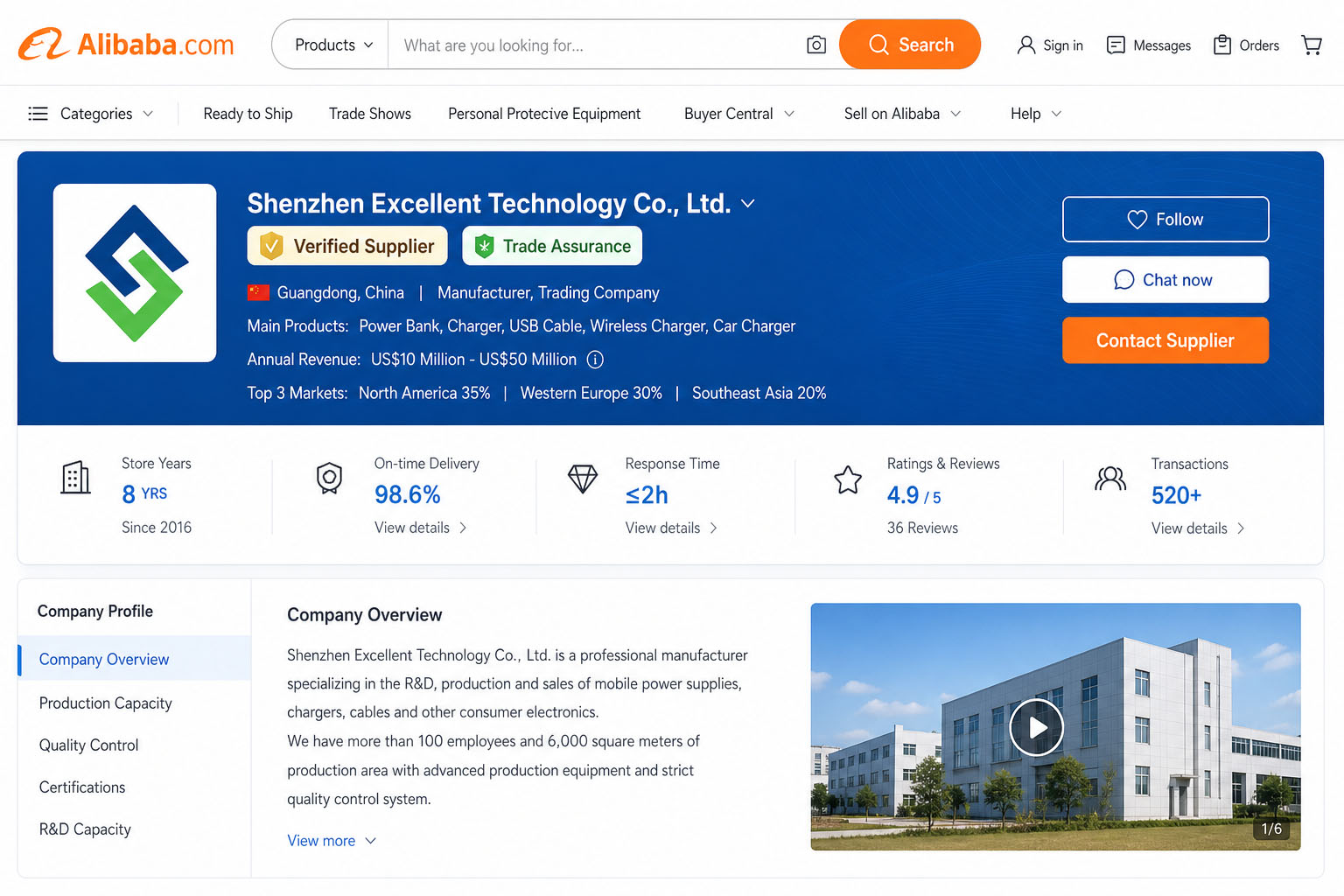
Insight 2 – Examine Client Testimonials & Case Studies on the Supplier’s Site
Reliable manufacturers often display a “Testimonials” or “Success Stories” page that lists client names, order volumes, product types, and delivery timelines. Look for specifics: a testimonial that says “We ordered 500 leather tote bags and received them in 18 days with zero defects” is far more valuable than a vague “Great quality!”
Insight 3 – Tap Peer‑to‑Peer Communities for Unfiltered Feedback
Facebook groups (e.g., Dropshipping & Importing from China), Reddit subreddits (r/Entrepreneur, r/smallbusiness), and industry forums are goldmines for honest opinions. Search for the supplier’s name plus keywords like “review,” “scam,” or “real experience.” You’ll often find comments detailing communication speed, problem‑solving ability, and whether the client reordered.
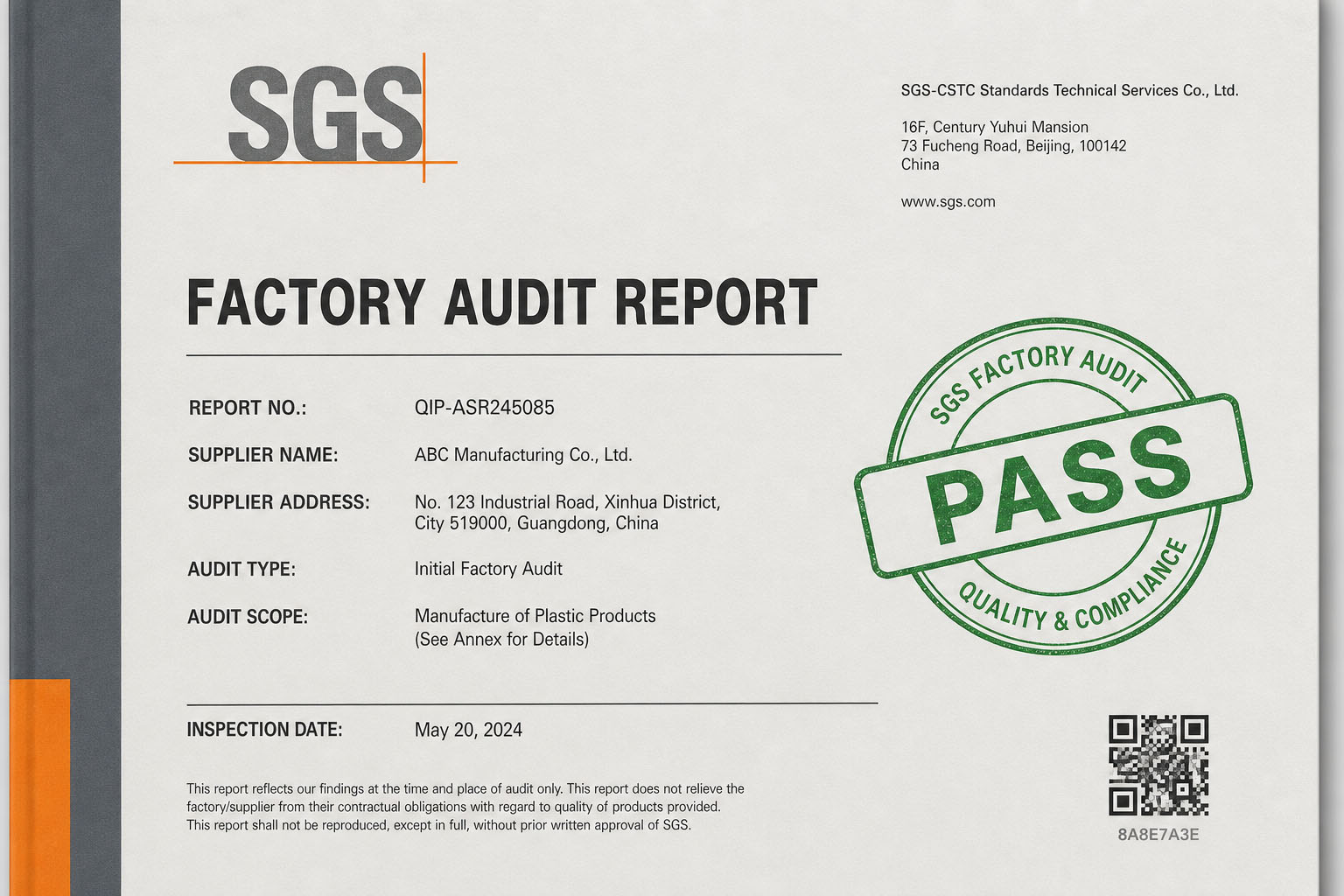
Insight 4 – Request Independent Audit Reports (SGS, Bureau Veritas, TÜV)
Reputable suppliers can provide PDF copies of recent inspections performed by global testing firms. These reports verify material composition, stitching strength, colorfastness, and compliance with safety standards (e.g., REACH, CPSIA). If a supplier hesitates to share one, treat it as a red flag.
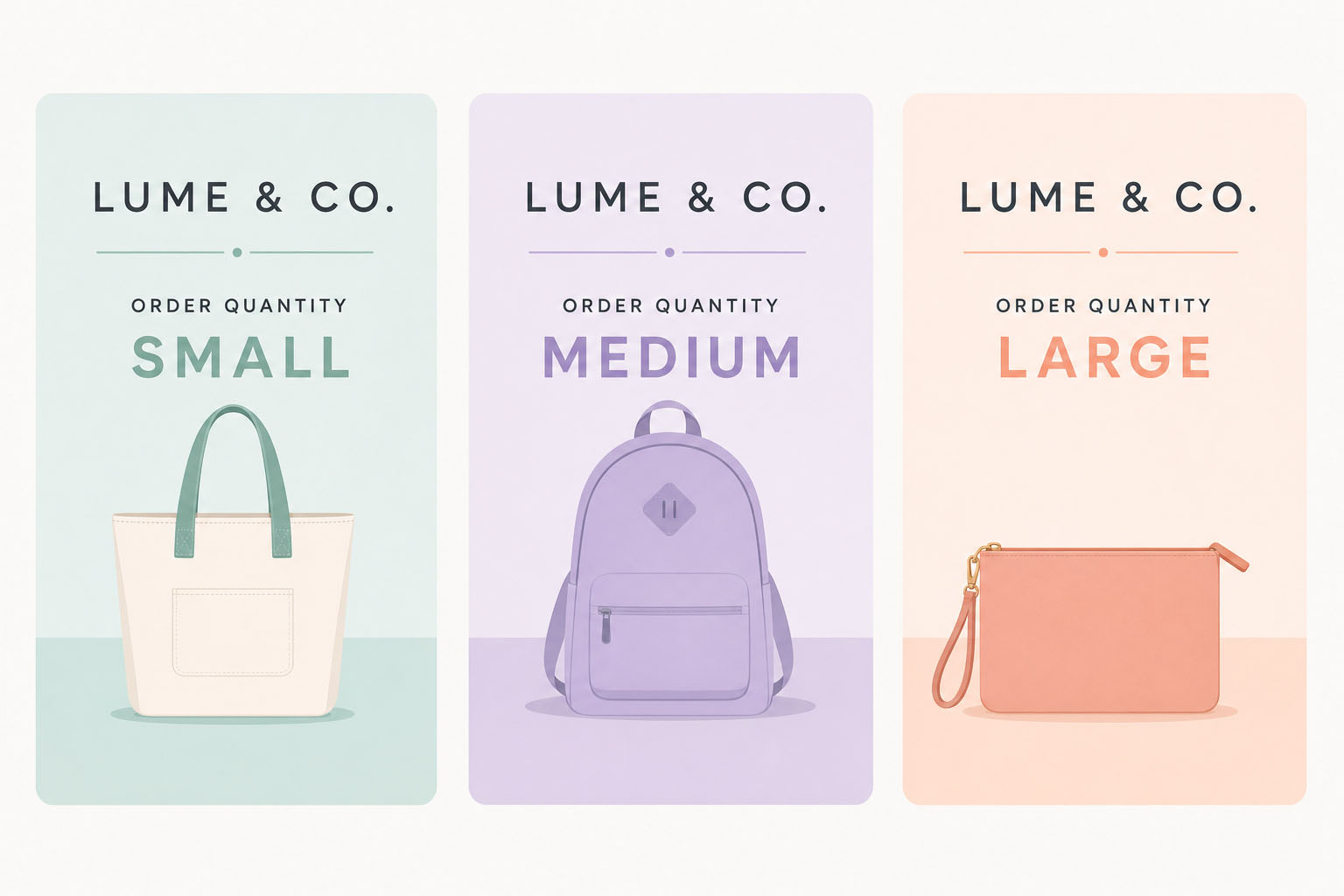
Insight 5 – Ask for at Least Three References Before Committing
A rule of thumb in the import community: “Three references, three different order sizes.” This gives you a spread of experiences—small, medium, and large—so you can gauge consistency.
Insight 6 – Review Transaction History on Alibaba’s “Trade Assurance” Dashboard
Alibaba’s Trade Assurance shows the actual transaction volume, order completion rate, and buyer feedback for each product. A supplier with a 95%+ completion rate over the past 12 months is a strong candidate.
Insight 7 – Probe Communication Responsiveness
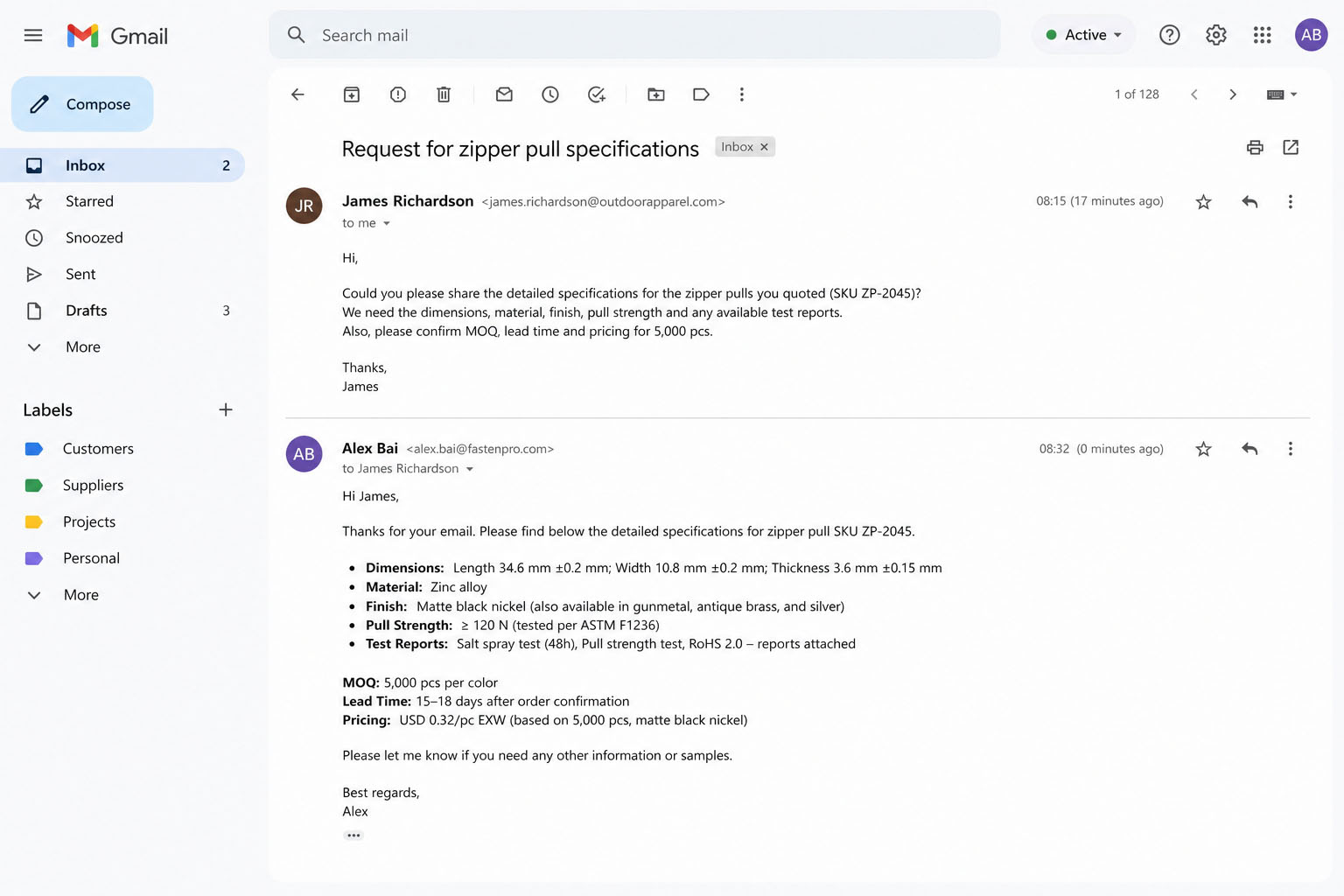
Send a concise email or message asking a few technical questions (e.g., “Can you provide a detailed specification sheet for the zipper pull?”). A supplier that replies within 24 hours with clear, thorough answers demonstrates professionalism and a willingness to partner with small buyers.
Insight 8 – Match References to Your Market
If you sell to U.S. or European customers, ask for references from buyers in those regions. A reference from a U.S. boutique that ordered 200 custom‑logo totes, for example, will be more relevant than a reference from a local Chinese wholesaler.
Insight 9 – Use a Third‑Party Escrow Service
Escrow platforms (e.g., Alibaba’s Trade Assurance, PayPal’s Goods & Services, or dedicated services like Payoneer Escrow) hold the payment until you confirm receipt of goods. This protects you while you verify the authenticity of any references provided.
Insight 10 – Plan for a Long‑Term Partnership
Once you’ve vetted a supplier and placed a successful pilot order, consider negotiating a “preferred buyer” status. Long‑term relationships often unlock lower MOQs, priority production slots, and exclusive pricing—plus the supplier may be more forthcoming with testimonials and case studies down the line.
2️⃣ Getting References & Testimonials – What to Ask For
Collecting solid references is only useful if you ask the right questions. Below is a practical checklist you can send to any prospective supplier.
What to Ask
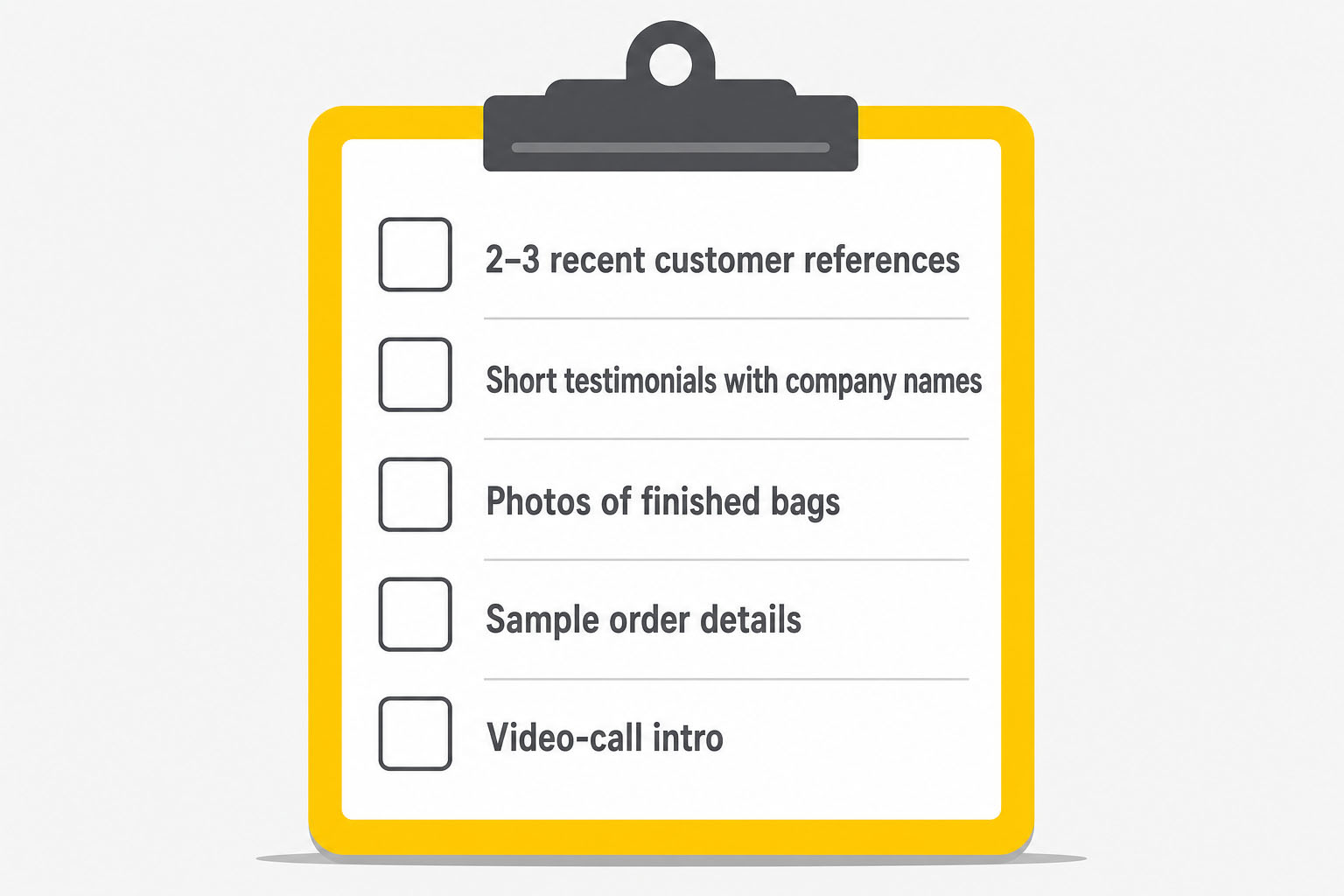
1. 2–3 recent customer references (ideally small businesses similar to yours).
2. Short testimonials with company names, websites, or social media links so you can verify authenticity.
3. Photos of finished bags linked to those clients’ orders—visual proof of the product’s quality and branding.
4. Sample order details: MOQ, lead time, price per unit, and whether the client placed repeat orders.
5. A video‑call introduction to one existing customer if the supplier is willing (a strong signal of confidence).
Good Screening Questions
- Which small businesses have you supplied in the last 12 months?
- Can you share a reference in the U.S. or a comparable market?
- What was the order size and product type?
- Did the client place repeat orders?
- Can I see a packing list, invoice sample, or anonymized order record?
Sample Message You Can Send
“Before placing my first order, please share 2–3 references or testimonials from small‑business clients who bought bags from you recently. I’d like to know their order size, product type, lead time, and whether they reordered.”
One Caution
A testimonial displayed on a supplier’s website is helpful, but never rely on it alone. Pair references with a sample order, a written specification sheet, and a payment method that offers protection (see Section 3).
3️⃣ Safe Payment Methods for Small Orders
Choosing the right payment method is the single most effective risk‑mitigation tool you have. Below are the most common options, ranked by safety for small importers.
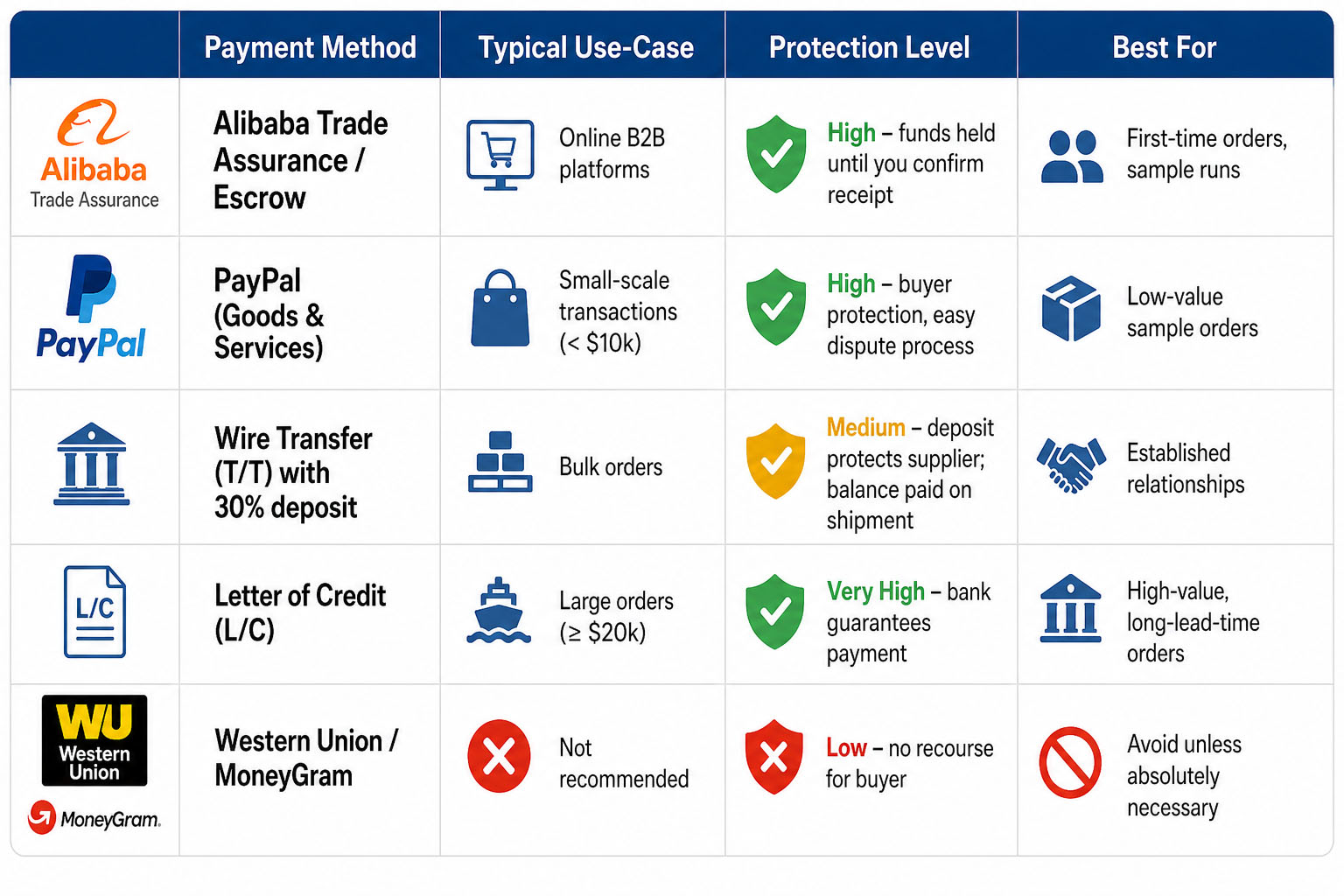
Pro Tip: Start with Trade Assurance or PayPal for your pilot order. Once you’ve built trust, you can negotiate a 30%/70% split via T/T to reduce transaction fees.
4️⃣ Ensuring Product Quality – A Step‑by‑Step QA Roadmap
Quality control is not a one‑time inspection; it’s a continuous process that starts before you place the order and ends after the goods reach your warehouse.
Pre‑Production Phase
1. Request a Pre‑Production Sample (PPS). This is a prototype built to your exact specs. Evaluate material, stitching, hardware, and logo placement.
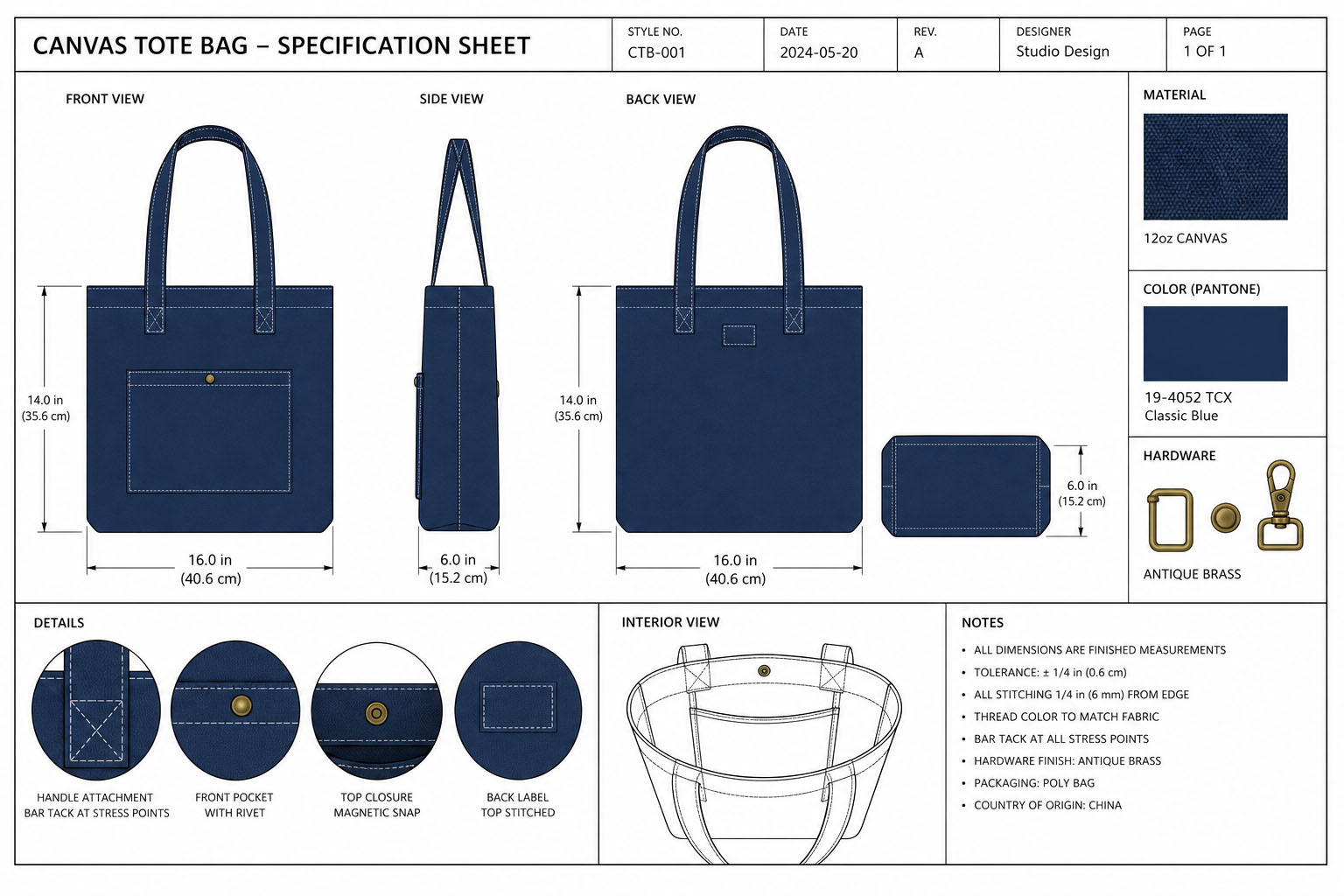
2. Develop a Detailed Specification Sheet. Include dimensions (width × height × depth), material weight (e.g., 12 oz canvas), color codes (Pantone), hardware finish (antique brass), and packaging requirements.
During Production
3. Factory Audits & Inline Inspections. If you have a trusted QC partner (or use services like QIMA, AsiaInspection), schedule an inline inspection when 10–15% of the order is completed. This catches issues early.
Pre‑Shipment Phase
4. Pre‑Shipment Inspection (PSI). Hire a third‑party inspector (SGS, Bureau Veritas, QIMA) to check 100% of the finished units against your spec sheet. Typical criteria:
- Dimension check (tolerance ±2 mm)
- Material test (tear strength, colorfastness)
- Hardware functionality (zippers, snaps, magnetic clasps)
- Logo & label accuracy (spell‑check, correct placement)
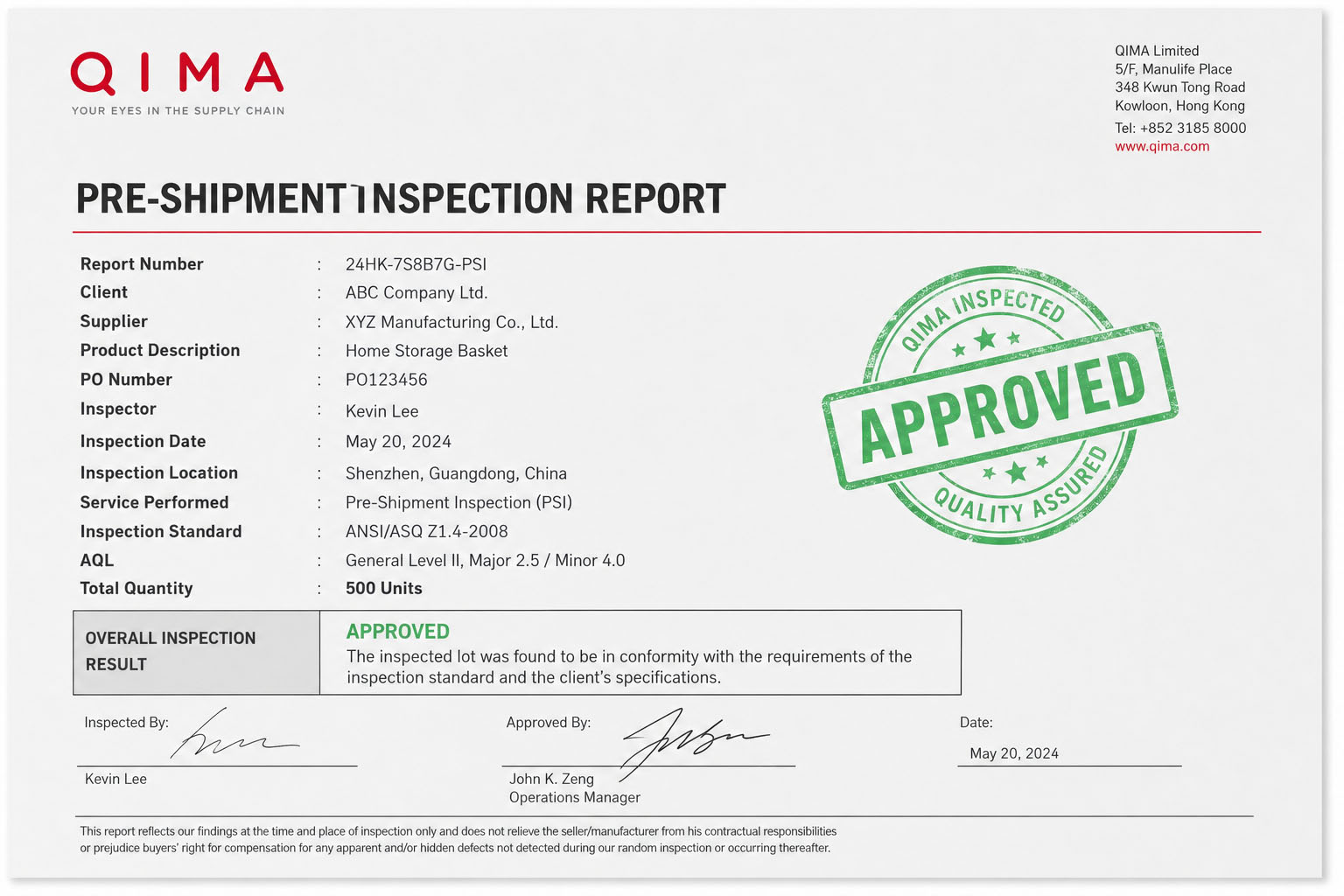
5. Lab Testing (optional but recommended for regulated markets). For leather or synthetic bags destined for the EU or U.S., consider REACH or CPSIA testing to ensure chemical safety.
Post‑Delivery Phase
6. Customer Feedback Loop. Encourage early buyers to submit photos and reviews. Any recurring issue (e.g., zipper failure) should trigger a corrective action request (CAR) with the supplier.
5️⃣ Managing Shipping Costs & Customs Duties for Small‑Volume Imports
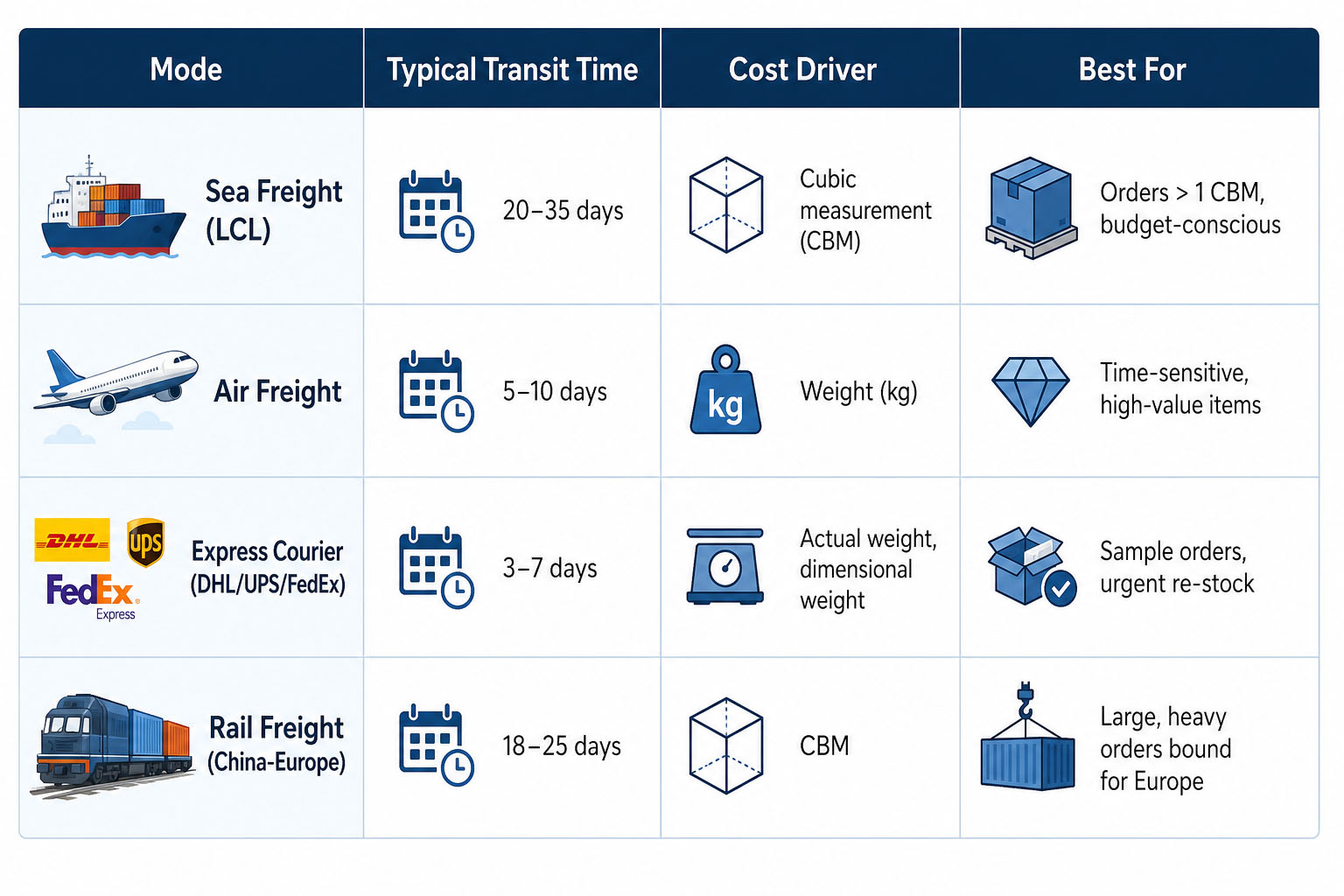
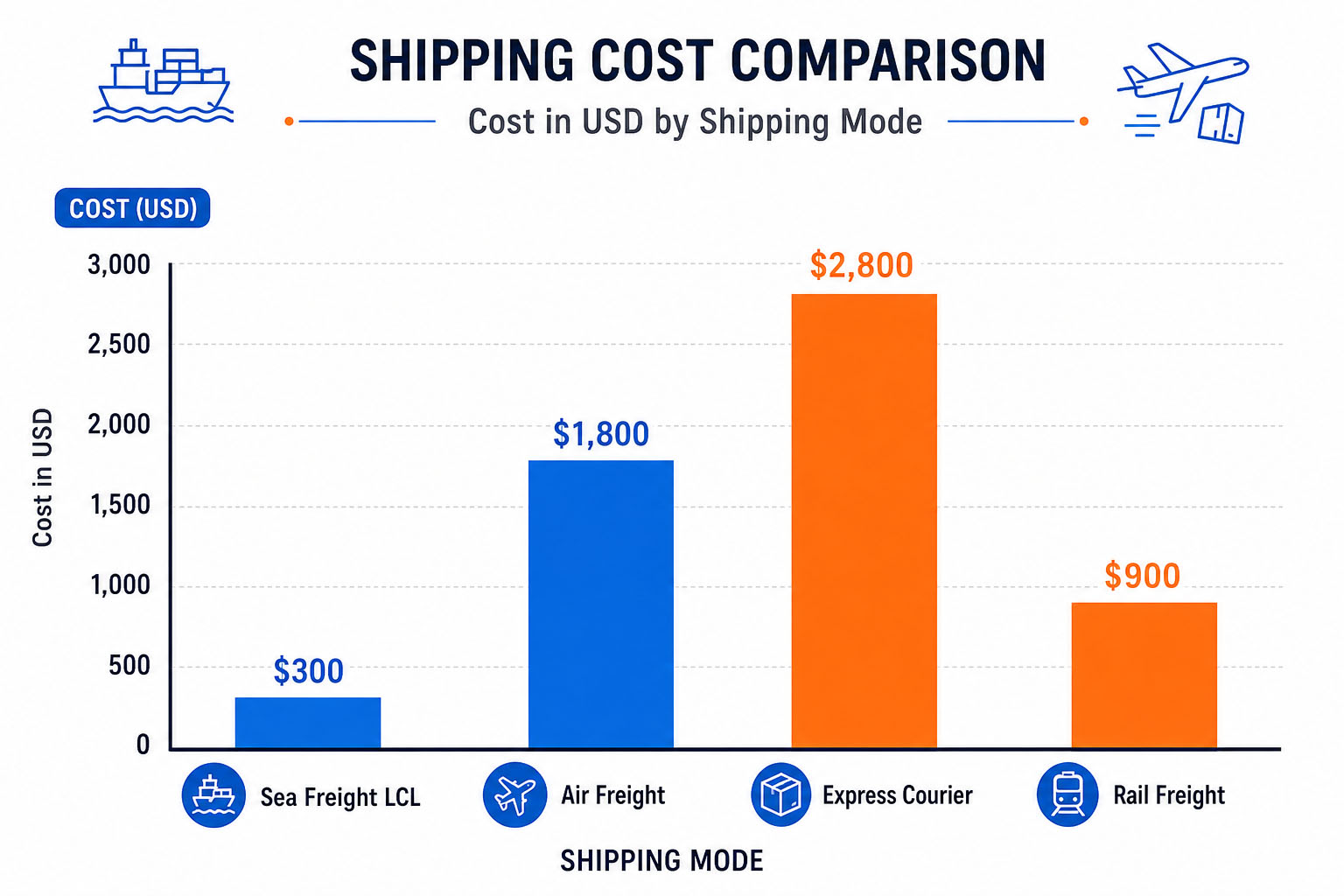
Even if you order only 200–500 units, you can still keep freight costs reasonable with the right strategy.
Shipping Options
Cost‑Savings Tips
- Consolidate shipments by combining several small orders into one LCL shipment (most freight forwarders offer this service).
- Negotiate with a freight forwarder for a “door‑to‑door” DDP (Delivered Duty Paid) quote. This bundles shipping, insurance, customs clearance, and duties into a single price, simplifying budgeting.
- Use cubic weight calculators to compare sea vs. air costs; for lightweight bags, air may be cheaper if you’re shipping less than 0.5 CBM.
Customs & Duties
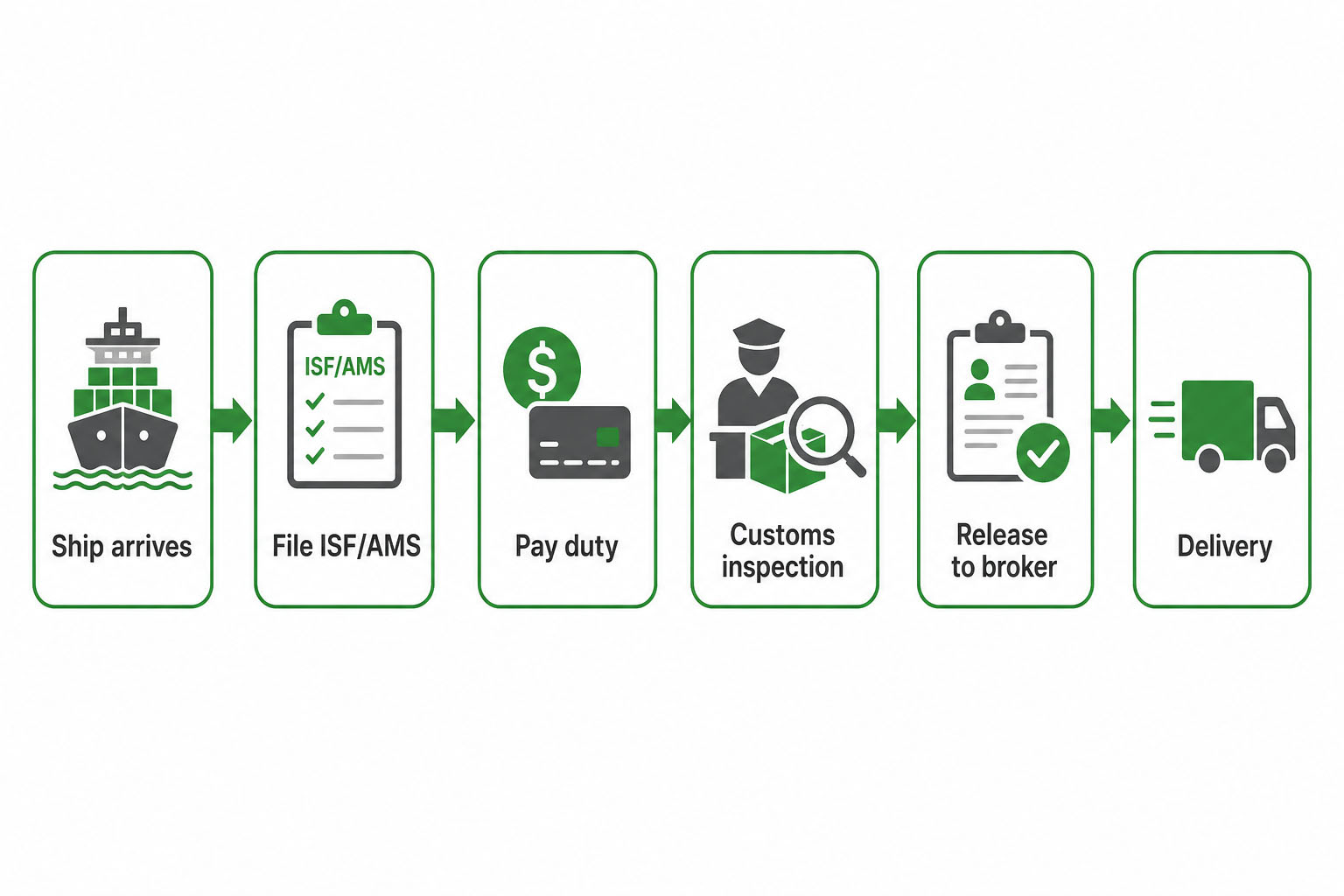
1. Determine the Correct HS Code. For most handbags and backpacks, the U.S. HS code is 4202.92 (with sub‑classifications for materials like leather, plastic, or textile). Incorrect classification can lead to penalty fees.
2. Know the Duty Rate. U.S. import duty on most non‑leather bags is ≈6.5%–20% depending on material and sub‑classification. The EU generally charges ≈4%–12% for similar items.
3. Use a Customs Broker. Even for a single shipment, a licensed broker (often part of your freight forwarder’s service) can ensure paperwork accuracy and reduce the risk of “hold for examination.”
4. Plan for Additional Fees. Some countries levy a “VAT/GST” on the landed cost (including shipping + duty). In the U.S., sales tax may apply upon resale.
6️⃣ Building a Long‑Term Partnership – The Supplier’s Perspective
Many small‑business owners worry that asking for references or detailed documentation will alienate a supplier. In reality, professional manufacturers welcome a transparent partnership because it reduces the risk of disputes and returns. By establishing a relationship grounded in mutual respect and clear expectations, you’ll find that the supplier becomes an extension of your own product development team.
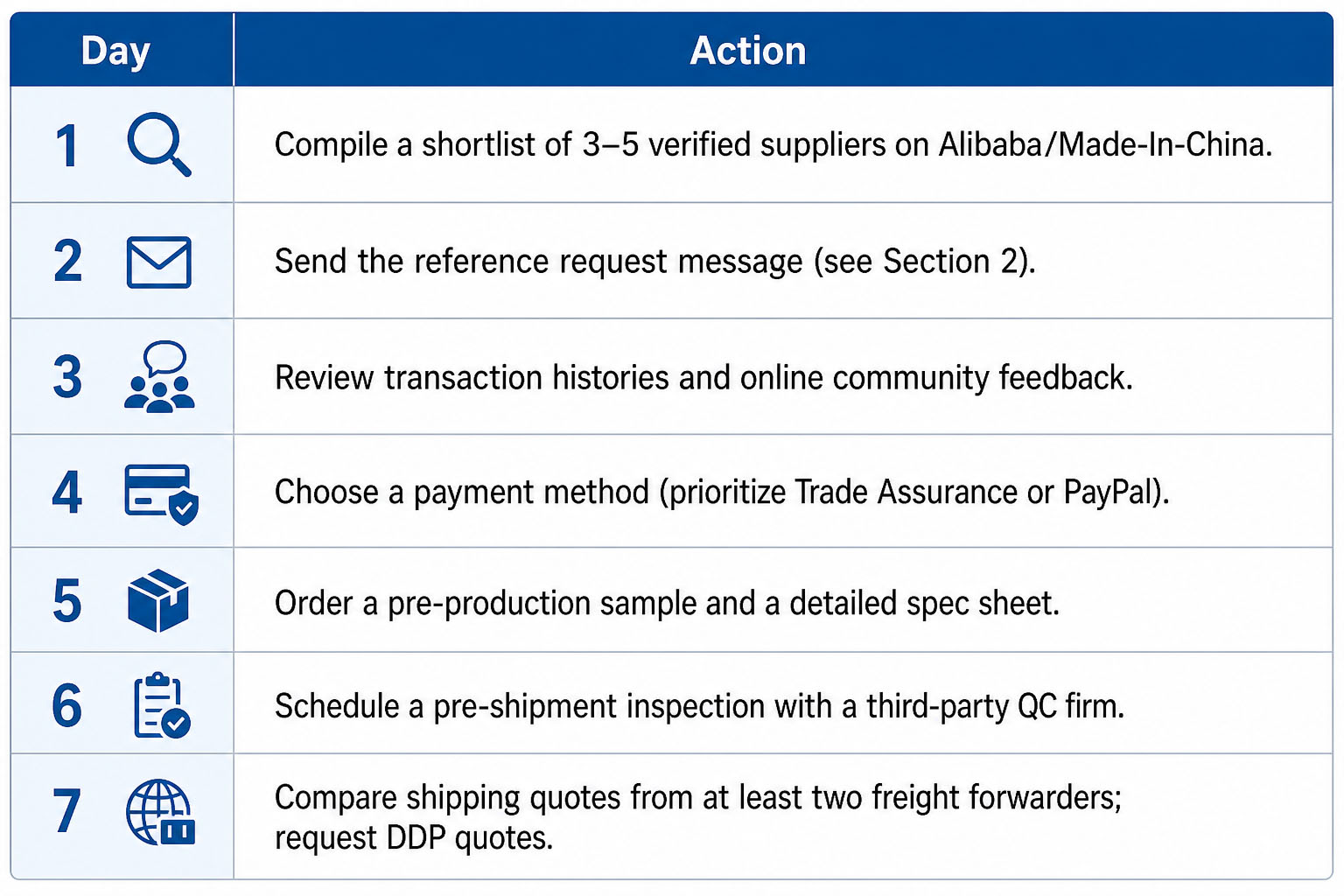
7️⃣ Quick‑Reference Checklist – Your Next 7 Days
8️⃣ Final Thoughts – From “First‑Time Importer” to “Trusted Partner”
Sourcing bags from China as a small online retailer doesn’t have to feel like a leap of faith. By systematically verifying supplier credibility, demanding concrete references, protecting your payments, enforcing strict quality controls, and mastering the logistics side, you turn a potentially risky endeavor into a repeatable, scalable operation.
The key takeaway? Invest the time upfront to do thorough due diligence. That investment pays dividends in the form of fewer returns, stronger margins, and a reliable supply chain that can grow with your brand.
Ready to take the next step? Contact us today to discuss your bag line, request a sample order, or receive a personalized sourcing plan tailored to your volume and market.
Post time: May-26-2026