
Sourcing Bio‑Based Leather Alternatives for Handbags From Chinese Manufacturers: Cactus, Mushroom, Apple and Pineapple Leather Buyer’s Guide
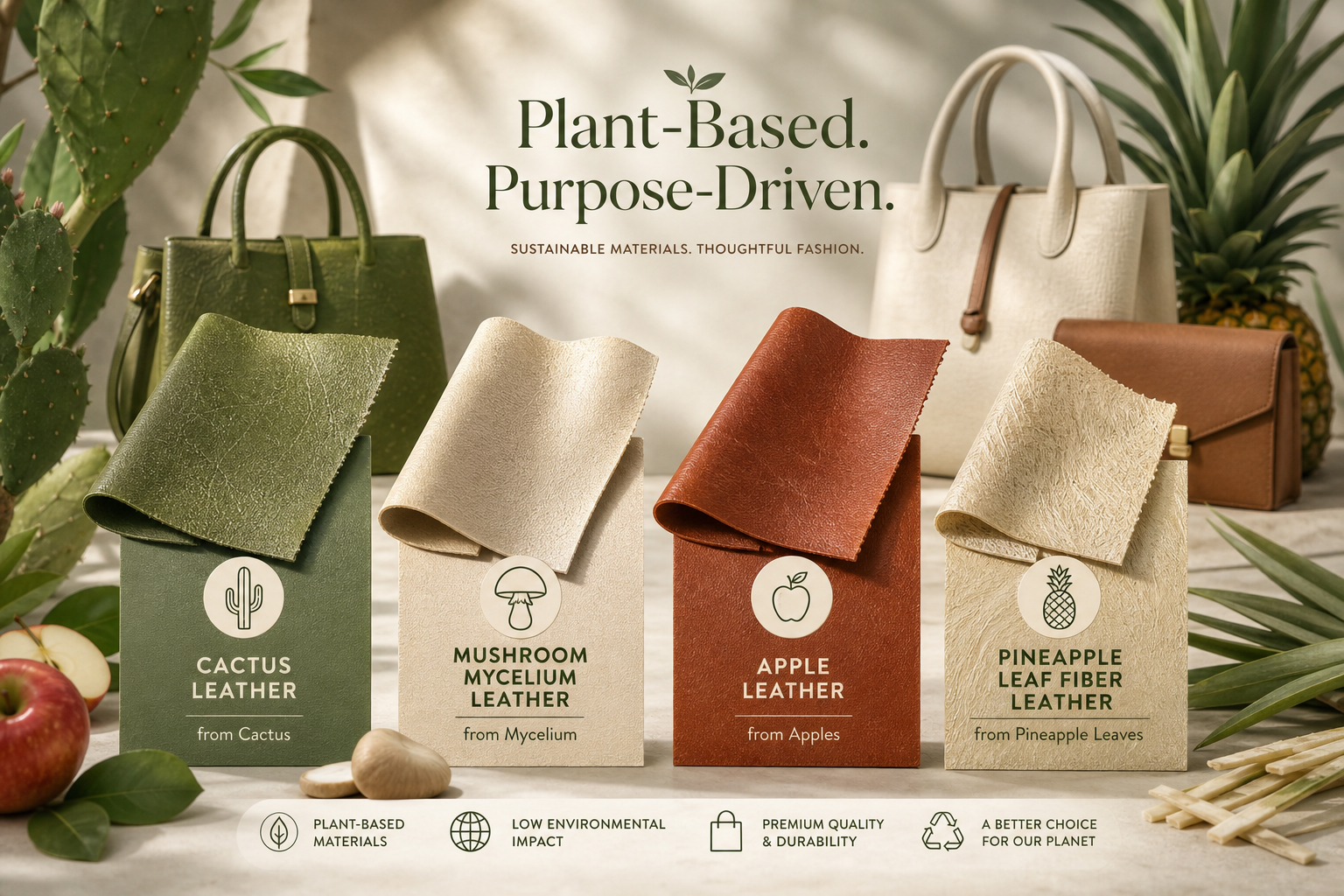
When sustainable fashion continues reshaping consumer buying behavior in the United States, eco‑conscious shoppers are tired of vague marketing buzzwords such as “vegan leather” or “eco leather.” Modern independent bag brands are searching for premium, traceable plant‑derived leather substitutes to differentiate their product lines from cheap conventional PU and PVC synthetic handbags. Bio‑based leather alternatives made from cactus, mushroom mycelium, apple waste and pineapple leaf fiber have quickly become standout premium material choices for high‑end handbag collections.
As an American bag brand owner sourcing finished bags directly from China, you will inevitably face critical practical questions before committing bulk orders. Can Chinese bag factories actually supply authentic plant‑based leather materials? What kind of price gap separates bio‑based leather from traditional cow leather? Are there strict minimum order quantity rules for these sustainable fabrics? How can overseas buyers verify factories’ sustainability and biodegradability claims instead of falling into greenwashing traps?
This detailed sourcing guide breaks down material availability, cost structure, MOQ rules, verification standards and proven negotiation strategies specifically for US independent bag retailers. It combines real‑world factory supply conditions in mainland China and compliance requirements for selling sustainable accessories on American e‑commerce websites, helping you build trustworthy eco‑friendly product lines and avoid common sourcing pitfalls.
1. Are Chinese Bag Factories Able to Source Cactus, Mushroom, Apple and Pineapple Bio‑Based Leather?
The short answer is yes. A growing number of experienced Chinese bag manufacturers can produce finished handbags using cactus leather, apple leather, pineapple fiber leather and limited mycelium mushroom leather. However, overseas buyers must understand one core industry reality: most bag factories do not manufacture these bio‑based raw materials on their own. Instead, they source finished material rolls from specialized biomaterial suppliers, or they accept custom‑provided materials nominated by foreign buyers.
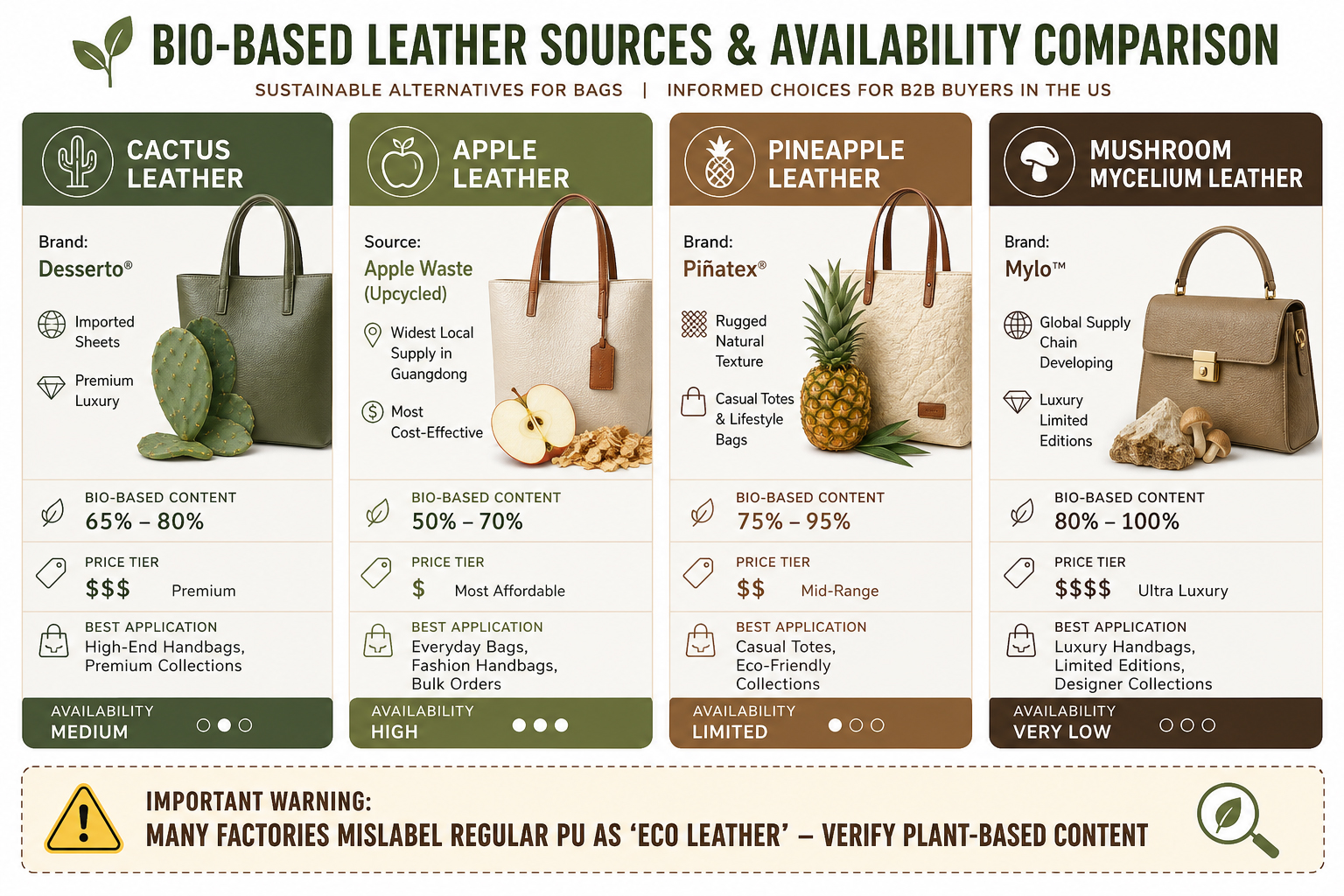
Over recent years, Chinese suppliers have expanded their sustainable material inventory significantly to meet rising global demand for circular fashion products. Cactus leather, most famously the branded Desserto® material, is widely stocked by specialist material traders and selected premium bag workshops targeting eco‑luxury brands. It is important to note that most cactus leather entering Chinese factories is imported finished sheet material rather than locally grown and processed cactus fiber. Apple leather, created from leftover apple peel and fruit waste, has the best accessibility among all four plant‑based alternatives, especially in Guangdong province, China’s core handbag manufacturing hub. Factories favor apple leather for wallets, small crossbody bags and structured handbags, because it balances natural texture and decent shaping performance. Piñatex®, the well‑known pineapple leaf fiber leather, is available from a narrow group of qualified Chinese suppliers. Unbranded pineapple fiber imitation materials are also common on the market. Genuine pineapple leather features rough, distinctive natural fiber grains, making it ideal for casual tote bags and fashion accessories. Mushroom mycelium leather, represented by Mylo™, remains the scarcest commercial option. Its global supply chain is still under development, and only a small pool of high‑end Chinese manufacturers have stable purchasing channels. This material suits limited‑edition luxury collections rather than mass‑produced everyday bags.
Many forward‑thinking Chinese suppliers further optimize bio‑based leather performance by blending plant fibers with recycled textile substrates. This modification improves tear resistance and reduces overall production costs compared with pure biomaterial sheets. Most factories maintain physical sample swatch libraries, and they can send material samples to US buyers for texture, durability and color testing before bulk manufacturing. A small number of factories even develop proprietary bio‑based leather formulas. They mix natural plant fibers with bio‑resin coatings to create unique surface grains and custom hand‑feel according to brand requirements.
Buyers need to stay alert to a widespread greenwashing risk within China’s vegan leather market. A large number of factories label ordinary PU synthetic leather as “vegan leather” or “eco leather” without any plant‑based content. These generic PU sheets look similar to genuine bio‑based leather at first glance, but they contain zero agricultural waste fiber. Never confirm a material only by its marketing name. You must ask factories to clarify three categories clearly: certified branded biomaterial, unbranded fabric containing partial plant ingredients, and regular synthetic PU with a nature‑themed product name.
A further key technical point every US merchant should learn: nearly all commercial bio‑based leather on the market is composite material. Plant waste acts only as one raw ingredient. Manufacturers add PU, bio‑resin or synthetic binders, then laminate the mixture onto polyester, cotton or microfiber backing fabrics. Surface waterproof coatings are applied to boost scratch resistance. Apple leather, pineapple leather and cactus leather are not plastic‑free or fully biodegradable in most cases. Do not advertise your handbags as 100% plastic‑free or fully compostable on your US independent website unless independent lab reports can back up such claims. Misleading sustainability statements will trigger consumer complaints and regulatory risks for American retailers.
2.Price Differences Between Bio‑Based Leather and Traditional Leather From Chinese Suppliers
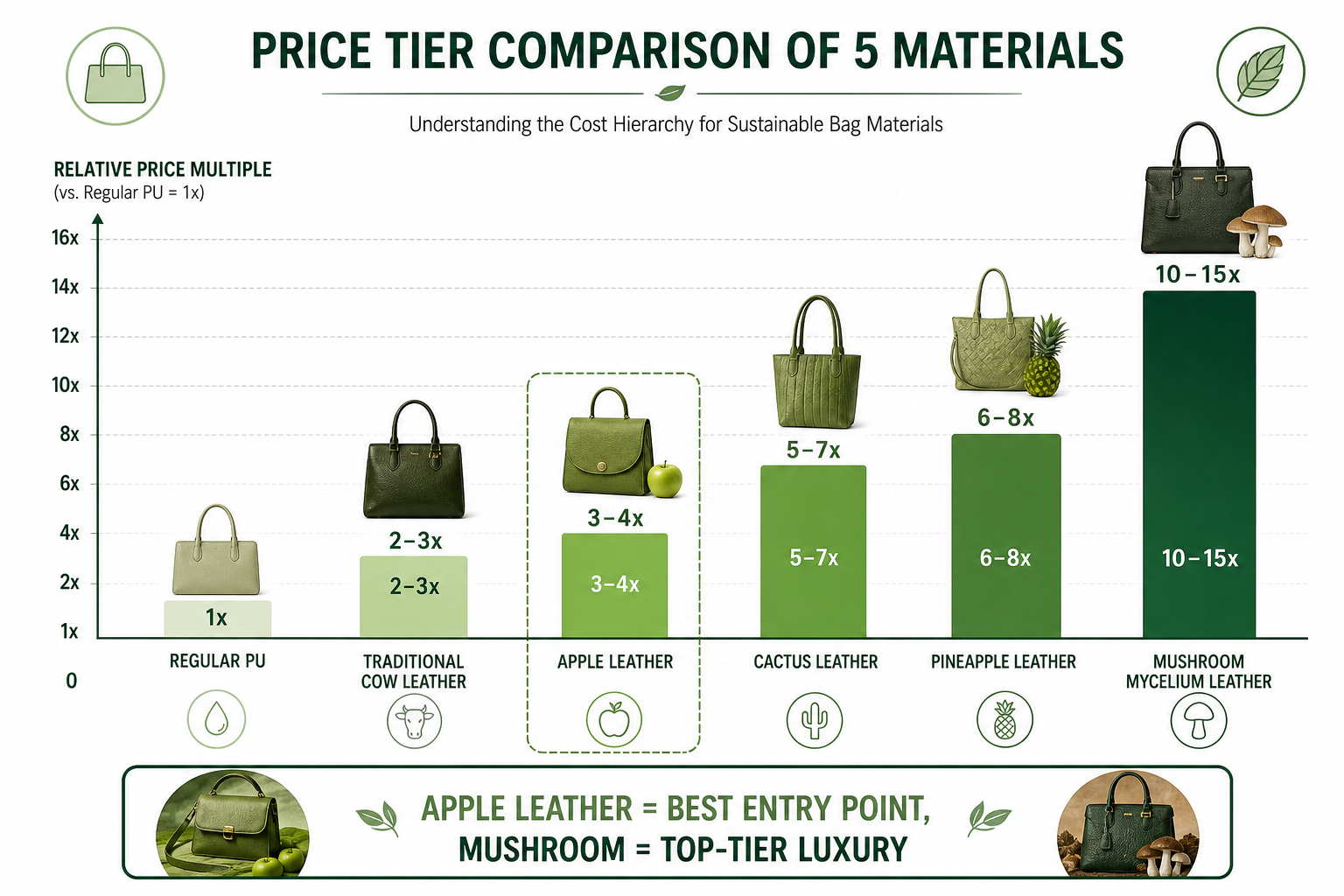
Bio‑based leather sits at a much higher price tier than conventional PU synthetic leather, and it is generally more expensive than regular genuine cow leather used for mid‑range handbags. The final cost gap fluctuates based on material brands, bio‑content percentage, order volume, thickness and custom surface finishing.
Generic PU vegan leather, the cheapest option for mass‑market bags, has dominated Chinese bag production for decades. Its raw‑material cost stays very low, but it cannot support premium sustainable branding. Traditional full‑grain or split cow leather has stable pricing for mainstream handbag lines.
Apple leather is the most cost‑effective plant‑based alternative. Its cost is moderately higher than standard cow split leather, and it is the best starting choice for brands new to sustainable materials. Genuine branded cactus leather carries a noticeable premium. Since most sheets are imported, logistics and import markup push raw material costs upward. It fits luxury small leather goods and limited‑run collections instead of large‑volume basic totes. Authentic Piñatex pineapple leather costs more than apple leather. The limited supplier pool keeps its market price high, and custom dyeing or embossing will add extra expenses. Mylo mushroom mycelium leather is the most expensive biomaterial by a wide margin. Limited global production capacity restricts supply and drives up raw‑material expenditure significantly. Only high‑price‑point designer collections can absorb this cost.
Customization options also change total pricing. If you request unique embossing, special dye colors, water‑resistant surface treatment or custom bio‑resin coating on bio‑based leather, factories will charge extra processing fees. When calculating finished handbag wholesale prices for your US website, do not only compare raw‑material costs. You also need to consider higher sample charges, longer lead times and extra third‑party testing fees required for sustainability documentation.
Although bio‑based leather increases your landed product cost, it creates strong commercial advantages for American independent bag sellers. US shoppers actively pay premium prices for verified sustainable products. Transparent material composition descriptions on your website help you stand out from thousands of competitors selling cheap PU bags. Instead of vague slogans like “environmentally friendly leather,” use precise wording such as “crafted with 32% apple waste bio‑based material and polyurethane binder.” Honest, specific descriptions build long‑term customer trust and reduce greenwashing accusations.
3. MOQ Rules for Bio‑Based Leather Materials in China
Minimum order quantity requirements represent another major difference between bio‑based leather and common synthetic leather. Standard PU leather is available with very low MOQs, but plant‑derived biomaterials have stricter minimum purchase thresholds.
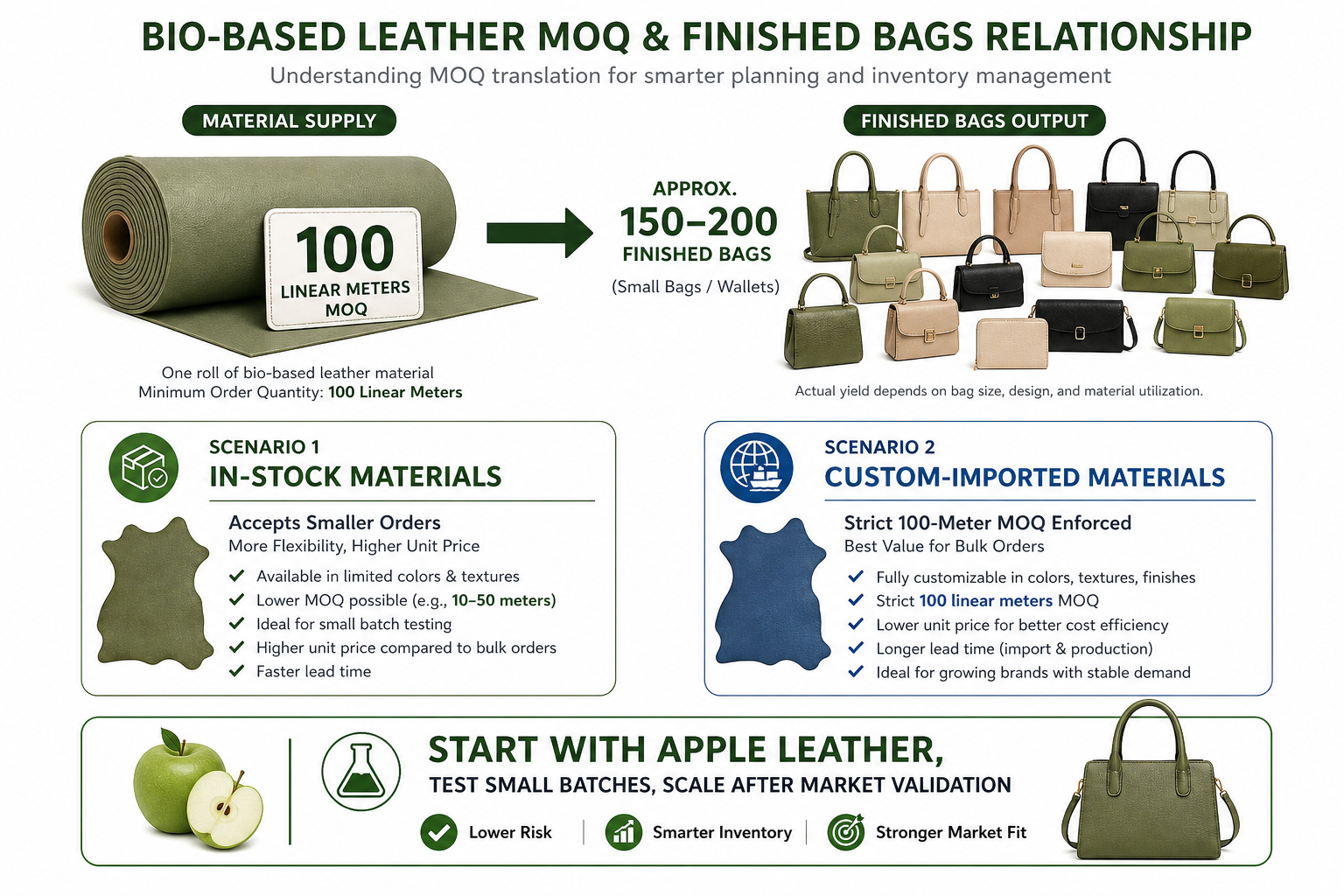
Most Chinese material traders set the baseline MOQ of bio‑based leather rolls at 100 linear meters. You need to translate this material MOQ into finished handbag quantities for your business planning. On average, 100 meters of bio‑based leather can produce roughly 150 to 200 finished handbags. The exact finished bag number depends on each design’s material consumption. Large tote bags use more fabric per unit, while slim wallets and mini crossbodies consume less raw material.
It is critical to separate two types of MOQs during factory communication: raw‑material roll MOQ and finished handbag production MOQ. Some bag workshops hold small inventories of popular apple leather colors. They can accept smaller finished bag orders without requiring buyers to purchase full 100‑meter rolls, but the unit material price rises sharply for small inventory batches. If you ask factories to source brand‑imported cactus or mushroom leather specially for your order, suppliers will enforce the full 100‑meter roll MOQ without exceptions.
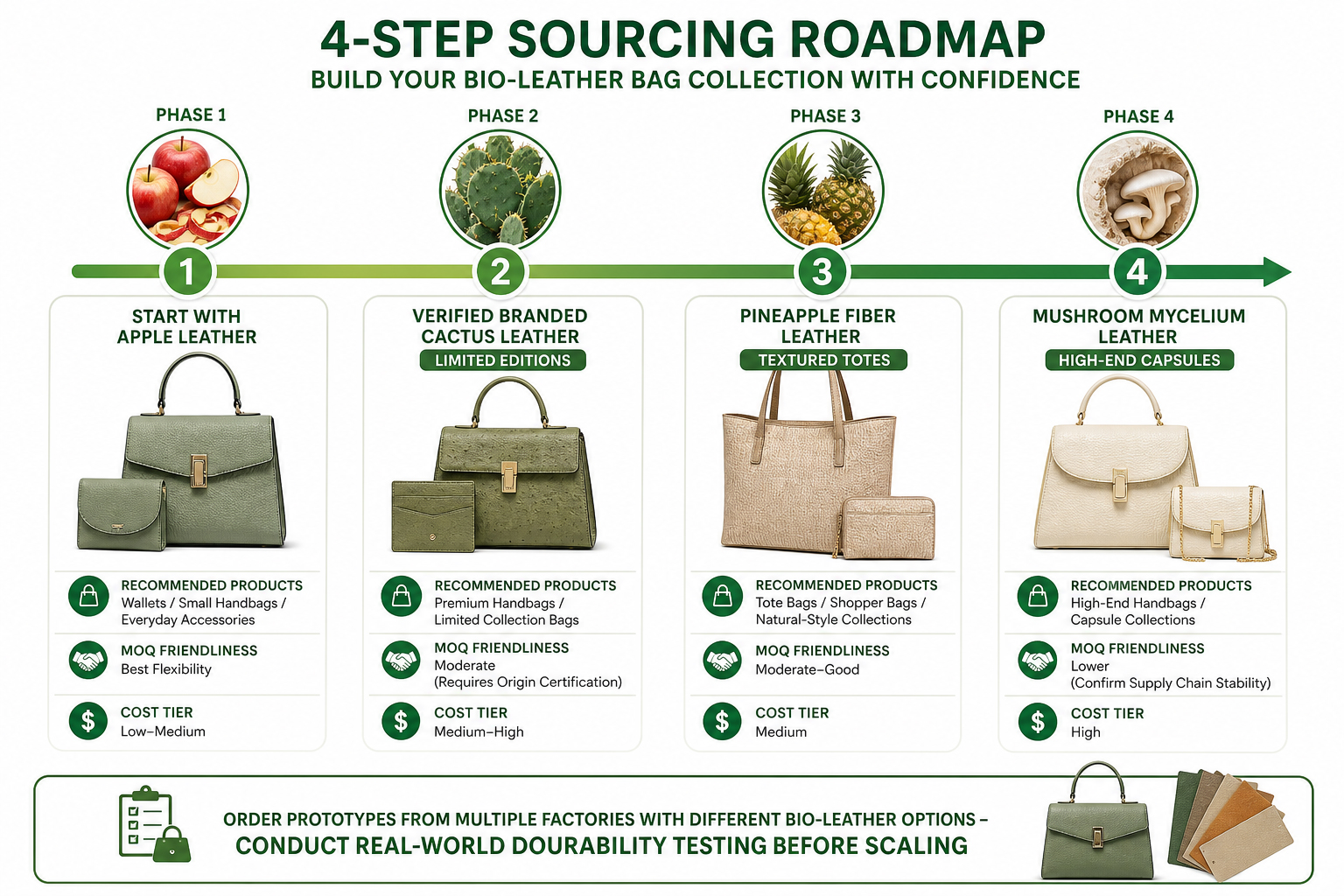
For small and mid‑size US independent brands, we recommend a phased sourcing strategy. Do not launch four different bio‑based leather lines at the same time. Start with apple leather, which has flexible supply and relatively relaxed MOQ limits. Place small sample orders with 3–5 reliable factories first, test material durability, stitching performance and color consistency, then scale up bulk orders after verifying quality. If you only want 50–100 finished eco‑bags for website testing, search for factories with existing bio‑leather stock rather than custom‑sourcing brand‑new material rolls. This avoids overbuying expensive raw materials and reduces inventory risk.
4. How Chinese Factories Validate Bio‑Based Leather Sustainability and Authenticity Claims
Sustainability certification verification is the biggest pain point for overseas buyers. Many factories advertise “eco‑friendly plant leather” without credible proof. As a US retailer, you cannot rely only on supplier self‑declarations. Professional buyers must demand complete supporting documentation before releasing bulk payments.
A small number of qualified Chinese suppliers provide laboratory test reports that prove biodegradability and compostability of their bio‑based leather. Experienced factories also understand technical limits of plant‑based fabrics. They can offer professional advice about suitable stitching techniques, compatible metal hardware and edge finishing methods, because bio‑leather behaves differently from traditional cowhide during cutting and sewing.
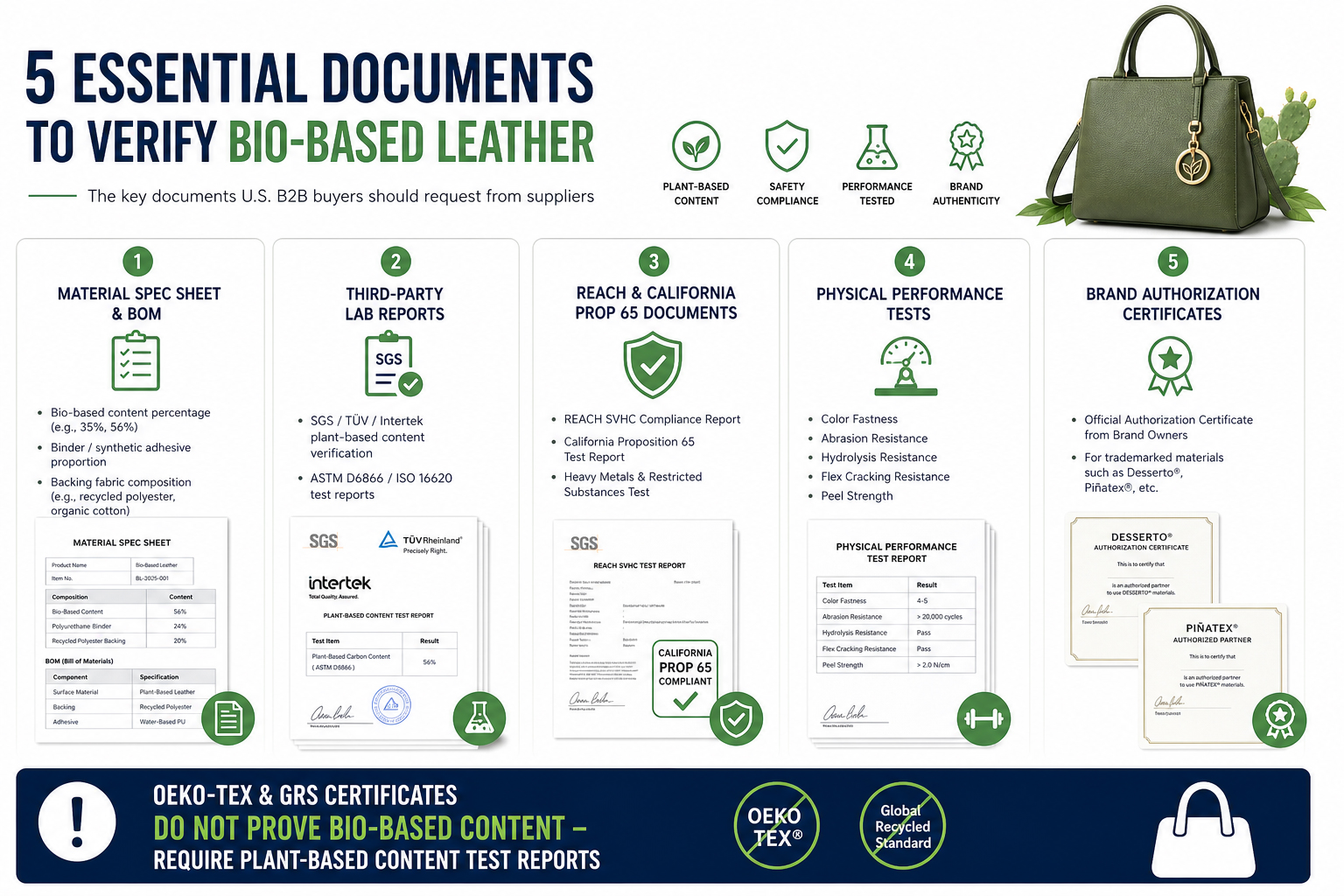
However, two popular fashion certifications often create misunderstandings. OEKO‑TEX tests harmful chemical substances and ensures safe textile contact, but it cannot prove a fabric contains cactus, apple or mushroom fiber. GRS certification confirms recycled‑content components, yet it does not automatically verify bio‑based plant waste ingredients. These two certificates are valuable additions, but they are not enough to authenticate bio‑leather origin.
Before placing large orders, create a standardized document checklist and require factories to deliver all records:
Full material specification sheet and bill of materials listing exact bio‑content percentage, synthetic binder proportion and backing fabric composition
Independent third‑party lab test reports from SGS, TÜV or Intertek confirming plant‑based content
REACH compliance files and California Proposition 65 test documents for US market sales
Physical performance test results including color fastness, abrasion resistance, hydrolysis, flex cracking, seam strength and peel strength
Brand authorization certificates if you select trademarked materials such as Desserto® or Piñatex®
When negotiating purchase contracts, add non‑negotiable quality clauses to protect your business. Confirm the exact approved sample in writing, state that factories cannot substitute materials without your written consent. Write the minimum bio‑based percentage and mandatory testing requirements clearly on the purchase order. Arrange pre‑shipment inspection on finished bulk samples before settling the final balance payment. This contract framework prevents unauthorized material replacement and avoids receiving counterfeit plant‑based leather goods.
5.Recommended Sourcing Roadmap for US Independent Bag Brands
For American online bag merchants launching sustainable collections, follow this practical step‑by‑step plan: First, prioritize apple leather for wallets, small structured handbags and everyday accessories. It balances stable supply, reasonable cost and manageable MOQ. Second, select verified branded cactus leather for premium limited collections only when suppliers provide complete origin certification. Third, use genuine pineapple fiber leather for distinctive textured tote bags targeting natural‑style consumers. Fourth, reserve mushroom mycelium leather for high‑end capsule collections after confirming stable supply chains and long‑term durability data.
Order identical bag prototypes from multiple factories using the same design template but different bio‑leather options. Run practical durability tests: repeated folding, surface rubbing, water splash tests and long‑term hardware connection fatigue checks. Some plant‑based fabrics look attractive on swatches but crack or peel quickly after daily wear. Real‑world physical testing eliminates costly post‑production failures.
Final Conclusion
Bio‑based leather alternatives from cactus, apple, pineapple and mushroom mycelium represent a promising premium development direction for the global handbag industry. Chinese bag factories are capable of manufacturing finished eco‑bags with these sustainable materials, yet the whole supply chain has obvious limitations including higher pricing, fixed material MOQs and widespread greenwashing risks.
Successful sustainable sourcing depends not on chasing trendy material names, but on rigorous verification, clear contract terms and realistic product positioning. As a professional US independent website seller, your greatest competitive advantage lies in transparent, fact‑backed product descriptions and reliable quality control. When you combine carefully selected bio‑based leather, third‑party certification and honest marketing language, your handbag brand will attract loyal eco‑conscious American customers and stand out fiercely in the crowded fashion accessory marketplace.
Blog closing suggestion: Add a call‑to‑action paragraph:If you plan to source bio‑leather handbags from China and need a factory screening template or supplier inquiry message, download our free sourcing checklist and send detailed material requirements to qualified manufacturers for formal quotations.
Post time: Sep-05-2026