
Published for US independent website bag sellers | B2B Sourcing Insights
Disclaimer: This blog is written for US‑based e‑commerce merchants who source leather bags directly from Chinese manufacturers. It covers leather‑grade classification, pricing logic, MOQ expectations, lead‑time benchmarks, supplier verification tactics, and FTC‑compliant product‑description best practices. Real‑world factory observations and industry terminology differences between China‑based factories and US market standards are highlighted throughout.
For US‑based bag sellers operating independent websites, importing genuine‑leather bags directly from Chinese factories presents huge margin opportunities — yet it also carries significant material‑claim risks. Many overseas buyers assume Chinese bag manufacturers set product pricing and market positioning strictly based on three well‑known leather grades: full‑grain, top‑grain, and split leather. While leather grade is a core reference point, it is never the sole factor determining factory quotes, product tiers, or final wholesale pricing. Misunderstanding Chinese leather terminology, translation gaps, and coating‑based material disguise can lead to mislabeled product listings, consumer complaints, and FTC compliance violations for your US‑based store. This practical guide breaks down how Chinese bag factories work with genuine leather, how pricing is structured, realistic MOQ and lead‑time expectations, actionable supplier‑verification workflows, and how to write legally safe product descriptions for your US website.
Do Chinese Bag Factories Use Full‑Grain, Top‑Grain, And Split Leather Grades To Define Price Tiers And Product Positioning?
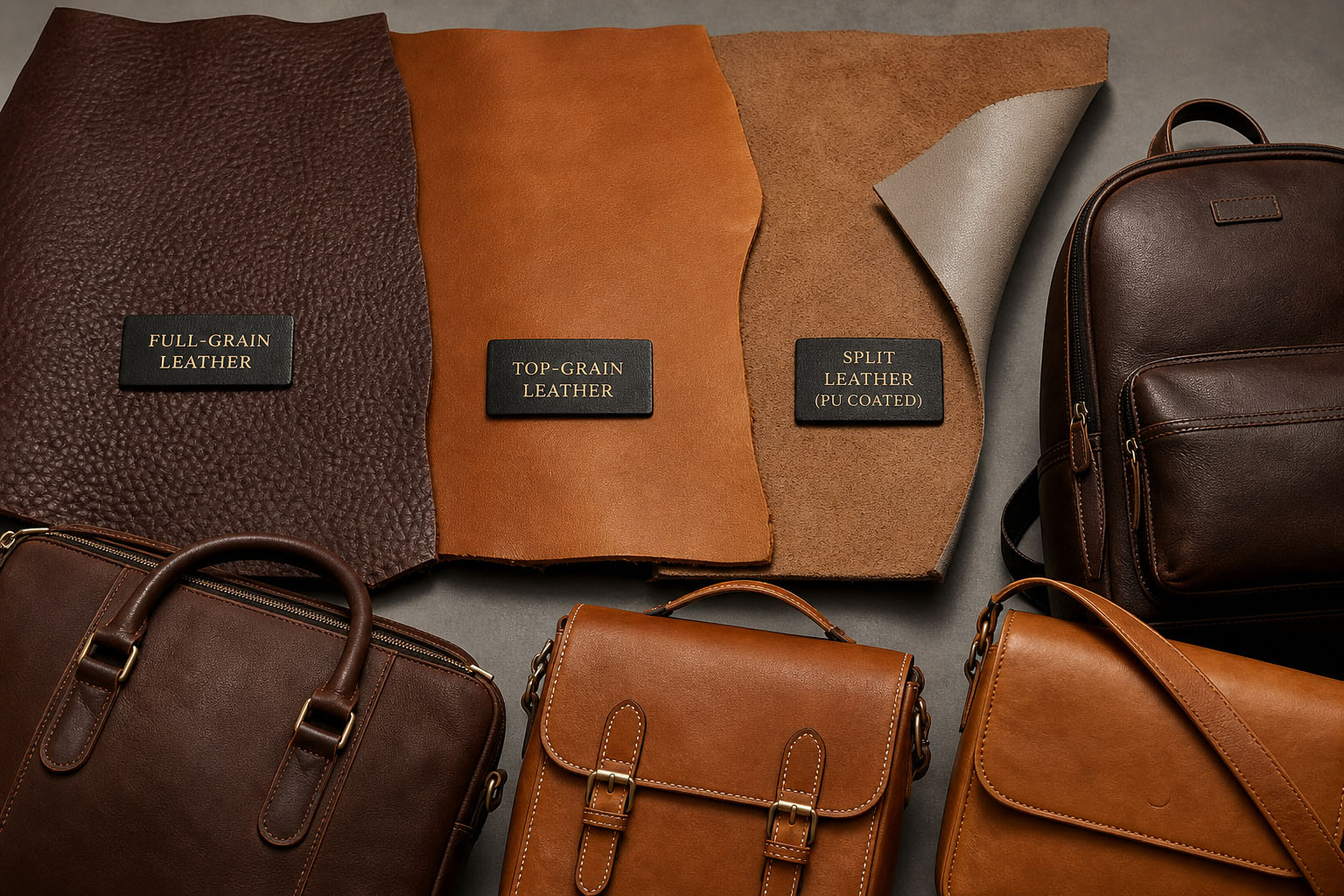
Chinese bag manufacturers typically segment product lines by leather grade. Full‑grain leather is reserved for premium‑tier collections, top‑grain targets mid‑range positioning, and split leather serves entry‑level economy‑oriented bulk orders. Even so, factories **do not set final pricing purely based on these three western‑defined leather grades alone**. Multiple overlapping variables shift unit costs even within one leather‑grade category.
Full‑grain leather consistently sits at the highest price tier across Chinese export‑oriented product catalogs, designed for luxury‑focused US importers. Top‑grain leather is the most widely adopted material for mid‑market bags, delivering a balanced trade‑off between production cost and perceived quality that resonates well with American independent‑store shoppers. Split leather, which is frequently marketed under the broad umbrella term “genuine leather”, anchors entry‑level bulk‑order price points. In typical China‑sourcing scenarios, the price gap between full‑grain leather goods and split‑leather counterparts can range from 40 % to 70 %.
One critical nuance for US buyers: identical‑grade leather hides still create internal‑price sub‑tiers. Leather origin drives much of this difference. Factories can source hides from domestic Chinese tanneries, or import premium hides from Italy, Brazil, and other international tanneries. Two bags labelled “full‑grain cowhide” can therefore carry very different wholesale prices, entirely due to tannery‑source differences, not the leather‑grade label itself. Trade‑show environments including the Canton Fair often expose more transparent grade‑based pricing structures than anonymous online B2B platform listings, because physical samples allow you to inspect grain density, hand‑feel, and edge finishing side‑by‑side.
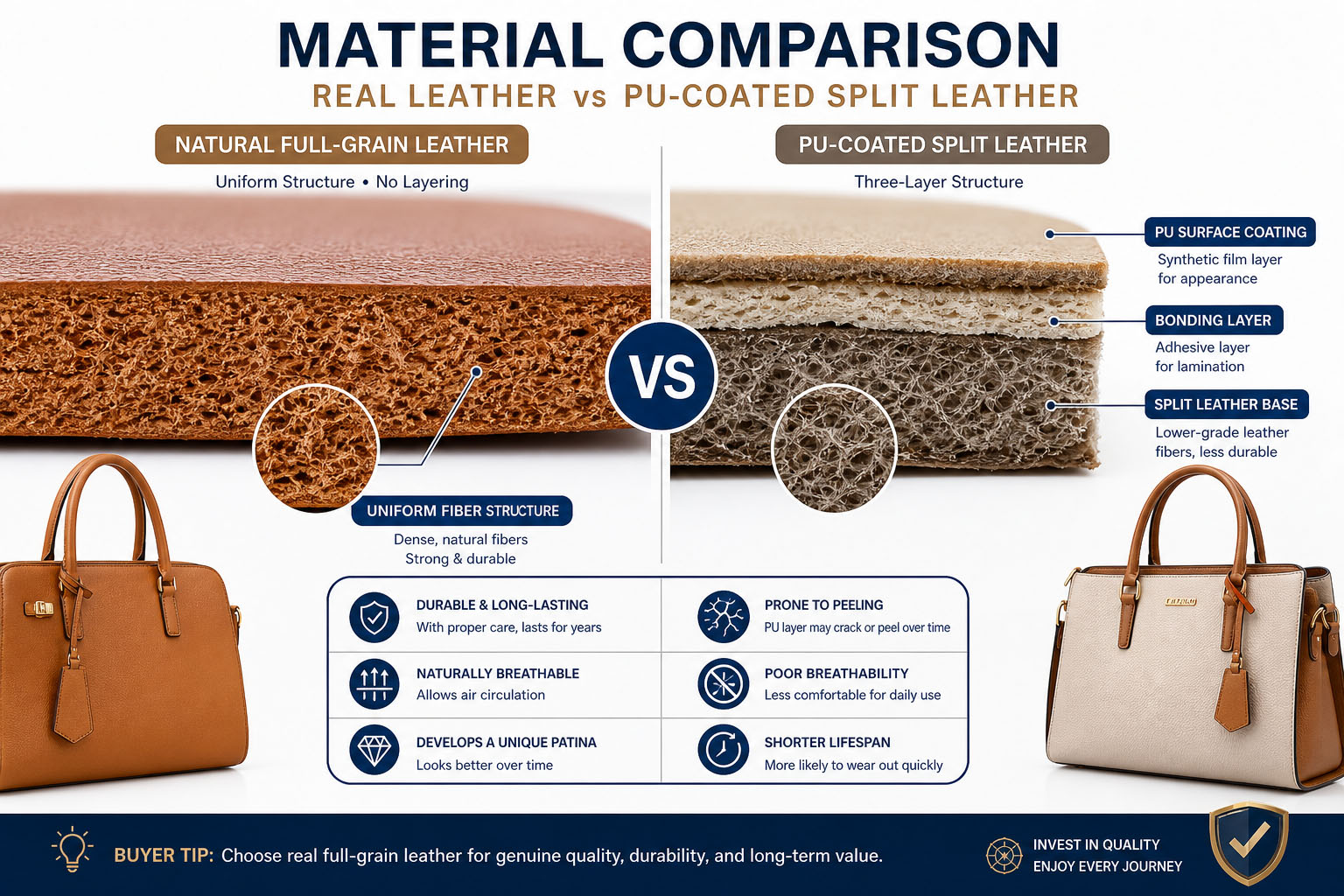
Key takeaway: Grain density, edge finish, and tactile hand‑feel are far more trustworthy quality benchmarks than printed grade labels supplied by Chinese suppliers. PU or PVC surface coatings can visually make split leather closely resemble higher‑grade materials. Tactile testing and cross‑section edge inspection become non‑negotiable verification steps for every sample you evaluate.
Decoding Chinese Leather Terminology For US Importers
Language translation gaps create the single largest source of costly sourcing misunderstandings. Chinese domestic leather‑industry vocabulary does not map one‑to‑one to standard North American leather‑grade definitions. Many factories will translate domestic Chinese terms loosely into English for B2B buyers, without clarifying the actual technical meaning. Below is a practical translation reference table for terms you will repeatedly encounter in supplier chats, quotations, and sample‑spec sheets.
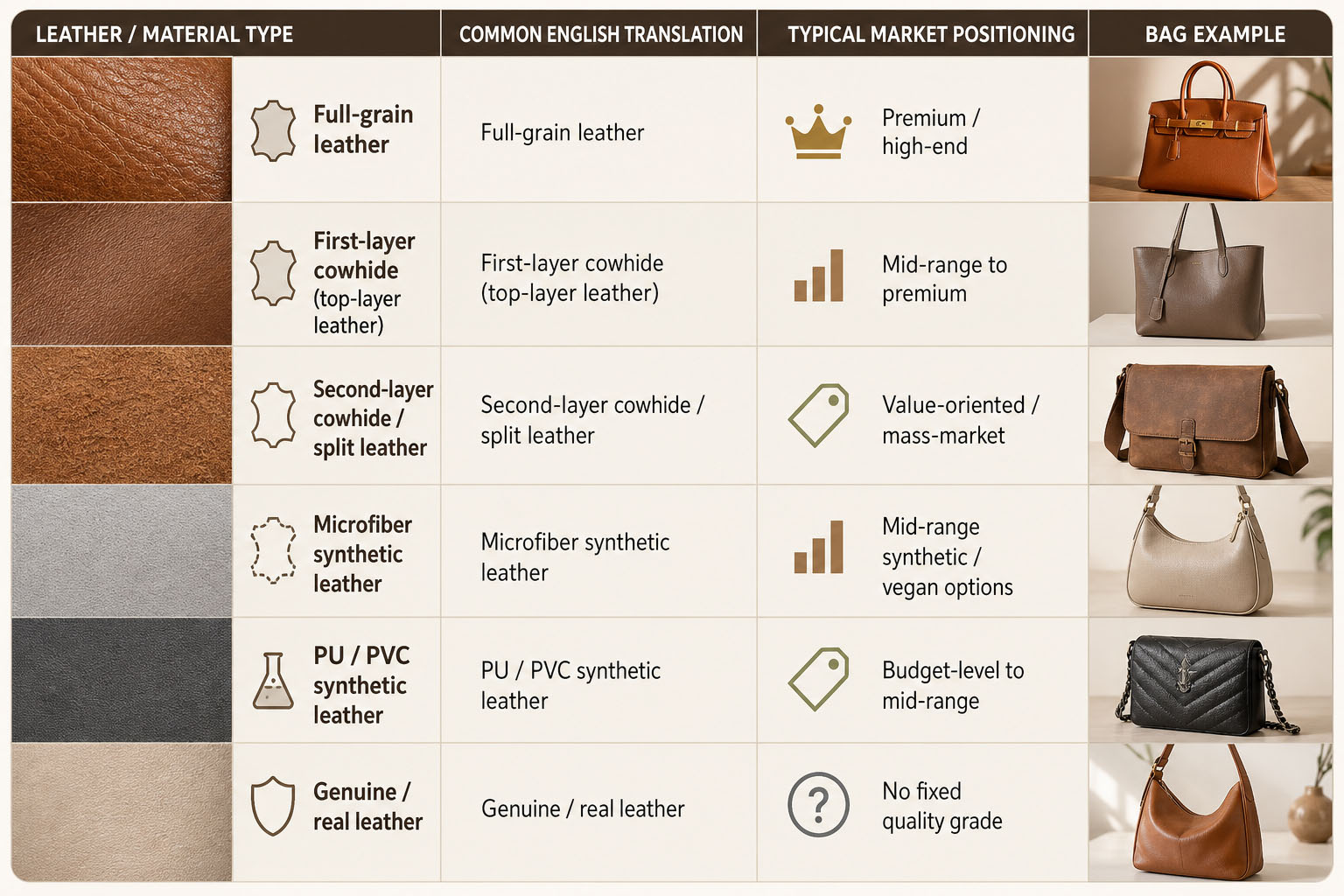
The term **zhēnpí (真皮 / genuine leather)** deserves special attention for US sellers. “Genuine leather” only confirms that some portion of the product contains animal hide. It provides zero information about whether the material is full‑grain, top‑grain, split, heavily coated, or bonded leather. Under United States FTC Leather Guides, merchants selling goods within the US market are legally prohibited from misleading consumers about leather composition and material grades. Vague marketing phrases such as “premium genuine leather” carry real compliance risk for your independent‑site product pages, unless you hold concrete supporting documentation for every claim you publish.
Important technical‑terminology clarification:
Technically, full‑grain leather retains its untouched natural grain surface with minimal surface correction. Top‑grain describes hide sourced from the upper section of animal skin; this category can include sanded, buffed, or corrected‑grain leather. Split leather refers to material cut from the lower layer after the hide is physically split apart.
Chinese suppliers frequently translate **头层牛皮** as “top‑grain”, “first‑layer leather”, and sometimes even “full‑grain”, even though these western‑market terms are not technically interchangeable. Chinese factories also differentiate raw animal hide, uncoated split leather, and film‑transfer PU‑coated split leather internally — distinctions that are often omitted in simplified English‑language quotations sent to overseas buyers.
Core Factors That Shape Chinese Factory Leather‑Bag Pricing
Leather grade is only one pricing variable. When a Chinese factory calculates your quotation, many additional factors will alter unit cost even when you stay within one leather‑grade bracket. Key pricing inputs include:
1. Hide animal type: cowhide, calfskin, buffalo hide, lambskin, goatskin and alternative hides each carry different base material costs.
2. Tannery and hide‑origin: domestically tanned Chinese hides versus imported Italian or Brazilian leather create significant price variance within identical grade classifications.
3. Leather thickness and material yield: usable surface yield directly impacts waste percentage during cutting operations.
4. Surface finishing treatments: aniline finish, semi‑aniline, corrected grain, embossed texture, patent leather, and PU/PVC film coating all add cost.
5. Auxiliary hardware and accessories: zipper quality, metal hardware, interior lining material, edge‑paint craftsmanship, and structural reinforcement details.
6. Bag‑construction complexity: intricate stitching, multi‑panel assembly, special shaping requirements, and manual‑labor intensity.
7. Order‑related variables: total order volume, custom‑logo embossing, custom packaging, third‑party testing requirements, and special‑customization work.
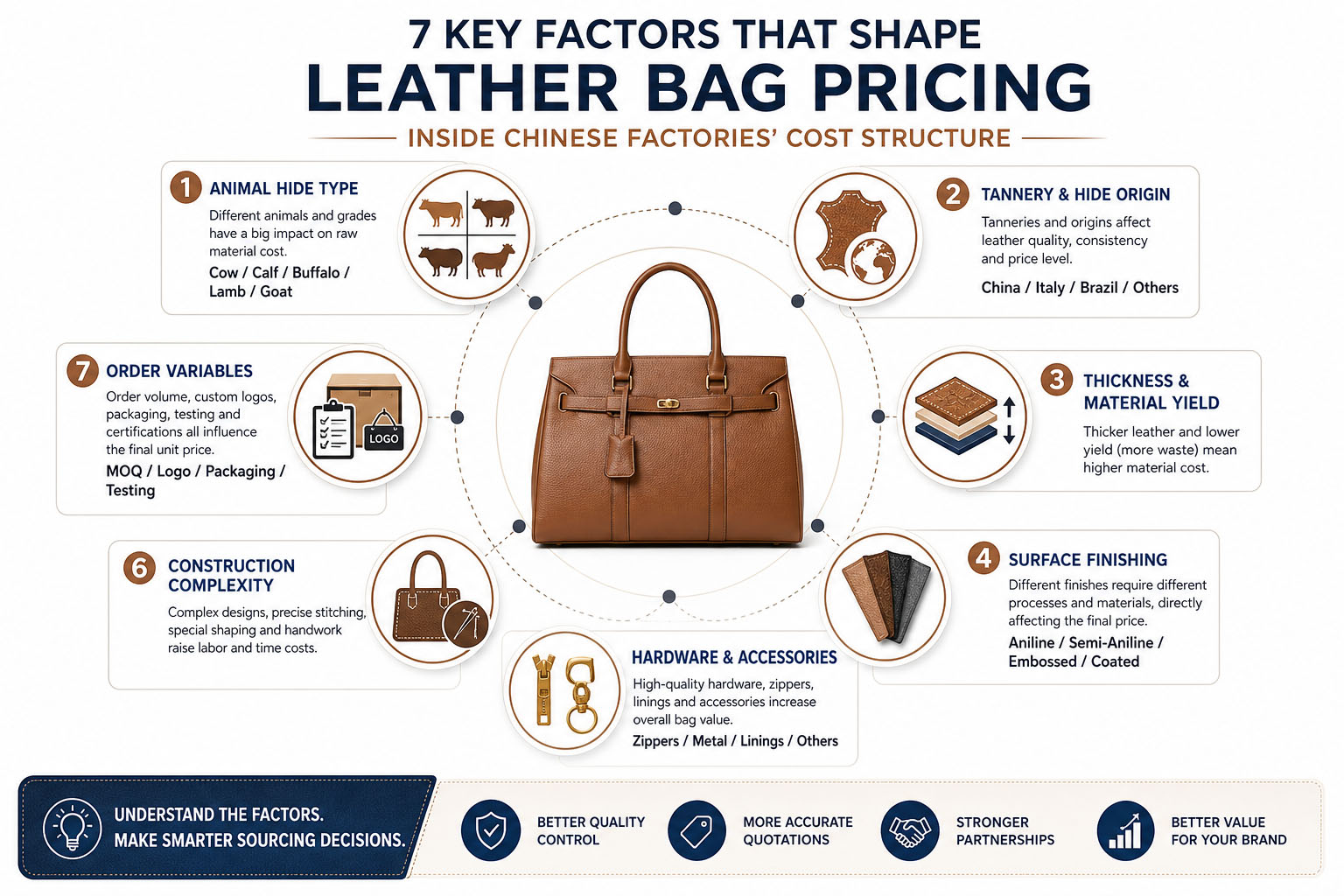
This mix of variables creates counter‑intuitive pricing outcomes US buyers frequently encounter. A heavily corrected “top‑layer cowhide” bag can cost less than a carefully‑sourced, thick, minimally‑finished full‑grain piece. Meanwhile, split leather covered with high‑quality embossed PU coating can achieve a premium visual appearance that outshines poorly finished top‑grain samples. Never rely solely on leather‑grade labelling to judge expected wholesale price or end‑product quality.
MOQ Realities For Genuine‑Leather Bags From Chinese Factories
Minimum order quantity requirements generally scale alongside leather grade. Premium full‑grain leather lines typically demand larger production commitments from buyers, compared against entry‑level split‑leather or synthetic‑leather goods.
For standard genuine‑leather bags manufactured in China, the industry baseline MOQ sits at **50 units per color per style**. This baseline applies to most mid‑market top‑layer cow‑hide custom orders. High‑end full‑grain custom projects may raise MOQ thresholds higher, while simple stock‑ready catalogue samples can occasionally allow lower order volumes.
When you negotiate with factories, separate your custom‑sample MOQ from mass‑production MOQ. Many factories accept small‑batch sample orders for pre‑production validation, while mass‑production runs still enforce the 50‑piece‑per‑color‑per‑style baseline. Always confirm MOQ separately for each leather‑material option you are evaluating in your quotation request.
Standard Production Lead‑Times For Custom Full‑Grain Leather Bag Orders
For custom‑developed full‑grain leather bag projects out of China, standard mass‑production lead‑times range from **30 to 45 calendar days**. This timeline starts after sample final‑approval, receipt of confirmed technical drawings, and deposit payment.
Bear in mind that this production window excludes shipping transit time, pre‑production sample‑development cycles, and unexpected delays such as tannery‑material‑supply shortages, public‑holiday factory shutdowns, or third‑party‑testing turnaround time. When planning inventory restocks for your US independent website, build extra buffer time into your overall sourcing timeline.
How US Buyers Can Verify Leather‑Grade Authenticity From Chinese Suppliers
Supplier‑provided written descriptions are not sufficient proof of leather‑grade authenticity. Successful US importers build a multi‑layer verification workflow combining document requests, physical‑sample inspection, and third‑party testing. Many Chinese bag‑making factories can supply formal quality‑inspection test reports upon customer request. Even with test reports in‑hand, physical sample inspection remains essential, because test‑report samples may not always represent bulk‑production material.
Tactile and visual inspection steps for every sample:
- Examine cross‑section edges of the leather. Split leather with PU film coating will show a distinct layered boundary between base substrate and surface film.
- Evaluate natural grain patterns. Uniform, perfectly repeated grain texture often indicates embossed or coated material rather than natural full‑grain hide.
- Assess hand‑feel, flexibility, and surface texture across straps, gussets, bottom panels, and trim pieces. Factories sometimes mix different leather grades across different bag components.
Essential Questions To Include In Every Supplier Quotation Request
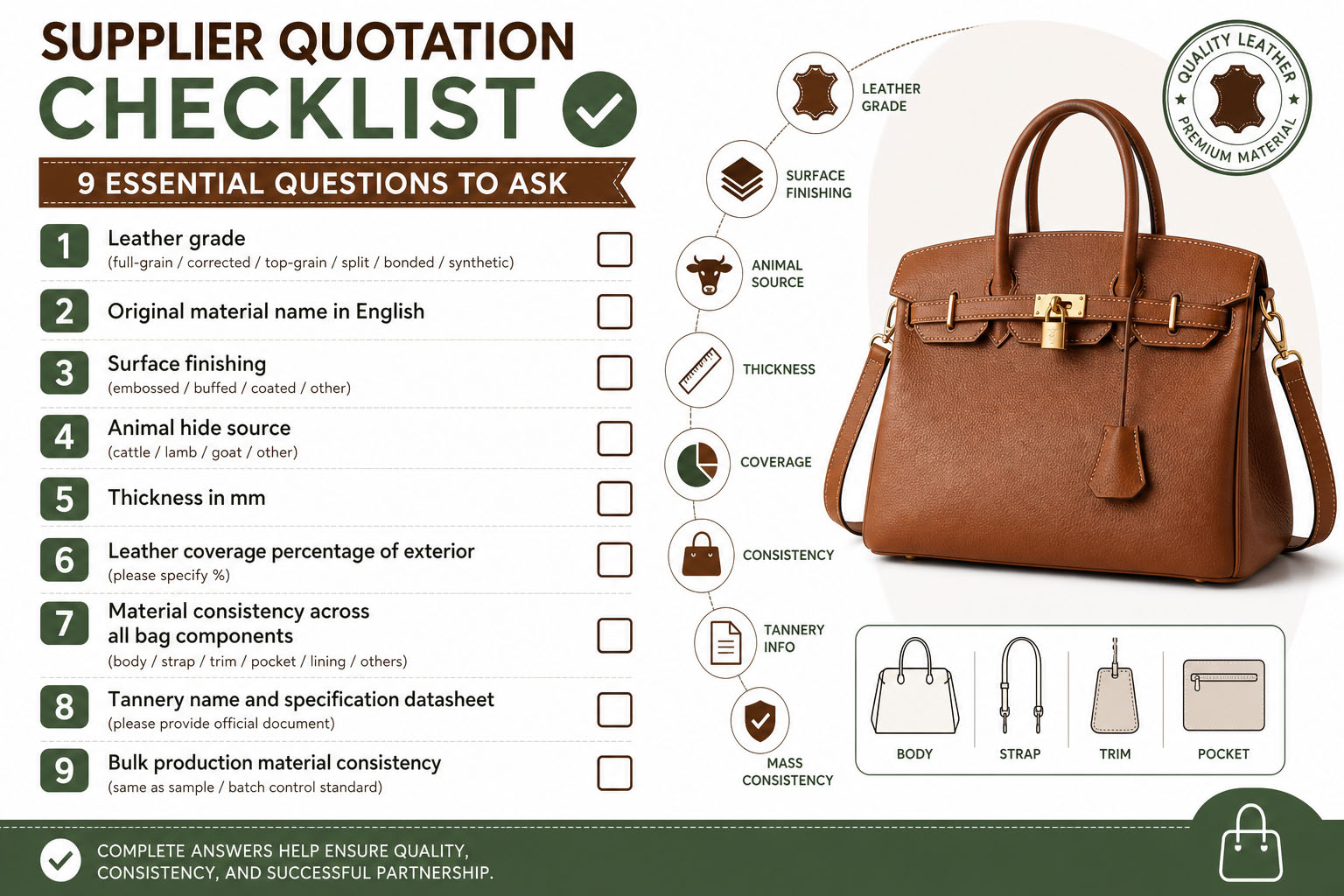
Avoid vague questions such as “is this genuine leather?”. Instead, ask for fully written‑out material specifications. Send this checklist to every potential factory partner:
1. Is the exterior material full‑grain, corrected‑grain, top‑layer, split, bonded, or synthetic leather?
2. What is the original Chinese material name (全粒面, 头层, 二层, 再生皮, PU, or PVC)?
3. Is the leather surface embossed, buffed, or covered by PU / PVC film?
4. What animal‑hide source is used for this product?
5. What is the leather thickness measured in millimeters?
6. What percentage of the bag exterior is composed of genuine animal leather?
7. Are straps, side gussets, bag bottom, and decorative trim manufactured from exactly the same leather material?
8. Can you share the tannery name, official leather‑specification datasheet, and close‑up cross‑section photographs of the material?
9. Will the exact pre‑approved leather material be used for the full bulk‑production run?
A powerful quotation‑request template you can copy‑paste for suppliers:
“Please quote this bag design separately for full‑grain cowhide, corrected top‑layer cowhide, coated split cowhide, microfiber leather, and PU leather. For each material option, kindly state the Chinese material name, leather thickness, surface‑finish details, leather‑coverage percentage, MOQ requirement, and unit wholesale price.”
FTC‑Compliant Product‑Description Best Practices For Your US Independent Website
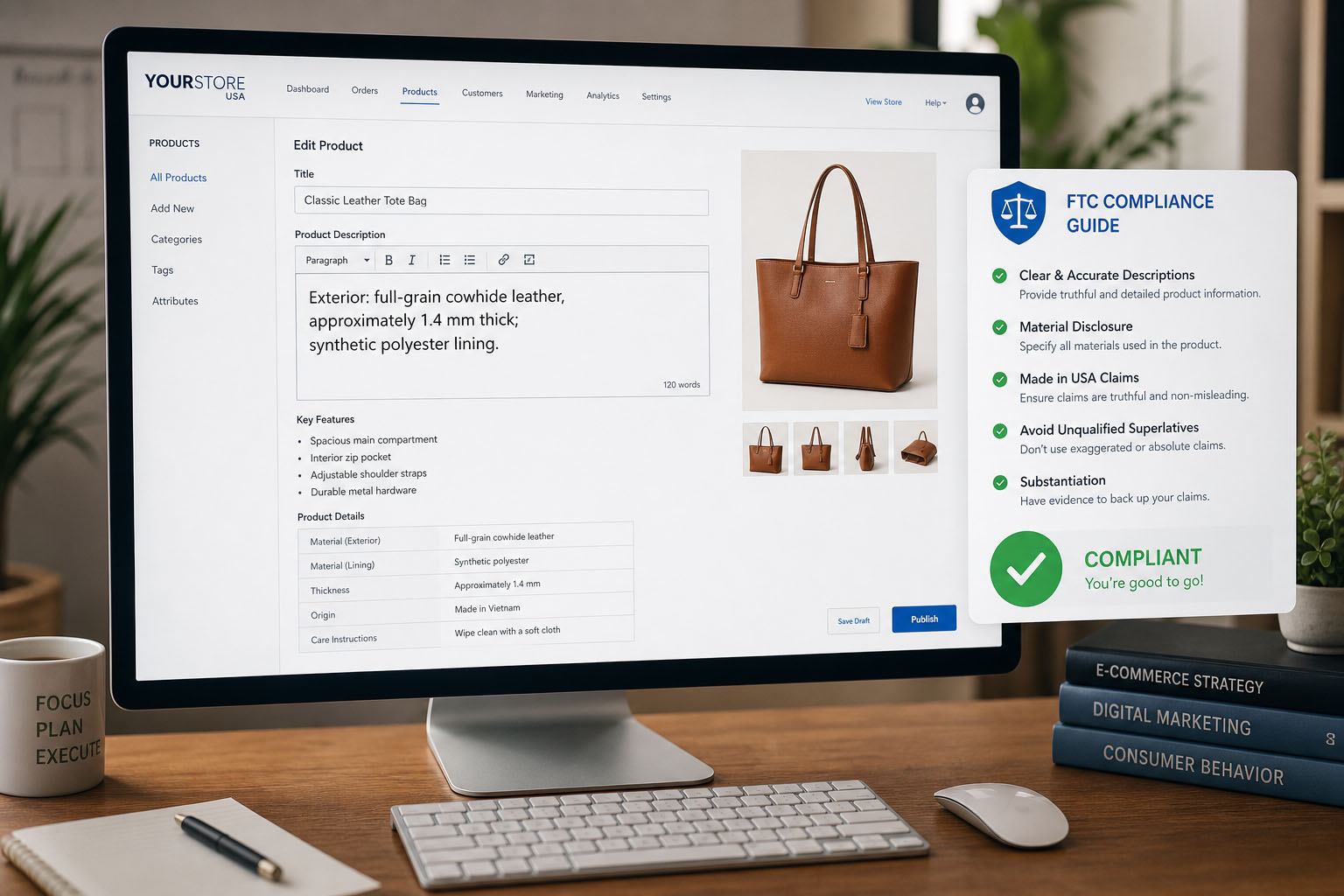
All material claims published on your US‑based website fall under FTC Leather Guides regulations. Broad, ambiguous marketing copy creates liability risk. Avoid generic phrases such as “premium genuine leather” unless you hold complete supporting documentation.
Instead, write precise, factual material descriptions. Two real‑world examples you can adapt for your own product listings:
> Example 1: Exterior: corrected‑grain cowhide leather with polyurethane finish; lining and interior trim: polyester and PU.
> Example 2: Exterior: full‑grain cowhide leather, approximately 1.4 mm thick; synthetic polyester lining.
Integrate all agreed‑upon material specifications, signed‑off sample references, material reference photos, and quality‑tolerance standards directly within your formal purchase orders. Treat leather‑grade labelling as only your starting reference point. Always validate actual hide layer, coating type, leather thickness, and construction quality before sorting finished goods into your store’s luxury, mid‑range, or budget‑priced product tiers.
Final Sourcing Takeaways For US Bag E‑Commerce Sellers
Sourcing genuine‑leather bags directly from Chinese factories delivers strong profit potential for independent‑website retailers, but success depends on navigating terminology gaps, multi‑factor pricing logic, realistic MOQ and lead‑time expectations, and consistent material verification.
Chinese factories do organize product lines around full‑grain, top‑grain, and split leather grades. Still, origin tannery, surface finishing, hardware complexity, and order volume can shift wholesale prices dramatically within one leather‑grade category. Remember that “genuine leather” is a broad classification, not a quality grade. Prioritize written detailed specifications, cross‑section sample inspection, and clear purchase‑order agreements over supplier‑supplied grade labels. When you translate verified material facts into compliant, transparent product descriptions for your US‑store visitors, you protect your business, reduce return rates, and build long‑term trust with your American customers.
Post time: Aug-17-2026