
Sourcing PFAS-Free Water-Repellent Bags from China: A Complete Buyer’s Guide for U.S. Importers
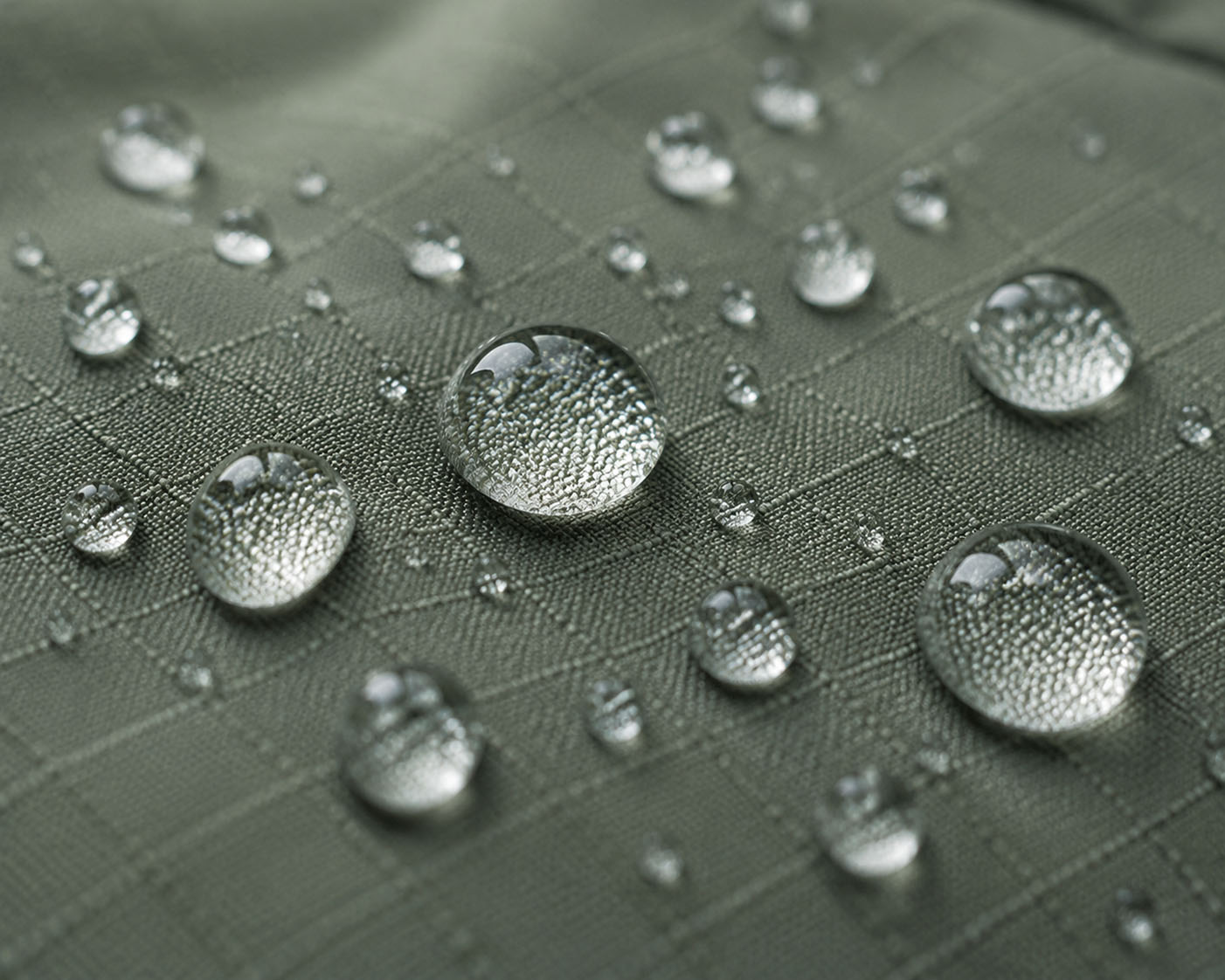
As a U.S.-based bag buyer sourcing finished products directly from Chinese factories, you’ve likely noticed a shift in the market conversation. The words “PFAS-free” and “PFC-free” are no longer niche buzzwords — they have become baseline expectations from consumers, retailers, and regulators alike. If you’re building or scaling a bag brand on an independent e-commerce site, understanding how to navigate this transition with your Chinese manufacturing partners is no longer optional. It’s a competitive necessity.
This guide breaks down everything you need to know about sourcing PFAS-free water-repellent coatings for nylon and polyester bags, from chemistry basics to compliance documentation, pricing implications, and the specific questions that will separate a serious supplier from one that’s just paying lip service to the term “eco-friendly.”
Why PFAS-Free Has Become the New Industry Standard
Per- and polyfluoroalkyl substances — commonly known as PFAS or PFCs — are a class of synthetic chemicals that have been used in water-repellent treatments for decades. The trouble is, they don’t break down in the environment. They persist in water, soil, and even human bloodstreams, which is why the media has dubbed them “forever chemicals.” Bioaccumulation concerns, combined with high-profile drinking water contamination lawsuits in the United States, have put the entire fluorochemical industry under a microscope.
For bag buyers, this translates into a clear market signal: U.S. consumers increasingly expect — and major retailers increasingly require — that the products they buy are free from intentionally added PFAS. Outdoor brands like Patagonia have already published public statements committing to PFAS-free finishes, and the ripple effect has reached contract manufacturers across Asia, including the bag factories in Guangzhou, Quanzhou, and Yiwu that supply much of the U.S. independent e-commerce market.
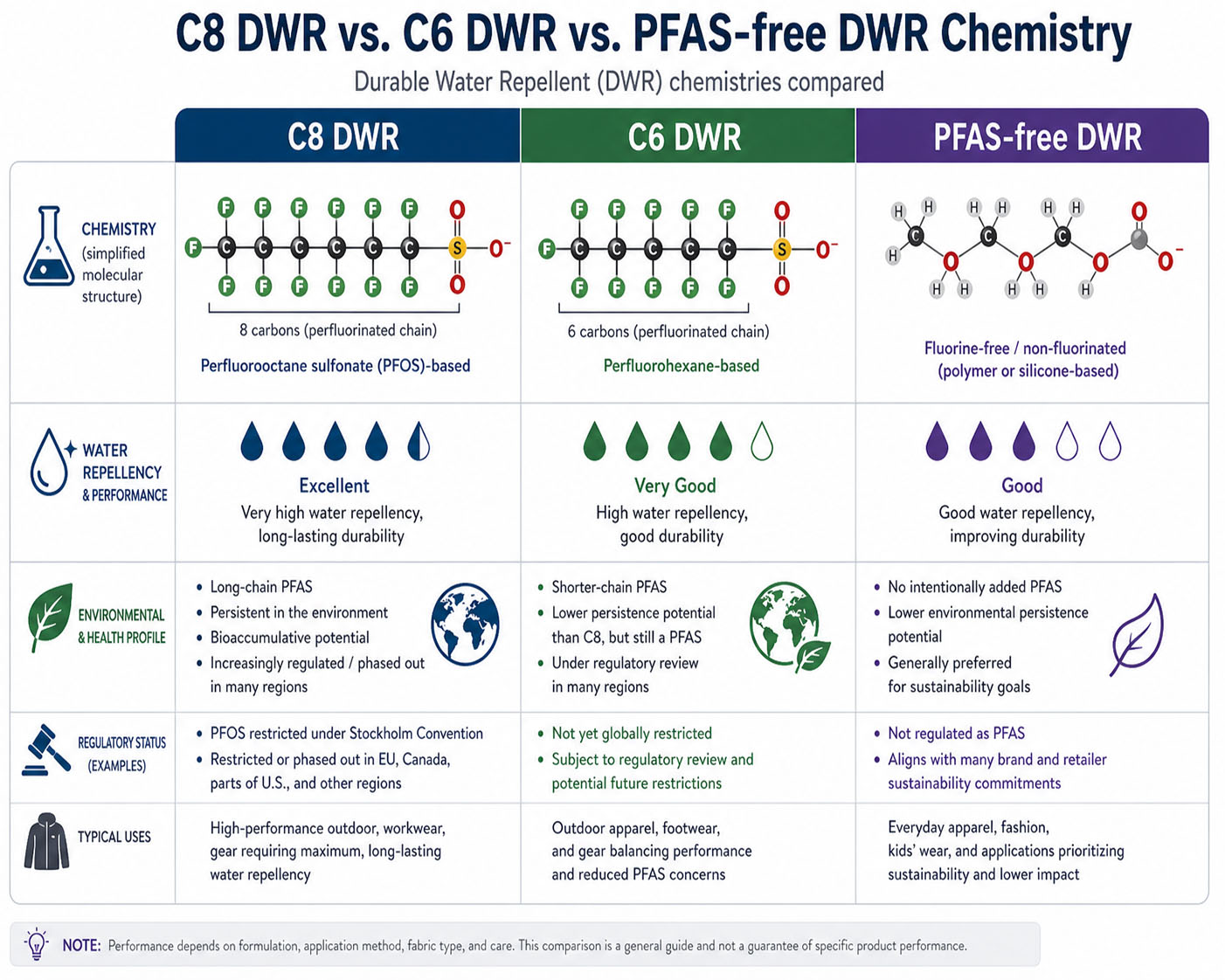
The good news? Chinese factories have responded. Most reputable bag manufacturers have phased out legacy C8-based DWR (durable water repellent) coatings and now offer either C6 alternatives or fully fluorine-free options as default. This shift is being driven less by Chinese regulation and more by export market pressure — specifically, U.S. state legislation that’s about to change the rules of the game.
The Four Critical Questions Every U.S. Bag Buyer Should Ask
When evaluating a Chinese bag factory’s PFAS-free capabilities, you need more than a verbal confirmation. Here are the four questions that will tell you whether the supplier truly understands the chemistry, the compliance landscape, and the performance trade-offs.
1. Can the factory provide third-party test reports proving the water-repellent coatings contain no PFAS or PFCs above detection limits?
This is the most important question, because the word “water-repellent” alone tells you nothing about the chemistry. Many fluorinated DWR finishes still bead water beautifully — they just happen to also contain PFAS.
A credible factory should be able to provide a recent third-party test report from a recognized lab such as SGS, Intertek, Bureau Veritas, or TÜV. The test method should reference either U.S. EPA Method 537.1 (which detects specific PFAS compounds in drinking water and has been adapted for textiles) or a total fluorine screening method (often reported as total organic fluorine, or TOF). The report should clearly state that detected levels are below the method’s reporting limit, typically expressed in parts per billion (ppb) or parts per million (ppm).
If a factory tells you they “don’t have test reports available,” that’s a red flag. If they offer a factory-issued certificate without an independent lab stamp, that’s also insufficient. Insist on documentation you can verify.
2. What is the durability and wash-fastness of PFAS-free DWR coatings compared to traditional C6 or C8 treatments on nylon and polyester bags?
Here’s where honest suppliers will give you a nuanced answer, because PFAS-free doesn’t mean identical performance. Traditional C8 DWR treatments can withstand 50 or more wash cycles before water repellency degrades significantly. PFAS-free DWRs — whether based on paraffin, silicone, polyurethane, or dendrimer chemistries — typically maintain their spray rating through 20 to 30 wash cycles.
The spray rating itself, measured by ISO 4920, is comparable: a well-applied PFAS-free finish on nylon or polyester will generally achieve a rating of 80 to 90 out of 100, which is on par with C6 treatments. The difference shows up over time, not at first application.
The good news is that heat can reactivate PFAS-free DWR. Tumble-drying on low heat or a brief ironing step (with a press cloth) can restore much of the original water repellency. This is something you can build into your product care instructions as a value-add for your customers.
3. How does the PFAS-free option affect the unit price, MOQ, and lead time for the finished bags?
For most Chinese bag factories, the price premium for switching from C6 DWR to PFAS-free DWR is currently in the range of 5% to 15%, depending on order volume, the specific chemistry used, and whether the factory is applying the finish in-house or sourcing pre-treated fabric from a mill.
Minimum order quantities (MOQs) typically don’t change, because the PFAS-free coating is applied through the same finishing process (padding or spray application, then heat curing) as traditional DWR. Lead times are similarly unaffected — usually 30 to 45 days for production plus 7 to 14 days for ocean freight from southern Chinese ports to U.S. West Coast destinations.
If a factory quotes you a premium significantly higher than 15%, ask why. They may be using a specialty imported chemistry (some European-sourced PFAS-free finishes carry a steeper cost) or they may simply be testing your price sensitivity.
4. Do PFAS-free coatings meet the requirements of upcoming U.S. state bans such as California’s AB 1817 and New York’s S.4630A for textiles?
This is the question that will increasingly separate informed buyers from the rest of the market. California’s AB 1817, signed into law in 2022, prohibits the sale of textiles containing intentionally added PFAS, with reporting and compliance deadlines that have already begun phasing in. New York’s S.4630A is similarly structured, banning PFAS in apparel and other textiles with enforcement dates rolling out through 2025 and beyond.
For a U.S. bag seller, this is critical. Even if your factory assures you their bags are “PFAS-free,” you need to confirm that the specific chemistry and concentration thresholds align with the states in which you’re selling. A “PFAS-free” claim based on the absence of long-chain PFAS (like PFOA and PFOS) may not satisfy legislation that defines PFAS more broadly to include any compound with at least one fully fluorinated carbon atom.
Ask the factory which specific PFAS compounds are excluded from their finish, and request documentation that addresses the broadest reasonable regulatory definition. This protects you from both compliance risk and the reputational damage of a “PFAS-free” product that gets flagged by a state attorney general.
Ten Industry Insights Every Bag Buyer Should Know
Beyond the four questions, here are ten insights that will help you evaluate suppliers, set customer expectations, and build a more defensible product line.
Insight #1: Most reputable Chinese bag factories have phased out C8-based DWR coatings and now offer C6 or fully PFAS-free alternatives as default options.
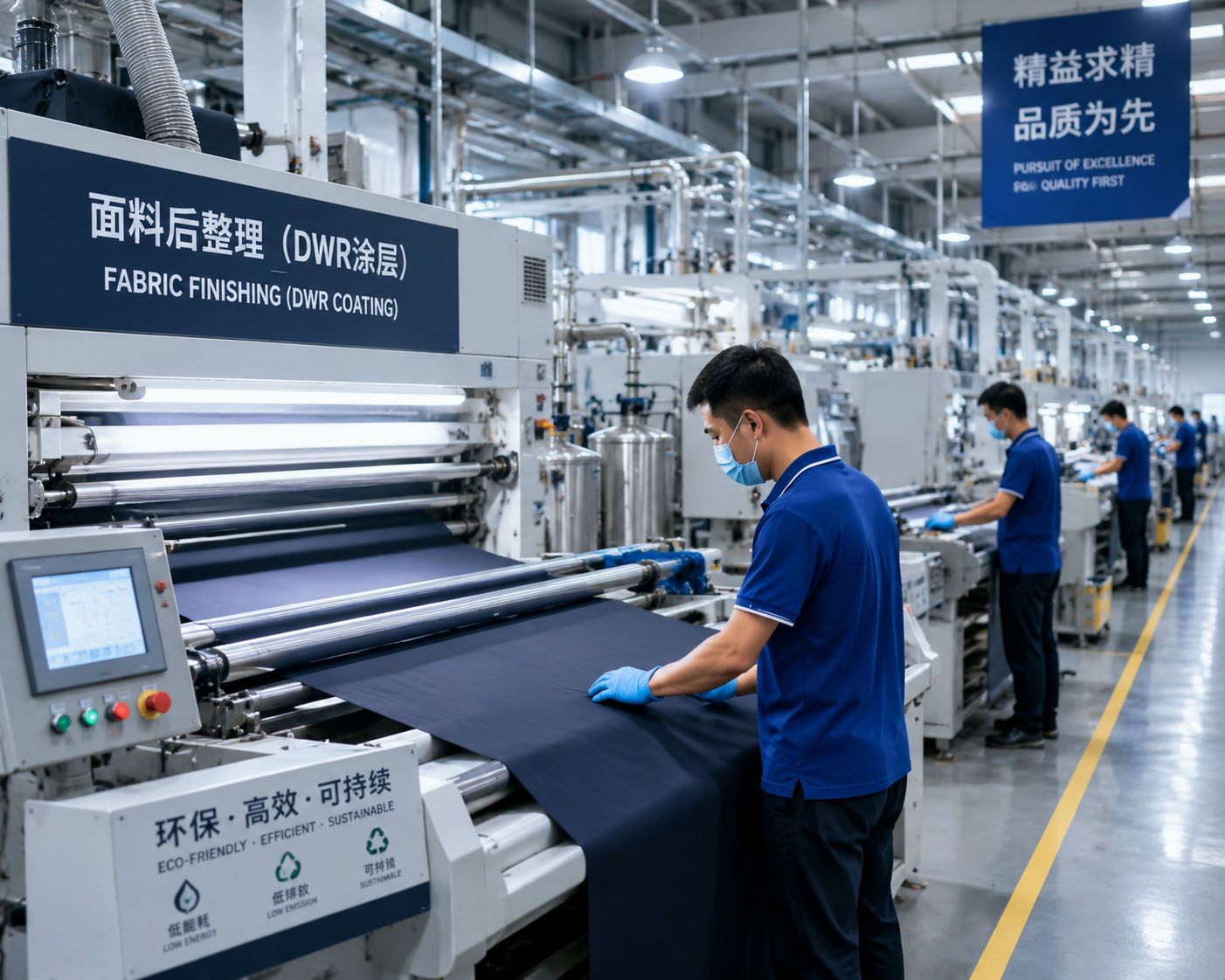
The transition away from C8 chemistry began in the early 2010s when major chemical companies like 3M and DuPont voluntarily phased out PFOA and PFOS. By 2024, C8 DWR was largely a legacy product, and Chinese factories serving export markets had already pivoted to C6 or fluorine-free options. If a factory is still offering “C8″ as a standard, that’s a sign they’re working with outdated chemistry — and possibly outdated compliance knowledge.
Insight #2: PFAS-free DWR coatings are typically based on paraffin, silicone, or dendrimer chemistries rather than fluorocarbon chemistry.
These alternative chemistries each have their own performance characteristics. Paraffin-based finishes are the most affordable and most common; they work by creating a low-surface-energy film on the fabric that causes water to bead. Silicone-based finishes are softer and more flexible, which can be advantageous for bags that need to drape or fold. Dendrimer-based finishes are the newest category and offer the best durability among PFAS-free options, though they come at a higher cost.
Insight #3: U.S. state bans on PFAS in textiles — including California’s AB 1817 and New York’s S.4630A — are pushing Chinese factories to standardize PFAS-free production for export.
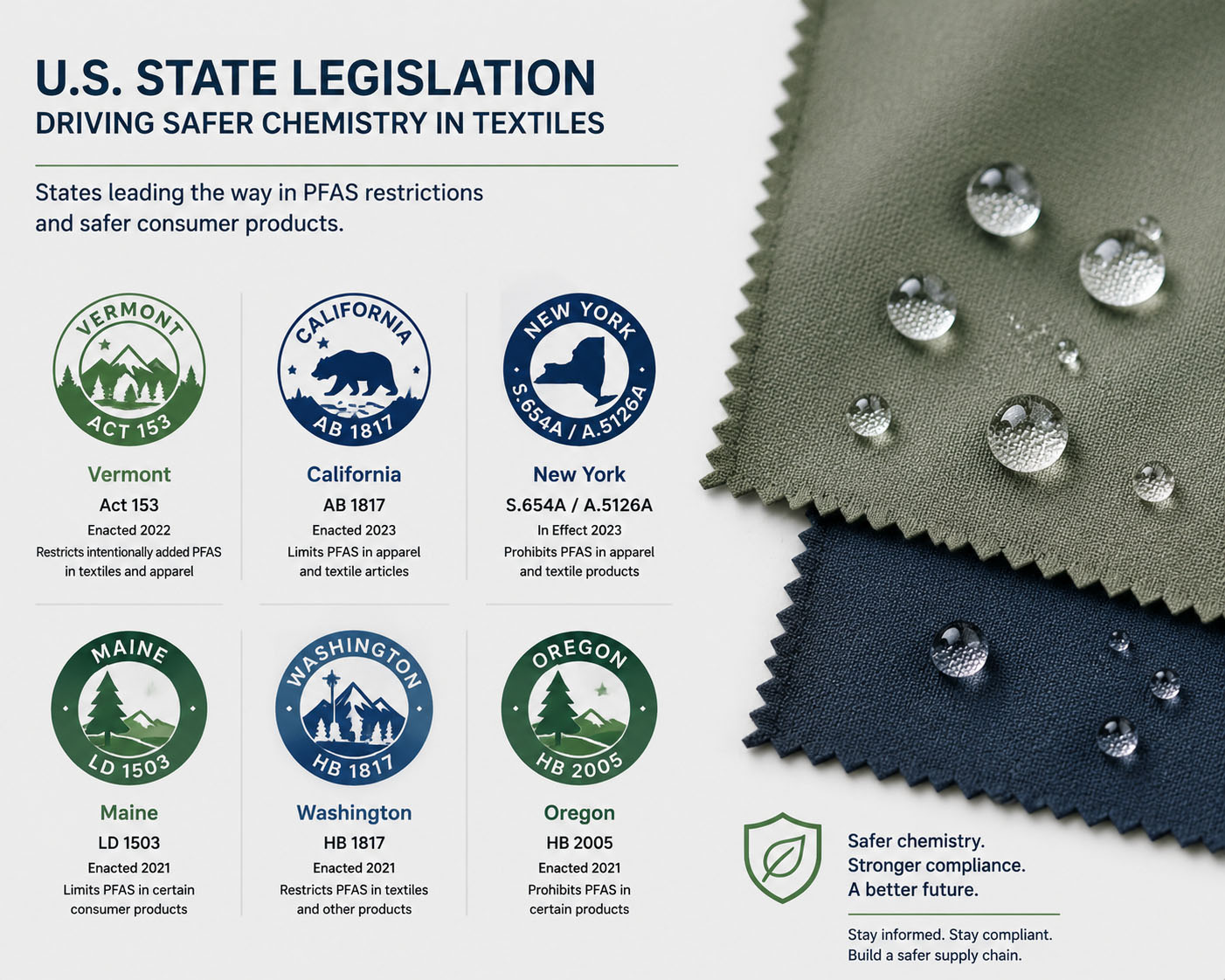
This is the market force driving the transition more than any Chinese environmental regulation. Because U.S. e-commerce sellers are increasingly demanding PFAS-free compliance, factories have built it into their standard production lines rather than treating it as a custom or premium add-on. As a buyer, you benefit from this — the regulatory pressure has done much of the negotiating work for you.
Insight #4: PFAS-free DWR treatments generally achieve a spray rating of 80–90 (ISO 4920) on nylon and polyester fabrics, comparable to standard C6 treatments.
The ISO 4920 spray test is the international standard for measuring the surface wetting resistance of fabrics. A score of 80 or above is considered “good” to “excellent” water repellency. When testing samples from your factory, ask them to provide the spray rating test result for the specific fabric and finish combination they’re proposing. Anything in the 80–90 range should perform well for everyday consumer use.
Insight #5: The unit price premium for PFAS-free coatings is currently 5%–15% over standard C6 DWR, depending on order volume and coating chemistry.
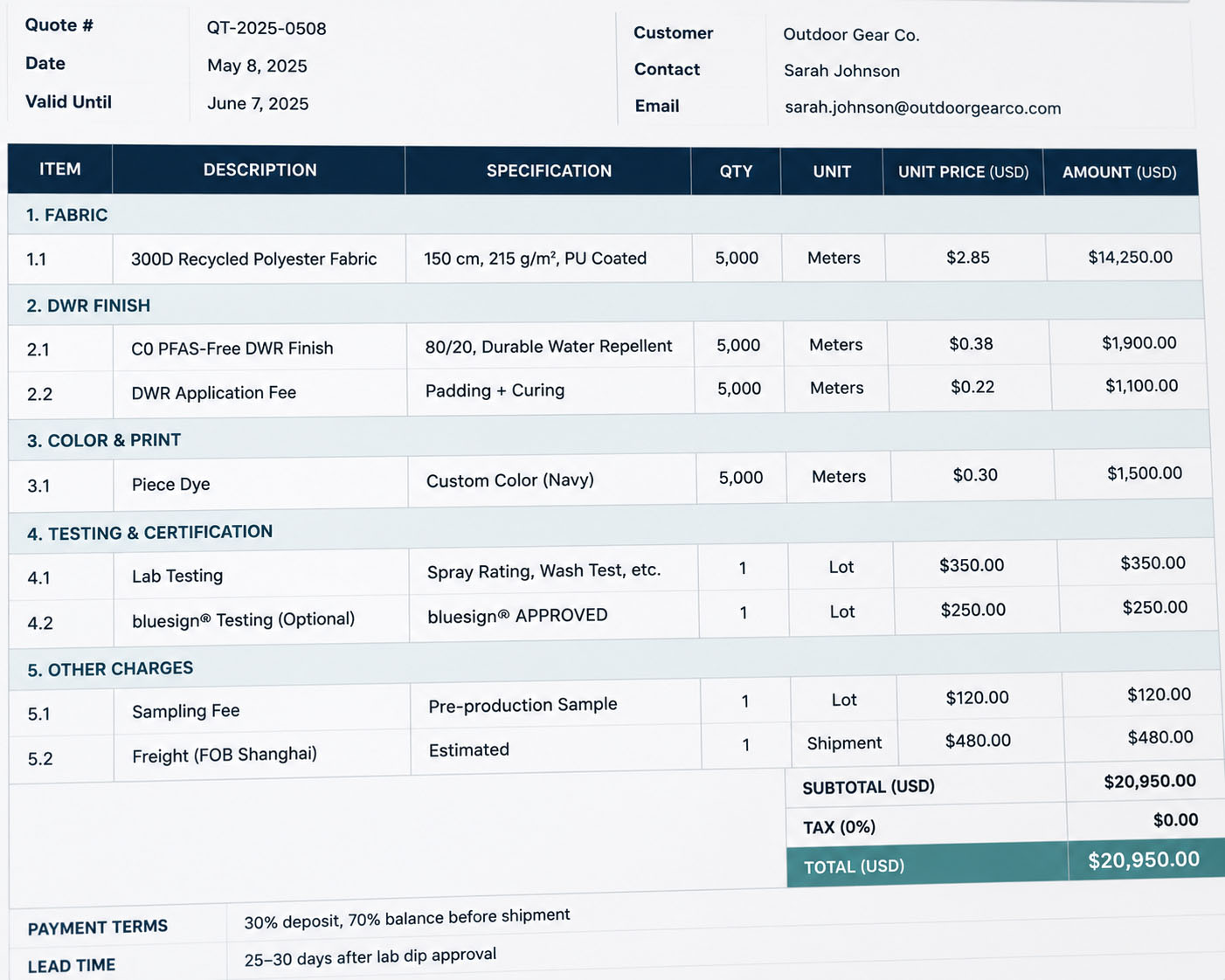
For a typical mid-volume order (say, 1,000 to 5,000 bags), expect to pay somewhere in the middle of this range. For larger orders (10,000+ bags), the premium often compresses to 5%–8%. For very small runs, you may see the full 15%, particularly if the factory is using a more expensive imported finish.
Insight #6: Third-party lab tests — such as SGS or Intertek PFAS screening using EPA Method 537.1 or total fluorine screening — are commonly provided by factories on request.
Most large Chinese bag factories have established relationships with SGS, Intertek, or Bureau Veritas offices in Shenzhen, Shanghai, or Guangzhou. Testing typically costs between $200 and $500 per sample, depending on the number of PFAS compounds screened. Some factories absorb this cost for buyers placing substantial orders; others pass it through. Always confirm the testing lab, method, and date before relying on a report.
Insight #7: PFAS-free DWR typically loses water repellency after 20–30 wash cycles, versus 50+ for traditional C8 treatments, so care-label language should reflect shorter refresh cycles.
This is one of the more honest conversations to have with your factory, because some will try to oversell PFAS-free performance. The reality is that consumers will need to refresh or re-treat the bag’s water repellency sooner than they would with a C8 finish. Build this into your product care instructions: include a line about tumble-drying on low heat after washing, or recommending a spray-on DWR refresher (available from brands like Nikwax or Granger’s) every 6–12 months for heavy use.
Insight #8: Heat-pressing or tumble-drying after washing can reactivate PFAS-free DWR performance, and factories can include this in product care instructions.
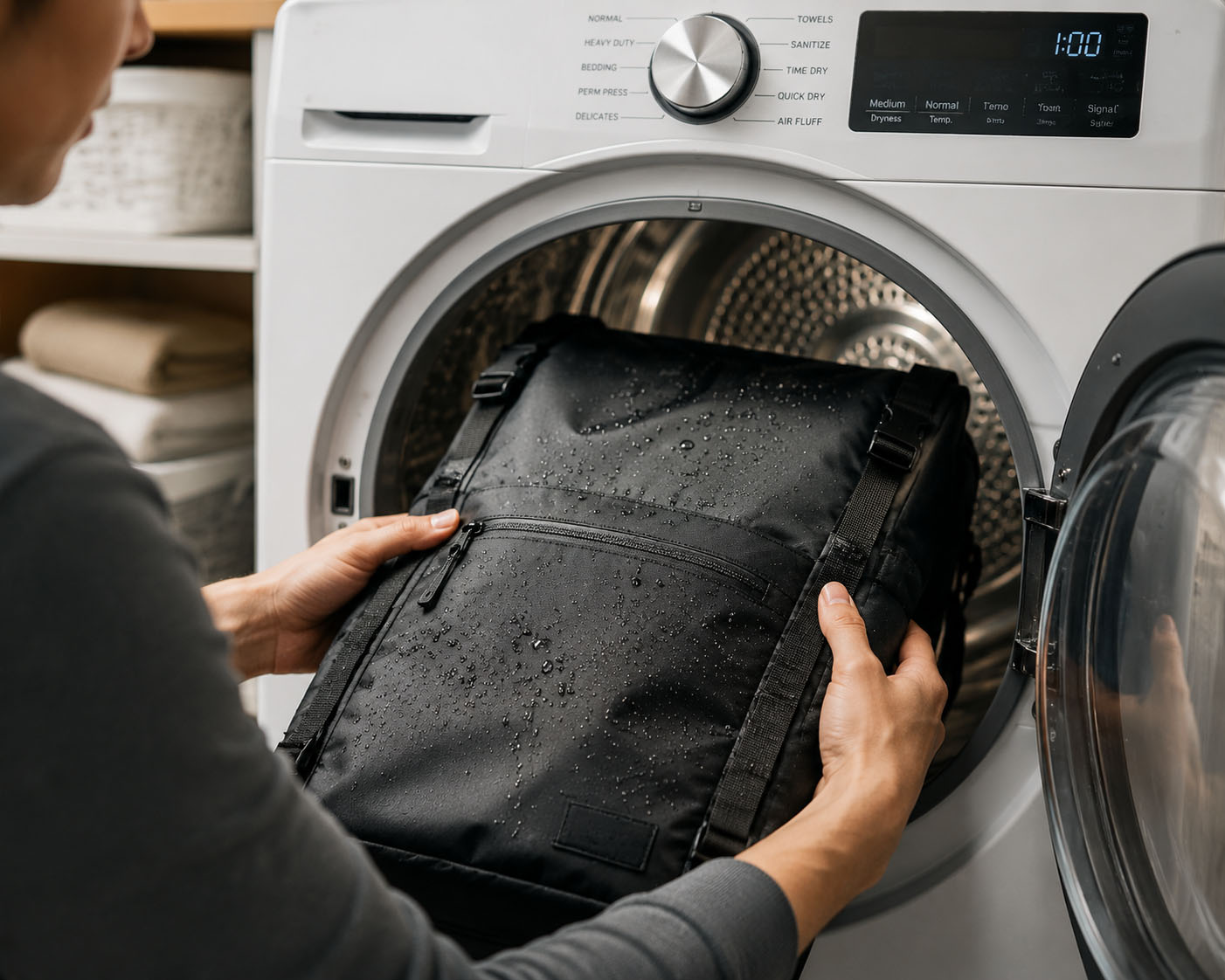
This is a small but meaningful value-add. A care label that says “Tumble dry low for 20 minutes to reactivate water repellency” gives your customers a clear, actionable way to extend the product’s functional life. It also signals to consumers that you’ve thought carefully about the product’s long-term performance — which builds trust.
Insight #9: PFAS-free coatings work well on rPET and recycled nylon, but adhesion may vary — factories should run pre-production wash and spray tests to confirm durability.
Recycled fabrics often have slightly different surface characteristics than virgin polyester or nylon, which can affect how well the DWR finish bonds. If you’re building a sustainability-focused product line using rPET or recycled nylon, ask the factory to run a pre-production test: apply the finish, wash the fabric 10–20 times, and then measure the spray rating. This small step can prevent a much larger quality issue down the line.
Insight #10: Finished bags with PFAS-free coatings may still need separate testing to meet CPSIA, REACH, and California Prop 65 requirements before U.S. market release.
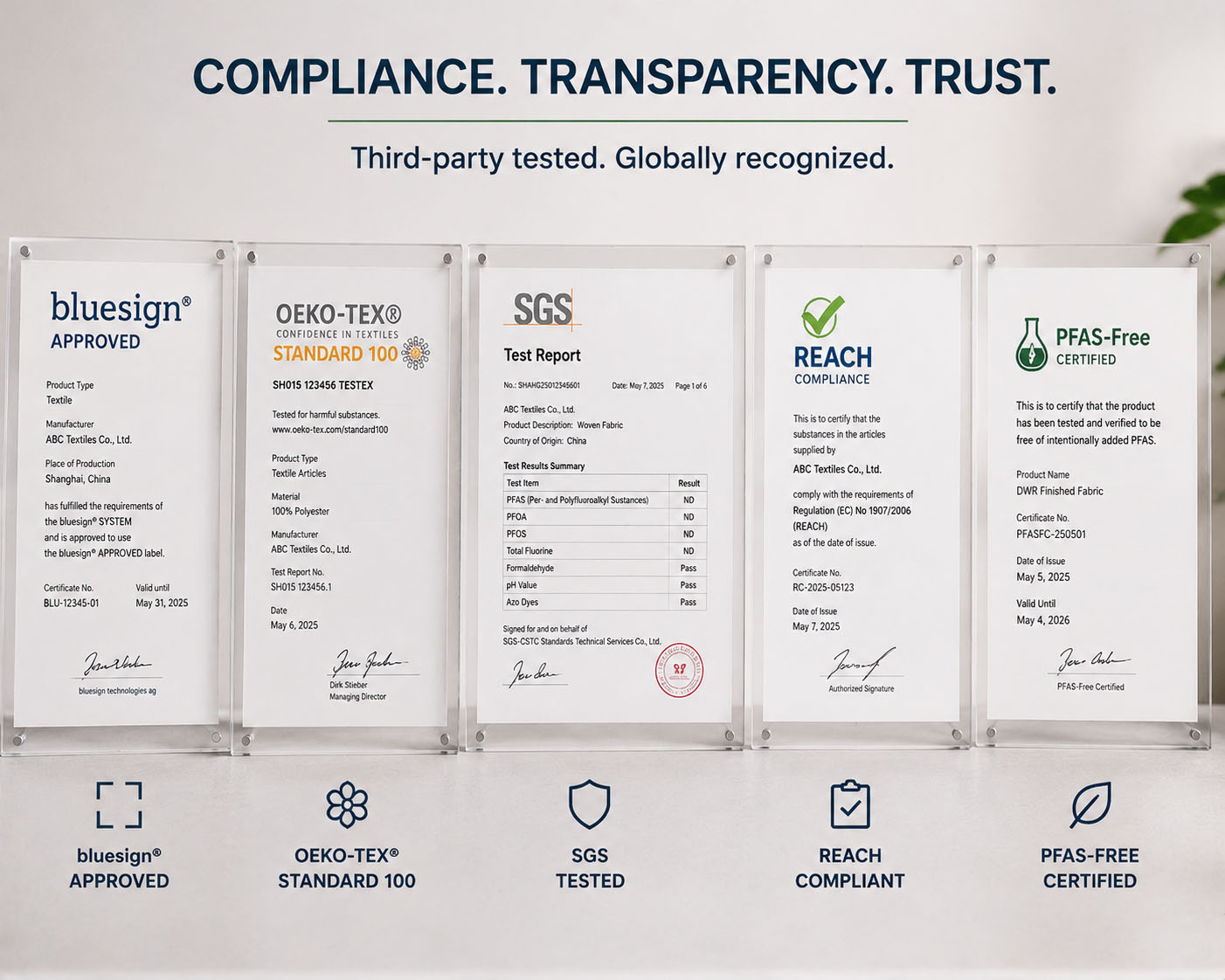
PFAS-free status is one piece of a larger compliance picture. Depending on your product category, you’ll also need to confirm compliance with CPSIA (the U.S. Consumer Product Safety Improvement Act, particularly for lead and phthalate limits), REACH (the EU chemicals regulation, required if you have any European customers), and California Proposition 65 (which covers a long list of chemicals known to cause cancer or reproductive harm). A good factory will help you coordinate these tests, but as the brand owner, the ultimate responsibility for compliance is yours.
What to Ask Your Chinese Factory: Direct Wording That Works
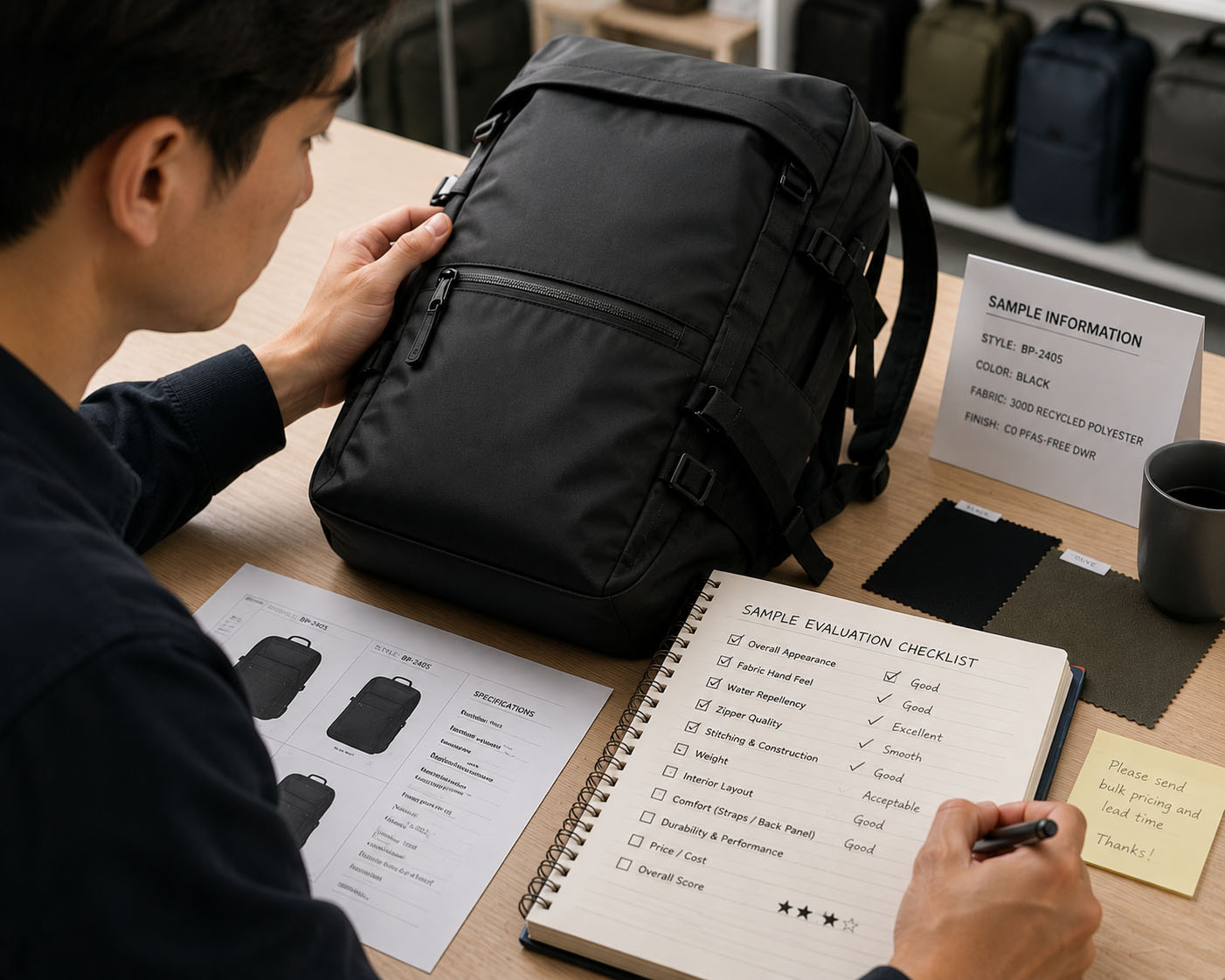
When you’re corresponding with factories — whether on Alibaba, through a sourcing agent, or via direct email — clarity matters. Avoid vague terms like “eco-friendly” or “green,” which can mean almost anything. Use specific, direct language:
“Can you supply a water-repellent coating that is PFAS-free, PFC-free, and fluorine-free?”
“Please confirm there are no intentionally added PFAS, PFCs, PFOS, or PFOA in the finish.”
“Can you provide a material declaration and third-party test report for PFAS content?”
“Which chemistry do you use: silicone-based, polyurethane, TPU, wax, or paraffin?”
“Can you confirm the coating meets U.S. buyer requirements for restricted substances, including California’s AB 1817 and New York’s S.4630A?”
These questions do two things: they signal to the factory that you understand the chemistry and the regulatory landscape, and they force the supplier to engage with the specifics rather than offering generic assurances.
Your Pre-Order Supplier Checklist
Before you finalize any purchase order, your documentation package should include:
A written PFAS-free statement from the factory, on company letterhead if possible, signed by a quality or compliance officer.
A PFAS/PFC test report from an independent third-party lab (SGS, Intertek, Bureau Veritas, or TÜV), with the test method and detection limits clearly stated.
The exact chemical name or trade name of the coating, so you can independently verify what’s being applied.
Compliance documentation for your target market — particularly California Prop 65, CPSIA, and any U.S. state PFAS bans relevant to your customer base.
A physical sample for your own performance testing: spray rating, abrasion resistance, odor, hand feel, and color fastness.
Practical Sourcing Advice for U.S. Independent E-Commerce Sellers
If you’re building a bag brand and selling through Shopify, Amazon, or your own DTC website, the most strategic move is to make PFAS-free a standard line item in your sourcing specification, not a special request. This accomplishes several things at once.
First, it forces every factory you evaluate to compete on the same compliance baseline, which compresses pricing over time. Second, it protects you from the unpleasant surprise of discovering — six months into a product launch — that a factory was using fluorinated chemistry despite verbal assurances. Third, it makes your product listing more defensible: if a customer, journalist, or regulator ever questions your sustainability claims, you have the documentation to back them up.
The strongest specification language is direct and verifiable: “No intentionally added PFAS/PFCs; confirm fluorine-free water-repellent finish with third-party test documentation.”
Avoid softer language like “eco-friendly water-repellent finish” or “green DWR,” which are marketing claims rather than technical specifications. These phrases don’t hold up under regulatory scrutiny and don’t give your factory clear production instructions.
Final Thoughts
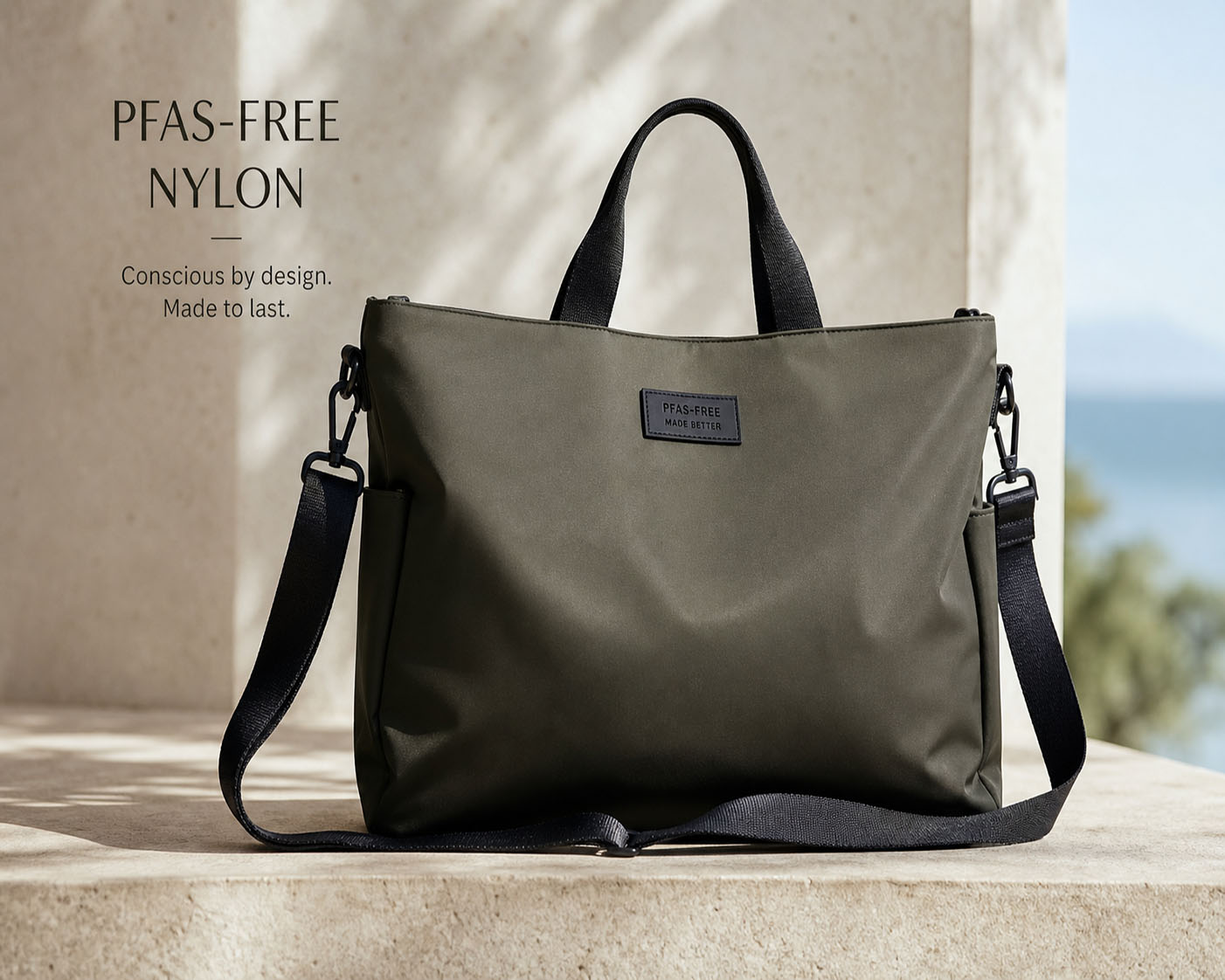
Sourcing PFAS-free water-repellent bags from China is not only possible — it’s quickly becoming the default for serious export-oriented manufacturers. The supply chain has caught up with the regulatory and consumer demand, and the price premium for switching to PFAS-free finishes is modest and shrinking.
Your job as a U.S.-based bag buyer is to treat PFAS-free status as a specific, verifiable specification — not a marketing claim. Ask the right questions, request the right documentation, test the samples, and build the compliance work into your sourcing process from day one. That’s how independent e-commerce sellers compete with the big outdoor brands: by being just as rigorous about what’s in the product, and just as transparent with the customer about what isn’t.
The factories that can meet this standard are out there. The ones that can’t will become increasingly difficult to work with as California’s AB 1817, New York’s S.4630A, and similar legislation in other states move from the books to active enforcement. The transition is already underway, and the buyers who get ahead of it will be the ones still standing — and still selling — five years from now.
Post time: Jun-11-2026