
Published for US bag e‑commerce operators | Industry Insights, Material Breakdown, Certifications & Sourcing Best Practices
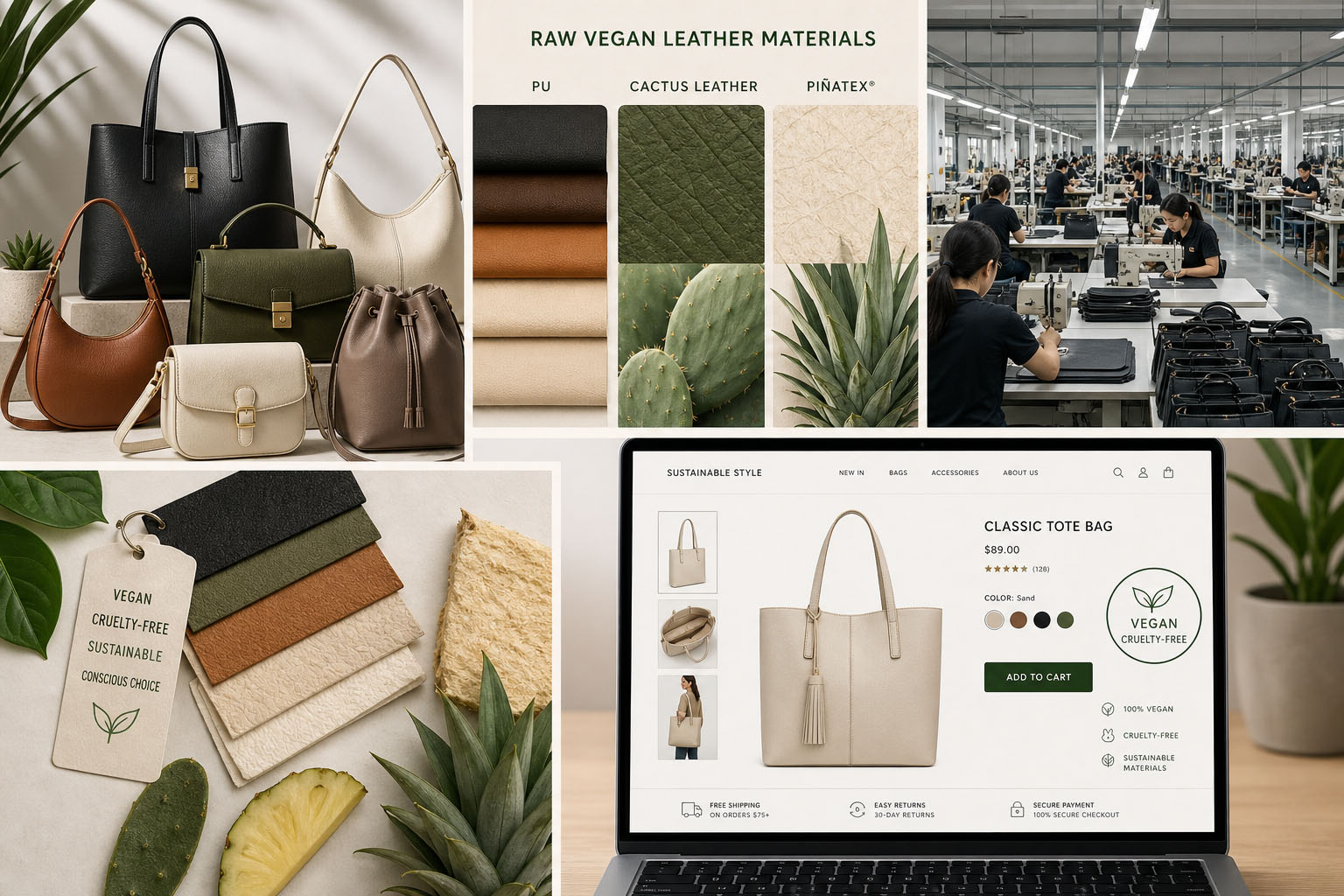
Consumer purchasing behavior across the United States is transforming the accessories marketplace. For US‑based bag sellers operating independent e‑commerce websites, vegan and cruelty‑free bag lines are no longer a small‑niche product category reserved for ethical‑focused shoppers. Today, mainstream retail brands and everyday end‑users are actively requesting animal‑free handbags, crossbody bags, totes and accessories, reshaping supplier requirements for overseas manufacturing partners in China.
If you are an American bag buyer sourcing inventory directly from Chinese factories for your own website, you will face a set of critical practical questions: What vegan materials do Chinese export‑oriented bag factories actually use? Which third‑party certifications hold real weight for US customers? How do vegan alternatives stack up against genuine leather on durability, cost and market reception? What MOQs and lead times should you expect for custom vegan‑material bag orders? This article breaks down actionable market research, material knowledge, certification standards and on‑the‑ground China sourcing intelligence to help independent site merchants build competitive, compliant vegan bag product lines.
The Rising US Market Demand for Vegan and Cruelty‑Free Bags
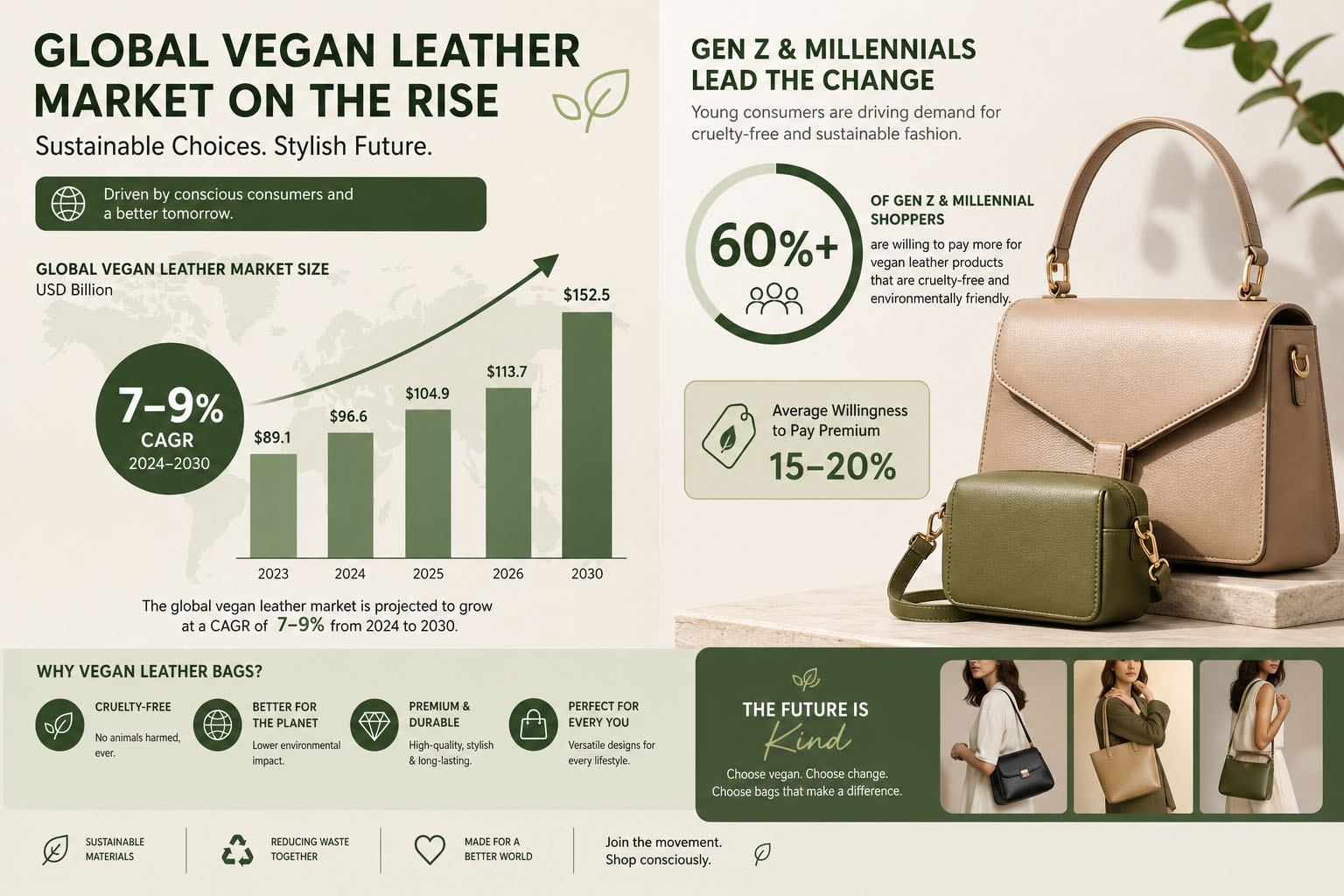
Global market data confirms fast‑expanding momentum for vegan leather accessories. The global vegan leather market is projected to grow at 7‑9% compound annual growth rate through 2030, fueled by rapidly rising ethical‑driven consumer demand across North America, Europe and other developed markets. Within this broader space, the luxury vegan handbag segment delivers even stronger expansion. Industry reports value the luxury vegan handbag market at approximately $1.34 billion USD in 2023, with forecasts pushing the market size to $2.83 billion USD by 2030, representing an 11% CAGR; alternative industry models project the category will reach $3.57 billion USD by 2032.
This market surge is deeply rooted in demographic shifts. More than 60 percent of Gen Z and Millennial shoppers state they are ready to pay premium price points for cruelty‑free fashion goods. Young consumers do not treat animal‑free production as a secondary bonus feature; many shoppers actively research brand ethics before completing checkout, and will abandon purchases if animal welfare standards fail to meet expectations. TikTok and Instagram amplify this trend: social‑media content creates periodic viral demand spikes for cruelty‑free bags, particularly among younger‑age online audiences who make up the core customer base for many US independent bag websites.
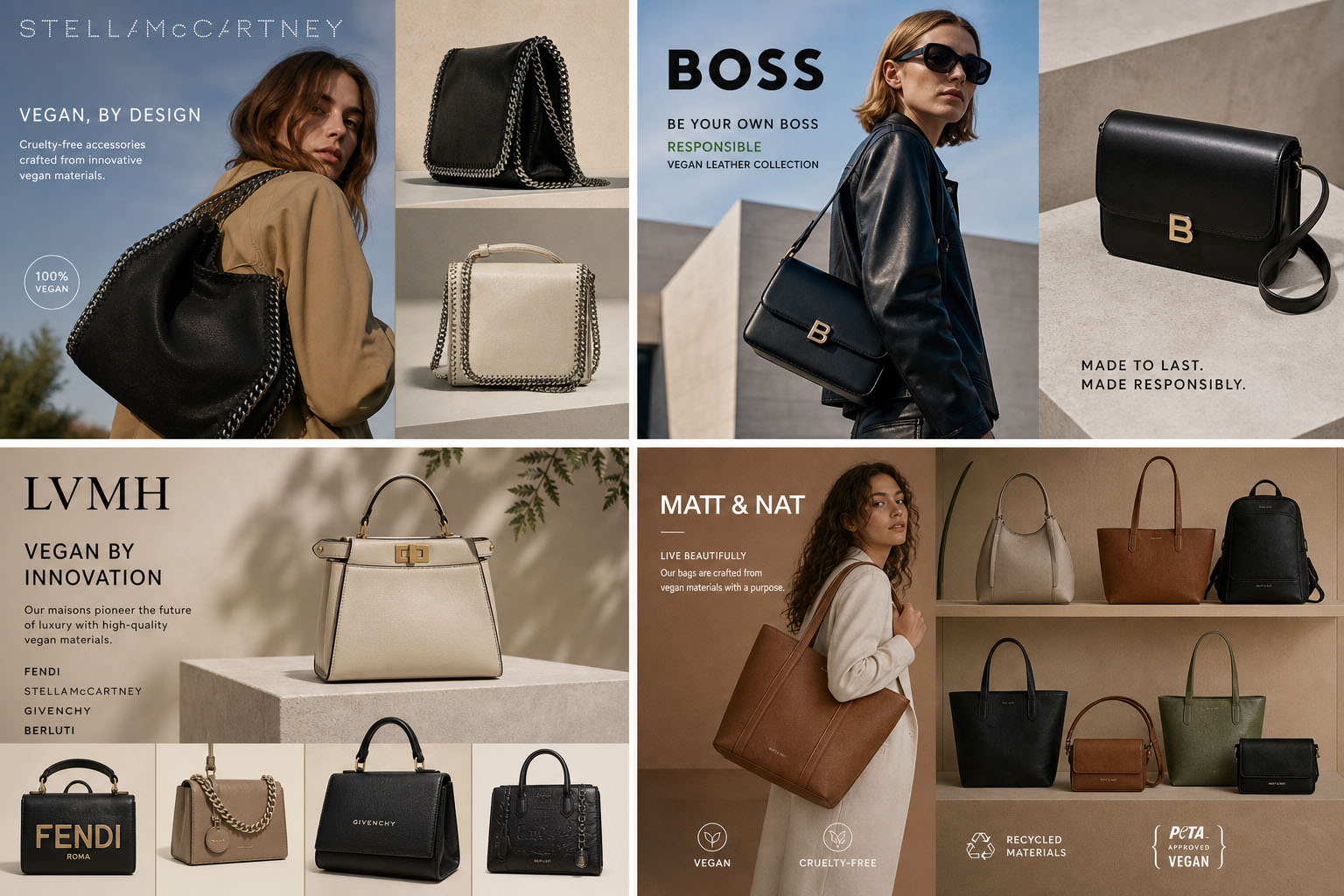
Major global fashion houses have already validated this market shift. Stella McCartney, Hugo Boss, and multiple labels under the LVMH group have rolled out or significantly enlarged vegan leather product lines in recent years. These well‑known collections normalize vegan materials within mainstream fashion, removing the perception that animal‑free bags are only for small ethical‑only brands. Large‑scale retail adoption signals that independent US website sellers cannot afford to overlook this product category; competitors are adding vegan SKUs to capture ethically‑minded traffic.
Four core forces keep pushing this demand higher for US‑market bag sellers:
First, ethical consumerism. Modern US shoppers increasingly seek merchandise aligned with personal animal‑welfare values. “Zero animal‑derived ingredients and no animal testing” has transitioned from a specialty selling point to a baseline expectation for many accessory buyers.
Second, sustainability‑driven pressure. Traditional genuine leather manufacturing carries well‑documented environmental downsides. Conventional leather tanning processes create chrome pollution and consume massive volumes of water. These environmental downsides push retailers to adopt vegan alternative materials marketed for lower ecological impact. Recycled synthetic fabrics and plant‑derived fibers serve as key substitutes for traditional hide leather.
Third, demographic power from Gen Z and Millennial buyers. These younger consumer groups dominate social‑driven e‑commerce traffic for independent bag sites. They prioritize cruelty‑free attributes and actively filter product listings for vegan labeling.
Fourth, formal retailer ESG and supply‑chain due‑diligence requirements. United States retail operators now face growing expectations to trace and document imported goods’ raw‑material origins. Even direct‑to‑consumer independent website sellers must prepare supply‑chain documentation for vegan claims, as misrepresented “vegan” marketing risks customer backlash and potential regulatory complaints.
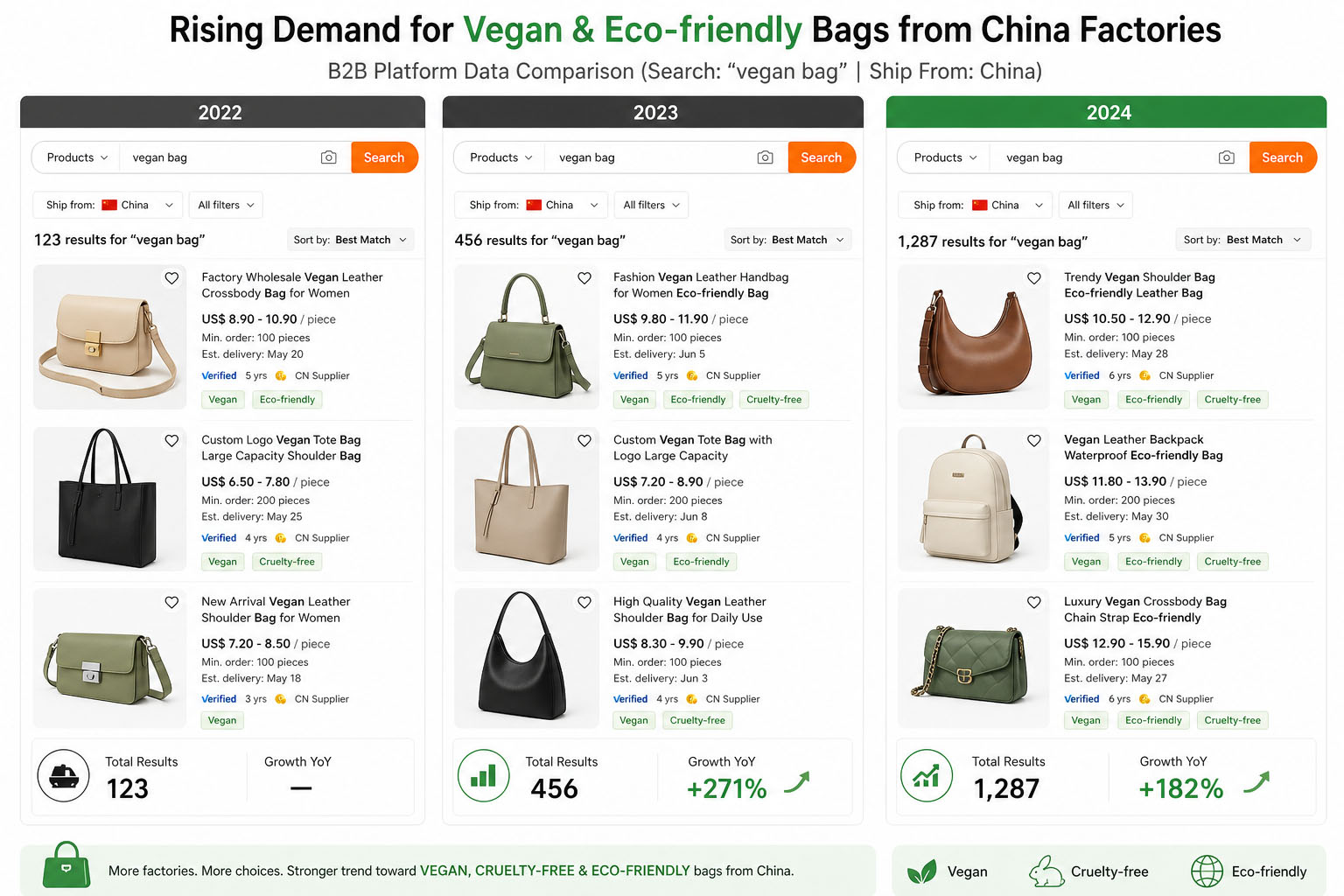
This market shift is clearly visible on major B2B sourcing platforms. Over the past three years, there has been a measurable, sharp increase in bag supplier listings tagged “vegan”, “cruelty‑free”, or “eco‑friendly”. Chinese manufacturing hubs including Guangzhou, Yiwu, and Quanzhou have expanded local production capacity for vegan leather and microfiber leather materials. These established production clusters deliver export‑ready quality with competitive pricing for overseas buyers. For US independent sellers, this means viable supply capacity exists domestically within China, yet buyers must learn to distinguish genuine vegan‑compliant materials from marketing‑only labels.
1. Common Vegan & Cruelty‑Free Export‑Grade Materials Used by Chinese Bag Manufacturers
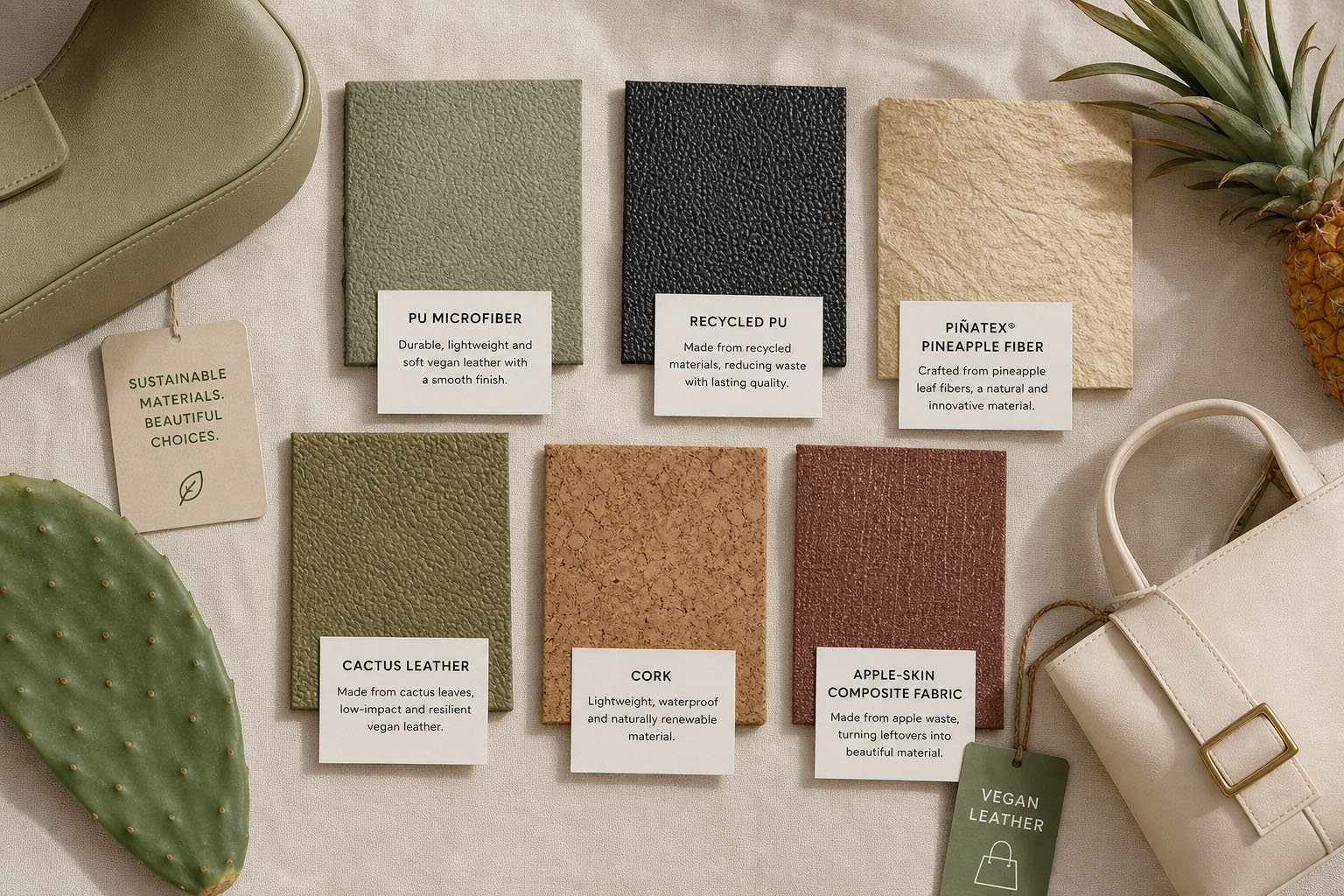
When you communicate with Chinese export bag factories, you will encounter a wide spectrum of animal‑free materials. Not all “vegan leather” descriptions are equal. Some options are mass‑produced for high‑volume export, while innovative plant‑based alternatives remain emerging, lower‑volume choices.
Synthetic Microfiber PU (Polyurethane)
Microfiber PU is by far the most widely used vegan leather for China‑export bags. It contains zero animal hides. This material mimics the hand‑feel and grain texture of natural leather, can be embossed into diverse grain patterns, and delivers stable color fastness suitable for US retail requirements. It is scalable for large‑batch orders, widely stocked in Guangzhou and Quanzhou material markets, and represents the workhorse material for most mass‑market vegan bag exports. Standard PU and recycled‑content PU variants are both available. Recycled PU incorporates post‑consumer plastic components for enhanced sustainability storytelling on your independent website.
Recycled Polyester Fabrics
Recycled polyester (rPET), manufactured from recycled plastic bottles, is frequently used for tote bags, backpacks and casual‑style handbags. It is lightweight, cost‑effective, durable, and easy for Chinese factories to print custom patterns. While not a “leather‑like” material, it qualifies as 100% vegan and cruelty‑free, and works well for casual‑oriented product lines targeting younger US consumers.
Cork leather
Cork is a plant‑based vegan material sourced from cork oak bark harvesting. Chinese export suppliers can source imported cork sheets and process them into bag‑making material. It delivers a distinctive natural texture, lightweight hand‑feel, and good wear performance. It sits at a mid‑to‑higher price tier compared to standard microfiber PU.
Emerging plant‑derived innovative materials
Commercial availability keeps improving for next‑generation plant‑based vegan leathers across Chinese supply chains. These options are still less common than microfiber PU, but more factories are gaining processing capabilities:
- Piñatex (pineapple‑leaf fiber): Created from waste pineapple leaf fibers. It provides natural‑looking texture for premium vegan bag collections.
- Cactus‑based leather: Produced from nopal cactus, gaining traction for luxury‑positioned vegan accessories.
- Apple‑skin composite leather: Made from apple‑processing industry waste by‑products.
- Mushroom mycelium leather: Still in scaling‑up stages within China’s export manufacturing ecosystem; supplier options remain limited for high‑volume mass orders.
Important note for US buyers: Avoid PVC where feasible for US retail. While technically animal‑free, PVC carries negative sustainability perceptions among American ethical shoppers, and many DTC brands exclude PVC from their vegan product assortments. When sending factory inquiries, explicitly state your preference for non‑PVC vegan materials.
Critical check point for every material: Ensure suppliers confirm zero hidden animal‑derived inputs. Some factories may use animal‑based glue. For true vegan compliance, adhesives must also be synthetic, with no wool, silk or suede substitutes mixed into fabric blends. Require formal material declarations covering all components of your custom bags.
2. Key Certifications to Validate Vegan and Cruelty‑Free Claims From Chinese Suppliers
Marketing words such as “vegan” or “cruelty‑free” on Alibaba or factory quotation sheets hold zero legal guarantee. In United States e‑commerce, making unsubstantiated vegan claims creates real risk: customer complaints, product returns, reputational harm for your independent website, and potential regulatory scrutiny. As a US‑based seller sourcing from China, you need to know which third‑party certifications carry real credibility for American consumers, and what documentation you should demand from manufacturing partners.
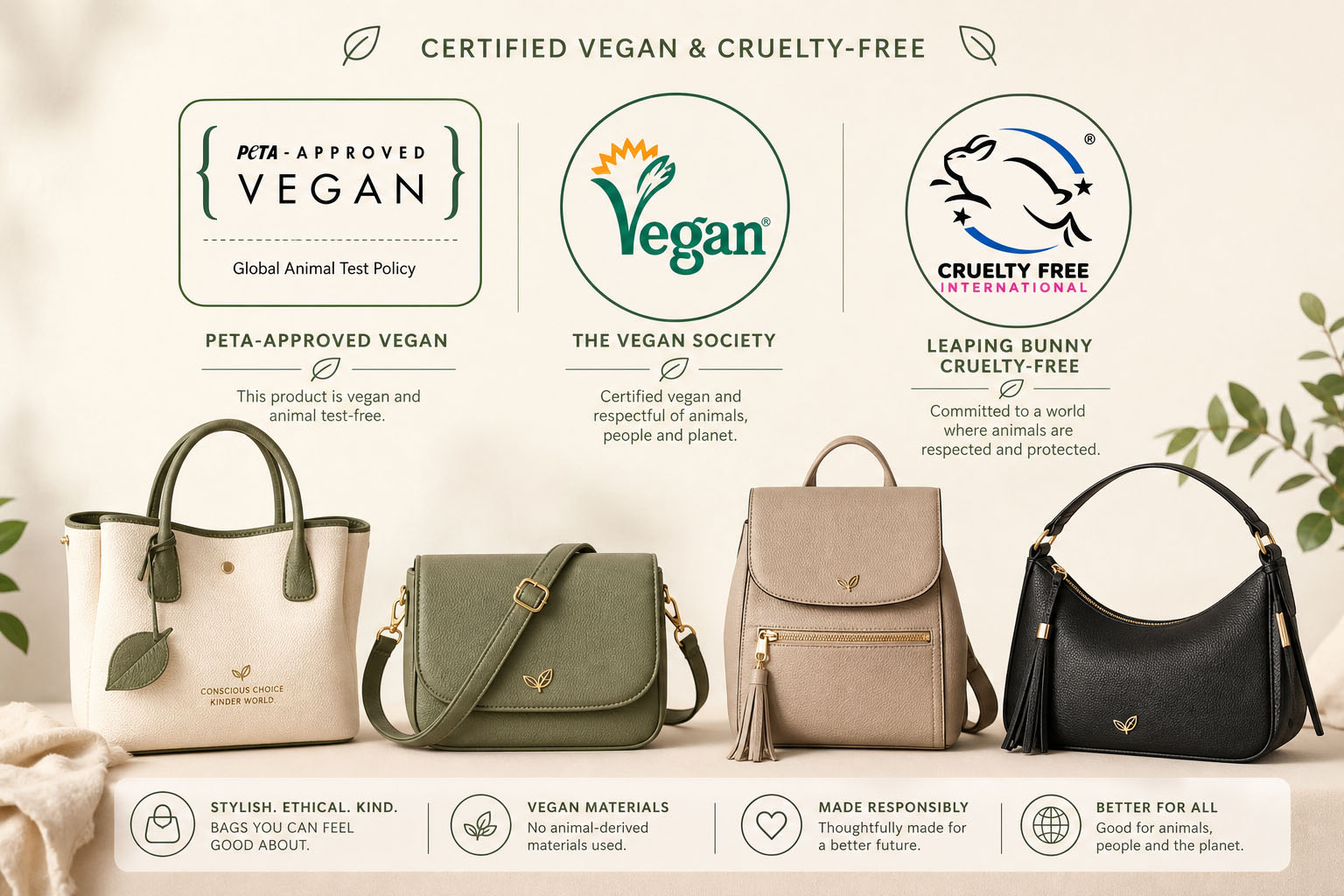
Three internationally‑recognized standards carry the most weight for US‑market bag listings:
1. PETA‑Approved Vegan: Highly recognizable among American consumers. This certification verifies no animal‑derived materials and no animal testing across the product supply chain. US shoppers actively look for this badge on e‑commerce product pages.
2. The Vegan Society Trademark: One of the oldest global vegan standards, confirming products contain no animal ingredients and no animal‑testing involvement.
3. Cruelty‑Free International (Leaping Bunny): Focused on zero animal‑testing requirements across materials and finished‑goods production.
Not every Chinese factory will hold these certifications on‑file for all material lines. Many smaller export‑oriented manufacturers produce certified batches only when overseas buyers explicitly request and fund certification‑related costs. Two practical sourcing tips:
First, distinguish between material‑level certification and finished‑product certification. It is acceptable for the raw‑material supplier to hold the vegan certification, while your bag factory processes that certified material. In this scenario, you need to collect and retain material‑mill certification documents plus traceability paperwork proving your bag production run uses that exact certified batch of raw material. Do not accept only verbal assurances.
Second, if full third‑party certification cost is outside your project budget, require comprehensive supplier documentation: formal material composition declarations, lab test reports confirming absence of animal‑derived components, and copies of any existing client references for orders previously sold as vegan‑compliant. You can display partial transparency statements on your independent site such as “Made with certified animal‑free PU sourced from audited material mills” when full finished‑goods certification is not in place. Never falsely display certification badges you have not legitimately obtained.
Keep in mind growing US supply‑chain due‑diligence expectations. Save all certification and material‑declaration records in your business files. These documents protect your brand if customers question your vegan marketing copy.
3. Vegan Bags vs Genuine Leather: Durability, Pricing & US Consumer Acceptance
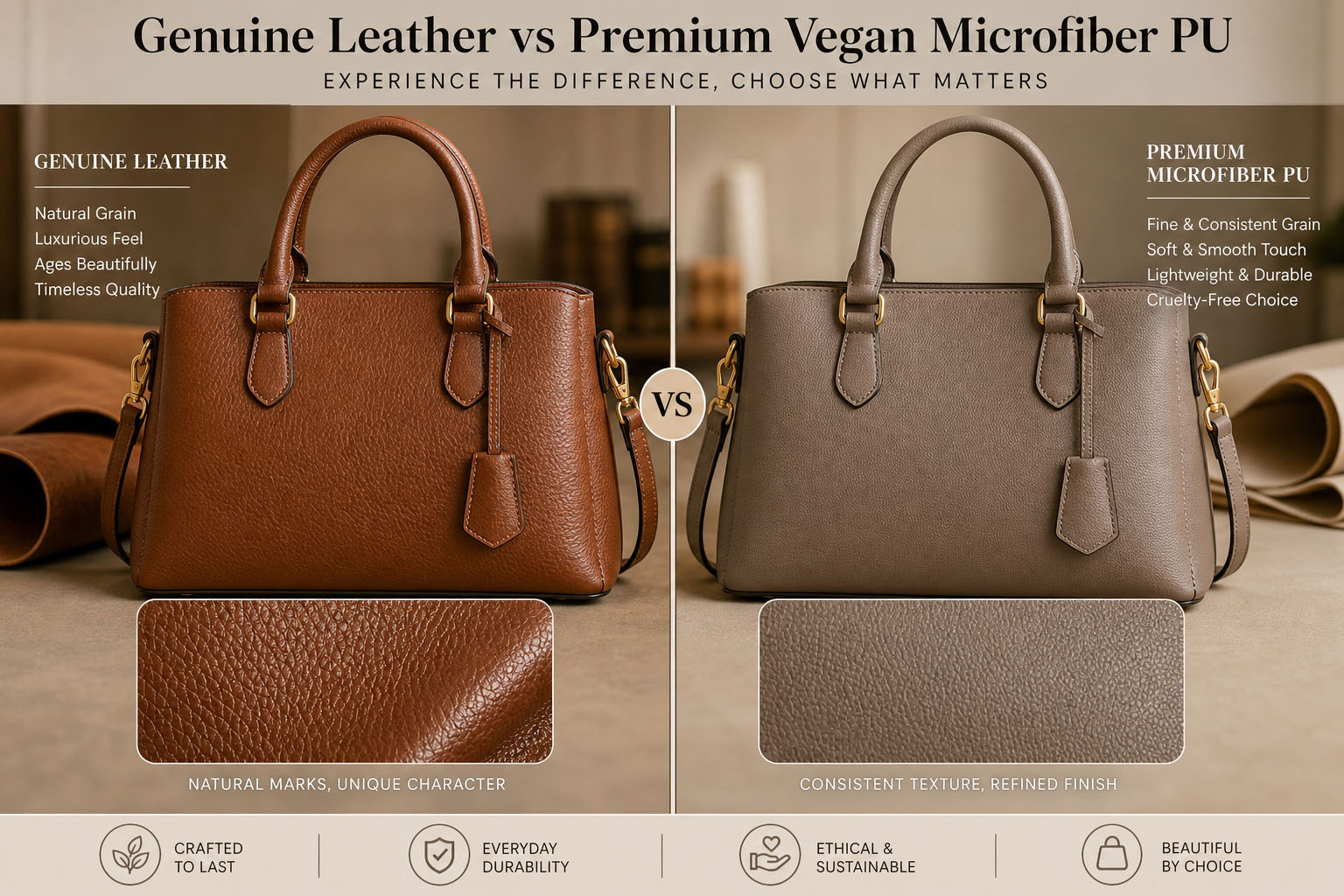
A core business question for independent website sellers is market positioning: How will vegan bags compete against classic genuine‑leather offerings? There are meaningful gaps across durability, unit pricing and consumer acceptance that directly shape your product assortment and marketing copy.
Durability
High‑grade Chinese‑made microfiber PU vegan leather delivers solid service life comparable to entry‑level genuine leather. Premium microfiber PU resists scratches, abrasion and fading reasonably well for daily accessory use. Lower‑grade regular PU, by contrast, can suffer peeling, cracking and surface wear after months of heavy use — quality variance is substantial between different Chinese material suppliers. This makes sample testing absolutely essential before placing large‑volume custom orders.
Genuine full‑grain leather develops patina over years of usage and can last for decades with proper care. Even top‑tier vegan materials cannot replicate that long‑term patina aging effect. Plant‑based innovative materials such as Piñatex or cactus leather sit in the middle ground: aesthetically distinctive, but performance varies heavily by material formulation. As part of your pre‑order quality process, conduct real‑world wear testing of factory samples. Document performance characteristics so you can write accurate product descriptions on your independent site, avoiding over‑promising durability to buyers.
Pricing
At factory sourcing level in China, vegan microfiber PU bags generally cost less than genuine leather bags of identical design and construction. Synthetic vegan materials eliminate high costs for animal hide raw stock. Plant‑based innovative vegan fabrics (Piñatex, cactus leather) narrow this price gap; some premium plant‑sourced materials can approach or even match entry‑level genuine‑leather unit costs.
On US direct‑to‑consumer independent websites, you have pricing flexibility. Market research confirms over 60% of Gen Z and Millennial shoppers are willing to pay premium pricing for cruelty‑free fashion goods. You are not forced to position vegan bags purely as cheap budget alternatives. Many successful DTC sellers price high‑quality vegan collections at mid‑range price points, marketing ethical and sustainability benefits to justify price levels.
Consumer Acceptance
Consumer acceptance is split into two segments. One group of shoppers actively chooses vegan bags specifically for animal‑welfare and sustainability priorities; for these customers, vegan materials are a positive selling feature, and they do not expect exact leather‑like patina performance. A second segment of general accessory buyers still associate genuine leather with luxury status. For these shoppers, vegan bags will not replace leather purchases entirely.
For your independent website business, the practical strategy is not to treat vegan lines as a full leather replacement, but as a complementary product segment. Build dedicated vegan collections targeted at ethically‑focused shoppers, with clear, honest product descriptions that explain material properties. Social‑media content on TikTok and Instagram can highlight ethical value propositions to connect with receptive audiences.
4. MOQ and Production Lead‑Time for Custom Vegan Bags Sourced in China
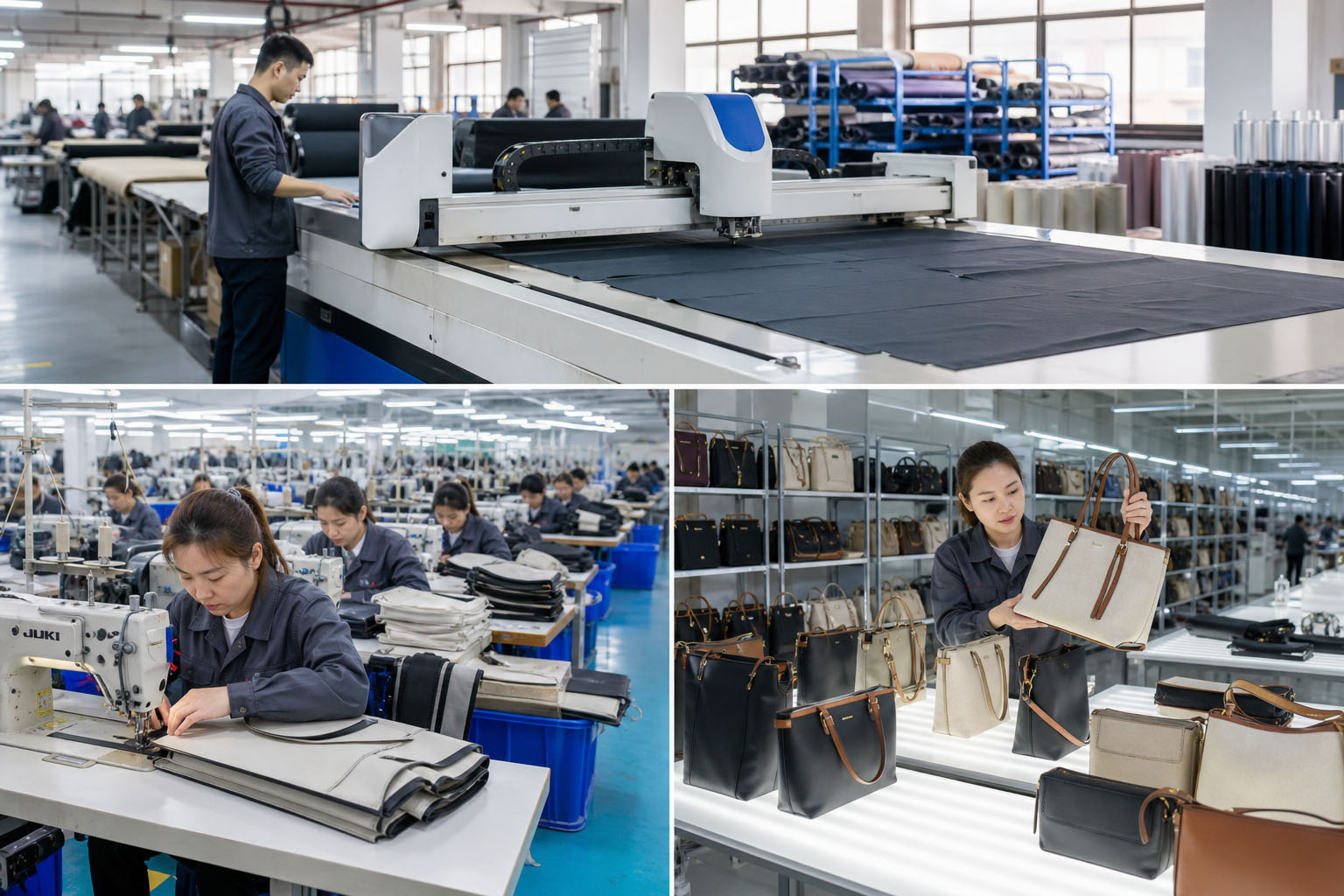
For US independent‑site sellers, minimum‑order quantity and lead time directly control inventory risk and cash flow. When ordering custom‑designed vegan bags from Chinese manufacturers, typical industry benchmarks are 500 units as baseline MOQ for custom‑made styles, with production lead‑times of 20‑30 working days post sample confirmation. There are important caveats to these numbers.
This 500‑unit MOQ benchmark applies to custom‑designed bags: styles with your own shape, hardware branding, custom colors, and custom fabric selection. If you select existing off‑the‑shell factory vegan bag designs with only minor logo‑embellishment customization, many Chinese factories will accept lower MOQs, sometimes down to 100‑200 pieces. Keep in mind innovative plant‑based materials (Piñatex, mycelium leather) usually carry higher MOQ thresholds, because raw‑material stock is less widely available.
The 20‑30‑day production lead time counts from sample approval and deposit receipt, and only covers factory manufacturing work. This timeline excludes material procurement time, sample development cycles, and international ocean or air shipping transit time to the United States. If your selected vegan raw material is not in‑stock locally at the factory, material sourcing can add multiple extra weeks to your overall project timeline.
Sourcing best practices for US buyers:
1. Complete sample validation first. Confirm hand‑feel, color fastness, hardware quality and vegan‑material compliance before approving mass‑production.
2. Explicitly ask factories whether their quoted lead time includes raw‑material ordering for your selected vegan fabric.
3. Build extra buffer time into your overall project schedule for overseas shipping to your US warehouse.
Practical Communication Playbook When Negotiating With Chinese Bag Factories
You can use clear, commercially‑oriented wording that Chinese export‑sales teams easily understand. Frame vegan requirements as mainstream US‑market demand rather than niche‑market requests:
> “U.S. retail buyers and end consumers are increasingly requiring vegan and cruelty‑free options for bags; this is now a mainstream expectation, not niche.”
> “Please confirm which of your materials are 100% animal‑free (no leather, suede, wool, silk, animal glues) and whether you can provide documentation (material declarations, test reports, or third‑party certifications).”
> “We need scalable supply of vegan leathers (PU/microfiber, recycled polyester, plant‑based such as Piñatex / cork / cactus if available) with consistent quality and colorfastness suitable for U.S. retail.”
> “If you already supply brands that market ‘vegan’ or ‘cruelty‑free,’ please share case studies or client references.”
Ask factories to specify MOQ separately for standard microfiber PU versus premium plant‑based vegan fabrics, as these figures often differ significantly. Always request material swatch kits before locking in custom orders.
Closing Thoughts for US Independent Website Bag Sellers
Vegan and cruelty‑free bags represent a high‑growth opportunity for American sellers operating independent e‑commerce sites. Market growth statistics, major‑brand adoption, and young‑consumer buying preferences all signal sustained rising demand. China’s manufacturing hubs in Guangzhou, Yiwu and Quanzhou possess mature production capacity for animal‑free bag products.
Success depends on avoiding common sourcing pitfalls: do not trust unsubstantiated “vegan” marketing labels alone. Verify material composition, collect supporting documentation or third‑party certifications, test physical samples for durability, and manage realistic expectations for material performance compared to genuine leather. Understand MOQ and lead‑time variations between synthetic microfiber PU and newer plant‑based leather alternatives.
By combining US‑market consumer insight with rigorous China‑sourcing due diligence, you can build profitable, trustworthy vegan bag collections that resonate with your website’s American audience, while mitigating brand and compliance risks for your cross‑border e‑commerce business.
Post time: Aug-15-2026