
Sustainable Bag Sourcing from China: A Comprehensive Guide for Small‑Business Online Sellers
How to Choose Eco‑Friendly Materials, Verify Certifications, Manage Costs, Request Samples, and Market Your Green Story
Introduction
Running a small‑business that sells bags online gives you the freedom to shape your brand story around the values your customers care about most. In today’s marketplace, sustainability is no longer a nice‑to‑have—it’s a decisive purchasing factor. If you’re looking to source bags from China, you’ll quickly discover a vast landscape of material options, certification schemes, and pricing structures that can feel overwhelming.
This guide is built on the latest industry insights, real‑world supplier practices, and practical checklists that will help you:
1. Identify the most eco‑friendly bag materials and understand their environmental footprint.
2. Verify supplier sustainability claims with credible certifications and lab testing.
3. Navigate pricing and MOQ (minimum order quantity) realities for small orders.
4. Request and evaluate material samples before committing to a bulk order.
5. Market and label sustainability features in a way that resonates with your online audience.
By the end, you’ll have a clear roadmap for building a responsible, cost‑effective supply chain—and a ready‑to‑use supplier checklist you can hand directly to Chinese factories.
1. Understanding Common Bag Materials and Their Eco‑Credentials
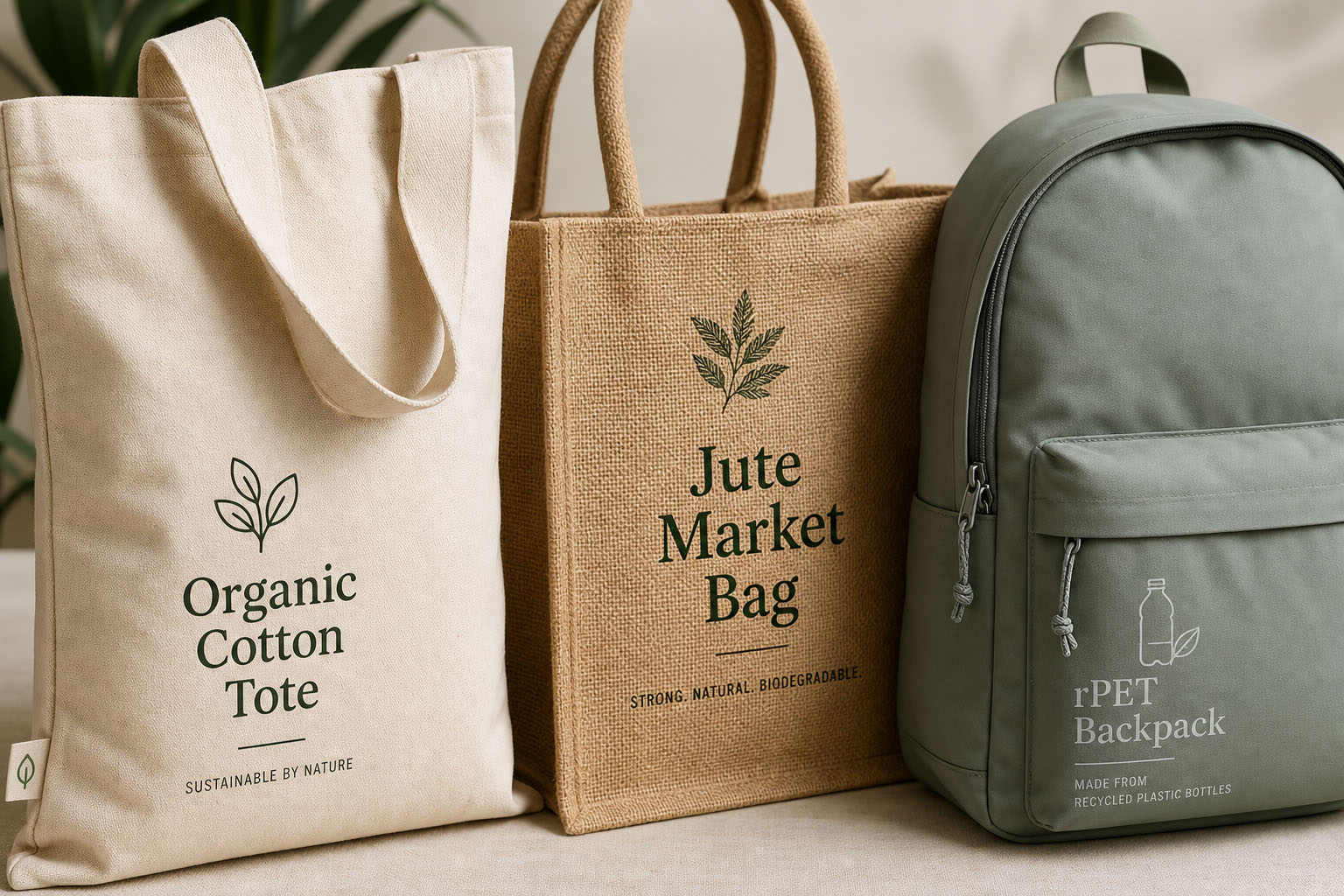
When sourcing bags from Chinese manufacturers, the material palette is broader than you might expect. Below is a detailed breakdown of the most prevalent options, their sustainability strengths, and the trade‑offs you should consider.
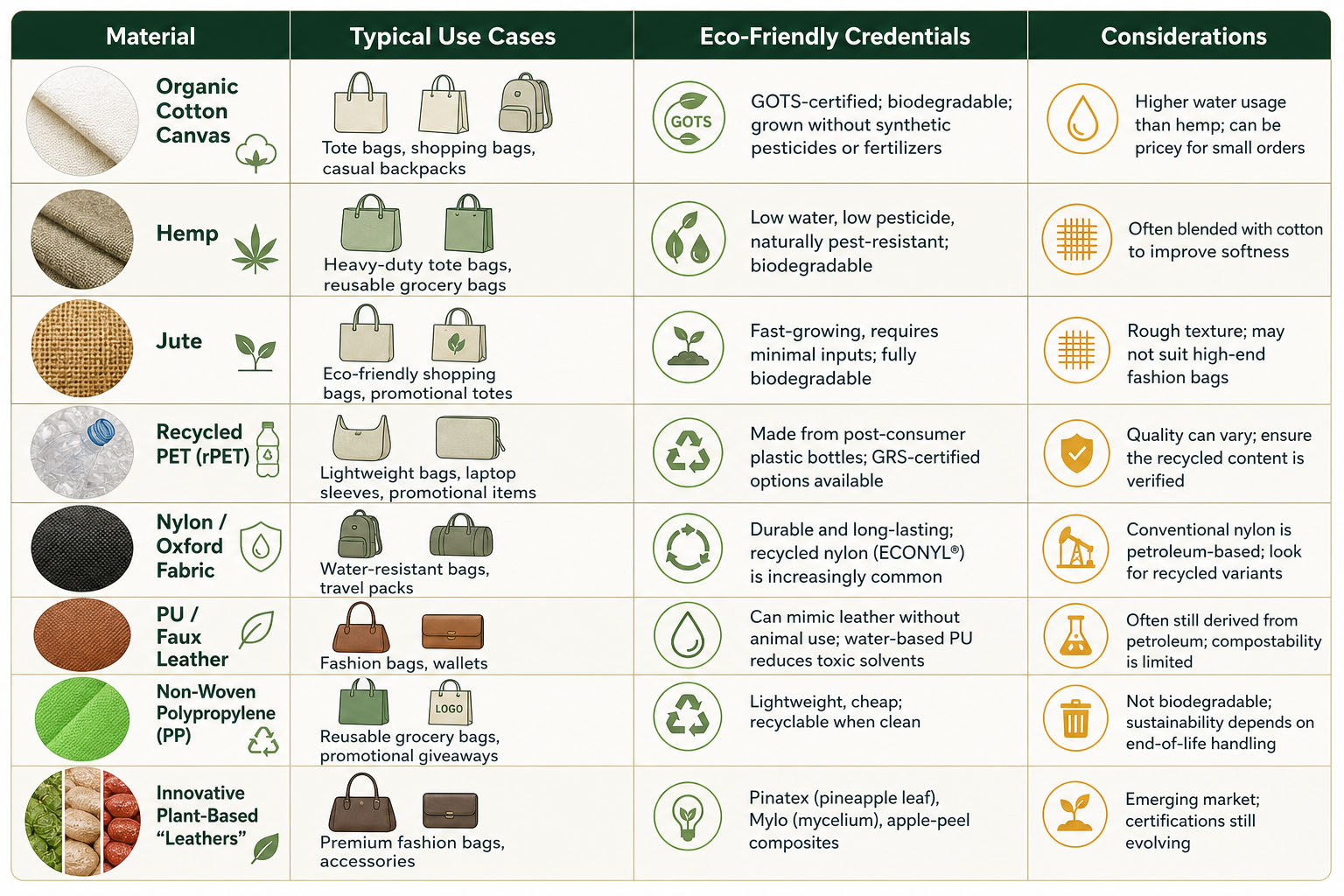
Why These Materials Matter
Biodegradability: Natural fibers (cotton, hemp, jute) break down more quickly than synthetic polymers, reducing long‑term waste.
Recycled Content: rPET and recycled nylon divert plastic from landfills and oceans, turning waste into value.
Resource Efficiency: Hemp and jute require far less water and no pesticides, making them attractive for low‑impact production.
Supplier Voice: (“All the materials we use are eco‑friendly.”) — A typical claim you’ll hear from many Chinese factories. The key is to verify it with documentation, not just trust the word.
2. Certifying Eco‑Friendly Claims – What Standards Matter
A supplier’s assertion that a product is “green” is only as strong as the proof behind it. The following certifications are the industry gold‑standard for verifying sustainability in bag materials sourced from China.
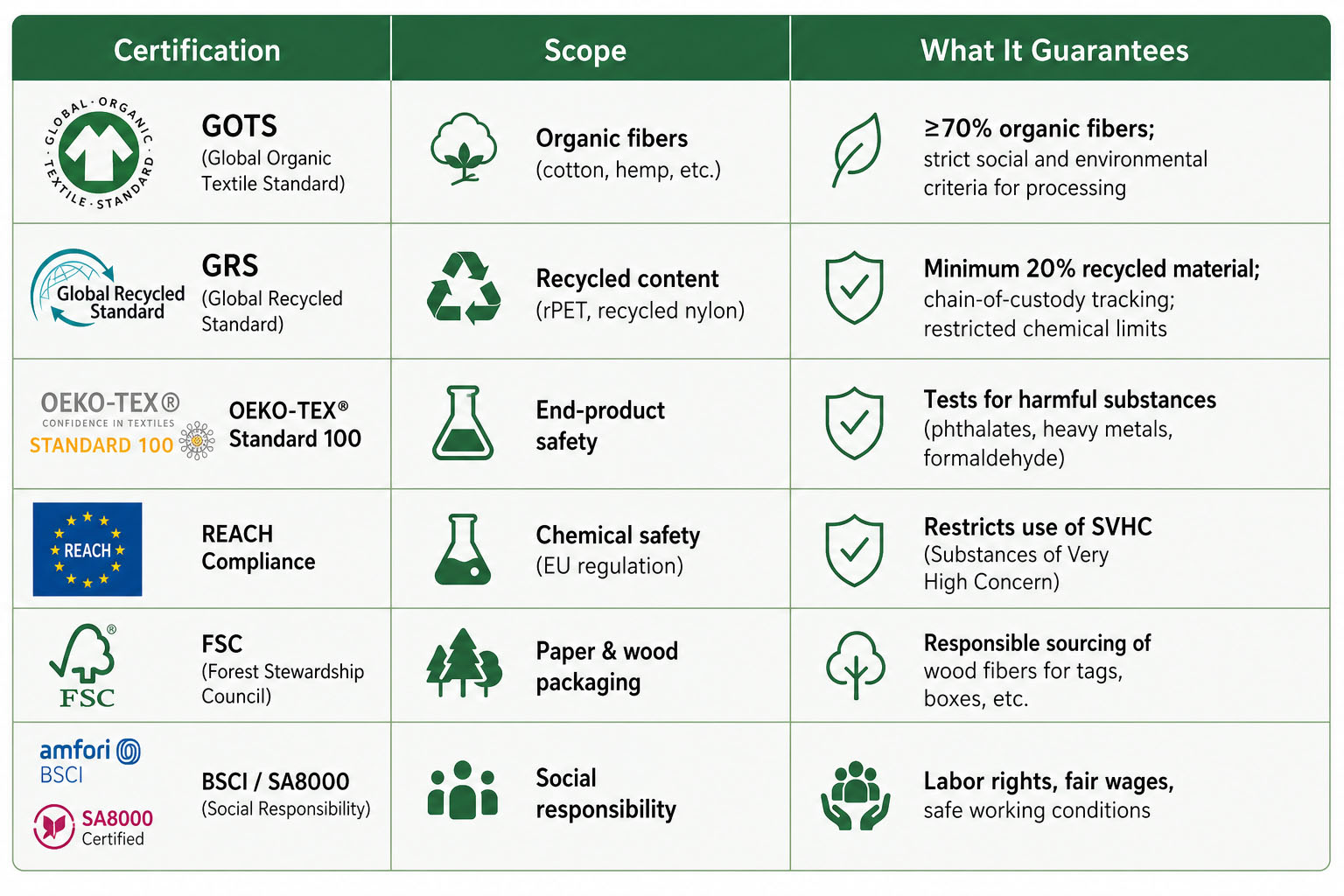
How to Use These Certifications
1. Request copies of the certificates directly from the supplier.
2. Verify authenticity: Use the issuing body’s public database (e.g., GOTS public database) to confirm the certificate number.
3. Check validity dates and scope (e.g., whether it covers the specific product line you’re interested in).
Lab Testing Tip: For an extra layer of assurance, you can ask the supplier to provide a third‑party lab report (e.g., ASTM D5489 for fiber composition, or EN 71 for harmful substances). This is especially useful for rPET or plant‑based “leather” where composition can vary.
3. Pricing and MOQ Realities for Small Orders
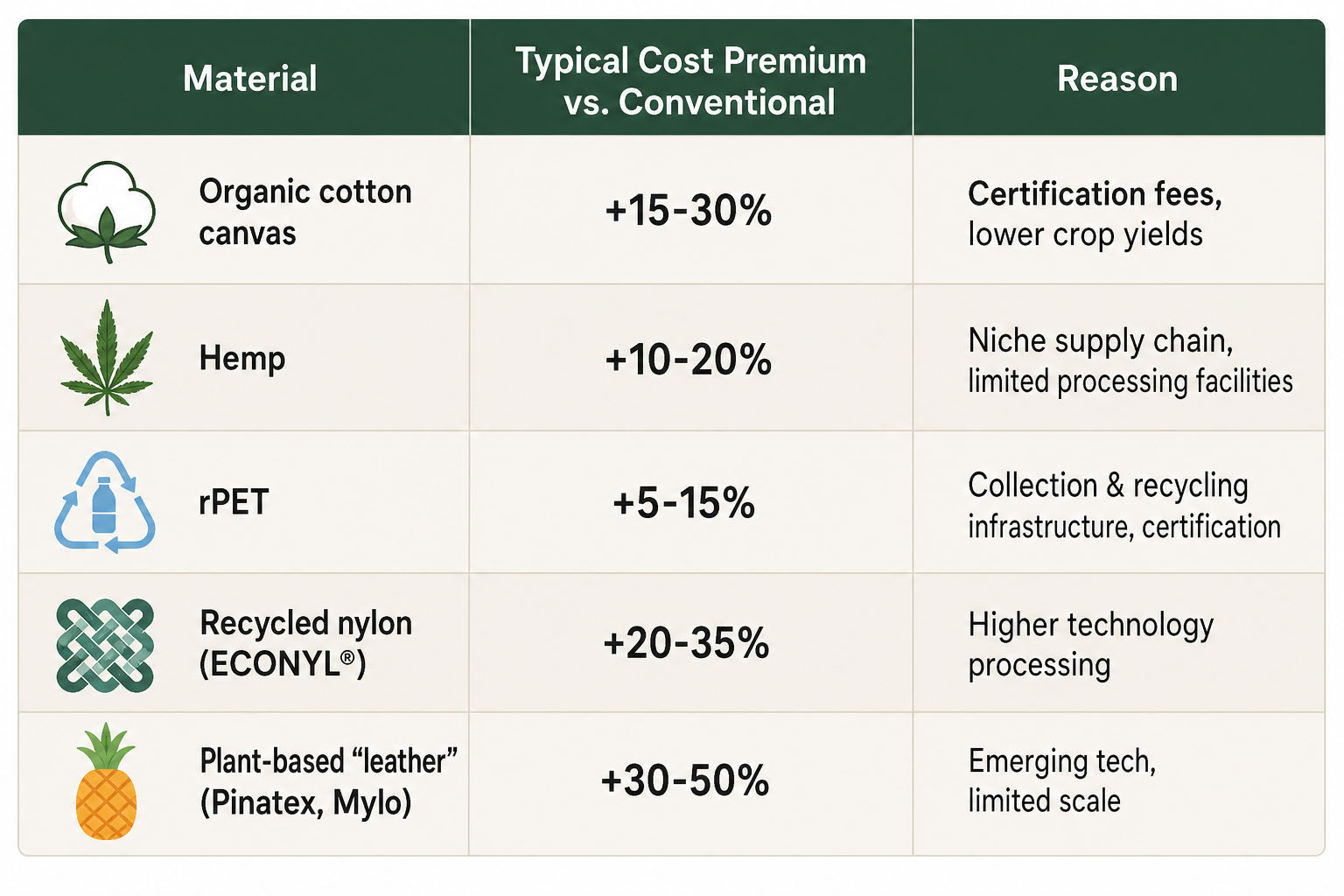
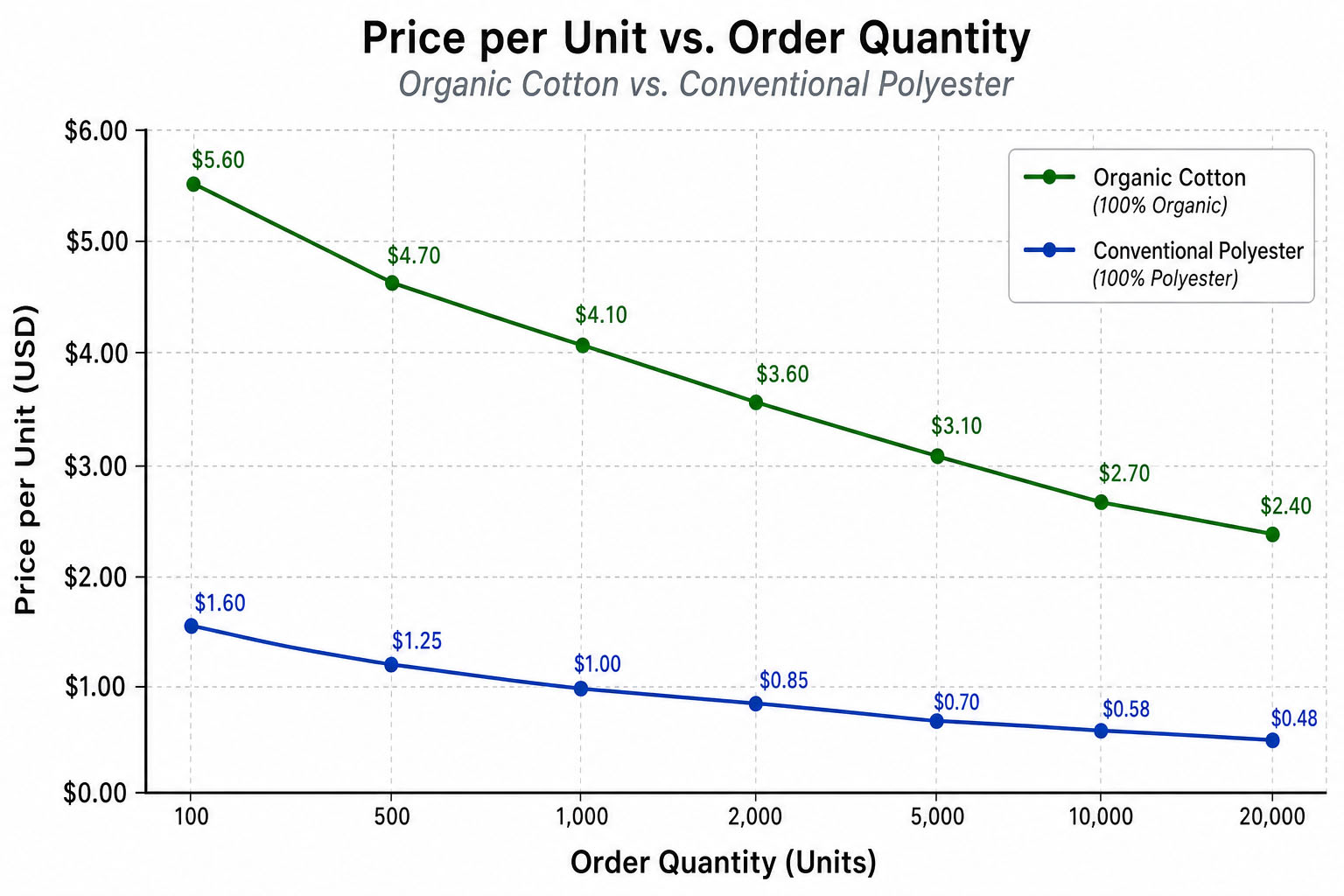
One of the biggest concerns for small‑business owners is cost vs. sustainability. Here’s what you need to know about how eco‑friendly material choices affect pricing and how to manage minimum order quantities (MOQs).
Factors Influencing Price
MOQ Challenges
Certified fabrics often require larger runs because mills need to dedicate machines to a specific certification process.
Specialty blends (e.g., organic cotton + recycled polyester) may have higher MOQs than pure conventional polyester.
Strategies for Small Orders
1. Consolidate orders: Combine different bag styles into a single production run to meet MOQ thresholds while spreading the premium cost.
2. Negotiate “sample‑run” pricing: Many factories offer reduced MOQs for an initial “sample” order (typically 50‑200 pieces) at a slightly higher unit price.
3. Leverage “pre‑order” models: Pre‑sell a limited edition eco‑line to gauge demand before committing to a larger bulk order.
4. Seek “flex‑MOQ” suppliers: Some manufacturers now advertise “flexible MOQs” for certified sustainable lines, especially for brands that can commit to repeat orders.
Supplier Insight: “按客户需求我们提供检测报告。” (“We provide test reports according to customer needs.”) — This flexibility can be a deciding factor; a supplier willing to share lab reports and adjust MOQs demonstrates both technical competence and customer‑centric service.
4. How to Request and Evaluate Material Samples
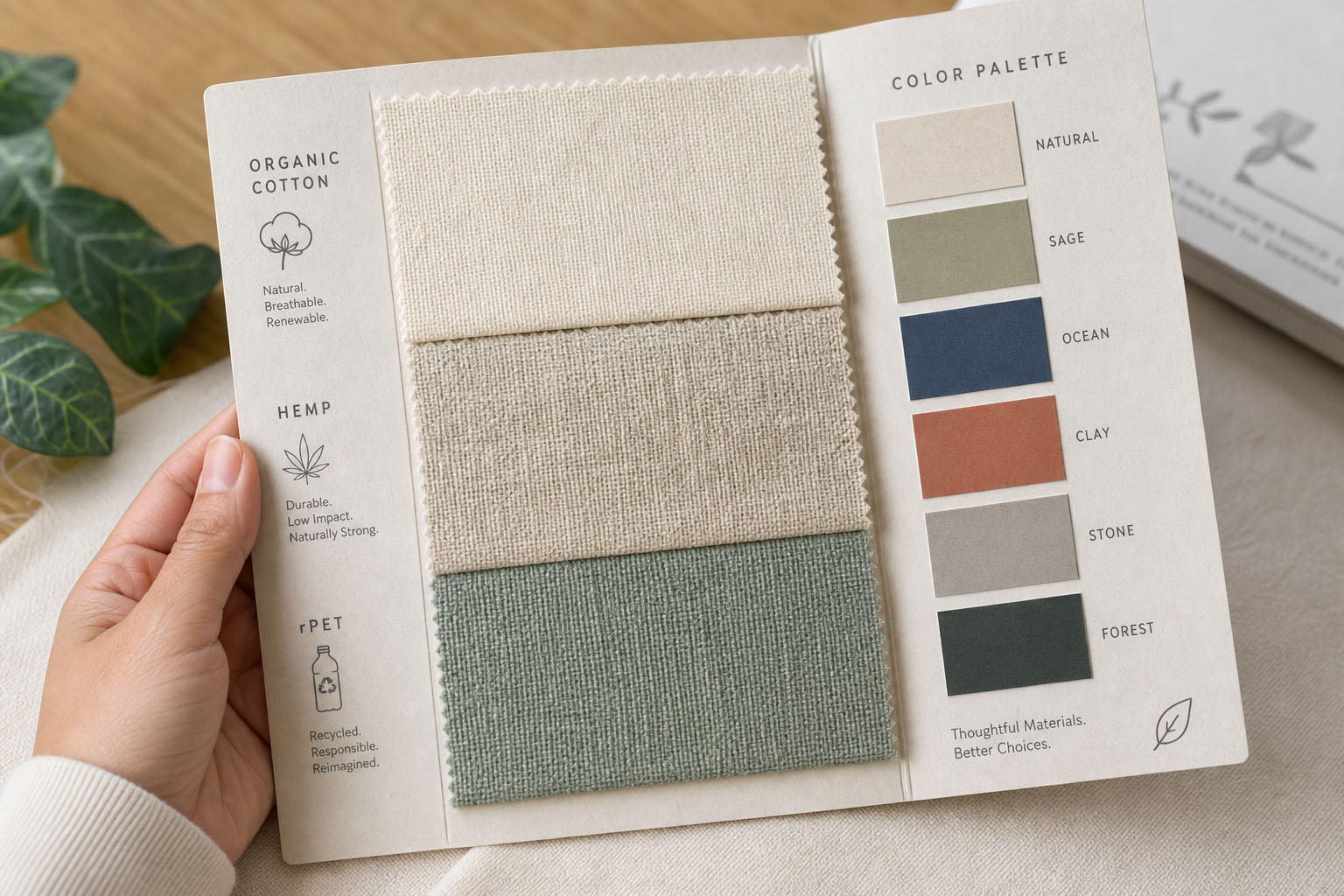
Getting your hands on material swatches before a bulk purchase is essential. Here’s a step‑by‑step workflow that ensures you make an informed decision.
Step 1: Define What You Need
Fiber composition (e.g., 100% organic cotton, 60% rPET / 40% recycled nylon).
Weight (gsm) and finish (water‑repellent, matte, glossy).
Colorfastness (e.g., wash‑fast, light‑fast).
Certifications you require (list them).
Step 2: Reach Out to Suppliers
Send a clear, concise inquiry that includes:
Desired material specs.
Quantity range (even a ballpark).
Request for material data sheets (MDS) and certificates.
Use platforms like Alibaba, Made‑In‑China, or direct outreach via LinkedIn to find verified suppliers with sustainability credentials.
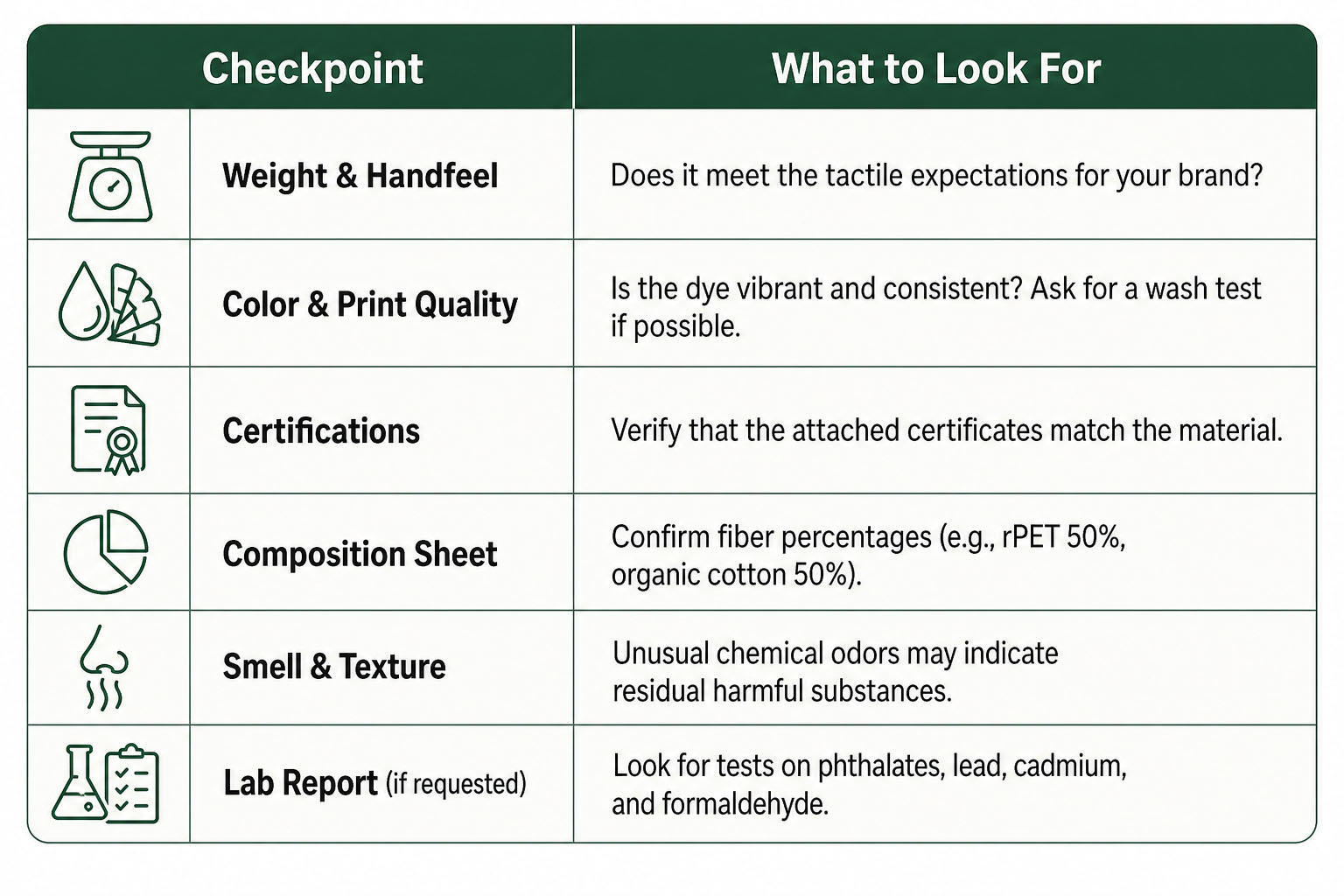
Step 3: Review the Sample Package
When you receive the swatch, check:
Step 4: Place a Small Trial Order
Trial order size: 30‑100 pieces per style.
Monitor: Production lead time, communication responsiveness, packaging sustainability, and any hidden costs (tooling, sampling fees).
5. Marketing and Labeling Sustainability Features
Once you have an eco‑friendly product, the next challenge is to communicate its green credentials clearly and compellingly to your online customers.
1. Craft a Sustainability Narrative
Origin Story: Describe the material’s source (e.g., “Our bags are made from 100% GOTS‑certified organic cotton grown on family farms in Xinjiang”).
Impact Numbers: Use concrete metrics (e.g., “Each tote saves 2 plastic bottles from entering the ocean”).
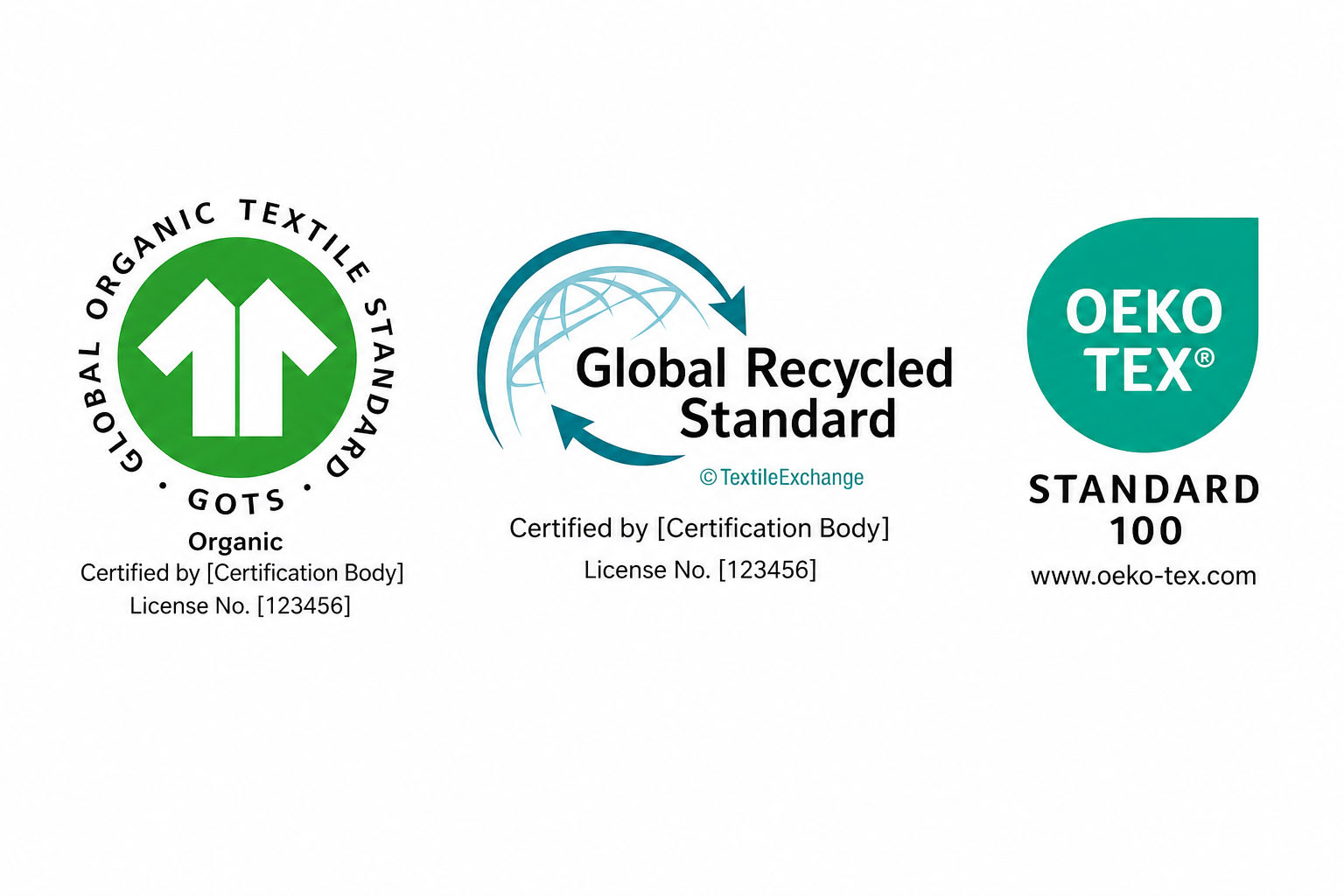
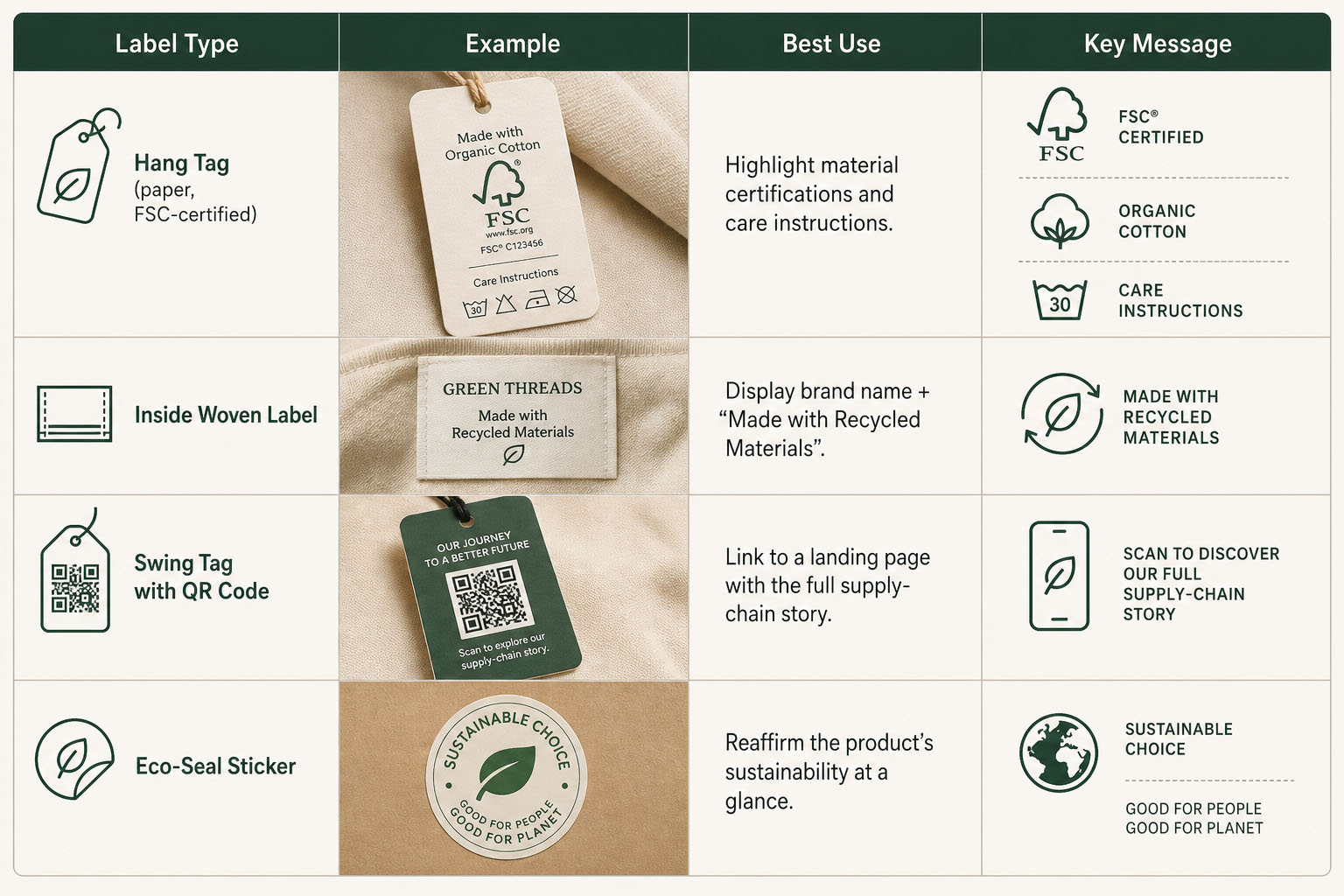
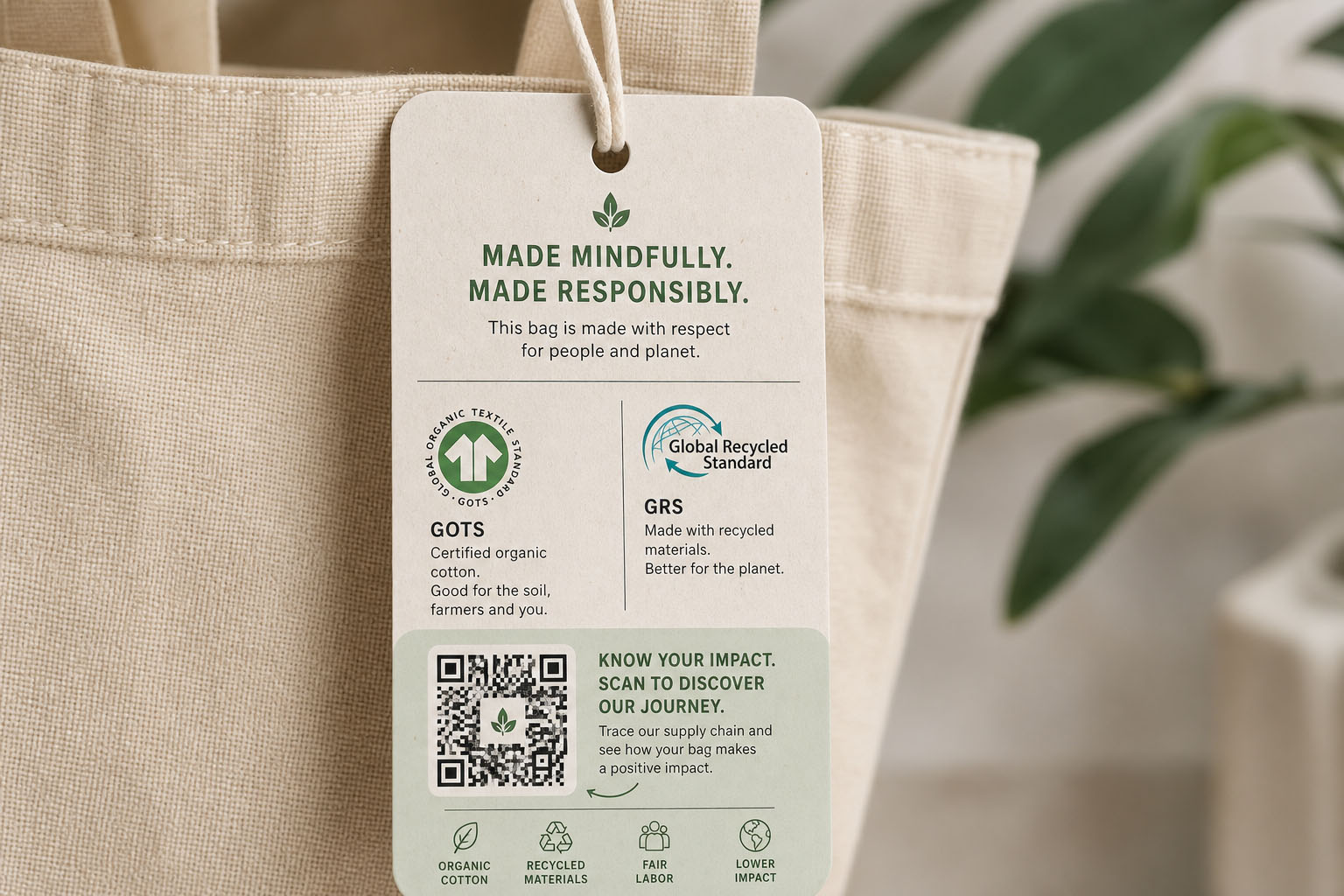
Certifications on Display: Feature logos on the product page, packaging, and hang tags.
2. Choose the Right Labels
3. Leverage Digital Storytelling
Blog Posts & Lookbooks: Share behind‑the‑scenes videos of the manufacturing process, emphasizing water‑saving dyeing techniques (e.g., water‑based dyes) and fair‑labor practices.
Social Proof: Encourage customers to post their own “green moments” using a branded hashtag; republish the best stories on your site.
Eco‑Impact Calculator: Offer an interactive widget on the product page that calculates the total CO₂ saved, plastic diverted, and water conserved based on the number of bags sold.
4. Avoid “Greenwashing”
Be Accurate: Only claim what you can prove with certificates or data.
Avoid Vague Terms: Instead of “eco‑friendly”, specify “made from 100% recycled polyester (GRS certified)”.
Disclose Limitations: If the bag is partially recycled, say so; transparency builds trust.
Supplier Quote: (“Using eco‑friendly materials is itself a contribution to global environmental protection.”) — Use this sentiment as a tagline for your brand’s mission statement.
6. Building a Sustainable Supply Chain – A Supplier Checklist
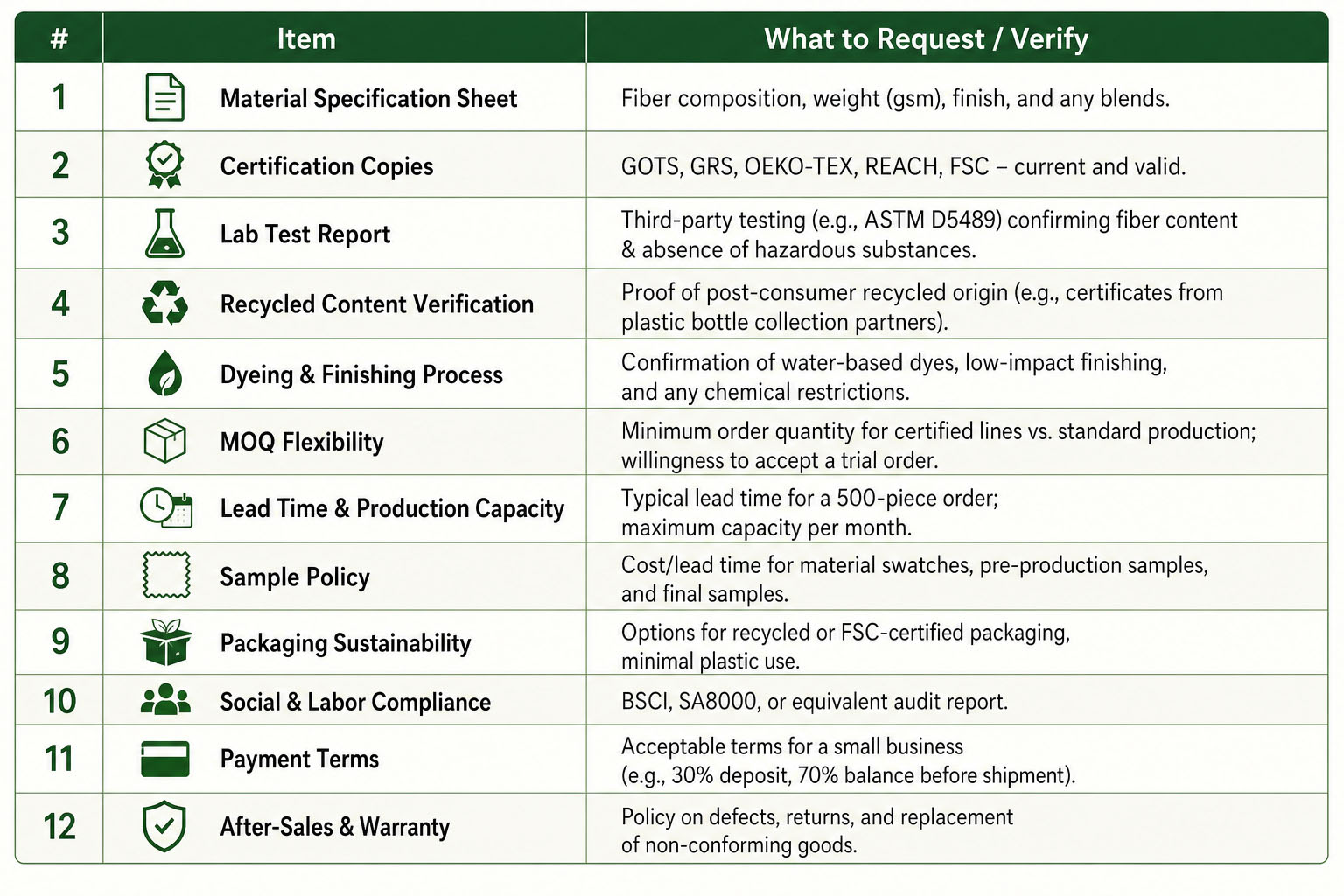
To streamline your communication with Chinese factories, use the following checklist. You can copy it into an email or print it as a PDF for supplier onboarding.
Pre‑Order Supplier Checklist
Conclusion: From Insight to Action
Sourcing sustainable bags from China is an achievable, rewarding journey for small‑business owners who invest time in material education, certification verification, and clear communication with suppliers. By leveraging the material insights, certification standards, pricing strategies, sample processes, and marketing tactics outlined in this guide, you can:
Differentiate your brand in a crowded e‑commerce market.
Build trust with eco‑conscious consumers through transparent, certified claims.
Maintain profitability by strategically balancing material costs, order quantities, and premium positioning.
Ready to take the next step? Download the Supplier Sustainability Checklist above, reach out to at least three verified manufacturers, and request material samples using the workflow provided. As you gather real‑world data, you’ll refine your sourcing playbook and grow a supply chain that’s both environmentally responsible and commercially viable.
Quick Recap (5 Key Takeaways)
1. Material Selection: Prioritize organic cotton, hemp, jute, and GRS‑certified rPET for the strongest eco‑story.
2. Certification Verification: Always request current certificates and cross‑check them against official registries.
3. Cost Management: Use trial orders, consolidate runs, and negotiate flex‑MOQ terms to keep sustainable options affordable.
4. Sample Evaluation: Obtain detailed material data sheets, lab reports, and perform tactile/visual checks before bulk commitment.
5. Marketing: Tell a precise, evidence‑based sustainability story with certifications, impact metrics, and honest labeling to avoid greenwashing.
Feel free to reach out for a personalized sourcing plan or if you have any questions about navigating specific certifications or negotiating with Chinese suppliers. Happy (sustainable) selling!
Post time: May-28-2026