
The Complete Buyer’s Guide to Logo Application Methods for Bags: Silkscreen, Heat Transfer, Sublimation, Embroidery, Debossing, and Metal Plates
Last updated: A practical sourcing handbook for U.S. bag retailers importing custom-branded bags directly from China
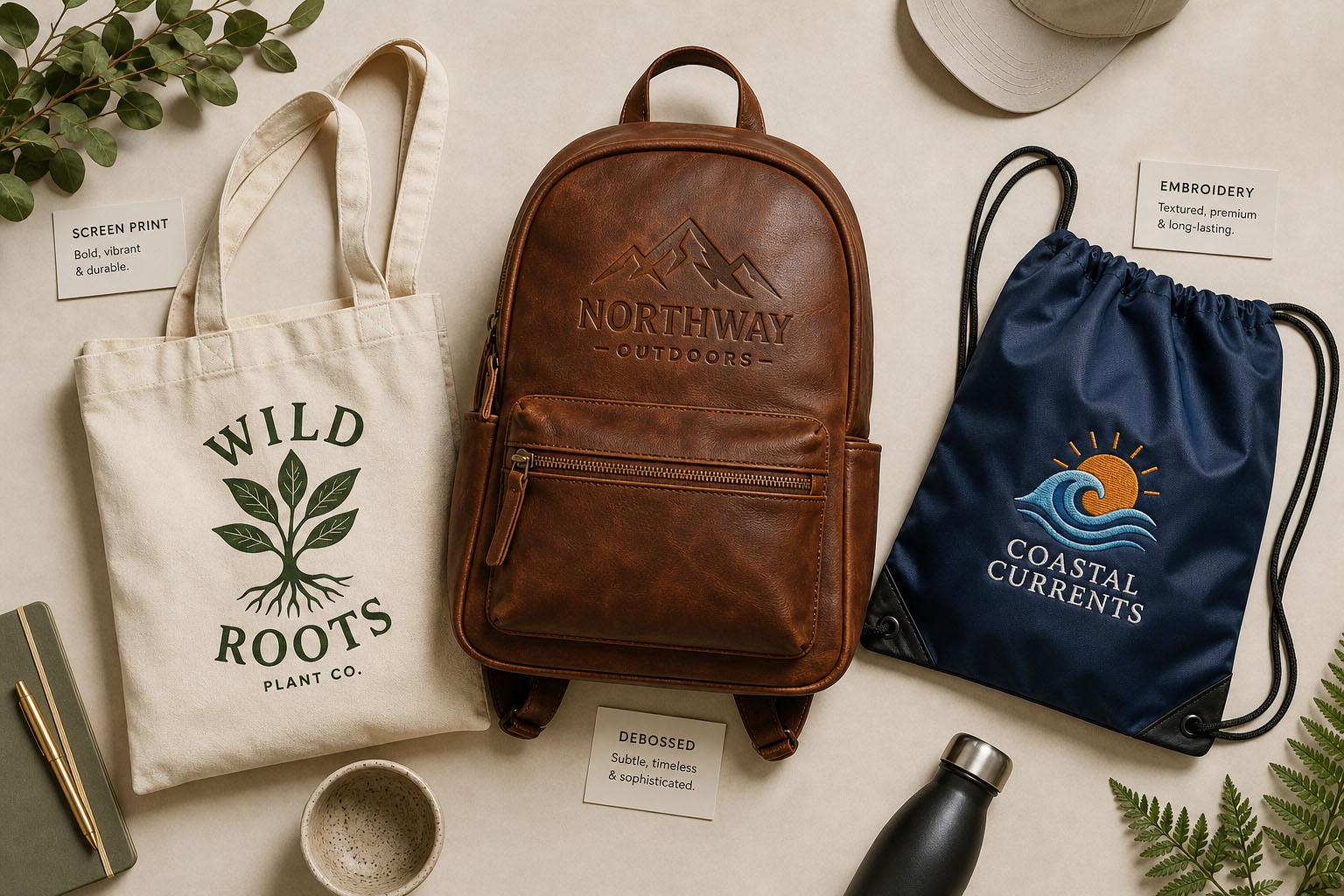
Introduction: Why Your Logo Method Matters More Than You Think
If you’re a U.S.-based bag retailer sourcing inventory from Chinese manufacturers, you’ve probably already realized that the logo on your bag is more than decoration — it’s your brand. It’s the very first thing your customers touch, photograph, and judge. A poorly executed logo can make a $25 retail bag look like a $5 product, while a premium logo application can elevate an affordable base bag into a perceived luxury item.
In our years of working with American e-commerce sellers, importers, and boutique brand owners, we’ve seen the same question surface again and again: “Which logo method should I choose, and how do I communicate that to my Chinese supplier?”
The six most common logo application methods offered by professional Chinese bag factories are:
1. Silkscreen printing (also called screen printing)
2. Heat transfer (including digital heat transfer and vinyl heat transfer)
3. Sublimation printing
4. Embroidery
5. Debossing (and its counterpart, embossing)
6. Metal plates (zinc alloy, aluminum, or stainless steel logo plates)
Each method has its own price point, durability profile, material compatibility, minimum order quantity (MOQ), and lead time. Choosing the right one — or the right combination — can directly affect your profit margin, return rate, and customer reviews.
This guide breaks down everything you need to know before placing your next bulk order, and it ends with a ready-to-send supplier inquiry message you can copy and paste.
Part 1: The Six Logo Application Methods Explained
1. Silkscreen Printing — The Workhorse of Mass-Market Bags
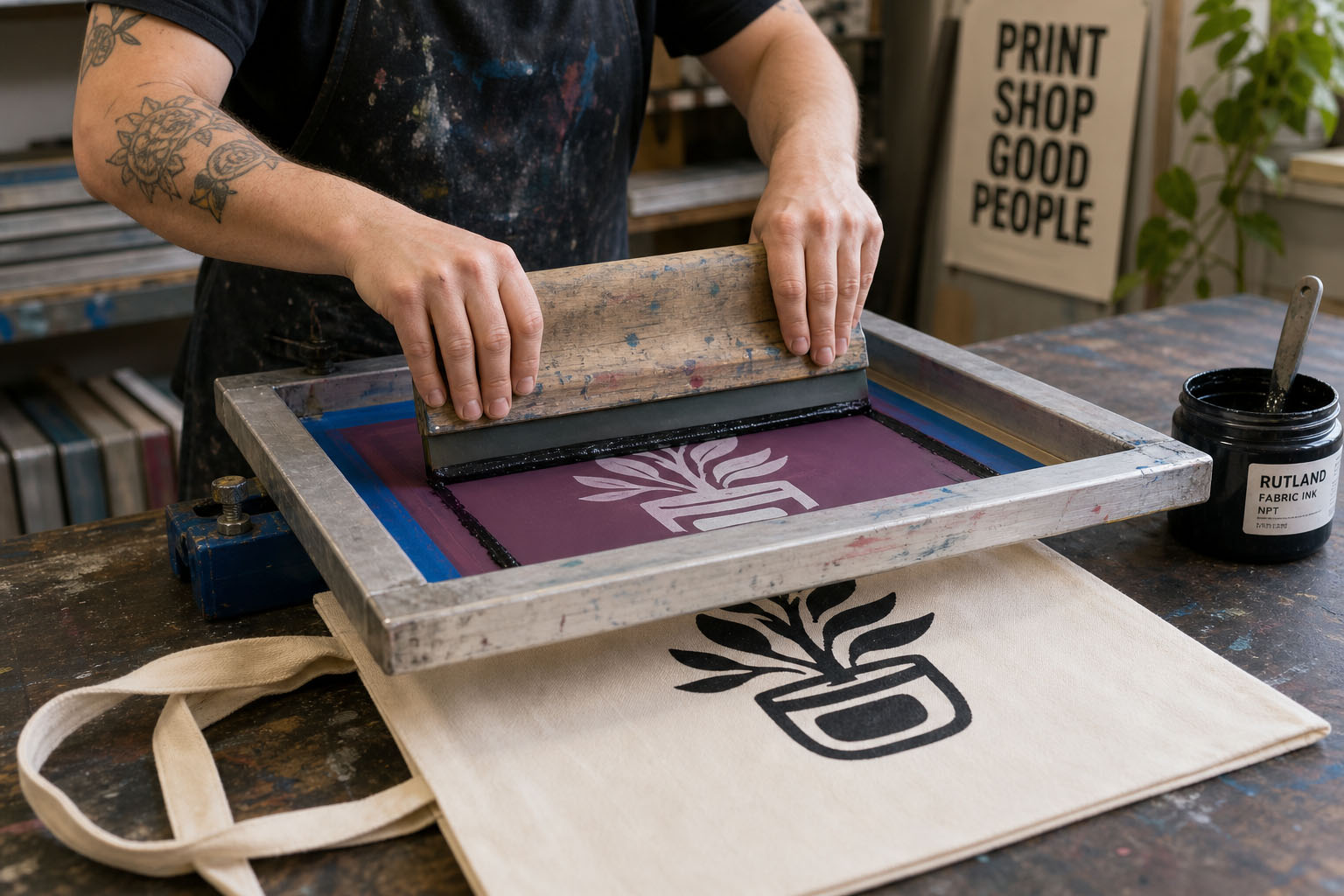
Silkscreen printing is the most widely used and most cost-effective logo method in the global bag industry. Ink is pushed through a mesh screen (one screen per color) directly onto the bag’s surface. It’s been around for decades, and Chinese factories have it dialed in.
Best for:
Cotton canvas tote bags
Polyester drawstring bags
Non-woven polypropylene shopping bags
Simple, bold logos with 1–4 solid colors
Large bulk orders (typically 500+ units)
Limitations to be aware of:
Each color requires its own screen, so a 5-color logo costs roughly 5× the setup of a 1-color logo.
Fine details, gradients, and photographic images don’t reproduce well.
On dark fabrics, a white underbase is required, adding cost.
Real buyer insight: If your logo is a clean two-color wordmark (like a brand name in one color and a small icon in another), silkscreen is almost always the smartest first choice.
2. Heat Transfer — The Detail Specialist
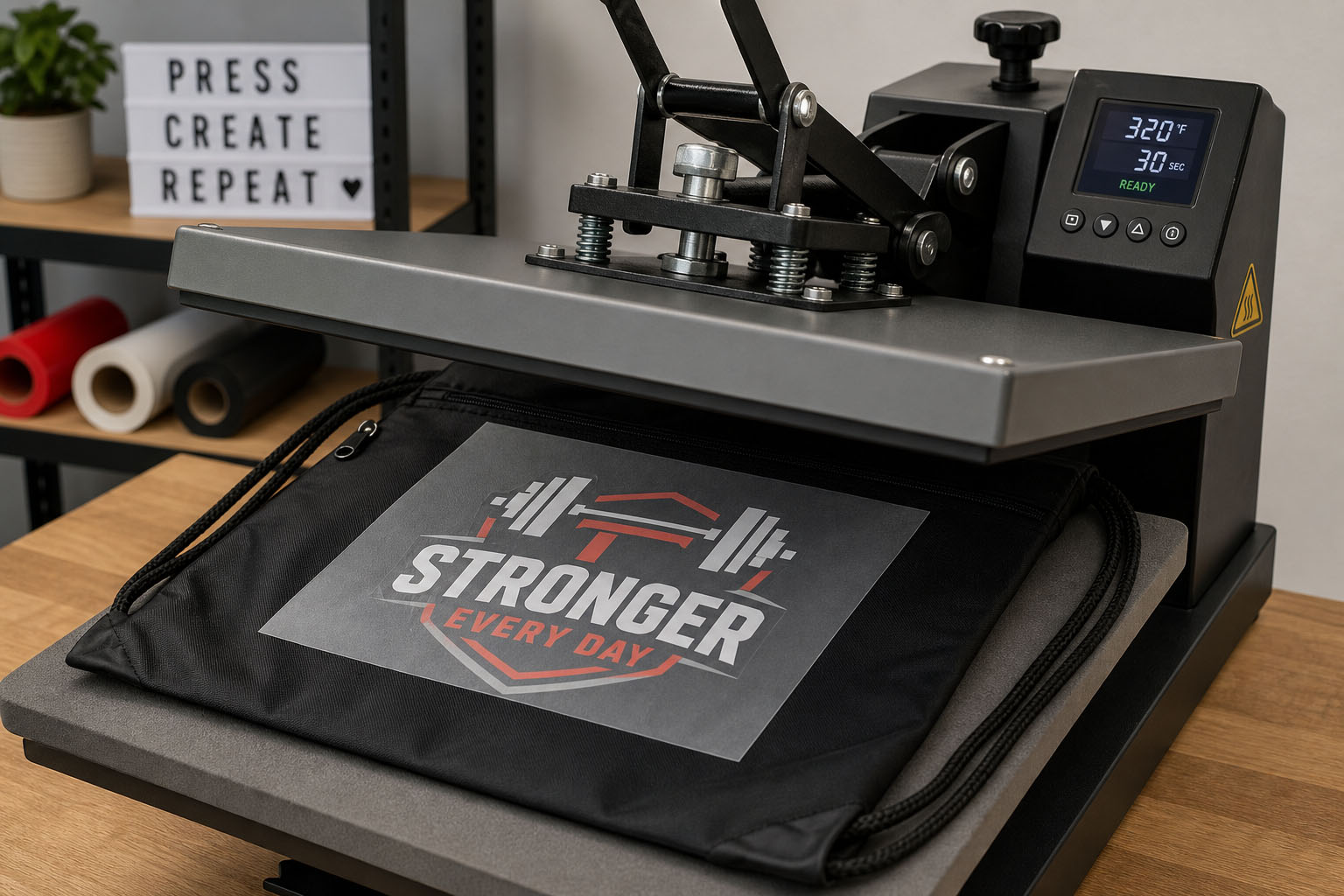
Heat transfer uses a pre-printed design (often digitally printed on special transfer paper or vinyl) that is bonded to the bag’s surface using heat and pressure. There are two main sub-types:
Digital heat transfer — great for complex, multi-color, or photographic logos
Vinyl / cut heat transfer — great for crisp, single-color text or shapes
Best for:
Polyester bags, nylon bags, and coated fabrics
Detailed logos with many colors, small text, or gradients
Mid-volume orders (typically 100–500 units)
Limitations to be aware of:
The transferred layer can peel, crack, or fade after repeated abrasion, washing, or heavy use.
Not ideal for items that will be folded sharply at the logo area.
Lower breathability on the printed area.
Real buyer insight: Heat transfer is a perfect middle-ground method — it costs more than silkscreen but far less than embroidery, and it lets you reproduce detailed logos that silkscreen simply cannot handle.
3. Sublimation Printing — The All-Over Color King
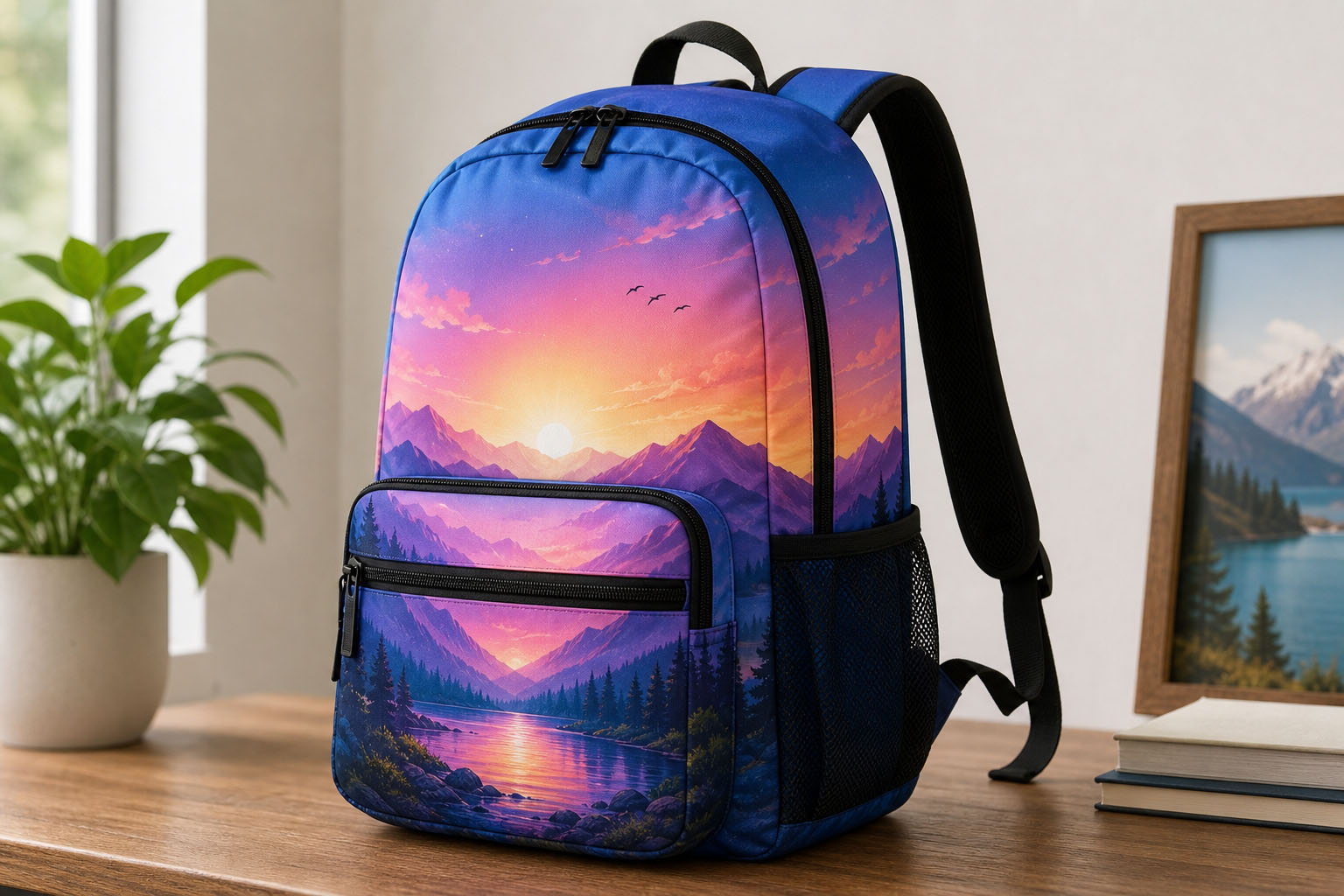
Sublimation printing uses heat to turn solid dye directly into a gas that bonds with polyester fibers (or a special poly-coating). The result is a print that becomes part of the fabric — it doesn’t sit on top like silkscreen or transfer.
Best for:
100% polyester bags and polyester-coated items
Edge-to-edge, all-over prints (the entire bag surface becomes the canvas)
Photographic, gradient, or hyper-detailed designs
Boutique-style or artist-collab bags
Limitations to be aware of:
Does not work on natural fibers like cotton, canvas, leather, or non-woven polypropylene.
White or very light base colors produce the most accurate colors.
The fabric must be polyester or have a polyester-receptive coating.
Real buyer insight: Sublimation is the only method that lets your logo (or your full design) wrap around the entire bag seamlessly. If you’re selling printed-pattern backpacks or fashion-forward gym bags, this is your method.
4. Embroidery — The Premium Texture
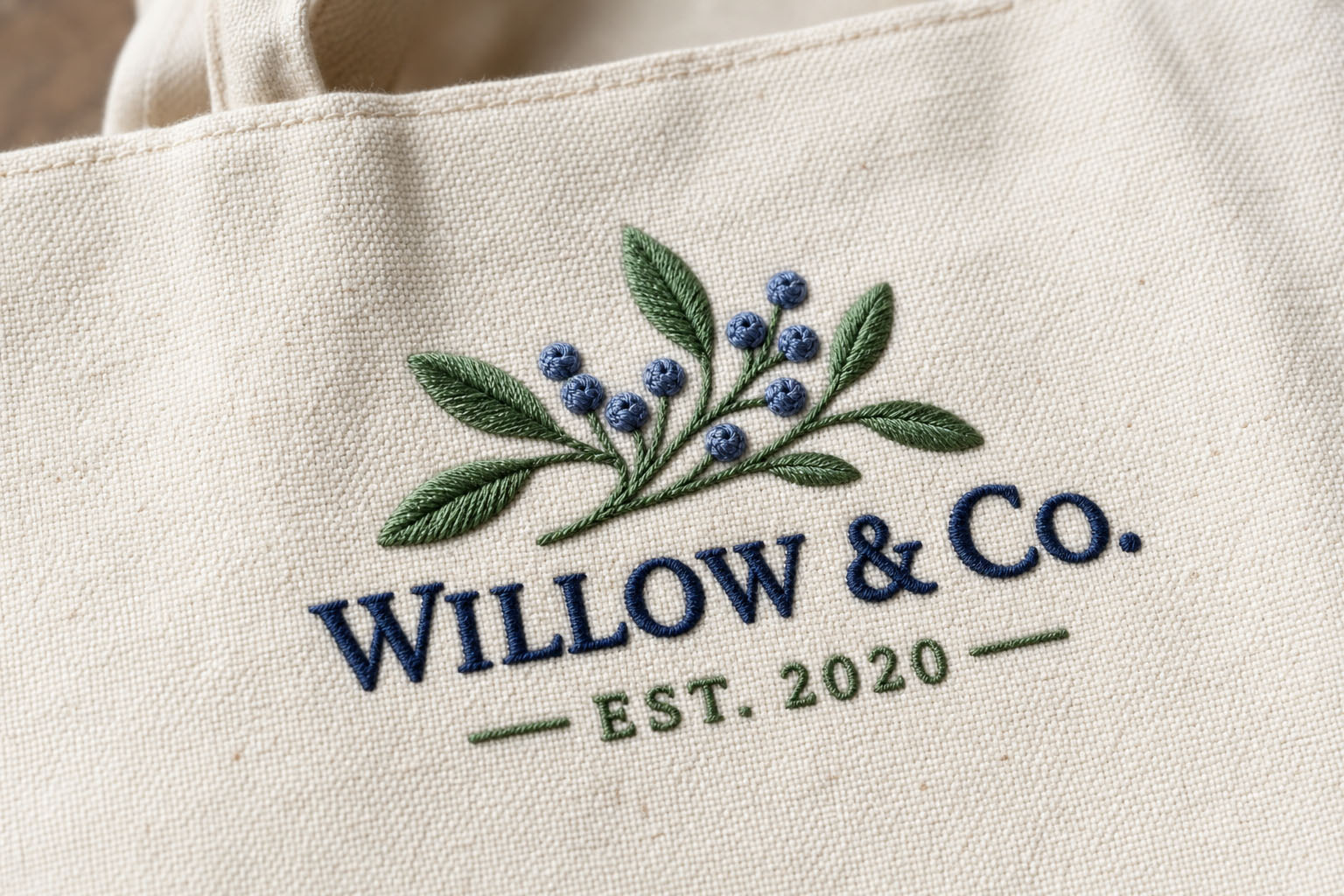
Embroidery stitches your logo directly into the fabric using thread. The result is a raised, tactile, three-dimensional logo that signals quality the moment a customer picks up the bag.
Best for:
Canvas totes, cotton bags, polyester bags, caps, and backpacks
Simple to moderately complex logos (very fine text or tiny details can be tricky)
Mid- to high-end positioning
Limitations to be aware of:
Each logo stitch is calculated and digitized — there is a one-time digitizing fee (typically $20–$60 per design).
The logo is limited by the embroidery hoop size (usually 4″×4″, 4″×7″, or larger industrial hoops).
Thread colors are matched to Pantone, but exact matches aren’t always possible.
Not ideal for very thin, stretchy, or highly textured materials.
Real buyer insight: Embroidery is the single most common “upgrade” we see U.S. sellers add when they move from promotional pricing to retail-ready positioning. It instantly changes how a bag feels in the hand.
5. Debossing & Embossing — The Leather Standard
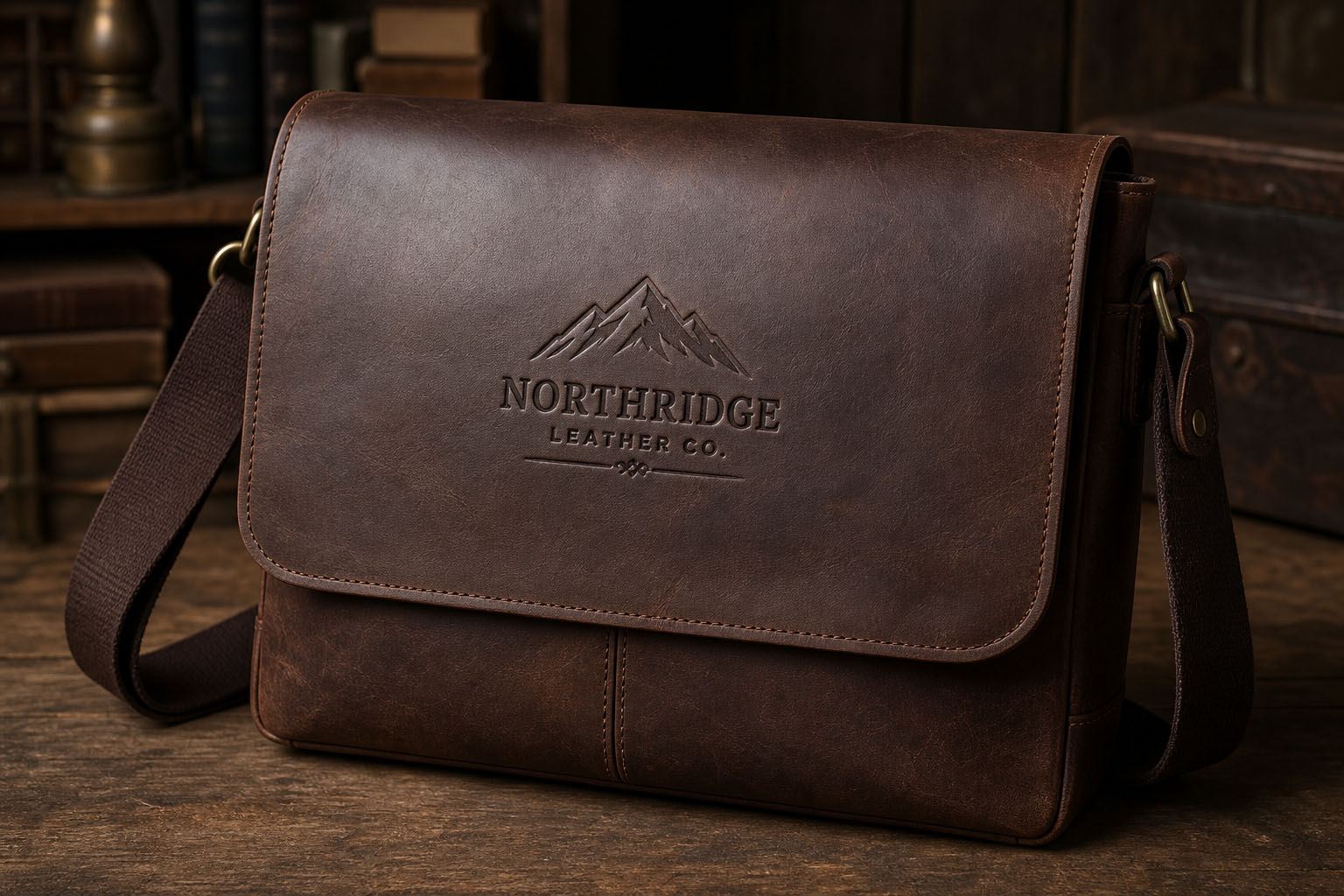
Debossing presses your logo into the material, leaving a recessed impression. Embossing raises the logo above the surface. Both are almost always used on leather, PU leather, vegan leather, or high-end synthetic leather bags.
Best for:
Genuine leather, PU leather, PVC, and microfiber leather
Premium handbags, briefcases, backpacks, and wallets
Minimalist, text-based, or iconic-shape logos
Limitations to be aware of:
Requires a custom metal mold (die), which has a one-time setup cost (typically $30–$150 depending on size and complexity).
The mold belongs to the design — if you ever change your logo, you need a new mold.
Less visible on very dark or very textured leathers without color fill (some sellers add a subtle metallic or paint fill to enhance visibility).
Real buyer insight: If your brand identity is built on understated luxury, debossing is almost always the right choice. It whispers “premium” instead of shouting it.
6. Metal Plates — The Luxury Signature
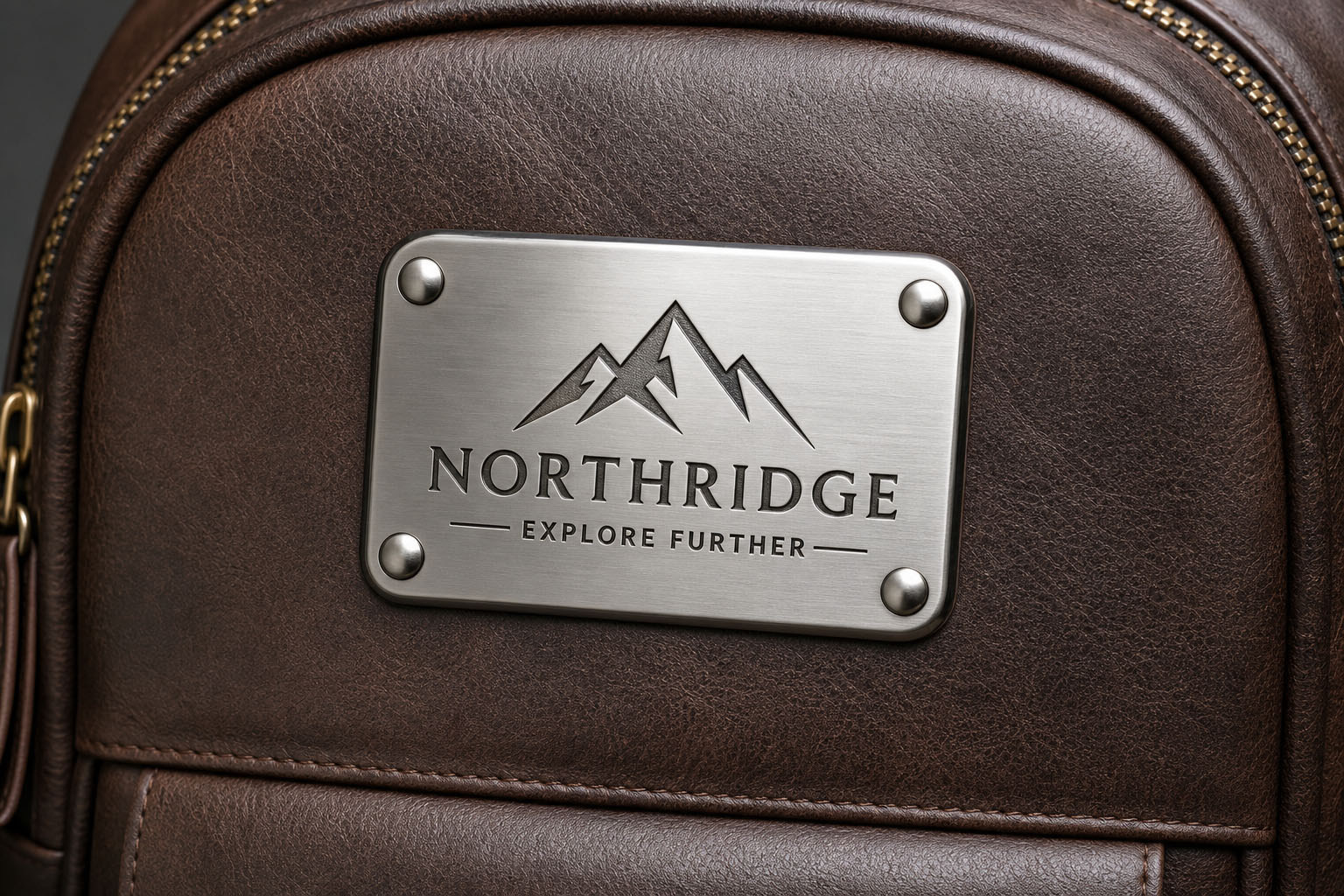
Metal plates are small, custom-cast or engraved metal tags — usually made from zinc alloy, aluminum, brass, or stainless steel — that are riveted, screwed, or stitched onto the bag. They are the classic “luxury” logo treatment.
Best for:
Premium leather handbags, backpacks, and luggage
Brands that want a visible, polished, metal identity
Products where the metal itself becomes part of the design
Limitations to be aware of:
The mold/tooling cost is the highest of all logo methods (often $100–$300+ for the custom mold).
MOQ is usually higher (commonly 300–500+ units) because the mold cost is amortized.
Longer lead time (mold production + sample confirmation + bulk production).
Small risk of plating wear on very low-quality plates, though reputable factories use durable finishes.
Real buyer insight: Metal plates are the most “aspirational” logo method. If your bags retail above $40–$50, a metal plate can dramatically increase perceived value — but the tooling cost means you need to be sure of your design before ordering.
Part 2: Price Differences Between the Main Methods
One of the most common questions we get from new importers is: “How much more does each method cost per bag?” The honest answer is: it depends on your logo size, color count, quantity, and the factory — but here is a realistic, factory-floor pricing benchmark based on typical 2024–2025 Chinese bag supplier quotes for a logo roughly 2″×2″ (5cm × 5cm) in size.
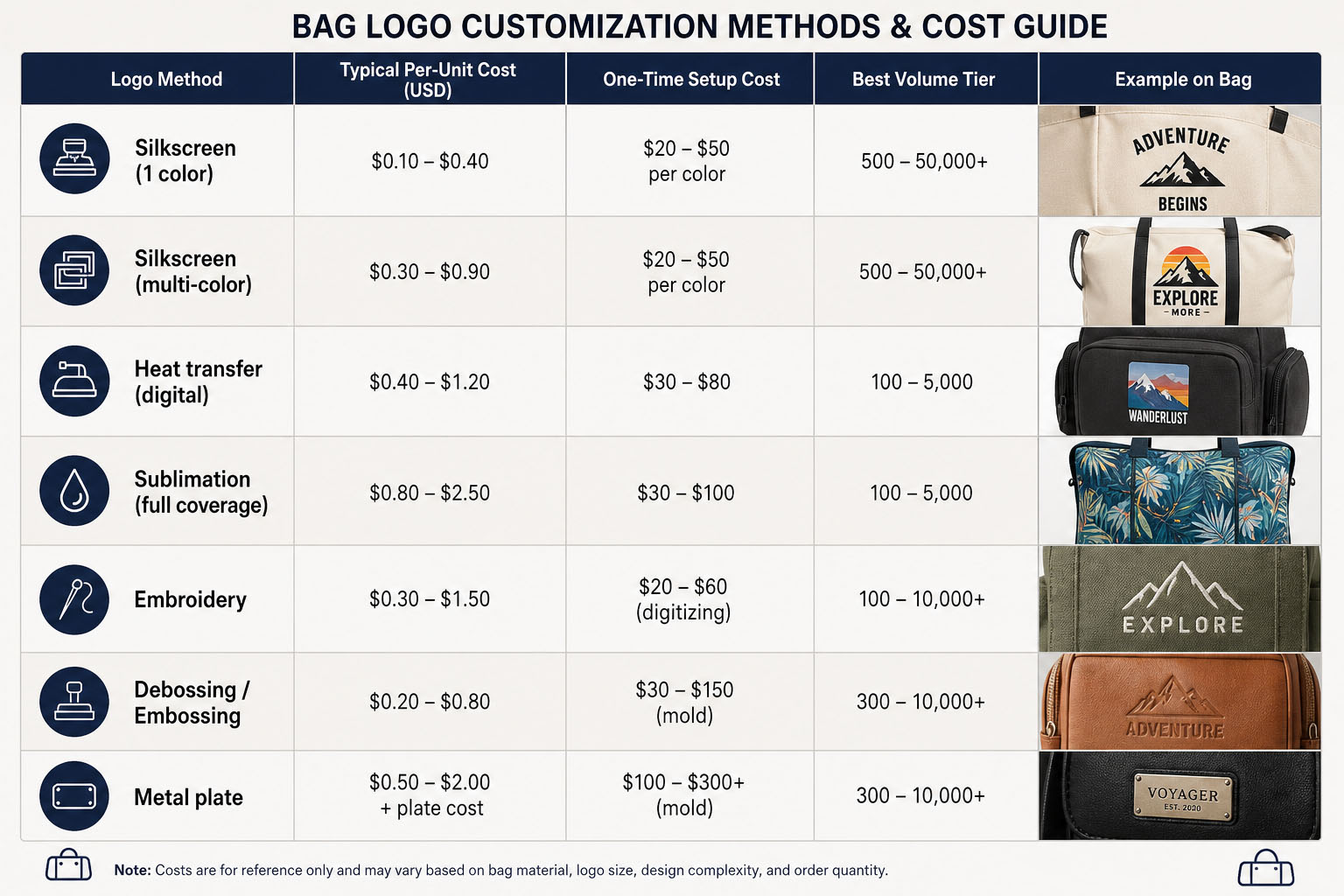
Key pricing principles every buyer should know:
Silkscreen is almost always the cheapest for large runs of simple logos.
Embroidery and debossing are mid-priced and offer the best “premium feel per dollar.”
Heat transfer and sublimation scale with logo size and color complexity — a 6-color photographic logo will cost 4–5× more than a 1-color wordmark.
Metal plates have the highest upfront cost because of the custom mold, but the per-unit cost drops sharply at higher volumes.
Setup costs are one-time and per design — if you order the same logo on three bag styles, you usually only pay setup once.
Part 3: Which Logo Method Is the Most Durable?
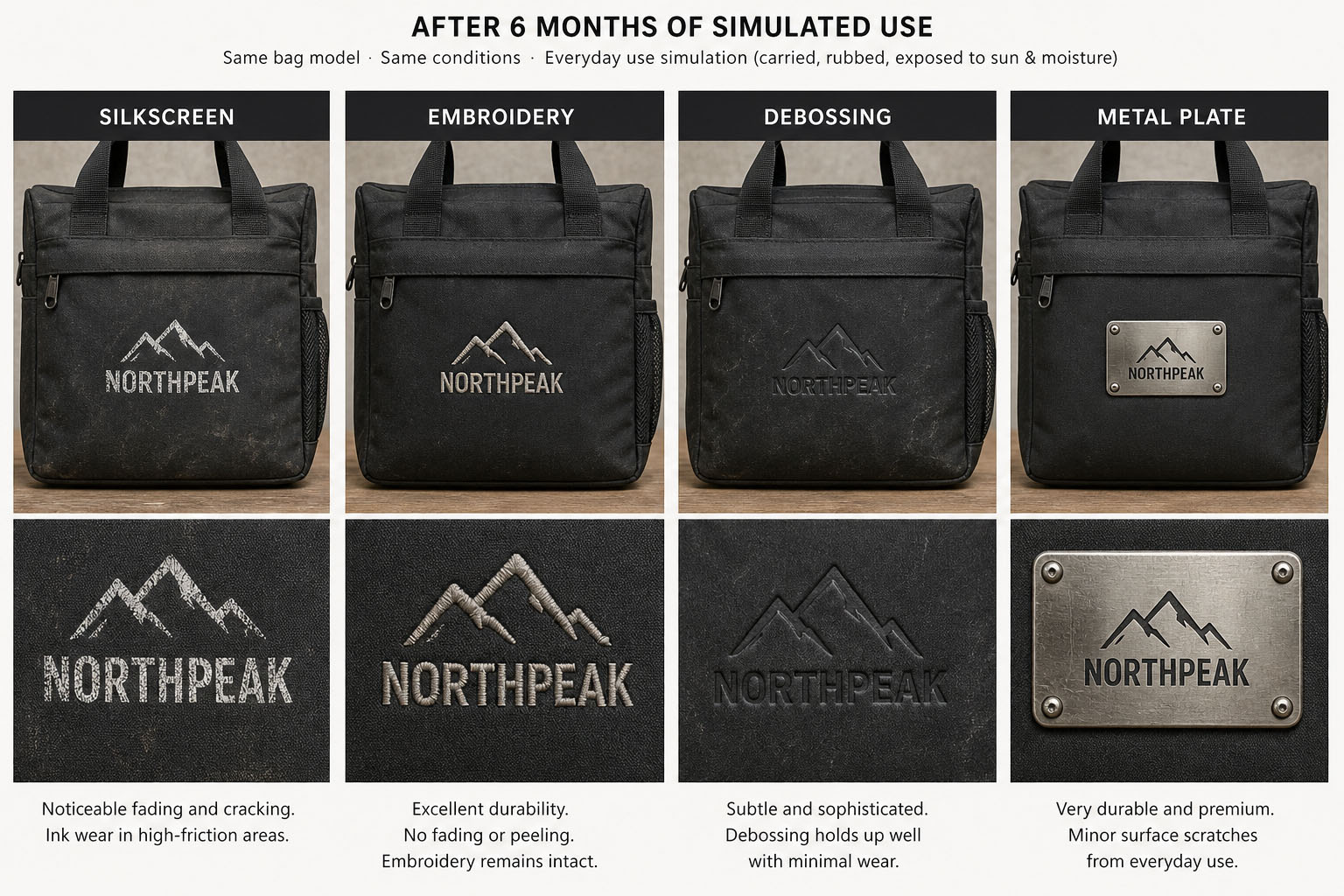
If your bags will be used outdoors, in harsh conditions, in gym environments, or for travel, durability matters as much as appearance. Here’s how the six methods rank from most to least durable:
1. Metal plate — Almost indestructible. The metal itself doesn’t fade, peel, or wear. As long as the plate is properly riveted or sewn on, it will outlast the bag. Best for: outdoor, travel, tactical, workwear bags.
2. Debossing / Embossing — The logo is physically pressed into the material. It cannot peel or wash off because it is the material. Best for: leather bags that will be used for years.
3. Embroidery — Threads are stitched into the fabric. With proper thread (polyester or rayon), embroidery easily survives hundreds of washes and years of abrasion. Best for: daily-use totes, backpacks, caps.
4. Silkscreen (with proper curing) — Modern plastisol or water-based inks, when heat-cured correctly, can last for years on bags that aren’t machine-washed frequently. Best for: promotional totes, retail bags, light everyday use.
5. Heat transfer — Good durability for the first 6–18 months, but the bonded layer can eventually crack, peel at the edges, or fade with heavy use or hot washing. Best for: fashion bags, gym bags used indoors.
6. Sublimation — Because the dye becomes part of the polyester fiber, sublimation is technically permanent on polyester — but if the fabric itself wears through, the print goes with it. Best for: fashion bags, light-use printed bags.
Pro tip for harsh environments: If you sell outdoor, work, or tactical bags, avoid heat transfer on high-touch areas. Choose metal plates, debossing on leather-reinforced patches, or high-density embroidery instead.
Part 4: How to Send Your Logo File to a Chinese Supplier
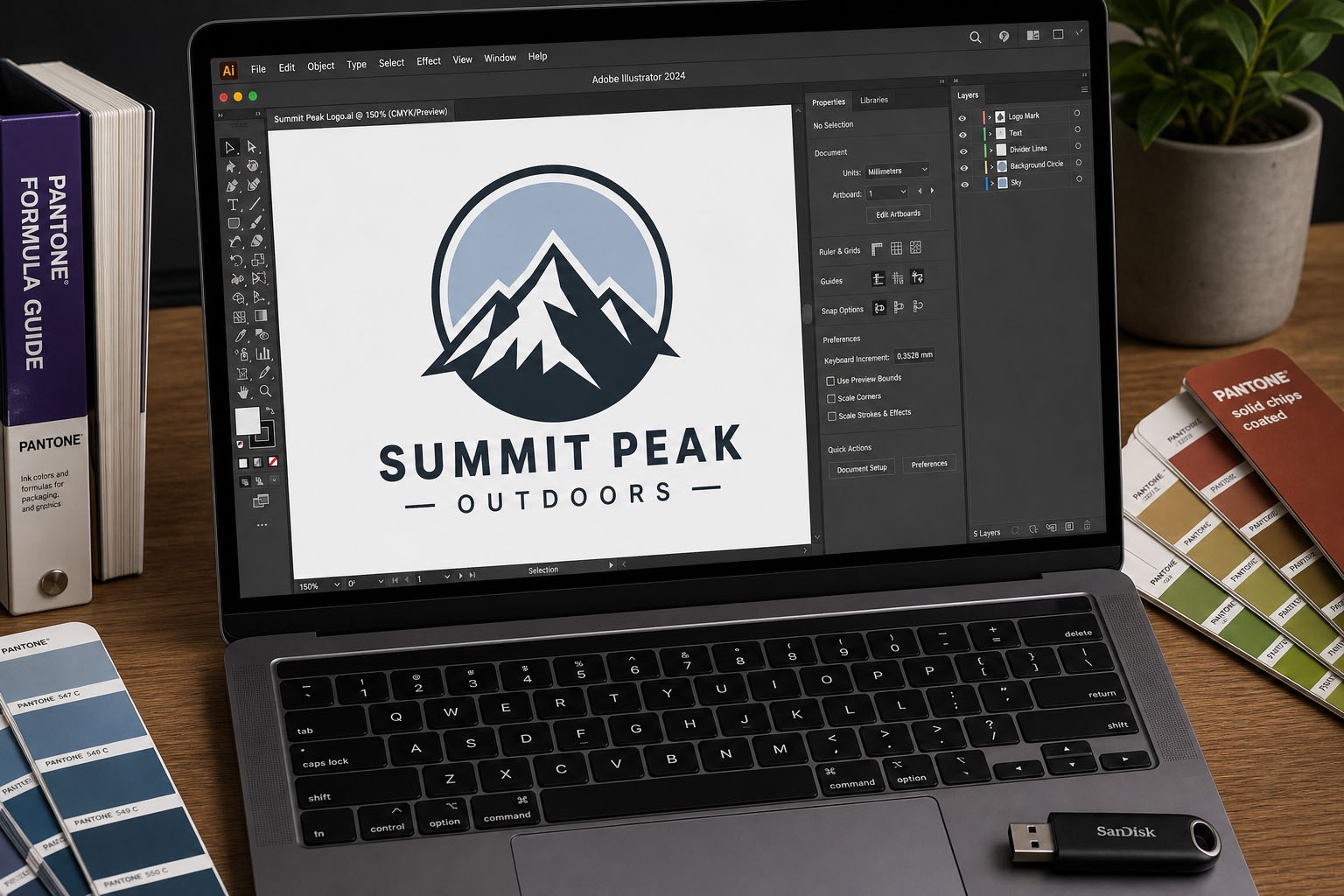
One of the most common friction points in China sourcing is the logo file format. Different methods require different file types. Here’s what to send for each method:
Universal “Always Send” File
Vector file in AI, EPS, or PDF format — This is the master file. Every Chinese factory will ask for it. If you only have a PNG or JPG, vectorize it in Adobe Illustrator (or hire a freelancer on Fiverr to do it for $5–$15) before sending.
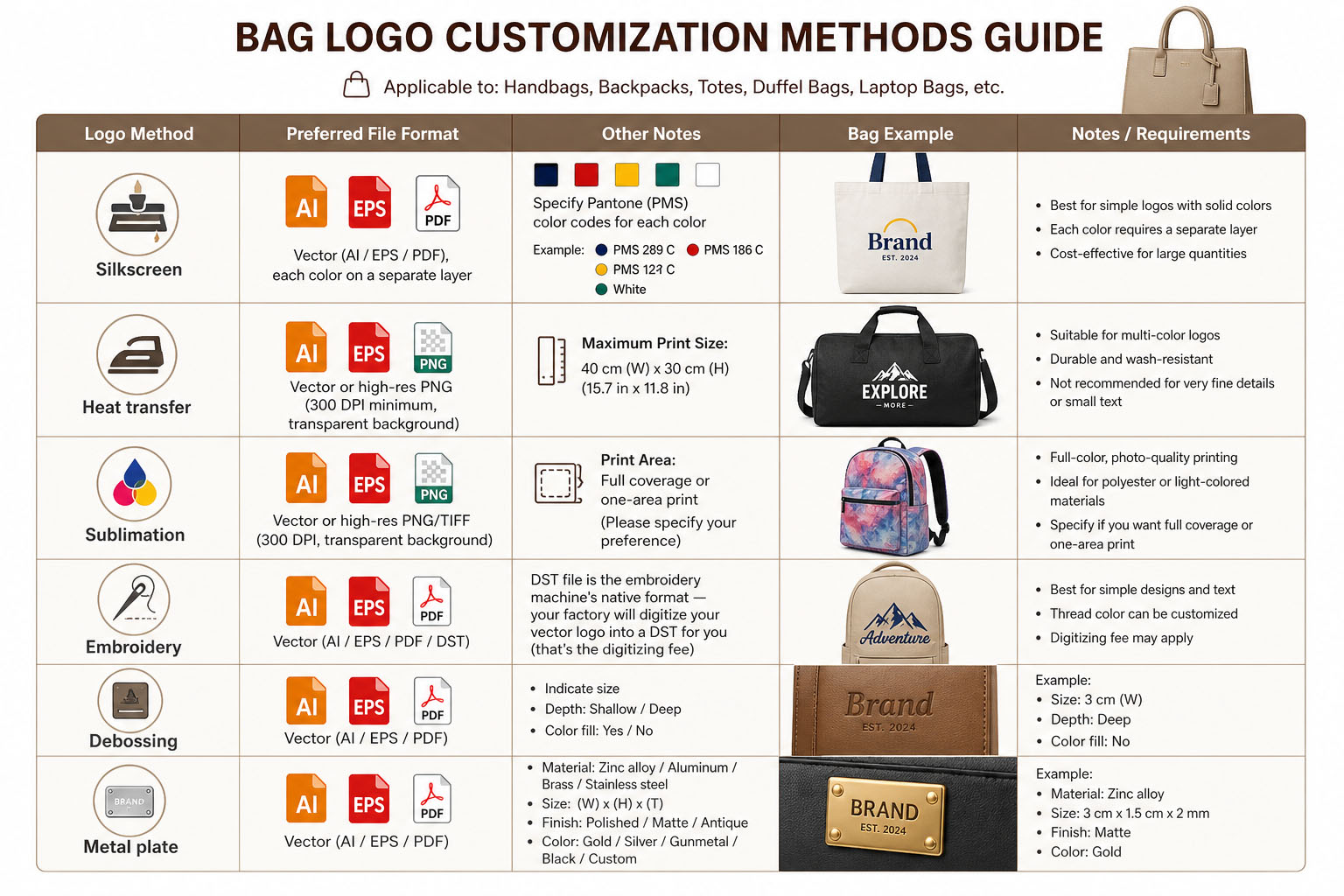
Method-Specific Requirements
Communication Best Practices
Always include a reference image (a mockup on the actual bag) so the factory understands placement, size, and orientation.
List Pantone colors — don’t just say “navy blue.” Say “Pantone 533 C.” This avoids the #1 cause of color mismatch in China orders.
Confirm in writing — ask the factory to reply with the file they received and a sample plan before you pay any deposit.
Use WeChat, Alibaba Messenger, or email — all three work, but email is best for paper-trail purposes (especially for first-time orders).
Part 5: Can You Order Samples with Different Logo Methods?
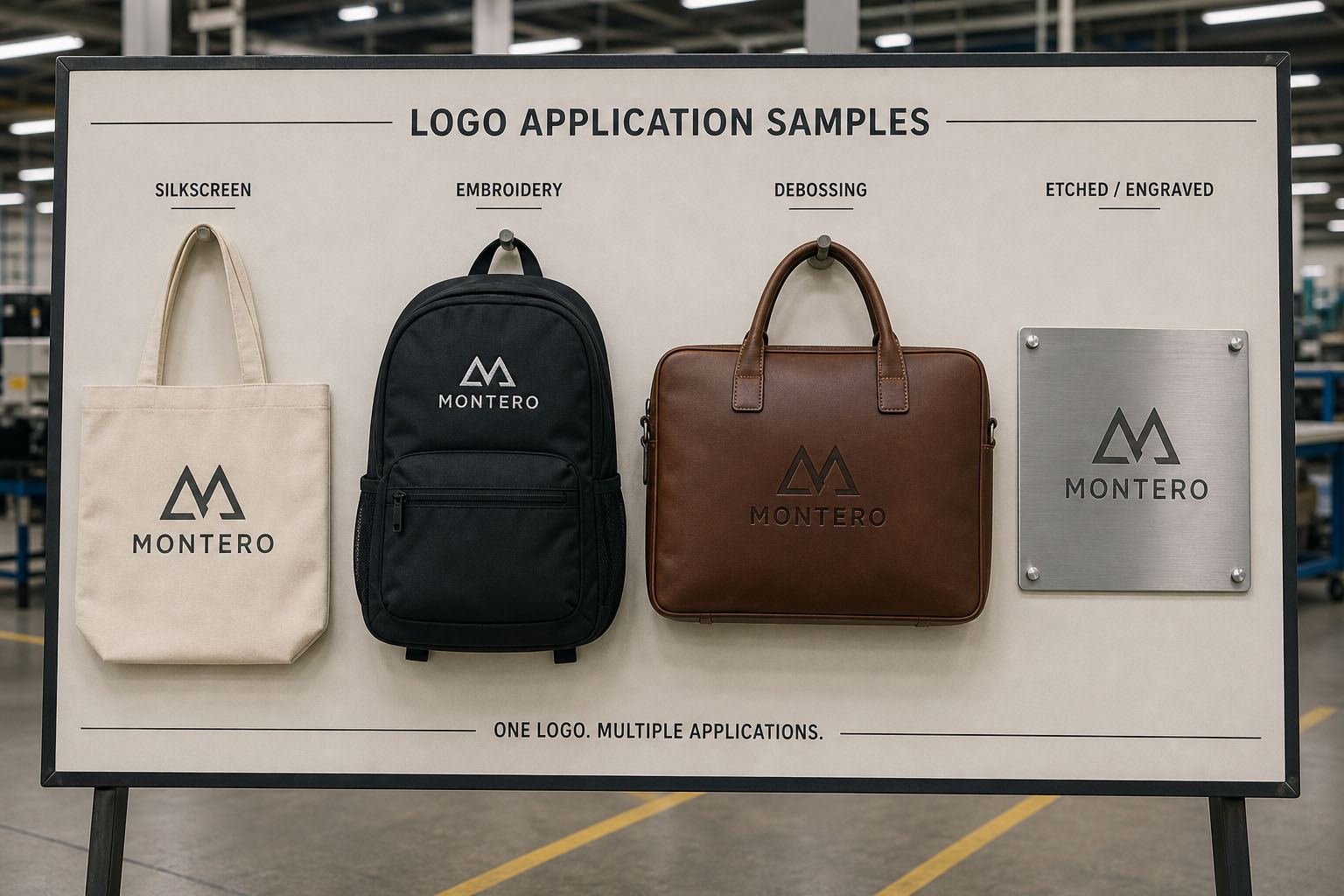
Yes — and you absolutely should.
In fact, any reputable Chinese bag factory will expect you to order samples (or at least pre-production proofs) before committing to a bulk order. Here’s what to know:
Sample vs. Pre-Production Proof
Pre-production proof (or “PP sample”) — The factory makes a single bag with your exact logo and sends it to you for approval before bulk production starts. This is the gold standard.
Random bulk sample — Some factories will send a sample pulled from a previous production run with a similar logo. This is cheaper and faster, but less accurate.
Typical Sample Costs
Sample bag cost: $5 – $30 per bag (often refunded or credited against your bulk order)
Logo setup cost for sample: $20 – $100 per method
Express shipping (DHL/FedEx): $30 – $80 from China to the USA
Total typical sample cost: $80 – $250 per method
Recommended Sampling Strategy for First-Time Buyers
We recommend ordering at least 2–3 different logo methods on the same bag (or the same logo on 2–3 different bag materials) so you can compare:
1. The visual quality of each method
2. The hand-feel and texture
3. The color accuracy against your Pantone spec
4. The placement and proportion on the actual bag
This is a small upfront investment that prevents the much larger cost of receiving 1,000 bags with a logo you don’t love.
Typical Sample Lead Times
Silkscreen sample: 3–5 days
Heat transfer sample: 5–7 days
Sublimation sample: 5–7 days
Embroidery sample: 5–10 days
Debossing sample: 7–10 days (plus mold production if not already made)
Metal plate sample: 10–15 days (plus mold production if not already made)
Part 6: Other Practical Insights for U.S. Buyers
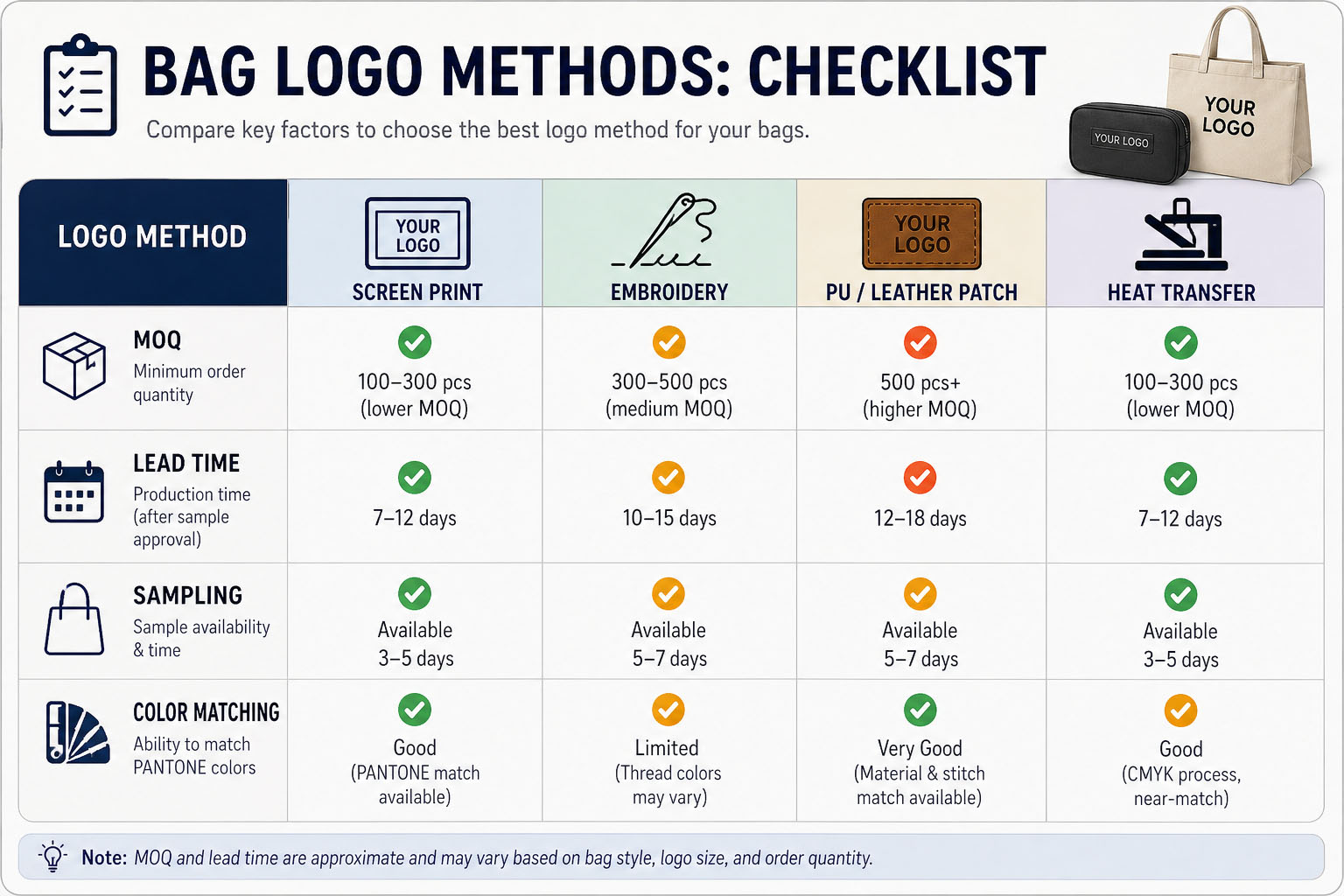
Beyond the core questions, here are ten concise, fact-based insights we’ve gathered from working with hundreds of bag imports:
1. Silkscreen printing is the most cost-effective method for large-volume orders and works best on simple designs with limited colors.
2. Heat transfer delivers vibrant, multi-color graphics on fabric surfaces but may peel after extended use or repeated washing.
3. Sublimation produces seamless, all-over prints exclusively on polyester or polyester-coated materials.
4. Embroidery creates a premium, textured finish and offers superior durability compared to printed methods.
5. Debossing and embossing are widely applied on genuine leather, PU, and vegan leather for a refined, tactile logo effect.
6. Metal plates (zinc alloy, aluminum, or stainless steel) add a luxury aesthetic and are commonly attached to high-end handbags and backpacks.
7. Each logo method carries a different MOQ — debossing and metal plates typically require higher MOQs than silkscreen.
8. Sampling and pre-production proof approval are essential to verify color accuracy, sizing, and placement before bulk manufacturing.
9. Lead times vary significantly — silkscreen and heat transfer are fastest, while embroidery, debossing, and metal plate production take longer.
10. Combining multiple logo techniques on one bag is possible — and is often used to enhance perceived product value (for example, an embroidered logo on the front pocket plus a small debossed metal plate on the side).
Part 7: Ready-to-Send Supplier Inquiry Message
Copy and paste this message to your Chinese bag supplier to start the conversation professionally:
Subject: Logo Application Inquiry for Custom Bags
Hello,
Thank you for your quotation. Before we confirm the order, we would like to confirm the following logo application options for our bags:
1. Do you support silkscreen, heat transfer, sublimation, embroidery, debossing, and metal plate logo methods?
2. Which methods are most suitable for the materials we are considering (canvas / polyester / nylon / PU leather / genuine leather)?
3. For each method, please provide:
Per-unit cost for our quantity tier
One-time setup / mold / digitizing cost
MOQ (minimum order quantity)
Sample lead time and bulk production lead time
4. Can we order pre-production samples with different logo methods to compare quality before placing a bulk order?
5. What Pantone color matching and file format (AI / EPS / PDF) do you require for the logo file?
Our target quantity for the first order is [insert your quantity]. Please also let us know if the price changes at higher volumes.
Best regards,
[Your Name]
[Your Company]
Conclusion: Choose the Method That Matches Your Brand
The “best” logo method is the one that matches your brand positioning, your bag material, your order volume, and your target price point. There is no universal winner — only the right fit for your specific product.
Selling promotional totes at $5–$10? → Silkscreen.
Selling fashion polyester backpacks at $20–$35? → Heat transfer or sublimation.
Selling premium leather-look bags at $40+? → Debossing, embroidery, or metal plate.
Selling outdoor or tactical bags? → Metal plate or high-density embroidery.
Want a hybrid “premium casual” look? → Combine embroidery on the front with a small debossed patch or metal tag on the side.
When in doubt, always request a pre-production sample before you commit. A $100 sample today can save you a $10,000 mistake tomorrow.
Post time: Jul-07-2026