
Published for bag importers, e‑commerce store owners, and product developers sourcing luggage, backpacks, laptop bags, and duffels from Chinese manufacturers
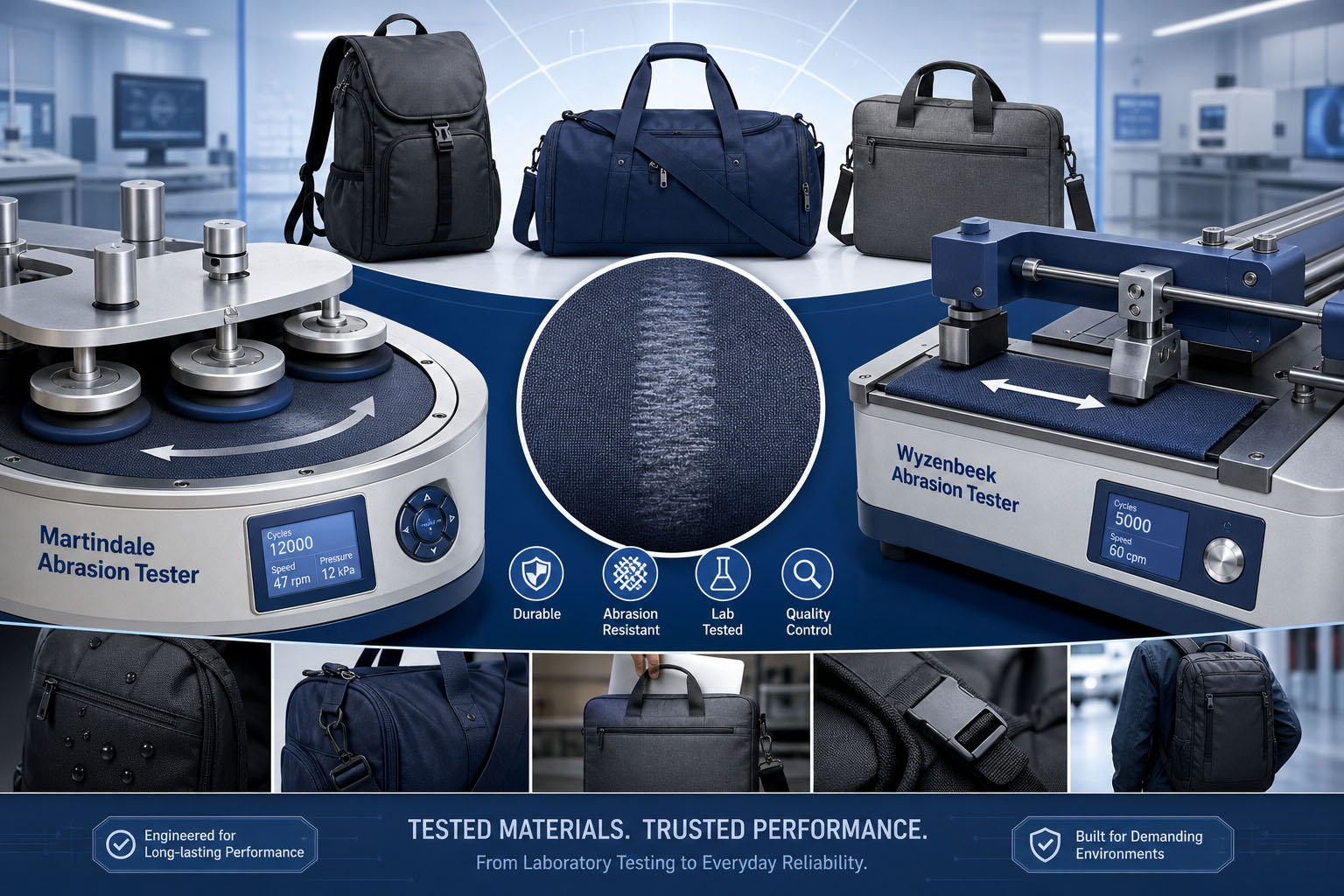
When selling bags on your US‑based independent website, product durability is one of your most critical selling points. American shoppers frequently research real‑world wear performance before purchasing backpacks, laptop bags, travel duffels, and everyday carry totes. Consumers want reassurance that their bag will resist scuffs, surface wear, and fabric breakdown after months or years of regular use. As an importer sourcing directly from Chinese bag factories, understanding abrasion‑resistance testing standards, factory capabilities, cost trade‑offs, and material performance will help you set realistic product specifications, avoid quality surprises, and build trust with your website customers. Many overseas buyers run into avoidable problems: accepting vague “heavy‑duty” marketing claims, misinterpreting Martindale and Wyzenbeek test figures, accepting test reports from unrelated fabric lots, or overlooking how coatings and finishing change real‑world abrasion results. This guide breaks down everything you need to know when negotiating durability requirements with your Chinese bag suppliers.
Are Martindale and Wyzenbeek Used as Standard Durability Benchmarks Among Chinese Bag Factories?
A common misconception among US bag buyers is that every export factory automatically applies Martindale or Wyzenbeek abrasion standards for all bag production. The short answer: **not universally**.
Chinese bag factories are generally familiar with abrasion‑resistance testing concepts. Well‑established export‑oriented manufacturers regularly work with Martindale (ISO 12947), Chinese national standard GB/T 21196, and ASTM‑based test specifications for American clients. Even so, Martindale cycles or Wyzenbeek double rubs are **not a default, automatic benchmark for every bag order**. The test methodology, target rub counts, and failure criteria will almost always need to be clearly defined by you, the buyer, in your product brief and purchase documentation.
China maintains its own national textile abrasion‑resistance standard, GB/T 21196, which aligns closely with the international ISO 12947 Martindale standard. Factories and third‑party labs in China can also run testing following international norms including ISO 12947 and ASTM D4966. It is essential to note that all these standardized tests evaluate **raw or finished fabric material**, not the fully assembled finished bag. Fabric‑level abrasion data tells you how well the base textile withstands surface scuffing; it does not automatically validate stitching, zipper life, hardware strength, or seam durability of the final product.
There is a key distinction between factory‑in‑house testing and independent third‑party verification. Many Chinese bag factories have basic in‑house textile testing equipment, but in‑house generated numbers carry limited weight for US‑market product marketing. For selling on your website, third‑party lab documentation is far more credible for customer‑facing product descriptions and quality assurance.
Martindale vs. Wyzenbeek: Critical Differences for US‑Market Sourcing
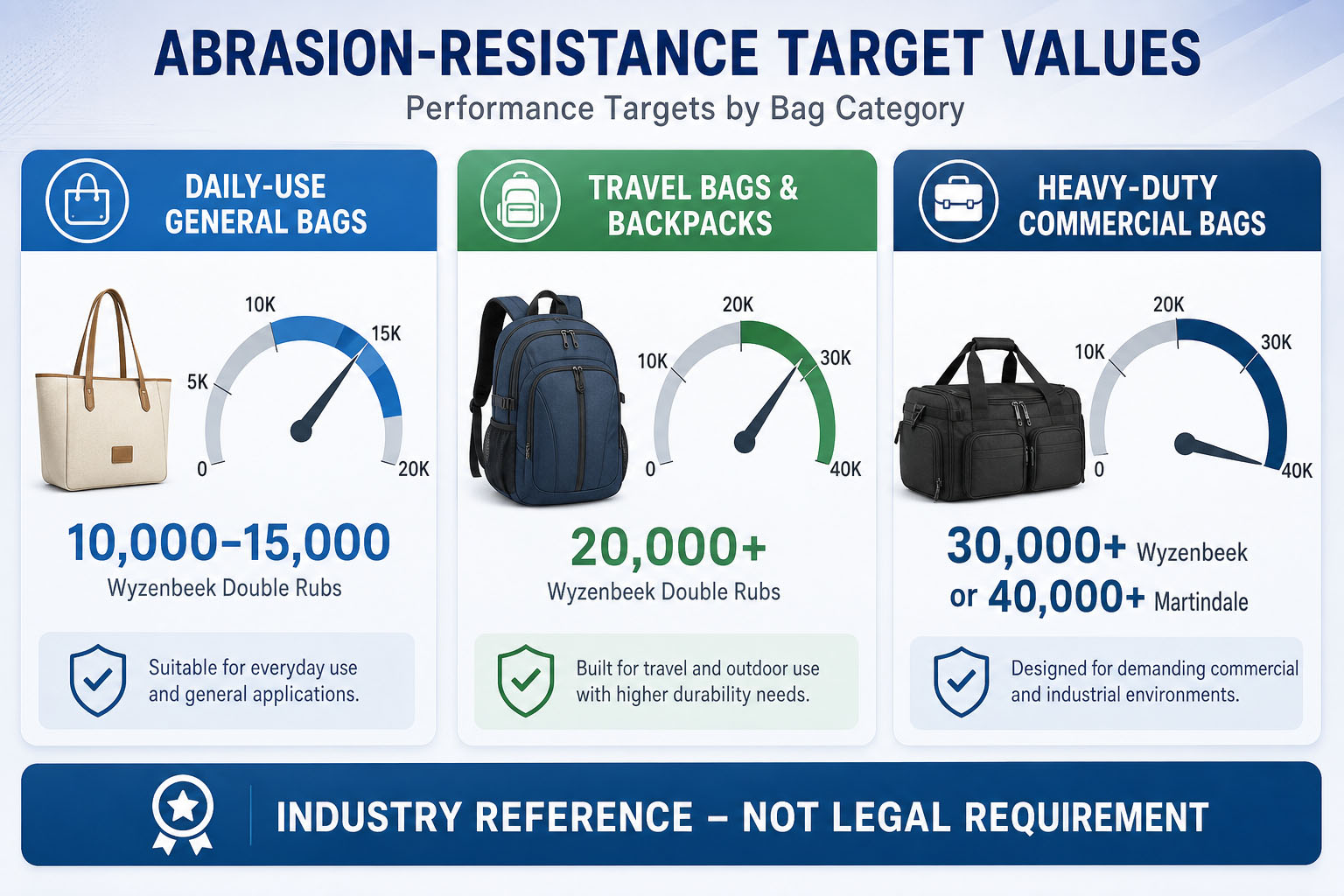
Confusion between Martindale cycles and Wyzenbeek double rubs creates some of the most frequent sourcing mistakes for US bag importers. These two abrasion tests operate on completely different hardware, use different abrasive media, apply different pressure loads, follow distinct movement patterns, and use separate pass‑fail evaluation rules. **There is no reliable, industry‑accepted direct conversion factor between Martindale cycles and Wyzenbeek double rubs.** While some informal industry conversations reference a rough estimate of 1 Wyzenbeek double rub ≈ 3 Martindale cycles, this ratio is only for casual reference and should never be written into your product specifications or purchase contracts. Relying on informal conversion will lead to mismatched product performance and disputes with your Chinese suppliers.
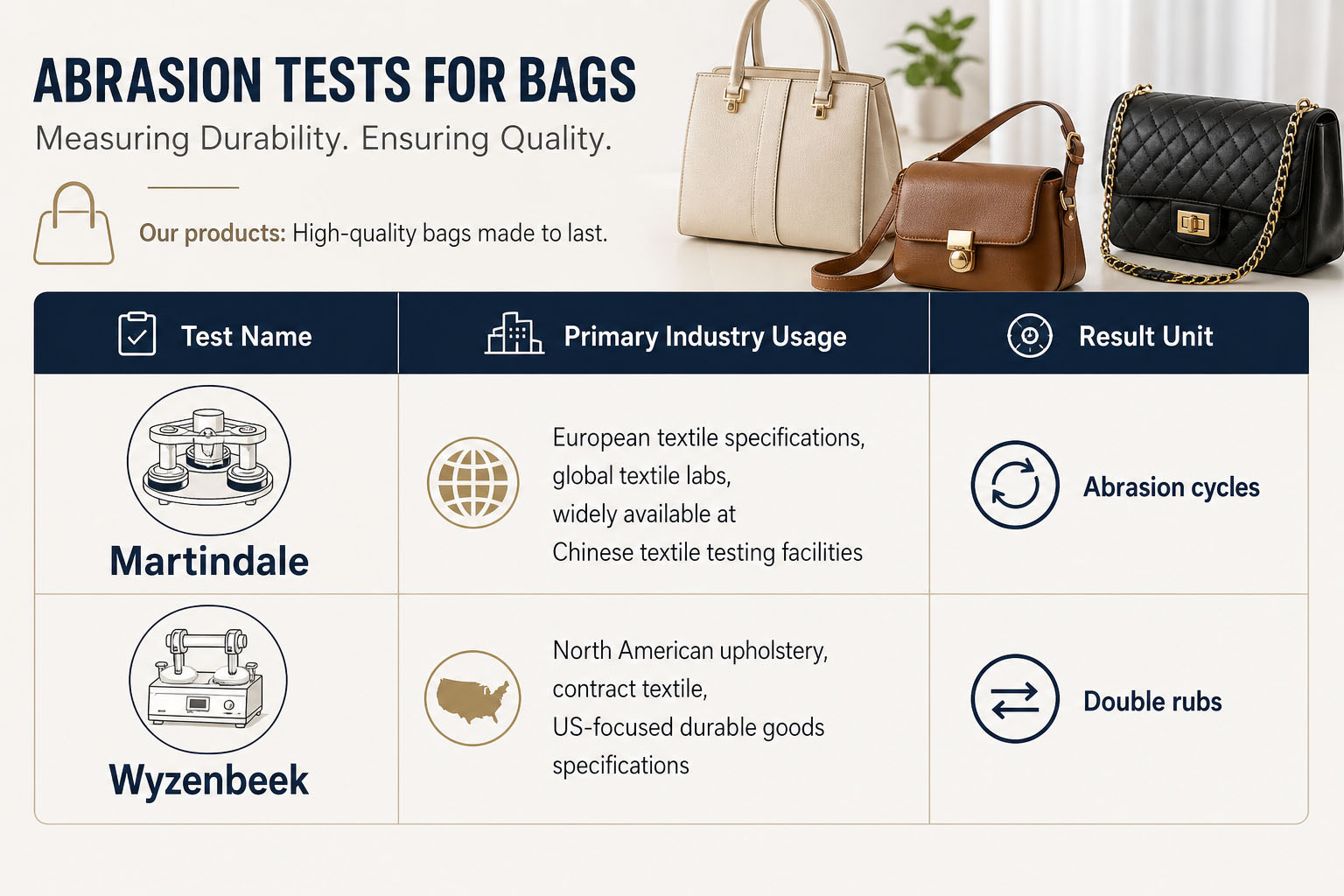
For your US‑based independent store, you may select either test standard, but consistency is non‑negotiable. You must specify the exact test method in your RFQ and purchase order. Avoid mixing Martindale and Wyzenbeek numbers when comparing fabric options.
If you prefer to reference the North American standard familiar to US consumers, you should explicitly request:
“Please provide abrasion‑resistance test report for production‑grade finished fabric, tested in accordance with ASTM D4157, with results reported in double rubs.”
If you opt for internationally‑recognized Martindale testing, your request to suppliers should read with full technical detail:
“Please provide the abrasion‑resistance test report for the final production fabric, tested according to ASTM D4966‑22 or ISO 12947‑2. Include fabric composition, color, coating or lamination details, test load, abradant type, number of test specimens, testing laboratory name, defined failure criteria, and final abrasion cycle count.”
Always remember: test performance changes significantly after textile finishing operations. Coating, printing, lamination, waterproof treatment, and washing can each alter abrasion results. A test report for uncoated base yarn cannot represent the performance of your final coated bag fabric.
Typical Abrasion‑Resistance Targets for Backpacks, Laptop Bags and Duffel Bags
Different bag categories for the US market carry different expected wear‑and‑tear profiles. Travel duffels and outdoor‑focused backpacks face heavy surface friction against airport floors, vehicle interiors, and outdoor surfaces. Laptop bags are subject to consistent rubbing against desks and transit surfaces. Daily‑use casual bags experience lighter, intermittent abrasion.
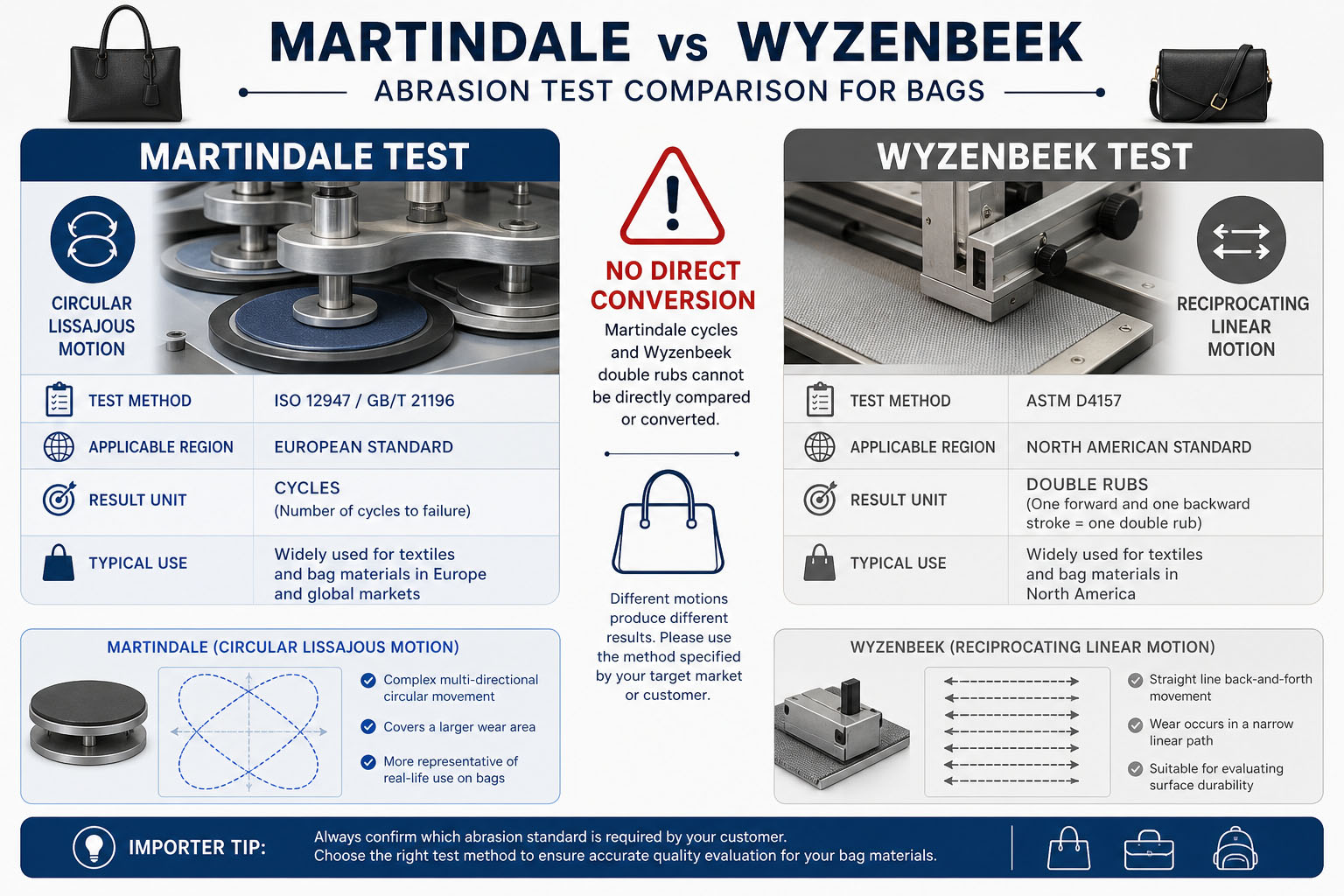
Within the Chinese bag manufacturing industry, general performance benchmarks are widely referenced:
Daily‑use general‑purpose bags: 10 000‑15 000 Wyzenbeek double rubs
Travel‑oriented bags, backpacks and duffels: 20 000+ Wyzenbeek double rubs
Heavy‑duty commercial‑grade bags: 30 000+ Wyzenbeek double rubs, or 40 000+ Martindale cycles
These numbers are general industry reference points, not legal requirements. As the buyer, you decide which threshold aligns with your price tier, target customer, and product marketing promises. Do not assume your factory will automatically hit these numbers unless you write them into your specification.
Abrasion‑resistance scores are fabric‑specific. Nylon, polyester, canvas, and PU‑coated textiles each have their own baseline durability performance. Surface treatments deserve special attention: PU, PVC and TPU coatings can boost measured abrasion‑resistance in lab testing. However, these surface layers can crack, peel or delaminate with long‑term real‑world use. High lab rub counts for coated fabric do not guarantee long‑term visual durability if the coating itself fails.
Also keep in mind: excellent fabric abrasion performance cannot compensate for weak construction. Even highly abrasion‑resistant fabric bags can fail because of poor stitching, low‑quality zippers, weak strap attachment points, or inferior hardware. Abrasion testing only evaluates surface textile wear; many other separate performance metrics define overall bag service life.
Third‑Party Test Reports: SGS, Bureau Veritas, and Intertek
One of the most frequent questions US importers raise is whether Chinese bag suppliers can provide third‑party abrasion‑resistance documentation. The short answer: yes, upon buyer request.
Qualified export‑focused Chinese bag manufacturers can arrange third‑party abrasion‑resistance test reports from globally‑recognized laboratories including SGS, Bureau Veritas (BV), and Intertek. However, these reports are **not automatically included with every order**. In most cases, the buyer covers lab testing fees, or testing costs are factored into unit pricing.
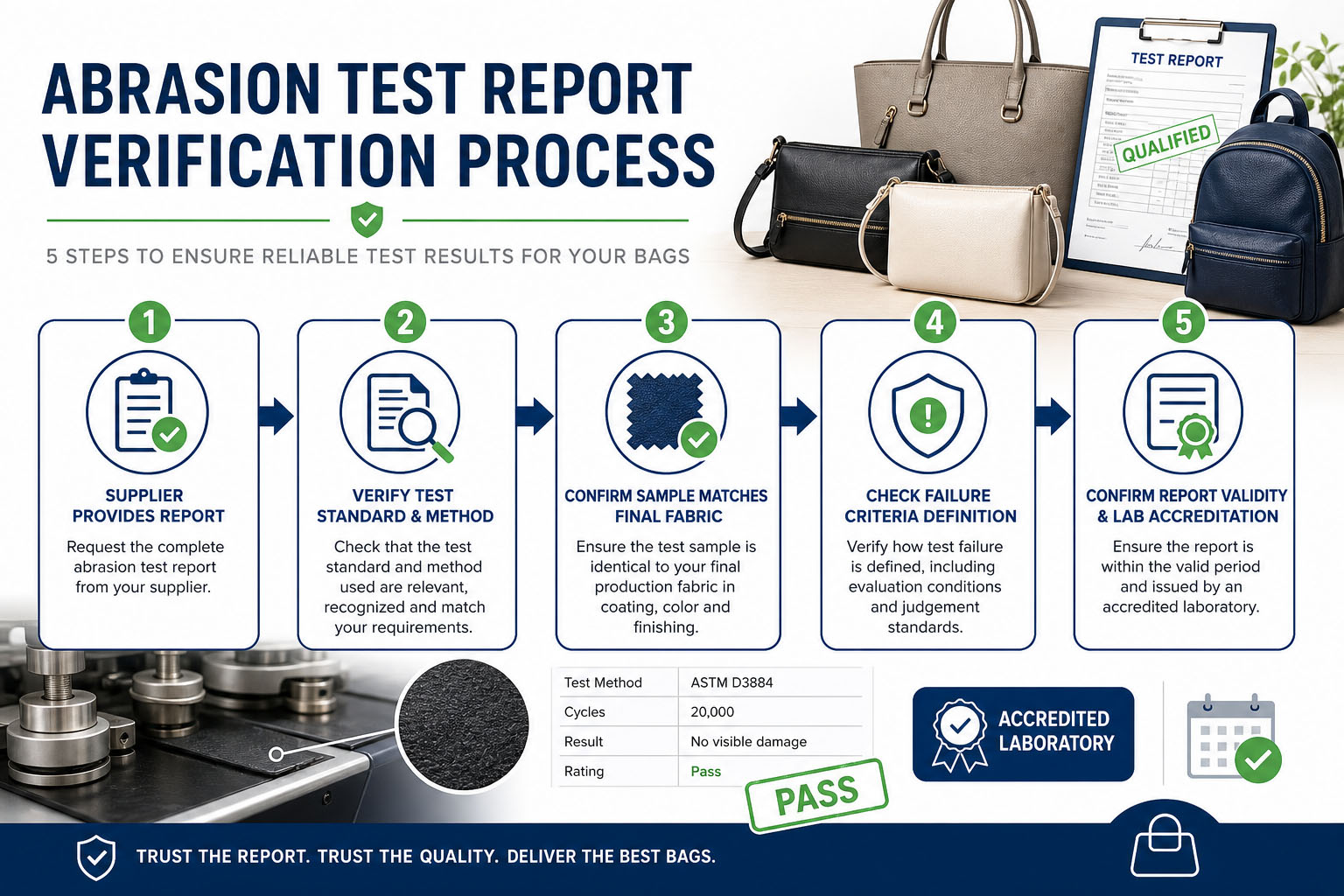
It is extremely important to verify exactly what material sample was tested. Many suppliers will share existing test reports from older fabric batches, different fabric weights, different colors, or uncoated base textiles. A report generated for another product does not validate your custom‑specified material. Before trusting any submitted document, work through these critical questions to send to your supplier during the quotation phase:
1. Do you hold a current third‑party test report for **this exact fabric, exact color, and exact coating finish** we will use for our order?
2. Was testing completed on the final finished coated fabric, or only raw unprocessed yarn?
3. Which formal standard was followed: GB/T 21196, ISO 12947, ASTM D4966, ASTM D4157, or an alternative method?
4. What exact test conditions and failure criteria were applied during the abrasion test?
5. Was the fabric sample tested after PU/PVC coating, printing, lamination, waterproof finishing, or washing procedures?
6. Are you able to test pre‑production samples or mass‑production samples at SGS, Intertek, TÜV, or another independent third‑party laboratory?
7. Can you formally guarantee that mass‑production fabric will consistently meet our agreed‑minimum abrasion‑resistance performance?
Never accept marketing‑style phrases such as “heavy‑duty fabric” or “high abrasion resistance” without full supporting documentation. A bare numerical value like “20 000 rubs” is meaningless without supporting context: what standard, what abrasive material, applied pressure, and defined failure condition. For example: “30 000 cycles per ISO 12947‑2, specified abrasive, 12 kPa pressure, failure defined at first visible thread breakage.”
Cost Impact: Price Increases for Higher Abrasion‑Resistance Fabrics
Upgrading your fabric specification to achieve higher abrasion‑resistance directly impacts your landed unit cost. When you move to higher‑performance textile materials or upgraded coating formulations, Chinese suppliers typically see unit‑price increases in the range of 5 %‑10 %. This percentage range is a general market reference; exact cost swings depend on multiple variables: base fabric material, fabric denier, coating type, target rub‑count requirement, order volume, and raw‑material market conditions.
If you select premium high‑performance specialty textiles such as high‑denier ballistic‑grade nylons, cost increases can exceed this baseline 5‑10 % window. Always ask your supplier for side‑by‑side pricing for multiple fabric options with documented abrasion‑test performance, so you can balance product durability goals against your target retail margin for your US website.
High‑Performing Base Materials: Ballistic Nylon, Cordura‑Spec Fabrics, Coated Canvas
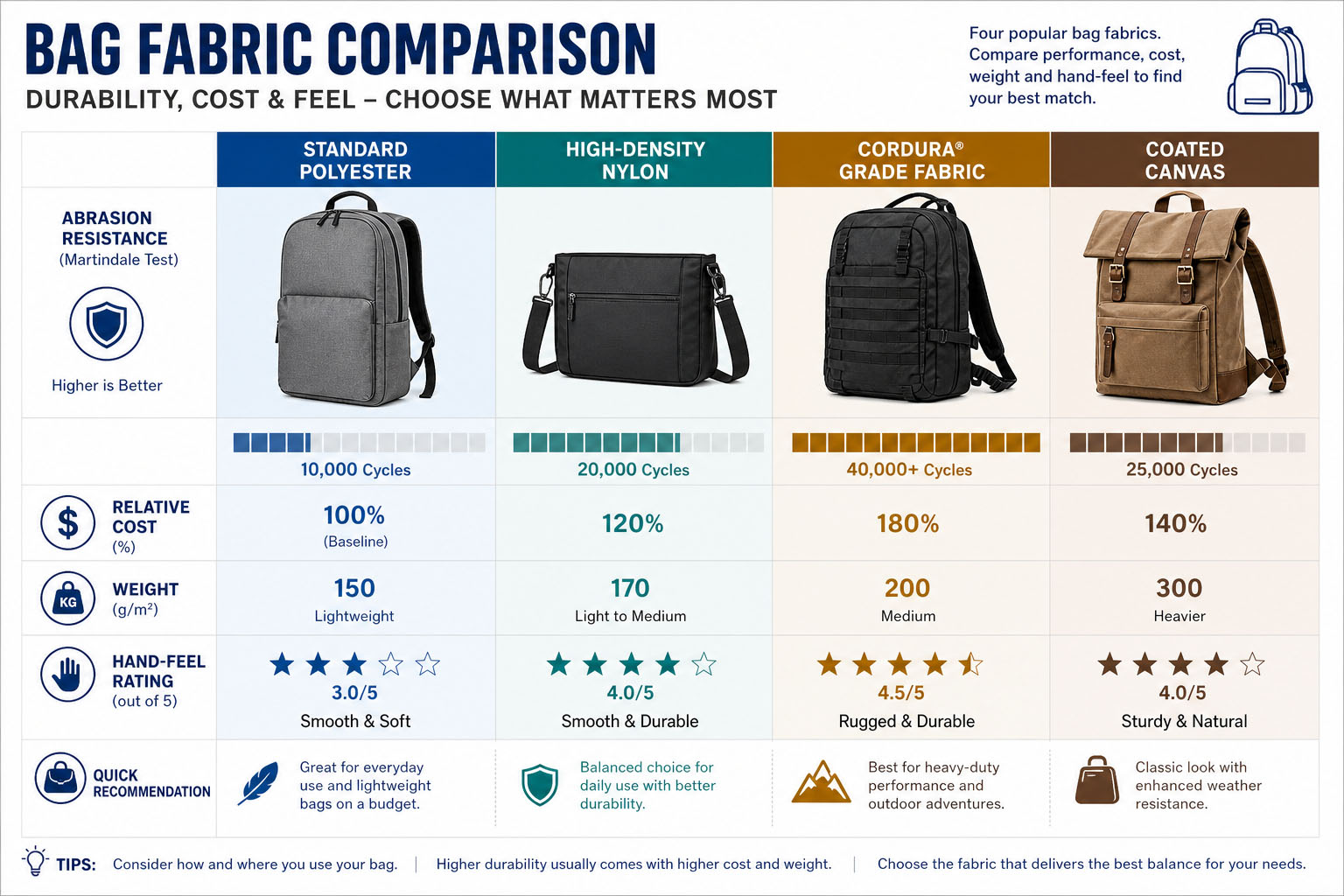
Chinese textile mills manufacture a wide range of base fabrics for bag production. Ballistic‑spec nylon, Cordura‑grade fabrics, and heavy‑weight coated canvas are commonly sourced for high‑durability bag lines. Each material delivers different lab abrasion‑resistance outcomes, alongside different weight, cost, hand‑feel, and weather‑resistance trade‑offs.
High‑denier nylon‑based fabrics (ballistic‑style weave and Cordura‑compliant fabrics) typically deliver among the highest Martindale and Wyzenbeek abrasion‑resistance scores available from domestic Chinese mills. These materials are widely used for tactical‑style backpacks, travel duffels, and heavy‑use gear bags. Heavy‑weight coated canvas can achieve strong abrasion performance as well, though canvas is heavier and can show surface scuff marks more visibly than dense‑weave nylon‑polyester blends.
Keep in mind that fabric weave density, denier count, fiber quality, and coating formulation all heavily influence final abrasion results. Two different 1000D nylon fabrics from different mills can return very different lab rub counts. Material name alone is not sufficient; you must tie purchasing decisions back to standardized test‑report data for your exact finished fabric.
Abrasion Resistance Is Only One Part of Overall Bag Durability
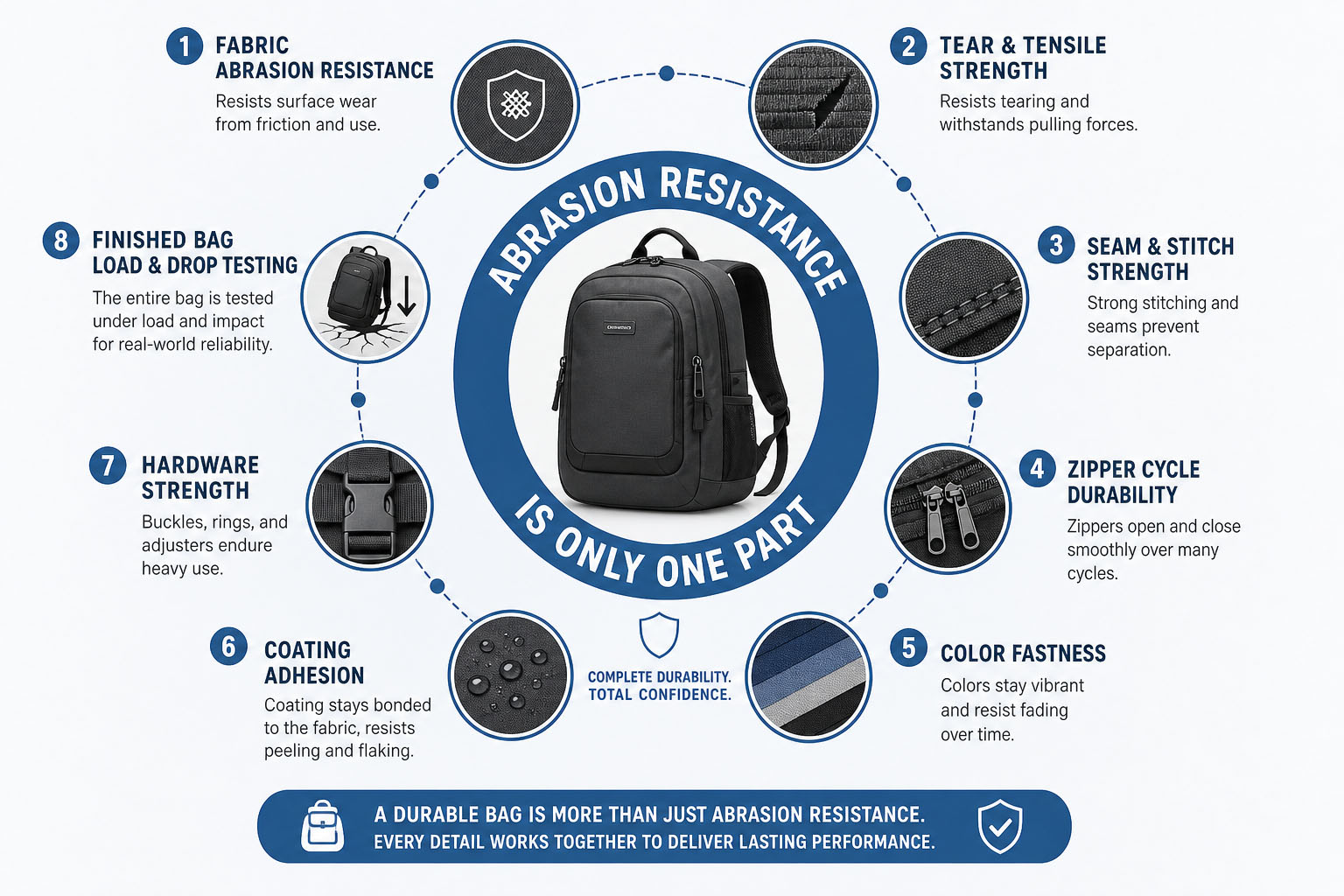
Focusing exclusively on fabric abrasion numbers is a common sourcing mistake. Even when your fabric meets excellent lab abrasion benchmarks, your finished bags can still fail in real‑world consumer use. For backpacks, laptop bags, duffels, and travel luggage, you need to evaluate a complete set of performance criteria alongside fabric abrasion‑resistance:
- Fabric tear strength and tensile strength
- Seam strength and stitch density
- Strap and handle pull‑load resistance
- Zipper cycle durability testing
- Color fastness to rubbing, water exposure, and perspiration
- Coating adhesion performance and hydrostatic water‑resistance ratings
- Durability of buckles, snaps, and all metal or plastic hardware
- Load‑bearing and drop testing for fully assembled finished bags
Material‑level lab reports will not catch assembly‑related defects. For this reason, best practice combines fabric‑material testing with finished‑product inspection. This dual‑approach reduces product‑return risks for your US e‑commerce business.
Recommended End‑to‑End Buying Workflow for US Independent‑Store Sellers
To reliably source durable bags from Chinese factories for your website, adopt this structured workflow for every new‑product development project:
1. Lock in one well‑defined fabric specification (example: 600D polyester with PU coating).
2. Select one single abrasion‑test standard (ASTM D4966, ISO 12947‑2, or GB/T 21196). Do not mix test‑method results for comparison.
3. Set your minimum required cycle or double‑rub threshold aligned with your product’s intended end‑use and price positioning.
4. Submit pre‑production sample material to an independent third‑party lab for abrasion‑resistance testing before mass‑production begins.
5. Approve a physical reference sample, and embed fabric specifications, test‑method requirements, and minimum‑performance thresholds within your formal purchase contract.
6. Carry out random pre‑shipment inspections before goods leave the factory, and securely archive retained reference samples for future quality audits.
Avoid accepting vague supplier claims. Every durability claim you plan to reference on your US website should trace back to documented test conditions.
Final Thoughts
Sourcing durable bags from Chinese manufacturers for your US independent website does not need to be overwhelming. The key takeaway is simple: Martindale and Wyzenbeek abrasion‑resistance standards are available, but they are rarely applied by default. You, as the buyer, must define your test method, minimum performance thresholds, test‑sample conditions, and third‑party‑report requirements clearly in all supplier communications.
Third‑party lab reports from SGS, BV, or Intertek are obtainable upon request. Upgrading to higher‑abrasion‑resistance fabrics will typically raise unit costs by 5‑10 % (subject to material and order specifics). High‑density nylon‑family fabrics generally deliver top‑tier abrasion‑test results among Chinese‑mill offerings. Always remember that fabric abrasion is only one component of real‑world bag durability. Stitching, hardware, coating integrity, and finished‑bag assembly all play equally important roles in delivering products that satisfy your US customers and reduce returns for your online store.
Post time: Aug-20-2026