
Introduction: Why Bag Quality Matters More Than Ever
If you’re running a bag business in the USA and sourcing products directly from Chinese manufacturers, you already know that quality is everything. One bad batch of handbags with frayed edges, visible glue marks, or loose threads can destroy your brand reputation overnight. With Amazon reviews, Instagram posts, and TikTok unboxings amplifying every flaw, there’s simply no room for substandard products.
Over the years, I’ve built relationships with dozens of factories across Guangzhou, Yiwu, and Quanzhou, and I’ve learned that the difference between a profitable SKU and a returns nightmare often comes down to understanding the small details—especially the finishing work like trimming, thread cleanup, and surface finishing.
In this comprehensive guide, I’ll walk you through everything I wish I had known when I first started importing bags from China: what trimming really means, the most common defects to watch for, how to conduct pre-shipment inspections, what quality standards to demand, and how to verify a supplier’s capabilities before you wire that first deposit.
Section 1: What Is Trimming in Bag Production?
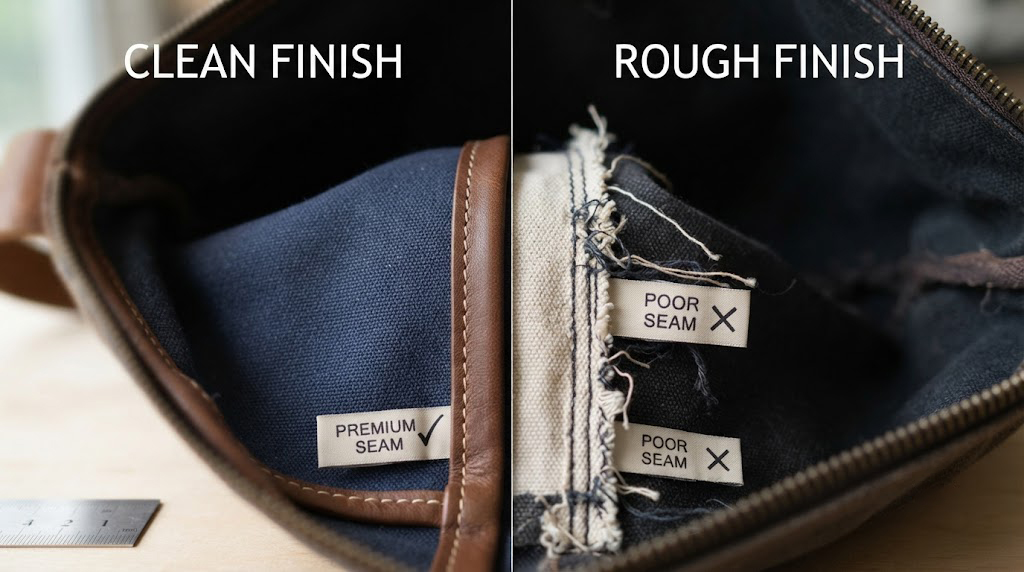
Let’s start with the basics. Trimming is one of the most overlooked yet critical steps in bag manufacturing. When a Chinese supplier tells you “we do trimming,” here’s exactly what that should mean:
Trimming is the finishing process that removes loose threads, excess backing material, and surface marks to enhance a bag’s appearance and overall quality.
But trimming isn’t just one single action. It involves several precise steps:
Thread trimming: Cutting away loose stitching threads around seams, zippers, handles, and interior linings
Backing removal: Eliminating excess interfacing or backing fabric that may peek out from seams
Surface cleaning: Wiping away dust, lint, adhesive residue, pencil marks, chalk lines, and handling smudges
Edge finishing: Ensuring all cut edges—whether on leather, canvas, or synthetics—are smooth and even
Why Trimming Matters for Your Brand
A bag with excellent leather and beautiful stitching can still look cheap if it’s covered in loose threads and glue marks. I’ve seen countless samples where the materials were premium, but the trimming was so poor that the bag looked unfinished. This is why trimming quality is often the first thing your customers notice when they open the package.
Here’s what proper trimming accomplishes:
1. Enhances aesthetic appeal – Clean lines and smooth edges signal premium craftsmanship
2. Prevents fraying and unraveling – Especially important for canvas, denim, and woven fabrics
3. Extends product lifespan – Removing weak thread ends prevents seam failure over time
4. Reduces customer complaints – No one wants to pull loose threads off a $80 handbag
Material-Specific Trimming Techniques
Different materials require different trimming approaches, and this is where experienced manufacturers separate themselves from the amateurs:
Genuine leather: Requires sharp, specialized blades to avoid pulling or tearing the grain. Heat-treated edges may need additional sealing.
PU/PVC synthetic leather: Can melt or deform if the wrong tools are used. Specialized rotary trimmers work best.
Canvas and cotton: Needs careful scissor or hot-knife cutting to prevent unraveling.
Nylon and polyester: Often trimmed with heat-sealing tools to prevent fraying.
Suede and nubuck: Demands extreme care to avoid damaging the nap.
When Does Trimming Happen in Production?
Trimming is not a standalone step. It fits into a specific sequence in the production line:
1. Material cutting and preparation
2. Stitching and assembly
3. Trimming and finishing ← This is where quality magic happens
4. Hardware attachment (zippers, buckles, clasps)
5. Final cleaning and surface treatment
6. Quality inspection
7. Packaging
When I audit a factory, I always ask to see where the trimming station is located. If it’s crowded, disorganized, or staffed by inexperienced workers, that’s a red flag.
Manual vs. Automated Trimming
Larger factories often use automated trimming machines for consistent results on high-volume production runs. These machines can handle hundreds of units per hour with uniform quality. However, for intricate designs, custom hardware placement, or premium leather goods, skilled manual trimming is still superior.
The best factories use a hybrid approach: machines for standard parts, hand-finishing for detail work.
Section 2: The Most Common Quality Defects in Chinese-Made Bags
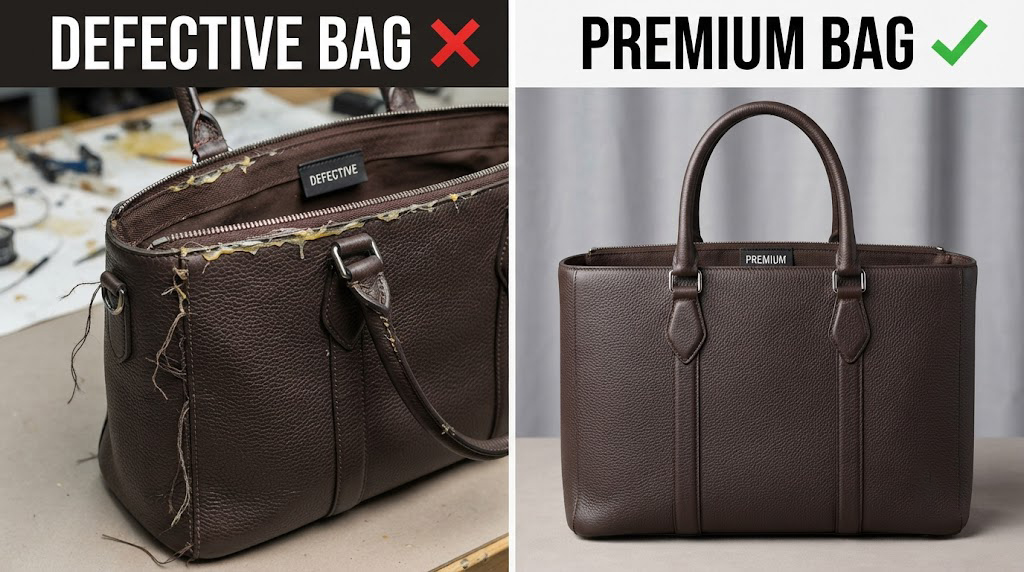
After inspecting thousands of bags from Chinese factories, I’ve compiled a master list of the defects I see most frequently. These are the issues that will end up in your customer returns if you’re not vigilant:
Category 1: Stitching and Thread Defects
Loose or untrimmed threads hanging from seams, zippers, and interior linings
Broken stitches that compromise structural integrity
Uneven stitch length (some areas tight, others loose)
Crooked seam lines that don’t follow the pattern properly
Thread color mismatches that stand out against the fabric
Category 2: Material Defects
Surface scratches or scuff marks on leather and PU
Color inconsistencies between panels (especially on dyed leather)
Fabric pilling on canvas or nylon bags
Wrinkles or creases that weren’t pressed out before assembly
Glue stains visible on the surface or interior
Category 3: Hardware Defects
Zippers that don’t glide smoothly or have missing teeth
Mismatched hardware finish (some pieces shiny, others dull)
Loose or wobbly buckles, rings, and clasps
Tarnishing or oxidation on metal components
Logo engravings that are crooked, shallow, or misspelled
Category 4: Structural Defects
Uneven handle attachment causing one strap to sit higher than the other
Twisted or warped bag shape when set on a flat surface
Weak seam construction that pulls apart under minimal weight
Misaligned pockets, flaps, or panels
Bottom corners that don’t match in size or shape
Category 5: Finishing Defects
Frayed or rough edges on straps, handles, and trim
Excess glue seeping out from under linings or trim
Dust, lint, or fingerprints inside the bag
Pencil marks, chalk lines, or cutting guides left visible
Unpleasant chemical smell (especially in PU bags with poor-quality coatings)
Real Talk: The “Almost Good” Problem
One of the trickiest issues is the “almost good” defect. The bag looks 95% perfect, but something is just slightly off—a handle that sits 2mm too low, a zipper pull that catches on the lining, or a thread end that wasn’t fully trimmed.
These subtle defects are exactly what customers photograph and post on social media. You need a quality control process that catches the “almost goods” before they ship.
Section 3: How to Conduct Pre-Shipment Inspections When Importing Bags from China
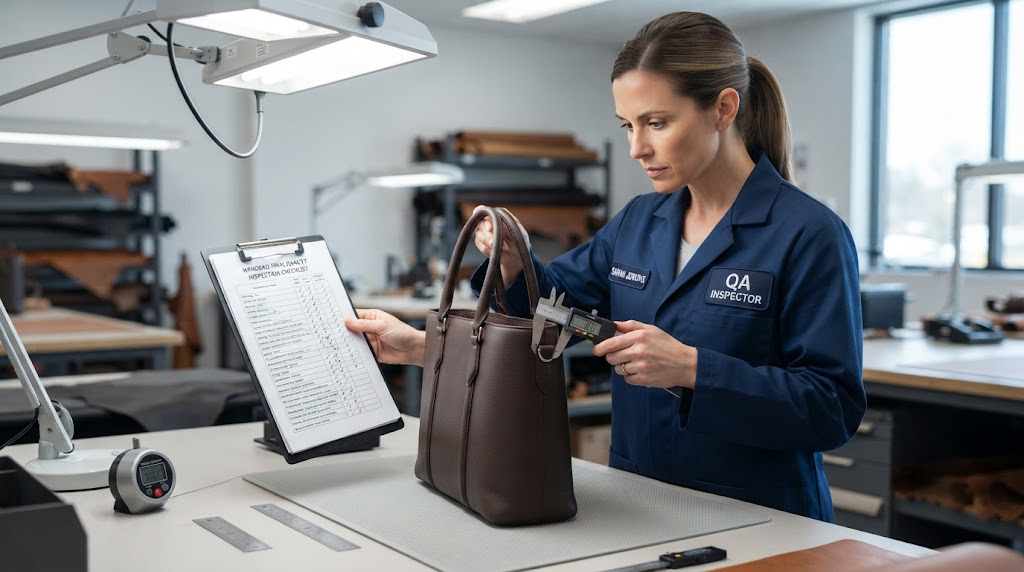
Pre-shipment inspections (PSI) are your last line of defense before products leave the factory. Get this wrong, and you’re stuck with thousands of dollars in merchandise you can’t sell. Here’s my battle-tested inspection process:
Step 1: Hire a Third-Party Inspection Company
Even if you trust your supplier, never rely solely on factory self-inspection. Hire a third-party service like:
SGS
Bureau Veritas
Intertek
Asia Inspection / QIMA
V-Trust
Costs typically run $200–$400 per man-day for a professional inspector in China. This is the best money you’ll ever spend.
Step 2: Choose the Right Inspection Timing
Schedule your inspection when 80–100% of goods are produced and at least 20% is packed. This is called the DPI (During Production Inspection) and PSI (Pre-Shipment Inspection) combination. You want to catch issues while there’s still time to rework them.
Step 3: Use AQL Sampling Standards
Don’t inspect every single bag—that’s unrealistic for large orders. Instead, use AQL (Acceptable Quality Level) sampling:
AQL 2.5 is the industry standard for general consumer goods
AQL 1.0 for premium or luxury products
AQL 4.0 for very low-cost items
The inspector will randomly select samples based on your order size and acceptable defect levels.
Step 4: Conduct a Comprehensive Inspection Checklist
Your inspection should cover:
Visual Inspection:
Color consistency across all units
Surface cleanliness (no glue, dust, or marks)
Stitching uniformity
Logo placement and clarity
Trimming quality on all edges and seams
Functional Testing:
Zipper operation (open and close 50+ times)
Handle strength (apply weight test)
Hardware security
Magnetic snap alignment
Strap adjustability
Measurement Verification:
Overall dimensions match the spec sheet (±5mm tolerance)
Handle drop length
Strap width
Pocket dimensions
Material Verification:
Leather grain matches approved sample
Lining fabric weight and texture
Hardware material and finish
Packaging Inspection:
Proper folding and stuffing (no permanent creases)
Dust bag inclusion if promised
Box strength and printing quality
Barcode and label accuracy
Step 5: Document Everything with Photos
Insist on high-resolution photos showing:
Overall product shots from multiple angles
Close-ups of any defects found
Batch/lot numbers visible
Packaging configuration
Carton markings
I learned the hard way: if it’s not documented, it didn’t happen. When a defect dispute arises, photos save thousands of dollars.
Step 6: Issue a Clear Inspection Report
Your inspector should provide a detailed report within 24 hours, including:
Pass/Fail status
Number of defects found by category
Photos of all defects
Recommendations for rework
If the inspection fails, you have the right to demand rework at the supplier’s cost before shipment. This is a standard practice and reputable suppliers expect it.
Section 4: What Quality Standards Should You Require from Chinese Bag Suppliers?
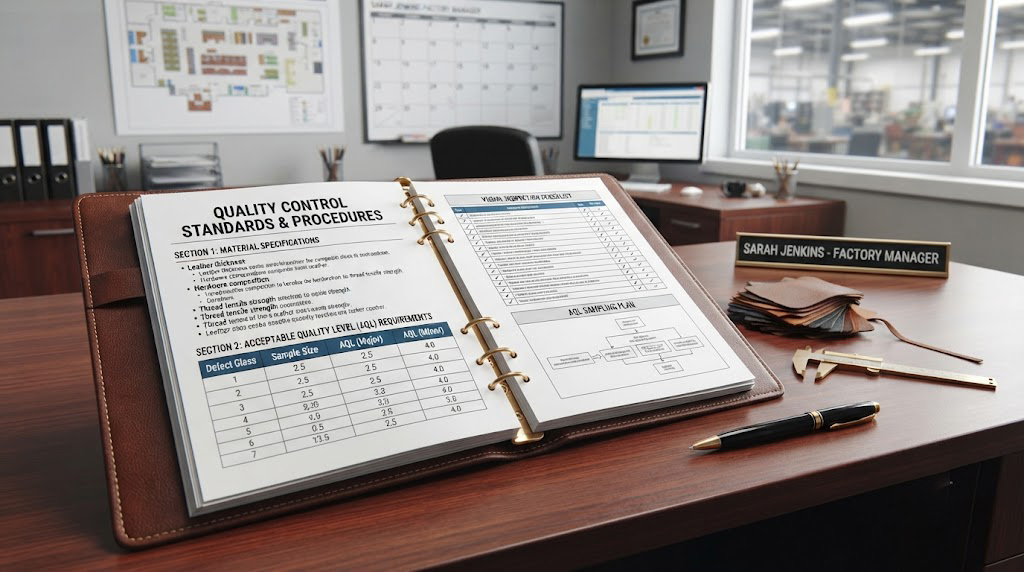
Setting clear quality standards before you place an order is the single most important thing you can do to protect your business. Verbal agreements mean nothing in international sourcing. You need written, measurable, enforceable standards.
Standard 1: Material Specifications
Your purchase order should specify:
Material composition (e.g., “Full-grain cowhide leather, 1.2–1.4mm thickness”)
Lining material (e.g., “210D polyester with logo print”)
Hardware material (e.g., “Zinc alloy with matte nickel plating, lead-free”)
Color codes (Pantone matching for all fabrics and threads)
Fabric weight in GSM or oz/sq.yd for textiles
Standard 2: Workmanship Standards
Define acceptable and unacceptable defects explicitly:
Acceptable:
Minor thread ends trimmed within 2mm of seam
Slight color variation within Delta E ≤ 2.0
Hardware scratches invisible at arm’s length
Unacceptable:
Any loose threads longer than 3mm
Visible glue marks on exterior surfaces
Broken stitches anywhere
Misaligned logos or panels
Functional failures in zippers or hardware
Standard 3: Performance Testing Requirements
Depending on your product category, require:
Tensile strength testing for handles and straps (minimum 20kg load)
Zipper cycle testing (500+ open/close cycles without failure)
Color fastness testing (no bleeding after wash or rub test)
Abrasion resistance (Martindale or Taber test for high-wear areas)
Water resistance if applicable (spray test results)
Standard 4: Packaging Standards
Don’t let packaging be an afterthought. Specify:
Individual packaging (poly bag, tissue paper, dust bag)
Master carton specifications (5-ply corrugated, double-walled for heavy items)
Shipping marks and labels
Barcode placement and scannability
Quantity per carton (typically 20–50 units depending on size)
Standard 5: Compliance and Safety Standards
For bags sold in the USA, you may need:
Prop 65 compliance (California) for heavy metals and chemicals
CPSIA compliance for children’s bags
REACH compliance for chemical restrictions
Country of origin labeling requirements
Standard 6: AQL Inspection Agreement
Embed your AQL requirements in every purchase order:
“Final inspection will be conducted at AQL 2.5/4.0 general inspection level II. Supplier agrees to rework or replace any units exceeding these limits at no additional cost to buyer.”
Section 5: How to Verify a Supplier’s Trimming and Finishing Capabilities Before Placing a Bulk Order
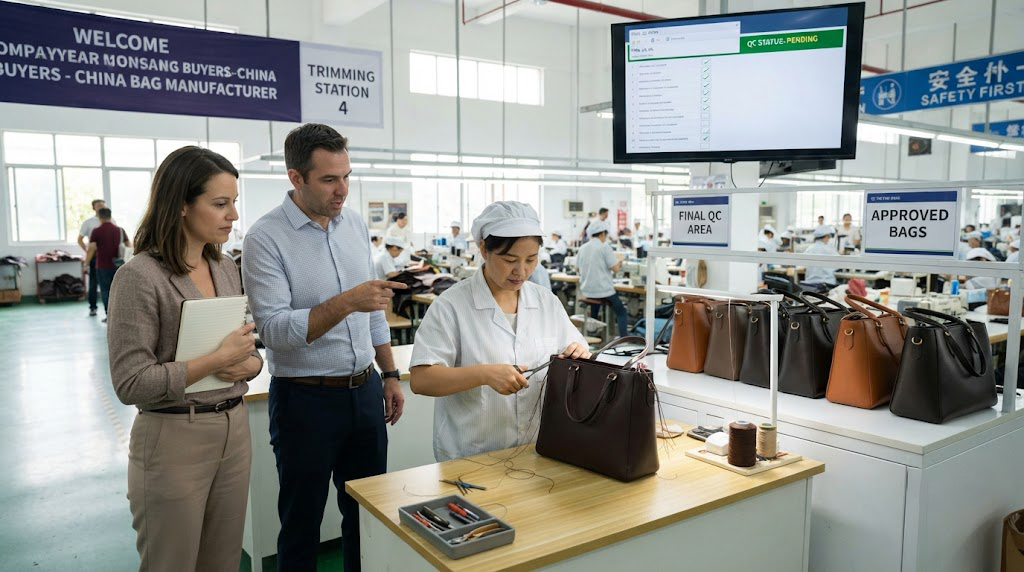
This is the section I wish someone had written for me when I started. Verifying a supplier’s actual capabilities is dramatically different from what they claim in WeChat messages. Here’s my proven verification process:
Step 1: Request Detailed Production Photos and Videos
Don’t just ask for one or two product photos. Request:
Factory floor photos showing the trimming station
Worker close-ups performing trimming tasks
Before/after comparison shots of the trimming process
Tool and equipment photos (sharp scissors, hot knives, etc.)
Finished product close-ups showing interior seams, zipper areas, and handle attachments
If a supplier can’t or won’t provide these, move on.
Step 2: Order Physical Samples (Multiple Times)
Never place a bulk order based on a single sample. Order:
A development sample (typically $50–$150 + shipping)
A pre-production sample (PPS) after all materials are sourced
A “top of production” sample (TOP) from the actual production run
Each sample round tests different aspects. The TOP sample is critical because it shows how the factory performs under real production pressure, not just on one handmade unit.
Step 3: Inspect the Samples Meticulously
When you receive samples, put them under a magnifying glass—literally:
Check every seam for loose thread ends
Look at the interior lining for excess material
Examine hardware for sharp edges or rough spots
Smell the bag (strong chemical odors indicate cheap materials)
Test every zipper, snap, and buckle
Look for fingerprints, dust, or handling marks inside the bag
Create a scoring rubric and rate each sample. I reject any sample scoring below 8/10 for premium products.
Step 4: Conduct a Factory Audit
For serious bulk orders ($10,000+), visit the factory in person or hire an audit service. Things to verify:
Production capacity matches your order quantity and timeline
Number of workers and their experience levels
Quality control department with dedicated inspectors
Equipment condition (well-maintained vs. worn out)
Material storage (clean, organized, climate-controlled)
Trimming station has proper lighting, tools, and trained operators
Reference customers you can contact for feedback
Step 5: Ask the Right Questions
Before placing an order, ask your supplier these direct questions:
1. “How many workers are dedicated to trimming and finishing?”
2. “What tools and equipment do you use for trimming different materials?”
3. “Can you show me photos of your trimming process?”
4. “What is your standard for acceptable thread length after trimming?”
5. “Do you have a final cleaning and inspection step before packaging?”
6. “What is your defect rate for trimming-related issues?”
7. “Can I see your QC checklist and AQL standards?”
8. “Will you provide a TOP sample before mass production?”
Their answers will tell you almost everything you need to know.
Step 6: Start with a Small Trial Order
Never go from sample to 5,000 units in one jump. Place an initial order of 200–500 units to test the factory’s real-world performance. This is your “marriage test” before committing to larger volumes.
Pay attention to:
Communication quality during production
Adherence to delivery timeline
Defect rate in the actual shipment
Responsiveness to issues that arise
Step 7: Build a Relationship with the Finishing Team
One of my best-kept secrets: befriend the finishing department supervisor, not just the sales representative. The sales team wants your order; the finishing team determines your quality.
Send them detailed specifications, photos of what you want, and even small gifts during Chinese holidays. They’ll go the extra mile for customers who respect their craft.
Conclusion: Your Roadmap to Better Quality Bags from China
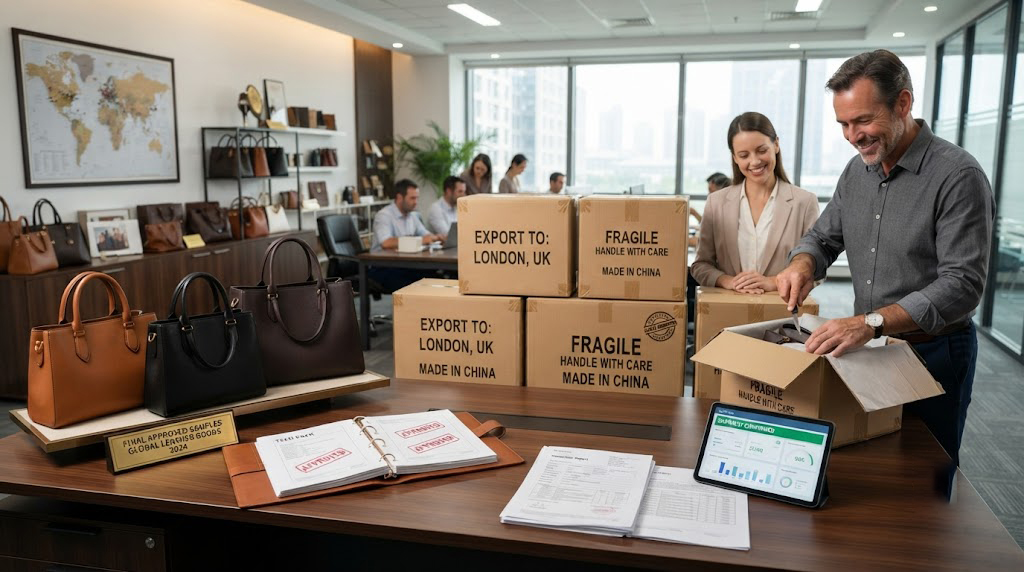
Sourcing bags directly from Chinese manufacturers can be incredibly profitable—when you have the right knowledge and systems in place. The key takeaways from this guide are:
✅ Trimming is not optional—it’s the difference between a premium product and a cheap-looking one
✅ Common defects are predictable—knowing what to look for puts you in control
✅ Pre-shipment inspections are essential—never skip third-party QC
✅ Written quality standards prevent disputes—document everything
✅ Verification happens before you pay—samples, audits, and trial orders protect your investment
At TRUST-U, we’ve spent years perfecting our bag sourcing process. We work directly with vetted Chinese manufacturers who meet our rigorous quality standards for trimming, stitching, hardware, and finishing. Every bag we sell has passed multiple inspection checkpoints before it reaches your customer.
Ready to elevate your bag business with quality products you can stand behind? Browse our collection or contact our team to learn more about our manufacturing partnerships and quality assurance process.
Have questions about sourcing bags from China? Drop them in the comments below—I personally read and respond to every question. And if you found this guide valuable, share it with another entrepreneur who needs to hear this.
Post time: Jul-22-2026