
The Complete Guide to Importing Bags from China: Hidden Costs, Duties, and Smart Sourcing Strategies for 2024
Bag industry expert analyzing shipping costs
Running a small bag business means every dollar on your landed cost sheet matters. Here’s everything you need to know before placing that first bulk order from China.
Introduction: Why “Cheap” Bags from China Aren’t Always Cheap
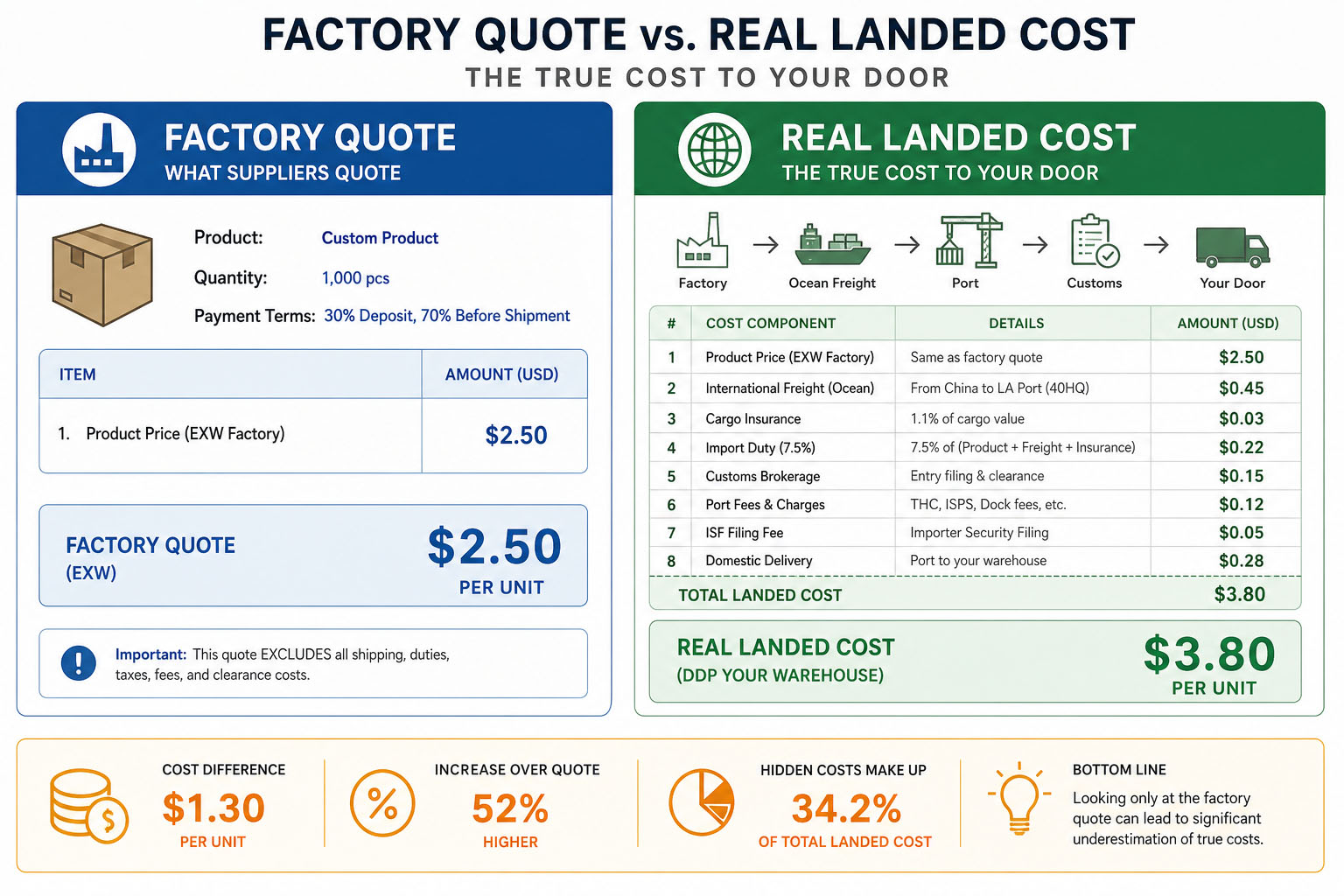
If you’re an independent retailer or e-commerce seller sourcing handbags, backpacks, totes, or travel bags from Chinese manufacturers, you’ve probably already discovered a hard truth: the unit price your supplier quotes you is rarely the price you’ll actually pay. Between customs duties, fuel surcharges, brokerage fees, and the occasional surprise inspection charge, the gap between the invoice and your real cost-per-bag can quietly erode your margins — sometimes by 20%, sometimes by 40%.
After more than a decade working directly with bag factories in Guangzhou, Yiwu, and Quanzhou, we’ve seen hundreds of small business owners make the same costly mistake: they price their products based on the factory quote, then scramble when the customs bill arrives. This guide is designed to fix that problem permanently.
Below, we break down the five most common questions new importers ask, the ten real cost factors most buyers overlook, and the exact strategies experienced bag importers use to keep their margins intact.
Question 1: Are There Any Hidden Costs When Shipping Bags from China?
The short answer is yes — and the longer answer is more than you probably think.
When you buy bags from China, the main hidden costs usually fall into four buckets: shipping, customs duties/tariffs, brokerage/processing fees, and inspection or port charges. While each one is technically disclosed somewhere in the paperwork, most first-time importers don’t see them until after the goods have shipped.
What to budget for in reality
Product cost — the factory price you negotiate with your supplier.
International shipping — air freight is faster but more expensive; ocean freight is cheaper for larger orders but adds port-related charges, fuel surcharges, and BAF (Bunker Adjustment Factor) fees.
Customs duty/tariff — in the United States, imported goods from China are charged duties based on the product’s HS/HTS code, and additional Section 301 tariffs can stack on top depending on the product category.
Brokerage/processing fees — carriers like UPS, FedEx, and DHL often add disbursement fees or advance fee charges to clear your shipment through customs.
Inspection, storage, or port fees — these kick in if customs holds the shipment, if your paperwork is incomplete, or if cargo sits at the port longer than the free storage window.
For U.S. importers, the long-standing $800 duty-free de minimis exemption that once allowed small parcels from China to enter without duties has been significantly restricted under recent policy changes. That means even a small sample shipment or a low-value test order can now face customs charges depending on the carrier process and product classification. You should no longer assume any shipment from China will arrive duty-free.
This single policy shift has changed the math for thousands of small bag resellers who built their pricing models around low-value individual parcels. The importers who adapt fastest are the ones who now consolidate shipments, work with a customs broker proactively, and calculate landed cost before placing the order.
Question 2: How Much Are Import Duties and Taxes on Bags Shipped from China?
The honest answer is that there’s no single number — but the range is predictable once you understand how customs classifies your product.
Customs broker reviewing HS codes for handbag import
The role of HS codes in duty calculation
Import duties on bags are calculated based on the HS (Harmonized System) code classification, with rates typically ranging from 3% to 30% depending on the destination country and the bag’s material composition. Leather handbags, for example, almost always face higher duty rates than canvas totes or polyester backpacks. In the U.S., the relevant HTS chapters are typically:
Chapter 4202 — Trunks, suitcases, handbags, and similar containers
Chapter 3923 / 3926 — Plastic and similar articles (used for some synthetic bags)
Chapter 4602 — Plaiting materials, luggage, and handbags made from natural materials
Your supplier should be able to provide their factory’s standard HS code, but always verify it independently with your customs broker. Misclassification — whether accidental or intentional — is one of the most common ways importers either overpay on duties or get flagged for an audit.
How VAT and sales tax stack on top
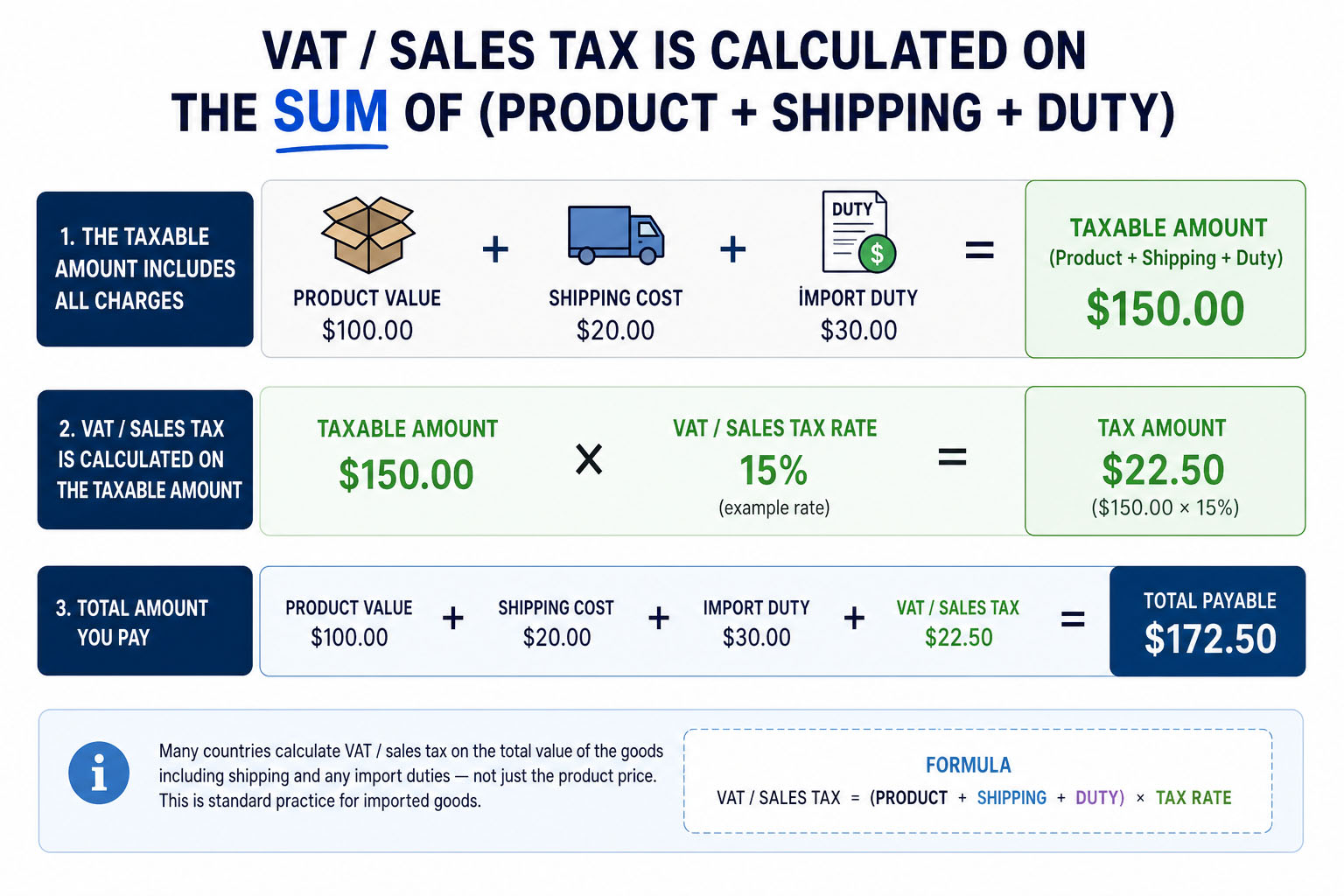
VAT or sales tax is usually applied to the combined value of the product, shipping cost, and duty, meaning the tax base is significantly larger than the goods’ invoice price alone.
Here’s how that math works in practice for a U.S. importer:
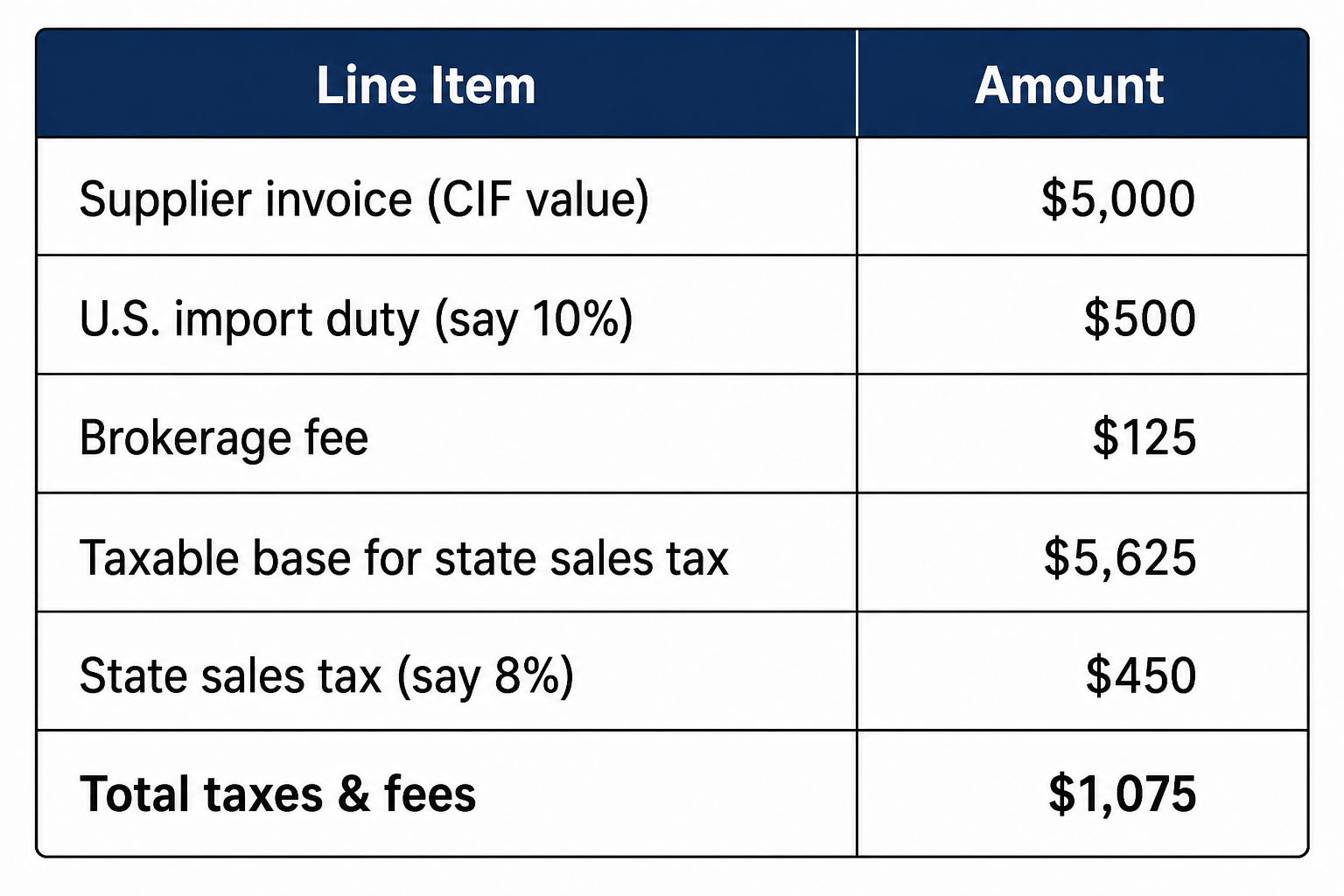
That 10% bag duty just became a 21.5% effective tax burden — and you haven’t even paid for ground shipping to your warehouse yet.
The Section 301 tariff layer
For U.S. imports from China, Section 301 tariffs introduced during recent trade policy changes can add an additional 7.5% to 25% on top of standard MFN duty rates for many bag categories. Some synthetic-material backpacks, for example, now face a combined effective duty rate north of 30% when Section 301 tariffs are included. Always check the most current HTS list before quoting your customer a final retail price.
Question 3: What Is the Cheapest Shipping Method for Small Packages from China?
This is one of the most common questions we get from new bag sellers, and the answer depends almost entirely on how “small” your package actually is — and how fast you need it.
Comparison of air freight vs. sea freight for bag shipments
The three main shipping options
Shipping fees vary significantly by method. Air freight is faster but more expensive; sea freight is cheaper per kilogram but slower and only viable once you hit a certain volume. For small parcels, express couriers like DHL, FedEx, and UPS are usually the only practical option.
Here’s a quick comparison:
Express couriers (DHL, FedEx, UPS, TNT) — Best for samples and small commercial shipments under 100kg. Transit time is typically 3–7 business days. Pricing is based on either actual or volumetric weight, whichever is higher. Expect to pay $5–$12 per kilogram for shipments under 50kg.
Air freight (consolidated or dedicated) — Best for medium-sized orders between 100kg and 500kg. Transit time is 7–14 days. You’ll typically pay $3–$6 per kilogram, but you’ll also need to handle airport clearance, which adds brokerage fees.
Sea freight (LCL or FCL) — Best for bulk orders above 1 CBM (cubic meter). Transit time is 25–40 days door-to-door. Pricing ranges from $50–$150 per CBM for LCL (less than container load), but full container loads (FCL) offer much better unit economics.
The volumetric weight trap most bag importers miss
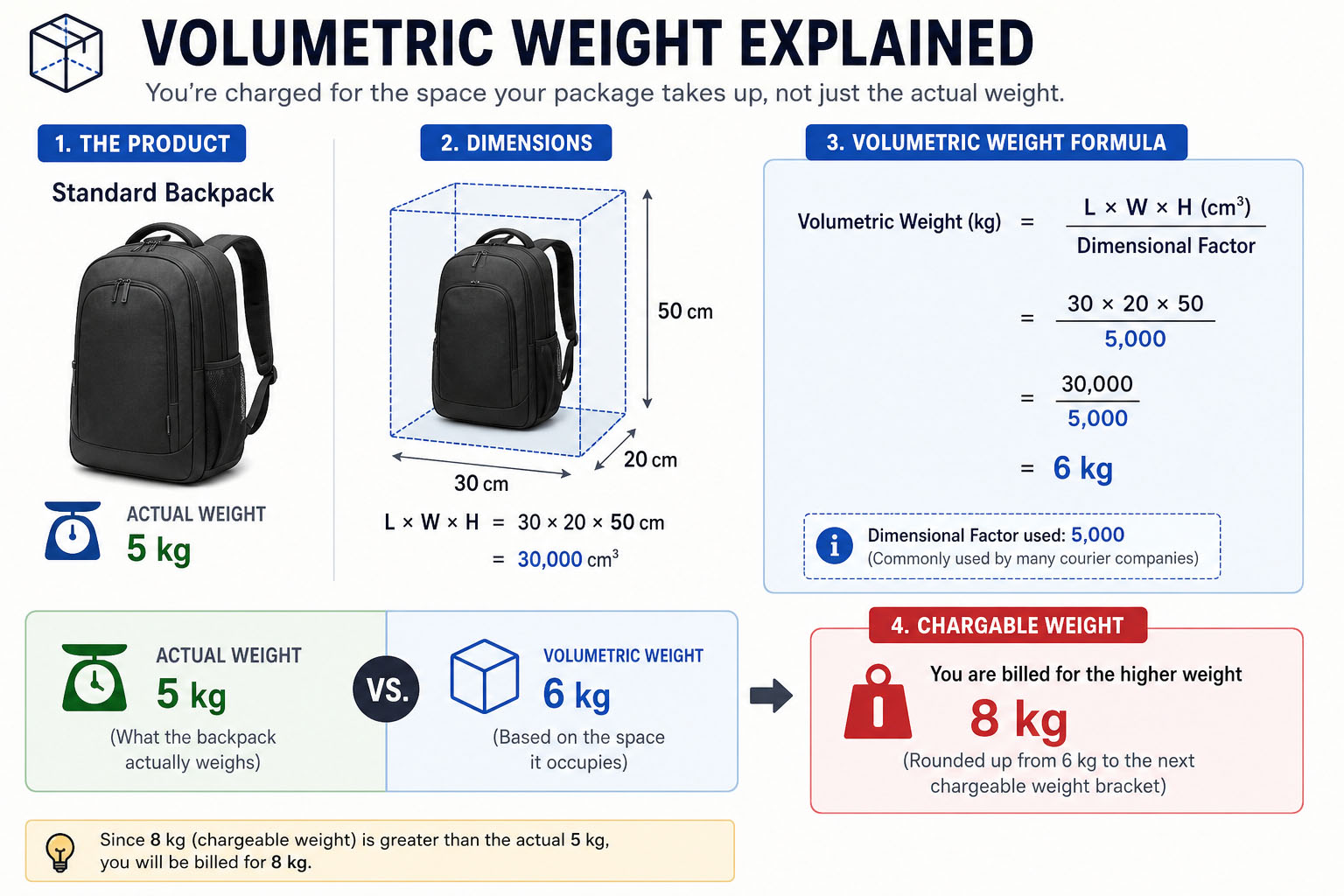
Volumetric weight often determines the charge for bags because they are bulky, low-density products. A 20kg shipment of canvas tote bags might actually be billed as a 35kg shipment because of the dimensional weight formula most carriers use:
Volumetric weight (kg) = (Length × Width × Height in cm) ÷ 5,000
If you’re shipping backpacks, duffel bags, or any item that “looks light but measures big,” you will almost always be billed on dimensional weight — and that single calculation can double your shipping cost if you didn’t account for it.
A practical recommendation for small bag businesses
For most small bag resellers placing their first orders, express courier (DHL/FedEx) for samples and small batches, then air freight or LCL sea freight for bulk reorders offers the best balance of cost and speed. Don’t lock yourself into one method — your shipping strategy should evolve as your order volume grows.
Question 4: How Do You Calculate the Total Landed Cost When Importing from China?
This is the single most important calculation in your entire bag business, and most importers either skip it or do it wrong.
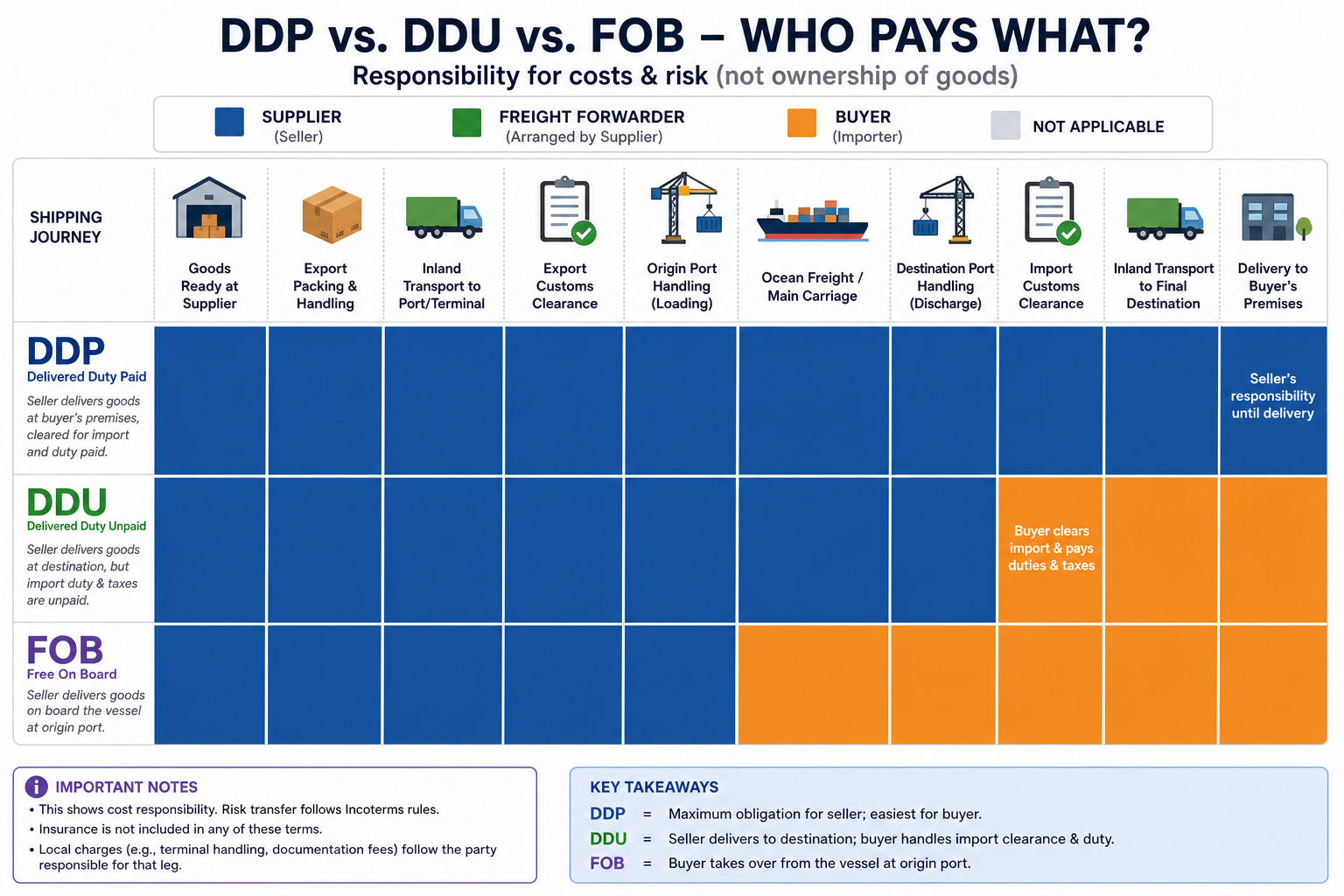
Total landed cost = supplier price + international freight + customs duty/tariff + broker/processing fees + any port/storage/inspection charges.
Spreadsheet showing total landed cost calculation for bag import
Let’s walk through a real example.
A worked example: 500 canvas tote bags from Guangzhou to Los Angeles
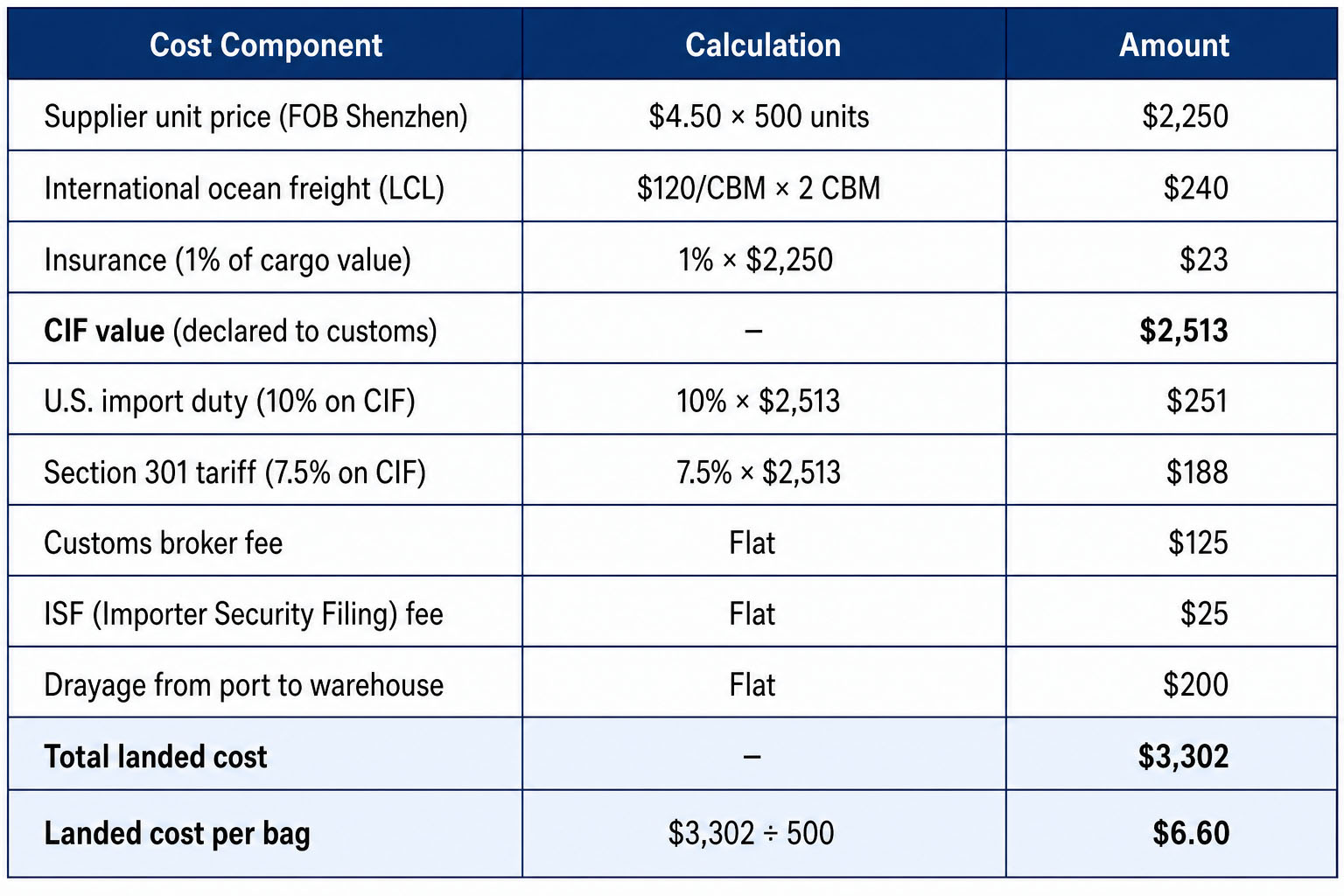
Notice that the supplier quoted $4.50 per bag, but the real landed cost is $6.60 — a 47% premium over the factory price. If you priced your product at retail with a 50% margin based on the $4.50 figure, you’d actually be losing money on every sale.
Don’t forget the brokerage line item
Customs brokerage fees may apply if a broker is required to clear the shipment, ranging from $50 to $150 per entry for small commercial shipments. Some carriers (like UPS and FedEx) include brokerage in their service for shipments above a certain value, but they typically add a disbursement fee of 2–3% of the duty amount. Always ask your freight forwarder or customs broker for an all-in landed cost estimate before placing the order.
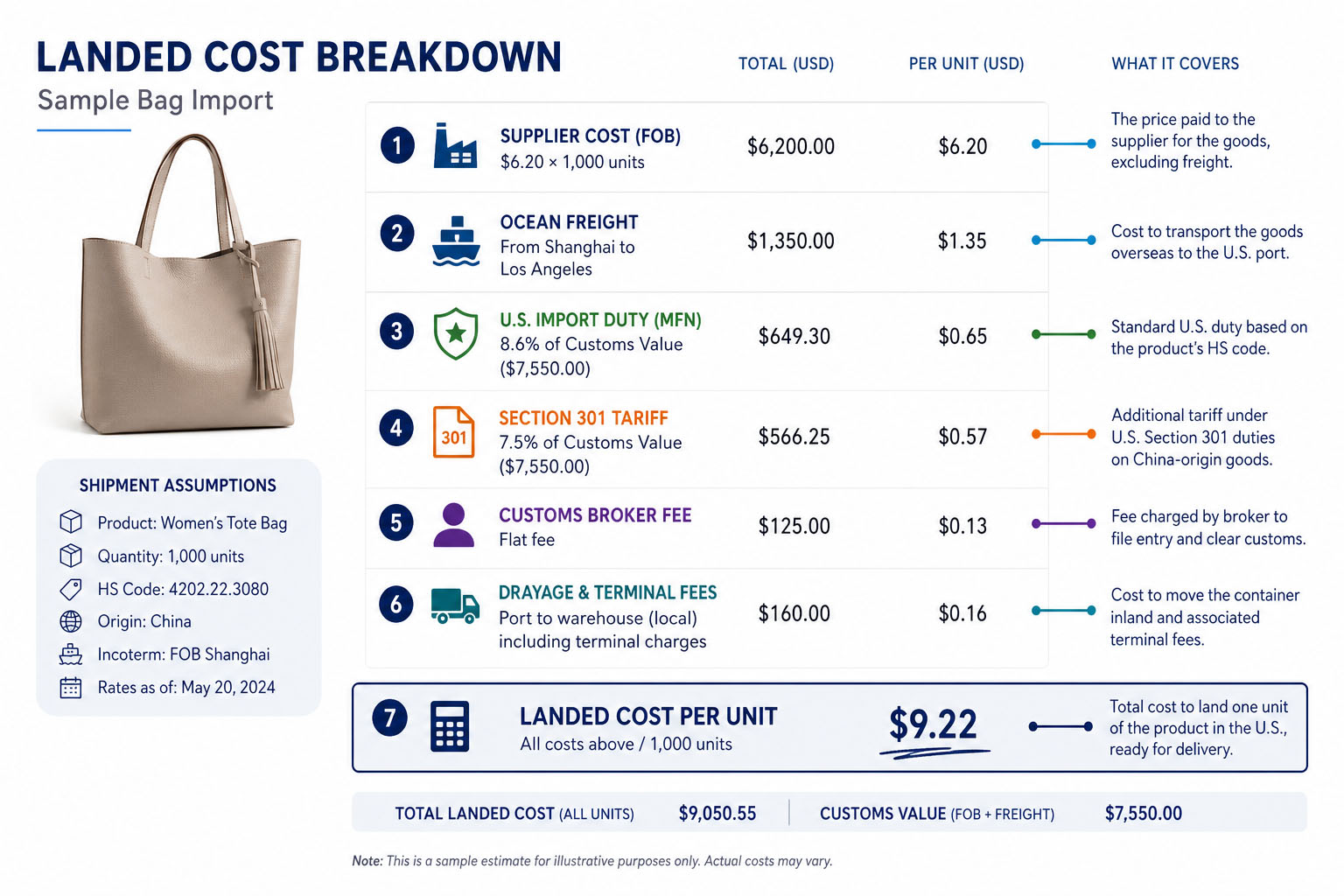
DDP vs. DDU: who pays for what
One of the most important decisions you’ll make is whether to ship DDP (Delivered Duty Paid) or DDU (Delivered Duty Unpaid).
DDP shipping shifts all import costs to the supplier. The Chinese factory or freight forwarder handles everything, and you receive the goods at your door with no additional charges. This is the most expensive shipping option but the simplest for new importers.
DDU shipping places the burden on the buyer to handle duties, taxes, and customs clearance upon arrival. It’s cheaper but requires you to be prepared for unexpected charges and paperwork.
For a small bag business just starting out, DDP is often worth the premium because it eliminates the risk of surprise charges. As you scale and learn the process, you can transition to DDU or FOB to lower your per-unit cost.
Question 5: How Can You Avoid Unexpected Fees and Surcharges from Chinese Suppliers?
After years of working with importers who’ve been burned by hidden charges, we’ve identified the seven most common traps — and exactly how to avoid each one.
Bag industry expert reviewing supplier contract terms
1. Understand your payment terms upfront
Most small importers pay their Chinese suppliers via T/T (bank wire transfer), which is straightforward but irreversible once sent. Some use PayPal or credit cards, but these methods often incur foreign transaction fees of 1% to 3% on top of the purchase amount — fees that quietly inflate your unit cost if you didn’t budget for them.
Pro tip: For first-time orders, consider using Alibaba Trade Assurance or Letter of Credit for added protection. Yes, they add a small cost, but they give you legal recourse if the supplier fails to deliver as promised.
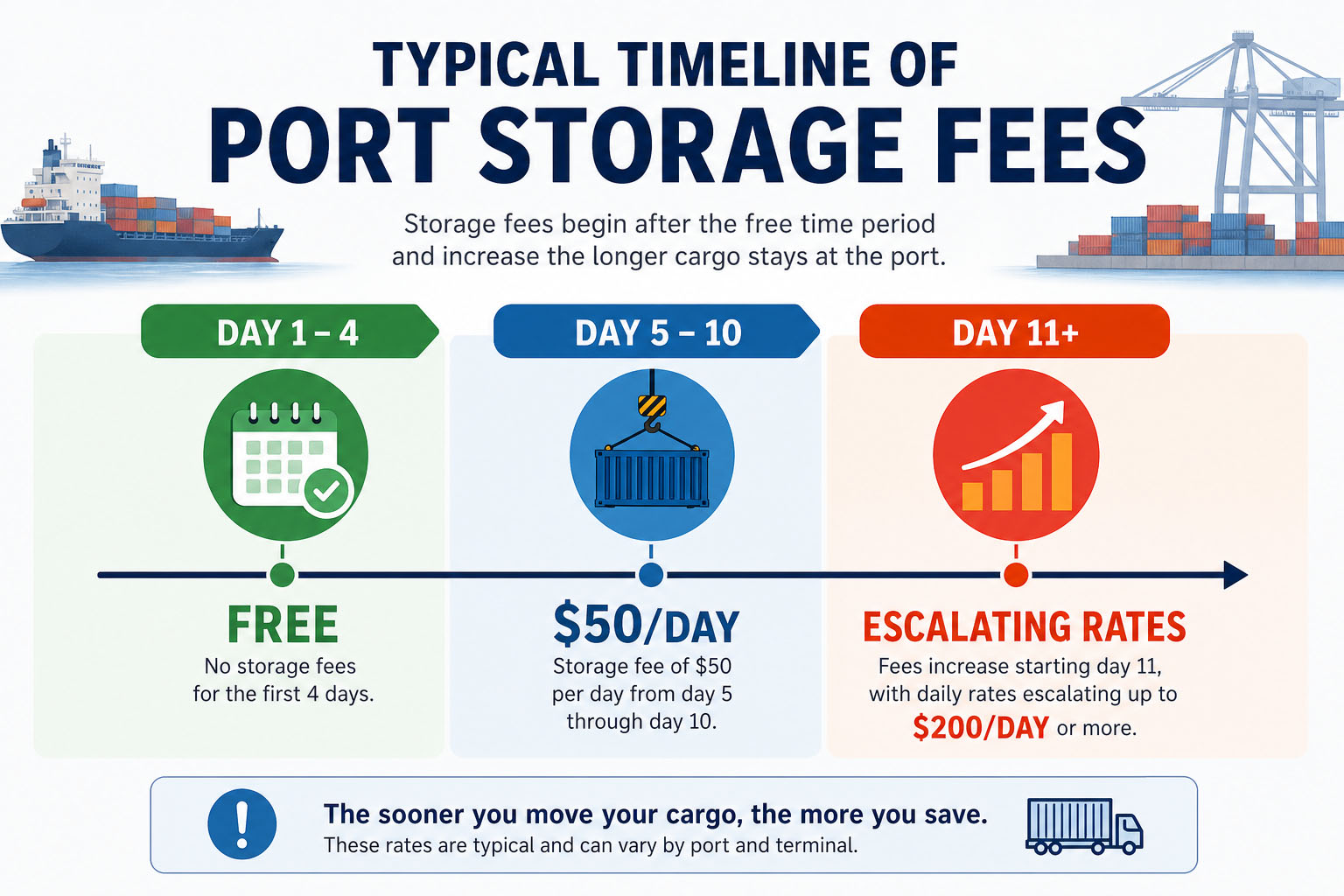
2. Budget for storage and demurrage fees
Customs duties and taxes are typically due before the goods are released, so failing to budget for them can result in storage fees, demurrage charges, or even shipment returns. Most U.S. ports give you 4–5 days of free storage; after that, charges can run $50–$200 per day depending on the port and shipment size.
3. Decide on insurance — and don’t skip it
Product insurance during transit is optional but highly recommended. Loss or damage without insurance leaves the buyer fully responsible for the full replacement cost of the shipment. Marine cargo insurance typically costs 0.3% to 1% of the cargo value — pennies on the dollar for peace of mind on a $10,000 order.
4. Know how samples differ from bulk orders
Samples shipped via express couriers (DHL, FedEx, UPS) usually include prepaid duties in the quoted rate, but bulk orders via freight may trigger unexpected port handling, documentation, or fumigation charges. The shipping experience for a 2kg sample is fundamentally different from a 500kg bulk shipment — make sure your cost model accounts for the difference.
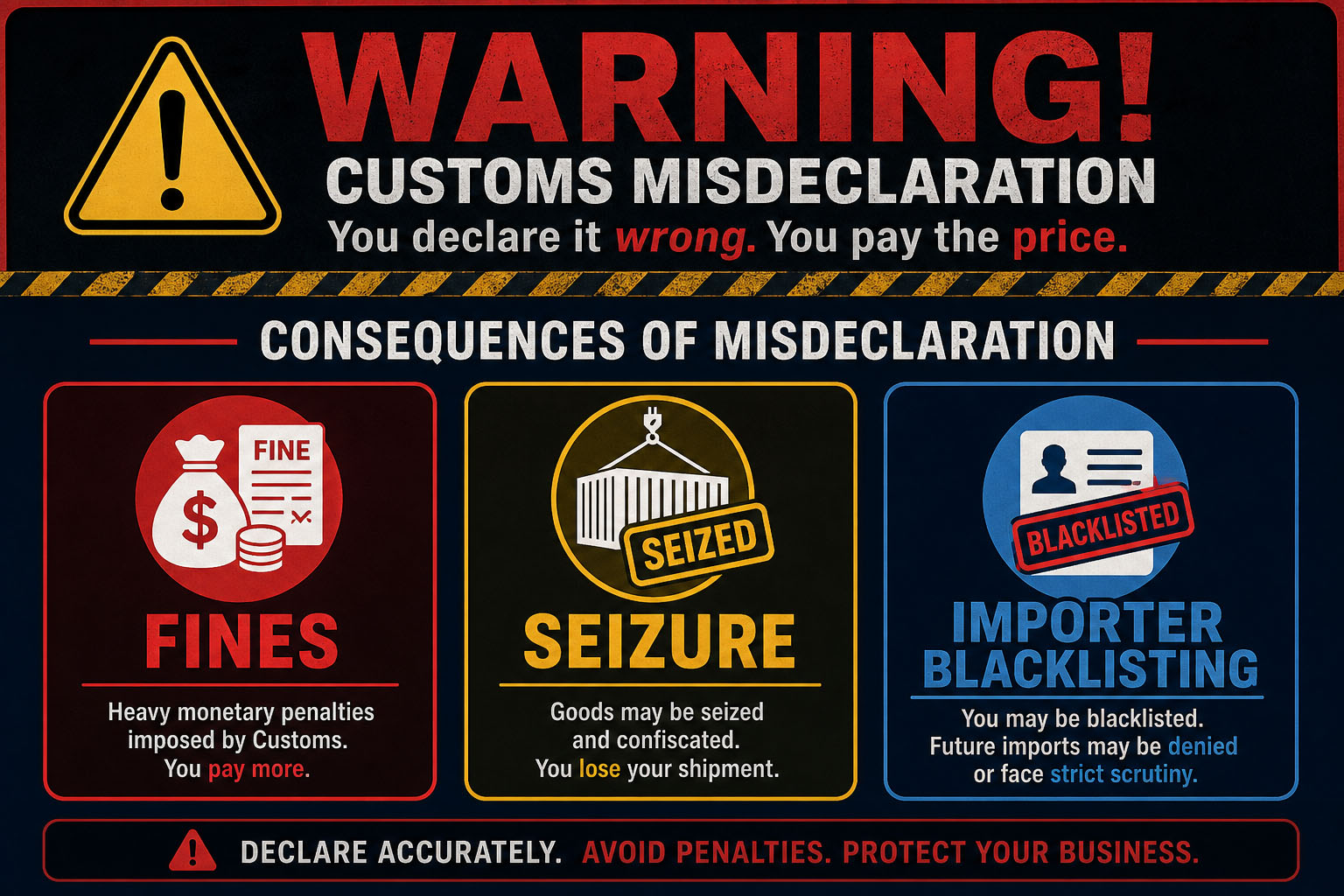
5. Never misdeclare value or product description
Misdeclaring the value or product description on customs forms to reduce duties is illegal and can result in fines, seizure of goods, or even blacklisting of the importer by U.S. Customs and Border Protection. We’ve seen small importers face $5,000+ penalties for “accidentally” listing $8,000 worth of leather handbags as $800 worth of “fabric samples.” Don’t risk your entire business to save a few hundred dollars on a single shipment.
6. Always confirm the shipping Incoterm before paying
The difference between EXW, FOB, CIF, and DDP can mean thousands of dollars in unexpected costs. EXW (Ex Works), for example, means you’re responsible for everything from the supplier’s loading dock to your warehouse — including local Chinese trucking, export clearance, and freight. Most small importers should be working with FOB (Free On Board) or CIF (Cost, Insurance, and Freight) as a starting point, and only consider DDP if you want maximum simplicity.
7. Build a relationship with a freight forwarder, not just a supplier
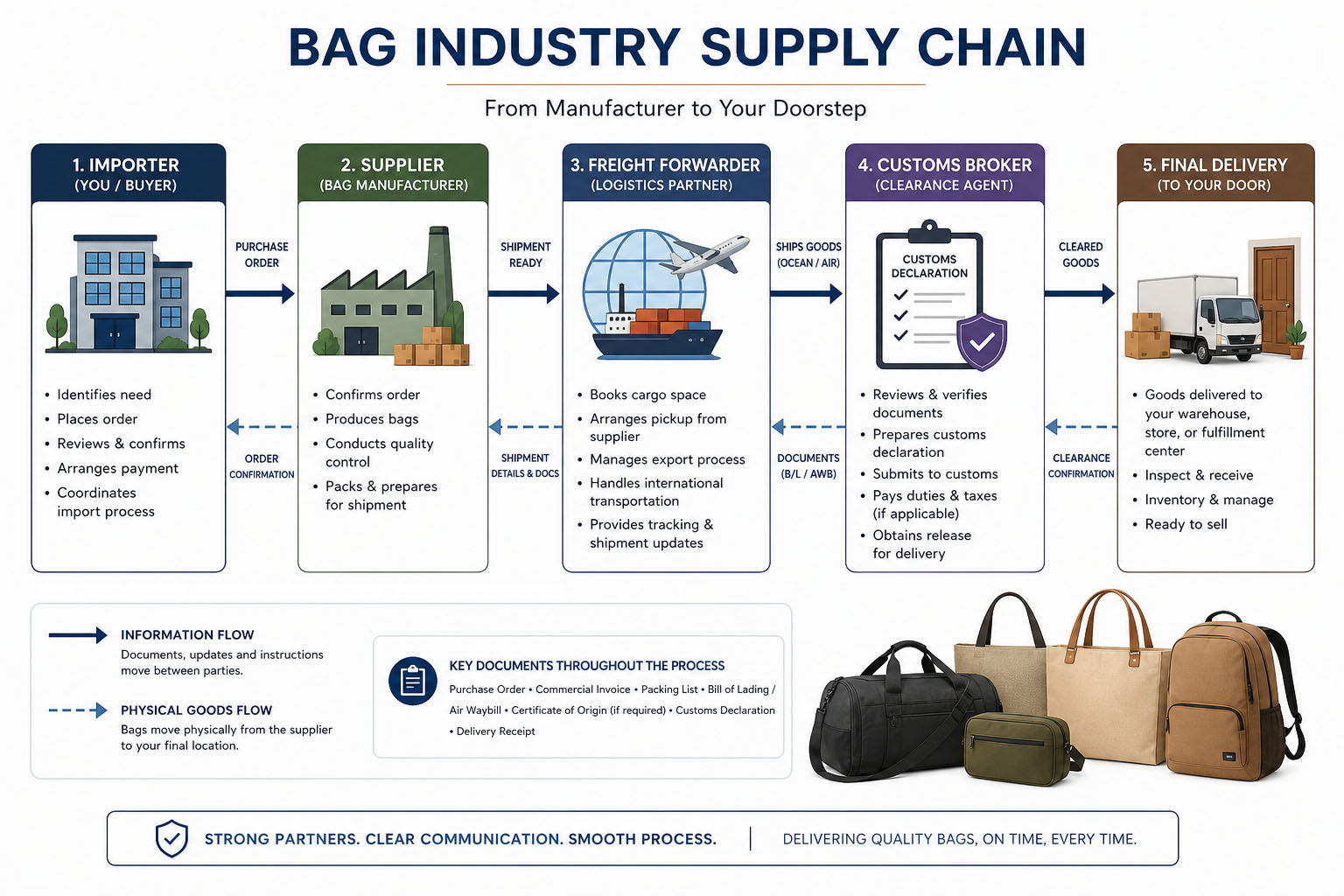
The best importers in the bag industry have a trusted freight forwarder and customs broker on speed dial — not just a Chinese factory. A good forwarder will tell you when shipping rates are about to spike, warn you about upcoming tariff changes, and proactively flag any documentation issues before they become expensive problems.
Our Commitment to Transparent Pricing
We’ve worked with hundreds of small bag businesses over the years, and we’ve seen the damage that hidden costs can do to a young brand. That’s why transparency isn’t just a policy for us — it’s the foundation of how we operate.
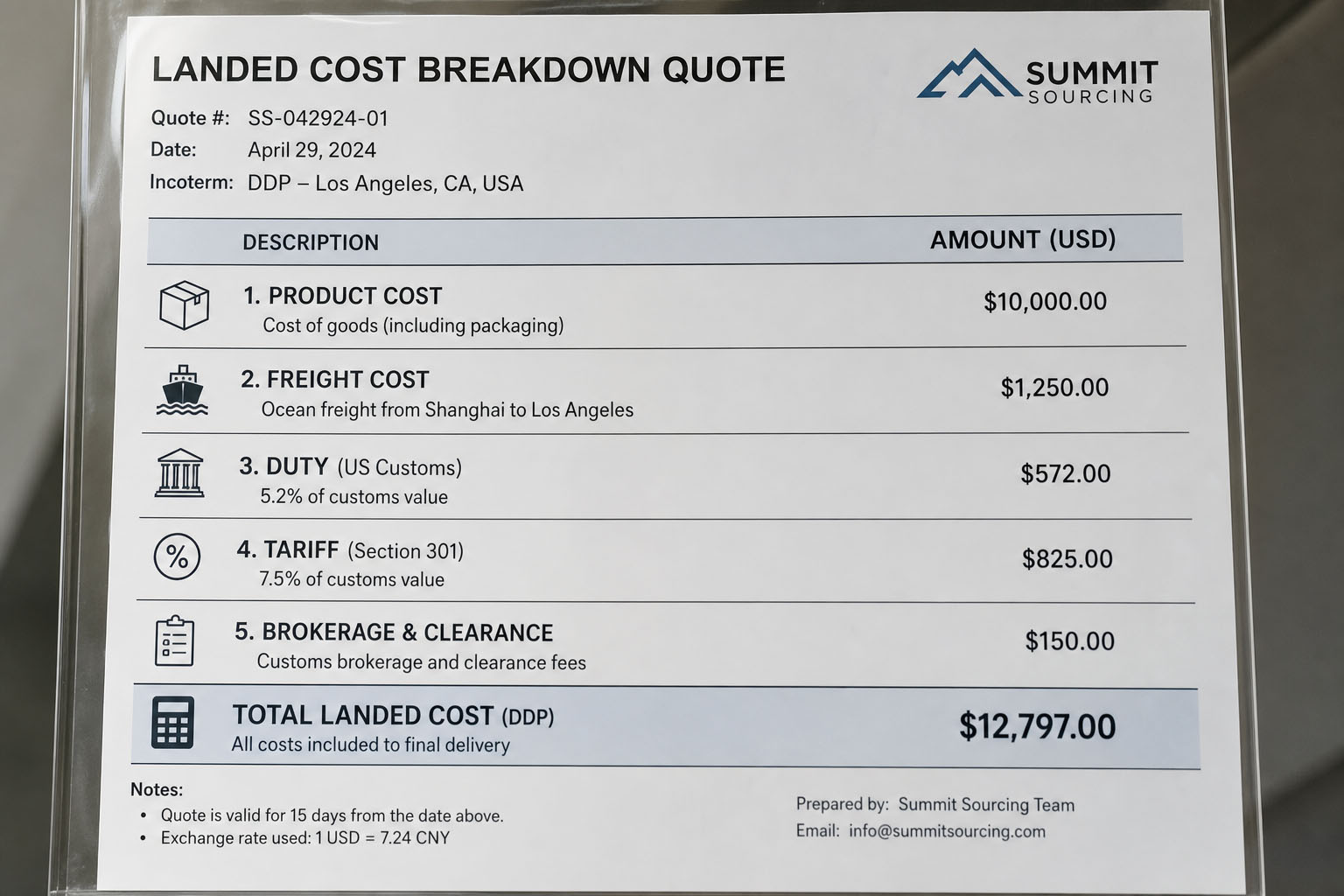
1. Before we confirm any order or release any shipment, we provide our customers with a complete breakdown of all specific cost line items. No surprises, no “additional fees will apply later” footnotes.
2. We proactively flag all potential hidden costs with our customers in advance. From potential Section 301 tariff surcharges to port handling fees that may apply for certain destinations, we make sure you know what to expect before you commit.
3. We guarantee full cost transparency across the entire order process. Every quote we provide separates the product cost from shipping, duties, and any ancillary fees. Every invoice matches what was quoted. Every communication is documented.
This isn’t just good business practice — it’s how long-term partnerships are built. We want you to be able to price your bags confidently, knowing that your real cost is exactly what we told you it would be.
Conclusion: Build Your Bag Business on Real Numbers, Not Factory Quotes
Importing bags from China can be one of the most profitable moves a small business makes — but only if you approach it with a clear understanding of your true landed cost. The importers who succeed in this industry aren’t the ones who find the cheapest factory quote; they’re the ones who build their pricing models on the full cost of getting goods from a Chinese loading dock to their customer’s door.
To recap the most important takeaways:
✅ Always calculate landed cost, not just unit price, before placing any order.
✅ Verify the HS code for your specific bag category with a customs broker.
✅ Choose the right shipping method based on volume, speed, and budget.
✅ Decide between DDP and DDU based on your experience level and risk tolerance.
✅ Build a relationship with a trusted freight forwarder and broker before you need one.
✅ Never misdeclare on customs forms — the risk far outweighs the savings.
✅ Work with suppliers who provide full cost transparency before you commit.
The bag industry is competitive, but it’s also one of the most accessible product categories for new importers. The factories are sophisticated, the supply chains are mature, and the consumer demand is strong and growing. The only question is whether you’ll build your business on a complete cost model — or learn the hard way, like so many others have, that the factory quote is just the beginning of the story.
Ready to source bags from China with complete cost transparency? Contact our team for a full landed cost quote on your next order — no hidden fees, no surprises, just the real numbers you need to make confident decisions.
Post time: Jun-01-2026