
The Complete Guide to Individual Polybag Packing for Handbag Export: What Every Global Buyer Should Know
By Trust-U Bag | B2B Bag Industry Insights
When you’re sourcing handbags from Chinese manufacturers and shipping them across the ocean to the United States, the packaging decision you make at the factory level quietly determines how your product arrives on retail shelves — and ultimately, how your brand is perceived. Among the many packaging methods used in the global bag trade, individual polybag packing remains the most widely adopted, the most cost-efficient, and the most misunderstood.
In this in-depth guide, we’ll walk you through everything a U.S. bag buyer needs to know about polybag packaging — from standard thickness specifications to eco-friendly alternatives, custom branding options, and how those individually packed bags are consolidated into master cartons for international ocean freight. Whether you’re a first-time importer or an experienced wholesale buyer looking to upgrade your supply chain, this article will give you the clarity you need to communicate confidently with your Chinese suppliers.
Why Individual Polybag Packing Matters in the Handbag Export Industry
If you’ve ever opened a wholesale shipment of handbags and found scuffed corners, dust-filled interiors, or strange odors drifting from the cartons, you’ve experienced the consequences of inadequate inner packaging. Individual polybag packing effectively shields each bag from dust, moisture, and surface scratches during storage and transit. This is not a marketing claim — it’s an industry standard backed by decades of export packaging practice.
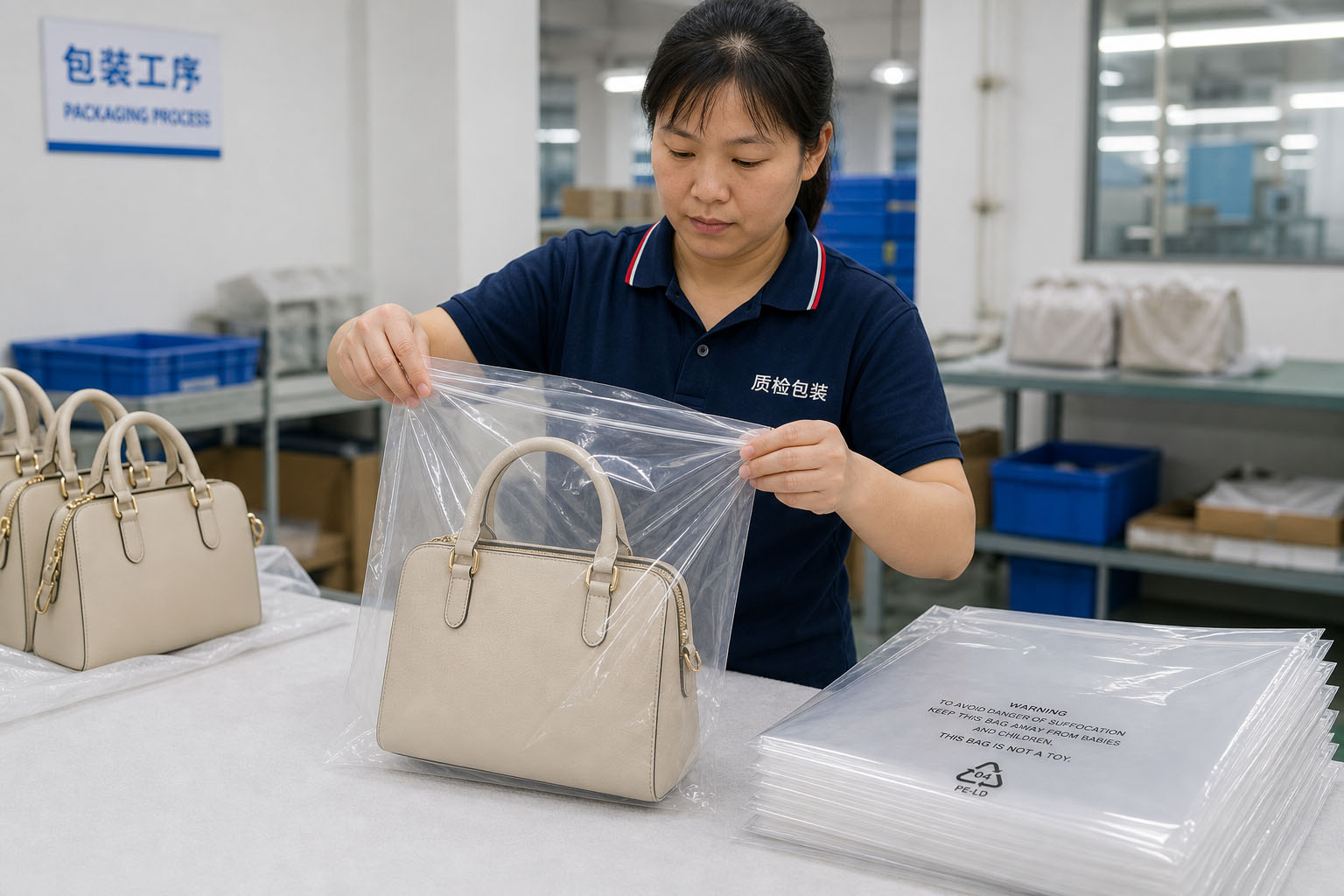
Think of the polybag as the first line of defense for your product. Even when master cartons are stacked high in a shipping container bound for Long Beach or New York, the polybag keeps the handbag’s surface pristine. Salt air, container condensation, forklift handling, and weeks of vibration can all compromise a bag’s finish — but a properly sealed polybag acts as a protective barrier.
From a buyer’s perspective, individual polybag packing also means faster quality inspection at your U.S. warehouse. You can spot any damage, color variation, or defect simply by looking through the transparent film without breaking the seal. This translates into faster receiving times, fewer disputes, and a smoother restocking process.
The Real Function of Polybags: More Than Just a Plastic Wrapper
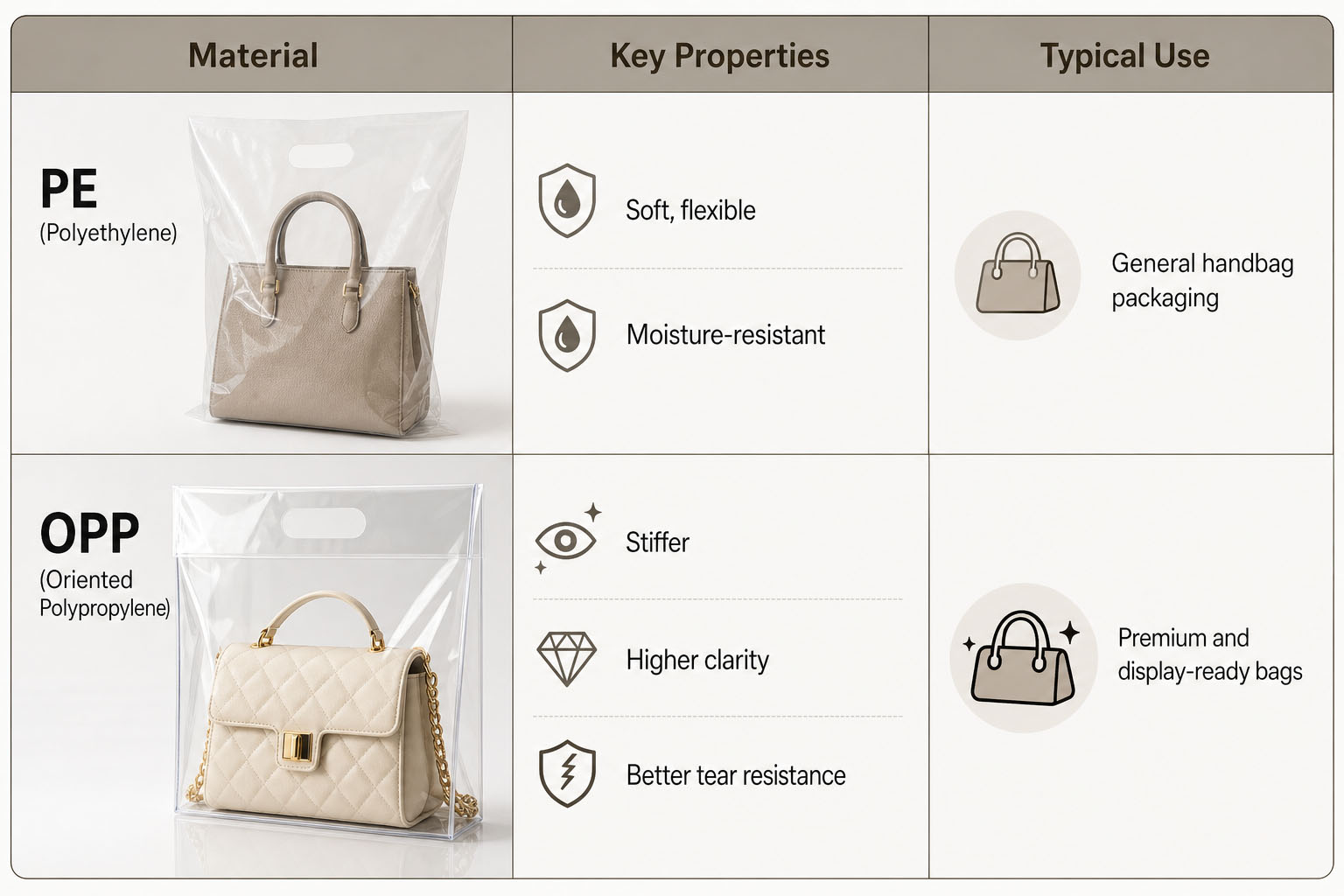
Many buyers underestimate the engineering behind a simple polybag. In the Chinese bag manufacturing ecosystem, polybags are typically made from transparent PE (polyethylene) or OPP (oriented polypropylene) plastic, allowing visual inspection of the product without opening the packaging. This transparency isn’t accidental — it’s a deliberate design choice that helps buyers, customs officers, and warehouse staff verify the contents without disturbing the protective seal.
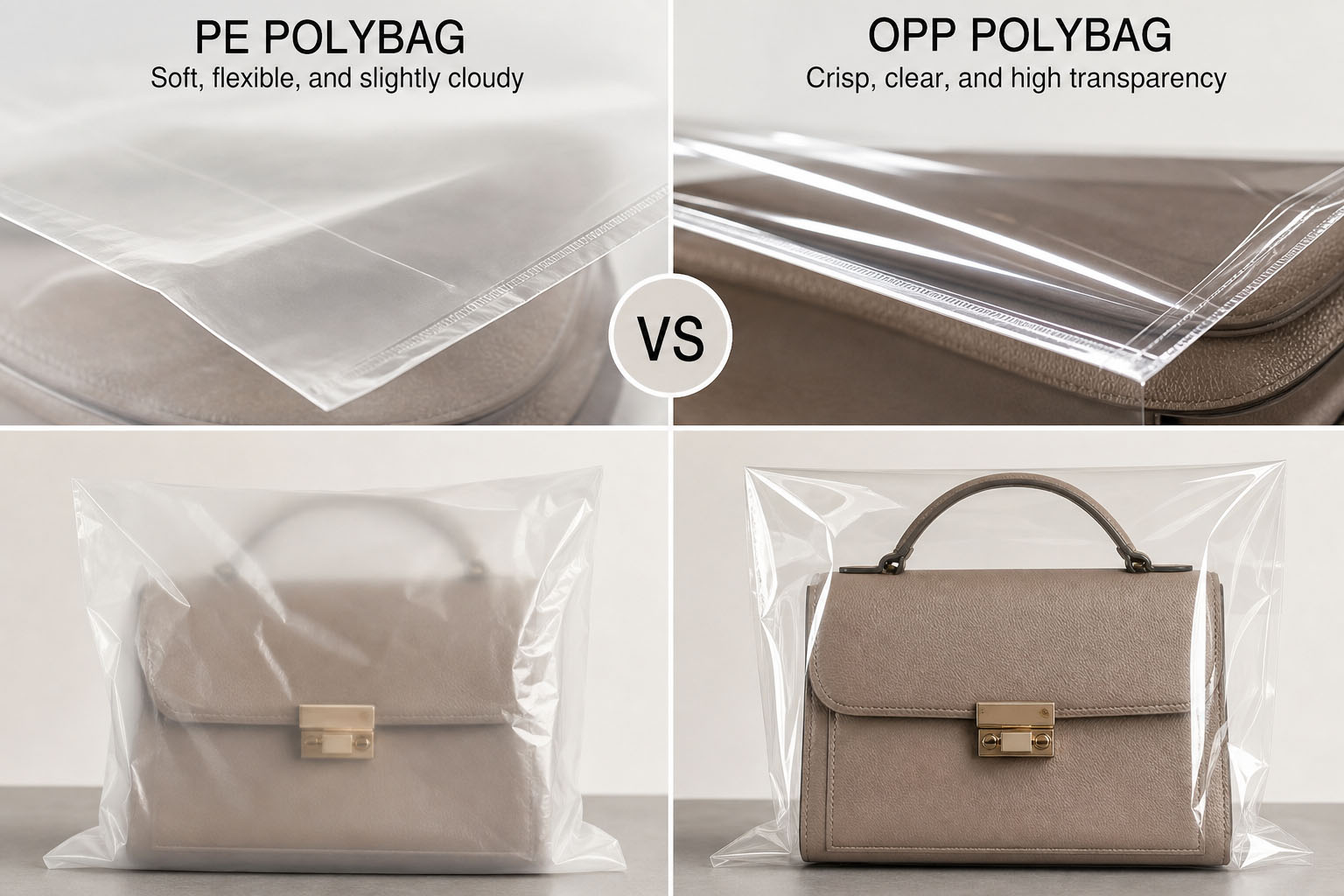
Here’s a quick breakdown of the two most common materials:
In addition to the polybag itself, many suppliers insert tissue paper or thin foam sheet inside the polybag to reinforce shape and prevent creasing. This is especially common for structured handbags, totes with hardware, and soft leather goods where any fold or dent can be permanent. If you’re importing high-end or fashion-forward bags, ask your supplier whether they offer internal tissue or foam reinforcement — it’s a small detail that makes a big visual difference.
Industry Standard: Is Individual Polybag Packing Included by Default?
Here’s a question every new buyer asks: Do I need to pay extra for polybag packing, or is it standard?
The answer is reassuring. Individual polybag packing is a standard export packaging practice in Chinese bag factories and is generally included in the unit price. Unlike branded gift boxes, dust bags, or custom retail packaging — which are typically quoted as add-ons — the basic individual polybag is considered part of the manufacturer’s default packaging protocol.
That said, “standard” doesn’t always mean “optimal.” Some factories use the thinnest possible polybag to minimize cost, which can tear during stuffing or shipping. As an experienced buyer, you should always specify the thickness, sealing method, and material type in your purchase order. We’ll cover the exact specifications to request in the next section.
Polybag Thickness Standards for Handbag Export: What You Should Specify
Polybag thickness is one of those technical details that can make or break your shipment. Polybag thickness (typically 0.03mm–0.08mm) directly impacts tear resistance; thicker gauges are recommended for premium or heavy bags. In the U.S. importing world, polybag thickness is usually measured in mils (1 mil = 0.0254 mm), so the typical export range converts to roughly 1.2 mil to 3.2 mil.
For a more practical reference, here’s a guide based on bag type:
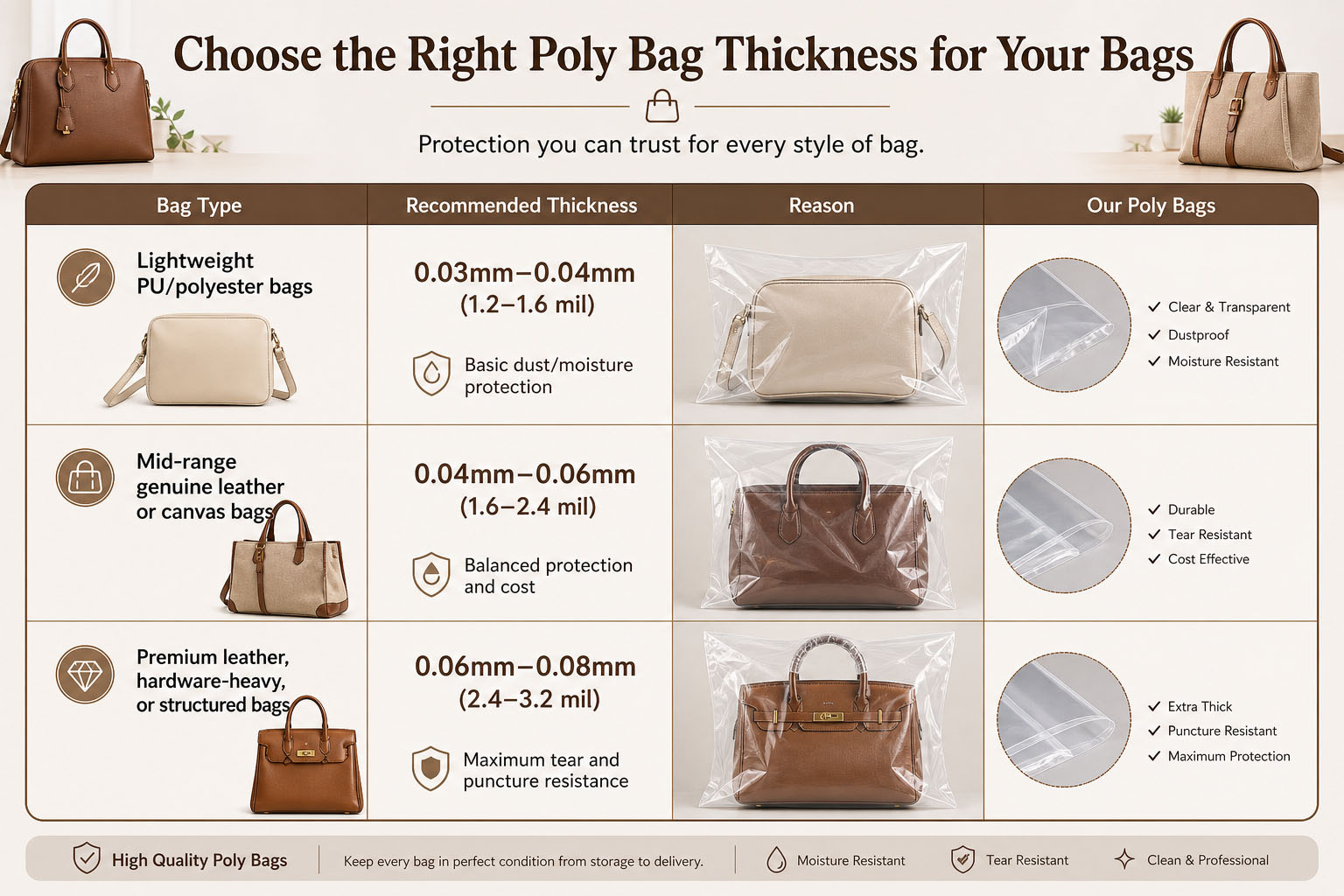
A simple message you can send to Chinese suppliers is: “Please pack each bag in one individual polybag with a minimum thickness of [0.05mm / 2 mil] to protect it from dust, moisture, and scratching during transport.” If you want, we can rewrite this into more professional supplier English for your Alibaba inquiry or formal email — just let us know in the comments.
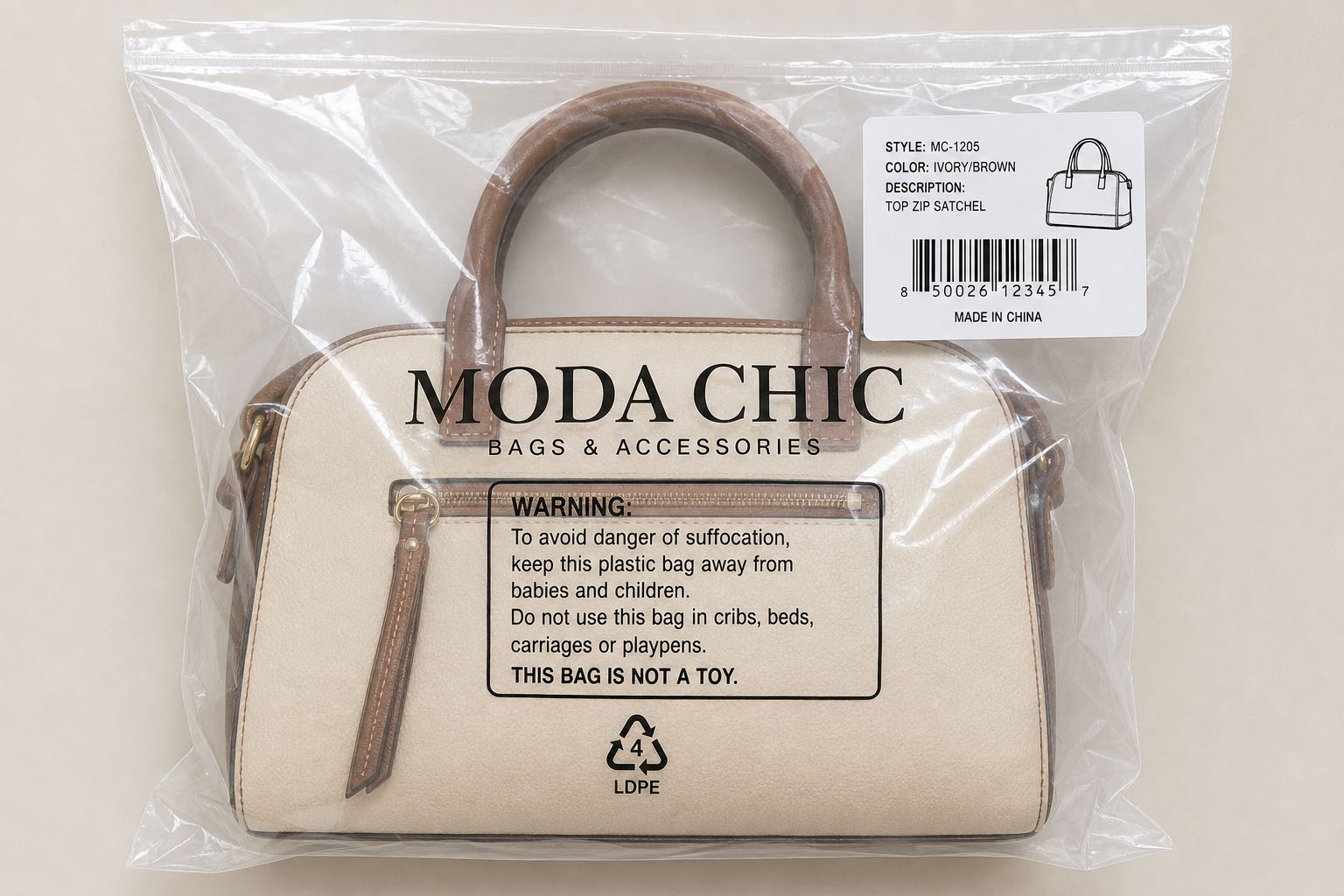
Some buyers also request suffocation warning labels on larger polybags. This is particularly important if your bags will be sold in U.S. retail stores like Target, Walmart, or Costco. If the opening is large, a suffocation warning may be needed for retail compliance in some markets. The standard U.S. warning reads: “Plastic bags can be dangerous. To avoid danger of suffocation, keep this bag away from babies and children. Do not use this bag in cribs, beds, carriages, or play pens.”
Custom Logo & Brand Printing on Polybags: A Hidden Branding Opportunity
Here’s an opportunity that most small and mid-size buyers overlook. Is custom logo or brand printing available on the individual polybag? The answer is yes — and it can be a remarkably affordable branding tool.
Most Chinese bag factories offer three main options for polybag customization:
1. Sticker labels — A printed sticker with your logo is applied to the outside of a standard clear polybag. This is the cheapest and fastest option, ideal for small orders or test shipments.
2. One-color or two-color flexographic printing — Your logo or brand name is printed directly onto the polybag film. This requires a higher MOQ (usually 1,000–3,000 pieces) but delivers a much cleaner, more premium look.
3. Full-color custom printing — For larger orders (typically 5,000+ pieces), some suppliers offer full-color printed polybags with your brand’s design, pattern, or messaging.
Beyond aesthetics, custom-printed polybags serve a functional purpose. Sealed polybag packaging preserves product cleanliness and retail-ready presentation upon arrival at the destination warehouse. When your customer opens a master carton and finds each bag individually wrapped in branded packaging, the perceived value of the product instantly increases.
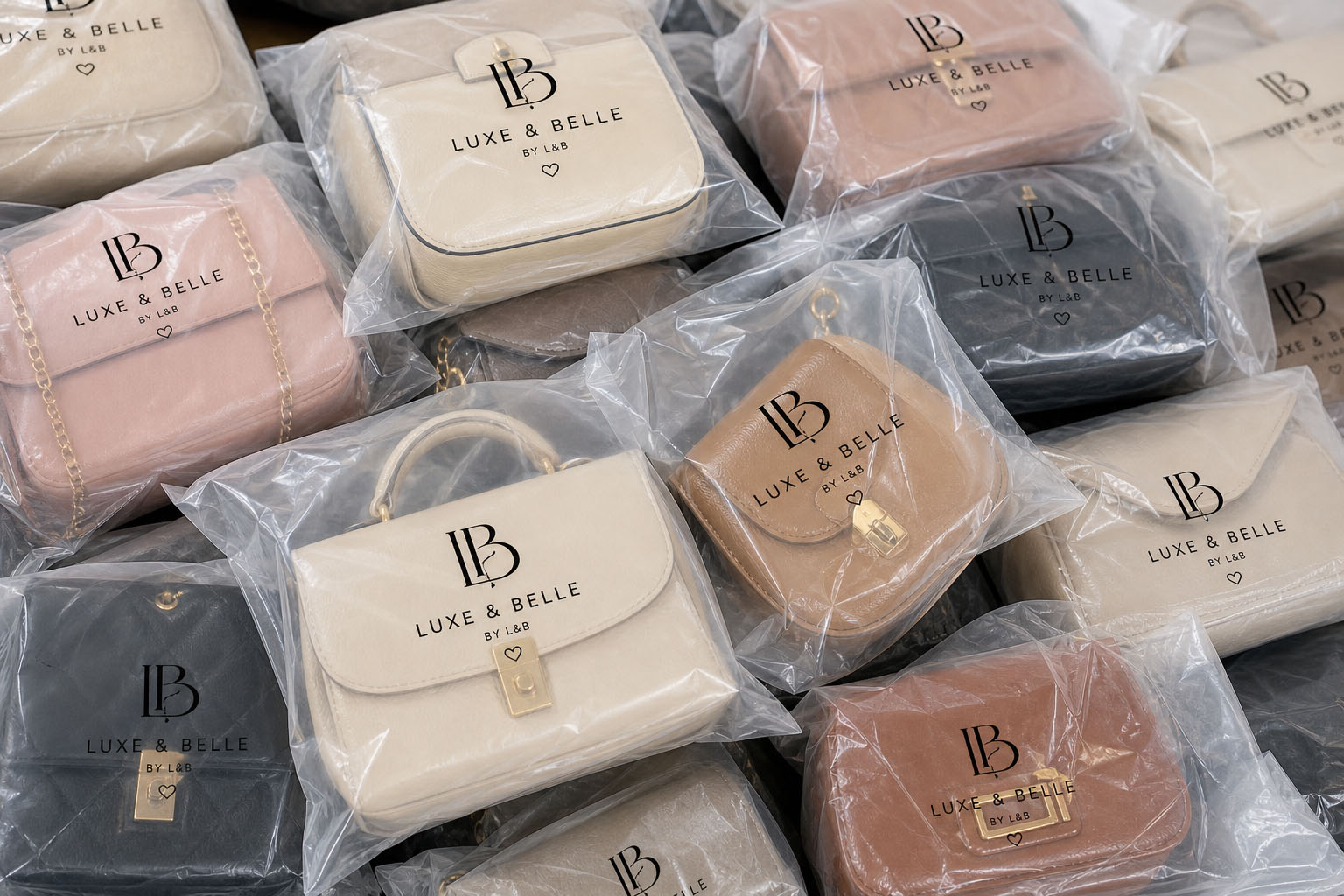
If you’re building a private-label handbag brand on Amazon, Shopify, or your own e-commerce site, investing a few extra cents per unit in custom polybags can pay off significantly in customer reviews and unboxing experiences.
Eco-Friendly Polybag Options: Meeting U.S. Sustainability Standards
Sustainability is no longer a “nice-to-have” in the U.S. market — it’s a baseline expectation. If your product listing on Amazon or your brand website doesn’t address environmental responsibility, you’re leaving conversions on the table. The good news? Are biodegradable or recycled polybag material options offered by Chinese bag suppliers? Yes, increasingly so.
Here are the main eco-friendly options currently available from Chinese bag manufacturers:
Recycled PE (rPE) — Made from post-consumer or post-industrial recycled plastic. Functionally identical to virgin PE, but with a lower carbon footprint.
Biodegradable PLA polybags — Made from plant-based materials such as cornstarch. These break down under industrial composting conditions.
Compostable bags (TÜV or BPI certified) — A more rigorously tested subset of biodegradable bags, suitable for brands making formal sustainability claims.
Paper-based inner sleeves — Some suppliers offer a hybrid approach: a paper sleeve inside a thin polybag, reducing plastic use while maintaining moisture protection.
Eco-friendly and recyclable polybag options are increasingly available from Chinese manufacturers to meet U.S. sustainability standards. When negotiating with suppliers, ask for documentation such as FDA food-contact certification (if relevant), REACH compliance, or GRS (Global Recycled Standard) certification for recycled materials. These credentials matter not just for compliance, but for marketing claims.
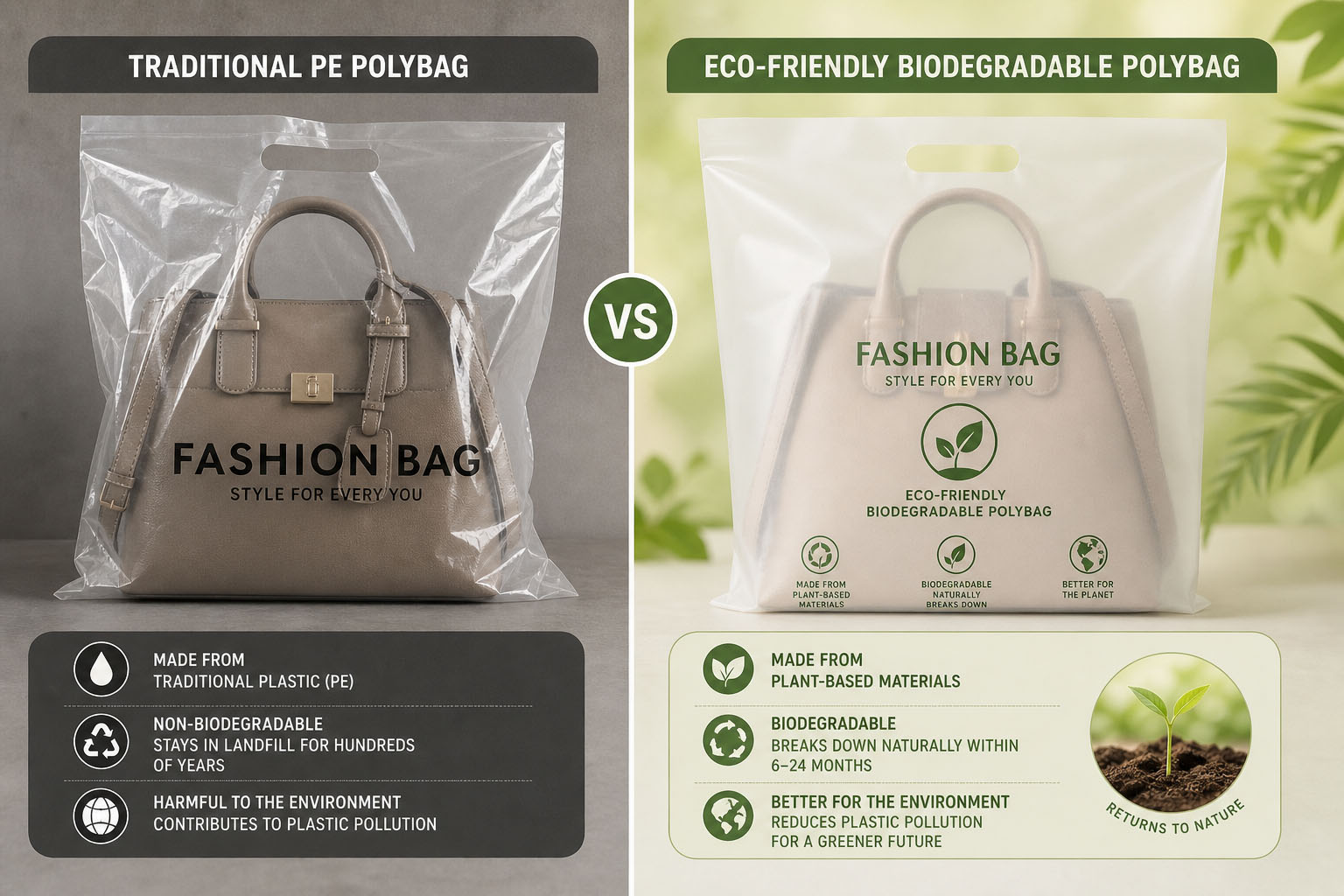
Be aware that eco-friendly polybags typically cost 20–60% more than standard PE and may have longer lead times. For U.S. buyers targeting sustainability-conscious consumers, however, the price premium is usually justifiable.
Smart Additions: Desiccants and Sealing Methods
Two small details that experienced buyers always specify — and that inexperienced ones often forget — are desiccants and sealing methods.
Adding a small silica gel desiccant inside the polybag helps prevent mildew and odor during sea freight. Ocean containers are notorious for “container rain” — the condensation that forms when temperature fluctuations cause humidity to condense on cold surfaces. A silica gel packet (typically 1–5 grams) absorbs excess moisture and keeps the interior of the polybag dry. This is especially important for genuine leather bags, which can develop mold if exposed to moisture for extended periods.
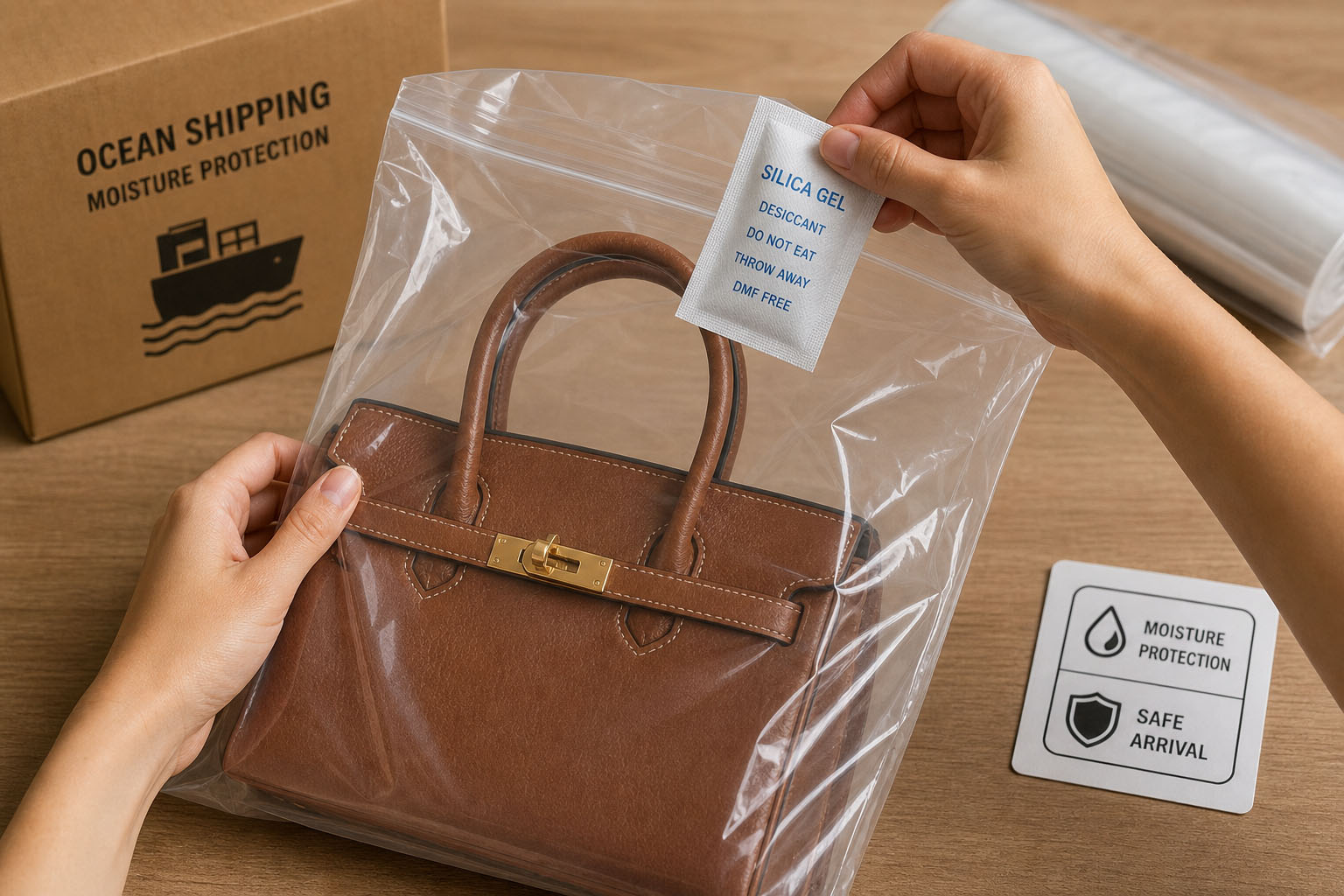
For sealing, the polybag sealing method — heat seal, adhesive tape, or self-seal strip — affects whether the packaging can be easily resealed after opening for retail display. Here’s a comparison:
Heat seal — Strongest and most tamper-evident, but cannot be resealed. Best for products that won’t be re-wrapped after opening.
Adhesive tape seal — Moderate strength, can sometimes be resealed depending on tape type.
Self-seal strip (re-closable) — Adds convenience for end consumers but is more expensive and less common in export packaging.
For most B2B handbag shipments, heat-sealed polybags are the default because they prevent accidental opening during rough handling and indicate tampering at the destination.
From Polybag to Master Carton: How Bags Are Consolidated for Ocean Shipping
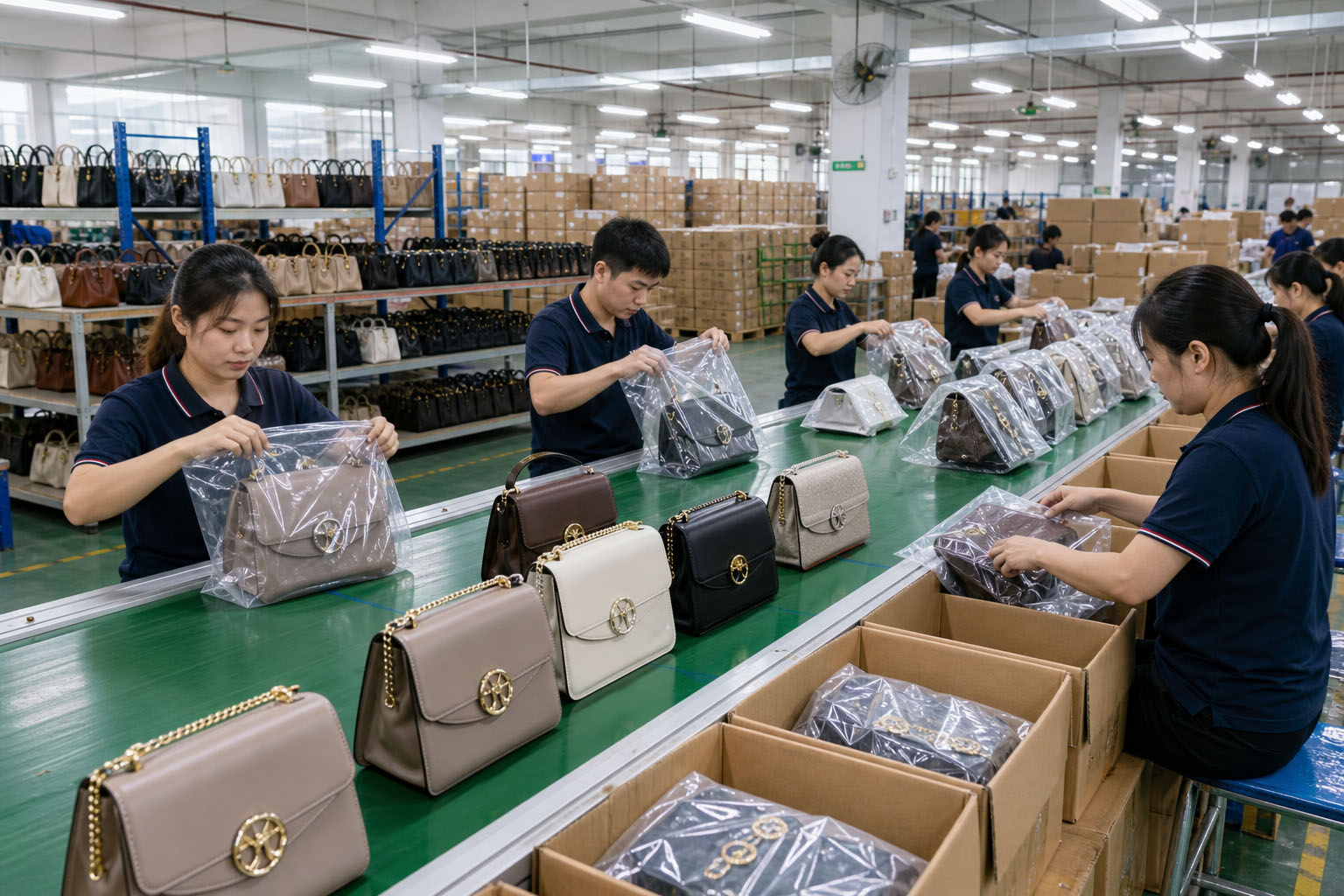
Now that each handbag is individually protected, the next step is consolidating them into master cartons for export. How are polybag-packed bags then consolidated into master cartons for international ocean shipping? This is where logistics efficiency and damage prevention intersect.
The standard process in most Chinese bag factories looks like this:
1. Grouping — Typically 10 to 50 individually polybagged bags are placed into a master carton, depending on bag size and carton dimensions.
2. Layer separation — For structured or premium bags, factories insert cardboard dividers or honeycomb paper between layers to prevent crushing.
3. Cushioning — Individual polybag packing is significantly more cost-effective than boxing each unit, especially for bulk wholesale orders. To compensate for the lack of individual boxes, factories often add bubble wrap, air pillows, or crumpled kraft paper around the bags inside the master carton.
4. Carton sealing — Master cartons are sealed with heavy-duty packing tape, often reinforced with strapping for heavier shipments.
5. Marking and labeling — Each carton is marked with product description, quantity, net/gross weight, dimensions, and (if required) your customer’s UPC or SKU labels.
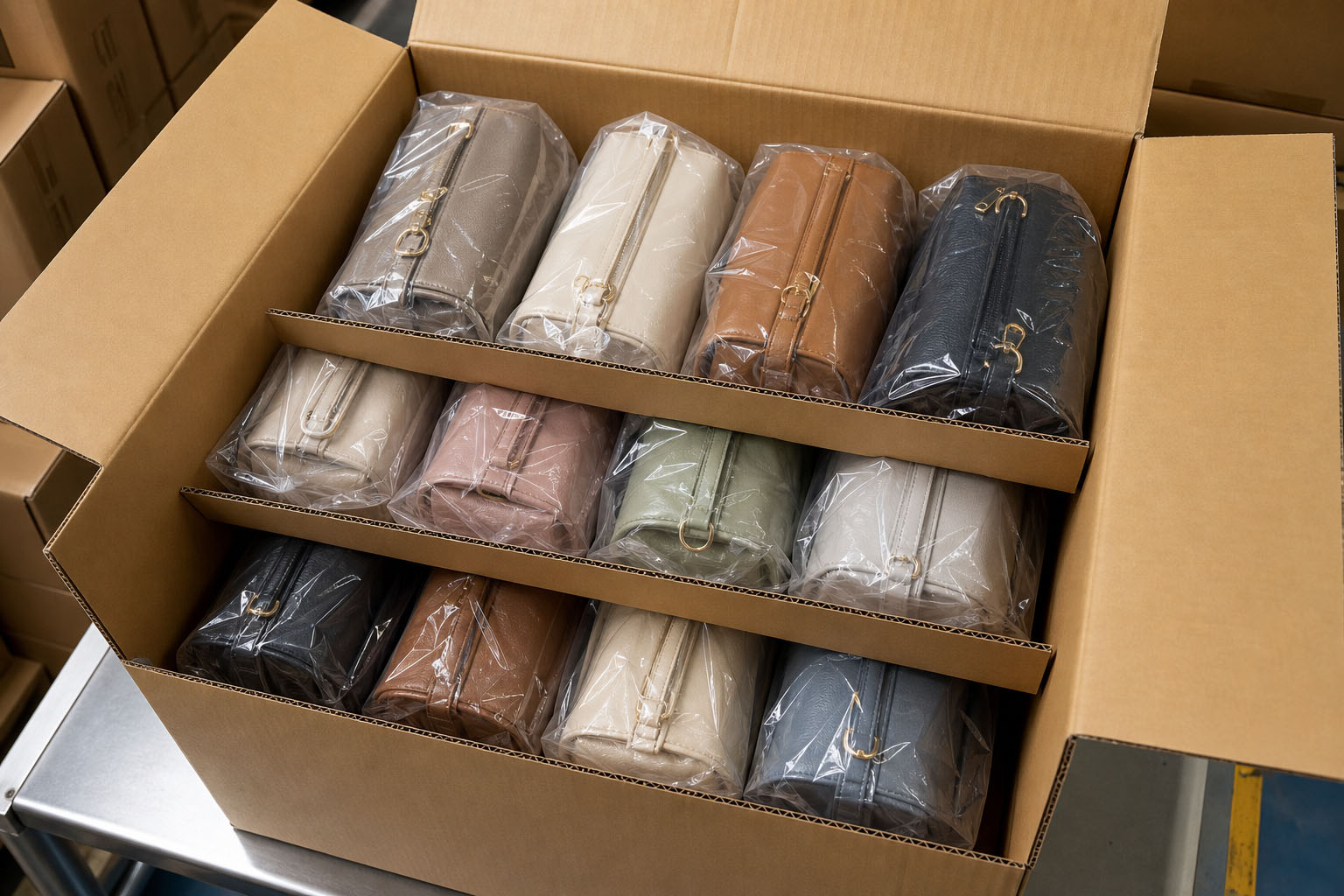
For larger shipments, multiple master cartons are then palletized and stretch-wrapped before being loaded into the shipping container. Individual polybag packing is a standard export packaging practice in Chinese bag factories and is generally included in the unit price — but master carton configuration, palletizing, and container loading are usually quoted separately as part of the Incoterms negotiation (FOB, CIF, DDP, etc.).
If you want extra protection for long ocean transits, you can request:
5-ply corrugated cartons instead of standard 3-ply
Double-walled master cartons for bags over 3 kg
“This side up” arrows and fragile stickers (cosmetic, but useful for less experienced freight handlers)
A Sample Message to Send Your Chinese Supplier
To make this guide practical, here’s a ready-to-send message template you can copy and paste into your Alibaba inquiry or email:
“Hello,
We are a U.S.-based handbag retailer sourcing [handbag type, e.g., women's PU tote bags] for our online store. Please confirm the following packaging requirements:
1. Each bag packed in one individual polybag, fully sealed (heat seal preferred).
2. Polybag material: Clear PE or OPP, minimum thickness 0.05mm (2 mil).
3. Suffocation warning label printed on polybag (U.S. retail compliance).
4. Optional: Custom logo sticker on the outside of each polybag (we will provide artwork).
5. Optional: Biodegradable or recycled polybag material — please quote both options.
6. Insert one silica gel desiccant packet (1–5g) inside each polybag.
7. Master carton: 5-ply corrugated, with cardboard dividers between layers, sealed with heavy-duty tape.
8. Please confirm whether the individual polybag packing is included in the unit price or quoted separately.
Looking forward to your reply and quotation.
Best regards,
[Your Name / Your Company]”
Frequently Asked Questions (FAQ)
Q1: Is individual polybag packing really enough to protect handbags during ocean shipping?
Yes. For most soft to medium-structured handbags, a properly sealed polybag (0.05mm+ thickness) combined with a 5-ply master carton provides adequate protection for 30–45 day ocean transits.
Q2: What’s the difference between PE and OPP polybags?
PE is softer and more flexible; OPP is stiffer and clearer. OPP is often preferred for premium display-ready products, while PE is the standard for general export.
Q3: Can I bring my own branded polybags to the factory?
Some factories accept client-supplied packaging materials, but this is less common due to logistics complexity. Most buyers opt for custom-printed or sticker-labeled polybags supplied by the factory.
Q4: How much extra do eco-friendly polybags cost?
Typically 20–60% more than standard PE, depending on material, certification, and order quantity. For small MOQs, the premium can be higher.
Q5: Is suffocation warning labeling legally required?
In the U.S., the federal requirement applies to plastic bags with an opening of 5 inches or more in diameter. For retail sale, it’s strongly recommended regardless of size.
Q6: What should I do if my shipment arrives with damaged polybags?
Document the damage with photos before opening the master cartons, then file a claim with your freight forwarder and notify the supplier immediately. Most factories will offer a partial refund or replacement for verifiable transit damage.
Final Thoughts: Packaging as Part of Your Brand
Packaging is no longer just a logistical afterthought — it’s an extension of your brand and a critical quality checkpoint in your supply chain. As a U.S. buyer sourcing handbags from China, mastering the details of polybag packing gives you an edge in three ways: better product protection, stronger brand presentation, and improved regulatory compliance.
By specifying the right thickness, material, sealing method, and optional upgrades (custom printing, eco-friendly films, desiccants), you’re not just protecting your inventory — you’re signaling to your supplier that you understand the industry. This often translates into better service, fewer disputes, and stronger long-term partnerships.
Post time: Aug-03-2026