
A Professional’s Handbook for Small Business Owners in the Bags & Luggage Industry
Introduction: Why Quality Control Matters for Your Bag Business
As a small business owner selling bags online, your reputation hinges on every stitch, every zipper, and every seam your customers encounter. When you decide to source products from China, you open doors to competitive pricing and vast manufacturing capabilities—but you also introduce unique quality control challenges that require proactive strategies.
Unlike large corporations with dedicated sourcing teams and established supplier relationships, small businesses often face higher risks when navigating international supply chains. A single shipment of defective bags can mean lost revenue, negative reviews, and damaged customer relationships that take months to rebuild.
The good news? With the right approach to quality management, defect prevention, and supplier communication, you can source bags from China confidently while minimizing quality issues that could impact your business. This comprehensive guide draws from industry best practices and proven strategies to help you build a robust quality control system for your bag sourcing operations.
In this article, we’ll walk you through everything from pre-shipment inspections to negotiating defect policies, providing you with actionable insights you can implement immediately. Whether you’re ordering your first sample or preparing your tenth bulk shipment, these strategies will help you maintain consistent quality and build lasting supplier relationships.
Understanding the Unique Challenges of Small Orders
Why Factories May Be Less Flexible with Smaller Quantities
When sourcing bags from Chinese manufacturers, it’s essential to understand the economics that drive supplier behavior. Small orders represent lower revenue for factories, which means they may allocate less attention and resources to your production compared to larger clients. This doesn’t mean quality will suffer—but it does mean you need to be more proactive in your communication and quality control efforts.
Chinese factories often operate on tight margins, and production setup costs (mold adjustments, color mixing, equipment calibration) remain relatively constant regardless of order size. For smaller orders, these fixed costs represent a higher percentage of total production cost, making factories potentially less motivated to accommodate special requests or extensive rework.
However, this dynamic also presents an opportunity. By positioning yourself as a growing business with potential for larger repeat orders, you can create powerful incentives for suppliers to prioritize your quality and responsiveness. The key is framing your business relationship strategically—suppliers who understand they could become your primary manufacturing partner are far more likely to go the extra mile when issues arise.
Starting Small, Thinking Big: The Sample Order Strategy
One of the most effective approaches for small businesses is the “start small” methodology. Before committing to substantial quantities, place a small sample order specifically designed to assess the manufacturer’s defect rate, communication quality, and production consistency. This initial order serves multiple purposes:
First, it allows you to physically examine product quality before significant financial commitment. You can assess material quality, stitching precision, hardware functionality, and overall construction. Second, it reveals how well the supplier follows specifications—you’ll quickly discover whether they read your requirements carefully or take shortcuts. Third, it tests their responsiveness and problem-solving attitude when you request modifications or identify issues.
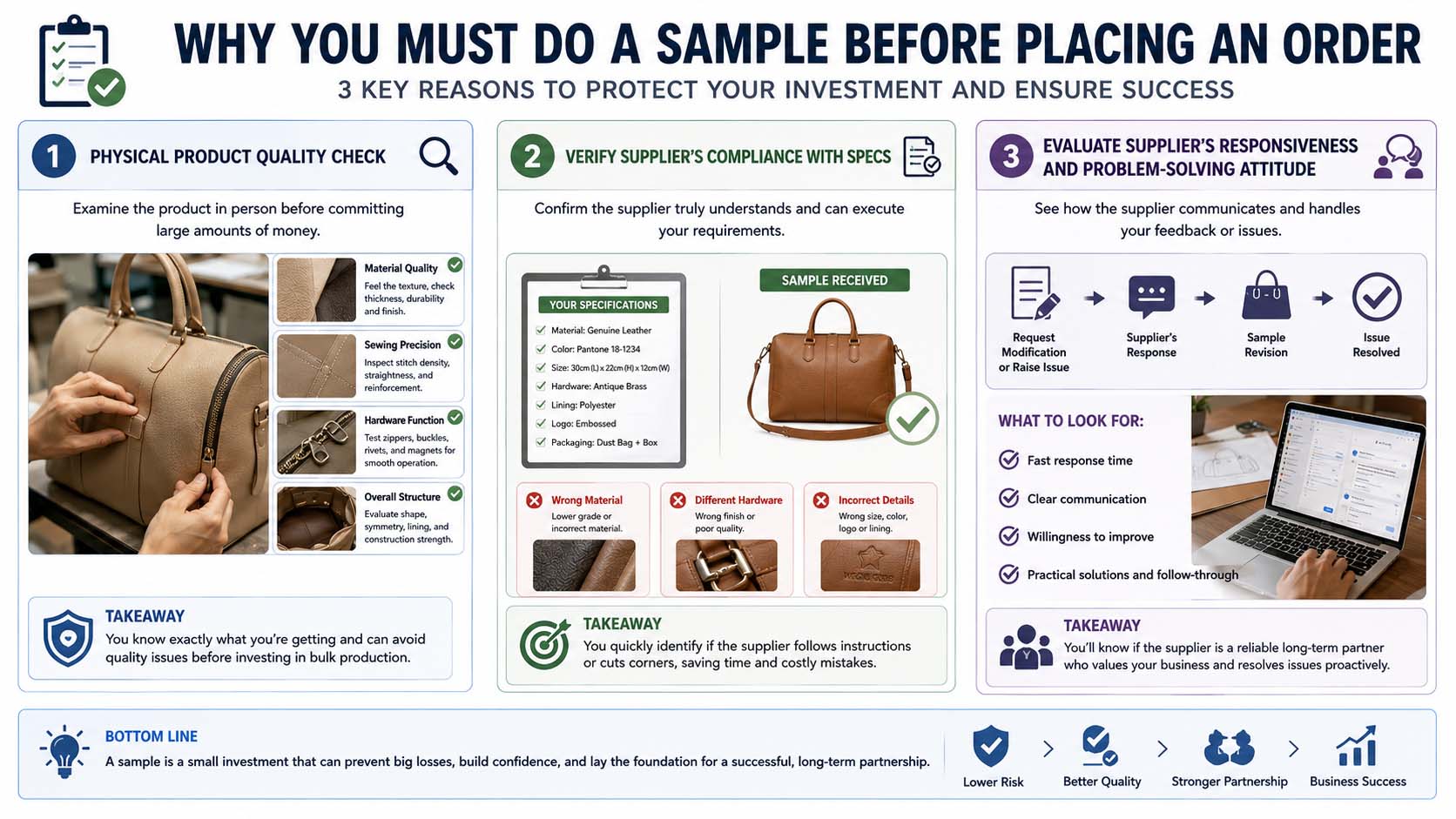
The optimal sample order size varies by product complexity and budget, but many industry experts recommend starting with quantities between 10 to 50 units for each style. This provides enough product for comprehensive evaluation while keeping financial exposure manageable. During this phase, document everything—material samples, color swatches, hardware specifications, and packaging requirements. These become your reference standards for all future orders.
Pre-Shipment Inspections: Your First Line of Defense
Why Third-Party QC Services Are Essential
Professional pre-shipment inspections represent one of the most cost-effective investments you can make in your quality control strategy. These inspections involve qualified quality control professionals examining your products before they leave the manufacturer’s facility, catching defects and specification violations before products enter the shipping pipeline.
For small business owners who cannot be physically present in China for every order, third-party inspection services provide independent verification that your products meet agreed-upon standards. Companies like SGS, QIMA, and Bureau Veritas have established networks of trained inspectors throughout China who can evaluate your bags against detailed checklists tailored to your specific requirements.
The value of third-party inspection extends beyond simple defect detection. These services also verify that your order was produced according to specifications, that quantities are correct, that packaging meets requirements, and that products are properly labeled for your target market. In the event of future disputes, inspection reports from recognized international companies carry significant weight when negotiating resolutions with suppliers.
What to Include in Your Inspection Checklist
A comprehensive pre-shipment inspection checklist for bags should cover multiple categories of evaluation. Material inspection includes verifying that leather, canvas, synthetic materials, and hardware match approved samples. Construction inspection examines stitching quality, seam strength, edge finishing, and overall structural integrity. Functional testing should cover all closures (zippers, clasps, buckles, magnetic snaps), pockets, straps, and handles under realistic usage conditions.
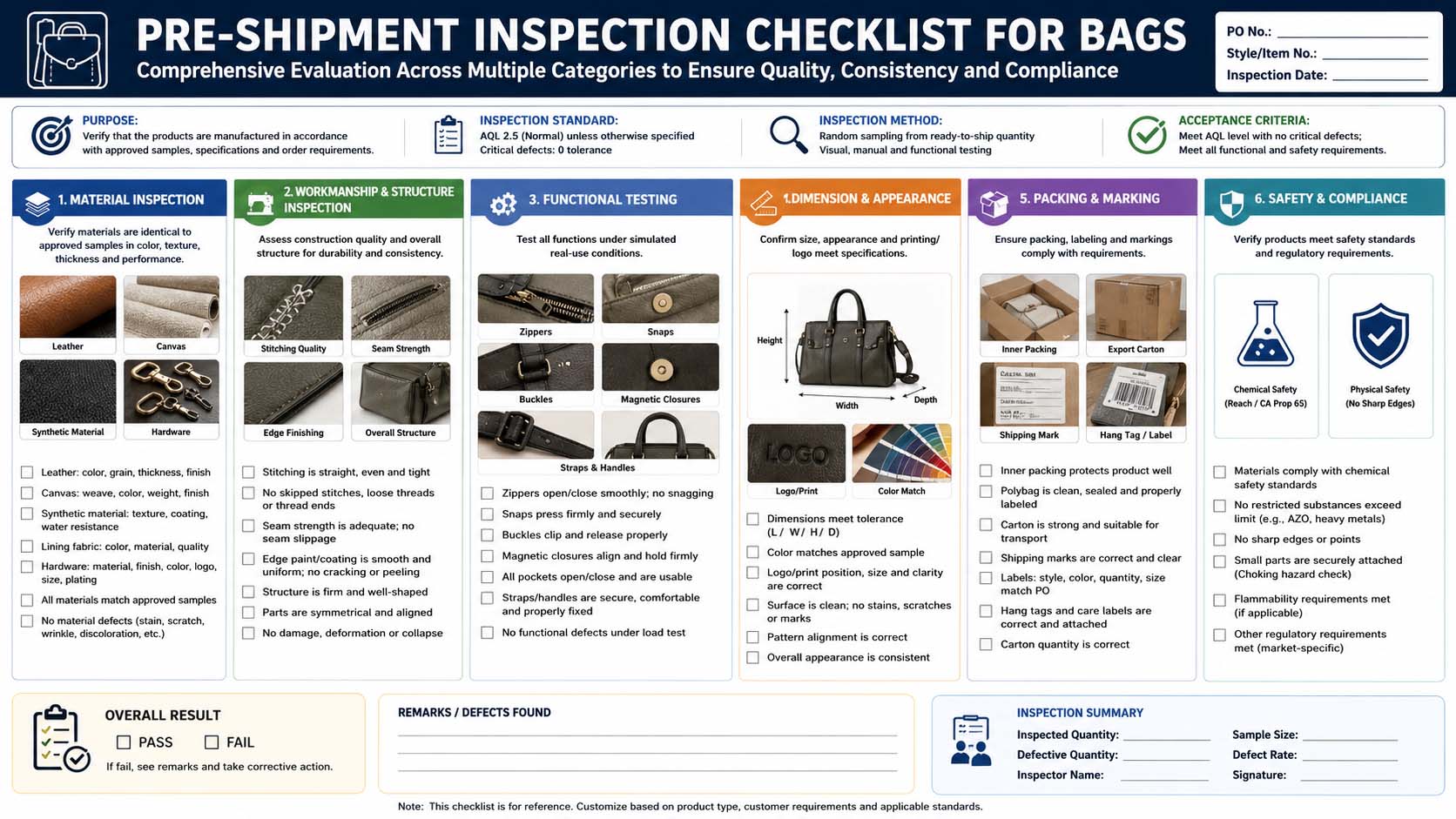
Packaging inspection ensures products are properly protected for transit and that retail packaging meets your specifications and labeling requirements. Cosmetic inspection identifies surface defects such as scratches, discoloration, stains, or irregular textures that might affect retail appeal. For branded products, inspection should also verify logo placement, label accuracy, and compliance with any regulatory requirements for your market.
Most small business owners should budget for inspection costs between $100 to $300 per day of inspection, depending on order complexity and inspection company. While this represents an additional cost, it typically amounts to just 1-3% of order value—a worthwhile investment compared to the costs of receiving defective merchandise.
Building a Bulletproof Quality Agreement
The Power of Detailed Written Specifications
When sourcing bags from China, verbal agreements rarely survive the translation from conversation to production floor. The single most important step you can take to protect your quality interests is creating comprehensive written specifications that leave no room for interpretation ambiguity.
Your product specifications should document every relevant detail: exact materials (including material weights, grades, and composition), precise dimensions (with acceptable tolerance ranges), color specifications (referencing Pantone numbers or physical samples), hardware specifications (including material, finish, and source if specified), stitching requirements (stitch type, thread specifications, stitch density), and packaging requirements (including all materials, inserts, and labeling).
Beyond product specifications, your quality agreement must address defect tolerances and acceptance criteria. Industry standards typically accept defect rates between 1% and 3%, with acceptable defect levels depending on product type and inspection rigor. Your agreement should specify exactly what constitutes a defect category (critical, major, minor), which defect categories are acceptable at what rates, and how defective products will be handled.
Essential Contract Clauses for Quality Protection
A well-structured purchase agreement should include several specific clauses designed to protect your quality interests. The defect definition clause should clearly enumerate what qualifies as a defect versus normal variation, potentially including visual references or sample products as reference standards.
The inspection and acceptance clause should specify inspection methods, inspection timing (before or after receipt of goods), and the process for conducting and documenting inspections. Include requirements for providing access to inspection reports and the timeframe for raising defect claims after receipt.
The remedy clause is perhaps the most critical element. It should clearly specify available remedies when defects are discovered—options typically include replacement of defective units, refund for defective units, partial refund based on defect severity, credit toward future orders, or rework at supplier expense. The clause should also address who bears responsibility for shipping costs associated with defect resolution.
The defect rate threshold clause establishes the maximum acceptable defect percentage and specifies consequences when shipments exceed this threshold. Common approaches include allowing rejection of the entire shipment, requiring replacement of all defective units, or negotiating price reductions proportional to defect rates.
Managing Defects: From Prevention to Resolution
A Practical Framework for Defect Handling
Even with the best quality control measures, some defect issues will inevitably arise. Having a clear, systematic approach to defect management ensures issues are resolved quickly and fairly, maintaining good supplier relationships while protecting your business interests.
The first step when receiving defective products is documentation. Immediately upon discovery, photograph and video the defects clearly, capturing multiple angles and, where relevant, showing the defect in context with packaging or labeling. Maintain detailed records of which units are affected, including any identifying markers such as production batch numbers or sequential numbering if present. This documentation serves multiple purposes—it helps the supplier understand and verify the issues you report, and it creates an essential record if disputes escalate.
When contacting the supplier about defects, provide clear communication that includes specific information about defect types and frequencies, references to the agreed specifications and defect tolerances, your proposed resolution approach, and a professional but firm timeline for response. The tone of your communication matters—suppliers are more responsive to professional partners than to aggressive demanding customers, even when legitimate complaints are justified.
Understanding Common Defect Categories
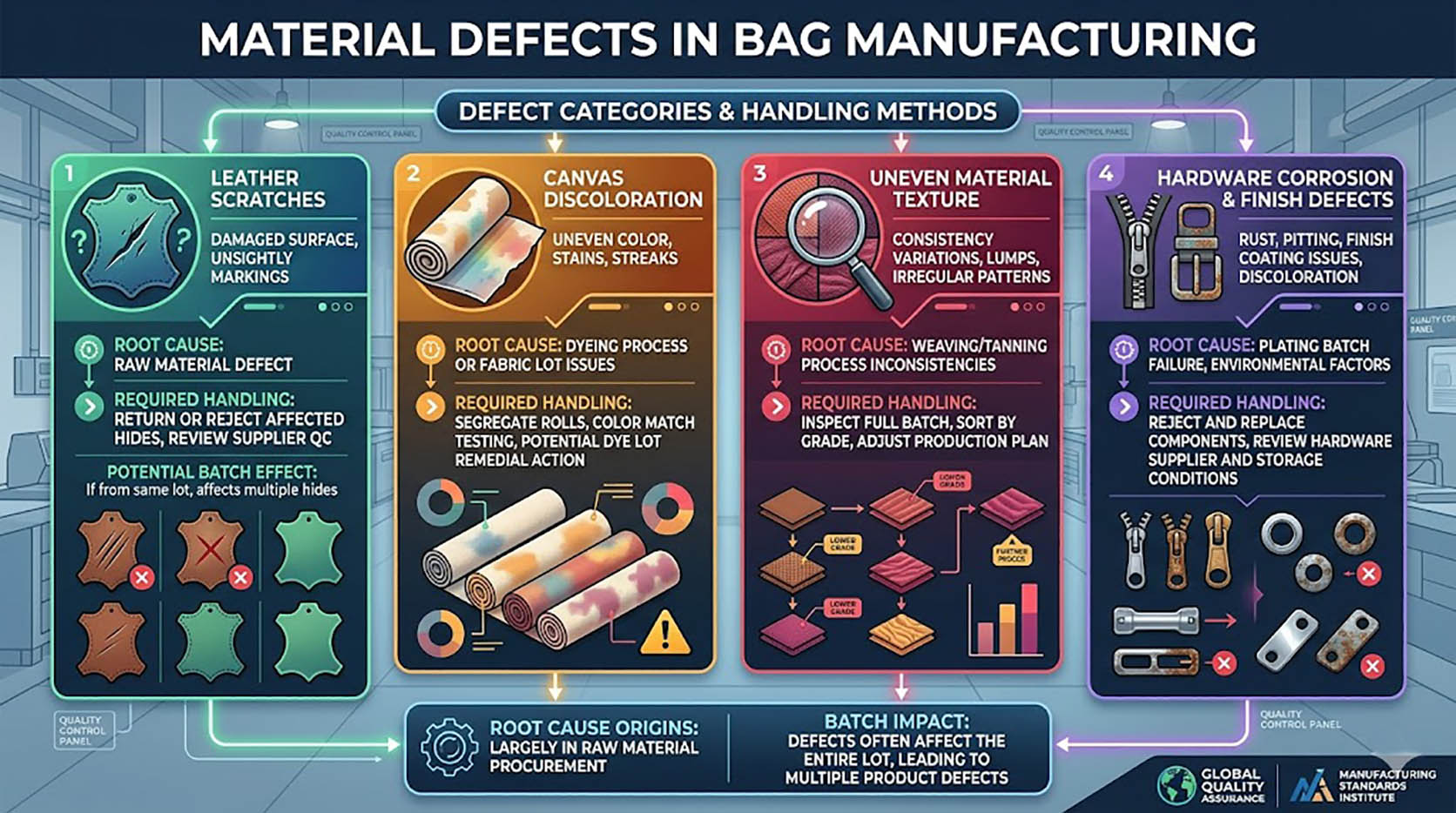
In the bag manufacturing industry, defects typically fall into several distinct categories, each requiring different handling approaches. Material defects include issues like leather scarring, canvas discoloration, uneven material texture, and hardware corrosion or finishing imperfections. These defects often originate from material sourcing and may affect multiple units if they come from the same material batch.
Construction defects encompass stitching issues (loose threads, skipped stitches, uneven stitching), seam problems (open seams, weak seams, seam puckering), and structural issues (improper alignment, weak attachment points). These defects often indicate production quality problems that may affect production-wide batches.
Functional defects involve problems with zippers (sticking, jamming, missing teeth), clasps and buckles (improper engagement, weak springs), straps and handles (detachment, fraying, weak attachment), and overall structural integrity. These defects are particularly serious as they affect product safety and usability.
Cosmetic defects include surface scratches, color inconsistencies, texture variations, and packaging damage. While these may not affect product function, they significantly impact retail appeal and customer satisfaction, particularly for bags sold at premium price points.
Return and Exchange Policies: What’s Realistic
Standard Practices in Chinese Manufacturing
Understanding what return and exchange policies Chinese bag suppliers typically offer helps set realistic expectations and informs your negotiation approach. Standard practices vary significantly based on order size, supplier type, and established relationships, but certain patterns emerge across the industry.
For small orders, Chinese suppliers often prefer handling defects through remedies other than physical returns. Return shipping from international destinations is expensive, and the logistics of customs returns are complex. Consequently, most suppliers are more willing to offer replacement units, partial refunds, or credits than to accept physical returns of defective products.
The most common approaches to defect resolution in small-order scenarios include replacement of confirmed defective units with correct products, partial refund proportional to defect severity and frequency, credit toward future orders (sometimes with bonus value), or local repair/rework with supplier covering costs.
Suppliers are generally more accommodating when defects are clearly documented, when they occur within an agreed tolerance period after delivery, and when the defect resolution request is reasonable and professional. Building a track record of fair dealing and prompt payment also significantly improves your negotiating position for defect resolution.
Negotiating Favorable Terms Before You Pay
The most opportune time to negotiate defect and return policies is before any payment is made. Once you have committed funds, your negotiating leverage decreases substantially. Approach initial supplier communications with clear expectations and firm requirements for what defect policies you require.
A professional approach is to state your requirements directly: “Before proceeding with the order, we need to agree on our quality standards and defect handling procedures. We will be conducting pre-shipment inspections and require a written agreement specifying acceptable defect rates, inspection methods, and remedies for non-conforming products.”
Many Chinese suppliers, particularly those experienced in serving international small businesses, have standard terms that can be adjusted to accommodate reasonable requests. Suppliers who refuse to discuss quality guarantees or insist on terms that leave you completely unprotected may be signals of suppliers who regularly produce quality problems or who are not serious about long-term relationships.
Documentation and Record-Keeping Best Practices
Creating a Paper Trail That Protects You
In international sourcing, documentation is your best friend. Every communication, every agreement, every piece of evidence related to your supplier relationship should be preserved systematically. In the event of disputes or claims, clear documentation often determines whether you succeed in obtaining remedies.
Maintain comprehensive records including all correspondence with suppliers (emails, messages through platforms, phone call notes), all purchase orders and acknowledgments, sample approvals and physical samples, inspection reports and certificates, shipping documentation and tracking information, payment records and invoices, and photographs of products at all stages from sample approval through receipt.
Digital organization systems work well for most small businesses. Create a structured folder system organized by supplier, then by order, with consistent subfolders for different document types. Cloud storage ensures records remain accessible even if your local systems fail. Consider using a dedicated sourcing management platform or customer relationship management system if your order volume warrants it.
What Documentation Is Required for Defect Claims
When filing defect claims with suppliers, the burden of proof typically falls on the buyer. Being prepared with proper documentation can mean the difference between successful claim resolution and being stuck with defective merchandise.
Effective defect claims include clear photographs showing defects in context, close-up images of specific defect areas, videos demonstrating functional issues (particularly important for zippers and closures), written description of each defect type with frequency counts, reference to relevant specification requirements, and your proposed resolution for each defect category.
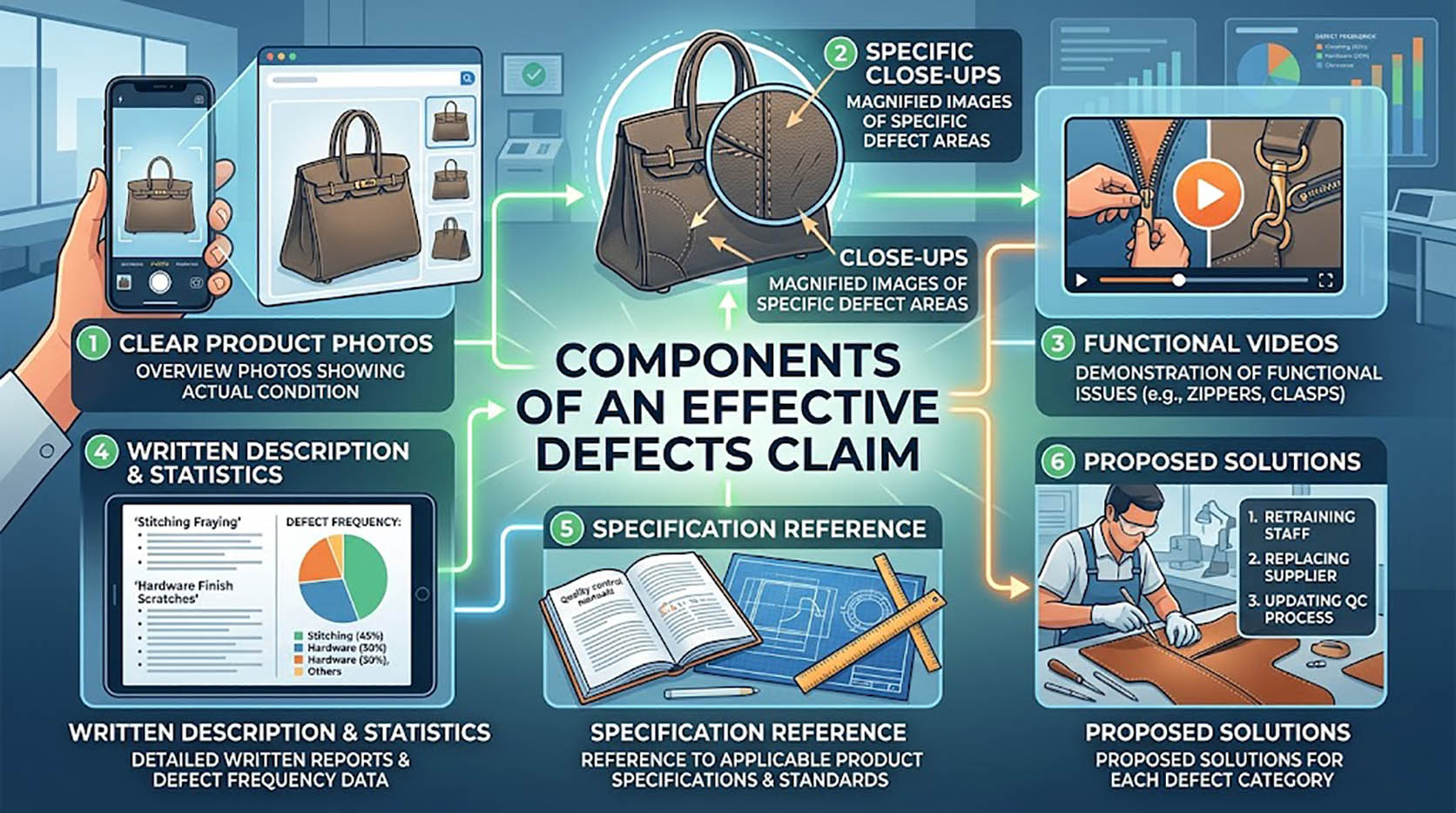
For claims involving inspection reports, include the full inspection report with findings, any corrective action requests you made to the supplier, the supplier’s response or lack of response, and evidence that pre-shipment inspection was completed before shipping authorization.
When defects affect multiple units, document the extent of the problem clearly. Note how many units were inspected, how many exhibited each type of defect, and calculate defect rates for each category. This quantitative approach makes your claim more credible and provides a clear basis for proportional remedies.
Payment Protection Strategies
Using Escrow and Buyer Protection Services
Protecting your payment is as important as protecting your product quality. When you transfer funds internationally to a supplier you’ve never met, you are extending significant trust. Various payment mechanisms can mitigate this risk while maintaining professional supplier relationships.
Escrow services hold your payment temporarily, releasing funds to the supplier only when specified conditions are met. This arrangement protects buyers by ensuring they don’t pay for goods that never ship, goods that don’t meet specifications, or goods that are never received. When disputes arise, escrow services often provide mediation services to resolve disagreements fairly.
Major B2B platforms like Alibaba offer trade assurance programs that provide payment protection for buyers. These programs typically guarantee on-time delivery, product quality matching specifications, and refund availability if terms aren’t met. While using platform-based payment services incurs fees, the protection they provide often justifies the cost, particularly for initial orders with new suppliers.
Payment platforms like PayPal offer buyer protection for qualified transactions, though coverage limits and eligibility requirements vary. For significant orders, explore whether your payment method provides adequate protection and understand the claims process should you need to file a dispute.
Balancing Protection with Supplier Relations
While strong buyer protection is essential, it’s important to balance protection mechanisms with relationship building. Suppliers who feel overly constrained or distrusted may be less committed to your success or less forthcoming about potential problems.
A balanced approach involves using strong protection for new supplier relationships, transitioning to more flexible arrangements as trust builds over successful orders. Communicate your protection requirements professionally rather than as accusations of distrust. Frame payment protection as standard business practice rather than personal suspicion.
Many successful small businesses start with maximum protection (escrow, trade assurance, smaller initial orders) and gradually increase order sizes and payment flexibility as they build relationships and confidence in specific suppliers. This graduated approach minimizes risk while creating opportunities for more favorable terms as relationships mature.
Building a Resilient Supplier Network
Why Multiple Suppliers Reduce Risk
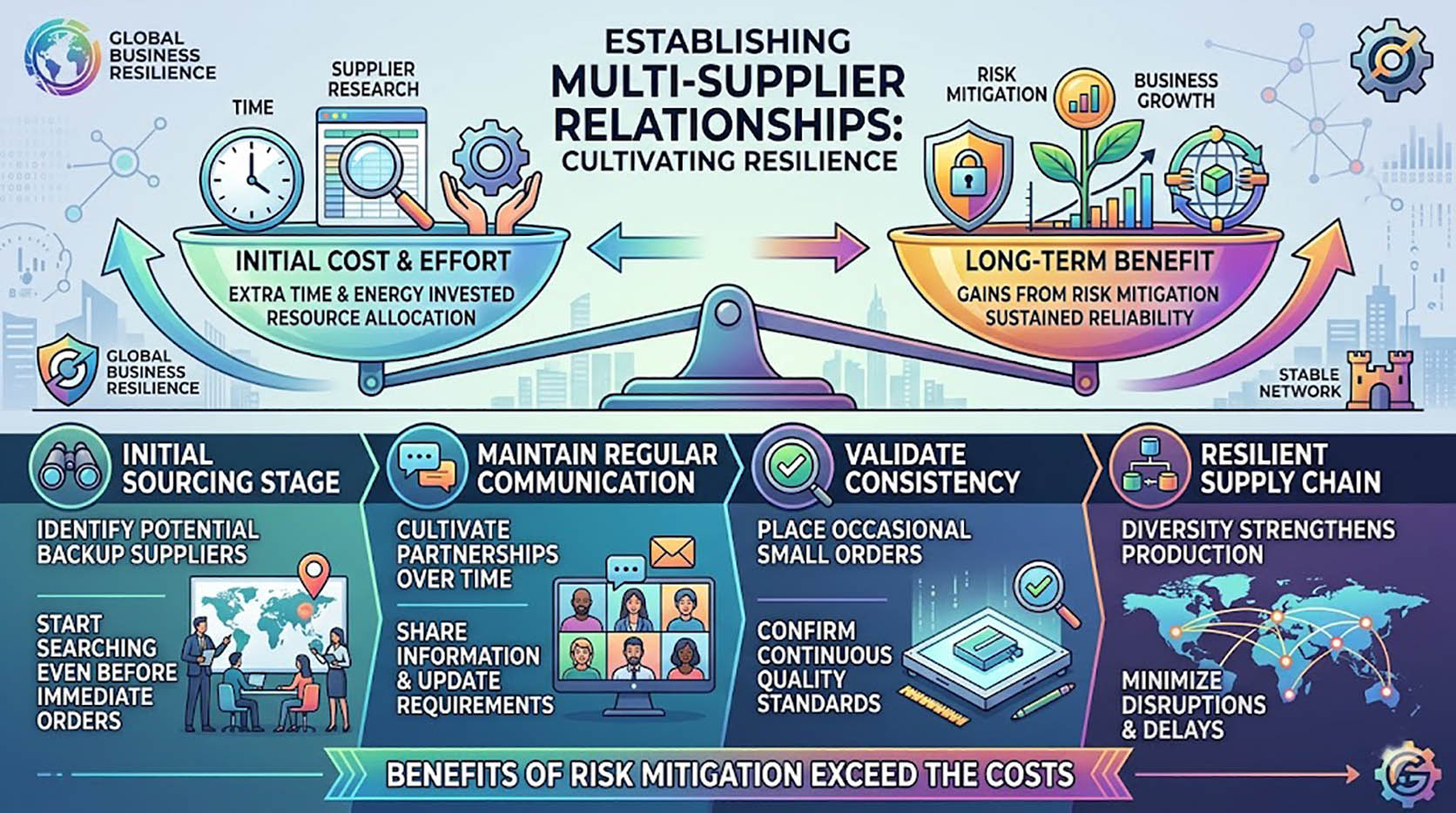
Relying on a single supplier creates significant vulnerability. Quality issues, production problems, communication breakdowns, or business closures can disrupt your entire operation. Successful small businesses typically develop relationships with two or more approved suppliers for each major product category.
Multiple supplier relationships provide backup capacity when primary suppliers face capacity constraints, competitive pressure when negotiating terms (knowing you have alternatives strengthens your position), quality comparison opportunities to identify which supplier consistently delivers superior products, and risk distribution across suppliers in different regions or with different specializations.
Developing multiple supplier relationships requires additional investment of time and energy, but the risk mitigation benefits typically outweigh these costs. Start by identifying potential backup suppliers during your initial sourcing phase, even if you don’t immediately place orders with them. Maintain periodic communication to keep relationships active, and occasionally place small orders to verify continued quality standards.
Supplier Relationship Management Best Practices
Long-term supplier relationships benefit both parties. Suppliers who view you as a valued long-term customer are more likely to prioritize your orders, accommodate reasonable requests, and work cooperatively to resolve issues. Invest in relationship building as seriously as you invest in product quality.
Communication practices that strengthen relationships include responding promptly to supplier communications, providing clear and complete information with every request, offering professional courtesy even when problems frustrate you, recognizing and acknowledging good performance, and making payments promptly or early when possible.
Consider occasional gestures of goodwill—ordering samples of new products you’re interested in, referring other buyers when appropriate, providing feedback on improvements that would make future orders smoother. These relationship investments often pay dividends when you need flexibility or cooperation from your suppliers.
Understanding Liability and Legal Considerations
Incoterms and Responsibility Allocation
International commercial terms (Incoterms) define when responsibility and risk transfer from seller to buyer during international shipments. Understanding these terms is essential for knowing who bears liability for damaged goods during transit and how to file claims appropriately.
Common Incoterms for small business bag sourcing include FOB (Free on Board), where the seller’s responsibility ends when goods are loaded onto the shipping vessel, with the buyer bearing all costs and risks from that point forward. CIF (Cost, Insurance, and Freight) includes the seller’s responsibility for costs and insurance to the destination port. DDP (Delivered Duty Paid) places maximum responsibility on the seller, including delivery to the buyer’s specified location with all costs and risks covered.
For small businesses, DDP terms often provide the most protection because the seller retains responsibility through delivery. However, DDP terms may command higher prices because the seller is absorbing more costs and risks. Carefully evaluate which Incoterms makes sense for your situation based on your logistics capabilities, risk tolerance, and total cost calculations.
Filing Claims with Carriers and Suppliers
When goods arrive damaged or defective, understanding your claim options helps maximize your chances of successful recovery. Claims may be filed against multiple parties depending on the nature of the problem and when damage occurred.
For shipping damage (visible damage occurring during transit), file claims with the carrier or freight forwarder immediately upon receipt, noting damage on the delivery receipt before signing. For quality defects discovered after opening, claims typically go to the supplier, supported by your pre-shipment inspection reports and defect documentation. For issues where responsibility is unclear, document everything thoroughly and communicate with both parties while pursuing resolution from whichever source seems most appropriate.
Keep detailed records of all claim communications, including dates, contact names, claim numbers, and the substance of each conversation. Persistence often matters—follow up on claims regularly and escalate through appropriate channels when initial contacts don’t produce results.
Conclusion: Building Your Quality-First Sourcing Strategy
Successfully sourcing bags from China as a small business requires balancing cost competitiveness with quality assurance, building supplier relationships while protecting your interests, and implementing professional practices that scale as your business grows.
The key takeaways from this comprehensive guide include the importance of starting small with sample orders before committing to large quantities, investing in pre-shipment inspections as cost-effective quality insurance, creating detailed written specifications that leave no room for ambiguity, negotiating clear defect policies before making any payments, documenting everything meticulously throughout your supplier relationships, using payment protection mechanisms appropriate to your risk level, building relationships with multiple suppliers to reduce dependency, and approaching every interaction professionally to build the cooperative relationships that serve you well when issues arise.
By implementing these strategies systematically, you can source bags from China with confidence, knowing that you have processes in place to prevent quality problems where possible and resolve them fairly when they occur. Your commitment to quality management will be reflected in the products you sell, the reviews you receive, and the repeat business that builds your brand.
Remember that every successful sourcing relationship starts somewhere. Be patient, be professional, be persistent, and be prepared. Your investment in learning these practices and implementing these systems will pay dividends in the quality of your products and the sustainability of your business for years to come.
Post time: May-27-2026